
Bachelor in French and Romance Languages and Literatures: General
-
Schedule
regular course
- ECTS Credits 180

Overview
Your bachelor’s program is based on two complementary approaches: the study of language and the study of literature.
In linguistics, you learn to describe the French language—as well as Italian or Spanish—in its various aspects (phonology, morphosyntax, semantics) and to understand how these languages have evolved over time to reach their current state.
In literature, you will discover how language enables cultures to define themselves and function through literature. You will be introduced to text analysis, the history of literary themes and genres, philology, and the study of contemporary, modern, and medieval French (as well as Italian and Spanish) authors.
These courses aim to develop a critical mind capable of structuring and interpreting textual, historical, and cultural information from a coherent perspective.
Philosophy, history, and art history round out your education.

You're off to a good start
- You have a passion for the French language and literature;
- you are able to analyze a text with rigor and precision;
- you have an excellent command of French, particularly spelling.
Teaching Methods
Lectures, practical exercises, seminars, group work... we do everything we can to ensure that you master the language, its history, and its culture.
To help you absorb the material covered in each language and literature course, the theoretical classes are supplemented by practical sessions in small groups.
Literary history is explored through novels, plays, and short stories via group discussions and individual analyses.
Through regular and varied assignments in linguistic analysis and literature, you will learn to rigorously and subtly define the main mechanisms of language as well as the various elements of a text.
You will conclude your bachelor’s program with an analytical project in one of the program’s subjects. Completing this project is one of the final steps in developing your independence.
Do you like to write?
To help you refine your writing skills, UNamur offers optional courses in creative writing, in addition to exercises in written French and academic writing.
These courses are structured as workshops where theoretical input and targeted exercises enrich your creative practice, allowing you to understand literature "from the inside."
Experience life abroad
An Erasmus exchange during your bachelor's degree
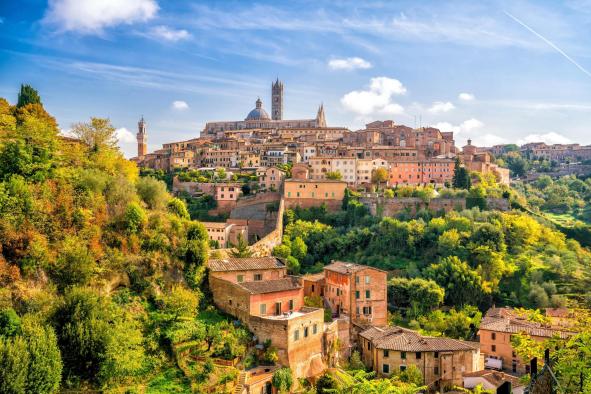
Thanks to language courses, your Italian or Spanish skills will improve throughout your program. If your proficiency is sufficient, you have the opportunity to study for 4 months in Italy (Universities of Padua, Siena, and Perugia), in Spain (Universities of Santiago de Compostela, Cádiz, and Cáceres), or in Canada.
You also have the option of spending time at a Dutch-speaking Belgian university in Ghent or Antwerp.
By choosing Italian, I had the opportunity to study at the University of Siena for four months. This experience was extraordinary: I significantly improved my Italian and gained a new perspective on life, not only in terms of how I approached certain courses, but also in terms of opening up to new horizons, life experiences, customs, and cultures
Marine Fobe
Graduate in French and Romance Languages and Literature
Support for Success
To help you meet these challenges, UNamur supports you in developing your academic, methodological, and interpersonal skills—with the help of many professionals.
Preparatory courses, personalized assistance… Discover the resources available to support your education.
After a bachelor's degree: a master's degree
A bachelor’s degree in French and Romance Languages and Literature automatically qualifies you, within the French Community, for a master’s degree in French and Romance Languages and Literature.
During this second cycle, you choose a Master’s program that prepares you more specifically for teaching (Master’s in Education), research (Advanced Track), or another professional specialization in the fields of publishing, information technology, and linguistics; teaching French as a foreign language; journalism; and so on.
Contacts
School of Philosophy and Letters
Office
1 Rue Grafé • B-5000 Namur
Tel.: +32 (0) 81 72 42 07
Ms. E. Debu and Ms. S. Favero: secretariat-etudiants.lettres@unamur.be
-
Literature
-
Linguistics
Code Name Staff Th.+Ex. Credits/Block 1 2 3 LROMB218 General Linguistics I Vaxelaire Jean-Louis 30h th. + 15h ex. 5 LROMB231 Historical linguistics of French and Romance languages Vaxelaire Jean-Louis Palumbo Giovanni Battista 45h th. 5 LROMB303 General Linguistics II Vaxelaire Jean-Louis 30h th. 5 -
Philosophy
Code Name Staff Th.+Ex. Credits/Block 1 2 3 LPHIB105 General introduction to philosophy De Meyer Thibault 45h th. 4 LHISB101 Religious Studies Hermans Michel 30h th. 3 -
Art history
Code Name Staff Th.+Ex. Credits/Block 1 2 3 LARTB028 Archaeology and Art History. Contemporary period Leenaerts Danielle 30h th. 3 -
History
Code Name Staff Th.+Ex. Credits/Block 1 2 3 LCLAB101 History of Antiquity Liard Florence Flament Christophe 45h th. 3 LHISB004_Bloc 1 History of the Middle Ages Hermand Xavier 30h th. 3 LHISB003 History of Modern Times Delleaux Fulgence 30h th. 3 Soft skillsImage
LHISB002 History of the Contemporary Era Tixhon Axel 30h th. 3 LHISB001_15h <unknown> Hermand Xavier 15h th. 2 -
Study and practice of a Romance language
-
Italian
Code Name Staff Th.+Ex. Credits/Block 1 2 3 LROMB103_Bloc 1 Italian I Palumbo Giovanni Battista 15h th. + 60h ex. 8 LROMB202 Italian II Palumbo Giovanni Battista 15h th. + 60h ex. 8 8 LROMB306 History of Italian literature - explanation of texts Palumbo Giovanni Battista 30h th. 5 LROMB308 Grammar - Italian Linguistics Palumbo Giovanni Battista 30h th. 5 -
Spanish
Code Name Staff Th.+Ex. Credits/Block 1 2 3 LROMB102_Bloc 1 Spanish I François Jéromine Diaz y Ruiz Fernardo 15h th. + 60h ex. 8 LROMB201 Spanish II François Jéromine Diaz y Ruiz Fernardo 15h th. + 60h ex. 8 8 LROMB305 Historia de la literatura española - Explicación de textos François Jéromine Diaz y Ruiz Fernardo 30h th. 5 LROMB307 Gramática - Lingüística española François Jéromine François Jéromine Diaz y Ruiz Fernardo Diaz y Ruiz Fernardo 30h th. 5
-
-
French language
Code Name Staff Th.+Ex. Credits/Block 1 2 3 LROMB117 Practice of written French I SINTE Aurélie SINTE Aurélie 30h th. 5 LROMB104 Synchronic Linguistics of Modern French I Vaxelaire Jean-Louis 30h th. + 30h ex. 5 LROMB120 Synchronic Linguistics of Modern French II SINTE Aurélie Vaxelaire Jean-Louis 30h th. + 30h ex. 5 LROMB123_Bloc 1 History of the French language and its grammatical norms SINTE Aurélie Vaxelaire Jean-Louis 30h th. 4 Soft skillsImage
LROMB219 Written French Practices II SINTE Aurélie SINTE Aurélie 30h th. 4 LROMB226 Language, gestures and signs Meurant Laurence 30h th. 5 LROMB315 Scientific writing SINTE Aurélie SINTE Aurélie 30h th. 8 -
Latin languages and literature
Code Name Staff Th.+Ex. Credits/Block 1 2 3 LCLAB009 Introduction to the Latin language Assenmaker Pierre 60h th. 3 Cyclic course organized this yearImage
LCLAB003_Bloc 1 Explanation of Latin authors A Assenmaker Pierre 30h th. 3 Cyclic course not organized this yearImage
LCLAB011_Bloc 1 Explanation of Latin authors B Assenmaker Pierre 30h th. 3 Cyclic course not organized this yearImage
LCLAB012_Bloc 1 Explanation of Latin authors C Assenmaker Pierre 30h th. 3 LCLAB007 Reading of Latin texts Assenmaker Pierre 45h th. 3 3 Cyclic course organized this yearImage
LCLAB003 Explanation of Latin authors A Assenmaker Pierre 30h th. 3 3 Cyclic course not organized this yearImage
LCLAB011 Explanation of Latin authors B Assenmaker Pierre 30h th. 3 3 Cyclic course not organized this yearImage
LCLAB012 Explanation of Latin authors C Assenmaker Pierre 30h th. 3 3 -
Tools and methods for Romance studies
Code Name Staff Th.+Ex. Credits/Block 1 2 3 LROMB214 Philology: editing of texts Palumbo Giovanni Battista 15h th. 3 LROMB321 Methodology of literary and linguistic studies SINTE Aurélie 30h th. 4 -
Modules
-
Module A - Languages
Code Name Staff Th.+Ex. Credits/Block 1 2 3 LCDLB032 Nederlands 2 (level B1 of hoger) Naveau Sophie Malcolm Ophélie 60h th. 4 4 LCDLB021 Introduction to the English language (level A2) Bar Vanina 60h th. 4 4 LROMB202 Italian II Palumbo Giovanni Battista 15h th. + 60h ex. 8 8 LROMB201 Spanish II François Jéromine Diaz y Ruiz Fernardo 15h th. + 60h ex. 8 8 LROMB102 Spanish I François Jéromine Diaz y Ruiz Fernardo 15h th. + 60h ex. 8 LROMB103 Italian I Palumbo Giovanni Battista 15h th. + 60h ex. 8 LCDLB031 Introduction to the Dutch language (level B1) Naveau Sophie 60h th. 4 4 Soft skillsImage
LCDLB022 English 2 (level B1 or higher) Bar Vanina 60h th. 4 4 -
Module B - Literature, linguistics, media
Code Name Staff Th.+Ex. Credits/Block 1 2 3 LROMB034 Fictional writing I De Mulder Caroline 30h th. 4 4 LROMB035 Fictional writing II De Mulder Caroline 30h th. 4 4 LROMB036 Spanish-American literature François Jéromine Diaz y Ruiz Fernardo 30h th. 4 4 LROMB037 Rhetoric and analysis of audiovisual discourse SINTE Aurélie Vaxelaire Jean-Louis 30h th. 4 4 LROMB038 The politics of literature Saint-Amand Denis 30h th. 4 4 LLETB002 History of ancient literature and its legacies Minet Mathieu 30h th. 4 4 Soft skillsImage
LLETB001 Books and digital culture Leyh Valérie Michel Nicolas Ruffini-Ronzani Nicolas 30h th. 4 4 English Friendly CoursesImage
LROMB222 Sign Language Meurant Laurence 30h th. 4 4 LROMB318 General linguistic issues Meurant Laurence Vaxelaire Jean-Louis 30h th. 4 4 LROMB002 Introduction to the language of film Gabriel Jean-Benoît 30h th. 4 4 -
Module C - Philosophy
Code Name Staff Th.+Ex. Credits/Block 1 2 3 LPHIB207 Philosophy of art and Culture Boureau Mai-Lan 30h th. 4 4 LPHIB201 General epistemology De Meyer Thibault 30h th. 4 4 LPHIB206_30h <unknown> Monseu-Van Cleemput Nicolas 30h th. 4 LPHIB330 Film philosophy Laoureux Sébastien 30h th. 4 4 LPHIB013 Philosophy, literature and religion Rizzerio Laura 15h th. 4 4 LPHIB203 Social and political philosophy Laoureux Sébastien 30h th. 4 4 LPHIB206 Metaphysics Monseu-Van Cleemput Nicolas 45h th. 4
-
-
Literature
Code Name Staff Credits Hours/Quarter 1 2 LROMB101 Introduction to literary studies Vrydaghs David 2 15h th. LROMB124 History of French literature (19th-21st century) Vrydaghs David Saint-Amand Denis 5 30h th. LROMB125 Introduction to literary analysis Vrydaghs David 5 15h th. + 15h ex. 15h th. + 15h ex. LROMB109_Bloc 1 History of French Literature I Saint-Amand Denis Vrydaghs David HOUTART Manon 5 30h th. -
Philosophy
Code Name Staff Credits Hours/Quarter 1 2 LPHIB105 General introduction to philosophy De Meyer Thibault 4 22.5h th. 22.5h th. LHISB101 Religious Studies Hermans Michel 3 30h th. -
Art history
Code Name Staff Credits Hours/Quarter 1 2 LARTB028 Archaeology and Art History. Contemporary period Leenaerts Danielle 3 30h th. -
History
Code Name Staff Credits Hours/Quarter 1 2 LCLAB101 History of Antiquity Liard Florence Flament Christophe 3 45h th. LHISB004_Bloc 1 History of the Middle Ages Hermand Xavier 3 30h th. LHISB003 History of Modern Times Delleaux Fulgence 3 30h th. Soft skillsImage
LHISB002 History of the Contemporary Era Tixhon Axel 3 30h th. -
Study and practice of a Romance language
-
Italian
Code Name Staff Credits Hours/Quarter 1 2 LROMB103_Bloc 1 Italian I Palumbo Giovanni Battista 8 7h th. + 30h ex. 8h th. + 30h ex. -
Spanish
Code Name Staff Credits Hours/Quarter 1 2 LROMB102_Bloc 1 Spanish I François Jéromine Diaz y Ruiz Fernardo 8 7h th. + 30h ex. 8h th. + 30h ex.
-
-
French language
Code Name Staff Credits Hours/Quarter 1 2 LROMB117 Practice of written French I SINTE Aurélie SINTE Aurélie 5 30h th. LROMB104 Synchronic Linguistics of Modern French I Vaxelaire Jean-Louis 5 30h th. + 30h ex. LROMB120 Synchronic Linguistics of Modern French II SINTE Aurélie Vaxelaire Jean-Louis 5 30h th. + 30h ex. LROMB123_Bloc 1 History of the French language and its grammatical norms SINTE Aurélie Vaxelaire Jean-Louis 4 30h th. -
Latin languages and literature
Code Name Staff Credits Hours/Quarter 1 2 LCLAB009 Introduction to the Latin language Assenmaker Pierre 3 30h th. 30h th. Cyclic course organized this yearImage
LCLAB003_Bloc 1 Explanation of Latin authors A Assenmaker Pierre 3 30h th. Cyclic course not organized this yearImage
LCLAB011_Bloc 1 Explanation of Latin authors B Assenmaker Pierre 3 30h th. Cyclic course not organized this yearImage
LCLAB012_Bloc 1 Explanation of Latin authors C Assenmaker Pierre 3 30h th. LCLAB007 Reading of Latin texts Assenmaker Pierre 3 30h th. 15h th.
-
Literature
Code Name Staff Credits Hours/Quarter 1 2 Cyclic course not organized this yearImage
LROMB228 Theory of literature Vrydaghs David 4 30h th. LROMB232 Comparative literature De Mulder Caroline 4 30h th. LROMB233 Literary analysis Vrydaghs David Saint-Amand Denis 4 30h th. Cyclic course organized this yearImage
LROMB327 Explanations by modern and contemporary French authors Vrydaghs David 4 30h th. Cyclic course organized this yearImage
LROMB330 Explanation of French texts from the Middle Ages (Middle French) Palumbo Giovanni Battista 5 30h th. Cyclic course not organized this yearImage
LROMB229 Explanation of French texts from the Middle Ages (Old French) Palumbo Giovanni Battista 5 30h th. -
Linguistics
Code Name Staff Credits Hours/Quarter 1 2 LROMB218 General Linguistics I Vaxelaire Jean-Louis 5 30h th. + 15h ex. LROMB231 Historical linguistics of French and Romance languages Vaxelaire Jean-Louis Palumbo Giovanni Battista 5 45h th. -
History
Code Name Staff Credits Hours/Quarter 1 2 LHISB001_15h <unknown> Hermand Xavier 2 15h th. -
Study and practice of a Romance language
-
Italian
Code Name Staff Credits Hours/Quarter 1 2 LROMB202 Italian II Palumbo Giovanni Battista 8 15h th. + 30h ex. 30h ex. -
Spanish
Code Name Staff Credits Hours/Quarter 1 2 LROMB201 Spanish II François Jéromine Diaz y Ruiz Fernardo 8 7h th. + 30h ex. 8h th. + 30h ex.
-
-
French language
Code Name Staff Credits Hours/Quarter 1 2 Soft skillsImage
LROMB219 Written French Practices II SINTE Aurélie SINTE Aurélie 4 30h th. LROMB226 Language, gestures and signs Meurant Laurence 5 30h th. -
Latin languages and literature
Code Name Staff Credits Hours/Quarter 1 2 LCLAB007 Reading of Latin texts Assenmaker Pierre 3 30h th. 15h th. Cyclic course organized this yearImage
LCLAB003 Explanation of Latin authors A Assenmaker Pierre 3 30h th. Cyclic course not organized this yearImage
LCLAB011 Explanation of Latin authors B Assenmaker Pierre 3 30h th. Cyclic course not organized this yearImage
LCLAB012 Explanation of Latin authors C Assenmaker Pierre 3 30h th. -
Tools and methods for Romance studies
Code Name Staff Credits Hours/Quarter 1 2 LROMB214 Philology: editing of texts Palumbo Giovanni Battista 3 15h th. -
Modules
-
Module A - Languages
Code Name Staff Credits Hours/Quarter 1 2 LCDLB032 Nederlands 2 (level B1 of hoger) Naveau Sophie Malcolm Ophélie 4 30h th. 30h th. LCDLB021 Introduction to the English language (level A2) Bar Vanina 4 30h th. 30h th. LROMB102 Spanish I François Jéromine Diaz y Ruiz Fernardo 8 7h th. + 30h ex. 8h th. + 30h ex. LROMB103 Italian I Palumbo Giovanni Battista 8 7h th. + 30h ex. 8h th. + 30h ex. LCDLB031 Introduction to the Dutch language (level B1) Naveau Sophie 4 30h th. 30h th. Soft skillsImage
LCDLB022 English 2 (level B1 or higher) Bar Vanina 4 30h th. 30h th. -
Module B - Literature, linguistics, media
Code Name Staff Credits Hours/Quarter 1 2 LROMB034 Fictional writing I De Mulder Caroline 4 30h th. LROMB035 Fictional writing II De Mulder Caroline 4 30h th. LROMB036 Spanish-American literature François Jéromine Diaz y Ruiz Fernardo 4 30h th. LROMB037 Rhetoric and analysis of audiovisual discourse SINTE Aurélie Vaxelaire Jean-Louis 4 30h th. LROMB038 The politics of literature Saint-Amand Denis 4 30h th. LLETB002 History of ancient literature and its legacies Minet Mathieu 4 30h th. Soft skillsImage
LLETB001 Books and digital culture Leyh Valérie Michel Nicolas Ruffini-Ronzani Nicolas 4 30h th. English Friendly CoursesImage
LROMB222 Sign Language Meurant Laurence 4 30h th. LROMB318 General linguistic issues Meurant Laurence Vaxelaire Jean-Louis 4 30h th. LROMB002 Introduction to the language of film Gabriel Jean-Benoît 4 30h th. -
Module C - Philosophy
Code Name Staff Credits Hours/Quarter 1 2 LPHIB207 Philosophy of art and Culture Boureau Mai-Lan 4 30h th. LPHIB201 General epistemology De Meyer Thibault 4 30h th. LPHIB206_30h <unknown> Monseu-Van Cleemput Nicolas 4 30h th. LPHIB330 Film philosophy Laoureux Sébastien 4 30h th. LPHIB013 Philosophy, literature and religion Rizzerio Laura 4 15h th. LPHIB203 Social and political philosophy Laoureux Sébastien 4 30h th.
-
-
Literature
Code Name Staff Credits Hours/Quarter 1 2 LROMB312 Romance literature Lecomte Sophie Lecomte Sophie François Jéromine François Jéromine 4 30h th. LROMB313 Belgian French-language literature CABU Coralie De Mulder Caroline 5 30h th. Cyclic course not organized this yearImage
LROMB228 Theory of literature Vrydaghs David 4 30h th. Cyclic course not organized this yearImage
LROMB229 Explanation of French texts from the Middle Ages (Old French) Palumbo Giovanni Battista 5 30h th. Cyclic course organized this yearImage
LROMB330 Explanation of French texts from the Middle Ages (Middle French) Palumbo Giovanni Battista 5 30h th. LROMB339 Questions of literary history De Mulder Caroline 4 30h th. Cyclic course organized this yearImage
LROMB327 Explanations by modern and contemporary French authors Vrydaghs David 4 30h th. -
Linguistics
Code Name Staff Credits Hours/Quarter 1 2 LROMB303 General Linguistics II Vaxelaire Jean-Louis 5 30h th. -
Study and practice of a Romance language
-
Italian
Code Name Staff Credits Hours/Quarter 1 2 LROMB306 History of Italian literature - explanation of texts Palumbo Giovanni Battista 5 30h th. LROMB308 Grammar - Italian Linguistics Palumbo Giovanni Battista 5 30h th. -
Spanish
Code Name Staff Credits Hours/Quarter 1 2 LROMB305 Historia de la literatura española - Explicación de textos François Jéromine Diaz y Ruiz Fernardo 5 30h th. LROMB307 Gramática - Lingüística española François Jéromine François Jéromine Diaz y Ruiz Fernardo Diaz y Ruiz Fernardo 5 30h th.
-
-
French language
Code Name Staff Credits Hours/Quarter 1 2 LROMB315 Scientific writing SINTE Aurélie SINTE Aurélie 8 30h th. -
Latin languages and literature
Code Name Staff Credits Hours/Quarter 1 2 Cyclic course organized this yearImage
LCLAB003 Explanation of Latin authors A Assenmaker Pierre 3 30h th. Cyclic course not organized this yearImage
LCLAB011 Explanation of Latin authors B Assenmaker Pierre 3 30h th. Cyclic course not organized this yearImage
LCLAB012 Explanation of Latin authors C Assenmaker Pierre 3 30h th. -
Tools and methods for Romance studies
Code Name Staff Credits Hours/Quarter 1 2 LROMB321 Methodology of literary and linguistic studies SINTE Aurélie 4 30h th. -
Modules
-
Module A - Languages
Code Name Staff Credits Hours/Quarter 1 2 LCDLB031 Introduction to the Dutch language (level B1) Naveau Sophie 4 30h th. 30h th. LCDLB032 Nederlands 2 (level B1 of hoger) Naveau Sophie Malcolm Ophélie 4 30h th. 30h th. LROMB202 Italian II Palumbo Giovanni Battista 8 15h th. + 30h ex. 30h ex. LROMB201 Spanish II François Jéromine Diaz y Ruiz Fernardo 8 7h th. + 30h ex. 8h th. + 30h ex. LCDLB021 Introduction to the English language (level A2) Bar Vanina 4 30h th. 30h th. Soft skillsImage
LCDLB022 English 2 (level B1 or higher) Bar Vanina 4 30h th. 30h th. -
Module B - Literature, linguistics, media
Code Name Staff Credits Hours/Quarter 1 2 LROMB318 General linguistic issues Meurant Laurence Vaxelaire Jean-Louis 4 30h th. English Friendly CoursesImage
LROMB222 Sign Language Meurant Laurence 4 30h th. LROMB002 Introduction to the language of film Gabriel Jean-Benoît 4 30h th. LROMB034 Fictional writing I De Mulder Caroline 4 30h th. LROMB035 Fictional writing II De Mulder Caroline 4 30h th. LLETB002 History of ancient literature and its legacies Minet Mathieu 4 30h th. Soft skillsImage
LLETB001 Books and digital culture Leyh Valérie Michel Nicolas Ruffini-Ronzani Nicolas 4 30h th. LROMB036 Spanish-American literature François Jéromine Diaz y Ruiz Fernardo 4 30h th. LROMB037 Rhetoric and analysis of audiovisual discourse SINTE Aurélie Vaxelaire Jean-Louis 4 30h th. LROMB038 The politics of literature Saint-Amand Denis 4 30h th. -
Module C - Philosophy
Code Name Staff Credits Hours/Quarter 1 2 LPHIB207 Philosophy of art and Culture Boureau Mai-Lan 4 30h th. LPHIB206 Metaphysics Monseu-Van Cleemput Nicolas 4 45h th. LPHIB201 General epistemology De Meyer Thibault 4 30h th. LPHIB203 Social and political philosophy Laoureux Sébastien 4 30h th. LPHIB013 Philosophy, literature and religion Rizzerio Laura 4 15h th. LPHIB330 Film philosophy Laoureux Sébastien 4 30h th.
-
Careers in Romance Studies
Romanist professions
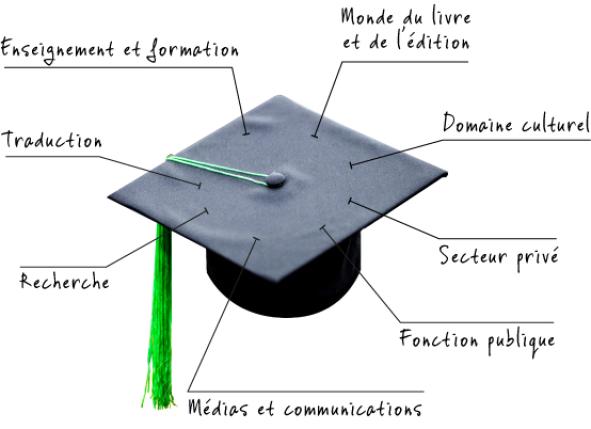
Although graduates in French and Romance languages and literature often go on to become French teachers, they can apply their skills in many other professional fields, some of which may be unexpected.
Teaching and Training
Many Romance language specialists share their expertise and passion for French language and literature with secondary school students. But they also work in other educational settings with diverse audiences: for example, they become teachers of French as a foreign language, Spanish, or Italian, or trainers in communication or literacy. They can be found in higher education institutions, private language centers, continuing education organizations, associations focused on socio-professional integration, or sometimes within certain large companies.
Under bilateral agreements concluded by the Wallonia-Brussels Federation, the WBI (Wallonia-Brussels International, the public administration responsible for international relations) coordinates a network of French language instructors in several European countries and even in Louisiana. Dozens of young Romance language students thus spend a few years abroad as French language and literature assistants at a university or a school for translators and interpreters, as instructors at bilingual high schools, or as French language assistants at secondary schools, helping to promote Belgian French culture in the broadest sense (literature, history, institutional system, etc.).
Cultural Sector
The full range of book-related professions is open to Romance language and literature graduates, from proofreading to publishing house management, including literary promotion and translation. These professions are practiced within publishing houses, libraries, bookstores, documentation centers, or as freelancers. Thanks to their training, which covers major artistic movements, some Romance studies graduates manage cultural projects in institutions such as cultural centers and theaters…
My mission is to bring young audiences to the Royal Opera of Wallonia, a role in which I draw on my previous experience as a teacher. I organize workshops and tours for children, prepare educational resources for teachers, and promote our activities… I enjoy staying connected to the arts, a passion that dates back to my studies in Romance languages.
Florent
I have been working for several years at an international scientific publishing house. As a production manager, I was responsible for the process from manuscript receipt to printing. Today, I manage our Brussels headquarters. In addition to managing the company in the strict sense, I seek out new projects and create and develop collections. Being a publisher is not just about reading manuscripts. A photographic perspective is usually preferred because the text is viewed as an object to be processed, finalized, and published… Being able to combine social interaction with management tasks while working on the text—in short, participating in the development of a publishing project—is fascinating.
Emilie
Media and Communication
An openness to the socio-economic world or a specialization in a particular cultural field can enable Romance language and literature graduates to apply their skills in the media (television, print media, etc.). Many of our graduates are now journalists, literary critics, or editors at corporate publications. Some work in roles directly related to communication: press officers, project managers in advertising, and more.
I’m an account executive at a large advertising agency. My job is to serve as the liaison between clients and our agency. I have to make sure the project runs smoothly. Multilingualism is an asset when working with a more diverse and larger client base.
David
Research
After graduation, some Romance language and literature specialists pursue research, often combined with teaching duties, in Belgium and sometimes abroad. Universities and public funding bodies (e.g., the FNRS) may provide funding for doctoral studies. Those with a doctorate in philosophy and literature then have the opportunity to teach at the university level. Research conducted by Romance studies scholars focuses on the history of French literature, comparative arts, the pedagogy of Romance languages, language…
Building a Social Life
When it comes to landing a first job, a candidate’s personality is often just as important as their university degree, which is why it’s important to keep your curiosity alive throughout your studies and build a rich social life, for example by getting involved in community organizations. Young Romance language and literature students should expect a career path that can be winding at times, especially in the early years…
But it is often through these detours that creative, curious individuals and those driven by an entrepreneurial spirit will discover the profession that will inspire them. Some Romance language and literature graduates continue their studies with further training (in communication, languages, computer science, management, etc.), which can facilitate their entry into specialized fields of work.