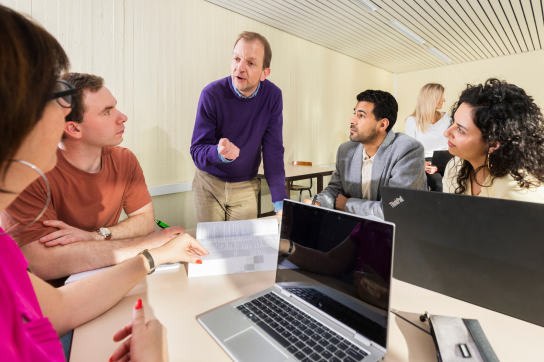
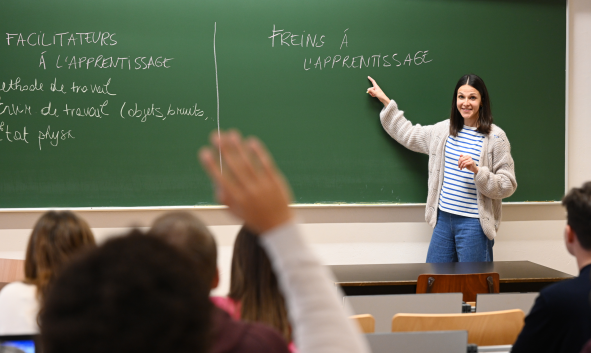
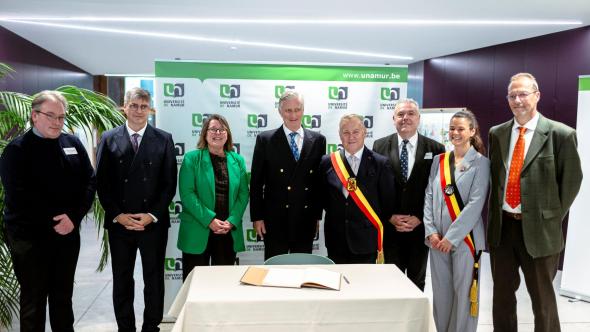
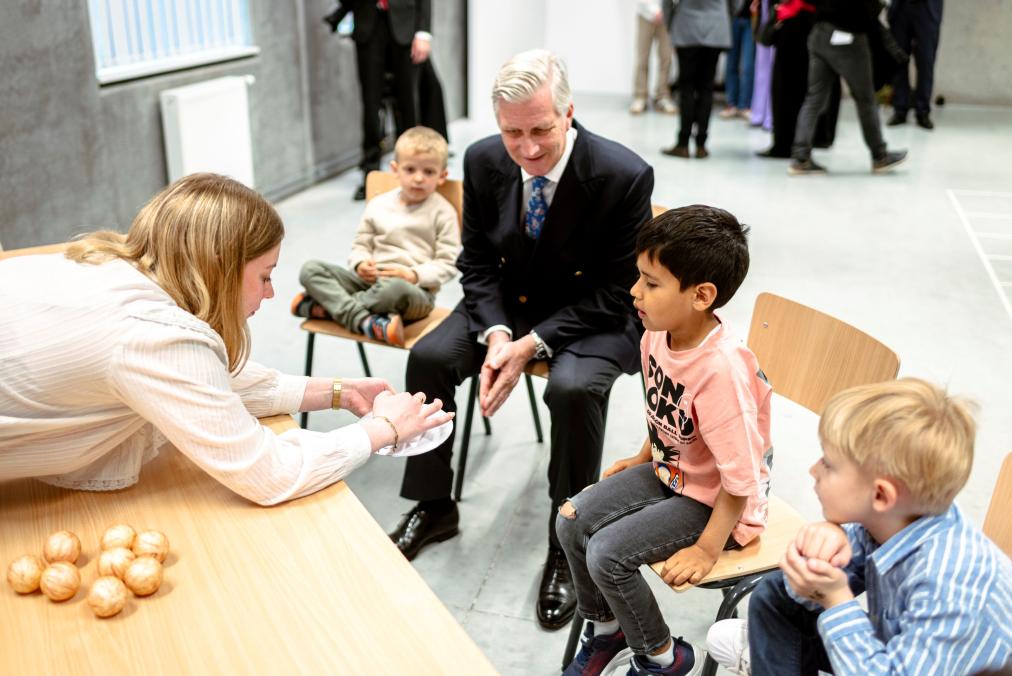
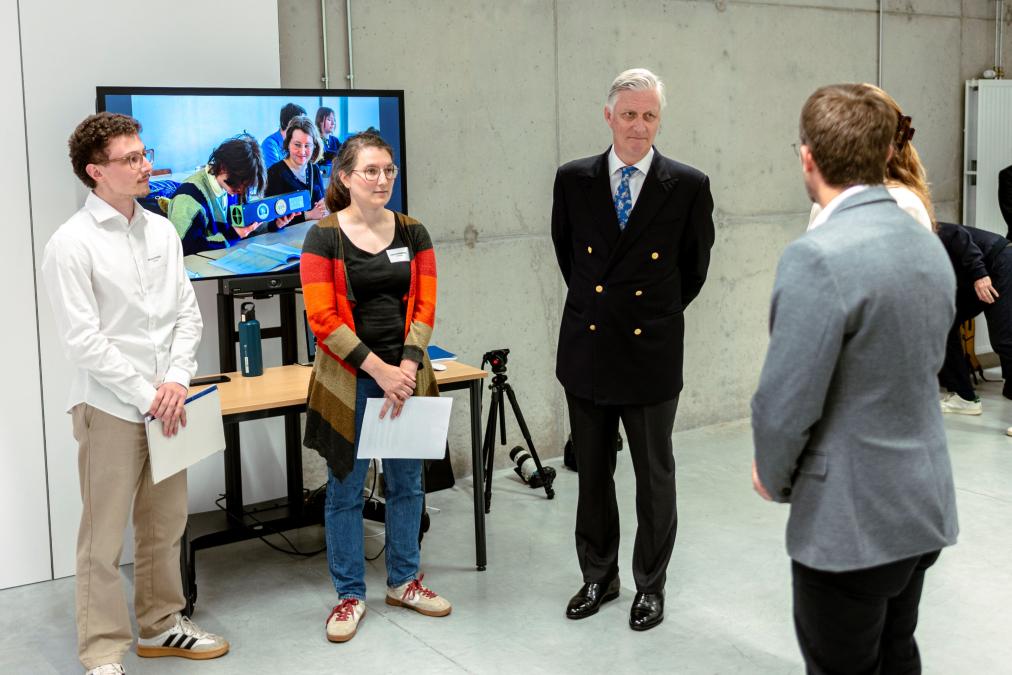
The Faculty of Education and Training Sciences (FaSEF) is designed to host teacher training programs as part of the reform of initial teacher training. It brings together researchers and educationalists to promote teacher training and support, as well as research in the educational sciences.
Spotlight
News
University and democracy: a living, sometimes threatened, link
Trust of traditional political institutions and elected representatives, rise of authoritarian logics, definition of public services... Democracy today seems to be going through a turbulent zone. What role does the university play in this context? To shed light on this question, we interviewed four researchers from different disciplines: educationalist Sephora Boucenna, philosopher Louis Carré, political scientist Vincent Jacquet and legal scholar Aline Nardi. Their contrasting views sketch out the contours of an issue that is more topical than ever: thinking about and defending the link between university and democracy.
Democracy is by no means a fixed concept. It is the subject of debate, especially today. Louis Carré, Director of the Department of Philosophy and member of the Espace philosophique de Namur (Institut ESPHIN), proposes a three-dimensional definition: a political regime, a state of law and a way of forming society.
.The concept of democracy: between people power and centralization
"Etymologically, democracy is a political regime that consists in giving power to the people," he reminds us. "Our Western democracies today are based on the idea that the people are sovereign, without governing directly. From this arises a tension between ideal democracy and real democracy."Vincent Jacquet, professor in the Department of Social, Political and Communication Sciences and president of the Transitions Institute supports the point: "Democracy is an ideal of citizen self-government, but it is in tension with more centralizing, authoritarian logics. [...] Our political systems are crisscrossed by these different tensions, with both authoritarian logics increasingly present, including in our own country, and logics of participation that are sometimes accompanied by a great deal of hope and disappointment too."
The second pillar according to Louis Carré: the rule of law. Democracy guarantees the fundamental rights of all citizens through the constitution. But here again, beware of paradoxes: "One could indeed imagine laws passed by a majority of representatives or by a referendum, but which contravene fundamental rights" the philosopher stresses. Democracy cannot therefore be summed up by the majority principle alone.
Finally, democracy is also a way of forming society. It is based on real pluralism: diversity of opinions, beliefs and values. "This presupposes the existence of a relatively autonomous public space in the face of the power in place, which at times challenges the decisions taken by the governments that have been elected,"insists Louis Carré.
As such, citizens' distrust of politics is not necessarily a symptom of democratic crisis. It may even be a sign of its vitality, as Vincent Jacquet explains:"The fact that citizens are critical of their government is not necessarily negative because, in a democracy, citizens must be able to control the actions of those in power."
Training the governors... and the governed
In this context, what is the university's responsibility? Louis Carré begins by reminding us of a simple fact: a large proportion of our elected representatives have passed through university benches. But its teaching mission doesn't stop there. "It's about training enlightened citizens, not just rulers. Universities must offer quality higher education, open to as many people as possible", he asserts.
"Democracy does indeed presuppose citizens capable of debating, reflecting, problematizing issues", adds Sephora Boucenna, Dean of the Faculty of Education and Training Sciences and member of UNamur's Institut de Recherches en Didactiques et Éducation (IRDENA). It's all about training reflective minds, capable of questioning their times.
Training reflective teachers for critical citizens
Universities also train those who, tomorrow, will educate future generations: teachers. And here again, democracy is at stake.
"Our mission is to train reflective teachers who, in turn, will teach their students to think critically"insists Sephora Boucenna. This requires in-depth work on analyzing practices, collective construction and learning to debate, from initial teacher training through to in-service training.
Producing and disseminating knowledge... in complete independence
In addition to teaching, universities also have a research and social service mission. It produces knowledge that can enlighten public policy, but also question it. This critical function presupposes real independence from politics. "To analyze democratic mechanisms with lucidity, including those that governments put in place, the university must retain its freedom of research and speech," insists Vincent Jacquet.
Louis Carré goes further: "Like the press, the university is a form of counter-power in the public space". He also points out that "there is a confusion between freedom of opinion and academic freedom. Academic knowledge goes through a series of verification, experimentation and discussion procedures within the scientific community. This gives it a robustness that is not that of an opinion, a value, a belief."
This critical function of the university presupposes strong independence. In Belgium, however, university funding is largely a matter for the political authorities. "Celane must not mean being placed under tutelage", warns Louis Carré. "Conducting critical research that doesn't satisfy short-term sponsors requires independence, including in terms of resources. We need a large number of researchers who can analyze different types of dynamics. The more we cut research funding, as is the case today, the fewer researchers we'll have and therefore the less capacity for independent analysis and diversity of perspectives, insists Vincent Jacquet.
The "Université en colère" movement, recently launched within the universities of the Wallonia-Brussels Federation, intends to denounce the effects of definancement. Its representatives are calling for "guarantee the conditions for the development of an open, independent, quality university accessible to the greatest number. Faced with the social, economic and political challenges of our time, and because other choices for society, and therefore budgets, are possible, it is more essential than ever to strengthen the institutions and players at the heart of knowledge production."
Between vigilance and commitment: a link to be reinvented
Democracy is therefore not limited to elections or institutions. It is based on collective vigilance, carried by citizens, knowledge... and the places where this knowledge is built. In this respect, universities are an essential link in the chain of democratic vitality. Provided it remains independent, accessible and open to society.
"Democracy is not just a matter of institutions. It's about citizens who bring it to life and organize themselves to assert their perspectives at different times", insists Vincent Jacquet. A clear invitation not to remain a spectator, but to participate, with lucidity and exigency, in the construction of a common democratic future.
On the same subject
- Artificial intelligence, a danger for democracy?
An academic year focused on democracy
Find the speech given by Rectrice Annick Castiaux at the 2025-2026 Academic Back-to-School Ceremony.
Cet article est tiré de la rubrique "Le jour où" du magazine Omalius #38 (Septembre 2025).
The Department of Physics welcomes a delegation from CERN
In May 2025, the Department of Physics welcomed two special visitors: Serge Mathot and François Briard from Namur, both alumni of UNamur and members of CERN. Several activities were on the program, ranging from a visit to the particle accelerator, to science popularization and thematic seminars, particularly in heritage sciences. The aim? To identify areas or activities in which UNamur and CERN could strengthen their collaboration.
In the picture, from left to right: (top) Pierre Louette, Director of the Physics Department; François Briard, Head of the Science Portal Group (CERN); Julien Colaux, IBA specialist, physics researcher; Boris Hespeels, biology researcher; Alexandre Mayer, physics researcher; Anne-Catherine Heuskin, physics and biophysics researcher. (bottom) André Füzfa, astrophysicist and mathematics researcher; Serge Mathot, Applied Physicist (CERN) and Michaël Lobet, physics researcher.
The love affair between CERN and UNamur goes back a long way. CERN's accelerator complex and experimental program are very different and much larger than those of UNamur's Physics Department, but the fields in which the two institutions work have much in common.
In addition, both guests have a personal history with UNamur. The Physics Department was pleased to welcome Serge Mathot, Referent Applied Physicist (CERN) and alumni of the UNamur Physics Department (1992), as well as François Briard, Group Leader Science Portal (CERN), and alumni of the UNamur Faculty of Computer Science (1994).
The activities began with a meeting between the guests, Rector Annick Castiaux, Vice-Rector for Research Carine Michiels, Physics Department Director Pierre Louette and several other members of the Physics and Biology Department. After a general presentation of the University, the participants pointed out the missions shared by both institutions: research and the transfer of technology and knowledge, service to society, scientific popularization and education and training.
.
Focus on meetings
Physics lunch - CERN presentation
The physics lunch is the monthly meeting between students and members of the physics department and a professional, alumni or not, coming to explain his or her background and what he or she does on a daily basis as a physicist.
During this meeting, attended by around 80 people, François Briard and Serge Mathot presented CERN, the world's largest laboratory for particle physics. CERN's mission is to understand the most elementary particles and the laws of our universe.
At the end of the seminar, the students came away with stars in their eyes. Indeed, opportunities for internships or even first jobs at CERN are possible for physicists but also in many other fields.
Your physics training at UNamur is your best ticket to a job at CERN. It's more than just a degree in particle physics!
Some internship programs at CERN are particularly well suited to the needs of young Belgian students.
The vast majority of physicists working with CERN (over 13,000) are in fact sent to CERN for varying periods of time by their employing national research institutes. CERN offers an exceptional opportunity to develop international experience under excellent conditions, in an environment that is unique in the world! What an inspiration for our young students!
Visit of the ALTAÏS and SIAM facilities
Capable of generating ion beams consisting of any stable element with energies of up to 16 Mega electron-Volt (MeV), the ALTAÏS particle accelerator is used in various fields of fundamental and applied research, notably through industrial partnerships. CERN's largest current linear accelerator can produce particle beams of up to 160 MeV.
Meeting with members of the ARC PHOENIX project, complemented by a heritage science seminar given by Serge Mathot.
The projet d'Action Recherche Concertée (ARC) PHOENIX aims to renew our understanding of medieval parchments and ancient coins. Artificial intelligence will be exploited to analyze the data generated by material characterization.
This joint study between the Department of Physics and the Namur Institute of Structured Matter (NISM) and the Department of History and the Institut Patrimoines, Transmissions, Héritages (PaTHs) will address questions relating to the production chain and use of these objects and materials in past societies.
At the same time, Serge Mathot presented a seminar in heritage science attended by some 50 people. In particular, he presented his research and the brand-new ELISA accelerator: a miniaturized gas pedal capable of delivering a 2 MeV proton beam used to perform real measurements at the Science Portal.
Meeting on science popularization
Having the opportunity to exchange views with François Briard, Group Leader of the CERN Science Portal is a rare opportunity. Comparing outreach activities has opened up new avenues, discovering and sharing approaches, assessing what works and what doesn't, depending on the target audience. A highly satisfying enrichment for the members present from Confluent des Savoirs (CDS), the University of Namur's research outreach and dissemination service.
The CERN Science Portal is a place where you can explore CERN and science through authentic and innovative experiences: immersive multimedia exhibitions, hands-on lab workshops, science shows, events combining science and culture, prototyping workshops on the theme of innovation, tours of CERN sites, all accompanied by CERN staff.
BD Physix - Energy
Teachers André Füzfa and Michaël Lobet were able to present the comic strip project created with author Jean-Marc Dubois.
The theme? Energy!
What could be more natural than to talk about it with François Briard, chief popularizer at CERN, who is interested in this popularization project in a medium accessible to people aged 7 to 77!
Meeting on the theme of biophysics
Professor Anne-Catherine Heuskin and Dr. Boris Hespeels are currently working on the BEBLOB project, a Belspo project with ESA support, as part of the UNIVERSEH (European Space University for Earth and Humanity) alliance. They are particularly interested in its astonishing ability to withstand high doses of radiation.
Anne-Catherine Heuskin also works in radiobiology. Particles are used to irradiate cancerous cells in order to destroy their genetic material and prevent them from proliferating: this is the basis of radiotherapy and proton therapy.
Meeting with FaSEF regarding teacher training opportunities.
The meeting confirmed the willingness of FaSEF and UNamur to get involved in coordinating the Belgian National Teacher Programme in French-speaking Belgium, which CERN intends to relaunch in 2026. Consideration was also given to other avenues for teacher training, such as CERN's forthcoming involvement in the "Salle des Pros", the training venue for the various players involved in teacher training at UNamur.
.A visit to TRAKK
The TRAKK is Namur's creative hub supported by 3 complementary partners in the field: BEP, KIKK, and UNamur. In addition to the venue, François Briard was able to visit the ProtoLab , which bridges the gap between ideas and industry by being a decentralized research and development hub accessible to SMEs and project leaders by offering advanced support in prototyping products or services.
Guests at CERN
François Briard - CERN Science Portal Group Leader, UNamur alumni 1994
Specialities:
- Information systems, administrative applications and databases (Oracle)
- Communications for the general public
- Visitor reception logistics
- Event organization for up to 80,000 participants.
Graduating in law and information technology management (DGTIC) in 1994 after his bachelor's and master's degrees in computer science in 1993, François Briard works at CERN, the European Organization for Nuclear Research in Geneva, the world's largest particle physics laboratory.
During his school career, which was 100% at UNamur, he was vice-president of the Régionale namuroise and student delegate during his years as a candidate in economic and social sciences, computer science option.
Thanks to the multidisciplinary training provided at UNamur, he was able to seize several opportunities to redirect his career at CERN, where he was an information systems engineer from 1994 and then, from 2014, redirected his career until he became Group Leader of the Science Portal, which is CERN's general public communications center.
Serge Mathot - Referent Applied Physicist at CERN, UNamur alumni 1992
His specialties
- Ion Beam Analysis (IBA)
- Metallurgy, vacuum brazing
- Radio-Frequency Quadrupole (RFQ) linacs, ion sources
Serge Mathot obtained his doctorate in applied sciences from UNamur in 1992, following his bachelor's degree in physical sciences in 1985.
He then carried out a post-doctorate at the Joint Research Center (EU science hub) in Geel, which aims to bring together multidisciplinary skills to develop new measurement methods and tools such as reference materials.
He perfected his expertise in physical metallurgy before joining CERN in 1995 as a Referent Applied Physicist. He has worked on numerous research projects (CLOUD, MACHINA, ELISA...) and developed numerous parts for the manufacture of CERN's gas pedals.
It's a great pleasure to meet him.CERN
CERN, the European Organization for Nuclear Research, is one of the world's largest and most prestigious scientific laboratories. Its vocation is fundamental physics, the discovery of the constituents and laws of the Universe. It uses highly complex scientific instruments to probe the ultimate constituents of matter: the fundamental particles. By studying what happens when these particles collide, physicists understand the laws of Nature.
The instruments used at CERN are particle gas pedals and detectors. Gas pedals carry beams of particles at high energies to collide with other beams or fixed targets. Detectors observe and record the results of these collisions.
Founded in 1954, CERN is located on either side of the French-Swiss border, near Geneva. It was one of the first organizations on a European scale and today has 25 member states, including Belgium.
Physics programs at UNamur
From the infinitely small to the infinitely large, from elementary particles to galaxies, are you thirsty to understand the whys and wherefores of the natural phenomena you observe? Physics answers all your questions.
Raise awareness among future compulsory school teachers of the need to integrate sustainable development objectives into their courses
The university has a duty to set an example in terms of sustainable development, in all three of its dimensions: economic, social and environmental. Sustainable "in form" through the way it manages its infrastructures and assets, and sustainable "in substance" through its commitment to research and teaching activities, in order to actively contribute to the environmental transition. All in line with the United Nations' Sustainable Development Goals (SDGs)
.
The "Sustainable Campus" objective in both content and form is part of UNamur's Univers2025 strategic plan. With this in mind, teachers at the Faculté des Sciences de l'éducation et de la formation (FaSEF) organized the first "Foire aux associations ". An activity linked to the course "Enseigner en interdisciplinarité : l'exemple du développement durable", it is aimed at students in Bloc2 en enseignement Section 3 (future teachers of a discipline for students in the last third of the Tronc Commun, from 5th primary to 3rd secondary) in co-graduation with Henallux.
On March 18 and 19, 2025, some 50 students took part in the 2 half-days organized and were able to explore various experiential methods proposed by the associations and the course's teaching team comprising Julie Dagnely, Virginie Meyer and teachers Charlotte Dejaegher and Cédric Vanhoolandt.
Towards sustainable education
This 1st Association Fair has a dual objective for future teachers:
- Use the experiential method to concretize actions to be implemented in teaching activities;
- Analyze and use the experienced workshops to build their future courses with greater integration of the SDGs.
When asked about their feelings, students who took part in the workshops enjoyed the experience. Generally speaking, they emphasized the value of an active approach to learning, which facilitates memorization and inspires them in turn to design engaging activities for their future students. Many also noted the relevance of interventions led by associations rooted in concrete actions in the field. Through games, testimonials and real-life situations, these workshops sparked reflection and awareness.
The diversity of reactions shows how important it is to offer a sufficiently varied range of activities to enable everyone to find their bearings and nurture their representations. These workshops thus provide interesting avenues for thinking about didactic transposition adapted to different audiences. In fact, this is the objective for the rest of the course: that these students themselves become levers for raising awareness of the transition. Now it's their turn to appropriate the tools and mobilize them in their future professional field.
.
For next year, we hope to organize a new fair that could include future teacher students from other sections (e.g. sections 4 and 5, ex-finalités didactiques and agrégés de l'enseignement secondaire supérieur), or even other faculties, thereby increasing the impact of the initiative. All with the concrete aim of experimenting with interdisciplinarity between bachelor students.
.
Alongside other initiatives such as the Journées d'Éducation au Développement Durable et à la Transition (JEDDT), the course "Enseigner en interdisciplinarité : l'exemple du développement durable" is also one of the courses offered for UNamur as part of the "AGIR dans l'enseignement supérieur namurois" action-research project supported by the Vice-rectorat à la formation et au développement durable. This project is financed by ARES with a view to the creation of a Chair in sustainable development at FWB higher education level, and led by Cédric Vanhoolandt and Charlotte Dejaegher, also researchers in educational sciences at the IRDENa Institute. Other pilot courses have also been identified in each establishment of the Pôle académique de Namur, to ensure that teachers become ambassadors for sustainable development among students.
Focus on the associations present
L'asbl COREN, represented by Céline Grandjean, is active in the field of the environment and sustainable development, mainly in schools. It supports schools in setting up environmental management projects and in their efforts to obtain a "sustainable school" label.
L'asbl EFDD, represented by Justine Henning, supports schools (secondary) and higher education establishments in their transition towards more sustainable development, thanks to educational tools developed with the support of Wallonia.
The ALIMEN'TERRE game, from the EFDD network, was presented by Isabelle Picquot. The aim of this game is to compose an original menu (starter, main course, dessert, drink) from different foods while respecting a set meal context. But be careful not to exceed the ecological footprint that's sustainable for the planet! The aim is to get participants to weave a link between their food choices and their impact on the environment, to identify the elements that influence the ecological footprint and to modify their food choices.
Guillaume Bernard is a PhD student in the Biology Department, under the supervision of Arnaud Vervoort (IRDENa researcher). His thesis focuses on the impact of humans on ecosystems. He interviews students before and after class, to get an overview of their knowledge of the subject from different angles. At the same time, he questioned secondary school teachers, 40% of whom stated that they did not address this topic in transitional teaching due to lack of time. Then, through classroom observations, he attempts to understand what worldviews are conveyed, and how they might be addressed in a mobilizing way.
Network of associations active in Environmental Education (ErE) in Wallonia and Brussels, the Réseau Idée, represented by Laëtitia Fernandez, offers teachers, facilitators, trainers, eco-counsellors, parents, citizens... clear, centralized information on environmental education: existing teaching tools, environmental education organizations active in Wallonia and Brussels, their activities (events, training courses, courses, walks, etc.), teaching approaches, etc.
.Jean-Pierre Grootaerd represented "Stars Shine for Everyone", an association that postulates that everyone should have the opportunity to admire the sky with a telescope. It works for quality education for all, regardless of gender, using astronomy. Thanks to donations and the expertise of UGent, it has distributed do-it-yourself telescopes in over 145 countries.
FUCID (Forum Universitaire pour la Coopération Internationale au Développement) was represented by Maxime Giegas.The NGO, based at the University of Namur, has a mission to contribute to raising awareness and training responsible actors committed to promoting a more just and united world, where the values of freedom, democracy, tolerance and peace are deployed.
Interested in becoming a teacher?
We'll tell you all about it on the pages of the Faculty of Education and Training (FaSEF)!
Initial teacher training (FIE)
The implementation of the reform of initial teacher training (RFIE) began at the start of the 2023-2024 academic year. In the so-called S1-S2-S3 sections (for teaching kindergarten to lower secondary), studies have been extended from 3 to 4 years to bring the diploma in line with most European countries. Thanks to close collaboration between Universities and Hautes Écoles, the aim of this reform of initial teacher training is to enable the acquisition of university-level skills while reinforcing professional practice.
Marc Romainville: Learning to think right by discovering why we think wrong
In a digital context where fake news and other "alternative truths" abound and spread frantically, how can we educate to doubt? That's the question answered by pedagogy expert Professor Marc Romainville. He shows how schools must appropriate this central mission to shape tomorrow's citizen.
What led you to work on education in doubt?
16% of young people believe that the earth is flat. Nearly 50% believe that the best method of getting information is to go online, compared with less than 10% who say they trust school more. These figures are alarming. And even more worrying: they're on the rise. Generally speaking, citizens are credulous about what they discover on the Internet. Learning to doubt is therefore a real challenge. The need is far from new, but today, with the development of digital technology and artificial intelligence, it is even more pressing. With examples like Trump, who doesn't care whether what he says to millions of people is true or false, we need to educate people in this discernment more than ever. Doesn't Trump's victory reflect the failure of the American school system? By teaching young people to think right from school, based on a better understanding of why they think wrong, they will become cautious, critical digital citizens who are aware of the traps laid by the sirens of disinformation.
Do you think schools are not fulfilling this mission?
In part, but not enough. Within French-speaking education in Belgium, there is very clearly an awareness of the urgency and necessity of educating for doubt. In fact, this is one of the major thrusts of the Pacte d'Excellence, which is implementing a series of educational reforms from kindergarten to the end of secondary school. However, education in critical thinking is not sufficiently integrated into curricula. It should be part of every subject, from science to French, mathematics and history. What's more, schools don't know how to implement this learning.
How do you go about it?
This is the subject of my book (1), in which I develop a method for teaching critical thinking for the digital age. At the heart of my proposal is a pedagogy of metacognition, extended to thought processes. The first step is to make students aware of their own "me-thinking" mechanisms, i.e. their spontaneous and sometimes fallacious reasoning. Students must also be made aware of the biases that lead them to be excessively credulous. In other words, when confronted with a piece of information, students need to ask themselves spontaneously, but reasonably: "Is it right? How can I tell if it's right or wrong? At present, the education system has too much of a tendency to do this for the student, to tell him or her what is true and what is not. Yet there are a multitude of fairly simple techniques and activities to be carried out at school that train doubt, when necessary.
(1) "À l'école du doute", Marc Romainville, Presse universitaire de France, 2023
So what's to stop it becoming part of the school curriculum?
Because it takes time, and so we'd have to give up certain program elements in favor of educating people to doubt. But education is an ocean liner. To change direction just a little, you have to put a lot of energy into it. You have to convince a lot of players: politicians, teachers, inspectors, parents, etc. All of this leads to a certain inertia. All this leads to a certain amount of inertia. You can see it in every educational reform: there's a certain slowness in implementing change.
And yet you've worked to implement major educational reforms: so change is possible?
Of course. In recent years, the school, through the Pacte d'excellence reform, has changed its habits. It has adapted even better to the needs of our society. Real progress has been made in digital education, culture and the arts. Or in the introduction of the first reference framework for kindergartens. These are successes that we'll be able to accurately assess with the CEB exams in 2026.
After doubt, what's your next educational project?
Climate change education. This is also a central issue. At UNamur, we are already conducting research on this subject to determine the role of schools in this area. Here too, the need is great and urgent.
CV Express
Marc Romainville is Professor of Education at UNamur. In addition to metacognition and education for critical thinking, his main areas of research concern failure in higher education, student practices and changes in teaching practices at university. In connection with his research, Marc Romainville has also been involved in setting up innovative projects at the frontier between secondary and higher education, such as :
- The REBOND inter-network training course for early school leavers in Namur's higher education system.
- The ‘Passeports pour le bac’ project, aimed at identifying the prerequisites for university courses and measuring students' mastery of them at the start of the year.
- The ‘Transition Tutoring’ project, which uses the Passports to provide specific support for secondary school pupils from disadvantaged backgrounds (funded by the King Baudouin Foundation).
Marc Romainville is also one of the main architects of the Pacte pour un enseignement d'excellence. He was Chairman of the Commission des référentiels et des programmes, appointed by the Fédération Wallonie Bruxelles.
This article is taken from the "The Expert" section of Omalius magazine #35 (December 2024).
University and democracy: a living, sometimes threatened, link
Trust of traditional political institutions and elected representatives, rise of authoritarian logics, definition of public services... Democracy today seems to be going through a turbulent zone. What role does the university play in this context? To shed light on this question, we interviewed four researchers from different disciplines: educationalist Sephora Boucenna, philosopher Louis Carré, political scientist Vincent Jacquet and legal scholar Aline Nardi. Their contrasting views sketch out the contours of an issue that is more topical than ever: thinking about and defending the link between university and democracy.
Democracy is by no means a fixed concept. It is the subject of debate, especially today. Louis Carré, Director of the Department of Philosophy and member of the Espace philosophique de Namur (Institut ESPHIN), proposes a three-dimensional definition: a political regime, a state of law and a way of forming society.
.The concept of democracy: between people power and centralization
"Etymologically, democracy is a political regime that consists in giving power to the people," he reminds us. "Our Western democracies today are based on the idea that the people are sovereign, without governing directly. From this arises a tension between ideal democracy and real democracy."Vincent Jacquet, professor in the Department of Social, Political and Communication Sciences and president of the Transitions Institute supports the point: "Democracy is an ideal of citizen self-government, but it is in tension with more centralizing, authoritarian logics. [...] Our political systems are crisscrossed by these different tensions, with both authoritarian logics increasingly present, including in our own country, and logics of participation that are sometimes accompanied by a great deal of hope and disappointment too."
The second pillar according to Louis Carré: the rule of law. Democracy guarantees the fundamental rights of all citizens through the constitution. But here again, beware of paradoxes: "One could indeed imagine laws passed by a majority of representatives or by a referendum, but which contravene fundamental rights" the philosopher stresses. Democracy cannot therefore be summed up by the majority principle alone.
Finally, democracy is also a way of forming society. It is based on real pluralism: diversity of opinions, beliefs and values. "This presupposes the existence of a relatively autonomous public space in the face of the power in place, which at times challenges the decisions taken by the governments that have been elected,"insists Louis Carré.
As such, citizens' distrust of politics is not necessarily a symptom of democratic crisis. It may even be a sign of its vitality, as Vincent Jacquet explains:"The fact that citizens are critical of their government is not necessarily negative because, in a democracy, citizens must be able to control the actions of those in power."
Training the governors... and the governed
In this context, what is the university's responsibility? Louis Carré begins by reminding us of a simple fact: a large proportion of our elected representatives have passed through university benches. But its teaching mission doesn't stop there. "It's about training enlightened citizens, not just rulers. Universities must offer quality higher education, open to as many people as possible", he asserts.
"Democracy does indeed presuppose citizens capable of debating, reflecting, problematizing issues", adds Sephora Boucenna, Dean of the Faculty of Education and Training Sciences and member of UNamur's Institut de Recherches en Didactiques et Éducation (IRDENA). It's all about training reflective minds, capable of questioning their times.
Training reflective teachers for critical citizens
Universities also train those who, tomorrow, will educate future generations: teachers. And here again, democracy is at stake.
"Our mission is to train reflective teachers who, in turn, will teach their students to think critically"insists Sephora Boucenna. This requires in-depth work on analyzing practices, collective construction and learning to debate, from initial teacher training through to in-service training.
Producing and disseminating knowledge... in complete independence
In addition to teaching, universities also have a research and social service mission. It produces knowledge that can enlighten public policy, but also question it. This critical function presupposes real independence from politics. "To analyze democratic mechanisms with lucidity, including those that governments put in place, the university must retain its freedom of research and speech," insists Vincent Jacquet.
Louis Carré goes further: "Like the press, the university is a form of counter-power in the public space". He also points out that "there is a confusion between freedom of opinion and academic freedom. Academic knowledge goes through a series of verification, experimentation and discussion procedures within the scientific community. This gives it a robustness that is not that of an opinion, a value, a belief."
This critical function of the university presupposes strong independence. In Belgium, however, university funding is largely a matter for the political authorities. "Celane must not mean being placed under tutelage", warns Louis Carré. "Conducting critical research that doesn't satisfy short-term sponsors requires independence, including in terms of resources. We need a large number of researchers who can analyze different types of dynamics. The more we cut research funding, as is the case today, the fewer researchers we'll have and therefore the less capacity for independent analysis and diversity of perspectives, insists Vincent Jacquet.
The "Université en colère" movement, recently launched within the universities of the Wallonia-Brussels Federation, intends to denounce the effects of definancement. Its representatives are calling for "guarantee the conditions for the development of an open, independent, quality university accessible to the greatest number. Faced with the social, economic and political challenges of our time, and because other choices for society, and therefore budgets, are possible, it is more essential than ever to strengthen the institutions and players at the heart of knowledge production."
Between vigilance and commitment: a link to be reinvented
Democracy is therefore not limited to elections or institutions. It is based on collective vigilance, carried by citizens, knowledge... and the places where this knowledge is built. In this respect, universities are an essential link in the chain of democratic vitality. Provided it remains independent, accessible and open to society.
"Democracy is not just a matter of institutions. It's about citizens who bring it to life and organize themselves to assert their perspectives at different times", insists Vincent Jacquet. A clear invitation not to remain a spectator, but to participate, with lucidity and exigency, in the construction of a common democratic future.
On the same subject
- Artificial intelligence, a danger for democracy?
An academic year focused on democracy
Find the speech given by Rectrice Annick Castiaux at the 2025-2026 Academic Back-to-School Ceremony.
Cet article est tiré de la rubrique "Le jour où" du magazine Omalius #38 (Septembre 2025).
The Department of Physics welcomes a delegation from CERN
In May 2025, the Department of Physics welcomed two special visitors: Serge Mathot and François Briard from Namur, both alumni of UNamur and members of CERN. Several activities were on the program, ranging from a visit to the particle accelerator, to science popularization and thematic seminars, particularly in heritage sciences. The aim? To identify areas or activities in which UNamur and CERN could strengthen their collaboration.
In the picture, from left to right: (top) Pierre Louette, Director of the Physics Department; François Briard, Head of the Science Portal Group (CERN); Julien Colaux, IBA specialist, physics researcher; Boris Hespeels, biology researcher; Alexandre Mayer, physics researcher; Anne-Catherine Heuskin, physics and biophysics researcher. (bottom) André Füzfa, astrophysicist and mathematics researcher; Serge Mathot, Applied Physicist (CERN) and Michaël Lobet, physics researcher.
The love affair between CERN and UNamur goes back a long way. CERN's accelerator complex and experimental program are very different and much larger than those of UNamur's Physics Department, but the fields in which the two institutions work have much in common.
In addition, both guests have a personal history with UNamur. The Physics Department was pleased to welcome Serge Mathot, Referent Applied Physicist (CERN) and alumni of the UNamur Physics Department (1992), as well as François Briard, Group Leader Science Portal (CERN), and alumni of the UNamur Faculty of Computer Science (1994).
The activities began with a meeting between the guests, Rector Annick Castiaux, Vice-Rector for Research Carine Michiels, Physics Department Director Pierre Louette and several other members of the Physics and Biology Department. After a general presentation of the University, the participants pointed out the missions shared by both institutions: research and the transfer of technology and knowledge, service to society, scientific popularization and education and training.
.
Focus on meetings
Physics lunch - CERN presentation
The physics lunch is the monthly meeting between students and members of the physics department and a professional, alumni or not, coming to explain his or her background and what he or she does on a daily basis as a physicist.
During this meeting, attended by around 80 people, François Briard and Serge Mathot presented CERN, the world's largest laboratory for particle physics. CERN's mission is to understand the most elementary particles and the laws of our universe.
At the end of the seminar, the students came away with stars in their eyes. Indeed, opportunities for internships or even first jobs at CERN are possible for physicists but also in many other fields.
Your physics training at UNamur is your best ticket to a job at CERN. It's more than just a degree in particle physics!
Some internship programs at CERN are particularly well suited to the needs of young Belgian students.
The vast majority of physicists working with CERN (over 13,000) are in fact sent to CERN for varying periods of time by their employing national research institutes. CERN offers an exceptional opportunity to develop international experience under excellent conditions, in an environment that is unique in the world! What an inspiration for our young students!
Visit of the ALTAÏS and SIAM facilities
Capable of generating ion beams consisting of any stable element with energies of up to 16 Mega electron-Volt (MeV), the ALTAÏS particle accelerator is used in various fields of fundamental and applied research, notably through industrial partnerships. CERN's largest current linear accelerator can produce particle beams of up to 160 MeV.
Meeting with members of the ARC PHOENIX project, complemented by a heritage science seminar given by Serge Mathot.
The projet d'Action Recherche Concertée (ARC) PHOENIX aims to renew our understanding of medieval parchments and ancient coins. Artificial intelligence will be exploited to analyze the data generated by material characterization.
This joint study between the Department of Physics and the Namur Institute of Structured Matter (NISM) and the Department of History and the Institut Patrimoines, Transmissions, Héritages (PaTHs) will address questions relating to the production chain and use of these objects and materials in past societies.
At the same time, Serge Mathot presented a seminar in heritage science attended by some 50 people. In particular, he presented his research and the brand-new ELISA accelerator: a miniaturized gas pedal capable of delivering a 2 MeV proton beam used to perform real measurements at the Science Portal.
Meeting on science popularization
Having the opportunity to exchange views with François Briard, Group Leader of the CERN Science Portal is a rare opportunity. Comparing outreach activities has opened up new avenues, discovering and sharing approaches, assessing what works and what doesn't, depending on the target audience. A highly satisfying enrichment for the members present from Confluent des Savoirs (CDS), the University of Namur's research outreach and dissemination service.
The CERN Science Portal is a place where you can explore CERN and science through authentic and innovative experiences: immersive multimedia exhibitions, hands-on lab workshops, science shows, events combining science and culture, prototyping workshops on the theme of innovation, tours of CERN sites, all accompanied by CERN staff.
BD Physix - Energy
Teachers André Füzfa and Michaël Lobet were able to present the comic strip project created with author Jean-Marc Dubois.
The theme? Energy!
What could be more natural than to talk about it with François Briard, chief popularizer at CERN, who is interested in this popularization project in a medium accessible to people aged 7 to 77!
Meeting on the theme of biophysics
Professor Anne-Catherine Heuskin and Dr. Boris Hespeels are currently working on the BEBLOB project, a Belspo project with ESA support, as part of the UNIVERSEH (European Space University for Earth and Humanity) alliance. They are particularly interested in its astonishing ability to withstand high doses of radiation.
Anne-Catherine Heuskin also works in radiobiology. Particles are used to irradiate cancerous cells in order to destroy their genetic material and prevent them from proliferating: this is the basis of radiotherapy and proton therapy.
Meeting with FaSEF regarding teacher training opportunities.
The meeting confirmed the willingness of FaSEF and UNamur to get involved in coordinating the Belgian National Teacher Programme in French-speaking Belgium, which CERN intends to relaunch in 2026. Consideration was also given to other avenues for teacher training, such as CERN's forthcoming involvement in the "Salle des Pros", the training venue for the various players involved in teacher training at UNamur.
.A visit to TRAKK
The TRAKK is Namur's creative hub supported by 3 complementary partners in the field: BEP, KIKK, and UNamur. In addition to the venue, François Briard was able to visit the ProtoLab , which bridges the gap between ideas and industry by being a decentralized research and development hub accessible to SMEs and project leaders by offering advanced support in prototyping products or services.
Guests at CERN
François Briard - CERN Science Portal Group Leader, UNamur alumni 1994
Specialities:
- Information systems, administrative applications and databases (Oracle)
- Communications for the general public
- Visitor reception logistics
- Event organization for up to 80,000 participants.
Graduating in law and information technology management (DGTIC) in 1994 after his bachelor's and master's degrees in computer science in 1993, François Briard works at CERN, the European Organization for Nuclear Research in Geneva, the world's largest particle physics laboratory.
During his school career, which was 100% at UNamur, he was vice-president of the Régionale namuroise and student delegate during his years as a candidate in economic and social sciences, computer science option.
Thanks to the multidisciplinary training provided at UNamur, he was able to seize several opportunities to redirect his career at CERN, where he was an information systems engineer from 1994 and then, from 2014, redirected his career until he became Group Leader of the Science Portal, which is CERN's general public communications center.
Serge Mathot - Referent Applied Physicist at CERN, UNamur alumni 1992
His specialties
- Ion Beam Analysis (IBA)
- Metallurgy, vacuum brazing
- Radio-Frequency Quadrupole (RFQ) linacs, ion sources
Serge Mathot obtained his doctorate in applied sciences from UNamur in 1992, following his bachelor's degree in physical sciences in 1985.
He then carried out a post-doctorate at the Joint Research Center (EU science hub) in Geel, which aims to bring together multidisciplinary skills to develop new measurement methods and tools such as reference materials.
He perfected his expertise in physical metallurgy before joining CERN in 1995 as a Referent Applied Physicist. He has worked on numerous research projects (CLOUD, MACHINA, ELISA...) and developed numerous parts for the manufacture of CERN's gas pedals.
It's a great pleasure to meet him.CERN
CERN, the European Organization for Nuclear Research, is one of the world's largest and most prestigious scientific laboratories. Its vocation is fundamental physics, the discovery of the constituents and laws of the Universe. It uses highly complex scientific instruments to probe the ultimate constituents of matter: the fundamental particles. By studying what happens when these particles collide, physicists understand the laws of Nature.
The instruments used at CERN are particle gas pedals and detectors. Gas pedals carry beams of particles at high energies to collide with other beams or fixed targets. Detectors observe and record the results of these collisions.
Founded in 1954, CERN is located on either side of the French-Swiss border, near Geneva. It was one of the first organizations on a European scale and today has 25 member states, including Belgium.
Physics programs at UNamur
From the infinitely small to the infinitely large, from elementary particles to galaxies, are you thirsty to understand the whys and wherefores of the natural phenomena you observe? Physics answers all your questions.
Raise awareness among future compulsory school teachers of the need to integrate sustainable development objectives into their courses
The university has a duty to set an example in terms of sustainable development, in all three of its dimensions: economic, social and environmental. Sustainable "in form" through the way it manages its infrastructures and assets, and sustainable "in substance" through its commitment to research and teaching activities, in order to actively contribute to the environmental transition. All in line with the United Nations' Sustainable Development Goals (SDGs)
.
The "Sustainable Campus" objective in both content and form is part of UNamur's Univers2025 strategic plan. With this in mind, teachers at the Faculté des Sciences de l'éducation et de la formation (FaSEF) organized the first "Foire aux associations ". An activity linked to the course "Enseigner en interdisciplinarité : l'exemple du développement durable", it is aimed at students in Bloc2 en enseignement Section 3 (future teachers of a discipline for students in the last third of the Tronc Commun, from 5th primary to 3rd secondary) in co-graduation with Henallux.
On March 18 and 19, 2025, some 50 students took part in the 2 half-days organized and were able to explore various experiential methods proposed by the associations and the course's teaching team comprising Julie Dagnely, Virginie Meyer and teachers Charlotte Dejaegher and Cédric Vanhoolandt.
Towards sustainable education
This 1st Association Fair has a dual objective for future teachers:
- Use the experiential method to concretize actions to be implemented in teaching activities;
- Analyze and use the experienced workshops to build their future courses with greater integration of the SDGs.
When asked about their feelings, students who took part in the workshops enjoyed the experience. Generally speaking, they emphasized the value of an active approach to learning, which facilitates memorization and inspires them in turn to design engaging activities for their future students. Many also noted the relevance of interventions led by associations rooted in concrete actions in the field. Through games, testimonials and real-life situations, these workshops sparked reflection and awareness.
The diversity of reactions shows how important it is to offer a sufficiently varied range of activities to enable everyone to find their bearings and nurture their representations. These workshops thus provide interesting avenues for thinking about didactic transposition adapted to different audiences. In fact, this is the objective for the rest of the course: that these students themselves become levers for raising awareness of the transition. Now it's their turn to appropriate the tools and mobilize them in their future professional field.
.
For next year, we hope to organize a new fair that could include future teacher students from other sections (e.g. sections 4 and 5, ex-finalités didactiques and agrégés de l'enseignement secondaire supérieur), or even other faculties, thereby increasing the impact of the initiative. All with the concrete aim of experimenting with interdisciplinarity between bachelor students.
.
Alongside other initiatives such as the Journées d'Éducation au Développement Durable et à la Transition (JEDDT), the course "Enseigner en interdisciplinarité : l'exemple du développement durable" is also one of the courses offered for UNamur as part of the "AGIR dans l'enseignement supérieur namurois" action-research project supported by the Vice-rectorat à la formation et au développement durable. This project is financed by ARES with a view to the creation of a Chair in sustainable development at FWB higher education level, and led by Cédric Vanhoolandt and Charlotte Dejaegher, also researchers in educational sciences at the IRDENa Institute. Other pilot courses have also been identified in each establishment of the Pôle académique de Namur, to ensure that teachers become ambassadors for sustainable development among students.
Focus on the associations present
L'asbl COREN, represented by Céline Grandjean, is active in the field of the environment and sustainable development, mainly in schools. It supports schools in setting up environmental management projects and in their efforts to obtain a "sustainable school" label.
L'asbl EFDD, represented by Justine Henning, supports schools (secondary) and higher education establishments in their transition towards more sustainable development, thanks to educational tools developed with the support of Wallonia.
The ALIMEN'TERRE game, from the EFDD network, was presented by Isabelle Picquot. The aim of this game is to compose an original menu (starter, main course, dessert, drink) from different foods while respecting a set meal context. But be careful not to exceed the ecological footprint that's sustainable for the planet! The aim is to get participants to weave a link between their food choices and their impact on the environment, to identify the elements that influence the ecological footprint and to modify their food choices.
Guillaume Bernard is a PhD student in the Biology Department, under the supervision of Arnaud Vervoort (IRDENa researcher). His thesis focuses on the impact of humans on ecosystems. He interviews students before and after class, to get an overview of their knowledge of the subject from different angles. At the same time, he questioned secondary school teachers, 40% of whom stated that they did not address this topic in transitional teaching due to lack of time. Then, through classroom observations, he attempts to understand what worldviews are conveyed, and how they might be addressed in a mobilizing way.
Network of associations active in Environmental Education (ErE) in Wallonia and Brussels, the Réseau Idée, represented by Laëtitia Fernandez, offers teachers, facilitators, trainers, eco-counsellors, parents, citizens... clear, centralized information on environmental education: existing teaching tools, environmental education organizations active in Wallonia and Brussels, their activities (events, training courses, courses, walks, etc.), teaching approaches, etc.
.Jean-Pierre Grootaerd represented "Stars Shine for Everyone", an association that postulates that everyone should have the opportunity to admire the sky with a telescope. It works for quality education for all, regardless of gender, using astronomy. Thanks to donations and the expertise of UGent, it has distributed do-it-yourself telescopes in over 145 countries.
FUCID (Forum Universitaire pour la Coopération Internationale au Développement) was represented by Maxime Giegas.The NGO, based at the University of Namur, has a mission to contribute to raising awareness and training responsible actors committed to promoting a more just and united world, where the values of freedom, democracy, tolerance and peace are deployed.
Interested in becoming a teacher?
We'll tell you all about it on the pages of the Faculty of Education and Training (FaSEF)!
Initial teacher training (FIE)
The implementation of the reform of initial teacher training (RFIE) began at the start of the 2023-2024 academic year. In the so-called S1-S2-S3 sections (for teaching kindergarten to lower secondary), studies have been extended from 3 to 4 years to bring the diploma in line with most European countries. Thanks to close collaboration between Universities and Hautes Écoles, the aim of this reform of initial teacher training is to enable the acquisition of university-level skills while reinforcing professional practice.
Marc Romainville: Learning to think right by discovering why we think wrong
In a digital context where fake news and other "alternative truths" abound and spread frantically, how can we educate to doubt? That's the question answered by pedagogy expert Professor Marc Romainville. He shows how schools must appropriate this central mission to shape tomorrow's citizen.
What led you to work on education in doubt?
16% of young people believe that the earth is flat. Nearly 50% believe that the best method of getting information is to go online, compared with less than 10% who say they trust school more. These figures are alarming. And even more worrying: they're on the rise. Generally speaking, citizens are credulous about what they discover on the Internet. Learning to doubt is therefore a real challenge. The need is far from new, but today, with the development of digital technology and artificial intelligence, it is even more pressing. With examples like Trump, who doesn't care whether what he says to millions of people is true or false, we need to educate people in this discernment more than ever. Doesn't Trump's victory reflect the failure of the American school system? By teaching young people to think right from school, based on a better understanding of why they think wrong, they will become cautious, critical digital citizens who are aware of the traps laid by the sirens of disinformation.
Do you think schools are not fulfilling this mission?
In part, but not enough. Within French-speaking education in Belgium, there is very clearly an awareness of the urgency and necessity of educating for doubt. In fact, this is one of the major thrusts of the Pacte d'Excellence, which is implementing a series of educational reforms from kindergarten to the end of secondary school. However, education in critical thinking is not sufficiently integrated into curricula. It should be part of every subject, from science to French, mathematics and history. What's more, schools don't know how to implement this learning.
How do you go about it?
This is the subject of my book (1), in which I develop a method for teaching critical thinking for the digital age. At the heart of my proposal is a pedagogy of metacognition, extended to thought processes. The first step is to make students aware of their own "me-thinking" mechanisms, i.e. their spontaneous and sometimes fallacious reasoning. Students must also be made aware of the biases that lead them to be excessively credulous. In other words, when confronted with a piece of information, students need to ask themselves spontaneously, but reasonably: "Is it right? How can I tell if it's right or wrong? At present, the education system has too much of a tendency to do this for the student, to tell him or her what is true and what is not. Yet there are a multitude of fairly simple techniques and activities to be carried out at school that train doubt, when necessary.
(1) "À l'école du doute", Marc Romainville, Presse universitaire de France, 2023
So what's to stop it becoming part of the school curriculum?
Because it takes time, and so we'd have to give up certain program elements in favor of educating people to doubt. But education is an ocean liner. To change direction just a little, you have to put a lot of energy into it. You have to convince a lot of players: politicians, teachers, inspectors, parents, etc. All of this leads to a certain inertia. All this leads to a certain amount of inertia. You can see it in every educational reform: there's a certain slowness in implementing change.
And yet you've worked to implement major educational reforms: so change is possible?
Of course. In recent years, the school, through the Pacte d'excellence reform, has changed its habits. It has adapted even better to the needs of our society. Real progress has been made in digital education, culture and the arts. Or in the introduction of the first reference framework for kindergartens. These are successes that we'll be able to accurately assess with the CEB exams in 2026.
After doubt, what's your next educational project?
Climate change education. This is also a central issue. At UNamur, we are already conducting research on this subject to determine the role of schools in this area. Here too, the need is great and urgent.
CV Express
Marc Romainville is Professor of Education at UNamur. In addition to metacognition and education for critical thinking, his main areas of research concern failure in higher education, student practices and changes in teaching practices at university. In connection with his research, Marc Romainville has also been involved in setting up innovative projects at the frontier between secondary and higher education, such as :
- The REBOND inter-network training course for early school leavers in Namur's higher education system.
- The ‘Passeports pour le bac’ project, aimed at identifying the prerequisites for university courses and measuring students' mastery of them at the start of the year.
- The ‘Transition Tutoring’ project, which uses the Passports to provide specific support for secondary school pupils from disadvantaged backgrounds (funded by the King Baudouin Foundation).
Marc Romainville is also one of the main architects of the Pacte pour un enseignement d'excellence. He was Chairman of the Commission des référentiels et des programmes, appointed by the Fédération Wallonie Bruxelles.
This article is taken from the "The Expert" section of Omalius magazine #35 (December 2024).
Agenda
Theoretical frameworks in science and mathematics didactics
The seminar will be organized around three talks led by Viviane Durand-Guerrier (Université de Montpellier), Ghislaine Gueudet (Université Paris-Saclay), Nicolas Grenier-Boley (Université de Rouen) and Stéphanie Bridoux (UMONS).
Conceptual field theory and didactic situation theory
Two complementary theories for thinking about and organizing mathematical learning
In the first part of this talk, I'll propose an introductory situation in literal arithmetic (Barallobres & Giroux, 2008) that will enable me to introduce and illustrate the main concepts and methodological tools of the theory of didactic situations developed by Guy Brousseau (Brousseau, 1997; Bessot, 2024). In the second part, I will give a brief presentation of Gérard Vergnaud's theory of conceptual fields (Vergnaud, 1990; Durand-Guerrier and Saby, 2023), then show how this theory helps to shed further light on the introductory situation.
The contributions of the anthropological theory of didactics
The Anthropological Theory of Didactics (TAD, Chevallard, 2001) aims to explain why and how a given knowledge lives in a certain institution, and/or is transformed as it passes from one institution to another. This perspective and some of its evolutions will be presented and illustrated in this talk.
Students' activities and teachers' practices in the mathematics classroom: analysis methodology with Activity Theory
In this talk, we will present the founding assumptions of the Activity Theory framework adapted to the Didactics of Mathematics (TADM, Vandebrouck, 2008), showing how this theory gives importance to fine-grained analyses of mathematical knowledge to appreciate classroom developments. We will then exemplify some of these aspects on the teaching of limits at university (Bridoux and Grenier-Boley, 2024).
Bibliography
Barallobres, G., & Giroux, J. (2008). Environmental deficiencies and regulations in validation situations. N. In Berdnaz, & C. Mary (Eds). L'enseignement des mathématiques face aux défis de l'école et des communautés. Actes du colloque EMF 2006 (CD-ROM). Éditions du CRP https://emf.unige.ch/application/files/1414/5390/4857/EMF2006_GT8_Barallobres.pdf
Bessot, A. (2003). An introduction to the theory of didactic situations. Cahiers du laboratoire Leibniz, 91. hal-00078794
Bridoux, S., & Grenier-Boley, N. (2024). What teaching practices should be used to introduce the limits of functions in the first year of university? A case study. In A. González-Martín, G. Gueudet, I. Florensa & N. Lombard (Eds.), Proceedings of the Fifth Conference of the International Network for Didactic Research in University Mathematics (INDRUM 2024, 10-14 June 2024) (pp. 791-800). Escola Universitària de Sarrià. Univ. Autònoma de Barcelona and INDRUM.
Brousseau, G. (1997). Théorie des situations didactiques. Lecture given at the award to Guy Brousseau of the title of Doctor Honoris Causa from the University of Montreal. http://www.cfem.asso.fr/actualites/archives/Brousseau.pdf
Chevallard, Y. (2001). Organizing study: 1. Structures and Functions. In J.-L. Dorier, M. Artaud, M. Artigue, R. Berthelot, & R. Floris Proceedings of the XIe École d'été de didactique des mathématiques. (pp. 3-32). Editions la Pensée Sauvage.
Durand-Guerrier, V., & Nicolas Saby, N. (2023). Usages de la théorie des champs conceptuels en didactique des mathématiques. The example of transitivity. Caminhos da Educação Matemática em Revista, 13 (4),118-134. ⟨hal-04585866⟩
Vandebrouck, F. (dir.) (2008). La classe de mathématiques: activités des élèves et pratiques des enseignants. OCTARES Éditions.
Vergnaud, G. (1990). Conceptual field theory. Recherches en didactique des mathématiques, 10(2/3), 133-170.
In practice
Program
18:00: Presentation by Viviane Durand-Guerrier
18:40: Presentation by Ghislaine Gueudet
19:20: Presentation by Nicolas Grenier-Boley and Stéphanie Bridoux
20:00: Q&A around the three presentations
Modalities
Required registration via the PhD school website or direct link to the registration form.
FaSEF study day
Preserving democracy: the role of research in education and training sciences.
Lectures by Angela Barthes, Isabelle Ferreras and Jean-Miguel Pire.
Save the date!
The studies
Do you dream of inspiring curious minds and passing on your knowledge to future generations? Welcome to the Faculty of Education and Training Sciences, the first Faculty in Belgium to be specifically dedicated to teacher training!
Integrated services
The Faculty of Education and Training Sciences (FaSEF) offers services related to the proposed fields of study.
Research
Research is centered on the Unité de Recherche en Sciences de l'Éducation et de la Formation (URSEF). It constitutes a dynamic gathering of researchers within the Faculty of Education and Training Sciences (FaSEF). These researchers are also affiliated with the Institut de Recherche en Didactique et Education de l'UNamur (IRDENa)
Ongoing training for teaching and support staff
The continuing education center for teachers and trainers (CEFOPEF) in the field of teaching and coaching is organized within the Salle des Pros.
Organization
The Faculty of Education and Training Sciences (FaSEF) is steered by various consultative and decision-making bodies.
An original faculty
The FaSEF is the first faculty in Belgium to be primarily dedicated to initial and continuing training programs for teachers, teaching executives as well as trainers in various professional sectors. It is open to all disciplines related to the world of education and training.
In a context where the web provides resources for pupils and students, where social networks are spaces for life and exchange, the opening of a Faculty of Education and Training Sciences testifies to an awareness of the societal issues to be encountered in the coming decade. The University of Namur is determined to make a lasting investment in facilitating access to information and knowledge, as well as putting them into perspective in a critical approach, supported and accompanied by trainers and teachers.
Based in particular on the resources developed over 35 years within the Education and Technology Department (DET), it is characterized by its integration of services dedicated to the UNamur university community (students and teachers). All members share the conviction that teaching, research and services maintain close links and mutually enrich each other in an academic context.
Inauguration of FASEF
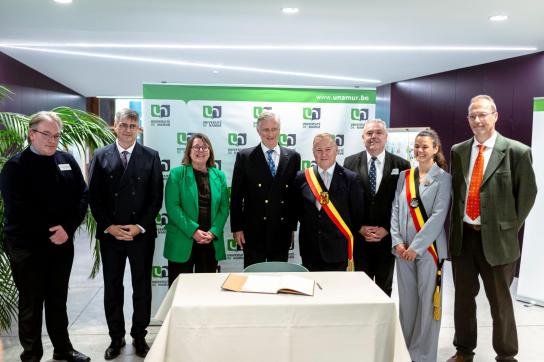
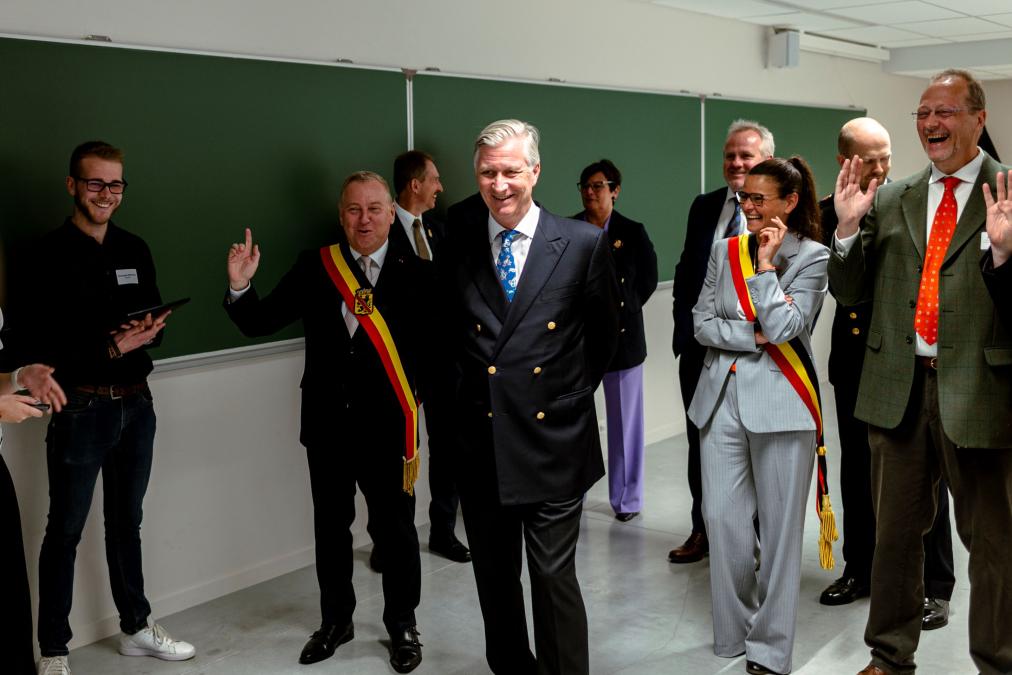
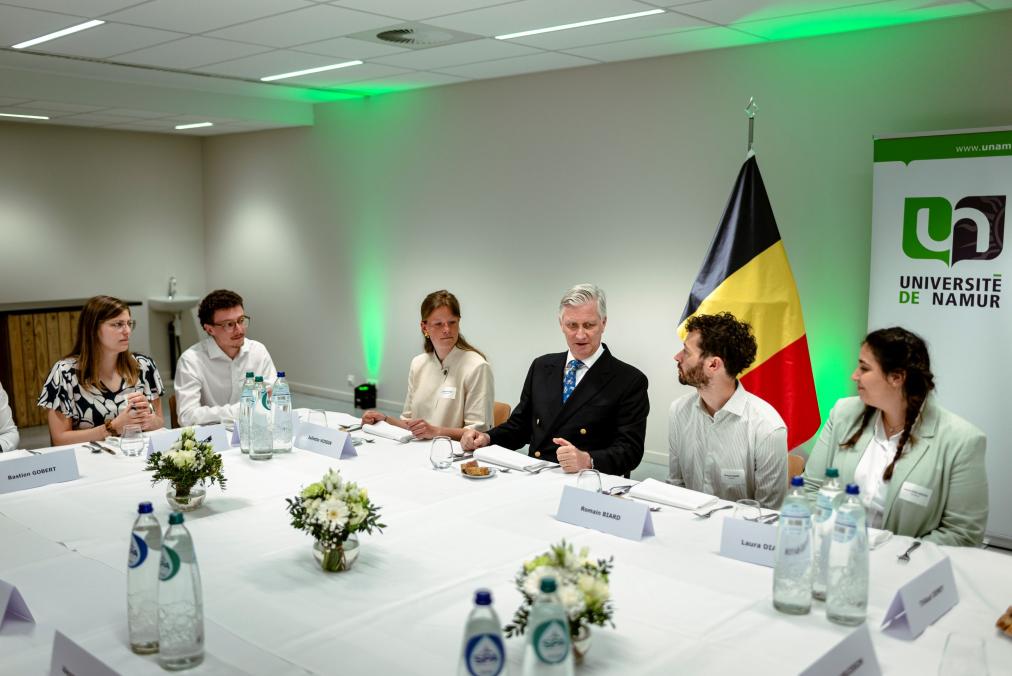
The new Faculty of Education and Training Sciences at UNamur was inaugurated on April 24, 2024, during a day-long event attended by numerous players in the sector. A look back at this historic day, marking the opening of the 7th Faculty at the University of Namur.