L’Université de Namur se doit d’être exemplaire en matière de développement durable, dans les trois dimensions de celui-ci (économique, sociale et environnementale), par sa manière de gérer ses infrastructures et son patrimoine pour être « durable sur la forme », ainsi que, en tant qu’institution d’enseignement et  de recherche, par son engagement afin de contribuer activement à la transition environnementale pour être « durable sur le fond ». Le tout en concordance avec les Objectifs de Développement Durable (ODD) des Nations Unies.
Le développement durable et la transition dans les missions de l'UNamur

Image
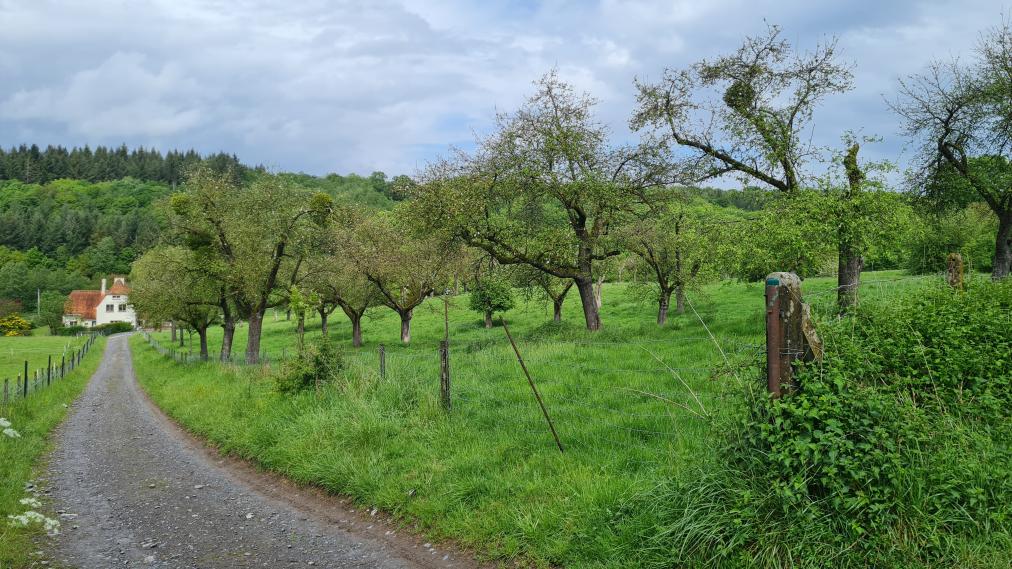
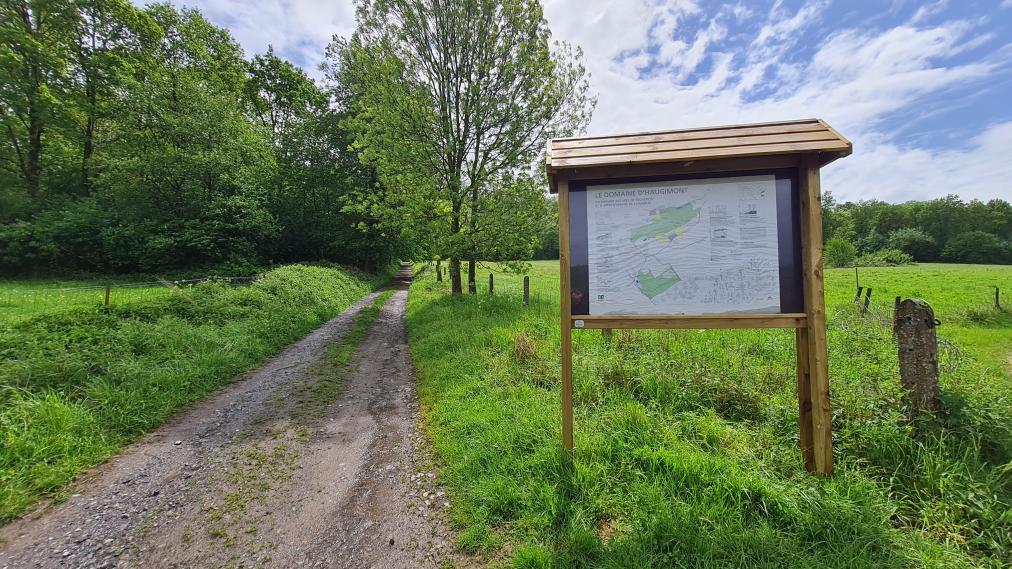
Domaine d'Haugimont - vue paysage du domaine

Le Domaine d'Haugimont, campus vert de l'UNamur

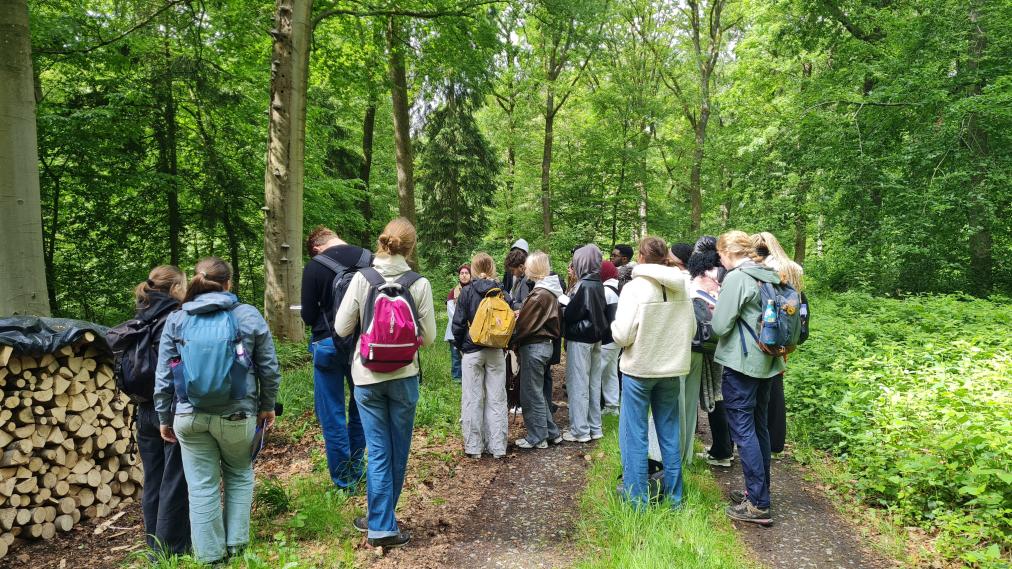
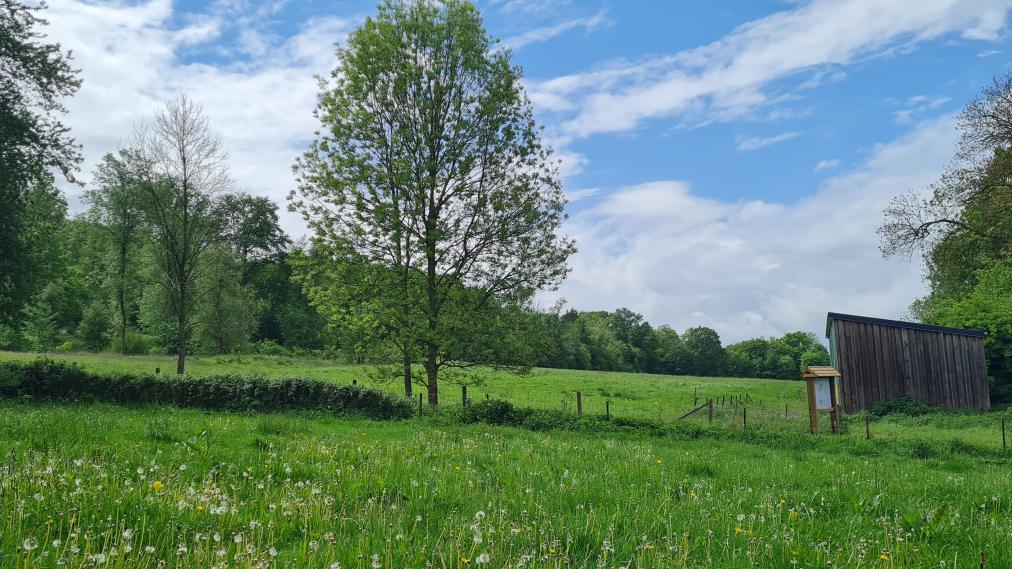
Situé au coeur de la campagne condruzienne, le domaine d'Haugimont est un lieu exceptionnel d'enseignement et de recherche.  Il est également ouvert au public et aux écoles dans le cadre d’activités de formation, de découverte et de loisirs.

Spotlight

News

Article

Haugimont: 30 Years of Sustainable Forest Management Under Scrutiny

Biodiversity
Sustainable
Environment
Pedagogy

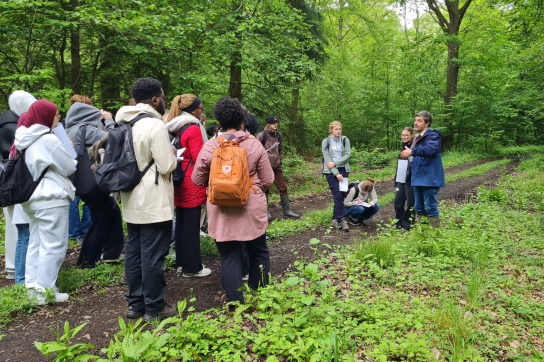
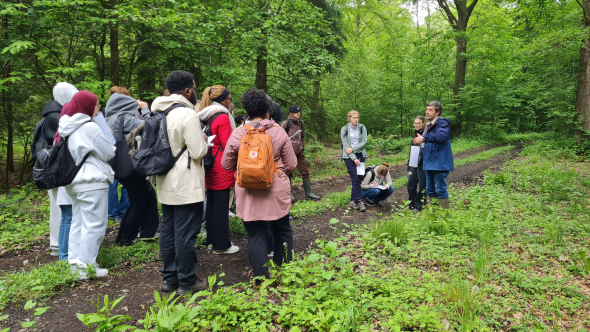
At the Domaine d’Haugimont, UNamur is drawing lessons from thirty years of nature-based forestry. On September 4, the results of the PRW108 project—carried out with funding from the Walloon Region’s “Supporting the Regeneration of Resilient Forests” initiative—were presented in the presence of Anne-Catherine Dalcq, Walloon Minister of Agriculture and Rural Affairs, and members of the Baillet Latour Fund. The results demonstrate the economic viability and ecological impact of this approach to forestry. Thanks to the Baillet Latour Fund’s Environment Award, granted to UNamur in 2016 for the multifunctional management of the estate, these results are now summarized in educational, illustrated brochures made available during guided forest tours. 
Haugimont

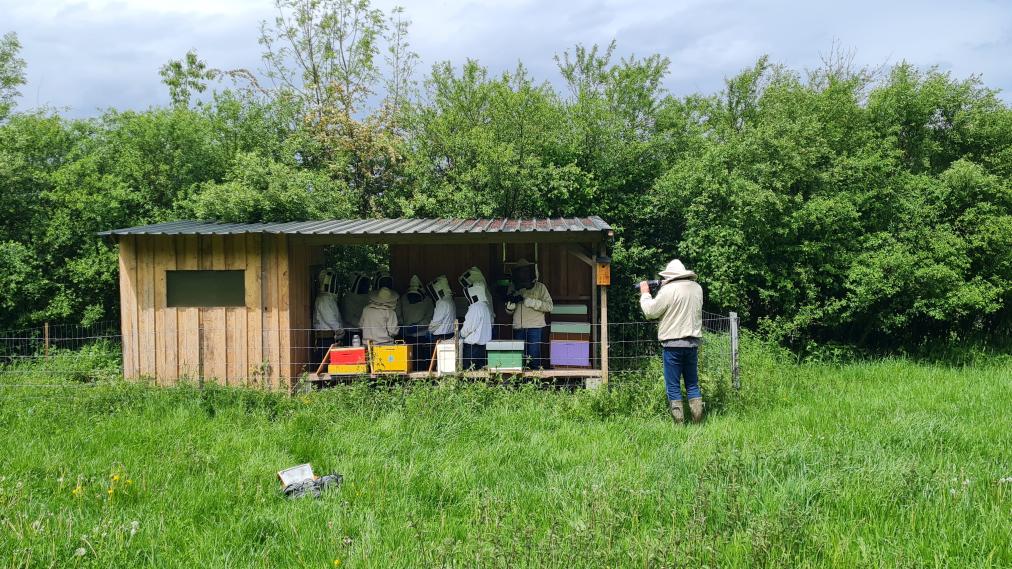
In Faulx-les-Tombes, the Domaine d’Haugimont is one of the University of Namur’s iconic natural heritage sites. Spanning nearly 360 hectares—including approximately 295 hectares of forest—UNamur has been implementing Pro Silva forest management practices there for several decades: promoting natural regeneration, diversifying tree species, preserving habitats, and maintaining the forest’s ecological functions.

This approach was analyzed as part of the PRW108 project, titled “30 Years of Pro Silva Silviculture at UNamur’s Domaine d’Haugimont: An Ecological and Economic Assessment—Lessons and Prospects for Resilient Forests in Wallonia.” Selected in 2023 as part of the Walloon call for projects “Supporting the Regeneration of Resilient Forests,” PRW108 enabled the analysis of forestry data accumulated by UNamur over 30 years. This analysis, along with the production of educational summary documents, also enabled our institution to fulfill its commitments to the Baillet Latour Fund, which had awarded UNamur its renowned Environment Prize in 2016.
Image
Annick Castiaux

Haugimont is a place where the university can fully fulfill its role: generating knowledge, educating future generations, and testing concrete solutions to environmental challenges. The results of the PRW108 project demonstrate how patient management—based on observing living systems and cooperating with local stakeholders—can fuel the ecological transition. 

Annick Castiaux President of the University of Namur

The PRW108 project brought together two key areas: forestry economics and ecology. The economic assessment is based on four comprehensive standing timber inventories conducted between 1992 and 2019, as well as on an analysis of accounting data, management costs, investments, expenses, and revenues related to the forest. The objective: to document the profitability of Pro Silva silviculture based on mixed stands, natural regeneration, and the sustainable use of wood.

The ecological assessment, meanwhile, is based on indicators such as humus types, deadwood, dendromicrohabitats, trees of biological interest, very large trees, vascular plants, wood-dwelling fungi, and epiphytic lichens. These markers make it possible to assess soil quality, forest continuity, and habitat diversity.

Lessons for More Resilient Forests

Against a backdrop of climate change, health pressures, and biodiversity loss, Walloon forests must strengthen their ability to adapt. In Haugimont, the project’s findings confirm the benefits of a diverse, uneven-aged forest composed mainly of native broadleaf species and managed in accordance with natural dynamics.

Image
Simon Hauser

Haugimont is an exceptional observation site because it allows us to see the effects of long-term changes. The PRW108 project helps us objectively assess what we observe in the field: a forest that is regenerating, habitats that are diversifying, and management practices that seek a balance between production, biodiversity, and the preservation of natural heritage. 

Simon Hauser Estate Manager of the Domaine d’Haugimont

Beyond the diagnostic phase, PRW108 also has a strong educational component. The project resulted in a report, three thematic summaries—focusing on economic aspects, biodiversity, and soils, as well as regeneration—and educational materials intended for landowners, managers, government agencies, students, and forestry professionals.

Image
Amélie Lachapelle

The development of the Domaine d’Haugimont as a site for scientific exploration and experimentation is one of the University’s three strategic initiatives in the area of Sustainable Development & Transition. A place for learning and research, this estate is also a source of wonder that (re)connects us to the natural world and calls on us, deep down, to care for it. 

Amélie Lachapelle Project Manager, “Transitions & Sustainable Development”

Crucial support from the Baillet Latour Fund

The project is part of a broader history of recognition and support. In 2016, the management of the Domaine d’Haugimont was honored with the Baillet Latour Fund’s Environmental Award, a significant acknowledgment of the multifunctional management of the Domaine d’Haugimont, which comprises a variety of biotopes that enable the development of applied research alongside educational use for students and other visitors. The restoration of its buildings, the comprehensive study of its botanical, zoological, geological, geographical, and historical features, as well as the creation of an educational tool such as the “Géoparcours”—which is set to be expanded and promoted in the near future —and the local processing of timber produced on the estate through a local sawmill during the Faculty of Sciences’ construction—had thus strongly impressed the jury members at the time.

“The support from the Baillet Latour Fund sent an important signal,” recalls Annick Castiaux. “It recognized the value of an approach that goes beyond the mere management of a university estate: Haugimont is a place where we learn to care for living things, to envision the forest of tomorrow, and to put knowledge to work for society.”

A video of the Haugimont estate:

Vidéo Haugimont

The Domaine d’Haugimont in Ten Key Figures

  • 1978: the year since which Haugimont has served as a center for teaching and research for UNamur.
  • Nearly 360 hectares: the total area of the estate.
  • 295 hectares: the area covered by forest, representing approximately 82% of the estate.
  • 30 years: the period analyzed as part of the PRW108 project.
  • 4 comprehensive standing timber inventories conducted between 1992 and 2019.
  • 17% of the forested area is designated as a Natura 2000 site.
  • 56.5 hectares of meadows.
  • 11 hectares of standard-tree orchards with heirloom varieties, managed using organic farming methods.
  • 13 biotopes of biological interest identified on the site.
  • 35 bird species and 8 bat species identified during recent surveys.

The Walking Tour: An Event for Families to Explore the Estate

Every fall, the public is invited to explore the Haugimont estate during a large-scale open house open to everyone. This free family-friendly event features a variety of activities throughout the day, including organic apple picking, informational booths, guided walks, children’s activities, and more. When’s the next one? October 18, 2026. More details to come… 

Maraude

"Green Lab" initiative: towards more sustainable laboratories

Biology
Medicine
Sustainable
Institution

For several years now, researchers have been striving to make their laboratories "greener". A series of actions have been implemented, funded by the CaNDLE 2023 call for projects have been supported by the Department of Biology at the initiative of Alison Forrester and Frédéric Silvestre, the project leaders, as well as by Campus Infrastructure Management Services (SIGeC) and Prevention Services (SerP). In March 2025, a Green Day was held to provide information on the project's progress, and to motivate people to join the initiative.  

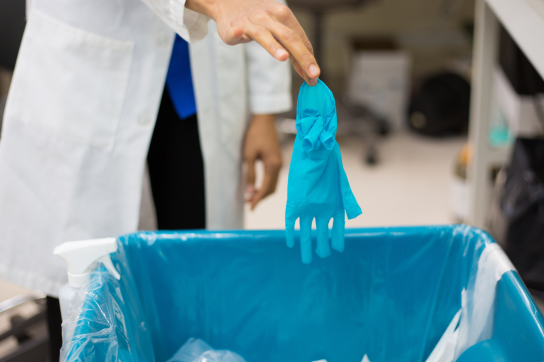
Chercheur jettant un gant en latex

Since 2013, the aim of the Campus Namur Durable (CaNDLE) funding calls has been to invite the university community to propose actions aimed at making the campus and university activities more sustainable in the short, medium and long term. 

The first and second CaNDLE calls contributed, in 2013 and 2015, to the realisation of eight projects likely to improve the sustainability of the campus or university activity. The 2021 call saw the launch of five new eco-responsible initiatives proposed by UNamur members and financed by the Jerome Fund for Sustainable Development, which included an award to the URVI, which headed by Benoit Muylkens, has been an excellent template for the initiative in the Department of Biology. In 2023, the CaNDLE call was financed thanks to the joint support of the « Jérôme fund for sustainable development » and the « Assembly of University of Namur Students Circles » 

On 18 March 2025, researchers from the Department of Biology and Faculty of Medicine got together for a Green Day to raise awareness of the Green Lab initiative. 

The aim is to reduce waste, increase recycling and reduce energy consumption, with a key focus on wet labs as well as throughout the university. 

A working group made up of representatives from each unit, led by Alison Forrester and supported by Frederic Silvestre, has drawn up a list of actions aimed at making laboratory practices more sustainable. The Green Day provided an opportunity to present the many changes already implemented by the unit representatives, as well as the changes to come at laboratory and university level.  

Image
Alison Forrester

At the University of Namur, everyone knows everyone else, which means that initiatives of this kind can be implemented efficiently and logically.  Our strength is the will and the motivation to change things.  We have the support of the institution, which gives us the means to achieve our ambitions.

Prof. Alison Forrester FNRS Qualified Researcher, Welbio-Health Researcher - Department of Biology, Institut Narilis

RRRR methodology - Reduce, Reuse, Recycle, Re-educate

Based on the saying that ‘the best waste is the waste that doesn't exist’, the project leaders looked at everything that could be made ‘greener’ in the context of the lab, using a precise ‘Reduce - Reuse - Recycle - Re-educate’ methodology, starting with the changes that can be made immediately, and then setting short-term (3-6 months), medium-term (6-12 months) and long-term (12 months and more) objectives. 

The areas in which this methodology has already been applied include purchasing and use of laboratory supplies, energy consumption, waste management, infrastructure pooling, water consumption and filtration.   

Staff training, new ways of working, the sharing of best practices and the pooling of infrastructures has produced very significant results.  Specific examples are given at the end of this article.

Project sponsors

Alison Forrester

Alison Forrester is a qualified FNRS researcher. Her research group is based at the Unité de Recherche en Biologie Cellulaire (URBC) in the Department of Biology, where research is devoted to understanding cellular response mechanisms in normal and pathological situations. Alison Forrester is a researcher at the WEL Research Institute for the Welbio-Health program.

She is also Fellow NARC and member of the Institut Narilis.

Photo d'Alison Forrester avec ses affiliations FNRS, Wel research institute, et NARILIS (UNamur)

Fréderic Silvestre

Frédéric Silvestre heads the Laboratory of Evolution and Adaptive Physiology (LEAP). It is one of four laboratories belonging to the Environmental and Evolutionary Biology Research Unit (URBE) within the Biology Department. LEAP is also a member of the ILEE Research Institute.

Frédéric Silvestre et les logos de ses affiliations (UNamur, Institut ILEE, Département de biologie, laboratoire LEAP)

A key issue for the future

At the Green Day, external guest speaker Kristine Oevel, a former member of the first certified Green laboratory at the Leibniz-Forschungsinstitut für Molekulare Pharmakologie (FMP) in Berlin, gave a talk entitled ‘Obtaining green certification for FMP Berlin laboratories’. During her PhD at the FMP, Kristine was a key member of the team who initiated the move to sustainability, resulting in the laboratory obtaining certification from ‘My green lab’, for which the University of Namur also intends to apply. 

Image
Alison Forrester

Overall, the commitment of the people involved has been, and remains, enormous in terms of implementing and optimising sustainable practices and strategies.  It's also very motivating when you see that the actions put in place are making huge savings in waste and also financially. All you need to do is change your habits.  It takes energy and perseverance, but this initiative has been met with great enthusiasm from people across the university. 

Starting from the Department of biology, we have been joined by Jean-Henri Rouard from « SiGEC » and Jean-Francois Pirlot from « SerP». Their involvement has been excellent, allowing us to efficiently increase the scope of the initiative, their progressive ideas have been perfectly complimentary to our perspective from teh side of the lab users.    All of the laboratories in the Biology Department are already on board, and the Faculty of Medicine is joining the project.  It's only just begun and already has great support. This is such an important element for the university,it's a key issue for the future.

Prof. Alison Forrester FNRS Qualified Researcher, Welbio-Health Researcher - Department of Biology, Institut Narilis

This ‘Green Lab’ initiative, as well as the 1st ‘Green Day’ event, required both personal and collaborative efforts, and involved professors, researchers, doctoral students and students from the Biology Department, as well as staff from the Campus Infrastructure Management Service (SIGeC) and the Prevention Service (SerP): a convincing demonstration of the university community's high level of commitment to a more sustainable future. 

Sustainable development at UNamur

The university has a duty to set an example in terms of sustainable development, to be ‘sustainable in form’ and ‘sustainable in substance’ in line with the United Nations' Sustainable Development Goals (SDGs).

RRRR methodology - Reduce, Reuse, Recycle, Re-educate - Some examples

Reduce (when possible)

Instead of buying products off the shelf, units are moving to using cell culture media made in-house.  This reduces the cost from €9.50 to €2 per bottle.  The same goes for the sterile PBS used in cell culture, down from €5 to less than €0.5 a bottle. This operation can also reduce the consumption of plastic bottles by up to 1,300 units per year per unit.  The reuse of cell culture flasks can also help to reduce the current usage of 15,000 units per year per unit. 

Good Lab Practice is also spreading to Good Work Practice, encouraging each person to take more responsability for energy use in the buildings. For example, turning off the lights or the computer when leaving the office or lab, and turning off lab equipment when not in use. Based on analysis on the efficiency of ultra-cold storage carried out in leading certified Green Labs the freezers have been reduced from -80°C to -70°C and from -20°C to -17°C, and the fridges from +4 °C to +7 °C, resulting in an estimated substantial saving of 30% in energy consumption without affecting the preservation of the products and biological samples.   

Reuse (when possible)

By switching from plastic to glass, it is estimated that 30,000 single use aspiration pipettes and a percentage of the 25,000 test tubes will be saved.  A process has been put in place to manage the work involved in this new working method.  Dirty lab wear have to be collected, washed, sterilised and then redistributed.  At the same time, products such as sterile PBS also has to be prepared, autoclaved and redistributed. This involves tasks distributed between the members of each research unit, which is estimated at 2 hours of each persons time every 10 weeks. 

Recycle

Promoting daily recycling practices holds an ever important role. However the recycling of lab products is more complex, and purchasing items made from recycled and recyclable materials contributes to sustainable lab practice. New waste disposal routes are also being developed to allow the decontamination of hazardous waste (biohazardous or chemical waste) with an aim to decrease the amount of hazardous waste produced. Additionally, new bins that contain less plastics and cost less to dispose of, are being rolled out through the university labs. Better sorted waste in appropriately sized containers reduces disposal costs.  Similar changes have been put in place for different types of waste (cardboard, plastic, glass) to improve efficiency. 

Re-educate

Many sustainable changes can be made just by deciding to regulate your own behaviour. These decisions are fast and easy, but people need ideas! However implementing other changes involves a change in mentality and a reorganisation of work to share the load fairly. The green day provided information and day to day tips that all researchers can use to work in a sustainable manner.  A virtual workspace containing information on sustainability and recordings of the Green Day presentations has been created and is accessible to all members interested in the initiative.  A suggestion box is also available.   

Article

The ambition to protect bats through a CaNDLE call for projects

Biodiversity
Sustainable
Institution
SDG#4 - Quality education
SDG#11 - Sustainable cities and communities
SDG#13 - Measures to combat climate change

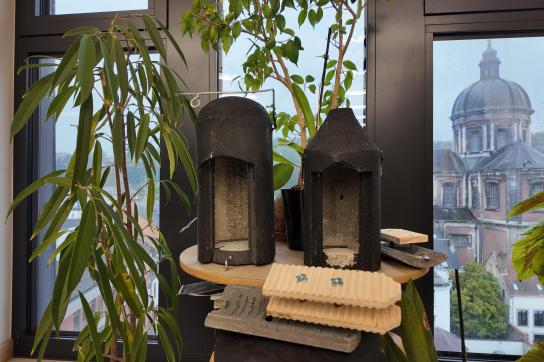
Since 2013, the University of Namur has launched an ambitious initiative to make its campus more sustainable through CaNDLE projects. Among these, the "Good school, bat's cool" project intends to set up resting and breeding sites for bats in urban environments. The project, spearheaded by Laura De Wandeleer and Jérémy Berthe, two passionate biologists from UNamur, focuses on two main areas: protecting bats and raising public awareness of their importance in the ecosystem.

.

Nichoirs à chauves-souris

Faced with declining bat populations, the team has chosen to focus its efforts on these little-known but indispensable mammals. "We responded to the 2023 CaNDLE call for projects by focusing on bats to encourage increased biodiversity at UNamur," explains Laura De Wandeleer. The project involves the installation of bat nesting boxes on several University buildings, similar to previous actions carried out for martinets in 2021. Around thirty gîtes will be set up.

The aim is not only to provide a safe habitat for bats in cities, where renovations and insulation work have reduced their natural refuges, but also to closely monitor the installed populations to assess the effectiveness of the measures. "What's also interesting about bats is that they provide important ecosystem services, such as regulating insect populations," adds Laura.

Raising awareness to protect

In addition to the direct protection of bats, the project places a strong emphasis on raising public awareness. Educational panels will be installed on campus to inform the university community and visitors about the importance of bats and the services they provide to the ecosystem. The idea is also to demystify the many prejudices surrounding these animals, which are often perceived as frightening. "There's nothing dangerous about bats, and they don't get caught in your hair, contrary to popular belief," Laura points out.

Group activities, such as nighttime guiding with acoustic equipment that lets you hear bat ultrasound, will also be on offer. "We want to show that there's life in the city, beyond the asphalt and isolated trees," says Jérémy Berthe. By eventually extending the project to the Haugimont site, an area in a rural setting where internships are organized, the team hopes to reach a wider audience, including high school students.

This project, which is part of a broader drive to promote urban biodiversity, is also a response to the challenges posed by modern renovations, which are often harmful to cave-dwelling species such as bats. By installing these nesting boxes, the University of Namur is proposing an alternative solution that reconciles energy insulation and the preservation of biodiversity.

The team hopes to launch the installation of the nesting boxes within a few weeks, before the end of winter, so that the bats can find refuge in them in spring. The project thus embodies a dual commitment: to protect an endangered species group and to raise community awareness of the harmonious cohabitation between nature and urbanization.

What are CaNDLE projects?

Since 2013, the purpose of the Campus Namur Durable (CaNDLE) calls has been to invite the University Community to propose actions aimed at making the campus and university activity more sustainable in the short, medium and long term.

In 2023, UNamur is launching a fourth CaNDLE call, financed thanks to the joint support of the Fonds Jérôme pour le développement durable and the Assemblée des Cercles des étudiantes et étudiants de l'UNamur.

Festival International Nature de Namur: when passion for nature meets education

Biodiversity
Biology
Geology
Event
SDG#4 - Quality education
SDG#14 - Aquatic life
SDG#17 - Partnerships to achieve the goals

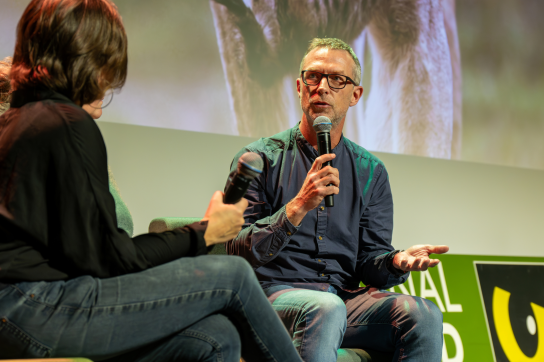
On the occasion of the 30th edition of the Festival International Nature de Namur (FINN), the University of Namur, partner of this event, reaffirms its commitment to environmental awareness by combining science and art. With its immersive stand in the nature village set up at the citadel, and the participation of its experts in the Focus Environnement ecological debates, the University of Namur offers an innovative look at nature through teaching. In addition, a jury of students from the Master in Cinematographic Cultures and Thought awarded the Prix de l'Environnement at the Professional Film Gala.

vignette-festival-nature-namur

A "natural" partnership to train tomorrow's players

The FINN represents a unique opportunity for students to discover the professional world beyond the classroom. By taking part, they can interact with experts and enthusiasts in the field, whether professionals, volunteers or amateurs. These meetings are an opportunity to establish valuable, sometimes long-term, links with players in ecological networks, creating bridges between academic training and the professional world.

"Participating in this festival enables our students to meet professionals and amateurs who, like them, are committed to preserving nature," emphasizes Frédéric Silvestre, Professor and Head of the Biology Department, "It's a chance for them to make connections, spark vocations and even discover unexpected areas of interest. Inspiring young people is an essential first step towards acting in favor of respectful cohabitation between humans and nature."

Beyond the encounters, the University of Namur sees this festival as a gateway to future collaborations, particularly for its students' internships. The event provides an opportunity to discover new fields of learning and interests that enrich the career paths of young people in search of practical experience. The partnership thus aims to open up professional prospects while inspiring and guiding those who aspire to build a career linked to ecology.

The environment takes center stage

On October 19, FINN organized the Gala for professional films and the photo competition, during which several prizes were awarded in the presence of directors, photographers and jury members. An evening during which the University of Namur was able to present the Environment Prize. "At the University of Namur, we are committed to the management of nature and the environment through research and teaching. We are therefore proud to support the Prix de l'Environnement," explains Johan Yans, Professor and Head of the Department of Geology. "The Festival's slogan, 'Nature is a spectacle', echoes our missions as a university. We try to teach nature-related disciplines as well as we can: biology, geology, geography... and it's a show, because today we have a master's degree specializing in Cinematic Cultures and Thoughts, as well as additional training in sustainable development. Through our research and pedagogy, we are working to preserve and enhance this natural heritage."The Prix de l'Environnement is supported by the Vice-Rectorate for Sustainable Development and the Faculty of Science.

The particularity of this award ceremony lies in its pedagogical approach. As part of the master's program specializing in cinematographic cultures and thought, Jean-Benoît Gabriel invited his students to form a selection jury. Their mission: to elect the winner from a selection of three professional films presented by FINN, and to present them with the Prix de l'Environnement on behalf of the University of Namur. "We chose to reward Josh Guyan's "Our Prairie", a film that really touched us. It follows a small group of people committed to preserving a nature reserve close to home. The absence of voice-over and the beauty of the images immerse us in their story in an immersive way", announces Bruno, a student on the master's program. "I'm very interested in environmental issues and a great cinema enthusiast, participating in this jury as part of my studies was a very enriching opportunity both personally and professionally,"concluded the student.

A stand in the nature village to promote biology studies and multidisciplinary internships

The nature village, set up on the Terra nova site at the Citadelle, provides an annual showcase for the University of Namur's various training courses and activities, around themes related to art (and more particularly photography), nature and ecology. This year, biology professor Marie Laurence Hubin explains how this space helps promote the projects run by the biology department, and more specifically the multi-disciplinary mountain internship.

"This internship allows students to be out in the field to directly observe fauna, flora, insects, and even explore local geology", she points out. "The hands-on experience is particularly rewarding for students, who can then capture their discoveries in photographs. These snapshots, on display in the nature village, bear witness to their work and are a big hit with visitors."

Article

Haugimont: 30 Years of Sustainable Forest Management Under Scrutiny

Biodiversity
Sustainable
Environment
Pedagogy

At the Domaine d’Haugimont, UNamur is drawing lessons from thirty years of nature-based forestry. On September 4, the results of the PRW108 project—carried out with funding from the Walloon Region’s “Supporting the Regeneration of Resilient Forests” initiative—were presented in the presence of Anne-Catherine Dalcq, Walloon Minister of Agriculture and Rural Affairs, and members of the Baillet Latour Fund. The results demonstrate the economic viability and ecological impact of this approach to forestry. Thanks to the Baillet Latour Fund’s Environment Award, granted to UNamur in 2016 for the multifunctional management of the estate, these results are now summarized in educational, illustrated brochures made available during guided forest tours. 

Haugimont

In Faulx-les-Tombes, the Domaine d’Haugimont is one of the University of Namur’s iconic natural heritage sites. Spanning nearly 360 hectares—including approximately 295 hectares of forest—UNamur has been implementing Pro Silva forest management practices there for several decades: promoting natural regeneration, diversifying tree species, preserving habitats, and maintaining the forest’s ecological functions.

This approach was analyzed as part of the PRW108 project, titled “30 Years of Pro Silva Silviculture at UNamur’s Domaine d’Haugimont: An Ecological and Economic Assessment—Lessons and Prospects for Resilient Forests in Wallonia.” Selected in 2023 as part of the Walloon call for projects “Supporting the Regeneration of Resilient Forests,” PRW108 enabled the analysis of forestry data accumulated by UNamur over 30 years. This analysis, along with the production of educational summary documents, also enabled our institution to fulfill its commitments to the Baillet Latour Fund, which had awarded UNamur its renowned Environment Prize in 2016.
Image
Annick Castiaux

Haugimont is a place where the university can fully fulfill its role: generating knowledge, educating future generations, and testing concrete solutions to environmental challenges. The results of the PRW108 project demonstrate how patient management—based on observing living systems and cooperating with local stakeholders—can fuel the ecological transition. 

Annick Castiaux President of the University of Namur

The PRW108 project brought together two key areas: forestry economics and ecology. The economic assessment is based on four comprehensive standing timber inventories conducted between 1992 and 2019, as well as on an analysis of accounting data, management costs, investments, expenses, and revenues related to the forest. The objective: to document the profitability of Pro Silva silviculture based on mixed stands, natural regeneration, and the sustainable use of wood.

The ecological assessment, meanwhile, is based on indicators such as humus types, deadwood, dendromicrohabitats, trees of biological interest, very large trees, vascular plants, wood-dwelling fungi, and epiphytic lichens. These markers make it possible to assess soil quality, forest continuity, and habitat diversity.

Lessons for More Resilient Forests

Against a backdrop of climate change, health pressures, and biodiversity loss, Walloon forests must strengthen their ability to adapt. In Haugimont, the project’s findings confirm the benefits of a diverse, uneven-aged forest composed mainly of native broadleaf species and managed in accordance with natural dynamics.

Image
Simon Hauser

Haugimont is an exceptional observation site because it allows us to see the effects of long-term changes. The PRW108 project helps us objectively assess what we observe in the field: a forest that is regenerating, habitats that are diversifying, and management practices that seek a balance between production, biodiversity, and the preservation of natural heritage. 

Simon Hauser Estate Manager of the Domaine d’Haugimont

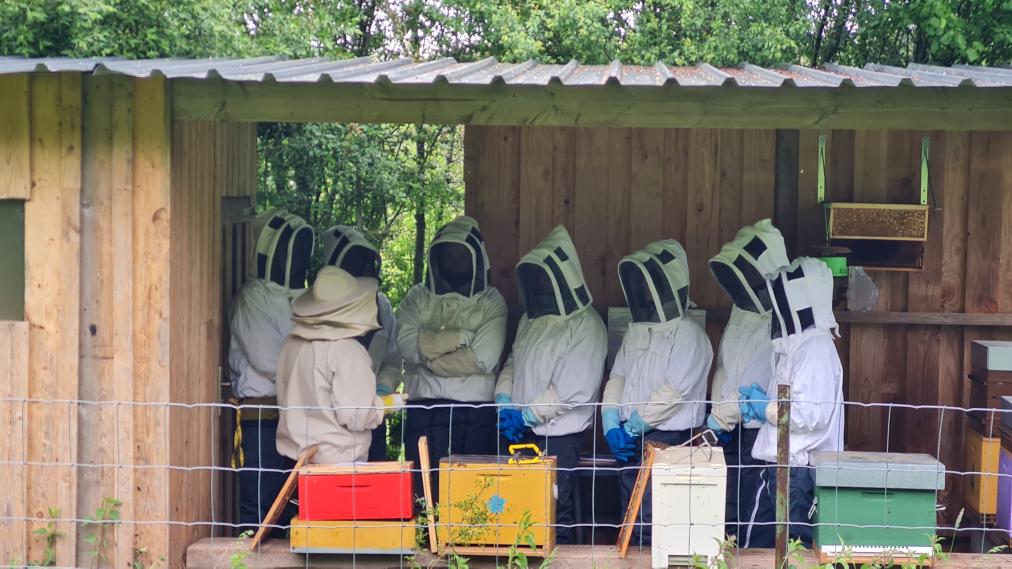
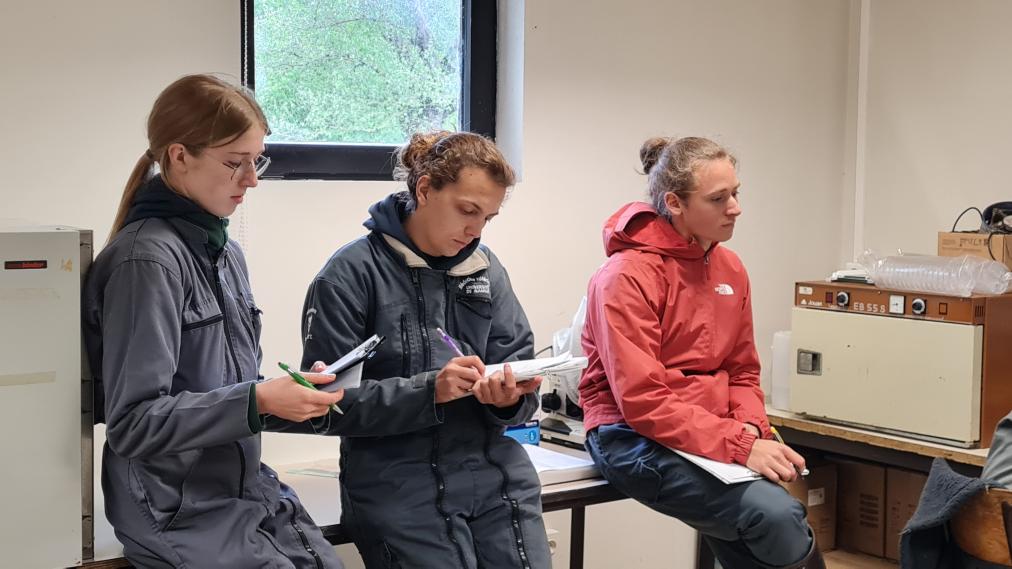
Beyond the diagnostic phase, PRW108 also has a strong educational component. The project resulted in a report, three thematic summaries—focusing on economic aspects, biodiversity, and soils, as well as regeneration—and educational materials intended for landowners, managers, government agencies, students, and forestry professionals.
Image
Amélie Lachapelle

The development of the Domaine d’Haugimont as a site for scientific exploration and experimentation is one of the University’s three strategic initiatives in the area of Sustainable Development & Transition. A place for learning and research, this estate is also a source of wonder that (re)connects us to the natural world and calls on us, deep down, to care for it. 

Amélie Lachapelle Project Manager, “Transitions & Sustainable Development”

Crucial support from the Baillet Latour Fund

The project is part of a broader history of recognition and support. In 2016, the management of the Domaine d’Haugimont was honored with the Baillet Latour Fund’s Environmental Award, a significant acknowledgment of the multifunctional management of the Domaine d’Haugimont, which comprises a variety of biotopes that enable the development of applied research alongside educational use for students and other visitors. The restoration of its buildings, the comprehensive study of its botanical, zoological, geological, geographical, and historical features, as well as the creation of an educational tool such as the “Géoparcours”—which is set to be expanded and promoted in the near future —and the local processing of timber produced on the estate through a local sawmill during the Faculty of Sciences’ construction—had thus strongly impressed the jury members at the time.

“The support from the Baillet Latour Fund sent an important signal,” recalls Annick Castiaux. “It recognized the value of an approach that goes beyond the mere management of a university estate: Haugimont is a place where we learn to care for living things, to envision the forest of tomorrow, and to put knowledge to work for society.”
A video of the Haugimont estate:

Vidéo Haugimont

The Domaine d’Haugimont in Ten Key Figures

  • 1978: the year since which Haugimont has served as a center for teaching and research for UNamur.
  • Nearly 360 hectares: the total area of the estate.
  • 295 hectares: the area covered by forest, representing approximately 82% of the estate.
  • 30 years: the period analyzed as part of the PRW108 project.
  • 4 comprehensive standing timber inventories conducted between 1992 and 2019.
  • 17% of the forested area is designated as a Natura 2000 site.
  • 56.5 hectares of meadows.
  • 11 hectares of standard-tree orchards with heirloom varieties, managed using organic farming methods.
  • 13 biotopes of biological interest identified on the site.
  • 35 bird species and 8 bat species identified during recent surveys.

The Walking Tour: An Event for Families to Explore the Estate

Every fall, the public is invited to explore the Haugimont estate during a large-scale open house open to everyone. This free family-friendly event features a variety of activities throughout the day, including organic apple picking, informational booths, guided walks, children’s activities, and more. When’s the next one? October 18, 2026. More details to come… 

Maraude

"Green Lab" initiative: towards more sustainable laboratories

Biology
Medicine
Sustainable
Institution

For several years now, researchers have been striving to make their laboratories "greener". A series of actions have been implemented, funded by the CaNDLE 2023 call for projects have been supported by the Department of Biology at the initiative of Alison Forrester and Frédéric Silvestre, the project leaders, as well as by Campus Infrastructure Management Services (SIGeC) and Prevention Services (SerP). In March 2025, a Green Day was held to provide information on the project's progress, and to motivate people to join the initiative.  
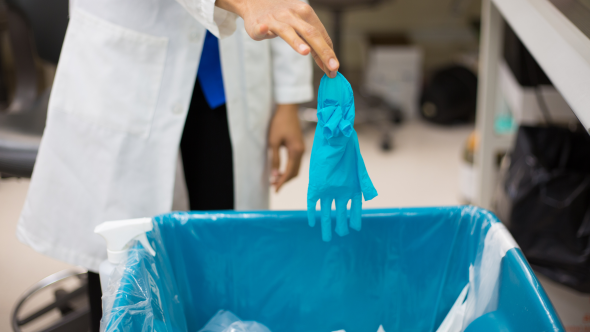
Chercheur jettant un gant en latex

Since 2013, the aim of the Campus Namur Durable (CaNDLE) funding calls has been to invite the university community to propose actions aimed at making the campus and university activities more sustainable in the short, medium and long term. 

The first and second CaNDLE calls contributed, in 2013 and 2015, to the realisation of eight projects likely to improve the sustainability of the campus or university activity. The 2021 call saw the launch of five new eco-responsible initiatives proposed by UNamur members and financed by the Jerome Fund for Sustainable Development, which included an award to the URVI, which headed by Benoit Muylkens, has been an excellent template for the initiative in the Department of Biology. In 2023, the CaNDLE call was financed thanks to the joint support of the « Jérôme fund for sustainable development » and the « Assembly of University of Namur Students Circles » 

On 18 March 2025, researchers from the Department of Biology and Faculty of Medicine got together for a Green Day to raise awareness of the Green Lab initiative. 

The aim is to reduce waste, increase recycling and reduce energy consumption, with a key focus on wet labs as well as throughout the university. 

A working group made up of representatives from each unit, led by Alison Forrester and supported by Frederic Silvestre, has drawn up a list of actions aimed at making laboratory practices more sustainable. The Green Day provided an opportunity to present the many changes already implemented by the unit representatives, as well as the changes to come at laboratory and university level.  

Image
Alison Forrester

At the University of Namur, everyone knows everyone else, which means that initiatives of this kind can be implemented efficiently and logically.  Our strength is the will and the motivation to change things.  We have the support of the institution, which gives us the means to achieve our ambitions.

Prof. Alison Forrester FNRS Qualified Researcher, Welbio-Health Researcher - Department of Biology, Institut Narilis

RRRR methodology - Reduce, Reuse, Recycle, Re-educate

Based on the saying that ‘the best waste is the waste that doesn't exist’, the project leaders looked at everything that could be made ‘greener’ in the context of the lab, using a precise ‘Reduce - Reuse - Recycle - Re-educate’ methodology, starting with the changes that can be made immediately, and then setting short-term (3-6 months), medium-term (6-12 months) and long-term (12 months and more) objectives. 

The areas in which this methodology has already been applied include purchasing and use of laboratory supplies, energy consumption, waste management, infrastructure pooling, water consumption and filtration.   

Staff training, new ways of working, the sharing of best practices and the pooling of infrastructures has produced very significant results.  Specific examples are given at the end of this article.

Project sponsors

Alison Forrester

Alison Forrester is a qualified FNRS researcher. Her research group is based at the Unité de Recherche en Biologie Cellulaire (URBC) in the Department of Biology, where research is devoted to understanding cellular response mechanisms in normal and pathological situations. Alison Forrester is a researcher at the WEL Research Institute for the Welbio-Health program.

She is also Fellow NARC and member of the Institut Narilis.

Photo d'Alison Forrester avec ses affiliations FNRS, Wel research institute, et NARILIS (UNamur)

Fréderic Silvestre

Frédéric Silvestre heads the Laboratory of Evolution and Adaptive Physiology (LEAP). It is one of four laboratories belonging to the Environmental and Evolutionary Biology Research Unit (URBE) within the Biology Department. LEAP is also a member of the ILEE Research Institute.

Frédéric Silvestre et les logos de ses affiliations (UNamur, Institut ILEE, Département de biologie, laboratoire LEAP)

A key issue for the future

At the Green Day, external guest speaker Kristine Oevel, a former member of the first certified Green laboratory at the Leibniz-Forschungsinstitut für Molekulare Pharmakologie (FMP) in Berlin, gave a talk entitled ‘Obtaining green certification for FMP Berlin laboratories’. During her PhD at the FMP, Kristine was a key member of the team who initiated the move to sustainability, resulting in the laboratory obtaining certification from ‘My green lab’, for which the University of Namur also intends to apply. 

Image
Alison Forrester

Overall, the commitment of the people involved has been, and remains, enormous in terms of implementing and optimising sustainable practices and strategies.  It's also very motivating when you see that the actions put in place are making huge savings in waste and also financially. All you need to do is change your habits.  It takes energy and perseverance, but this initiative has been met with great enthusiasm from people across the university. 

Starting from the Department of biology, we have been joined by Jean-Henri Rouard from « SiGEC » and Jean-Francois Pirlot from « SerP». Their involvement has been excellent, allowing us to efficiently increase the scope of the initiative, their progressive ideas have been perfectly complimentary to our perspective from teh side of the lab users.    All of the laboratories in the Biology Department are already on board, and the Faculty of Medicine is joining the project.  It's only just begun and already has great support. This is such an important element for the university,it's a key issue for the future.

Prof. Alison Forrester FNRS Qualified Researcher, Welbio-Health Researcher - Department of Biology, Institut Narilis

This ‘Green Lab’ initiative, as well as the 1st ‘Green Day’ event, required both personal and collaborative efforts, and involved professors, researchers, doctoral students and students from the Biology Department, as well as staff from the Campus Infrastructure Management Service (SIGeC) and the Prevention Service (SerP): a convincing demonstration of the university community's high level of commitment to a more sustainable future. 

Sustainable development at UNamur

The university has a duty to set an example in terms of sustainable development, to be ‘sustainable in form’ and ‘sustainable in substance’ in line with the United Nations' Sustainable Development Goals (SDGs).

RRRR methodology - Reduce, Reuse, Recycle, Re-educate - Some examples

Reduce (when possible)

Instead of buying products off the shelf, units are moving to using cell culture media made in-house.  This reduces the cost from €9.50 to €2 per bottle.  The same goes for the sterile PBS used in cell culture, down from €5 to less than €0.5 a bottle. This operation can also reduce the consumption of plastic bottles by up to 1,300 units per year per unit.  The reuse of cell culture flasks can also help to reduce the current usage of 15,000 units per year per unit. 

Good Lab Practice is also spreading to Good Work Practice, encouraging each person to take more responsability for energy use in the buildings. For example, turning off the lights or the computer when leaving the office or lab, and turning off lab equipment when not in use. Based on analysis on the efficiency of ultra-cold storage carried out in leading certified Green Labs the freezers have been reduced from -80°C to -70°C and from -20°C to -17°C, and the fridges from +4 °C to +7 °C, resulting in an estimated substantial saving of 30% in energy consumption without affecting the preservation of the products and biological samples.   

Reuse (when possible)

By switching from plastic to glass, it is estimated that 30,000 single use aspiration pipettes and a percentage of the 25,000 test tubes will be saved.  A process has been put in place to manage the work involved in this new working method.  Dirty lab wear have to be collected, washed, sterilised and then redistributed.  At the same time, products such as sterile PBS also has to be prepared, autoclaved and redistributed. This involves tasks distributed between the members of each research unit, which is estimated at 2 hours of each persons time every 10 weeks. 

Recycle

Promoting daily recycling practices holds an ever important role. However the recycling of lab products is more complex, and purchasing items made from recycled and recyclable materials contributes to sustainable lab practice. New waste disposal routes are also being developed to allow the decontamination of hazardous waste (biohazardous or chemical waste) with an aim to decrease the amount of hazardous waste produced. Additionally, new bins that contain less plastics and cost less to dispose of, are being rolled out through the university labs. Better sorted waste in appropriately sized containers reduces disposal costs.  Similar changes have been put in place for different types of waste (cardboard, plastic, glass) to improve efficiency. 

Re-educate

Many sustainable changes can be made just by deciding to regulate your own behaviour. These decisions are fast and easy, but people need ideas! However implementing other changes involves a change in mentality and a reorganisation of work to share the load fairly. The green day provided information and day to day tips that all researchers can use to work in a sustainable manner.  A virtual workspace containing information on sustainability and recordings of the Green Day presentations has been created and is accessible to all members interested in the initiative.  A suggestion box is also available.   
Article

The ambition to protect bats through a CaNDLE call for projects

Biodiversity
Sustainable
Institution
SDG#4 - Quality education
SDG#11 - Sustainable cities and communities
SDG#13 - Measures to combat climate change

Since 2013, the University of Namur has launched an ambitious initiative to make its campus more sustainable through CaNDLE projects. Among these, the "Good school, bat's cool" project intends to set up resting and breeding sites for bats in urban environments. The project, spearheaded by Laura De Wandeleer and Jérémy Berthe, two passionate biologists from UNamur, focuses on two main areas: protecting bats and raising public awareness of their importance in the ecosystem.

.
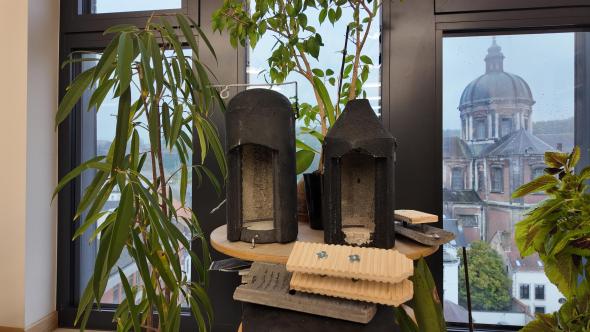
Nichoirs à chauves-souris

Faced with declining bat populations, the team has chosen to focus its efforts on these little-known but indispensable mammals. "We responded to the 2023 CaNDLE call for projects by focusing on bats to encourage increased biodiversity at UNamur," explains Laura De Wandeleer. The project involves the installation of bat nesting boxes on several University buildings, similar to previous actions carried out for martinets in 2021. Around thirty gîtes will be set up.

The aim is not only to provide a safe habitat for bats in cities, where renovations and insulation work have reduced their natural refuges, but also to closely monitor the installed populations to assess the effectiveness of the measures. "What's also interesting about bats is that they provide important ecosystem services, such as regulating insect populations," adds Laura.

Raising awareness to protect

In addition to the direct protection of bats, the project places a strong emphasis on raising public awareness. Educational panels will be installed on campus to inform the university community and visitors about the importance of bats and the services they provide to the ecosystem. The idea is also to demystify the many prejudices surrounding these animals, which are often perceived as frightening. "There's nothing dangerous about bats, and they don't get caught in your hair, contrary to popular belief," Laura points out.

Group activities, such as nighttime guiding with acoustic equipment that lets you hear bat ultrasound, will also be on offer. "We want to show that there's life in the city, beyond the asphalt and isolated trees," says Jérémy Berthe. By eventually extending the project to the Haugimont site, an area in a rural setting where internships are organized, the team hopes to reach a wider audience, including high school students.

This project, which is part of a broader drive to promote urban biodiversity, is also a response to the challenges posed by modern renovations, which are often harmful to cave-dwelling species such as bats. By installing these nesting boxes, the University of Namur is proposing an alternative solution that reconciles energy insulation and the preservation of biodiversity.

The team hopes to launch the installation of the nesting boxes within a few weeks, before the end of winter, so that the bats can find refuge in them in spring. The project thus embodies a dual commitment: to protect an endangered species group and to raise community awareness of the harmonious cohabitation between nature and urbanization.

What are CaNDLE projects?

Since 2013, the purpose of the Campus Namur Durable (CaNDLE) calls has been to invite the University Community to propose actions aimed at making the campus and university activity more sustainable in the short, medium and long term.

In 2023, UNamur is launching a fourth CaNDLE call, financed thanks to the joint support of the Fonds Jérôme pour le développement durable and the Assemblée des Cercles des étudiantes et étudiants de l'UNamur.
Festival International Nature de Namur: when passion for nature meets education

Biodiversity
Biology
Geology
Event
SDG#4 - Quality education
SDG#14 - Aquatic life
SDG#17 - Partnerships to achieve the goals

On the occasion of the 30th edition of the Festival International Nature de Namur (FINN), the University of Namur, partner of this event, reaffirms its commitment to environmental awareness by combining science and art. With its immersive stand in the nature village set up at the citadel, and the participation of its experts in the Focus Environnement ecological debates, the University of Namur offers an innovative look at nature through teaching. In addition, a jury of students from the Master in Cinematographic Cultures and Thought awarded the Prix de l'Environnement at the Professional Film Gala.
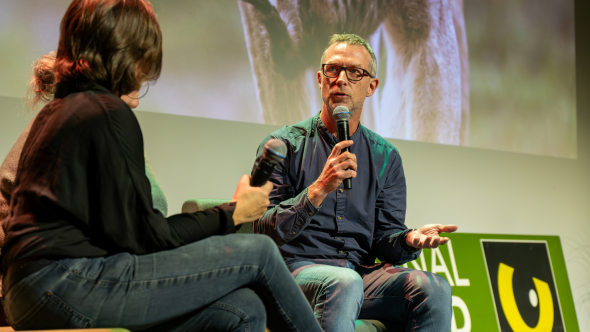
vignette-festival-nature-namur

A "natural" partnership to train tomorrow's players

The FINN represents a unique opportunity for students to discover the professional world beyond the classroom. By taking part, they can interact with experts and enthusiasts in the field, whether professionals, volunteers or amateurs. These meetings are an opportunity to establish valuable, sometimes long-term, links with players in ecological networks, creating bridges between academic training and the professional world.

"Participating in this festival enables our students to meet professionals and amateurs who, like them, are committed to preserving nature," emphasizes Frédéric Silvestre, Professor and Head of the Biology Department, "It's a chance for them to make connections, spark vocations and even discover unexpected areas of interest. Inspiring young people is an essential first step towards acting in favor of respectful cohabitation between humans and nature."

Beyond the encounters, the University of Namur sees this festival as a gateway to future collaborations, particularly for its students' internships. The event provides an opportunity to discover new fields of learning and interests that enrich the career paths of young people in search of practical experience. The partnership thus aims to open up professional prospects while inspiring and guiding those who aspire to build a career linked to ecology.

The environment takes center stage

On October 19, FINN organized the Gala for professional films and the photo competition, during which several prizes were awarded in the presence of directors, photographers and jury members. An evening during which the University of Namur was able to present the Environment Prize. "At the University of Namur, we are committed to the management of nature and the environment through research and teaching. We are therefore proud to support the Prix de l'Environnement," explains Johan Yans, Professor and Head of the Department of Geology. "The Festival's slogan, 'Nature is a spectacle', echoes our missions as a university. We try to teach nature-related disciplines as well as we can: biology, geology, geography... and it's a show, because today we have a master's degree specializing in Cinematic Cultures and Thoughts, as well as additional training in sustainable development. Through our research and pedagogy, we are working to preserve and enhance this natural heritage."The Prix de l'Environnement is supported by the Vice-Rectorate for Sustainable Development and the Faculty of Science.

The particularity of this award ceremony lies in its pedagogical approach. As part of the master's program specializing in cinematographic cultures and thought, Jean-Benoît Gabriel invited his students to form a selection jury. Their mission: to elect the winner from a selection of three professional films presented by FINN, and to present them with the Prix de l'Environnement on behalf of the University of Namur. "We chose to reward Josh Guyan's "Our Prairie", a film that really touched us. It follows a small group of people committed to preserving a nature reserve close to home. The absence of voice-over and the beauty of the images immerse us in their story in an immersive way", announces Bruno, a student on the master's program. "I'm very interested in environmental issues and a great cinema enthusiast, participating in this jury as part of my studies was a very enriching opportunity both personally and professionally,"concluded the student.

A stand in the nature village to promote biology studies and multidisciplinary internships

The nature village, set up on the Terra nova site at the Citadelle, provides an annual showcase for the University of Namur's various training courses and activities, around themes related to art (and more particularly photography), nature and ecology. This year, biology professor Marie Laurence Hubin explains how this space helps promote the projects run by the biology department, and more specifically the multi-disciplinary mountain internship.

"This internship allows students to be out in the field to directly observe fauna, flora, insects, and even explore local geology", she points out. "The hands-on experience is particularly rewarding for students, who can then capture their discoveries in photographs. These snapshots, on display in the nature village, bear witness to their work and are a big hit with visitors."

All news

Agenda

30
2026

Namur Lectures (GCN) | A Conversation with Johan Yans and Tanguy Dumortier

Public Lecture
Public Lecture

Namur Lectures (GCN) | A Conversation with Johan Yans and Tanguy Dumortier

General public
Register for the event
30
2026 20:00 - 22:00
Université de Namur - Auditoire Pedro Arrupe (PA01) - Rue de Bruxelles 65-67 - 5000 Namur
Register for the event

From Wonder to Knowledge: Understanding Nature to Better Protect It.
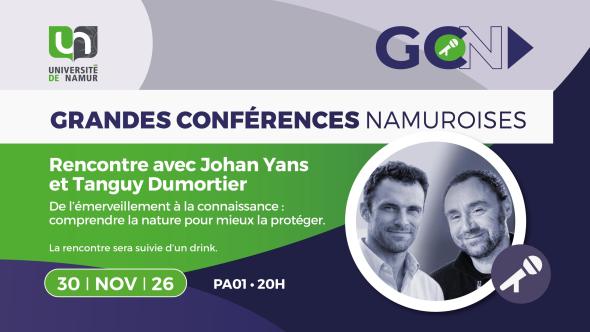
GCN Tanguy Dumortier et Johan Yans

For this season’s second Namur Grand Lecture Series, we are pleased to welcome Johan Yans, professor of geology at UNamur, and Tanguy Dumortier, journalist and host of *Le Jardin Extraordinaire*. The lecture will be moderated by Frédéric Sylvestre, a biology professor, as part of the department’s 50th-anniversary celebrations.

How can we better protect nature and inspire people to care for it? This lecture explores two approaches to this question. On the one hand, a sense of wonder and increased awareness can help us see our surroundings in a new light. On the other hand, scientific research allows us to better understand natural environments, their evolution, and the changes affecting them. 

Tanguy Dumortier, journalist, director, and host of *Le Jardin Extraordinaire* on RTBF, will share his experience in popularizing science and raising awareness about nature. Johan Yans, professor of geology at UNamur and president of the ILEE Institute, will discuss how research, teaching, and the dissemination of knowledge can contribute to a better understanding of our environment. These are two complementary approaches to better understanding and protecting nature. They will engage in a discussion with Frédéric Silvestre, a professor in the Department of Biology at UNamur.

The conference will take place from 8:00 p.m. to approximately 9:30 p.m.

Practical information: 

  • Monday, November 30, 2026
  • Doors open at 7:30 p.m.; lecture begins at 8:00 p.m.
  • Pedro Arrupe Auditorium (PA01), Rue de Bruxelles 65–67, Namur
  • The event will be followed by a reception

In partnership with the Point Virgule bookstore.

All events
Image
Amélie Lachapelle (c) Sebastien Roberty

Gouvernance durable

Amélie Lachapelle, Chargée de mission « Transitions & Développement soutenable », veille à l’élaboration et à la mise en œuvre des politiques de développement durable au sein de l’institution (Plan de transition) sous la responsabilité politique conjointe de la Rectrice et de l'Administratrice générale.