Win4Doc | Automating the Production of Radiotracers for Medical Imaging
Life and health sciences
Chemistry
Created on
13 Aug 2026
Modified on
13 Aug 2026
Share this article
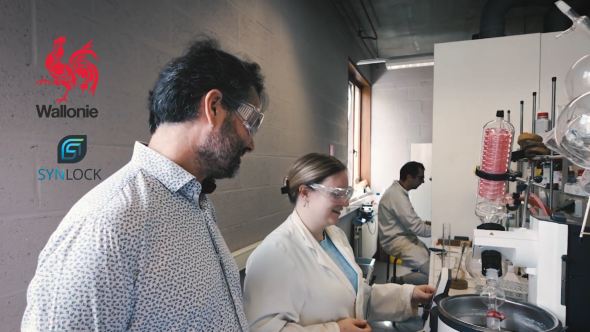
At UNamur, a doctoral thesis led by Juliette Liégeois—with support from SPW Recherche as part of the Win4Doc program—aims to modernize the automated production of radiotracers used, in particular, to diagnose certain cancers and other diseases. Called SMART, the project is being developed in collaboration with Synlock, a company that designs synthesis robots for academic and industrial laboratories.
Radiotracers are small radioactive molecules used in medical imaging. Once injected into the body, they can bind to specific targets characteristic of a disease and emit radiation that can be detected by imaging devices. Juliette Liégeois, a doctoral student at the Bioorganic Chemistry Laboratory (CBO) at UNamur, is working on these molecules as part of a thesis conducted in collaboration with the company Synlock. “You can compare them to GPS trackers. For example, they make it possible to precisely locate a tumor in the human body and then help the oncologist determine a treatment strategy,” she explains.
But producing these molecules is a real challenge. Because they are radioactive and unstable, they must be synthesized quickly and under conditions that ensure the safety of the scientists. Their synthesis is therefore carried out using automated machines capable of performing the various steps in sequence without direct human intervention. However, a large portion of the automated systems currently in use still rely on technologies that do not easily accommodate certain newer synthesis methods developed in research laboratories.
The goal of the SMART project is precisely to bridge this gap by adapting existing methods so they can be integrated into automated systems and to verify their effectiveness under conditions that closely resemble actual production.
Adapting machines to new research methods
To achieve this, Juliette Liégeois is working on two techniques. Biocatalysis uses enzymes to carry out certain chemical reactions under milder conditions, while photocatalysis uses light to trigger these reactions. These two methods are often used in research but still need to be adapted to the constraints of automated machines.
The project is also testing the Cheminizer, a technology developed by Synlock. This reactor rotates during the manufacturing process to better mix the various components and more effectively control the reactions. Its operation could, in particular, facilitate the use of light and enzymes.
From the Laboratory to Automated Production
The SMART project is based on the complementary strengths of UNamur and Synlock. The company contributes its expertise in the design of machinery and reactors, while UNamur’s Bioorganic Chemistry Laboratory (CBO) contributes its knowledge of chemical reactions.
Image
“The collaboration between Synlock and the CBO laboratory offers two key benefits. First, there is synergy regarding the technology or technologies developed in the project: the company contributes its expertise in the field of reactors, while the laboratory contributes its knowledge of chemical reactions and transformations relevant to the project. The other important aspect is the management and direction of strategic decisions to be made in consultation with both partners, as these decisions can have direct economic implications for the development of Synlock’s products.”
Professeur Stéphane VincentCBO Manager and Project Promoter
Watch the video about the project
Win4doc | Bridging the Gap Between Academic Research and Industry
Win4Doc is a program established by Wallonia (SPW Research) that allows a Walloon company to hire a researcher to conduct doctoral research in collaboration with a university research unit.