
Salle des pros
La dynamique de la formation continue des enseignants à l'Université de Namur, carrefour entre recherche et terrain !
La Salle des Pros est avant tout un lieu à l’écoute des questions que les enseignants se posent dans le cadre de leur pratique.
A l'intersection entre les milieux de la pratique et de la recherche, elle traite des problématiques qui émergent du terrain par le biais de réflexions, d'échanges et de constructions communes.
Le public cible
Les acteurs de l'enseignement : Enseignants - Éducateurs - Directeurs - Conseillers pédagogiques - Inspecteurs - Formateurs - Étudiants en agrégation/HE - ...
Je cherche
Spotlight
News

Article
-
Faculty of Law
NaDI Institute
Continuing Education: An Opportunity for Universities
Pedagogy
Article
-
Faculty of Law
Faculty Economics Management Communication Politics (EMCP)
Faculty of Education and Training Sciences
NaDI Institute
Institute
IRDENa Institute
Continuing Education: An Opportunity for Universities
Pedagogy
The days when people chose a career once and for all and when experience alone was enough to climb the career ladder seem to be over. Nowadays, lifelong learning has almost become the norm. “There is clearly a trend in this direction, particularly in the context of automation and artificial intelligence, which makes acquiring new skills all the more important,” says Michel Ajzen, a professor in the Management Department at the Faculty of Economics, Management, and Communication at SciencePo, UNamur, and a member of the Namur Digital Institute. “And it’s not a generational issue: whether you’re 30, 40, or 50, this need exists.”
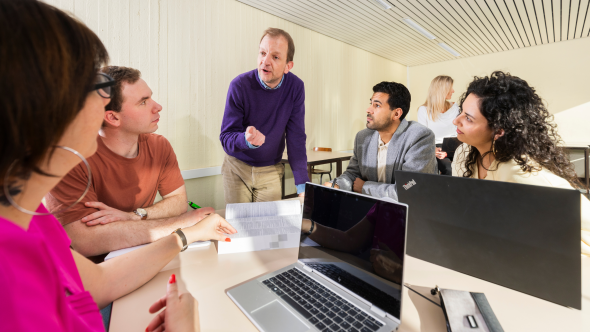
While many companies offer training programs for their employees, it also appears that the “responsibility for employability” has gradually shifted to the workers themselves, who are now expected to take greater control of their careers. “In the past, the boss was seen as responsible for the employee’s development—and even their personal fulfillment—sometimes even beyond the workplace,” notes Michel Ajzen. “But over time, this responsibility for employability has been diluted. ” This trend has been reinforced by new “career scripts,” which are heavily based on mobility. “When I ask students how many employers they think they’ll have in their lifetime, the average answer is six,” the professor continues. “This means that even before entering the workforce, they already have the idea that they’ll move from one employer to another, which can lead them to feel ‘responsible’ for their own careers and thus potentially to pursue training on their own initiative.”
Career Strategies
Getting an education, sure, but in what? And how? As Michel Ajzen explains, this choice depends largely on the “career tactics” adopted by workers. “Depending on their stage of life, they may adopt tactics that are more employment-oriented, with the goal of quickly securing a job to make ends meet,” he explains.
“At other times, they’ll adopt a strategy more focused on employability, with the goal of gradually acquiring the knowledge that will allow them to advance—whether through vertical mobility—within the same company—or horizontal mobility—to another company or a different position. Finally, there’s the ‘meaning’ approach: pursuing training that will lead them to a job that makes them even more eager to get out of bed in the morning…”

Michel Ajzen
Furthermore, training periods are often seen by workers as a breather: an opportunity to step back and “lift their heads up from the handlebars” in what is often a high-pressure workday. This “break” is now governed by various policies. For example, the law of October 3, 2022, guarantees private-sector employees an individual right to training equivalent to 5 days per year for full-time workers. This training may be organized by the employer or left to the employees’ discretion (subject to the employer’s oversight). “However, some companies are not required to guarantee this right to their employees. This is particularly the case for companies with fewer than ten employees,” explains Charlotte Lambert, an associate professor and specialist in labor law. “In labor law, there are also collective bargaining agreements that supplement the law on a sector-by-sector basis and may provide for additional days of training.”
CEP and Time Credit
When an employee wishes to pursue more extensive training—for example, a university certificate program that typically lasts more than five days per year—they can also take advantage of other programs that allow them to maintain all or part of their pay. “Paid educational leave, or CEP—which falls under regional jurisdiction—allows employees to take a recognized training course of at least 32 hours, including initial training,” explains Charlotte Lambert. “The employee retains their pay, while the employer is compensated by the ONEM.”
The other option is “training-related” time credit: this regional program, which exists only in the private sector, allows employees to temporarily reduce or suspend their working hours without affecting the validity of their contract. In this case, the employee receives compensation directly from the ONEM, subject to certain age and seniority requirements. Time credit is also limited to a period of 36 months. “These various programs are not necessarily well known to the public,” comments Charlotte Lambert, “which also explains why many people are discouraged from pursuing training, particularly out of fear of losing their job or having to reduce their working hours and, consequently, their pay.” Furthermore, they are only available to workers with relatively stable employment status (permanent contracts, long-term fixed-term contracts, etc.). “Specific but similar mechanisms exist in the public sector. For the self-employed, however, taking paid leave or using time credits is not an option. They must therefore bear the indirect cost of their training themselves,” the labor law specialist adds.
The Superheroes of the Off-Peak Schedule
Given the need for worker training, universities naturally have a role to play. The “Paysage” decree of November 7, 2013, stipulates that they are authorized to organize continuing education programs accredited by ARES (Academy of Research and Higher Education). “Under the terms of the decree, continuing education does not refer to bachelor’s or master’s degrees, but rather to certificates,” explains Charlotte Lambert. Thus, to avoid any misunderstanding, students should be aware that earning a university certificate is not the same as earning an academic degree and therefore does not confer the same advantages in the job market.
On the other hand, there is indeed the possibility for working professionals to earn a bachelor’s or master’s degree through part-time study, as is the case at the UNamur School of Law. “The unique feature of a bachelor’s degree—and ideally a master’s degree—is that it represents a true fresh start,” emphasizes Mathieu Rolain, academic coordinator of this program and researcher at the Vulnerabilities & Societies (V&S) Center at the Transitions Institute. “Often, it’s a complete career change and sometimes even the fulfillment of a dream: some are 50 years old and are about to begin their bar exam preparation…”. In Block 1 of the Faculty of Law’s part-time program, there are about 50 to 60 enrolled students each year: 10 to 15 of them will graduate in Block 3. “These students are extremely supportive of one another; they share their notes and help each other out when one of them is struggling,” observes the coordinator.
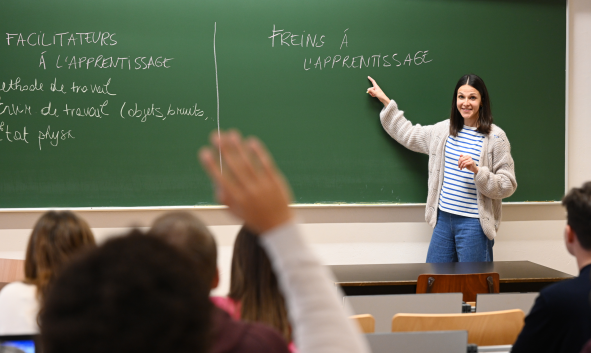
In the same vein, UNamur is committed to tailoring its programs as best as possible to this group. “Many have family responsibilities and sometimes live far from Namur,” continues Mathieu Rolain. “All of our classes are therefore recorded and posted online. We also give them access to staff parking lots and notify them of exam dates well in advance… We try to show them that we support them and understand them. ” Because for these adults with busy professional and personal lives, (re)starting university studies “in evening classes” requires extraordinary discipline and determination, as well as the unconditional support of those around them. “I really admire them a lot,” enthuses Mathieu Rolain. “To me, they’re superheroes. We’ve had medical specialists who came in after their workday, single parents… They’re very unconventional individuals with brilliant backgrounds. They’re also a very demanding group who are always watching your every move—which, for us teachers, is incredibly stimulating.” Because by opening its doors to an experienced audience, the academic world, too, continues to learn.
UNamur, a pioneer in continuing education for teachers
Since the 1980s, the University of Namur has distinguished itself through its expertise in continuing education for teachers, covering both didactic and psychopedagogical aspects.
“It was the Faculty of Philosophy and Letters that initially launched this initiative to offer what were then called ‘refresher courses’ to French teachers,” says Sandrine Biémar, coordinator of the Center for Continuing Education for Teachers at the Faculty of Education and Training Sciences (FaSEF), a professor, and a member of the Institute for Research in Didactics and Education (IRDENa). “ Subsequently, more general training courses on psychopedagogical aspects followed: these were initially organized by the Department of Education and Technology, which has since become FaSEF. Similarly, in the 1990s, the Faculty of Sciences and the Faculty of Economics developed their own centers for continuing teacher education.” These four centers for continuing teacher education are now united under the “Salle des Pros.”
While the decree of June 17, 2021 (Book 6 of the Education Code) formalizes the rights and duties of teaching staff regarding continuing education, this is by no means a new concept for the profession.
“The profession is so complex and subject to so many changes—particularly in curricula and teaching methods—that it is important for teachers to view their career as a continuous process,” insists Sandrine Biémar. “That is why, starting with initial training, we inform students about these opportunities for continuing education.”
The goal is to train “reflective practitioners” capable of questioning their own practices in order to refine and adapt them over time.
“We try to bridge the gap between the world of research and the world of practice: so that we can inform teachers about new studies, but they can also inform us about what’s happening in the field,” the coordinator continues. “The Salle des Pros serves as this space that opens us up to the world.”
The Pros' Room
The Dynamics of Continuing Education for Teachers at the University of Namur: A Crossroads Between Research and Practice!
The Salle des Pros is, above all, a space dedicated to addressing the questions teachers have about their practice. At the intersection of practice and research, it tackles issues that arise in the field through reflection, discussion, and collaborative problem-solving.

Differentiation and Language of Instruction
In addition to the mandatory and free training courses it offers as a “training provider” for teachers, UNamur also offers several certificate programs focused on specific topics. “Teachers voluntarily enroll in these certificate programs, in addition to their mandatory training and outside of their teaching hours, and cover the costs themselves,” explains Sandrine Biémar. Among the topics generating growing interest in the teaching community are differentiated instruction practices. “On a daily basis, teachers are faced with groups of students where each has different needs and learns at different paces,” explains the coordinator. “ Yet there is a whole range of methodologies that allow for these differences to be taken into account, which is a very important issue today, especially with the implementation of the common core curriculum.” Training programs focused on the language of instruction—which are central to combating inequalities—have also expanded significantly. “We make teachers aware that they use language specific to the school setting—‘sit down,’ ‘take out your notebook,’ ‘analyze,’ ‘color in’—and that this language must be made explicit. We need to tell students why we’re having them do this or that.” Finally, AI is, unsurprisingly, one of the new topics in continuing education for teachers, as well as for other audiences (managers, decision-makers, etc.). A new university micro-course on artificial intelligence has been offered since early 2026.
The Benefits of a Flexible/Adapted Schedule
- Identical Degree: The degree awarded is the same as that for the daytime program.
- Recognition of prior learning: Prior learning is recognized and credited.
- Schedule: A calendar and class times tailored to adult learners.
- Access: A campus that’s easily accessible by both train and car.
- Structure: About ten hours of classes per week.
Our staggered/adapted schedules
High School Graduates
- Law
- Economics and Business Administration
- Computer Science
Master's
- Economics and Management
- Education (Sections 4 and 5)
- Computer Science
Specialized Master’s Programs
This article is from the "Issues" section of Omalius magazine, Issue #41 (June 2026).

Article
-
Faculty of Sciences
Landscape analysis: three questions to understand this key concept in regional development
Geography
Landscape analysis: three questions to understand this key concept in regional development
Geography
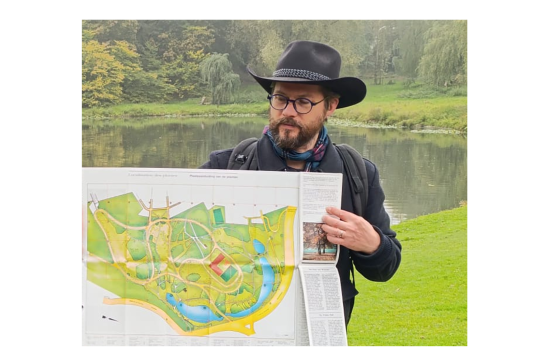
How can we better understand the landscape around us? For over ten years, UNamur has been offering continuing education in landscape analysis. What does this concept involve? What are its objectives? And how is landscape analysis practiced? Answers with Corentin Fontaine, Coordinator and Trainer for "Les Ateliers du Paysage" organized by UNamur's center for continuing education in science and mathematics (CeFoSciM).
What do we mean by landscape analysis?
Whether remarkable or ordinary, urban or rural, the landscape is not only an essential component of the quality of our living space, but also a major asset for the economic, social and cultural development of a region. Landscape analysis is an approach that enables us to better understand the territory we occupy. It's about understanding how our living spaces have been organized in the past, to help build and develop them for tomorrow. In this concept, we place ourselves in a spatio-temporal continuum, with a retrospective and prospective analysis: I look at the landscape today, identify what led our predecessors to shape it as it stands, then imagine the landscape of tomorrow, informed by current societal issues.
What are the objectives of this method?
It's about using a scientific approach to equip various local players, such as regional planning and development professionals, to better understand our current living spaces and plan for their future development. For example, the analysis can be used in targeted, individual projects, such as the construction or renovation of a single-family home, or more collective projects, such as the enhancement of a neighborhood's heritage. Their installation contributes to a continuous modification of landscapes, whether in urban or rural areas. Taking this impact into account and understanding it, through landscape analysis, contributes to their integration into the existing landscape and facilitates their acceptance. This can also be useful in more global projects, such as the pedestrianization of a city center. Here too, landscape analysis serves as a toolbox, providing a series of techniques to help understand the issues driving this territorial change. Beyond management issues, training in landscape analysis can also be useful for tourism and heritage professionals. They then have complementary elements to their basic training to amplify their stories as nature guides or tourist guides, for example.
In concrete terms, what are these tools? How do you "do" landscape analysis?
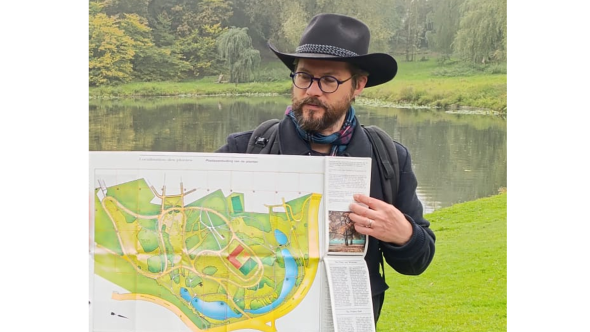
There are in fact several processes to combine, revolving around two central tools: cartographic analysis and field visits. First and foremost, the landscape must be studied on site. You also need to be able to meet the people who can help you with the analysis, because they are the living local memory. In addition, there's a great deal of historical research to be done. In landscape analysis, we are therefore in a discipline at the crossroads of natural and human sciences: geography, urban planning, history, geology, politics, agronomy, sociology, biology; ...
Landscape analysis training at UNamur
Discover it in pictures!
9 workshop modules: training combining practical experience and theory
CEFOSCIM offers "tailor-made" training with a flexible formula, presenting 9 distinct modules, each lasting three days, sometimes focusing on rural landscapes, sometimes on urban landscapes, while keeping the complexity of the "territory" system as a guiding thread.
Workshops last 3 to 4 full days, mainly in the field. These field days generally run from 9am to 6pm. Moments of theory and restructuring exercises are distilled among the field activities.
Each workshop has one day of theory, organized in Namur from 9am to 5pm.
The next workshop will be devoted to "Post-oil landscapes" and will be held on May 22,23 and 24, 2025. The compact format (3 days in a row rather than 3 Fridays in a row) will allow us to invite several speakers specializing in territorial foresight, including an interdisciplinary French collective.

Article
-
IRDENa Institute
"La Salle des Pros", the new partner of education professionnals
Institution
Pedagogy
"La Salle des Pros", the new partner of education professionnals
Institution
Pedagogy
The four UNamur continuing education centers specializing in the education sector have come together within "La Salle des Pros" to strengthen their collaborations, their cross-functional approach and their visibility. However, each center retains its autonomy and its faculty roots in order to preserve its specificities and maintain a close link with research and the initial training of teachers.

Active dans le domaine de la formation continuée depuis 1977, l’Université de Namur accorde une importance particulière aux acteurs de l’éducation et de l’enseignement. Depuis de nombreuses années, le CEDOCEF, le CEDES, le CEFOSCIM et le CEFOPEF (voir ci-dessous) leur proposent diverses activités : des formations continuées, des conférences, des outils pédagogiques, etc.
Des collaborations ponctuelles entre les centres se développaient depuis une dizaine d’années au sein d’un pôle qui regroupait les directeurs des centres. La Salle des Pros existait, elle aussi, au sein du CEFOPEF. Lieu d’échanges à l'intersection entre la pratique et la recherche, elle proposait des conférences sur des problématiques pédagogiques transversales.
Aujourd’hui, en se regroupant physiquement et structurellement au sein de la Salle des Pros, les quatre centres franchissent une étape supplémentaire dans leur dynamique d’échanges et de réseautage. Ils visent ainsi à mettre en place des formations continuées toujours plus qualitatives, transversales et innovantes.
Concrètement, les équipes des centres sont maintenant installées dans le bâtiment du Business and Learning Center de l’Université, situé au numéro 5 de la rue Godefroid à Namur. Elles y accueillent désormais leurs publics et y organisent une part importante de leurs activités. Les enseignants, les directeurs d’écoles, les accompagnateurs pédagogiques, les formateurs d’enseignants s’y côtoient plus aisément. Plus accessible, et plus visible, la Salle des Pros favorisera sans nul doute une nouvelle dynamique de collaboration.

La Salle des Pros, le nouveau partenaire des acteurs de l'éducation
Cet article a été réalisé pour la rubrique "Tomorrow learn" du magazine Omalius #26 de septembre 2022 et mis à jour le 17 mai 2023, à l'occasion de l'inauguration officielle de la salle des pros, puis le 25 mai.
Spécificité et autonomie des centres
Au sein de la Salle des Pros, les quatre centres restent autonomes afin de préserver leurs spécificités. « Chacun, en raison de son histoire, a développé des activités dans des niches différentes. Le CEDOCEF est par exemple reconnu comme un acteur essentiel de la recherche en didactique du français grâce à ses publications telles que la collection “Diptyque” », explique David Vrydaghs, directeur du centre. De son côté, le CEFOSCIM se distingue entre autres par son expertise en analyse paysagère qui a débouché sur la création de deux observatoires du paysage et d’un certificat d’université dans ce domaine spécifique. Le CeDES est, quant à lui, reconnu pour sa plateforme numérique proposant de multiples ressources pédagogiques et didactiques largement utilisées par les enseignants des sciences économiques et sociales. En ce qui concerne le CEFOPEF, il se démarque par sa transversalité et ses actions avec des publics variés dont les cadres de l’enseignement et de l’accompagnement, ainsi que par sa volonté d’impliquer des acteurs de terrain dans ses activités.
La recherche, l’atout des centres de formation continuée
En préservant leur autonomie, les centres entendent aussi garder leur ancrage facultaire. « Cet ancrage est essentiel parce qu’il nous permet de maintenir un lien fort avec la recherche. Toutes les actions que nous menons se nourrissent des réflexions issues de travaux de recherche en didactique ou en psychopédagogie », souligne Sandrine Biémar, directrice du CEFOPEF. « Nous avons aussi la chance de pouvoir nous appuyer sur l’institut IRDENA (Institut de Recherche en Didactiques et Éducation) dont nous faisons partie » remarque Philippe Snauwaert, directeur du CEFOSCIM.
De la recherche au terrain et inversement !
Les formations continuées offrent aux chercheurs l’opportunité de diffuser plus largement les résultats de leurs travaux. Le CEFOSCIM a par exemple présenté lors du récent Congrès des sciences pour les professeurs, un nouvel outil développé par leurs chercheurs « HEREDITY Challenge » . De même, le CEDOCEF et le CEFoPEF intègrent dans leur certificat en « différenciation et langues de scolarisation » des contenus issus des travaux de recherche financés par la FWB qui ont été menés en 2019-2020 en collaboration avec des écoles de l’enseignement primaire et secondaire.
« Cet échange permanent avec les acteurs de terrain nous permet aussi d’identifier un certain nombre de besoins émergents et d’essayer d’y répondre de la meilleure façon. Nous nous sommes par exemple aperçus que les professeurs ne maitrisent pas toujours tous les enjeux, toutes les difficultés, des médias tels que les sites internet, le cinéma, les séries télévisées, lorsqu’ils les utilisent dans leurs classes. Et quand ils les perçoivent, ils ne sont pas toujours en mesure de les traiter. Ils reviennent alors vers nous avec des questions. C’est la raison pour laquelle, le CEDOCEF a souvent proposé ces dernières années, des formations continuées sur le cinéma en particulier, mais aussi sur les séries, la bande dessinée ou encore les ressources internet », explique David Vrydaghs.
Avec « La Salle des Pros », l’Université de Namur étoffe donc son offre de formation continuée à destination des acteurs de l’éducation et de l’enseignement. Elle favorise l’approche transversale des différents centres, tout en maintenant leur ancrage facultaire, indispensable pour préserver leur lien étroit avec la recherche et la formation initiale des enseignants. Elle deviendra certainement un lieu incontournable pour de nombreuses écoles et enseignants, surtout dans le contexte actuel marqué par la mise en place du pacte d’excellence et la réforme de la formation initiale.
Les quatre centres de la Salle des Pros
Le CeDES diffuse de multiples ressources pédagogiques et didactiques à destination des enseignants de sciences économiques, de gestion et de sciences sociales (enseignement de transition et qualifiant) : revue de presse, dossiers thématiques, séquences d’apprentissage, etc. Il propose également des formations en présentiel à l’intention de ce public.
Le CEFOSCIM organise des formations pour les professeurs du secondaire, en chimie, biologie, physique, mathématiques ou géographie, mais également des formations continues en gestion animalière et des certificats d’université.
Le CEFOPEF propose à un large public (enseignants, directeurs, conseillers pédagogiques, PMS, éducateurs, gestionnaires de formation, accompagnateurs…) des activités sur des thématiques psychopédagogiques comme par exemple, la différenciation, la mise en place de dynamiques collaboration, la gestion des émotions dans l’apprentissage (etc.) Différents dispositifs combinant échanges et analyses de pratiques, formations et accompagnement, sont proposés aux acteurs de l’enseignement.
Omalius
Cet article est tiré du magazine Omalius #26 (septembre 2022).
Article
-
Faculty of Sciences
Geography Department
Discover the city of Namur through urban trails
Future students
Geography
Discover the city of Namur through urban trails
Future students
Geography
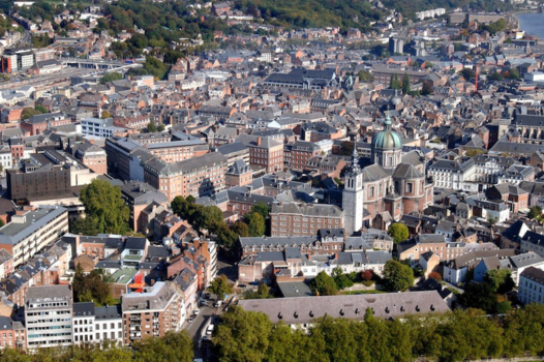
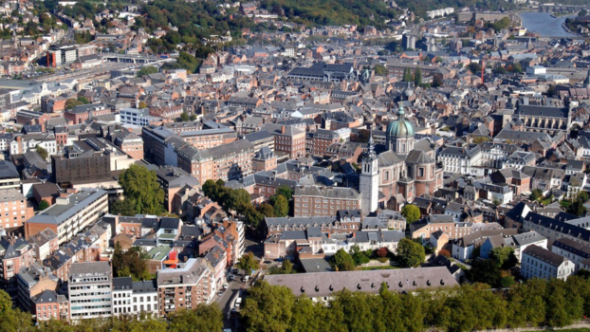
Namur, a capital city at the confluence of the Sambre and Meuse rivers, in the heart of Wallonia. Its history, geography and architecture make it an attractive city and an ideal place for secondary school students to discover the city.
Initier à la lecture et à l'interprétation d'un territoire urbain fait partie des nombreux objectifs du CEFOSCIM, le centre de Formation Continuée en Sciences et Mathématique de l'UNamur. Pour cela, une équipe de passionnés a développé les « Parcours urbains », un outil de lecture des paysages urbains ludique, à destination des enseignants en étude du milieu et de leur classe de 1e et 2e secondaire.
Pour cela, neuf parcours dans le centre-ville de Namur ont été créés. Ces itinéraires illustrent les différentes phases d’urbanisation dans laquelle la ville s’est construite. Ce dispositif permet d'utiliser le paysage comme porte d'entrée privilégiée des apprentissages des six piliers du cours d'EDM, à savoir habiter, circuler, consommer, se cultiver, produire et vivre en société.
Découvrez ce dispositif en images
En pratique, comment cela fonctionne ?
Une fois l’activité présentée par le professeur, les élèves sont invités à découvrir leur carnet de terrain et les cartes du parcours avec le trajet qu’ils devront suivre dans Namur.
Une fois que les élèves ont reçu les instructions et consignes de sécurité, ils peuvent se rendre dans la ville par groupe de quatre, en totale autonomie. Accompagnés d’un guide et d’un référentiel, ils vont pouvoir découvrir la ville, tout en endossant des rôles bien précis : l’élève GPS gérera l’itinéraire et la lecture de la carte, le secrétaire lira les questions et complètera le carnet de terrain, le photographe prendra les photos requises et l’horloge veillera au timing de la sortie.
Durant une heure, les élèves auront l’occasion d’analyser l’architecture des bâtiments, leur fonctionnalité, la disposition des rues, la circulation, les usagers présents (piétons, vélos…) dans les différents quartiers, le vocabulaire urbain… Mais ils seront aussi amenés à réfléchir sur l’avenir de la ville en termes de développement durable.
De retour en classe, c’est l’heure du débriefing. Chaque groupe raconte son expérience vécue sur le terrain. Les enseignants leur proposent alors d’aller plus loin grâce à une mise en situation. Ainsi, les élèves sont amenés à réaliser une brochure pour un office de tourisme contenant un itinéraire de promenade commenté. Ces apprentissages impliquent l’élève et lui permettent de développer son autonomie, la recherche d’information, sa structuration et sa communication. Ces quatre points forment les piliers des compétences d’un cours d’étude du milieu.
« Les enseignants sont séduits par la démarche », se réjouit Christian Jacques, formateur au CEFOSCIM et collaborateur didactique au Département de géographie. « Grâce à ce dispositif, ils ont la possibilité de sortir sur leur terrain avec leur classe et réaliser une activité où leurs élèves sont en totale autonomie. On leur offre une activité préparée et des outils pour aller plus loin sur la thématique de l’analyse des paysages urbains. »
Les avantages de ces parcours sont nombreux : l’expérience par les sens, confronter l’élève au réel, ancrer les apprentissages dans sa mémoire sensorielle, les responsabiliser. Les sorties sur le terrain sont aussi l’occasion de pousser les jeunes à redécouvrir le milieu au travers de problématiques actuelles et de créer du lien entre eux. Les parcours urbains s’inscrivent dans la pédagogie actuelle et active et placent l’élève au cœur de son apprentissage.
Une activité proposée par le CEFOSCIM
Centre de Formation Continuée en Sciences et Mathématique de l'Université de Namur (CEFOSCIM) regroupe les activités des différents départements de la Faculté des sciences.
Depuis 2008, leur domaine d'activité principal est la mise en place de formations continues dédiées aux enseignants du secondaire. Le CEFOSCIM couvre toutes les matières scientifiques enseignées (chimie, biologie, physique, mathématique et géographie) dans le respect des programmes. Fort de son expérience, il a également développé des outils pédagogiques uniques !
Le centre organise également des formations continues (animaux de laboratoire, biosécurité, ateliers du paysage, etc.) et des certificats d'université (CUBEA) destinés à d'autres publics.
Pour découvrir le CEFOSCIM et ses actualités
Contact
La Salle des Pros - salle-des-pros@unamur.be
UNamur - BLC, rue Godefroid, 5 - 5000 Namur