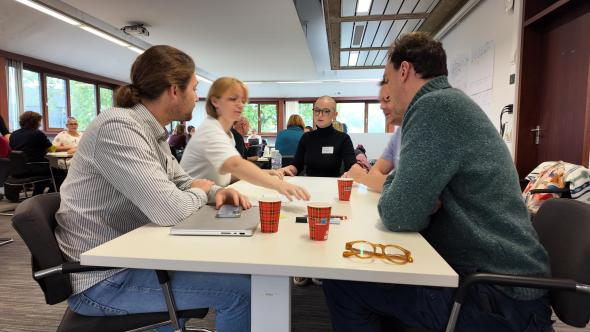
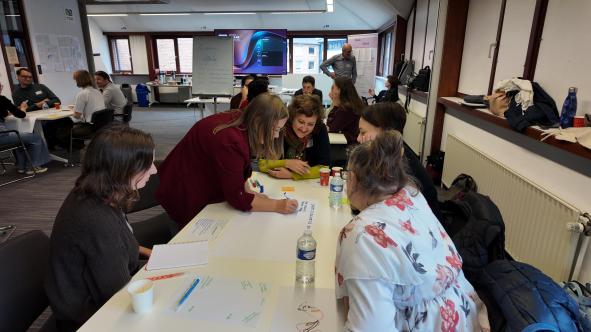
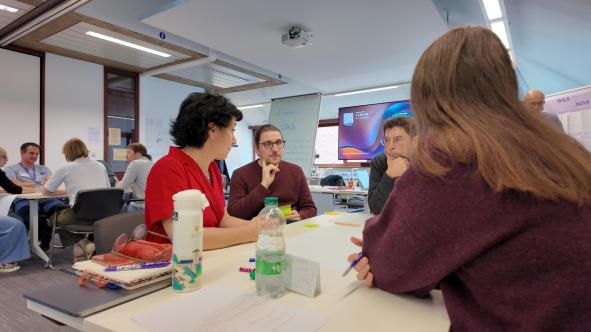
This commitment to taking proactive measures is also reflected at UNamur through a new training program designed for young faculty members who will serve as doctoral advisors. The goal is to equip them with the tools to better support their doctoral students. “We need to shape mindsets early on,” insists Cécile de Terwangne. “The first training session brought together thirteen recently hired young academics, with a balanced representation of men and women.”
The University also pays particular attention to the composition of committees and panels. When these are predominantly male, the goal is to seek greater balance. This is not about assuming that a woman will automatically support another woman, but rather about ensuring a diversity of perspectives and allowing young female researchers to see women in evaluation and leadership roles as well. At the same time, promotion procedures are also evolving toward greater transparency regarding evaluation criteria. This shift is one of several tools for examining the role that biases may play in career trajectories.
This reflection on careers, moreover, goes beyond the issue of gender alone. UNamur participates in the interuniversity CoARA project, which focuses in particular on the support and evaluation of researchers. The goal is to move away from measuring a scientific career solely by the number of publications or citations, and instead to better take into account the full scope of work performed, whether it involves teaching, mentoring, knowledge dissemination, or engagement with the scientific community.