Since 2022, the School of Law has chosen a theme each year designed to bring its entire community together. Following themes such as childhood and migration, the fight against harassment, the promotion of inclusion, and then environmentalism with “Let’s Re-enchant the Earth!”, peace will be the theme for this new academic year.

With “Peace & Law,” the School aims in particular to explore how the law can contribute to peace, as well as the limits of this tool and the situations in which it can, on the contrary, become an instrument of domination or a source of conflict. The “Fil Rouge” initiative brings students and faculty together around a common theme, while forging connections between different courses.

The Genocide in Rwanda as a Starting Point

To launch this new series, the Faculty has chosen to bring together two staunch defenders of human rights—both deeply aware of war and its consequences, but above all active contributors to a peaceful society: Annick Umutoni, a psychologist of Rwandan origin, and Jacques Fierens, a lawyer and professor emeritus at this Faculty.  

For Jacques Fierens, the theme “Peace & Law” immediately brought to mind an experience he had thirty years earlier. In 1996, the Law School received a fax from the new Rector of the National University of Rwanda, himself a former doctoral student at the University of Namur. The university, which had just resumed operations following the genocide against the Tutsis, was seeking a professor to teach the philosophy of law, and Jacques Fierens quickly volunteered.

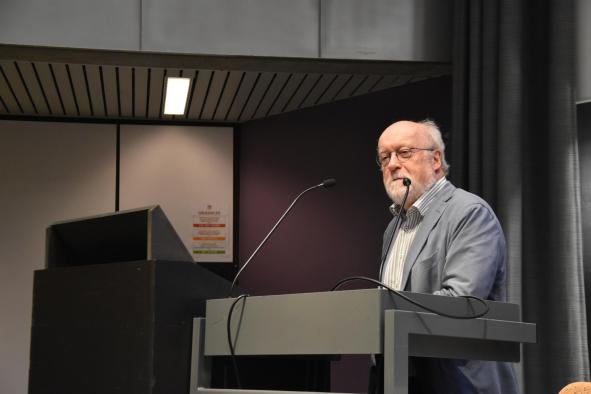
Jacques Fierens
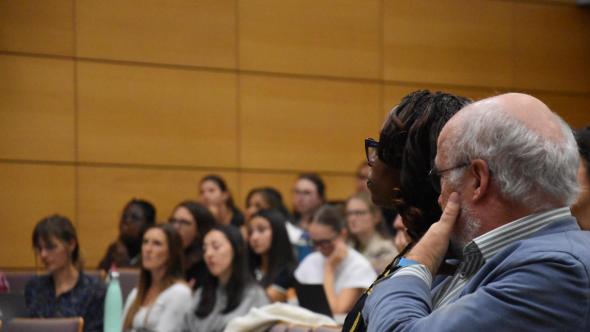
Jacques Fierens devant les étudiants de droit.

Speaking to a group of about fifty students, he discussed the thinkers who have reflected on the relationship between law and peace, from Grotius to Hannah Arendt, including Kant. But the exercise quickly brought him face to face with the limits of his own teaching: how could he discuss law, justice, or peace with students who had themselves experienced the consequences of genocide?

Image
Jacques Fierens

“Peace is infinitely more than just the end of a fight or a war”

Jacques Fierens Attorney and professor emeritus at this law school

For him, this experience has above all reinforced his conviction about the role of the law in peacebuilding: while it cannot solve everything, it can and must lay certain foundations. “The law cannot bring about peace,” he emphasizes. “However, it serves as a threshold, an indispensable step toward peace.”  

Memory, Trauma, and Transmission

Annick Umutoni’s life story offers a different perspective on this issue. A teenager at the time of the 1994 genocide against the Tutsis, she left Rwanda with the last of the UN peacekeepers and went on to build a life in Belgium. Now a psychologist, she works with people dealing with the consequences of conflict and the trauma that can be passed down from one generation to the next. 

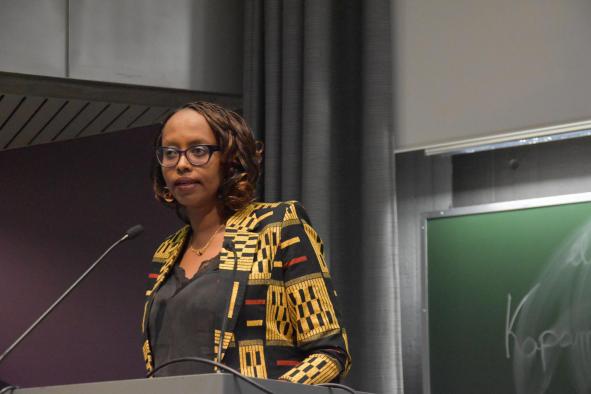
Her work, however, is not limited to Rwanda. She also works with people who have experienced post-conflict situations in the Congo or Burundi, as well as domestic violence, forced marriages, or other forms of violence. “When we talk about peace, we’re also talking about memory—what we pass on or what we don’t—and about resilience,” she explains. During her presentation, Annick Umutoni demonstrated that reflecting on peace also involves discussing trauma and what is built in the aftermath of conflict. 

Annick Umutoni
Annick Umutoni

Talking About Peace with Future Lawyers

For Jacques Fierens, returning to UNamur to speak to the students also held special significance. A former professor at the Faculty, he says he is “more convinced than ever that the world will be saved by young people and by the education they receive.” For Annick Umutoni, the value of Le Fil Rouge also lies in bringing together multiple disciplines and perspectives to address an issue as broad as peace. 

Image
Annick Umutoni

“This blending of all these disciplines is important. It’s not just about law, it’s not just about philosophy: we need to bring different perspectives together to build something more peaceful.”

Annick Umutoni Psychologist of Rwandan origin

The launch on September 22 is just the first step. Several events are already scheduled. On October 12, diplomat Antoine Misonne will speak on the topic “Does public international law still exist?” On October 22, Luuk Van Middelaar and Maxime Prévot will participate in a discussion focused on the European Union as an instrument of peace and the protection of democracy. A discussion on the Israeli-Palestinian conflict, featuring Simone Susskind and Bichara Khader, is scheduled for November 4, while a mock international negotiation on the crisis in Iran will be organized with Professor Elena Aoun. Other activities will be added to the program over the coming months, including a mock trial on the theme “Namur at War.”