
Master in Biomedical Sciences
-
Schedule
regular course
- ECTS Credits 120
You are viewing the program for
Master120 in Biomedical Sciences, professional focus in Clinical Research |
Overview
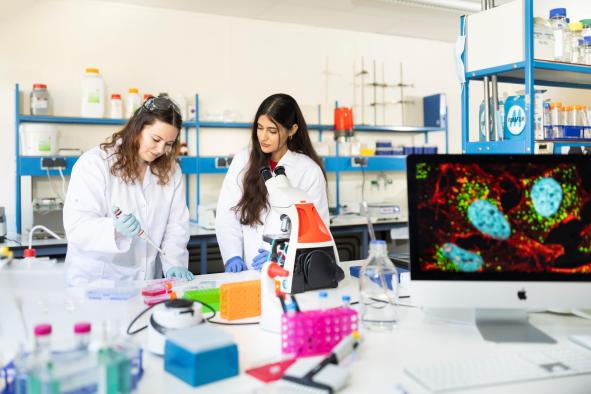
Taught in English, the 120-credit Master in Biomedical Sciences with a focus on clinical research is based around the research carried out on human beings. This Master is offered by UNamur but also relies on the expertise of the University of Liège, which provides many courses related to this professional focus. Thus, courses are taught at both universities.
Your degree programme will boast a significant professional dimension thanks to visits to companies and hospitals, practical projects and a 3 to 4-month internship in a laboratory, hospital or company in Belgium or abroad.
You will also have the opportunity to write a thesis based on 10 months personal project, which you will carry out in a university research group or a clinical setting, from design to completion.
Why choose this program?
- Unique programme in the Wallonia-Brussels Federation with strong links to the biopharmaceutical and biotechnological industries;
- Belgian and international specialists as professors;
- Integrated practical sessions;
- Specialised studies in the field of drug development, including basic and translational research, biotechnology (scale-up and 3D reconstruction), quality assurance and regulatory affairs;
- Rapid integration into the world of work, thanks to company and hospital visits and a placement;
- An excellent command of field-based English;
- An official qualification as a bio-technician in handling laboratory animals and managing experiments, in addition to your Masters degree;
- Experience abroad;
- Many elective courses in cutting-edge fields;.
- Access to a third study cycle: PhD (Doctorate) in Biomedical sciences.
Your goals
- To lead scientific projects which aim for better understanding of the molecular and cellular mechanisms in physiological and pathological conditions: to analyse data, interpret the results and share discoveries with the worldwide scientific community;
- To master every stage of the development of new therapies, in particular biotechnology or cell-related therapies;
- To develop biomarkers related to different therapies, for example using genetics and pharmacogenomics;
- To lead and monitor preclinical or clinical trials and to be responsible for the administrative management of testing;
- To ensure the production quality of biotechnological and biosimilar products, cell therapies (stem cells), gene therapies, tissue engineering, medical devices (implants, drug delivery devices, etc.) and so on;
- To monitor the quality, safety and efficiency of a drug before it is placed on the market.
Other master's programs in biomedical sciences
The University of Namur offers the following master’s programs:
Contacts
School of Medicine
Place du Palais de Justice • B-5000 Namur
Department of Biomedical Sciences
- Secretariat: Ms. Manon Chatillon: manon.chatillon@unamur.be
- Department Head: Prof. Marielle Boonen: departement.biomed@unamur.be
You are viewing the program for
Master 120 in Biomedical Sciences, professional focus in fundamental and preclinical research |
Overview
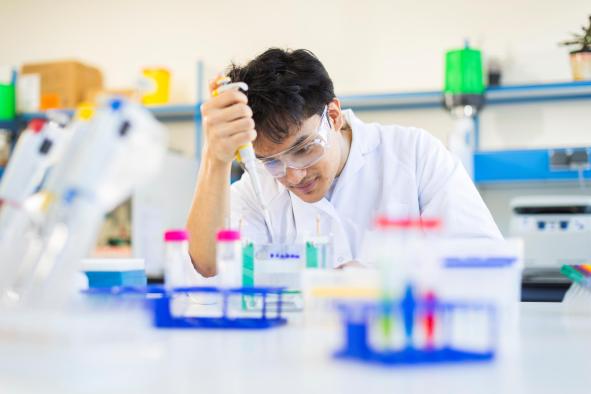
Taught in English, the 120-credit Master in Biomedical Sciences with a focus on fundamental and preclinical research focuses your learning on the laboratory phase of research into new disease-causing mechanisms, as well as products and techniques before they are tested on humans. It is based on a solid grounding in fundamental research, biopharmaceutics, biotechnology and preclinical studies. Students can choose one main orientation among three tracks:
- Biotechnology and Bioindustries
- Cancers and Metabolic diseases
- Molecular and Cellular Pathobiology
your degree programme will boast a significant professional dimension thanks to visits to companies and hospitals, practical projects and a 3 to 4-month internship in a laboratory, hospital or company in Belgium or abroad.
You will also have the opportunity to write a thesis based on 10 months personal project, which you will carry out in a university research group or a clinical setting, from design to completion.
Why choose this program?
- Unique programme in the Wallonia-Brussels Federation with strong links to the biopharmaceutical and biotechnological industries;
- Belgian and international specialists as professors;
- Integrated practical sessions;
- Specialised studies in the field of drug development, including basic and translational research, biotechnology (scale-up and 3D reconstruction), quality assurance and regulatory affairs;
- Rapid integration into the world of work, thanks to company and hospital visits and a placement;
- An excellent command of field-based English;
- An official qualification as a bio-technician in handling laboratory animals and managing experiments, in addition to your Masters degree;
- Experience abroad;
- Many elective courses in cutting-edge fields;.
- Access to a third study cycle: PhD (Doctorate) in Biomedical sciences.
Your goals
- To lead scientific projects which aim for better understanding of the molecular and cellular mechanisms in physiological and pathological conditions: to analyse data, interpret the results and share discoveries with the worldwide scientific community;
- To master every stage of the development of new therapies, in particular biotechnology or cell-related therapies;
- To develop biomarkers related to different therapies, for example using genetics and pharmacogenomics;
- To lead and monitor preclinical or clinical trials and to be responsible for the administrative management of testing;
- To ensure the production quality of biotechnological and biosimilar products, cell therapies (stem cells), gene therapies, tissue engineering, medical devices (implants, drug delivery devices, etc.) and so on;
- To monitor the quality, safety and efficiency of a drug before it is placed on the market.
Other master's programs in biomedical sciences
The University of Namur offers the following master’s programs:
Contacts
School of Medicine
Place du Palais de Justice • B-5000 Namur
Department of Biomedical Sciences
- Secretariat: Ms. Manon Chatillon: manon.chatillon@unamur.be
- Department Head: Prof. Marielle Boonen: departement.biomed@unamur.be
-
Workshop / Theses
Code Name Staff Th.+Ex. Credits/Block 1 2 MSBMM232 A Case Study of Clinical Trial Beaudart Charlotte 30h th. 4 MSBMM233 Master Thesis Beaudart Charlotte Locquet Médéa 30 MSBMM224 Meta-analysis of interventional studies Beaudart Charlotte 24h th. 3 -
Core Curriculum
Code Name Staff Th.+Ex. Credits/Block 1 2 MSBMM113 Bioethics Ravez Laurent Pontarotti Gaëlle 18h th. 2 MSBMM104 Statistics Applied to Biomedical Sciences Le Tallec David 24h th. + 24h ex. 4 MSBMM102 Preclinical Drug Development Gillet Jean-Pierre 24h th. 3 MSBMM114 Introduction to Scientific Research Boonen Marielle Beaudart Charlotte Michiels Carine 13 MSBMM126_clinical research Research Practice Training Beaudart Charlotte De Bolle Xavier Gillet Jean-Pierre 80h ex. 4 MSBMM125 Approaches to Career Development in Biomedical Sciences Gillet Jean-Pierre 12h th. 2 MSBMM208 Master Thesis Beaudart Charlotte Boonen Marielle Michiels Carine 22 MSBMM209 Professional Internship Gillet Jean-Pierre Arnould Thierry 30 -
Modules
Students in the Clinical Research track are required to complete all courses in the Clinical Research Module in Master 1. They then complete their Master 1 programme by selecting an elective course from the Biotechnology and Bioindustries Module. In Master 2, the programme comprises the master thesis and internship, and 8 ECTS to choose from the Clinical Research Module, Biotechnology and Bioindustries Module, or the Complementary Training Module. For more information, please consult the file provided in the Webcampus page “MBIOMEDINFO”, in the PAE section or contact departement.biomed@unamur.be.-
Biotechnology and bioindustries
Code Name Staff Th.+Ex. Credits/Block 1 2 MSBMM107 Biotechnology : Principles and Scale-up Gillet Jean-Pierre 24h th. 3 MSBMM106 Biopharmaceuticals Masereel Bernard 12h th. 2 MSBMM108 Quality Assurance : GMP, GCP, GLP and Auditing 24h th. 3 MSBMM127 Molecular & Clinical Pharmacology Douxfils Jonathan 24h th. 3 MSBMM115 Drug and Society Malonne Hugues 12h th. 2 SBIOM134 Protein Structure and Function Wouters Johan De Bolle Xavier 18h th. 3 SBIOM135 Proteins in the Early Secretory Pathway : Homeostasis and Quality Control Forrester Alison 18h th. 3 MSBMM128 Molecular Diagnostic Karadurmus Deniz 24h th. 3 SVETM209 Molecular Virology Muylkens Benoît Gillet Nicolas 12h th. 2 MSBMM217 Pharmaco-Economy and Health Technology Assessment Ethgen Olivier 18h th. 3 MSBMM205 Vaccinology, Immunotherapy André Emmanuel Dogne Jean-Michel 18h th. 3 MSBMM207 Project Management : Development of Biomarkers Gillet Jean-Pierre 12h th. 2 MSBMM216 Pharmacovigilance Dogne Jean-Michel 18h th. 3 -
Complementary training
Code Name Staff Th.+Ex. Credits/Block 1 2 SBIOM119 Effective Team Collaboration Vincent Béatrice 20h th. 2 MSBMM222 Biomarkers and surrogate markers in clinical dermatology trials Libon Florence 12h th. 2 MSBMM224 Meta-analysis of interventional studies Beaudart Charlotte 24h th. 3 Sustainable developmentImage
MSBMM202 Clinical Project Management Beaudart Charlotte 12h th. 2 Soft skillsImage
SCDLM201_Biologie Advanced English (Level B2+) Zimmer Carole 22.5h th. 2 SCDLM202 Refresher course in Dutch (level B1) Tréfois Cindy 24h th. 3 MSBMM220 Interdisciplinary Program in Healthcare Innovation 20h th. 4 -
Clinical Research
Code Name Staff Th.+Ex. Credits/Block 1 2 SBIM2004-1 Medical Psychology 5h th. + 10h ex. 2 SBIM2006-1 Pathophysiology 30h th. 3 SBIM2005-1 Regulatory Framework for (Bio)Safety and Biorisk Management in Clinical Research 13h th. + 2h ex. 1 SBIM2007-1 Clinical Trials of Medical Devices 20h th. + 10h ex. 3 INFO9005-1 Bioinformatic Skills 10h th. + 20h ex. 2 SBIM2009-1 Patient and Researcher Interplay 20h th. 3 SBIM2010-1 Intellectual Property and Patent 20h th. 2 SBIM2011-1 Writing and Reading Skills 15h th. + 30h ex. 3 SBIM2012-1 Biomarkers and Surrogate Markers in Clinical Research 25h th. + 10h ex. 3 SBIM2013-1 Evidence Based Medicine 10h th. 1 Sustainable developmentImage
MSBMM103 Clinical Trials Beaudart Charlotte 24h th. + 30h ex. 6 MSBMM201 Clinical Research Associate Training Beaudart Charlotte 15h th. 2 MSBMM200 Critical Analysis of Clinical Trials Beaudart Charlotte 20h th. 3
-
-
Core Curriculum
Code Name Staff Credits Hours/Quarter 1 2 MSBMM113 Bioethics Ravez Laurent Pontarotti Gaëlle 2 18h th. MSBMM104 Statistics Applied to Biomedical Sciences Le Tallec David 4 24h th. + 24h ex. MSBMM102 Preclinical Drug Development Gillet Jean-Pierre 3 24h th. MSBMM114 Introduction to Scientific Research Boonen Marielle Beaudart Charlotte Michiels Carine 13 MSBMM126_clinical research Research Practice Training Beaudart Charlotte De Bolle Xavier Gillet Jean-Pierre 4 80h ex. MSBMM125 Approaches to Career Development in Biomedical Sciences Gillet Jean-Pierre 2 12h th. -
Modules
Students in the Clinical Research track are required to select all courses in the Clinical Research Module. In addition, they must select one elective course of 3 ECTS, or two elective courses of 2 ECTS, from the Biotechnology and Bioindustries Module to complete their programme. For more information, please consult the file provided in the Webcampus page “MBIOMEDINFO”, in the PAE section or contact departement.biomed@unamur.be.-
Biotechnology and bioindustries
Code Name Staff Credits Hours/Quarter 1 2 MSBMM107 Biotechnology : Principles and Scale-up Gillet Jean-Pierre 3 24h th. MSBMM106 Biopharmaceuticals Masereel Bernard 2 12h th. MSBMM108 Quality Assurance : GMP, GCP, GLP and Auditing 3 24h th. MSBMM127 Molecular & Clinical Pharmacology Douxfils Jonathan 3 24h th. MSBMM115 Drug and Society Malonne Hugues 2 12h th. SBIOM134 Protein Structure and Function Wouters Johan De Bolle Xavier 3 18h th. SBIOM135 Proteins in the Early Secretory Pathway : Homeostasis and Quality Control Forrester Alison 3 18h th. MSBMM128 Molecular Diagnostic Karadurmus Deniz 3 24h th. SVETM209 Molecular Virology Muylkens Benoît Gillet Nicolas 2 12h th. -
Clinical Research
Code Name Staff Credits Hours/Quarter 1 2 SBIM2004-1 Medical Psychology 2 5h th. + 10h ex. SBIM2006-1 Pathophysiology 3 30h th. SBIM2005-1 Regulatory Framework for (Bio)Safety and Biorisk Management in Clinical Research 1 13h th. + 2h ex. SBIM2007-1 Clinical Trials of Medical Devices 3 20h th. + 10h ex. INFO9005-1 Bioinformatic Skills 2 10h th. + 20h ex. SBIM2009-1 Patient and Researcher Interplay 3 20h th. SBIM2010-1 Intellectual Property and Patent 2 20h th. SBIM2011-1 Writing and Reading Skills 3 15h th. + 30h ex. SBIM2012-1 Biomarkers and Surrogate Markers in Clinical Research 3 25h th. + 10h ex. SBIM2013-1 Evidence Based Medicine 1 10h th. Sustainable developmentImage
MSBMM103 Clinical Trials Beaudart Charlotte 6 24h th. + 30h ex.
-
-
Workshop / Theses
Code Name Staff Credits Hours/Quarter 1 2 MSBMM232 A Case Study of Clinical Trial Beaudart Charlotte 4 30h th. MSBMM233 Master Thesis Beaudart Charlotte Locquet Médéa 30 MSBMM224 Meta-analysis of interventional studies Beaudart Charlotte 3 24h th. -
Core Curriculum
Code Name Staff Credits Hours/Quarter 1 2 MSBMM208 Master Thesis Beaudart Charlotte Boonen Marielle Michiels Carine 22 MSBMM209 Professional Internship Gillet Jean-Pierre Arnould Thierry 30 -
Modules
Students in the Clinical Research track select 8 ECTS of courses among the following Modules: Clinical Reseach, Biotechnology and Bioindustries, or Complementary training. For more information, please consult the file provided in the Webcampus page “MBIOMEDINFO”, in the PAE section or contact departement.biomed@unamur.be.-
Biotechnology and bioindustries
Code Name Staff Credits Hours/Quarter 1 2 MSBMM217 Pharmaco-Economy and Health Technology Assessment Ethgen Olivier 3 18h th. MSBMM205 Vaccinology, Immunotherapy André Emmanuel Dogne Jean-Michel 3 18h th. MSBMM207 Project Management : Development of Biomarkers Gillet Jean-Pierre 2 12h th. MSBMM216 Pharmacovigilance Dogne Jean-Michel 3 18h th. -
Complementary training
Code Name Staff Credits Hours/Quarter 1 2 SBIOM119 Effective Team Collaboration Vincent Béatrice 2 20h th. MSBMM222 Biomarkers and surrogate markers in clinical dermatology trials Libon Florence 2 12h th. MSBMM224 Meta-analysis of interventional studies Beaudart Charlotte 3 24h th. Sustainable developmentImage
MSBMM202 Clinical Project Management Beaudart Charlotte 2 12h th. Soft skillsImage
SCDLM201_Biologie Advanced English (Level B2+) Zimmer Carole 2 22.5h th. SCDLM202 Refresher course in Dutch (level B1) Tréfois Cindy 3 24h th. MSBMM220 Interdisciplinary Program in Healthcare Innovation 4 20h th. -
Clinical Research
Code Name Staff Credits Hours/Quarter 1 2 MSBMM201 Clinical Research Associate Training Beaudart Charlotte 2 15h th. MSBMM200 Critical Analysis of Clinical Trials Beaudart Charlotte 3 20h th.
-
-
Professional Internship
Code Name Staff Th.+Ex. Credits/Block 1 2 MSBMM209 Professional Internship Gillet Jean-Pierre Arnould Thierry 30 -
Core curriculum
Code Name Staff Th.+Ex. Credits/Block 1 2 MSBMM113 Bioethics Ravez Laurent Pontarotti Gaëlle 18h th. 2 MSBMM104 Statistics Applied to Biomedical Sciences Le Tallec David 24h th. + 24h ex. 4 MSBMM126_fundamental and preclinical research Research Practice Training Beaudart Charlotte De Bolle Xavier Gillet Jean-Pierre 80h ex. 4 MSBMM102 Preclinical Drug Development Gillet Jean-Pierre 24h th. 3 MSBMM114 Introduction to Scientific Research Boonen Marielle Beaudart Charlotte Michiels Carine 13 MSBMM125 Approaches to Career Development in Biomedical Sciences Gillet Jean-Pierre 12h th. 2 MSBMM208 Master Thesis Beaudart Charlotte Boonen Marielle Michiels Carine 22 -
Students select a principal module: «Biotechnology and bioindustries», «Molecular and cellular pathobiology», or «Cancers and metabolic diseases». This means that the following courses must be taken in this module. In «Biotechnology and bioindustries» : MSBM M107, MSBM M106, MSBM M108, MSBM M115 MSBMM127, and MSBMM128 In «Molecular and cellular pathobiology» : MSBM M119, SBIO M101, SBIO M120, SBIOM121, and SMEDM115 In «Cancers and metabolic diseases»: MSBMM120, MSBMM129, SBIO M122, SBIO M128 and SBIOM138 Students then complete their programme with courses chosen from the same module or from the other modules (including the complementary training module). For more information, please consult the file provided in the Webcampus page “MBIOMEDINFO”, in the PAE section or contact departement.biomed@unamur.be.
-
Biotechnology and bioindustries
Code Name Staff Th.+Ex. Credits/Block 1 2 MSBMM127 Molecular & Clinical Pharmacology Douxfils Jonathan 24h th. 3 MSBMM107 Biotechnology : Principles and Scale-up Gillet Jean-Pierre 24h th. 3 MSBMM106 Biopharmaceuticals Masereel Bernard 12h th. 2 MSBMM115 Drug and Society Malonne Hugues 12h th. 2 SBIOM134 Protein Structure and Function Wouters Johan De Bolle Xavier 18h th. 3 SBIOM135 Proteins in the Early Secretory Pathway : Homeostasis and Quality Control Forrester Alison 18h th. 3 SVETM209 Molecular Virology Muylkens Benoît Gillet Nicolas 12h th. 2 MSBMM128 Molecular Diagnostic Karadurmus Deniz 24h th. 3 MSBMM108 Quality Assurance : GMP, GCP, GLP and Auditing 24h th. 3 MSBMM217 Pharmaco-Economy and Health Technology Assessment Ethgen Olivier 18h th. 3 MSBMM205 Vaccinology, Immunotherapy André Emmanuel Dogne Jean-Michel 18h th. 3 MSBMM216 Pharmacovigilance Dogne Jean-Michel 18h th. 3 MSBMM207 Project Management : Development of Biomarkers Gillet Jean-Pierre 12h th. 2 -
Molecular and cellular pathobiology
Code Name Staff Th.+Ex. Credits/Block 1 2 MSBMM119 Current Topics in Molecular Cell Biology Boonen Marielle 18h th. 3 SBIOM121 Organelle Dysfunction as the Basis of Diseases Arnould Thierry 18h th. 3 SBIOM101 Advanced Techniques of Cell and Molecular Biology Arnould Thierry De Backer Olivier Renard Henri-François 24h th. 3 SBIOM120 Stem Cells and Differentiation Renard Patricia 18h th. 3 SMEDM115 Intracellular trafficking in normal and pathological conditions Hamer Isabelle Renard Henri-François 18h th. 3 SBIOM132 Bacterial Genetics and Evolution De Bolle Xavier 18h th. 3 SBIOM136 Bacterial Cell Biology Matroule Jean-Yves 18h th. 3 MSBMM118 Cell Models Boonen Marielle 12h th. 2 SBIOM233 Glycobiology Vincent Stéphane 18h th. 3 Sustainable developmentImage
SMEDM237 Molecular Mechanisms of Neurological Diseases Nicaise Charles 18h th. 3 MSBMM214 Basic Research project conception Boonen Marielle 12h th. 2 SBIOM219 Genetic and Cell Therapy Baekelandt Veerle 18h th. 3 -
Cancers and metabolic diseases
Code Name Staff Th.+Ex. Credits/Block 1 2 SBIOM122 Cancer : from molecular to clinical aspects Michiels Carine 18h th. 3 MSBMM120 Cancer Biomarkers : Unlocking Diagnostics and Therapeutic Strategies Degosserie Jonathan Hennequart Marc Balligand Thomas 18h th. 3 SBIOM128 Hot Topics in Microbiomes, Diabetes and Cardiovascular Diseases Arnould Thierry 18h th. 3 SBIOM138 Inflammation Renard Patricia Canonne Morgane 18h th. 3 SBIOM124 Host Pathogen Interactions Gillet Nicolas 18h th. 3 MSBMM129 Overcoming Multidrug Resistance in Cancer: Molecular Targets and Innovations Gillet Jean-Pierre 18h th. 3 Soft skillsImage
MSBMM123 Comparative Pathophysiology Kirschvink Nathalie 12h th. 2 SBIOM208 Anticancer Therapies Feron Olivier 18h th. 3 MSBMM234 Biobanks, Personalized Medicine George Fabienne 15h th. 2 -
Complementary training
Code Name Staff Th.+Ex. Credits/Block 1 2 SFCMM101 Training in animal experimentation at technician level: techniques, alternative methods, legislation and ethics Vermeylen Anne 40h th. 3 SCDLM202 Refresher course in Dutch (level B1) Tréfois Cindy 24h th. 3 SFCMM201 Training of master animal handlers Vermeylen Anne 40h th. 3 MSBMM220 Interdisciplinary Program in Healthcare Innovation 20h th. 4 MSBMM222 Biomarkers and surrogate markers in clinical dermatology trials Libon Florence 12h th. 2 SBIOM119 Effective Team Collaboration Vincent Béatrice 20h th. 2 Soft skillsImage
SCDLM201_Biologie Advanced English (Level B2+) Zimmer Carole 22.5h th. 2 Sustainable developmentImage
MSBMM202 Clinical Project Management Beaudart Charlotte 12h th. 2
-
-
Core curriculum
Code Name Staff Credits Hours/Quarter 1 2 MSBMM113 Bioethics Ravez Laurent Pontarotti Gaëlle 2 18h th. MSBMM104 Statistics Applied to Biomedical Sciences Le Tallec David 4 24h th. + 24h ex. MSBMM126_fundamental and preclinical research Research Practice Training Beaudart Charlotte De Bolle Xavier Gillet Jean-Pierre 4 80h ex. MSBMM102 Preclinical Drug Development Gillet Jean-Pierre 3 24h th. MSBMM114 Introduction to Scientific Research Boonen Marielle Beaudart Charlotte Michiels Carine 13 MSBMM125 Approaches to Career Development in Biomedical Sciences Gillet Jean-Pierre 2 12h th. -
Students select a principal module: «Biotechnology and bioindustries», «Molecular and cellular pathobiology», or «Cancers and metabolic diseases». This means that the following courses must be taken in this module. In «Biotechnology and bioindustries» : MSBM M107, MSBM M106, MSBM M108, MSBM M115 MSBMM127, and MSBMM128 In «Molecular and cellular pathobiology» : MSBM M119, SBIO M101, SBIO M120, SBIOM121, and SMEDM115 In «Cancers and metabolic diseases»: MSBMM120, MSBMM129, SBIO M122, SBIO M128 and SBIOM138 Students then complete their programme with courses chosen from the same module or from the other modules (including the complementary training module) to reach 32 ECTS in total. For more information, please consult the file provided in the Webcampus page “MBIOMEDINFO”, in the PAE section or contact departement.biomed@unamur.be.
-
Biotechnology and bioindustries
Code Name Staff Credits Hours/Quarter 1 2 MSBMM127 Molecular & Clinical Pharmacology Douxfils Jonathan 3 24h th. MSBMM107 Biotechnology : Principles and Scale-up Gillet Jean-Pierre 3 24h th. MSBMM106 Biopharmaceuticals Masereel Bernard 2 12h th. MSBMM115 Drug and Society Malonne Hugues 2 12h th. SBIOM134 Protein Structure and Function Wouters Johan De Bolle Xavier 3 18h th. SBIOM135 Proteins in the Early Secretory Pathway : Homeostasis and Quality Control Forrester Alison 3 18h th. SVETM209 Molecular Virology Muylkens Benoît Gillet Nicolas 2 12h th. MSBMM128 Molecular Diagnostic Karadurmus Deniz 3 24h th. MSBMM108 Quality Assurance : GMP, GCP, GLP and Auditing 3 24h th. -
Molecular and cellular pathobiology
Code Name Staff Credits Hours/Quarter 1 2 MSBMM119 Current Topics in Molecular Cell Biology Boonen Marielle 3 18h th. SBIOM121 Organelle Dysfunction as the Basis of Diseases Arnould Thierry 3 18h th. SBIOM101 Advanced Techniques of Cell and Molecular Biology Arnould Thierry De Backer Olivier Renard Henri-François 3 24h th. SBIOM120 Stem Cells and Differentiation Renard Patricia 3 18h th. SMEDM115 Intracellular trafficking in normal and pathological conditions Hamer Isabelle Renard Henri-François 3 18h th. SBIOM132 Bacterial Genetics and Evolution De Bolle Xavier 3 18h th. SBIOM136 Bacterial Cell Biology Matroule Jean-Yves 3 18h th. MSBMM118 Cell Models Boonen Marielle 2 12h th. -
Cancers and metabolic diseases
Code Name Staff Credits Hours/Quarter 1 2 SBIOM122 Cancer : from molecular to clinical aspects Michiels Carine 3 18h th. MSBMM120 Cancer Biomarkers : Unlocking Diagnostics and Therapeutic Strategies Degosserie Jonathan Hennequart Marc Balligand Thomas 3 18h th. SBIOM128 Hot Topics in Microbiomes, Diabetes and Cardiovascular Diseases Arnould Thierry 3 18h th. SBIOM138 Inflammation Renard Patricia Canonne Morgane 3 18h th. SBIOM124 Host Pathogen Interactions Gillet Nicolas 3 18h th. MSBMM129 Overcoming Multidrug Resistance in Cancer: Molecular Targets and Innovations Gillet Jean-Pierre 3 18h th. Soft skillsImage
MSBMM123 Comparative Pathophysiology Kirschvink Nathalie 2 12h th. -
Complementary training
Code Name Staff Credits Hours/Quarter 1 2 SFCMM101 Training in animal experimentation at technician level: techniques, alternative methods, legislation and ethics Vermeylen Anne 3 40h th.
-
-
Professional Internship
Code Name Staff Credits Hours/Quarter 1 2 MSBMM209 Professional Internship Gillet Jean-Pierre Arnould Thierry 30 -
Core curriculum
Code Name Staff Credits Hours/Quarter 1 2 MSBMM208 Master Thesis Beaudart Charlotte Boonen Marielle Michiels Carine 22 -
Aside from the master thesis and internship, students complete their programme to reach 8 ECTS in total. It is recommended to select course in the same principal module chosen in the 1st year, but not mandatory. The courses organized in the 2nd semester will be taught in February (after the master thesis and before the beginning of the internship).
-
Biotechnology and bioindustries
Code Name Staff Credits Hours/Quarter 1 2 MSBMM217 Pharmaco-Economy and Health Technology Assessment Ethgen Olivier 3 18h th. MSBMM205 Vaccinology, Immunotherapy André Emmanuel Dogne Jean-Michel 3 18h th. MSBMM216 Pharmacovigilance Dogne Jean-Michel 3 18h th. MSBMM207 Project Management : Development of Biomarkers Gillet Jean-Pierre 2 12h th. -
Molecular and cellular pathobiology
Code Name Staff Credits Hours/Quarter 1 2 SBIOM233 Glycobiology Vincent Stéphane 3 18h th. Sustainable developmentImage
SMEDM237 Molecular Mechanisms of Neurological Diseases Nicaise Charles 3 18h th. MSBMM214 Basic Research project conception Boonen Marielle 2 12h th. SBIOM219 Genetic and Cell Therapy Baekelandt Veerle 3 18h th. -
Cancers and metabolic diseases
Code Name Staff Credits Hours/Quarter 1 2 SBIOM208 Anticancer Therapies Feron Olivier 3 18h th. MSBMM234 Biobanks, Personalized Medicine George Fabienne 2 15h th. -
Complementary training
Code Name Staff Credits Hours/Quarter 1 2 SCDLM202 Refresher course in Dutch (level B1) Tréfois Cindy 3 24h th. SFCMM201 Training of master animal handlers Vermeylen Anne 3 40h th. MSBMM220 Interdisciplinary Program in Healthcare Innovation 4 20h th. MSBMM222 Biomarkers and surrogate markers in clinical dermatology trials Libon Florence 2 12h th. SBIOM119 Effective Team Collaboration Vincent Béatrice 2 20h th. Soft skillsImage
SCDLM201_Biologie Advanced English (Level B2+) Zimmer Carole 2 22.5h th. Sustainable developmentImage
MSBMM202 Clinical Project Management Beaudart Charlotte 2 12h th.
-
Admission requirements
Si vous avez un diplôme belge
ACCÈS DIRECT
- bachelier en sciences biomédicales ;
ACCÈS moyennant un éventuel COMPLÉMENT DE 15 CRÉDITS maximum
- bachelier en sciences pharmaceutiques, médecine, médecine vétérinaire, sciences biologiques, sciences dentaires, kinésithérapie et réadaptation, sciences de la motricité, sciences chimiques ;
- master en ingénieur civil en chimie et science des matériaux, sciences de la santé publique, kinésithérapie et réadaptation.
ACCÈS moyennant un COMPLÉMENT DE 15 À 30 CRÉDITS
- bachelier (type court) en sage-femme, infirmier responsable en soins généraux ;
- bachelier de spécialisation (type court) en anesthésie, soins intensifs et aide médicale urgente.
ACCÈS moyennant un COMPLÉMENT DE 30 À 60 CRÉDITS
- bachelier (type court) en diététique, ergothérapie, soins infirmiers, technologie en imagerie médicale, technologue de laboratoire médical ;
- bachelier (type court) en chimie orientation biochimie, biotechnologie, chimie appliquée, environnement;
- bachelier (promotion sociale) en soins infirmiers pour titulaires du brevet d'infirmier hospitalier.
ACCÈS SUR DOSSIER
- autre diplômé de l’enseignement supérieur de la Communauté française de Belgique, tel que le bachelier (type court) en agronomie, orientation agro-industries et biotechnologies moyennant des éventuelles unités d'enseignement supplémentaires ;
- diplômé de l’enseignement supérieur hors Communauté française de Belgique, dans ce cas, des unités d'enseignement supplémentaires relevant du bachelier en sciences biomédicales peuvent êtres imposées au candidat par conséquent, celui-ci est tenu de maitriser le français ;
- sur base de VAE (Valorisation des acquis de l'expérience).
Pour les admissions en master, il y a lieu de prendre contact avec le service des inscriptions.
Si vous avez un diplôme non-belge
If you have a degree from an institution outside of Belgium, you will need to complete and return the admissions request form before 30 September (31 March for students from outside the European Union).
________________________________________________________________________________________________________________
Students with a first degree obtained in Belgium
> DIRECT ACCESS
- Bachelor in Biomedical Sciences.
> ACCESS subject to a maximum of 15 ADDITIONAL CREDITS
- Bachelor in Pharmacy, Medicine, Veterinary Medicine, Biology, Dentistry, Physiotherapy and Rehabilitation, Motor Sciences, Chemistry;
- Master in Chemical and Materials Science Engineering, Public Health, Physiotherapy and Rehabilitation.
> ACCESS subject to AN ADDITIONAL 15 TO 30 CREDITS
- Bachelor in Midwife, Nurse Responsible for General Care;
- Advanced Bachelor in Anaesthesia, Intensive Care and Emergency Medical Aid.
> ACCESS subject to AN ADDITIONAL 30 TO 60 CREDITS
- Bachelor in Dietetics, Occupational Therapy, Nursing, Medical Imaging Technologist, Medical Laboratory Technologist;
- Bachelor in Chemistry orientation Biochemistry, Biotechnology, Applied Chemistry, Environment;
- Bachelor in Nursing for holders of the certificate of Hospital Nurse.
> ACCESS BY APPLICATION
- other higher education qualifications obtained in the French Community of Belgium, such as the bachelor's degree (short programme) in agronomy, specialising in agro-industries and biotechnologies, with the possibility of additional teaching units ;
- higher education qualifications obtained outside of the French Community of Belgium, in this case, additional teaching units relating to the Bachelor's degree in Biomedical Sciences may be required of the candidate. Consequently, the candidate is required to have a good command of French ;
- on the basis of VAE (‘Valorisation des acquis de l’expérience’ – recognition of previous experience)
For admission to Masters degrees, please contact the Admission Service.
Students with a first degree obtained outside of Belgium
If you have a degree from an institution outside of Belgium, you will need to complete and return the admissions request form before 30 September (31 March for students from outside the European Union): www.unamur.be/en/enrolment
Aims and objectives
Focus on Fundamental and Preclinical Research :
Biotechnology and Bioindustries – Cancers and Metabolic Diseases – Molecular and Cellular Pathobiology
- To lead scientific projects which aim for greater understanding of the molecular and cellular mechanisms underlying human health and diseases: to analyse raw data, interpret the results and present observations clearly – these projects include basic and translational research projects;
- To master every stage of the development of new therapies, in particular biotechnology- or cell-related therapies;
- To develop biomarkers related to different therapies, for example using genetics and pharmacogenomics;
- To lead and monitor early stage (target identification) and preclinical research development of new drugs and to be responsible for the administrative management of testing;
- To ensure the production quality of biotechnological and biosimilar products, cell therapies (stem cells), gene therapies, tissue engineering, medical devices (implants, drug delivery devices, etc.) and so on;
- To monitor the quality, safety and efficiency of a drug before it is placed on the market.
Focus on Clinical Research :
- To develop an advanced understanding of biomedical sciences as they relate to clinical research
- To understand all the steps of drug development
- To master the principles of clinical trial design, including phases, methodologies, and regulatory frameworks
- To lead and manage clinical trials and to be responsible for the administrative management of testing;
- To acquire the ability to critically evaluate scientific literature and assess the validity, reliability, and ethical integrity of clinical studies
Description
The 120-credit Master in Biomedical Sciences focusing on Fundamental and Preclinical Research centers the learning of the student on the laboratory phase of research that aims to identify the causes and consequences of diseases, putative drug targets, or products and techniques before they are tested on humans. It is based on a solid grounding in fundamental research (in fields such as cancerology, molecular and cellular pathobiology, metabolic diseases…), biopharmaceutics (pharmacotherapy, health technology assessment, biosynthetic drugs and pharmacovigilance), biotechnology and therapy (clinical and non-clinical experimental approaches).
The 120-credit Master in Biomedical Sciences with a focus on Clinical Research is based around the research carried out on human beings when products and techniques are sufficiently far-advanced. This Master is offered by UNamur but also relies on the expertise of the University of Liège, which provides some courses related to this specialised focus.
Teaching methods
This Master comprises a few core lectures, complemented by courses selected by the students from a large list of topics organized in four main orientations: Biotechnology and Bioindustries – Molecular and Cellular Pathobiology – Cancers and Metabolic diseases – Clinical research management. The emphasis is on interactive learning, via a series of practical and personal projects.
Students also have the opportunity to gain practical experience in handling animals, thanks to training which leads to professional certificates in laboratory animal sciences.
The degree programme will boast a significant professional dimension thanks to practical projects and a 3-4-month placement
- (focus on Fundamental and Preclinical Research) in a laboratory or company in Belgium or abroad;
- (focus on Clinical Research) in a laboratory, hospital or clinical research organisation in Belgium or abroad.
The student will also have the opportunity to write a thesis based on their work in a research laboratory, working on a personal project right through from design to completion during 10 months.
Assessment
- Year 1:
In January, students take exams based on the subjects studied during the first semester. In June, students take exams based on the subjects studied in the second semester.
For some subjects, there are regular evaluations based on reports submitted after each session of practical projects. Marks awarded for these practical projects represent a significant percentage of the final marks.
Students begin work on a thesis during the second semester and submit a report regarding progress made on this project in June (the evaluation takes place in front of a jury).
In case of failed evaluations during the January session (for first semester courses) and/or during the June session (second semester evaluations), the evaluation can be presented again in August.
- Year 2:
The students pursue their thesis work during the first semester. In January, students take exams based on the subjects studied during the first semester, and submit, then defend their completed thesis in front of a jury. The next courses are taught at the beginning of the second semester, prior to the internship, which concludes by a report submitted in June. Evaluations of the second semester take place in June.
In case of failed evaluations during the January session (for first semester courses) and/or during the June session (second semester evaluations), the evaluation can be presented again in August.
International mobility and openness
Students have the opportunity to spend part of their Master studying abroad, within the context of the Erasmus study programme.
Career opportunities in biomedical sciences
Biomedical Sciences can lead to many different careers, mainly in the area of research, either basic or applied. This research is carried out at universities, university hospitals, government agencies (e.g. public health institutes, drug and health product agencies, health policy bodies, etc.), and in laboratories in the biopharmaceutical, biotechnological, nutrition or cosmetics sector.
Basic biomedical research aims to understand, via an experimental approach, how the human being
works at the level of cells and molecules. It comprises many fields (cancerology, neurobiology, metabolic diseases, genetics, stem cells…) and its conclusions may one day lead to clinical applications.
Applied biomedical research puts into practice the advances made in basic research. Its objective is to improve the way conditions are diagnosed and treated. For example, it might aim to design new vaccines or new diagnostic tests. It also paves the way for careers in the pharmaceutical or cosmetics industries.
Clinical research management involves the setting up and coordination of clinical trials in hospitals, clinical research organisations and the biopharmaceutical industry, and can lead to the following careers:
- clinical trials assistant - assists investigating doctors in carrying out clinical trials;
- clinical project manager - executes the clinical trial development plan, in accordance with regulations and deadlines;
- clinical research associate - sets up and monitors the clinical trials in a particular project, whilst ensuring the quality of the data gathered in compliance with regulations;
- data manager - responsible for the processing, validation, and management of data collected in the context of clinical trials, as well as data supporting diagnostic decision-making in personalized medicine.
As well as research, the clinical sector offers a large number of other career paths: toxicology, nutrition, clinical biology, bioengineering, medical imaging, etc., as well as medical data management.
Biomedical Sciences can also lead to many other opportunities in the fields of research and development, production, insurance and quality control, regulatory affairs, intellectual property, consultancy, medical representation, teaching, and so on.
Importantly, the Master in Biomedical Sciences allows you to further your studies with a third cycle (Doctorate in Biomedical Sciences) or to take an interuniversity certificate in Health Product Regulatory Affairs, offered jointly by UNamur and ULiège.
Career opportunities in biomedical sciences
Biomedical Sciences can lead to many different careers, mainly in the area of research, either basic or applied. This research is carried out at universities, university hospitals, government agencies (e.g. public health institutes, drug and health product agencies, health policy bodies, etc.), and in laboratories in the biopharmaceutical, biotechnological, nutrition or cosmetics sector.
Basic biomedical research aims to understand, via an experimental approach, how the human being
works at the level of cells and molecules. It comprises many fields (cancerology, neurobiology, metabolic diseases, genetics, stem cells…) and its conclusions may one day lead to clinical applications.
Applied biomedical research puts into practice the advances made in basic research. Its objective is to improve the way conditions are diagnosed and treated. For example, it might aim to design new vaccines or new diagnostic tests. It also paves the way for careers in the pharmaceutical or cosmetics industries.
Clinical research management involves the setting up and coordination of clinical trials in hospitals, clinical research organisations and the biopharmaceutical industry, and can lead to the following careers:
- clinical trials assistant - assists investigating doctors in carrying out clinical trials;
- clinical project manager - executes the clinical trial development plan, in accordance with regulations and deadlines;
- clinical research associate - sets up and monitors the clinical trials in a particular project, whilst ensuring the quality of the data gathered in compliance with regulations;
- data manager - responsible for the processing, validation, and management of data collected in the context of clinical trials, as well as data supporting diagnostic decision-making in personalized medicine.
As well as research, the clinical sector offers a large number of other career paths: toxicology, nutrition, clinical biology, bioengineering, medical imaging, etc., as well as medical data management.
Biomedical Sciences can also lead to many other opportunities in the fields of research and development, production, insurance and quality control, regulatory affairs, intellectual property, consultancy, medical representation, teaching, and so on.
Importantly, the Master in Biomedical Sciences allows you to further your studies with a third cycle (Doctorate in Biomedical Sciences) or to take an interuniversity certificate in Health Product Regulatory Affairs, offered jointly by UNamur and ULiège.