
Bachelor in Philosophy
-
Schedule
regular course
- ECTS Credits 180

Overview
From the very start of your studies, you will grapple with the various questions and perspectives that people have expressed in reflecting on their existence, their relationships with others, and their relationship with the world.
You will explore philosophy through history and in a thematic manner.
- The historical approach examines philosophical questions as they have been addressed by major thinkers over time, from their Greek origins to the present day.
- The thematic approach isolates and addresses major issues: reasoning in logic, action in ethics, human reality in psychology and anthropology, and ultimate reality in metaphysics.
To develop your sensitivity to other perspectives, you will explore various disciplines: languages (ancient and modern), the history of civilizations, the religious phenomenon, sociology, and psychology. The study and in-depth exploration of these disciplines will develop your adaptability and versatility.
The track you choose allows you to combine philosophical inquiry with other fields of science and culture:
- The “Ecologies” track: to acquire transdisciplinary skills regarding crucial contemporary issues related to ecological upheavals;
- The “Social Sciences and Communication” track: to master the social and economic aspects of contemporary philosophical problems;
- The “Exact Sciences” track: to focus your philosophical training on questions raised by the sciences and reflect on their anthropological, ethical, and political implications;
- The “Double Bachelor’s in Philosophy and Law” track: to earn a Bachelor’s degree in Law in addition to a Bachelor’s degree in Philosophy.
By the end of the bachelor’s program, through courses on specific authors and seminars on in-depth topics, you will learn to formulate a philosophical problem. You will also develop your research skills, your ability to engage in discussion, and your capacity to articulate your thoughts in a reasoned manner.
Your bachelor’s program culminates in a final thesis that encourages you to engage in philosophical inquiry on your own.
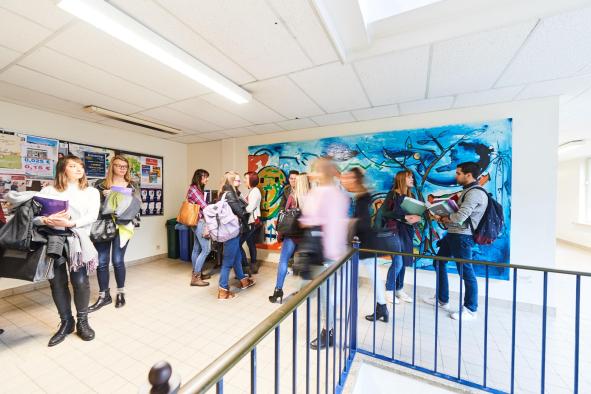
You're off to a good start
- you have a keen interest in the fundamental issues of the human condition;
- you have a genuine aptitude for and enjoy critical thinking, reading, and reasoned discussion;
- you felt comfortable with French in high school.

Teaching Methods
Lectures, practical exercises, seminars, participation in research activities... every effort is made to develop your analytical, critical thinking, and argumentation skills.
Through exercises and independent work, you will learn to master the subject matter, apply philosophical methodology, and discover the essential tools for approaching texts and writing essays.
The course schedule ensures ample time for independent study, ideal for the reading required to master philosophical methodology. This reading is facilitated by direct access to the philosophy seminar library, which is extensively stocked in the history of philosophy, anthropology, political and social philosophy, aesthetics, ethics, and metaphysics…
All theoretical courses are enriched by the guided reading of articles or excerpts from philosophical works.
Most specialized courses are conducted in a dialogic format, similar to a seminar. This allows you to verify your understanding of the material and clarify any points. In the same vein, review sessions and quizzes are offered regularly.
Experience life abroad
An Erasmus Exchange During Your Undergraduate Studies
You have the opportunity to study abroad at a university in France (University of Bordeaux III and University of Paris Nanterre), in Italy (University of Genoa), or in Quebec (Laval University).
Support for Success
Succeeding in a year of university studies involves many challenges.
To help you overcome them, UNamur supports you in developing your academic, methodological, and interpersonal skills—with the help of many professionals.
Preparatory courses, personalized assistance… Discover the resources available to support your education.
After a bachelor's degree: a master's degree
A bachelor’s degree in philosophy automatically qualifies you for admission to a master’s program in philosophy offered by universities in the Wallonia-Brussels Federation or abroad (subject to the conditions set by the hosting universities).
If you chose the “Social Sciences and Communication” track during your bachelor’s program, you may be eligible for course exemptions when you later enroll in the Bachelor of Political Science or Bachelor of Information and Communication programs at UNamur.
In addition, UNamur offers a certificate in advanced studies in philosophy to explore certain philosophical issues in depth, such as the major ethical and social questions of our technological world, questions of meaning and existence, and the philosophy of science...
Finally, the Department of Philosophy at UNamur participates in the specialized master’s program in Film Cultures and Thought (co-organized with the Université Saint-Louis in Brussels) as well as the specialized master’s program in Political Philosophy and Theory (co-organized with the ULB and ULiège).
Contacts
School of Philosophy and Letters
Office
1 Rue Grafé • B-5000 Namur
Tel.: +32 (0) 81 72 42 07
Ms. E. Debu and Ms. S. Favero: secretariat-etudiants.lettres@unamur.be
-
Basic philosophical training
-
Philosophy questions
Code Name Staff Th.+Ex. Credits/Block 1 2 3 LPHIB330 Film philosophy Laoureux Sébastien 30h th. 4 LPHIB331 The Orient and philosophy Monseu-Van Cleemput Nicolas 30h th. 4 LPHIB332 Advanced questions in philosophy Boureau Mai-Lan Rizzerio Laura 30h th. 4 LPHIB305 Ethical issues applied to the digital environment Rouvroy Antoinette 15h th. 3 -
Introduction to philosophy
Code Name Staff Th.+Ex. Credits/Block 1 2 3 LPHIB105 General introduction to philosophy De Meyer Thibault 45h th. 5 LPHIB114 Logic and argumentation De Meyer Thibault 45h th. 5 LPHIB125_Bloc 1 Methodology of philosophy Monseu-Van Cleemput Nicolas 30h th. + 30h ex. 4 -
Fundamental philosophy
Code Name Staff Th.+Ex. Credits/Block 1 2 3 Sustainable developmentImage
LPHIB103_Bloc 1 Philosophical and ecologies anthropology Laoureux Sébastien De Meyer Thibault 45h th. 5 LPHIB117_Bloc 1 Fundamental ethics Monseu-Van Cleemput Nicolas 30h th. 3 LPHIB201 General epistemology De Meyer Thibault 30h th. 3 LPHIB203 Social and political philosophy Laoureux Sébastien 30h th. 3 LPHIB206 Metaphysics Monseu-Van Cleemput Nicolas 45h th. 5 LPHIB207 Philosophy of art and Culture Boureau Mai-Lan 30h th. 3 -
History of philosophy
Code Name Staff Th.+Ex. Credits/Block 1 2 3 Cyclic course organized this yearImage
LPHIB005 History and Texts of Ancient Philosophy Boureau Mai-Lan 45h th. + 15h ex. 6 6 Cyclic course not organized this yearImage
LPHIB006 History and Texts of Medieval Philosophy Boureau Mai-Lan 45h th. + 15h ex. 6 6 Cyclic course not organized this yearImage
LPHIB007 History and Texts of Early Modern Philosophy Laoureux Sébastien 45h th. + 15h ex. 6 6 Cyclic course organized this yearImage
LPHIB008 History and Texts of Contemporary Philosophy Laoureux Sébastien Modera Astrid Carre Louis 45h th. + 15h ex. 6 6 -
Practical work
Code Name Staff Th.+Ex. Credits/Block 1 2 3 LPHIB106 Exercises on philosophical questions Laoureux Sébastien Monseu-Van Cleemput Nicolas 30h ex. 3 LPHIB115 Essay I Rizzerio Laura 3 LPHIB208 Personal work Carre Louis 6 LPHIB216 Essay Rizzerio Laura 4 -
Final year thesis
Code Name Staff Th.+Ex. Credits/Block 1 2 3 LPHIB310 Final year work Carre Louis 10 -
Philosophical authors
Code Name Staff Th.+Ex. Credits/Block 1 2 3 LPHIB300 Philosophical authors of antiquity and the Middle Ages Boureau Mai-Lan 30h th. 4 LPHIB302 Philosophical authors of modern times and the contemporary era Laoureux Sébastien Laoureux Sébastien 30h th. 4 -
Philosophy workshop
Code Name Staff Th.+Ex. Credits/Block 1 2 3 LPHIB312 Participation in research activities in philosophy III Rizzerio Laura 3
-
-
In-depth philosophical training
Code Name Staff Th.+Ex. Credits/Block 1 2 3 LPHIB013 Philosophy, literature and religion Rizzerio Laura 15h th. 3 LPHIB202 Participation in research activities in philosophy II Rizzerio Laura 3 LPHIB204 Ethics and social norms Bertot Clément Monseu-Van Cleemput Nicolas 30h th. 3 English Friendly CoursesImage
LPHIB213 Philosophy of science and technology De Meyer Thibault 30h th. 3 -
Cross-disciplinary training
-
Religious Sciences
Code Name Staff Th.+Ex. Credits/Block 1 2 3 LHISB101 Religious Studies Hermans Michel 30h th. 3 -
Introduction to human and natural sciences
Code Name Staff Th.+Ex. Credits/Block 1 2 3 ECGEB140 Sociology Djelloul Ghaliya 45h th. + 15h ex. 5 LPHIB010 Introduction to the Humanities 30h th. 3 Sustainable developmentImage
Soft skillsImage
LPHIB111 Introduction to Natural Sciences Pontarotti Gaëlle 30h th. 3 Sustainable developmentImage
Soft skillsImage
DROIB101 Sources and principles of law Degrave Élise 60h th. + 15h ex. 8 DROIB102 Constitutional law Vuye Hendrik 75h th. + 6h ex. 9 -
History
Code Name Staff Th.+Ex. Credits/Block 1 2 3 LCLAB101 History of Antiquity Liard Florence Flament Christophe 45h th. 3 LHISB004_Bloc 1 History of the Middle Ages Hermand Xavier 30h th. 3 LHISB003 History of Modern Times Delleaux Fulgence 30h th. 3 Soft skillsImage
LHISB002 History of the Contemporary Era Tixhon Axel 30h th. 3 -
Reviewing sources
Code Name Staff Th.+Ex. Credits/Block 1 2 3 LHISB001 Historical criticism Hermand Xavier 30h th. + 15h ex. 4 EPOLB214 Criticism of information sources Haineaux Esther Collard Anne-Sophie 30h th. + 15h ex. 5 -
Art history
Code Name Staff Th.+Ex. Credits/Block 1 2 3 LARTB110_Bloc 1 Archeology and Art History. Antiquity - Ancien Near East-Egypt Preys René 30h th. 3 LARTB111_Bloc 1 Archaeology and Art history : Greek and Roman Antiquity Richard Julian 30h th. 3 LARTB011_Bloc 1 Archaeology and art history. Middle Ages Piavaux Mathieu 30h th. 3 LARTB012_Bloc 1 Archaeology and Art History. Modern times Lefftz Michel Fagnart Laure 30h th. 3 LARTB028 Archaeology and Art History. Contemporary period Leenaerts Danielle 30h th. 3 -
Languages
-
Philosophy workshop
Code Name Staff Th.+Ex. Credits/Block 1 2 3 LPHIB102 Participation in research activities in philosophy I Rizzerio Laura 3 -
Literature
Code Name Staff Th.+Ex. Credits/Block 1 2 3 LLETB103 Introduction to Western literature De Mulder Caroline François Jéromine 30h th. 3
-
-
Cross-training/complementary UE
Code Name Staff Th.+Ex. Credits/Block 1 2 3 Sustainable developmentImage
UNAM0043_Bloc1 Global change and the Anthropocene Yans Johan Dendoncker Nicolas Yans Johan Linard Catherine Houssiau Laurent Henry Sabine 24h th. 3 -
Channel
-
"Ecologies" sector
Code Name Staff Th.+Ex. Credits/Block 1 2 3 Sustainable developmentImage
Soft skillsImage
DROIB330 Environmental law and sustainable development Lachapelle Amélie 30h th. 5 5 Sustainable developmentImage
Soft skillsImage
Cyclic course organized this yearImage
SGOGB207 Environmental migration Henry Sabine 15h th. 2 2 Sustainable developmentImage
EPOLB309 Ecological governance Jacquet Vincent 30h th. + 15h ex. 5 5 Sustainable developmentImage
Soft skillsImage
UNAM0047 Law, sustainable development and transition Lachapelle Amélie 24h th. 3 3 Sustainable developmentImage
Soft skillsImage
UNAM0055 JEDDT Lachapelle Amélie 30h th. 3 5 Sustainable developmentImage
SSPSM101 Science, ethics and development Tilman Valérie Leyens Stéphane 18h th. + 6h ex. 4 4 Développement durableImage
English Friendly CoursesImage
LHISB303_15h <unknown> Parmentier Isabelle Delleaux Fulgence 15h th. 2 2 -
"Philo/Law" sector
Code Name Staff Th.+Ex. Credits/Block 1 2 3 DROIB103 Law of obligations I George Florence 45h th. + 15h ex. 6 6 DROIB105_P39649 Roman law Roussieau Candice Silan Marie-Sophie Silan Marie-Sophie 60h th. + 6h ex. 8 8 DROIB154 Political economy Hungerbuhler Mathias De Crombrugghe De Picquendaele Alain 60h th. + 15h ex. 7 7 DROIB213 Methodology and legal work De Terwangne Cécile Defreyne Élise 30h th. + 30h ex. 6 6 DROIB216 Principles of civil procedure LEMAIRE Anne-Sophie Mougenot Dominique 45h th. + 6h ex. 5 5 DROIB218 Dutch legal terminology (minimum level B2) 30h th. 4 4 DROIB317 Social law Flohimont Valérie 45h th. + 8h ex. 4 4 -
"Scinecs" sector
-
Compulsory courses
Code Name Staff Th.+Ex. Credits/Block 1 2 3 Soft skillsImage
English Friendly CoursesImage
SPHYB213 Astronomie Fuzfa André 15h th. 2 2 SSPSB308 Philosophy of science Sartenaer Olivier 15h th. 2 2 Sustainable developmentImage
SSPSM101 Science, ethics and development Tilman Valérie Leyens Stéphane 18h th. + 6h ex. 4 4 SSPSM201 Philosophy of Mathematics DUBOIS Eve-Aline 15h th. 2 2 SSPSM203 Philosophy of Life Sciences Pontarotti Gaëlle 12h th. 3 3 -
Optional courses
Code Name Staff Th.+Ex. Credits/Block 1 2 3 SSPUC001 Stargazing and practical astronomy Fuzfa André Creuels Julien 2 2 SSPUC002 History of science and astronomy Lambert Dominique DUBOIS Eve-Aline Sartenaer Olivier 2 2 SSPUC003 Elements of scientific cosmology Fuzfa André Lambert Dominique DHELONGA BIARUFU Williams 2 2 SMATB112 Introduction to mathematical thinking Libert Anne-Sophie 30h th. + 30h ex. 5 5
-
-
"Social sciences and communication" sector
-
Social and political sciences
Code Name Staff Th.+Ex. Credits/Block 1 2 3 LPHIB212 Ethnology 30h th. 3 3 LHISB223 Political structures and institutions of the ancient world Flament Christophe 30h th. 3 3 EPOLB260 History of political ideas De Briey Laurent Majastre Christophe 30h th. + 15h ex. 5 5 LHISB220 Political structures and institutions in the Western Middle Ages Renard Etienne 30h th. 3 3 LHISB221 Political structures and institutions of the Belgian space in the modern period Parmentier Isabelle 30h th. 3 3 LHISB204 Belgian political structures and institutions in contemporary times Dodeigne Jérémy Tixhon Axel Vertongen Youri Lou 45h th. 3 3 -
Law
Code Name Staff Th.+Ex. Credits/Block 1 2 3 LHISB222 Introduction to law Jouan Quentin 30h th. 3 3 DROIB320_Philo Philosophy of law Montero Redondo Etienne 45h th. 4 4 Soft skillsImage
DROIB325 Ethics and Law MERTENS Romain 30h th. 3 3 -
Communications
Code Name Staff Th.+Ex. Credits/Block 1 2 3 Soft skillsImage
LHISB320 Critique of film sources Roekens Anne 15h th. 2 2 Soft skillsImage
LLETB001 Books and digital culture Leyh Valérie Michel Nicolas Ruffini-Ronzani Nicolas 30h th. 3 3 LROMB002 Introduction to the language of film Gabriel Jean-Benoît 30h th. 4 4 EPICB141 Communication fundamentals and news analysis Collard Anne-Sophie Haineaux Esther 30h th. + 30h ex. 5 5
-
-
-
Basic philosophical training
-
Introduction to philosophy
Code Name Staff Credits Hours/Quarter 1 2 LPHIB105 General introduction to philosophy De Meyer Thibault 5 22.5h th. 22.5h th. LPHIB114 Logic and argumentation De Meyer Thibault 5 45h th. LPHIB125_Bloc 1 Methodology of philosophy Monseu-Van Cleemput Nicolas 4 30h th. + 30h ex. -
Fundamental philosophy
Code Name Staff Credits Hours/Quarter 1 2 Sustainable developmentImage
LPHIB103_Bloc 1 Philosophical and ecologies anthropology Laoureux Sébastien De Meyer Thibault 5 45h th. LPHIB117_Bloc 1 Fundamental ethics Monseu-Van Cleemput Nicolas 3 30h th. -
Practical work
Code Name Staff Credits Hours/Quarter 1 2 LPHIB106 Exercises on philosophical questions Laoureux Sébastien Monseu-Van Cleemput Nicolas 3 30h ex. LPHIB115 Essay I Rizzerio Laura 3
-
-
Cross-disciplinary training
-
Religious Sciences
Code Name Staff Credits Hours/Quarter 1 2 LHISB101 Religious Studies Hermans Michel 3 30h th. -
Introduction to human and natural sciences
Code Name Staff Credits Hours/Quarter 1 2 ECGEB140 Sociology Djelloul Ghaliya 5 45h th. + 15h ex. LPHIB010 Introduction to the Humanities 3 30h th. Sustainable developmentImage
Soft skillsImage
LPHIB111 Introduction to Natural Sciences Pontarotti Gaëlle 3 30h th. Sustainable developmentImage
Soft skillsImage
DROIB101 Sources and principles of law Degrave Élise 8 30h th. + 8h ex. 30h th. + 7h ex. DROIB102 Constitutional law Vuye Hendrik 9 38h th. + 3h ex. 37h th. + 3h ex. -
History
Code Name Staff Credits Hours/Quarter 1 2 LCLAB101 History of Antiquity Liard Florence Flament Christophe 3 45h th. LHISB004_Bloc 1 History of the Middle Ages Hermand Xavier 3 30h th. LHISB003 History of Modern Times Delleaux Fulgence 3 30h th. Soft skillsImage
LHISB002 History of the Contemporary Era Tixhon Axel 3 30h th. -
Art history
Code Name Staff Credits Hours/Quarter 1 2 LARTB110_Bloc 1 Archeology and Art History. Antiquity - Ancien Near East-Egypt Preys René 3 30h th. LARTB111_Bloc 1 Archaeology and Art history : Greek and Roman Antiquity Richard Julian 3 30h th. LARTB011_Bloc 1 Archaeology and art history. Middle Ages Piavaux Mathieu 3 30h th. LARTB012_Bloc 1 Archaeology and Art History. Modern times Lefftz Michel Fagnart Laure 3 30h th. LARTB028 Archaeology and Art History. Contemporary period Leenaerts Danielle 3 30h th. -
Languages
Code Name Staff Credits Hours/Quarter 1 2 LCLAB009 Introduction to the Latin language Assenmaker Pierre 3 30h th. 30h th. Cyclic course organized this yearImage
LCLAB003_Bloc 1 Explanation of Latin authors A Assenmaker Pierre 3 30h th. Cyclic course not organized this yearImage
LCLAB011_Bloc 1 Explanation of Latin authors B Assenmaker Pierre 3 30h th. Cyclic course not organized this yearImage
LCLAB012_Bloc 1 Explanation of Latin authors C Assenmaker Pierre 3 30h th. LCLAB004_Bloc 1 Introduction to the Greek language Obsomer Claude 3 30h th. 30h th. LCLAB005_Bloc 1 Reading of Greek texts Obsomer Claude 3 22.5h th. 22.5h th. Cyclic course organized this yearImage
LCLAB006_Bloc 1 Explanation of Greek authors A Fontaine Elise 3 30h th. 15h th. Cyclic course not organized this yearImage
LCLAB013_Bloc 1 Explanation of Greek authors 3 30h th. 15h th. Cyclic course not organized this yearImage
LCLAB014_Bloc 1 Explanation of Greek authors C 3 30h th. 15h th. LCDLB021_Bloc 1 Introduction to the English language (level A2) Bar Vanina 3 30h th. 30h th. LANGB003_Bloc 1 Cultural History of Literature in English: 600-1660 Silva Emma-Louise 3 30h th. LCDLB011_Bloc 1 German as a Receptive Language: Reading and Listening (German I) Hansel Aude Drese Mathilde 3 30h th. LCDLB031_Bloc 1 Introduction to the Dutch language (level B1) Naveau Sophie 3 30h th. 30h th. LNRLB001_Bloc 1 Geschiedenis van de Nederlandstalige literatuur I (1100-1650) Leijnse Elisabeth 3 30h th. DCDLB101 Standard Dutch Bulon Amélie 3 30h th. LCLAB007 Reading of Latin texts Assenmaker Pierre 3 30h th. 15h th. -
Philosophy workshop
Code Name Staff Credits Hours/Quarter 1 2 LPHIB102 Participation in research activities in philosophy I Rizzerio Laura 3 -
Literature
Code Name Staff Credits Hours/Quarter 1 2 LLETB103 Introduction to Western literature De Mulder Caroline François Jéromine 3 30h th.
-
-
Cross-training/complementary UE
Code Name Staff Credits Hours/Quarter 1 2 Sustainable developmentImage
UNAM0043_Bloc1 Global change and the Anthropocene Yans Johan Dendoncker Nicolas Yans Johan Linard Catherine Houssiau Laurent Henry Sabine 3 24h th.
-
Basic philosophical training
-
Fundamental philosophy
Code Name Staff Credits Hours/Quarter 1 2 LPHIB201 General epistemology De Meyer Thibault 3 30h th. LPHIB203 Social and political philosophy Laoureux Sébastien 3 30h th. LPHIB206 Metaphysics Monseu-Van Cleemput Nicolas 5 45h th. LPHIB207 Philosophy of art and Culture Boureau Mai-Lan 3 30h th. -
History of philosophy
Code Name Staff Credits Hours/Quarter 1 2 Cyclic course organized this yearImage
LPHIB005 History and Texts of Ancient Philosophy Boureau Mai-Lan 6 30h th. 15h th. + 15h ex. Cyclic course not organized this yearImage
LPHIB006 History and Texts of Medieval Philosophy Boureau Mai-Lan 6 30h th. 15h th. + 15h ex. Cyclic course not organized this yearImage
LPHIB007 History and Texts of Early Modern Philosophy Laoureux Sébastien 6 30h th. 15h th. + 15h ex. Cyclic course organized this yearImage
LPHIB008 History and Texts of Contemporary Philosophy Laoureux Sébastien Modera Astrid Carre Louis 6 30h th. 15h th. + 15h ex. -
Practical work
Code Name Staff Credits Hours/Quarter 1 2 LPHIB208 Personal work Carre Louis 6 LPHIB216 Essay Rizzerio Laura 4
-
-
In-depth philosophical training
Code Name Staff Credits Hours/Quarter 1 2 LPHIB013 Philosophy, literature and religion Rizzerio Laura 3 15h th. LPHIB202 Participation in research activities in philosophy II Rizzerio Laura 3 LPHIB204 Ethics and social norms Bertot Clément Monseu-Van Cleemput Nicolas 3 30h th. English Friendly CoursesImage
LPHIB213 Philosophy of science and technology De Meyer Thibault 3 30h th. -
Cross-disciplinary training
-
Reviewing sources
Code Name Staff Credits Hours/Quarter 1 2 LHISB001 Historical criticism Hermand Xavier 4 30h th. + 15h ex. EPOLB214 Criticism of information sources Haineaux Esther Collard Anne-Sophie 5 30h th. + 15h ex. -
Languages
-
-
Channel
-
"Ecologies" sector
Code Name Staff Credits Hours/Quarter 1 2 Sustainable developmentImage
Soft skillsImage
DROIB330 Environmental law and sustainable development Lachapelle Amélie 5 30h th. Sustainable developmentImage
Soft skillsImage
Cyclic course organized this yearImage
SGOGB207 Environmental migration Henry Sabine 2 15h th. Sustainable developmentImage
EPOLB309 Ecological governance Jacquet Vincent 5 30h th. + 15h ex. Sustainable developmentImage
Soft skillsImage
UNAM0047 Law, sustainable development and transition Lachapelle Amélie 3 24h th. Sustainable developmentImage
Soft skillsImage
UNAM0055 JEDDT Lachapelle Amélie 3 30h th. Sustainable developmentImage
SSPSM101 Science, ethics and development Tilman Valérie Leyens Stéphane 4 18h th. + 6h ex. Développement durableImage
English Friendly CoursesImage
LHISB303_15h <unknown> Parmentier Isabelle Delleaux Fulgence 2 15h th. -
"Philo/Law" sector
Code Name Staff Credits Hours/Quarter 1 2 DROIB103 Law of obligations I George Florence 6 45h th. + 15h ex. DROIB105_P39649 Roman law Roussieau Candice Silan Marie-Sophie Silan Marie-Sophie 8 60h th. + 6h ex. DROIB154 Political economy Hungerbuhler Mathias De Crombrugghe De Picquendaele Alain 7 60h th. + 15h ex. DROIB213 Methodology and legal work De Terwangne Cécile Defreyne Élise 6 30h th. + 15h ex. 15h ex. DROIB216 Principles of civil procedure LEMAIRE Anne-Sophie Mougenot Dominique 5 45h th. + 6h ex. DROIB218 Dutch legal terminology (minimum level B2) 4 30h th. DROIB317 Social law Flohimont Valérie 4 45h th. + 8h ex. -
"Scinecs" sector
-
Compulsory courses
Code Name Staff Credits Hours/Quarter 1 2 Soft skillsImage
English Friendly CoursesImage
SPHYB213 Astronomie Fuzfa André 2 7.5h th. 7.5h th. SSPSB308 Philosophy of science Sartenaer Olivier 2 15h th. Sustainable developmentImage
SSPSM101 Science, ethics and development Tilman Valérie Leyens Stéphane 4 18h th. + 6h ex. SSPSM201 Philosophy of Mathematics DUBOIS Eve-Aline 2 15h th. SSPSM203 Philosophy of Life Sciences Pontarotti Gaëlle 3 12h th. -
Optional courses
Code Name Staff Credits Hours/Quarter 1 2 SSPUC001 Stargazing and practical astronomy Fuzfa André Creuels Julien 2 SSPUC002 History of science and astronomy Lambert Dominique DUBOIS Eve-Aline Sartenaer Olivier 2 SSPUC003 Elements of scientific cosmology Fuzfa André Lambert Dominique DHELONGA BIARUFU Williams 2 SMATB112 Introduction to mathematical thinking Libert Anne-Sophie 5 30h th. + 30h ex.
-
-
"Social sciences and communication" sector
-
Social and political sciences
Code Name Staff Credits Hours/Quarter 1 2 LPHIB212 Ethnology 3 30h th. LHISB223 Political structures and institutions of the ancient world Flament Christophe 3 30h th. EPOLB260 History of political ideas De Briey Laurent Majastre Christophe 5 30h th. + 15h ex. LHISB220 Political structures and institutions in the Western Middle Ages Renard Etienne 3 30h th. LHISB221 Political structures and institutions of the Belgian space in the modern period Parmentier Isabelle 3 30h th. LHISB204 Belgian political structures and institutions in contemporary times Dodeigne Jérémy Tixhon Axel Vertongen Youri Lou 3 45h th. -
Law
Code Name Staff Credits Hours/Quarter 1 2 LHISB222 Introduction to law Jouan Quentin 3 30h th. DROIB320_Philo Philosophy of law Montero Redondo Etienne 4 45h th. Soft skillsImage
DROIB325 Ethics and Law MERTENS Romain 3 30h th. -
Communications
Code Name Staff Credits Hours/Quarter 1 2 Soft skillsImage
LHISB320 Critique of film sources Roekens Anne 2 15h th. Soft skillsImage
LLETB001 Books and digital culture Leyh Valérie Michel Nicolas Ruffini-Ronzani Nicolas 3 30h th. LROMB002 Introduction to the language of film Gabriel Jean-Benoît 4 30h th. EPICB141 Communication fundamentals and news analysis Collard Anne-Sophie Haineaux Esther 5 30h th. + 30h ex.
-
-
-
Basic philosophical training
-
Philosophy questions
Code Name Staff Credits Hours/Quarter 1 2 LPHIB330 Film philosophy Laoureux Sébastien 4 30h th. LPHIB331 The Orient and philosophy Monseu-Van Cleemput Nicolas 4 30h th. LPHIB332 Advanced questions in philosophy Boureau Mai-Lan Rizzerio Laura 4 30h th. LPHIB305 Ethical issues applied to the digital environment Rouvroy Antoinette 3 15h th. -
History of philosophy
Code Name Staff Credits Hours/Quarter 1 2 Cyclic course organized this yearImage
LPHIB005 History and Texts of Ancient Philosophy Boureau Mai-Lan 6 30h th. 15h th. + 15h ex. Cyclic course not organized this yearImage
LPHIB006 History and Texts of Medieval Philosophy Boureau Mai-Lan 6 30h th. 15h th. + 15h ex. Cyclic course not organized this yearImage
LPHIB007 History and Texts of Early Modern Philosophy Laoureux Sébastien 6 30h th. 15h th. + 15h ex. Cyclic course organized this yearImage
LPHIB008 History and Texts of Contemporary Philosophy Laoureux Sébastien Modera Astrid Carre Louis 6 30h th. 15h th. + 15h ex. -
Final year thesis
Code Name Staff Credits Hours/Quarter 1 2 LPHIB310 Final year work Carre Louis 10 -
Philosophical authors
Code Name Staff Credits Hours/Quarter 1 2 LPHIB300 Philosophical authors of antiquity and the Middle Ages Boureau Mai-Lan 4 30h th. LPHIB302 Philosophical authors of modern times and the contemporary era Laoureux Sébastien Laoureux Sébastien 4 30h th. -
Philosophy workshop
Code Name Staff Credits Hours/Quarter 1 2 LPHIB312 Participation in research activities in philosophy III Rizzerio Laura 3
-
-
Channel
-
"Ecologies" sector
Code Name Staff Credits Hours/Quarter 1 2 Sustainable developmentImage
Soft skillsImage
UNAM0047 Law, sustainable development and transition Lachapelle Amélie 3 24h th. Sustainable developmentImage
SSPSM101 Science, ethics and development Tilman Valérie Leyens Stéphane 4 18h th. + 6h ex. Sustainable developmentImage
Soft skillsImage
Cyclic course organized this yearImage
SGOGB207 Environmental migration Henry Sabine 2 15h th. Sustainable developmentImage
EPOLB309 Ecological governance Jacquet Vincent 5 30h th. + 15h ex. Sustainable developmentImage
Soft skillsImage
DROIB330 Environmental law and sustainable development Lachapelle Amélie 5 30h th. Sustainable developmentImage
Soft skillsImage
UNAM0055 JEDDT Lachapelle Amélie 5 30h th. Développement durableImage
English Friendly CoursesImage
LHISB303_15h <unknown> Parmentier Isabelle Delleaux Fulgence 2 15h th. -
"Philo/Law" sector
Code Name Staff Credits Hours/Quarter 1 2 DROIB154 Political economy Hungerbuhler Mathias De Crombrugghe De Picquendaele Alain 7 60h th. + 15h ex. DROIB103 Law of obligations I George Florence 6 45h th. + 15h ex. DROIB216 Principles of civil procedure LEMAIRE Anne-Sophie Mougenot Dominique 5 45h th. + 6h ex. DROIB213 Methodology and legal work De Terwangne Cécile Defreyne Élise 6 30h th. + 15h ex. 15h ex. DROIB218 Dutch legal terminology (minimum level B2) 4 30h th. DROIB105_P39649 Roman law Roussieau Candice Silan Marie-Sophie Silan Marie-Sophie 8 60h th. + 6h ex. DROIB317 Social law Flohimont Valérie 4 45h th. + 8h ex. -
"Scinecs" sector
-
Compulsory courses
Code Name Staff Credits Hours/Quarter 1 2 Soft skillsImage
English Friendly CoursesImage
SPHYB213 Astronomie Fuzfa André 2 7.5h th. 7.5h th. SSPSB308 Philosophy of science Sartenaer Olivier 2 15h th. Sustainable developmentImage
SSPSM101 Science, ethics and development Tilman Valérie Leyens Stéphane 4 18h th. + 6h ex. SSPSM201 Philosophy of Mathematics DUBOIS Eve-Aline 2 15h th. SSPSM203 Philosophy of Life Sciences Pontarotti Gaëlle 3 12h th. -
Optional courses
Code Name Staff Credits Hours/Quarter 1 2 SSPUC001 Stargazing and practical astronomy Fuzfa André Creuels Julien 2 SSPUC002 History of science and astronomy Lambert Dominique DUBOIS Eve-Aline Sartenaer Olivier 2 SSPUC003 Elements of scientific cosmology Fuzfa André Lambert Dominique DHELONGA BIARUFU Williams 2 SMATB112 Introduction to mathematical thinking Libert Anne-Sophie 5 30h th. + 30h ex.
-
-
"Social sciences and communication" sector
-
Social and political sciences
Code Name Staff Credits Hours/Quarter 1 2 LHISB223 Political structures and institutions of the ancient world Flament Christophe 3 30h th. EPOLB260 History of political ideas De Briey Laurent Majastre Christophe 5 30h th. + 15h ex. LPHIB212 Ethnology 3 30h th. LHISB220 Political structures and institutions in the Western Middle Ages Renard Etienne 3 30h th. LHISB221 Political structures and institutions of the Belgian space in the modern period Parmentier Isabelle 3 30h th. LHISB204 Belgian political structures and institutions in contemporary times Dodeigne Jérémy Tixhon Axel Vertongen Youri Lou 3 45h th. -
Law
Code Name Staff Credits Hours/Quarter 1 2 Soft skillsImage
DROIB325 Ethics and Law MERTENS Romain 3 30h th. LHISB222 Introduction to law Jouan Quentin 3 30h th. DROIB320_Philo Philosophy of law Montero Redondo Etienne 4 45h th. -
Communications
Code Name Staff Credits Hours/Quarter 1 2 Soft skillsImage
LLETB001 Books and digital culture Leyh Valérie Michel Nicolas Ruffini-Ronzani Nicolas 3 30h th. Soft skillsImage
LHISB320 Critique of film sources Roekens Anne 2 15h th. EPICB141 Communication fundamentals and news analysis Collard Anne-Sophie Haineaux Esther 5 30h th. + 30h ex. LROMB002 Introduction to the language of film Gabriel Jean-Benoît 4 30h th.
-
-
The Professions of Philosophers

Philosophers' professions
A rich and varied skill set
Job postings rarely mention the title “philosopher.” However, contrary to popular belief, the skills developed through the study of philosophy prove to be particularly valuable in the workplace.
A survey of philosophy graduates from Namur highlights the strengths of philosophers in the professional world. A philosophy education develops analytical and reflective skills that, while fostering fluency in argumentation, enable a comprehensive understanding of complex situations. This aspect of the philosophical approach is a definite asset, both during job interviews and when making decisions in the professional field. Philosophers are also led to develop a strong critical mind: they do not merely “do”; they “think about what they do.” Among the other skills highlighted in the survey are broad general knowledge and intellectual curiosity—tools that enable philosophers to learn quickly and thus advance professionally.
A significant proportion of philosophy graduates continue their initial education with a complementary degree (in management, international relations, development, etc.) or intensive language training (English, Dutch), which can facilitate entry into specialized sectors of the workforce.
Key Philosophers in the Workplace
Philosophy and Teaching
Many philosophers share their knowledge and passion and help develop their students’ ability to reason. They teach ethics and religion in secondary and higher education, and sometimes other courses in the humanities as well.
Philosophy is not just theory; it also serves as a “tool” that enables one to critically engage with other fields of knowledge. In this sense, philosophers are also those who can “learn how to learn.” It is therefore not surprising to find them working as instructors in the field of continuing education, such as in literacy programs.
It should also be noted that career opportunities in education are expanding with the creation of a “Philosophy and Citizenship” course in the official secondary school curriculum.
Philosophy and Research
Some graduates pursue research after earning their degree, often combined with supervisory duties, in Belgium or abroad. Universities and public funds (e.g., the FNRS) finance doctoral studies. Those with a doctorate in philosophy can then teach at the university level.
Philosophy and Society
Bioethics, sustainable development, public health, and citizenship education: these are all current issues in which philosophers are called upon to contribute, and which touch on the very heart of the question of the meaning of life and the purposes of our society. Philosophers generally serve as advisors to decision-makers in these various fields (hospital or health insurance directors, political leaders, industry associations, etc.), or as trainers.
Philosophers possess critical perspective and communication skills that enable them to act as mediators in the management of human conflicts. They can make this their profession. Within a company, philosophers may, in particular, advance as human resources consultants (selection and recruitment, career coaching).
Philosophers are also employed in various roles within non-profit organizations (NPOs) or NGOs (Non-Governmental Organizations), particularly as coordinators or communications officers. It is also worth noting the possibility of working in the field of journalism and within various public administrations.
Philosophy and Creativity
Another way to enter the professional world is to carve out one’s own niche. In other words, the absence of a category such as “profession: philosopher” drives some to propose new structures—and thus to invent their own profession.
Thus, several graduates have successfully turned their passion for philosophical reflection into a professional career. Examples include leading philosophy workshops for children, creating “philosophy café” bookstores, and working as a writer…
Building a Social Life
When it comes to landing a first job, a candidate’s personality is sometimes just as important as their university degree…; hence the importance of keeping one’s curiosity alive throughout one’s studies and building a rich social life, for example by getting involved in community organizations. An open mind coupled with a keen critical sense will make philosophers well-suited to take on significant responsibilities in the professional world.