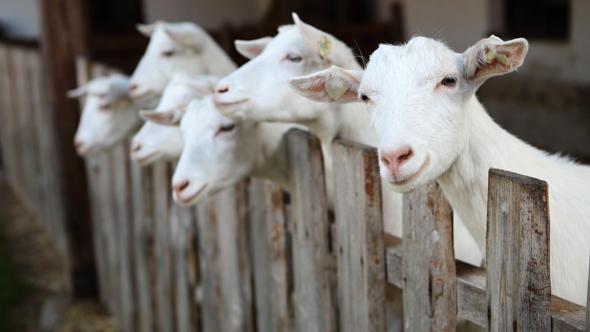
This project, called Proteomilk, aims to identify and select the best goats in order to optimize the production of proteins of therapeutic interest, which are then extracted from their milk. 

These proteins, secreted by the mammary gland, are of major interest. In fact, they can be used to produce monoclonal antibodies, which can treat numerous diseases such as certain cancers, autoimmune diseases, or various types of infections,” explains Fabien Delhalle, a member of the Cell Biology Research Unit at UNamur who is leading the Proteomilk project under the supervision of Patsy Renard.   

Image
Photo de Patsy Renard

Today, these antibodies are primarily produced using animal cells, known as CHO cells, derived from Chinese hamster ovaries.  

They are grown on an industrial scale in massive industrial bioreactors. 

This technology is widely used, but it also has limitations: the processes are costly, complex, energy-intensive, and have a significant environmental impact. As a result, production costs remain high, and access to these treatments may be limited for some patients. And there is another challenge: some antibodies are more difficult to produce in large quantities. This requires more time, more steps, and more resources… which can delay and increase the cost of treatments that are otherwise promising.

Prof. Patsy Renard Department of Biology, URBC, and member of the NARILIS Institute

Developing sustainable solutions

Given these limitations, we must therefore develop solutions that are more sustainable, more flexible, and more cost-effective. In other words, we need to find a way to produce these drugs differently.  

And this is precisely the goal of the Proteomilk project, conducted in partnership with Bio-Sourcing, a company specializing in the production of biotherapeutics.

The project aims to identify markers associated with high lactation performance through a detailed proteomic analysis of milk. This method uses the goat’s mammary gland as a natural bioreactor, capable of producing therapeutic proteins in the milk that are then purified. This ultimately reduces costs and environmental impact compared to industrial bioreactors.

Watch the video about the project

Win4Doc - Un doctorat en entreprise (SPW recherche) - vignette illustrative des vidéos

This project fully demonstrates the value of collaboration between academia and industry. UNamur contributes its scientific expertise, analytical tools, and ability to explore mechanisms in depth. Field partners, such as Bio-Sourcing and the Walloon Center for Agricultural Research, contribute their applied knowledge, their understanding of production realities, and their vision for commercialization. 

Supported by the SPW Research, this partnership demonstrates how research can be transformed into concrete innovation that benefits society.

Win4doc

Win4Doc is a program established by Wallonia (SPW Research) that enables a Walloon company to hire a researcher to conduct doctoral research in collaboration with a university research unit.

Logo Wallonie

Industry-Based Doctoral Programs at UNamur