The Biology Department strives to understand the living world in all its diversity, in the course of its evolution, from molecules to ecosystems, and to respond to complex societal problems such as biodiversity loss, infectious diseases, antibiotic resistance, etc. Biologists use an approach that integrates the laboratory, the field and computer tools.

Find out more about the department

SVG

Studies

See content
SVG

Research

See content
SVG

Organization chart

See content
SVG

Alumni

See content
SVG

Contact

See content

Biology is a modern science on the move. It responds to complex societal problems such as biodiversity loss, antibiotic resistance, adaptation to climate change, the fight against chronic or infectious diseases, food safety... In short, biology is present everywhere in society.

Biology uses a wide range of scientific and technological knowledge and approaches that enable it to address the living world in all its diversity (viruses, bacteria, fungi, plants, parasites, animals, humans), throughout its evolution and at all levels of organization (molecules, cells, tissues, individuals, super-organisms, populations, ecosystems).

From knowledge of fundamental processes to multiple applications, the 21st century biologist is a complete scientist, wielding the scientific approach, as much in the laboratory as when out in the field (in natural areas) or when using computer analysis methods (and processing high-throughput data).
Spotlight

News

Through the work of Patrick Kestemont, UNamur is contributing to the captive breeding of a catfish adapted to the saltwater of the Mekong River

Biodiversity

After more than two years of research, a team comprising the University of Namur, the University of Liège, and Can Tho University in Vietnam has succeeded in breeding Pangasius krempfi in captivity—a catfish capable of living in both freshwater and brackish water. This is a significant step forward for the DIVERSAQUA project, which aims to develop aquaculture better suited to the increasing salinization of the Mekong Delta. 
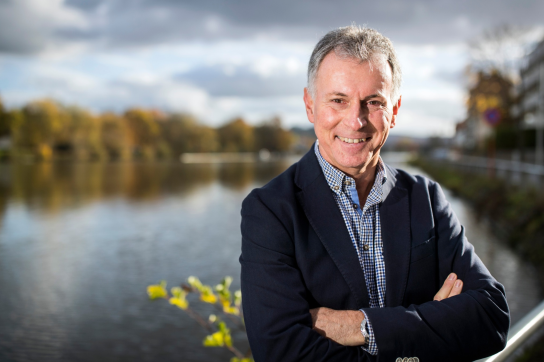
Patrick Kestemont
Félicitations à l’ensemble des chercheurs impliqués dans le projet DIVERSAQUA, et tout particulièrement au professeur Patrick Kestemont, qui coordonne le projet pour l’UNamur !

In the Mekong Delta, aquaculture is increasingly facing the encroachment of saltwater into areas that are typically supplied with freshwater. This phenomenon, known as salinity intrusion, can make it more difficult to farm certain locally raised species. 

It is against this backdrop that the DIVERSAQUA project is being carried out, funded by ARES-CCI and coordinated by Professor Patrick Kestemont of UNamur and Professor Nguyen Thanh Phuong of Can Tho University. The project also involves the University of Liège. Its goal is to identify and better manage the farming of species capable of withstanding these changes in salinity. 

A fish capable of adapting to various levels of salinity

The researchers focused on Pangasius krempfi, known locally as ca bong lau or ca dua. This catfish is considered euryhaline, meaning it can live in waters with varying salinity levels. This characteristic makes it a particularly promising candidate for areas of the Mekong Delta that are increasingly affected by saltwater intrusion. 

The species also has other advantages: it can grow to a large size, its flesh is highly prized, and it has significant economic value. In the delta, it is found primarily in estuaries and coastal areas. Until now, however, its aquaculture has remained limited.  

The first successful breeding in captivity

After more than two years of work, the project teams succeeded in raising wild juvenile fish to adulthood in a closed-loop aquaculture system, where the water is filtered and reused. The mature fish were then induced to reproduce using hormones commonly used in aquaculture. The resulting larvae were recently reared in tanks until they reached the juvenile stage. Eventually, these animals could become the first fully domesticated broodstock of the species.

The goal is to gradually produce the juvenile fish needed for aquaculture without relying solely on wild populations. This would ensure a more consistent supply and allow for continued research into the commercial farming of the species. 

Gaining a Better Understanding of Salt Tolerance

At the same time, researchers are also studying Pangasius krempfi’s ability to tolerate different salt concentrations. Several experiments are being conducted at various stages of its development—from the larval stage to the juvenile stage—to better understand its physiological responses and immune system. 

This research should help determine the conditions under which the species can be farmed and more accurately assess its potential in areas subject to saltwater intrusion. In the longer term, the DIVERSAQUA project aims to diversify the species farmed in the Mekong Delta and offer new solutions to aquaculturists facing the effects of climate change. The successful reproduction of Pangasius krempfi in captivity is therefore an important first step in this direction. The teams are now continuing their research with the goal of gaining a better understanding of the species and assessing the conditions necessary for its development on a larger scale. Congratulations to all the researchers involved in the DIVERSAQUA project, and especially to Professor Patrick Kestemont, who coordinates the project for UNamur!  
A paper published in *Nature Human Behavior* highlights the barriers to creativity among young researchers

Publication

Published in *Nature Human Behaviour*, an international study to which Eli Thoré—a professor at UNamur and a member of the Institute of Life-Earth-Environment—contributed examines the conditions necessary to foster greater scientific creativity. He discusses this project and what he has learned from it.
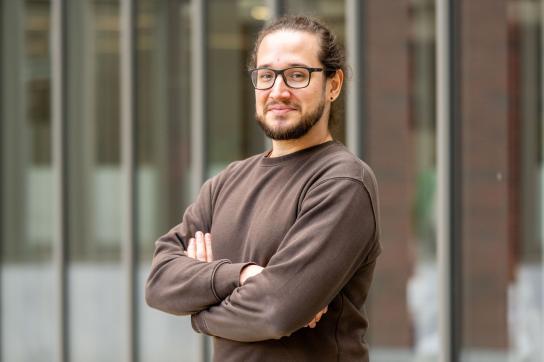
Eli Thoré
Eli Thoré, professeur assistant à l’UNamur et coauteur de l’étude publiée dans Nature Human Behaviour.

Pressure to publish, short-term funding, competition, and the precarious nature of early-career stages: Can these constraints push young researchers to prioritize “safer” projects at the expense of more original ideas? This is the central question of an international publication to which Eli Thoré, an assistant professor at the University of Namur, contributed.

Having been interested for several years in “metascience”—that is, the study of how science itself works—he participated in the discussions, the development of ideas, and the drafting and revision of the manuscript. The project, launched at the initiative of Phillip Haubrock in late 2025, led to numerous exchanges among the authors before it was finally published in *Nature Human Behaviour*. “The exchanges were very fruitful and, at first, quite chaotic!” says Eli Thoré.

Constraints that stifle creativity

To conduct their analysis, the authors compiled numerous studies on the workings of the academic world. Their conclusion is clear: scientific creativity is not merely an individual trait; it also depends on the conditions under which researchers work. 

Short-term funding, pressure to publish, emphasis on the number of articles or the prestige of journals, fierce competition for positions or funding… All these constraints can push researchers to prioritize projects whose results are easier to predict, at the expense of more original or risky ideas. 

This situation particularly affects early-career researchers. They often have less autonomy, and their future depends more heavily on upcoming publications, grant applications, or job opportunities. Taking a risk in one’s research can thus also become a risk to one’s career. 

Image
Eli Thoré

“The problem isn’t that young researchers lack creativity, but that the system doesn’t always provide them with the conditions they need to express it.”

Eli Thoré Teaching Assistant at UNamur

The consequences can be significant. For example, a study cited in the publication shows that narrowly failing to secure key funding early in one’s career increases the risk of leaving academia by more than 10 percent. 

Eli Thoré himself acknowledges having felt this tension between creativity and the need to demonstrate in advance that a project will succeed. During his Ph.D., he became interested in the daily rhythms of animal behavior—similar to our sleep-wake cycle—and how they might modify the effects of environmental pollution. At the time, this line of inquiry was quite removed from his main research project.  Yet he decided to pursue it. Over time, this idea became a central focus of his research. “If I had limited myself to questions I already knew were safe and easy to justify, I might never have gotten here,” he explains.

More time, stability, and autonomy

The authors propose several approaches to create an environment more conducive to this kind of scientific risk-taking. These include: providing funding over longer periods, offering greater stability to early-career researchers, reducing certain administrative burdens, and revising the criteria used to evaluate a scientific career. 

The idea, in particular, is to no longer measure success solely through easily quantifiable indicators, such as the number of publications or the prestige of journals, but to give greater weight to originality, collaboration, perseverance, and scientific independence. The publication also emphasizes three essential conditions for creativity: time, autonomy, and the freedom to fail.

Image
Eli Thoré

“Some of the most interesting discoveries probably begin with an idea that at first seems strange, uncertain, or even a little crazy.”

Eli Thoré Teaching Assistant at UNamur

The paper therefore puts forward an idea that seems fairly simple on the surface: if we want researchers to be creative, we must give them the freedom to be so. This is a particularly important issue for young scientists, who will shape the future directions of research. Congratulations to Eli Thoré and all the researchers involved in this work on their publication in *Nature Human Behaviour*! 
Researchers from Namur Achieve Great Success in the F.R.S.-FNRS’s 2026 “Grants and Research Awards” and “Télévie” Calls

Institution

On June 23, 2026, the F.R.S.-FNRS published the list of recipients of various doctoral and postdoctoral fellowships and Télévie projects (cancer-focused research). Among them, numerous researchers from UNamur received funding.
Logo FNRS

Six researchers have been awarded doctoral fellowships to begin their doctoral dissertations: Rachel LAURON from the Faculty of Sciences; Océane WATELET, Vera NOVAK, Camille LAMBIET, Alionka WÉRENNE, and Théodore HARDY (who received his grant from ULB under a joint supervision arrangement with UNamur) from the Faculty of Philosophy and Letters. 

Researchers from Namur also achieved great success in securing research fellow grants. Seven of them received this postdoctoral funding. They are Eleonor CELORA, Nataliya PUCHENKINA, Jérémy ARTRU and Bernardino PITOCCHELLI from the Faculty of Philosophy and Letters; Romain MERTENS from the Faculty of Law; and David TALUKDER and François WOITRIN from the Faculty of Economics, Management, and Communication at SciencesPo (EMCP). 

In addition, two permanent F.R.S.-FNRS researchers at UNamur have been promoted to Senior Researcher: Francesca CECCHET and Yves CAUDANO, both members of the Department of Physics and the NISM Institute. 

The Télévie call for proposals also enabled Marc HENNEQUART to secure funding to begin research aimed at identifying the metabolic determinants of the response to arginine deprivation in pancreatic and colorectal cancers. 

Congratulations to them!
 

Win4Doc | Producing therapeutic proteins in goat's milk

Biology
Life and health sciences
SDG#3 - Good health and well-being

At the University of Namur, a thesis led by Fabian Delhalle, with support from SPW Research as part of the Win4Doc program, is exploring an innovative approach to producing proteins of therapeutic interest. In collaboration with Bio-Sourcing and the Walloon Center for Agricultural Research, this project aims to better understand the mechanisms of lactation in goats in order to optimize biopharmaceutical production that is more accessible, more flexible, and more environmentally friendly.
Photos de chèvres

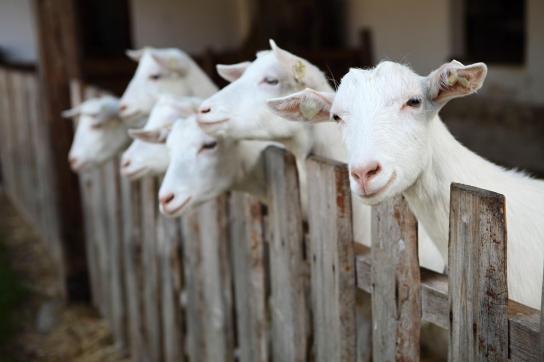
This project, called Proteomilk, aims to identify and select the best goats in order to optimize the production of proteins of therapeutic interest, which are then extracted from their milk. 

“These proteins, secreted by the mammary gland, are of major interest. In fact, they can be used to produce monoclonal antibodies, which can treat numerous diseases such as certain cancers, autoimmune diseases, or various types of infections,” explains Fabien Delhalle, a member of the Cell Biology Research Unit at UNamur who is leading the Proteomilk project under the supervision of Patsy Renard.   

Image
Photo de Patsy Renard

Today, these antibodies are primarily produced using animal cells, known as CHO cells, derived from Chinese hamster ovaries.  

They are grown on an industrial scale in massive industrial bioreactors. 

This technology is widely used, but it also has limitations: the processes are costly, complex, energy-intensive, and have a significant environmental impact. As a result, production costs remain high, and access to these treatments may be limited for some patients. And there is another challenge: some antibodies are more difficult to produce in large quantities. This requires more time, more steps, and more resources… which can delay and increase the cost of treatments that are otherwise promising.

Prof. Patsy Renard Department of Biology, URBC, and member of the NARILIS Institute

Developing sustainable solutions

Given these limitations, we must therefore develop solutions that are more sustainable, more flexible, and more cost-effective. In other words, we need to find a way to produce these drugs differently.  

And this is precisely the goal of the Proteomilk project, conducted in partnership with Bio-Sourcing, a company specializing in the production of biotherapeutics.

The project aims to identify markers associated with high lactation performance through a detailed proteomic analysis of milk. This method uses the goat’s mammary gland as a natural bioreactor, capable of producing therapeutic proteins in the milk that are then purified. This ultimately reduces costs and environmental impact compared to industrial bioreactors.
Watch the video about the project

Win4Doc - Un doctorat en entreprise (SPW recherche) - vignette illustrative des vidéos

This project fully demonstrates the value of collaboration between academia and industry. UNamur contributes its scientific expertise, analytical tools, and ability to explore mechanisms in depth. Field partners, such as Bio-Sourcing and the Walloon Center for Agricultural Research, contribute their applied knowledge, their understanding of production realities, and their vision for commercialization. 

Supported by the SPW Research, this partnership demonstrates how research can be transformed into concrete innovation that benefits society.

Win4doc

Win4Doc is a program established by Wallonia (SPW Research) that enables a Walloon company to hire a researcher to conduct doctoral research in collaboration with a university research unit.

Logo Wallonie

Industry-Based Doctoral Programs at UNamur

Through the work of Patrick Kestemont, UNamur is contributing to the captive breeding of a catfish adapted to the saltwater of the Mekong River

Biodiversity

After more than two years of research, a team comprising the University of Namur, the University of Liège, and Can Tho University in Vietnam has succeeded in breeding Pangasius krempfi in captivity—a catfish capable of living in both freshwater and brackish water. This is a significant step forward for the DIVERSAQUA project, which aims to develop aquaculture better suited to the increasing salinization of the Mekong Delta. 

Patrick Kestemont
Félicitations à l’ensemble des chercheurs impliqués dans le projet DIVERSAQUA, et tout particulièrement au professeur Patrick Kestemont, qui coordonne le projet pour l’UNamur !

In the Mekong Delta, aquaculture is increasingly facing the encroachment of saltwater into areas that are typically supplied with freshwater. This phenomenon, known as salinity intrusion, can make it more difficult to farm certain locally raised species. 

It is against this backdrop that the DIVERSAQUA project is being carried out, funded by ARES-CCI and coordinated by Professor Patrick Kestemont of UNamur and Professor Nguyen Thanh Phuong of Can Tho University. The project also involves the University of Liège. Its goal is to identify and better manage the farming of species capable of withstanding these changes in salinity. 

A fish capable of adapting to various levels of salinity

The researchers focused on Pangasius krempfi, known locally as ca bong lau or ca dua. This catfish is considered euryhaline, meaning it can live in waters with varying salinity levels. This characteristic makes it a particularly promising candidate for areas of the Mekong Delta that are increasingly affected by saltwater intrusion. 

The species also has other advantages: it can grow to a large size, its flesh is highly prized, and it has significant economic value. In the delta, it is found primarily in estuaries and coastal areas. Until now, however, its aquaculture has remained limited.  

The first successful breeding in captivity

After more than two years of work, the project teams succeeded in raising wild juvenile fish to adulthood in a closed-loop aquaculture system, where the water is filtered and reused. The mature fish were then induced to reproduce using hormones commonly used in aquaculture. The resulting larvae were recently reared in tanks until they reached the juvenile stage. Eventually, these animals could become the first fully domesticated broodstock of the species.

The goal is to gradually produce the juvenile fish needed for aquaculture without relying solely on wild populations. This would ensure a more consistent supply and allow for continued research into the commercial farming of the species. 

Gaining a Better Understanding of Salt Tolerance

At the same time, researchers are also studying Pangasius krempfi’s ability to tolerate different salt concentrations. Several experiments are being conducted at various stages of its development—from the larval stage to the juvenile stage—to better understand its physiological responses and immune system. 

This research should help determine the conditions under which the species can be farmed and more accurately assess its potential in areas subject to saltwater intrusion. In the longer term, the DIVERSAQUA project aims to diversify the species farmed in the Mekong Delta and offer new solutions to aquaculturists facing the effects of climate change. The successful reproduction of Pangasius krempfi in captivity is therefore an important first step in this direction. The teams are now continuing their research with the goal of gaining a better understanding of the species and assessing the conditions necessary for its development on a larger scale. Congratulations to all the researchers involved in the DIVERSAQUA project, and especially to Professor Patrick Kestemont, who coordinates the project for UNamur!  

A paper published in *Nature Human Behavior* highlights the barriers to creativity among young researchers

Publication

Published in *Nature Human Behaviour*, an international study to which Eli Thoré—a professor at UNamur and a member of the Institute of Life-Earth-Environment—contributed examines the conditions necessary to foster greater scientific creativity. He discusses this project and what he has learned from it.

Eli Thoré
Eli Thoré, professeur assistant à l’UNamur et coauteur de l’étude publiée dans Nature Human Behaviour.

Pressure to publish, short-term funding, competition, and the precarious nature of early-career stages: Can these constraints push young researchers to prioritize “safer” projects at the expense of more original ideas? This is the central question of an international publication to which Eli Thoré, an assistant professor at the University of Namur, contributed.

Having been interested for several years in “metascience”—that is, the study of how science itself works—he participated in the discussions, the development of ideas, and the drafting and revision of the manuscript. The project, launched at the initiative of Phillip Haubrock in late 2025, led to numerous exchanges among the authors before it was finally published in *Nature Human Behaviour*. “The exchanges were very fruitful and, at first, quite chaotic!” says Eli Thoré.

Constraints that stifle creativity

To conduct their analysis, the authors compiled numerous studies on the workings of the academic world. Their conclusion is clear: scientific creativity is not merely an individual trait; it also depends on the conditions under which researchers work. 

Short-term funding, pressure to publish, emphasis on the number of articles or the prestige of journals, fierce competition for positions or funding… All these constraints can push researchers to prioritize projects whose results are easier to predict, at the expense of more original or risky ideas. 

This situation particularly affects early-career researchers. They often have less autonomy, and their future depends more heavily on upcoming publications, grant applications, or job opportunities. Taking a risk in one’s research can thus also become a risk to one’s career. 

Image
Eli Thoré

“The problem isn’t that young researchers lack creativity, but that the system doesn’t always provide them with the conditions they need to express it.”

Eli Thoré Teaching Assistant at UNamur

The consequences can be significant. For example, a study cited in the publication shows that narrowly failing to secure key funding early in one’s career increases the risk of leaving academia by more than 10 percent. 

Eli Thoré himself acknowledges having felt this tension between creativity and the need to demonstrate in advance that a project will succeed. During his Ph.D., he became interested in the daily rhythms of animal behavior—similar to our sleep-wake cycle—and how they might modify the effects of environmental pollution. At the time, this line of inquiry was quite removed from his main research project.  Yet he decided to pursue it. Over time, this idea became a central focus of his research. “If I had limited myself to questions I already knew were safe and easy to justify, I might never have gotten here,” he explains.

More time, stability, and autonomy

The authors propose several approaches to create an environment more conducive to this kind of scientific risk-taking. These include: providing funding over longer periods, offering greater stability to early-career researchers, reducing certain administrative burdens, and revising the criteria used to evaluate a scientific career. 

The idea, in particular, is to no longer measure success solely through easily quantifiable indicators, such as the number of publications or the prestige of journals, but to give greater weight to originality, collaboration, perseverance, and scientific independence. The publication also emphasizes three essential conditions for creativity: time, autonomy, and the freedom to fail.

Image
Eli Thoré

“Some of the most interesting discoveries probably begin with an idea that at first seems strange, uncertain, or even a little crazy.”

Eli Thoré Teaching Assistant at UNamur

The paper therefore puts forward an idea that seems fairly simple on the surface: if we want researchers to be creative, we must give them the freedom to be so. This is a particularly important issue for young scientists, who will shape the future directions of research. Congratulations to Eli Thoré and all the researchers involved in this work on their publication in *Nature Human Behaviour*! 

Researchers from Namur Achieve Great Success in the F.R.S.-FNRS’s 2026 “Grants and Research Awards” and “Télévie” Calls

Institution

On June 23, 2026, the F.R.S.-FNRS published the list of recipients of various doctoral and postdoctoral fellowships and Télévie projects (cancer-focused research). Among them, numerous researchers from UNamur received funding.

Logo FNRS

Six researchers have been awarded doctoral fellowships to begin their doctoral dissertations: Rachel LAURON from the Faculty of Sciences; Océane WATELET, Vera NOVAK, Camille LAMBIET, Alionka WÉRENNE, and Théodore HARDY (who received his grant from ULB under a joint supervision arrangement with UNamur) from the Faculty of Philosophy and Letters. 

Researchers from Namur also achieved great success in securing research fellow grants. Seven of them received this postdoctoral funding. They are Eleonor CELORA, Nataliya PUCHENKINA, Jérémy ARTRU and Bernardino PITOCCHELLI from the Faculty of Philosophy and Letters; Romain MERTENS from the Faculty of Law; and David TALUKDER and François WOITRIN from the Faculty of Economics, Management, and Communication at SciencesPo (EMCP). 

In addition, two permanent F.R.S.-FNRS researchers at UNamur have been promoted to Senior Researcher: Francesca CECCHET and Yves CAUDANO, both members of the Department of Physics and the NISM Institute. 

The Télévie call for proposals also enabled Marc HENNEQUART to secure funding to begin research aimed at identifying the metabolic determinants of the response to arginine deprivation in pancreatic and colorectal cancers. 

Congratulations to them!


Win4Doc | Producing therapeutic proteins in goat's milk

Biology
Life and health sciences
SDG#3 - Good health and well-being

At the University of Namur, a thesis led by Fabian Delhalle, with support from SPW Research as part of the Win4Doc program, is exploring an innovative approach to producing proteins of therapeutic interest. In collaboration with Bio-Sourcing and the Walloon Center for Agricultural Research, this project aims to better understand the mechanisms of lactation in goats in order to optimize biopharmaceutical production that is more accessible, more flexible, and more environmentally friendly.

Photos de chèvres

This project, called Proteomilk, aims to identify and select the best goats in order to optimize the production of proteins of therapeutic interest, which are then extracted from their milk. 

“These proteins, secreted by the mammary gland, are of major interest. In fact, they can be used to produce monoclonal antibodies, which can treat numerous diseases such as certain cancers, autoimmune diseases, or various types of infections,” explains Fabien Delhalle, a member of the Cell Biology Research Unit at UNamur who is leading the Proteomilk project under the supervision of Patsy Renard.   

Image
Photo de Patsy Renard

Today, these antibodies are primarily produced using animal cells, known as CHO cells, derived from Chinese hamster ovaries.  

They are grown on an industrial scale in massive industrial bioreactors. 

This technology is widely used, but it also has limitations: the processes are costly, complex, energy-intensive, and have a significant environmental impact. As a result, production costs remain high, and access to these treatments may be limited for some patients. And there is another challenge: some antibodies are more difficult to produce in large quantities. This requires more time, more steps, and more resources… which can delay and increase the cost of treatments that are otherwise promising.

Prof. Patsy Renard Department of Biology, URBC, and member of the NARILIS Institute

Developing sustainable solutions

Given these limitations, we must therefore develop solutions that are more sustainable, more flexible, and more cost-effective. In other words, we need to find a way to produce these drugs differently.  

And this is precisely the goal of the Proteomilk project, conducted in partnership with Bio-Sourcing, a company specializing in the production of biotherapeutics.

The project aims to identify markers associated with high lactation performance through a detailed proteomic analysis of milk. This method uses the goat’s mammary gland as a natural bioreactor, capable of producing therapeutic proteins in the milk that are then purified. This ultimately reduces costs and environmental impact compared to industrial bioreactors.

Watch the video about the project

Win4Doc - Un doctorat en entreprise (SPW recherche) - vignette illustrative des vidéos

This project fully demonstrates the value of collaboration between academia and industry. UNamur contributes its scientific expertise, analytical tools, and ability to explore mechanisms in depth. Field partners, such as Bio-Sourcing and the Walloon Center for Agricultural Research, contribute their applied knowledge, their understanding of production realities, and their vision for commercialization. 

Supported by the SPW Research, this partnership demonstrates how research can be transformed into concrete innovation that benefits society.

Win4doc

Win4Doc is a program established by Wallonia (SPW Research) that enables a Walloon company to hire a researcher to conduct doctoral research in collaboration with a university research unit.

Logo Wallonie

Industry-Based Doctoral Programs at UNamur

All news

Agenda

  • 09
    2026
  • 10
    2026

FoodWal 2026 Symposium

Congress / Colloquium / Conference

FoodWal 2026 Symposium

Life and Health Sciences
SDG 3 - Good Health and Well-being
Register for the event
9
2026 09:00 - 10
2026 18:00
Université de Namur, Faculté des sciences, auditoire S01 - rue Grafé, 2 - 5000 Namur
Register for the event

This two-day event will bring together researchers, innovators, and industry professionals to explore the latest advances in food science, technology, and nutrition. This cutting-edge conference aims to foster collaborative discussions on emerging tools that could shape the future of our nutritional landscape.

Logo de FoodWal

Program Overview

This event will take place over two exciting days, featuring a diverse program designed to offer a dynamic and interactive experience for all participants. The entire symposium will be conducted in English.

  • On Wednesday, December 9, and Thursday, December 10, two days of scientific and technical sessions will be dedicated to the topics of alternative proteins, the microbiome, and functional ingredients.
  • On Wednesday, December 9, there will be a public lecture (in English) presented by Dr. Patrice Cani on the topic “Nourishing Your Gut: Nutrition, Microbiota, and Health.”
  • For experienced researchers and group leaders, we are organizing a third day on December 11 dedicated to international collaboration, including laboratory visits and a workshop focused on establishing structured collaborative projects. Separate registration is required
Overview of the Themes

This symposium is structured around the three projects in the FoodWal portfolio, while pushing their boundaries and framing them within a “One Health” approach.

The session titled “Building Sustainable Value Chains for Alternative Proteins: from protein sources to the development of healthy food products” will provide an opportunity to present scientific and technological advances in the creation and characterization of alternative protein sources and products, as well as socioeconomic perspectives on the development, maintenance, and growth of sustainable value chains for alternative proteins.

The session titled “Research on the Microbiome and Microbiotics: Innovation in Nutrition for Better Health” will present scientific advances in the characterization, understanding, and modulation of the microbiome, as well as cutting-edge technologies aimed at developing innovative microbiotics.

Finally, the session titled “Functional Ingredients and Bioactive Compounds: Food Science and Biotechnology for Health” will focus on scientific advances in the identification, characterization, and understanding of the mechanisms of action of functional ingredients, as well as cutting-edge technologies designed to develop and produce innovative functional ingredients.

All events

Management

Frédéric SILVESTRE

Director, Biology Department