

Narilis
NARILIS seeks to stimulate two-way interactions between basic researchers and physicians, and to build bridges between the laboratory and the patient's bedside. NARILIS therefore aims to facilitate the translation of basic research findings into clinical applications. Its mission is to promote multidisciplinary research in order to improve human and animal health and quality of life.
Un pont entre la science fondamentale et la médecine
NARILIS est fondé sur un partenariat entre l'UNamur et le complexe hospitalier CHU UCL Namur.
Grâce à ce partenariat, NARILIS favorise les interactions bidirectionnelles entre les chercheurs orientés vers la recherche fondamentale et ceux orientés vers la recherche clinique, et permet d'établir des passerelles entre le laboratoire et le chevet du patient. NARILIS offre ainsi aux scientifiques l'opportunité de mener des recherches qui ont un impact sur la santé, et finalement de participer au transfert des découvertes scientifiques fondamentales vers des applications cliniques.
Recherche multidisciplinaire et collaborative
NARILIS rassemble des scientifiques de diverses disciplines, notamment des biologistes, des physiciens, des chimistes, des géographes, des pharmaciens et des vétérinaires de l'UNamur, ainsi que des professionnels de la santé humaine du CHU UCL Namur. NARILIS encourage les groupes de recherche à passer du cloisonnement à la synergie et à travailler ensemble pour développer des projets innovants.
Six entités de recherche multidisciplinaires ont été créées au sein de NARILIS :
- Namur Thrombosis & Hemostasis Center (NTHC)
- Centre de Médecine et d'Innovation Médicamenteuse de Namur (NAMEDIC)
- Centre de Nanosécurité de Namur (NNC)
- Pôle de recherche en cancérologie de Namur
- Pôle de recherche en infectiologie de Namur (NaRePI)
- Omnibus Animalibus Studia Sanitatis (OASIS)
Spotlight
News
News
-
Faculty of Sciences
Geography Department Narilis Institute
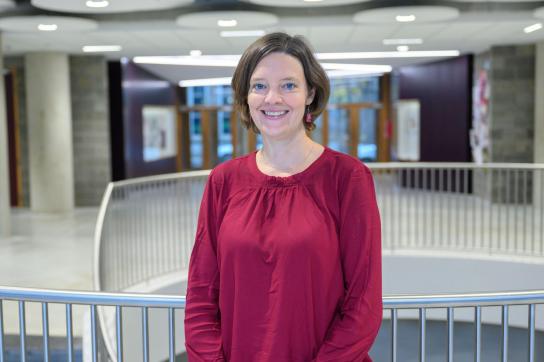
Catherine Linard has been awarded the Francqui-Collen Research Professorship for her research on the spread of infectious diseases
Award
Geography
Sciences
Catherine Linard has been awarded the Francqui-Collen Research Professorship for her research on the spread of infectious diseases
Award
Geography
Sciences
Catherine Linard, a researcher in the Department of Geography at UNamur, was recognized for her work at the intersection of geography and epidemiology. This Francqui-Collen fellowship will allow her, starting in September and for the next three years, to be relieved of most of her teaching duties so she can devote more time to her research on the influence of environmental changes on the spread of infectious diseases.
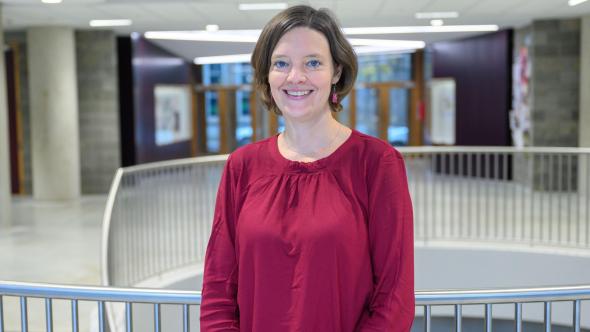
Why do certain infectious diseases pose a greater risk in some regions than in others? What role do urbanization, climate change, and population movements play in their spread? These are the kinds of questions that interest Catherine Linard, a researcher in the Department of Geography at UNamur.
A geographer by training, she works in the field of health geography, which studies the relationship between health and place. “I study health, but through the eyes of a geographer. I’m primarily interested in the landscape, and I try to understand the natural and social processes that shape health in a given place.”
Understanding Diseases Across the Region
Her research focuses specifically on vector-borne diseases—that is, diseases transmitted by organisms such as mosquitoes. These include, in particular, malaria and dengue fever. To better understand their geographic distribution, the researcher analyzes various factors that may influence their transmission. The environment obviously plays a role, since it determines, in particular, where mosquitoes can breed, but it is not enough on its own to explain the spread of a disease.
“I take a fairly systemic approach. We’ll look at the environment, but also at human behavior, mobility, and so on.” Part of her research thus focuses on the impact of rapid changes in our environments—such as the rapid urbanization of the African continent—on mosquito-borne diseases.
This work has now received significant recognition. Starting in September, Catherine Linard will hold a three-year grant from the Francqui Foundation. Her proposal was first selected by the UNamur Research Council before being approved by the Foundation.
Three years to take a step back
This appointment will allow the researcher to be relieved of most of her teaching duties so she can devote more time to her research. This is a particularly valuable opportunity given that her daily academic life is divided between teaching, supervising researchers and doctoral students, conducting research, and handling administrative tasks.
However, there are no plans yet to establish a specific schedule for the next three years. Catherine Linard first wants to take advantage of this newfound availability to devote more time to her ongoing projects and to mentor several doctoral students who are nearing the completion of their dissertations.
Image

“In recent years, I’ve felt that my work had become quite fragmented. I no longer necessarily had the time to explore certain aspects on my own that I would have liked to delve into more deeply. This appointment will give me valuable time to devote myself fully to research activities that are close to my heart.”
The appointment should also enable her to strengthen her international collaborations. In particular, the researcher works with Cheick Anta Diop University in Dakar, Senegal, and plans to use these three years to deepen these exchanges and organize new fieldwork trips. In the longer term, she hopes above all to find time to explore new avenues and determine the future direction of her research. “Research is advancing at a breakneck pace. To stay abreast of everything happening in our field, we need to keep reading and following the work of other teams.”
Collective Recognition
Catherine Linard also sees the Francqui Prize as recognition of the work she has carried out with her team and her many collaborators. She also sees it as recognition for the field of health geography, a discipline long overlooked by the general public, but whose importance was particularly highlighted during the COVID-19 pandemic, when understanding the geographic spread of an epidemic became a particularly critical issue. “I believe it is also recognition of the relevance of this research to society, of its ability to shed light on major and highly topical societal issues, as well as of the value of a resolutely interdisciplinary project.”
Catherine Linard – Short Biography
After defending her dissertation titled "Spatial and Integrated Modeling of Complex Disease Systems" in the Department of Geography at UCL in January 2009, she spent four months at the Department of Zoology at the University of Oxford (TALA Research Group) as a visiting researcher. She then began a two-year postdoc (2009–2011) at the University of Oxford on the WorldPop project, funded by the Wiener-Anspach Foundation, followed by six years (2011–2017) of postdoctoral research at the Spatial Epidemiology Laboratory (SpELL) at ULB (with funding from FNRS and BELSPO). She has been a professor in the Department of Geography at UNamur since 2015.

Article
-
Faculty of Sciences
Chemistry Department Narilis Institute
Win4Doc | Automating the Production of Radiotracers for Medical Imaging
Life and health sciences
Chemistry
Win4Doc | Automating the Production of Radiotracers for Medical Imaging
Life and health sciences
Chemistry
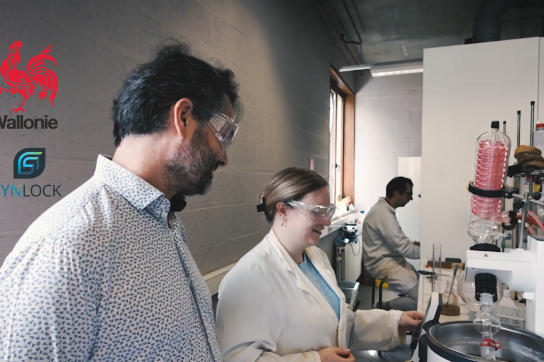
At UNamur, a doctoral thesis led by Juliette Liégeois—with support from SPW Recherche as part of the Win4Doc program—aims to modernize the automated production of radiotracers used, in particular, to diagnose certain cancers and other diseases. Called SMART, the project is being developed in collaboration with Synlock, a company that designs synthesis robots for academic and industrial laboratories.
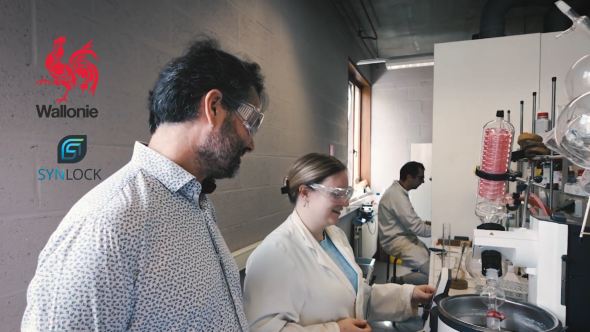
Radiotracers are small radioactive molecules used in medical imaging. Once injected into the body, they can bind to specific targets characteristic of a disease and emit radiation that can be detected by imaging devices. Juliette Liégeois, a doctoral student at the Bioorganic Chemistry Laboratory (CBO) at UNamur, is working on these molecules as part of a thesis conducted in collaboration with the company Synlock. “You can compare them to GPS trackers. For example, they make it possible to precisely locate a tumor in the human body and then help the oncologist determine a treatment strategy,” she explains.
But producing these molecules is a real challenge. Because they are radioactive and unstable, they must be synthesized quickly and under conditions that ensure the safety of the scientists. Their synthesis is therefore carried out using automated machines capable of performing the various steps in sequence without direct human intervention. However, a large portion of the automated systems currently in use still rely on technologies that do not easily accommodate certain newer synthesis methods developed in research laboratories.
The goal of the SMART project is precisely to bridge this gap by adapting existing methods so they can be integrated into automated systems and to verify their effectiveness under conditions that closely resemble actual production.
Adapting machines to new research methods
To achieve this, Juliette Liégeois is working on two techniques. Biocatalysis uses enzymes to carry out certain chemical reactions under milder conditions, while photocatalysis uses light to trigger these reactions. These two methods are often used in research but still need to be adapted to the constraints of automated machines.
The project is also testing the Cheminizer, a technology developed by Synlock. This reactor rotates during the manufacturing process to better mix the various components and more effectively control the reactions. Its operation could, in particular, facilitate the use of light and enzymes.
From the Laboratory to Automated Production
The SMART project is based on the complementary strengths of UNamur and Synlock. The company contributes its expertise in the design of machinery and reactors, while UNamur’s Bioorganic Chemistry Laboratory (CBO) contributes its knowledge of chemical reactions.
Image

“The collaboration between Synlock and the CBO laboratory offers two key benefits. First, there is synergy regarding the technology or technologies developed in the project: the company contributes its expertise in the field of reactors, while the laboratory contributes its knowledge of chemical reactions and transformations relevant to the project. The other important aspect is the management and direction of strategic decisions to be made in consultation with both partners, as these decisions can have direct economic implications for the development of Synlock’s products.”
Watch the video about the project
Win4doc | Bridging the Gap Between Academic Research and Industry
Win4Doc is a program established by Wallonia (SPW Research) that allows a Walloon company to hire a researcher to conduct doctoral research in collaboration with a university research unit.

Industry-Based Doctoral Programs at UNamur
News
-
Faculty of Sciences
Chemistry Department Narilis Institute
A new Walloon spin-off (UNamur / UCLouvain / WEL Research Institute) is developing a nasal spray to prevent viral respiratory infections
Life and health sciences
Sustainable
SDG#3 - Good health and well-being
ODD#9 - Industry, innovation and infrastructure
A new Walloon spin-off (UNamur / UCLouvain / WEL Research Institute) is developing a nasal spray to prevent viral respiratory infections
Life and health sciences
Sustainable
SDG#3 - Good health and well-being
ODD#9 - Industry, innovation and infrastructure
Jointly founded by the University of Namur and UCLouvain, the spin-off Intercept Bio aims to take a new step forward in the prevention of viral respiratory infections. Stemming from research conducted by the teams of Professor Stéphane Vincent at the UNamur Bio-Organic Chemistry Laboratory and Professor David Alsteens at the Louvain Institute of Biomolecular Science and Technology at UCLouvain, and a researcher at the WEL Research Institute, the start-up is developing a nasal spray designed to act right at the entry point for respiratory viruses: the nasal passages.
The innovation at the heart of Intercept Bio is based on a proprietary molecule, 9-Ac-SAP, protected by several families of international patents jointly held by the two universities. This molecule, formulated as a nasal spray, is designed to intercept viruses before they can attach to human cells. Specifically, it acts as a molecular “decoy”: instead of attaching to the surface of the body’s cells, the virus first encounters this molecule, which disrupts its adhesion and thus limits its ability to initiate infection.
Image

With the nasal spray, our goal is to offer an approach that is easy to use but based on a very detailed understanding of the early stages of viral infection. Rather than waiting for the virus to take hold in the body, we aim to prevent it from crossing that first barrier by acting directly on the nasal passages.
Professor Stéphane Vincent is a member of the Bio-Organic Chemistry Laboratory (CBO) and the NISM and NARILIS institutes at UNamur.
Respiratory viruses are constantly evolving. By targeting a fundamental step in their interaction with human cells rather than a specific viral protein, we hope to develop a solution that remains effective even as new variants or emerging viruses appear.
Professor David Alsteens of the NanoBioPhysics Lab and a member of the Louvain Institute of Biomolecular Science and Technology at UCLouvain and the WEL Research Institute.
This approach is particularly innovative because it does not target a single virus or a single strain. Preclinical studies conducted at UNamur and UCLouvain have demonstrated antiviral activity against several major respiratory viruses, including SARS-CoV-2, influenza viruses, and respiratory syncytial virus. By targeting a very early and common stage of the infection process—namely, the virus’s attachment to the host cell—the technology paves the way for a preventive strategy that complements vaccines, existing antiviral treatments, and conventional protective measures.
The first product developed by Intercept Bio comes in the form of a nasal spray. This method of administration follows a simple logic: to act locally, where many respiratory viruses begin their progression in the body. Easy to use, non-invasive, and designed for preventive use, this spray could be a particularly relevant solution for people at highest risk of complications, especially patients with chronic respiratory conditions.
“This spray could be an alternative to the vaccine for immunocompromised individuals. It would help prevent respiratory illnesses, the flu, or other infections by applying it before entering confined spaces, such as public transportation. It could also be used by an infected person to limit the risk of transmitting the virus to those around them,” explains David Alsteens of UCLouvain’s WEL Research Institute.
By reducing the risk of infection or exacerbation of severe respiratory illnesses, a preventive solution like this spray could help limit complications, hospitalizations, and pressure on the healthcare system.
A fruitful interuniversity collaboration
In 2020, as soon as the coronavirus pandemic began, David Alsteens (UCLouvain, WEL Research Institute) used his state-of-the-art atomic force microscopy platform—unique in Belgium for its ability to study interactions between pathogens and cells—to investigate how COVID-19 attaches to our cells. Very quickly, the UCLouvain-WEL Research Institute team discovered the importance of certain sialic acids on the surface of our cells in allowing the virus to attach to them. Sialic acids, which are sugar residues, act like tiny locks to which the virus binds via its surface proteins before entering the host cell.
In an effort to block this interaction—and thus prevent the virus from infecting cells— David Alsteens turned to Professor Stéphane Vincent of the Bio-Organic Chemistry Laboratory at UNamur, who specializes in organic chemistry, glycosciences, biocatalysis, and mechanistic enzymology. His team designs and synthesizes complex molecules capable of interacting with biological targets, particularly in contexts related to infections. Vincent then produced a molecule flanked by sialic acids—the famous decoy molecule—which saturates the virus and prevents it from binding to its host cells. Subsequent tests on mice proved effective in 80% of cases. Within the Intercept Bio framework, this contribution was instrumental in designing, producing, and optimizing the molecules that form the basis of the technology platform.
Intercept Bio also illustrates the power of inter-university collaboration. The project arose from the complementary nature of two high-level scientific areas of expertise: on the one hand, UNamur’s ability to design and synthesize innovative molecules inspired by glycoscience; and, on the other hand, the expertise of UCLouvain-WEL Research Institute in observing, measuring, and understanding, at the nanoscale, the interactions between viruses, molecules, and cells. This collaboration has made it possible to move from a scientific intuition to a protected technology, validated in preclinical trials and now moving toward industrial development.
From the Lab to the Spin-off
The creation of Intercept Bio is part of a commercialization initiative jointly led by UNamur and UCLouvain, with support from the WEL Research Institute, UNamur Venture, and Sopartec—a member of Louvain-Transfer, UCLouvain’s research commercialization organization. These organizations have supported the project’s development, structuring, initial funding, and governance, working alongside the founding researchers and the management team, thereby enabling the transition from basic research to a concrete application for society. Serge Pampfer, a seasoned figure in the Belgian biotech ecosystem, is leading the new organization as CEO.
The research and funding that made the development of this solution possible, as well as the filing of the related patents, were supported by several funding initiatives and programs: the two ERC grants, support from the WEL Research Institute and the Louvain Foundation, obtained by David Alsteens of UCLouvain; as well as the EOS (interuniversity) program, the FNRS, and the Marie Curie ITN network, which funded a Ph.D. position in Stéphane Vincent’s team. The ITN, funded under the FP7 Marie Curie Doctoral Network program, made it possible to establish the initial methodology developed for Ebola, which contributed to the scientific advances that led to this technology. The company’s mission will be to continue the preclinical and clinical development phases, secure the necessary funding for the upcoming regulatory phases, and ultimately prepare for the market launch of innovative solutions designed to prevent viral respiratory infections. Beyond this first product, Intercept Bio aims to gradually develop a portfolio of products based on the same technological platform.
News
-
Faculty of Sciences
Biology Department NISM Institute
Researchers from Namur Achieve Great Success in the F.R.S.-FNRS’s 2026 “Grants and Research Awards” and “Télévie” Calls
Institution
News
-
Faculty of Sciences
Faculty of Philosophy and Letters
Faculty Economics Management Communication Politics (EMCP)
Biology Department
Physics Department
NISM Institute
Narilis Institute
Researchers from Namur Achieve Great Success in the F.R.S.-FNRS’s 2026 “Grants and Research Awards” and “Télévie” Calls
Institution
On June 23, 2026, the F.R.S.-FNRS published the list of recipients of various doctoral and postdoctoral fellowships and Télévie projects (cancer-focused research). Among them, numerous researchers from UNamur received funding.
Six researchers have been awarded doctoral fellowships to begin their doctoral dissertations: Rachel LAURON from the Faculty of Sciences; Océane WATELET, Vera NOVAK, Camille LAMBIET, Alionka WÉRENNE, and Théodore HARDY (who received his grant from ULB under a joint supervision arrangement with UNamur) from the Faculty of Philosophy and Letters.
Researchers from Namur also achieved great success in securing research fellow grants. Seven of them received this postdoctoral funding. They are Eleonor CELORA, Nataliya PUCHENKINA, Jérémy ARTRU and Bernardino PITOCCHELLI from the Faculty of Philosophy and Letters; Romain MERTENS from the Faculty of Law; and David TALUKDER and François WOITRIN from the Faculty of Economics, Management, and Communication at SciencesPo (EMCP).
In addition, two permanent F.R.S.-FNRS researchers at UNamur have been promoted to Senior Researcher: Francesca CECCHET and Yves CAUDANO, both members of the Department of Physics and the NISM Institute.
The Télévie call for proposals also enabled Marc HENNEQUART to secure funding to begin research aimed at identifying the metabolic determinants of the response to arginine deprivation in pancreatic and colorectal cancers.
Congratulations to them!
Agenda
FoodWal 2026 Symposium
Life and Health Sciences
SDG 3 - Good Health and Well-being
9
2026
09:00
-
10
2026
18:00
Université de Namur, Faculté des sciences, auditoire S01 - rue Grafé, 2 - 5000 Namur
This two-day event will bring together researchers, innovators, and industry professionals to explore the latest advances in food science, technology, and nutrition. This cutting-edge conference aims to foster collaborative discussions on emerging tools that could shape the future of our nutritional landscape.

Program Overview
This event will take place over two exciting days, featuring a diverse program designed to offer a dynamic and interactive experience for all participants. The entire symposium will be conducted in English.
- On Wednesday, December 9, and Thursday, December 10, two days of scientific and technical sessions will be dedicated to the topics of alternative proteins, the microbiome, and functional ingredients.
- On Wednesday, December 9, there will be a public lecture (in English) presented by Dr. Patrice Cani on the topic “Nourishing Your Gut: Nutrition, Microbiota, and Health.”
- For experienced researchers and group leaders, we are organizing a third day on December 11 dedicated to international collaboration, including laboratory visits and a workshop focused on establishing structured collaborative projects. Separate registration is required
Overview of the Themes
This symposium is structured around the three projects in the FoodWal portfolio, while pushing their boundaries and framing them within a “One Health” approach.
The session titled “Building Sustainable Value Chains for Alternative Proteins: from protein sources to the development of healthy food products” will provide an opportunity to present scientific and technological advances in the creation and characterization of alternative protein sources and products, as well as socioeconomic perspectives on the development, maintenance, and growth of sustainable value chains for alternative proteins.
The session titled “Research on the Microbiome and Microbiotics: Innovation in Nutrition for Better Health” will present scientific advances in the characterization, understanding, and modulation of the microbiome, as well as cutting-edge technologies aimed at developing innovative microbiotics.
Finally, the session titled “Functional Ingredients and Bioactive Compounds: Food Science and Biotechnology for Health” will focus on scientific advances in the identification, characterization, and understanding of the mechanisms of action of functional ingredients, as well as cutting-edge technologies designed to develop and produce innovative functional ingredients.
2nd Symposium on Protein Disorder, Interactions, and Dynamics (PDID)
Training
18
2026
08:30
-
18:00
Université de Namur, Auditoire Pedro Arrupe (PA02) - Rue Joseph Grafé 2 (Faculté des Sciences) / rue Grangagnage, Sentier Thomas - 5000 Namur
Following a successful first edition that notably brought together leading figures known for discovering and conceptualizing intrinsically disordered proteins—Drs. Vladimir N. Uversky, Peter Tompa, and Sonia Longhi—we are pleased to announce that the second edition of the One-Day Symposium on Protein Disorder, Interactions, and Dynamics (PDID 2026) will be held on Friday, December 18, 2026, at the University of Namur (UNamur) in Namur, Belgium.
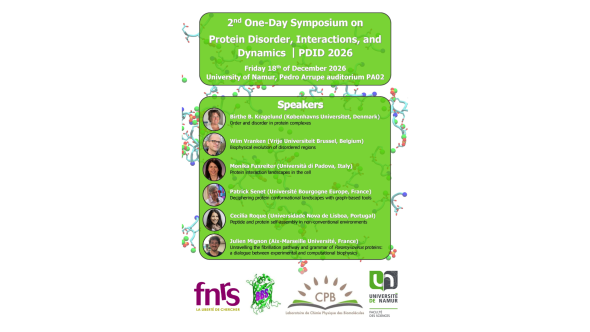
The PDID symposium is finally back in 2026!
Organized every two years by the Belgian Biophysical Society (BBS) and the Laboratoire de Chimie Physique des Biomolécules (CPB), the PDID symposium is an intimate and friendly event for exchanging new ideas and meeting leading experts in the field in the quintessentially Belgian city of Namur, the capital of Wallonia, located at the confluence of the Meuse and Sambre rivers.
We welcome participants from any scientific background who are particularly interested in delving into the world of biomolecular dynamics and exploring their unique behaviors, including structural transitions, interaction networks, protein-ligand interactions, self-assembly, amyloid fibrillation, condensation, phase separation, and phase transitions. Through the lens of biophysics, biochemistry, bioinformatics, and molecular biology, the program aims to cover both experimental and computational approaches for characterizing such intricate and elusive systems in health-related, biotechnological, and biomaterial contexts.
Ce contenu est en cours de migration. Retrouvez toutes les informations utiles sur le site web externe de l'Institut Narilis.
