Article
-
Faculty of Sciences
Faculty of Philosophy and Letters
Physics Department
Department of Classical Languages and Literatures
History Department
NISM Institute
Narilis Institute
PaTHs Institute
naXys Institute
PHOENIX: Revitalizing Heritage Sciences at UNamur
Heritage, culture and society
Physics and astronomy
History
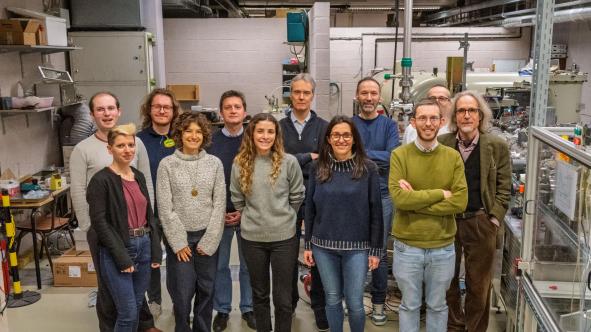
With the PHOENIX project, UNamur is revisiting a long-standing area of expertise: heritage sciences. Using cutting-edge techniques and artificial intelligence, a transdisciplinary team of experts in history, archaeology, and physics has set out to renew our understanding of heritage objects in order to uncover their origins, methods of production, and uses. Under their scrutiny: ancient coins and medieval parchments.