
Bachelor in Biology
-
Schedule
regular course
- ECTS Credits 180
Overview
The Bachelor’s program in Biology at the University of Namur is characterized by an early focus on the major fields of biology (cellular and molecular biology, plant, animal, and microbial diversity and evolution, evolutionary theories, and histology).
The program is complemented by fundamental concepts in chemistry and experimental physics, as well as statistics and programming.
Subsequently, the biology program intensifies and becomes more specialized with courses in physiology, genetics, biochemistry, microbiology, ecology, and bioinformatics.
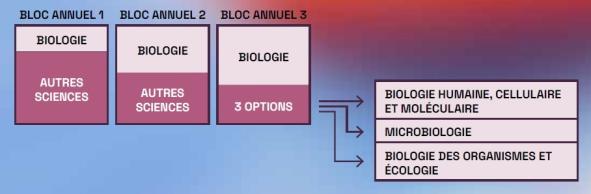
In the third block, you customize your program by choosing a concentration. This concentration does not limit your options, whether for a master’s degree or in the job market.
You will develop a strong command of English, enabling you to understand scientific literature and communicate with other scientists in your field (some courses are taught entirely in English).
A human dimension complements your bachelor’s degree with a reflective approach to the role and impact of science in society.
You're off to a good start
- You are passionate about living things and curious to learn how living organisms and processes work;
- you feel comfortable with biology;
- you feel capable of integrating concepts from physics, chemistry, and mathematics, without necessarily having taken a rigorous high school curriculum;
- you have strong analytical and synthesis skills;
- You are motivated by the idea of learning English and being able to communicate in that language.
Teaching Methods
Lectures, seminars, practicals, exercise sessions, labs, internships… every effort is made to ensure a thorough understanding of concepts and the development of practical skills in the techniques most commonly used by biologists.
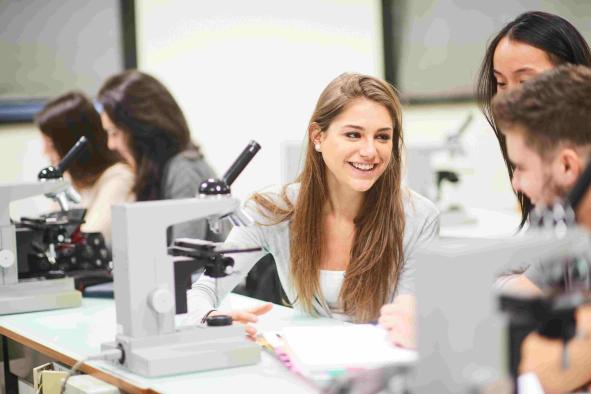
Organized in small groups, the practical work and exercise sessions introduce you to the techniques specific to each discipline. You learn how to use the equipment, take measurements, and then interpret them. In this way, you will experimentally observe certain laws or phenomena covered in theoretical lectures.
Field trips and internships are essential for a natural science like biology. That is why, in addition to exercises and lab work, you will participate in field days where you apply your discipline in real-world settings: marine biology and ecology internships, environmental biology internships, ecology and integrative biology internships, multidisciplinary summer internships, or immersion internships in laboratories, industry, and hospitals.

Independence and critical thinking are skills you learn to develop throughout your education. For example, during “flipped classrooms” or problem-based learning sessions, you prepare parts of the material in groups guided by a teacher. You present your findings and formulate questions to make the most of your interaction with the instructor.
Through the “student-researcher” project, you can gain an introduction to research under the supervision of a researcher from the department. This experience also allows you to develop your independence, creativity, and critical thinking skills.
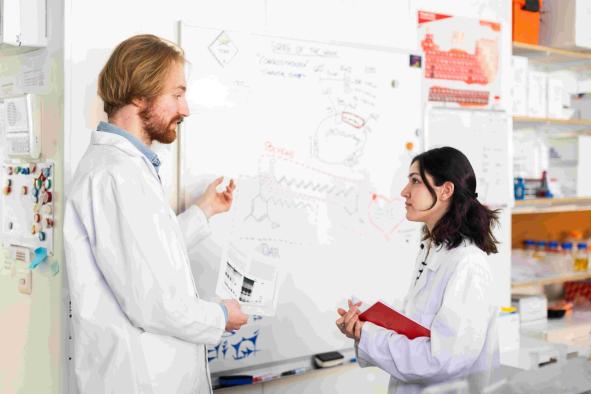
If you choose the “biology tutoring” option in Block 3, you will have the opportunity to mentor students in Blocks 1 and 2 during lab sessions, thereby gaining your first teaching experience.
Completing a final-year project on a topic of your choice concludes your bachelor’s degree. This project can be approached from a bibliographic, pedagogical (to allow you to participate in science outreach activities), or experimental perspective (assisting a researcher in the laboratory).
A program rooted in sustainable development
Deadly viruses, chronic diseases, loss of biodiversity, global warming, food resources… are complex societal issues that affect life in all its forms.
Analyze the core components of these problems and develop solutions for the future!
Support for Success
Succeeding in a year of university studies involves many challenges.
To help you overcome them, UNamur supports you in developing your academic, methodological, and interpersonal skills—with the help of many professionals.
Preparatory courses, personalized assistance… Discover the resources available to support your education.

After a bachelor's degree: a master's degree
The University of Namur offers the following master’s programs:
- Master's Degree (120 credits) in Biomedical Sciences
- 60-credit Master’s in Biomedical Sciences
- International Master’s in Translational Cosmetic and Dermatological Sciences (EMOTION)
directly accessible after earning a bachelor’s degree in biological sciences.
Contacts
Faculty of Science
2 Grafé Street • B-5000 Namur
Office
Ms. A. Brouir, Ms. S. Duvivier, and Ms. C. Haeck
Tel.: +32 (0) 81 72 45 00
secretariat.sciences@unamur.be
-
Complementary activities
Code Name Staff Th.+Ex. Credits/Block 1 2 3 Sustainable developmentImage
MMEDB360 One Health Wieërs Grégoire Lachapelle Amélie Canon Caroline 15h th. 3 3 SBIOB003 Pluridisciplinary scientific field trip Silvestre Frédéric Yans Johan Yans Johan Silvestre Frédéric 48h th. + 48h ex. 3 3 SVETB297 Zootechnics course 1 Hontoir Fanny Cambier Carole 10h th. 2 SVETB343 Internship at the Centre de Recherches Ovines 1 PETIT Astrid Hontoir Fanny 20h ex. 1 -
General scientific training
-
IT
Code Name Staff Th.+Ex. Credits/Block 1 2 3 SBIOB120_Bloc1 Data management in life sciences, basic principles De Laender Frédérik 8h th. + 12h ex. 2 SBIOB220 Data Analysis in Life Sciences Lima Mendez Gipsi 12h th. + 15h ex. 2 -
Language
Code Name Staff Th.+Ex. Credits/Block 1 2 3 Soft skillsImage
SCDLB101 Introduction to Scientific English (level B1 and above) Schutz Natassia 30h th. 2 SCDLB201 English : Communicating Science Effectively (level B2) Schutz Natassia 30h th. 2 Soft skillsImage
SCDLB301 Writing and Presenting a Scientific Literature Review (level B2) Schutz Natassia 30h th. 2 -
Humanities
Code Name Staff Th.+Ex. Credits/Block 1 2 3 SSPSB101 Philosophical questions Modera Astrid Sartenaer Olivier 22h th. + 7h ex. 2 Service learningImage
SSPSB102_Bloc1 Religious Studies: Anthropology, Metaphysics and Science Cazalis Roland Leyens Stéphane 30h th. 2 SSPSB203 Psychology Ravez Laurent 22.5h th. 2 2 SSPSB202 History of science Sartenaer Olivier 22.5h th. 2 SSPSB204 Logic and argumentation Sartenaer Olivier Sartenaer Olivier 22.5h th. 3 Service learningImage
SSPSB102 Religious Studies: Anthropology, Metaphysics and Science Cazalis Roland Leyens Stéphane 30h th. 2 SSPSB309 Ethical LAURENT Nathanaël Leyens Stéphane 15h th. 2 SSPSB308 Philosophy of science Sartenaer Olivier 15h th. 2 SSPSB307 Formal logic Sartenaer Olivier 15h th. 2 -
Biology
-
Module
-
Human, cellular and molecular biology
Code Name Staff Th.+Ex. Credits/Block 1 2 3 SBIOB327 Genetic and epigenetic regulations FINET Olivier Poncin Katy 30h th. 2 SVETB313 Applied microbiology Gillet Nicolas 20h th. 2 SBIOB301 Molecular Mechanisms of Development Matroule Jean-Yves Messiaen Johan Renard Patricia 24h th. 2 Sustainable developmentImage
English Friendly CoursesImage
SMEDB358 Integrated and biological approach to diseases Pierson Audrey Gourdin Maximilien Desseilles Martin Lambert De Rouvroit Catherine 30h th. + 15h ex. 2 SBIOB345 Human cell biology Renard Henri-François 15h th. + 10h ex. 2 SBIOB344 Visits to laboratories, industry and hospitals Renard Henri-François 10h th. + 10h ex. 2 English Friendly CoursesImage
SBIOB332 Mechanisms of cell responses to stimuli Michiels Carine 15h th. + 10h ex. 2 SBIOB358 Modern laboratory techniques. Renard Patricia Hennequart Marc Arnould Thierry 24h th. + 24h ex. 4 -
Organismal biology and ecology
Code Name Staff Th.+Ex. Credits/Block 1 2 3 SBIOB003 Pluridisciplinary scientific field trip Silvestre Frédéric Yans Johan Yans Johan Silvestre Frédéric 48h th. + 48h ex. 3 3 Sustainable developmentImage
SBIOB368 Applied ecology De Laender Frédérik 20h th. + 15h ex. 4 English Friendly CoursesImage
SBIOB349 Environmental biology course (including ornithology) Reid Brendan Pigneur Lise-Marie 30h ex. 3 SBIOB362 Ecoethology Thoré Eli Thoré Eli 30h th. + 15h ex. 4 SBIOB340 Biodiversity, conservation and population genetics Reid Brendan 30h th. + 15h ex. 4 SBIOB341 Ecophysiology and ecotoxicology Silvestre Frédéric 30h th. + 15h ex. 4 -
Microbiology
Code Name Staff Th.+Ex. Credits/Block 1 2 3 SBIOB372 Immunology of infection Muraille Éric 15h th. 2 SBIOB369 Metabolic diversity and ecology of microorganisms Lima Mendez Gipsi 22h th. + 22h ex. 3 SBIOB375 Internship rotations Lima Mendez Gipsi Hallez Régis De Bolle Xavier Renzi Francesco Matroule Jean-Yves 40h th. + 40h ex. 5 SBIOB371 Bacterial pathogenesis De Bolle Xavier Renzi Francesco 15h th. 2 SVETB313 Applied microbiology Gillet Nicolas 20h th. 2 SBIOB370 Bacterial models Matroule Jean-Yves Matroule Jean-Yves 15h th. + 30h ex. 2 SBIOB327 Genetic and epigenetic regulations FINET Olivier Poncin Katy 30h th. 2
-
-
Biological sciences
-
Optional courses
Code Name Staff Th.+Ex. Credits/Block 1 2 3 Sustainable developmentImage
UNAM0043 Global change and the Anthropocene Yans Johan Dendoncker Nicolas Yans Johan Linard Catherine Houssiau Laurent Henry Sabine 24h th. 3 SBIOB003 Pluridisciplinary scientific field trip Silvestre Frédéric Yans Johan Yans Johan Silvestre Frédéric 48h th. + 48h ex. 3 3 SBIOB350 Tutoring in biology Silvestre Frédéric Matroule Jean-Yves 24h ex. 3 Soft skillsImage
UNAM0049 Science for all : Introduction to popular science Schutz Natassia Hansel Aude 24h th. 3 UNAM0048 Artificial intelligence: challenges and opportunities Frenay Benoît 24h th. 3 Sustainable developmentImage
MMEDB360 One Health Wieërs Grégoire Lachapelle Amélie Canon Caroline 15h th. 3 3 Soft skillsImage
SBIOB002 Professional observation internship Silvestre Frédéric 5h th. 3 -
Optional courses
Code Name Staff Th.+Ex. Credits/Block 1 2 3 SBIOB203 Matroule Jean-Yves 15h th. 2 SBIOB202 De Laender Frédérik 5h th. + 10h ex. 2 -
Internships
Code Name Staff Th.+Ex. Credits/Block 1 2 3 Sustainable developmentImage
SBIOB208 Marine biology and ecology course Dennis Alice Thoré Eli Dennis Alice 40h th. + 40h ex. 3 Sustainable developmentImage
SBIOB309 Ecology course 60h ex. 3
-
-
General scientific training
Code Name Staff Credits Hours/Quarter 1 2 SGOLB102 Introduction to geology Collinet Max 3 20h th. + 20h ex. SCHIB118 General Chemistry I Vivegnis Sébastien 7 60h th. + 20h ex. SCHIB119 General Chemistry II Vivegnis Sébastien 4 30h th. + 25h ex. SPHYB113 Syllabus, webcampus, Teams. Colaux Julien Colaux Julien 3 30h th. + 11h ex. SPHYB114 Physics III - Optics Colaux Julien Colaux Julien 3 30h th. + 10h ex. SMATB111_Biologie <unknown> Lucas Maxime 2 15h th. + 15h ex. English Friendly CoursesImage
SPHYB112_Biologie Physics I : Mechanics and Waves HEUSKIN Anne-Catherine HEUSKIN Anne-Catherine 5 46h th. + 22h ex. SPHYB117 Supplementary physics in life sciences HEUSKIN Anne-Catherine 2 15h th. -
IT
Code Name Staff Credits Hours/Quarter 1 2 SBIOB120_Bloc1 Data management in life sciences, basic principles De Laender Frédérik 2 8h th. + 12h ex. -
Language
Code Name Staff Credits Hours/Quarter 1 2 Soft skillsImage
SCDLB101 Introduction to Scientific English (level B1 and above) Schutz Natassia 2 15h th. 15h th. -
Humanities
Code Name Staff Credits Hours/Quarter 1 2 SSPSB101 Philosophical questions Modera Astrid Sartenaer Olivier 2 22h th. + 7h ex. SSPSB203 Psychology Ravez Laurent 2 22.5h th. Service learningImage
SSPSB102_Bloc1 Religious Studies: Anthropology, Metaphysics and Science Cazalis Roland Leyens Stéphane 2 30h th. -
Biology
-
Biological sciences
Code Name Staff Credits Hours/Quarter 1 2 SBIOB131 Introduction to molecular and cell biology Renard Henri-François Matroule Jean-Yves 5 36h th. + 24h ex. SBIOB132 Theories of evolution Dennis Alice 2 12h th. SBIOB113 Microbial diversity and evolution Matroule Jean-Yves 2 12h th. SBIOB119 Histology of cells and tissues Renard Patricia 3 24h th. + 12h ex. SBIOB126 Animal diversity and evolution Silvestre Frédéric 5 30h th. + 24h ex. SBIOB100 Plant diversity and evolution Messiaen Johan 6 36h th. + 30h ex.
-
-
Complementary activities
Code Name Staff Credits Hours/Quarter 1 2 Sustainable developmentImage
MMEDB360 One Health Wieërs Grégoire Lachapelle Amélie Canon Caroline 3 15h th. SBIOB003 Pluridisciplinary scientific field trip Silvestre Frédéric Yans Johan Yans Johan Silvestre Frédéric 3 48h th. + 48h ex. -
General scientific training
Code Name Staff Credits Hours/Quarter 1 2 SCHIB212 Chimie organique Vincent Stéphane 4 40h th. + 10h ex. SMATB223 Mathematics II De Vleeschouwer Martine 3 15h th. + 20h ex. English Friendly CoursesImage
SBIOB205 Introduction to statistics De Laender Frédérik 4 24h th. + 22.5h ex. -
IT
Code Name Staff Credits Hours/Quarter 1 2 SBIOB220 Data Analysis in Life Sciences Lima Mendez Gipsi 2 12h th. + 15h ex. -
Language
Code Name Staff Credits Hours/Quarter 1 2 SCDLB201 English : Communicating Science Effectively (level B2) Schutz Natassia 2 15h th. 15h th. -
Humanities
Code Name Staff Credits Hours/Quarter 1 2 SSPSB203 Psychology Ravez Laurent 2 22.5h th. SSPSB202 History of science Sartenaer Olivier 2 22.5h th. SSPSB204 Logic and argumentation Sartenaer Olivier Sartenaer Olivier 3 22.5h th. Service learningImage
SSPSB102 Religious Studies: Anthropology, Metaphysics and Science Cazalis Roland Leyens Stéphane 2 30h th. -
Biology
-
Biological sciences
Code Name Staff Credits Hours/Quarter 1 2 SBIOB221 General ecology De Laender Frédérik Reid Brendan Thoré Eli 5 35h th. + 14h ex. SBIOB232 System Histology Renard Patricia 3 15h th. + 20h ex. SBIOB209 Introduction to Bacteriology De Bolle Xavier 2 15h th. + 10h ex. SVETB218_Biologie <unknown> Hontoir Fanny Silvestre Frédéric 3 25h th. + 12h ex. SBIOB214 Animal physiology II Dennis Alice Silvestre Frédéric 4 32h th. + 12h ex. Soft skillsImage
SBIOB229 Current issues in biology Arnould Thierry Silvestre Frédéric 3 20h th. SBIOB210 General Biochemistry I Michaux Catherine Renard Patricia 5 45h th. + 22.5h ex. SBIOB213 Génétique Matroule Jean-Yves 4 24h th. + 15h ex. SBIOB228 Plant physiology Messiaen Johan 4 30h th. SBIOB215 Animal diversity and evolution Flot Jean-François Flot Jean-François Flot Jean-François Dennis Alice Dennis Alice Reid Brendan 5 30h th. + 30h ex. -
Optional courses
Code Name Staff Credits Hours/Quarter 1 2 SBIOB203 Matroule Jean-Yves 2 15h th. SBIOB202 De Laender Frédérik 2 5h th. + 10h ex. -
Internships
Code Name Staff Credits Hours/Quarter 1 2 Sustainable developmentImage
SBIOB208 Marine biology and ecology course Dennis Alice Thoré Eli Dennis Alice 3 40h th. + 40h ex.
-
-
Complementary activities
Code Name Staff Credits Hours/Quarter 1 2 SVETB297 Zootechnics course 1 Hontoir Fanny Cambier Carole 2 5h th. 5h th. SVETB343 Internship at the Centre de Recherches Ovines 1 PETIT Astrid Hontoir Fanny 1 20h ex. -
General scientific training
Code Name Staff Credits Hours/Quarter 1 2 SBIOB324 Advanced Statistics and Bioinformatics in Life Sciences Lima Mendez Gipsi Lima Mendez Gipsi 5 36h th. + 24h ex. -
Language
Code Name Staff Credits Hours/Quarter 1 2 Soft skillsImage
SCDLB301 Writing and Presenting a Scientific Literature Review (level B2) Schutz Natassia 2 15h th. 15h th. -
Humanities
Code Name Staff Credits Hours/Quarter 1 2 SSPSB309 Ethical LAURENT Nathanaël Leyens Stéphane 2 15h th. SSPSB308 Philosophy of science Sartenaer Olivier 2 15h th. SSPSB307 Formal logic Sartenaer Olivier 2 15h th. -
Biology
-
Module
-
Human, cellular and molecular biology
Code Name Staff Credits Hours/Quarter 1 2 SBIOB327 Genetic and epigenetic regulations FINET Olivier Poncin Katy 2 30h th. SVETB313 Applied microbiology Gillet Nicolas 2 20h th. SBIOB301 Molecular Mechanisms of Development Matroule Jean-Yves Messiaen Johan Renard Patricia 2 24h th. Sustainable developmentImage
English Friendly CoursesImage
SMEDB358 Integrated and biological approach to diseases Pierson Audrey Gourdin Maximilien Desseilles Martin Lambert De Rouvroit Catherine 2 30h th. + 15h ex. SBIOB345 Human cell biology Renard Henri-François 2 15h th. + 10h ex. SBIOB344 Visits to laboratories, industry and hospitals Renard Henri-François 2 10h th. + 10h ex. English Friendly CoursesImage
SBIOB332 Mechanisms of cell responses to stimuli Michiels Carine 2 15h th. + 10h ex. SBIOB358 Modern laboratory techniques. Renard Patricia Hennequart Marc Arnould Thierry 4 24h th. + 24h ex. -
Organismal biology and ecology
Code Name Staff Credits Hours/Quarter 1 2 SBIOB003 Pluridisciplinary scientific field trip Silvestre Frédéric Yans Johan Yans Johan Silvestre Frédéric 3 48h th. + 48h ex. Sustainable developmentImage
SBIOB368 Applied ecology De Laender Frédérik 4 20h th. + 15h ex. English Friendly CoursesImage
SBIOB349 Environmental biology course (including ornithology) Reid Brendan Pigneur Lise-Marie 3 30h ex. SBIOB362 Ecoethology Thoré Eli Thoré Eli 4 30h th. + 15h ex. SBIOB340 Biodiversity, conservation and population genetics Reid Brendan 4 30h th. + 15h ex. SBIOB341 Ecophysiology and ecotoxicology Silvestre Frédéric 4 30h th. + 15h ex. -
Microbiology
Code Name Staff Credits Hours/Quarter 1 2 SBIOB372 Immunology of infection Muraille Éric 2 15h th. SBIOB369 Metabolic diversity and ecology of microorganisms Lima Mendez Gipsi 3 22h th. + 22h ex. SBIOB375 Internship rotations Lima Mendez Gipsi Hallez Régis De Bolle Xavier Renzi Francesco Matroule Jean-Yves 5 40h th. + 40h ex. SBIOB371 Bacterial pathogenesis De Bolle Xavier Renzi Francesco 2 15h th. SVETB313 Applied microbiology Gillet Nicolas 2 20h th. SBIOB370 Bacterial models Matroule Jean-Yves Matroule Jean-Yves 2 15h th. + 30h ex. SBIOB327 Genetic and epigenetic regulations FINET Olivier Poncin Katy 2 30h th.
-
-
Biological sciences
Code Name Staff Credits Hours/Quarter 1 2 SVETB306 Immunologie Gillet Nicolas 4 24h th. + 6h ex. SBIOB304 Bachelor thesis Messiaen Johan De Laender Frédérik 5 25h th. + 25h ex. SVETB310_Biologie Partim "Virology Gillet Nicolas 2 17.5h th. SBIOB305 Evolution Dennis Alice 2 15h th. English Friendly CoursesImage
SBIOB312 General Biochemistry II Arnould Thierry 5 25h th. SBIOB323 Cell Biology Renard Henri-François Messiaen Johan 5 45h th. + 10h ex. SBIOB326 Complements of genetics De Bolle Xavier 4 35h th. + 30h ex. -
Optional courses
Code Name Staff Credits Hours/Quarter 1 2 Sustainable developmentImage
UNAM0043 Global change and the Anthropocene Yans Johan Dendoncker Nicolas Yans Johan Linard Catherine Houssiau Laurent Henry Sabine 3 24h th. SBIOB003 Pluridisciplinary scientific field trip Silvestre Frédéric Yans Johan Yans Johan Silvestre Frédéric 3 48h th. + 48h ex. SBIOB350 Tutoring in biology Silvestre Frédéric Matroule Jean-Yves 3 24h ex. Soft skillsImage
UNAM0049 Science for all : Introduction to popular science Schutz Natassia Hansel Aude 3 12h th. 12h th. UNAM0048 Artificial intelligence: challenges and opportunities Frenay Benoît 3 24h th. Sustainable developmentImage
MMEDB360 One Health Wieërs Grégoire Lachapelle Amélie Canon Caroline 3 15h th. Soft skillsImage
SBIOB002 Professional observation internship Silvestre Frédéric 3 5h th. -
Internships
Code Name Staff Credits Hours/Quarter 1 2 Sustainable developmentImage
SBIOB309 Ecology course 3 60h ex.
-
Jury
Careers for Biologists
Career Opportunities
Spotlight on our alumni
Organismal Biology and Ecology
Upon completion of this master’s program, you will be qualified to pursue a scientific career in the national and international job market, particularly in research institutions, nature conservation organizations, government and non-governmental agencies, as well as private companies.
Your modeling skills, in-depth understanding of biological phenomena, passion for research, and scientific rigor will be in demand not only in scientific professions (research, development, teaching, etc.) but also across society as a whole.
Biomedical Sciences
Biomedical sciences can lead to many different careers in the field of basic and/or applied research: universities, hospitals, government agencies, laboratories in the biopharmaceutical, biotechnology, nutritional and food/animal feed, cosmetics, forensic science, and medical and laboratory equipment sectors.
Molecular Microbiology
The wide variety of research fields in bacteriology will allow you to apply your knowledge in industries or research centers involved in the development of new biotechnological, medical, or food solutions.
Your proficiency in scientific English and your participation in a joint European program will facilitate your recruitment beyond our borders.
A Constantly Evolving Sector
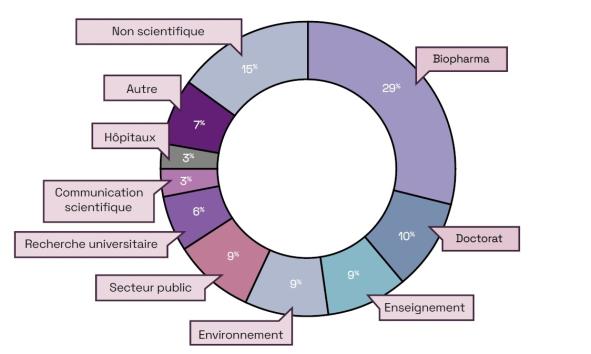
The life sciences are constantly evolving, and with them, techniques and professions. In Belgium, the pharmaceutical industry employs over 29,000 people, including more than 5,000 in research and development (R&D). With 12.8% of global pharmaceutical exports, our country holds a leading position. Alongside the healthcare sector, growing environmental awareness is opening up a growing number of opportunities for biologists.
Advancing science
Nearly 40% of our recent graduates begin their careers in research at a university, either in Belgium or abroad. There, they pursue a Ph.D. (typically a 4-year program) or participate in a research program, most often on a fundamental topic.
Research is also conducted in corporate R&D departments and at public research centers. As part of a team, biologists develop new products or conduct laboratory analyses.
After graduating, I was hired by a CRO (Contract Research Organization) located in Louvain-la-Neuve. I set up clinical trials on behalf of our clients. Specifically, I organize the submission of the trial to the ethics committee. Next, I train the staff at the site where the study will be conducted. I visit the site regularly to ensure that the protocol is being followed. I liaise with the other subcontractors involved (for example, for genetic blood analyses, for entering results into databases, etc.). Finally, I coordinate the writing of the final study report. It’s a job that requires a lot of organization and strong stress management skills
Marie, graduate
I manage a river contract in southern Belgium, within a nature park funded by European grants. Setting up a river contract involves convincing many partners with often divergent interests. I have to promote the project, particularly by publishing brochures. I organize outreach activities, such as workshops for children. Administrative and financial management, as well as fundraising, take up a significant portion of my time.
Nicolas, graduate
On the periphery of research and development
Many service providers are involved in the downstream phase of R&D. In large companies, specific departments handle these activities, either in full or in part.
CROs (Contract Research Organizations) are service companies that subcontract certain stages of clinical research on behalf of large companies. Some specialize in managing the clinical trials that new pharmaceutical products undergo before being brought to market, in order to verify their safety and pharmacokinetic profile (the behavior of a drug’s active ingredient within the body after administration).
Quality is the watchword of the pharmaceutical sector. It is always necessary to be able to prove that all procedures comply with current regulations, from the earliest stages of development through to the delivery of products to customers.
Within regulatory affairs departments, biologists supported by legal professionals monitor current regulations and handle the submission and tracking of “quality” or “intellectual property” filings with the relevant administrative authorities.
Preserving living heritage
An increasing number of biologists are working to protect natural, plant, and animal heritage. In accordance with established environmental policies, they conduct inventories, manage, monitor, and promote these resources. They may lead large-scale projects related to sustainable development (partner recruitment, fundraising, outreach, etc.).
My company develops bioreactors. We currently have 80 employees. After a year of laboratory training, I now manage a cell culture project. This involves planning the steps based on available resources—both equipment and personnel—using project management tools. I conduct literature reviews, carry out certain experiments, and present the results in the form of presentations and publications. English is essential for all communication with our partners and clients.
Florence, graduate
I am a quality assurance manager at an agricultural research center. We test pesticides before they are released to the market. I spend 25% of my time in the field, conducting inspections in the lab, attending meetings, or performing external audits. The rest of the time, I work on drafting procedures and reports. Communication, both oral and written, is essential in my work.
Vanessa, graduate
Passing on a passion for life
Science education remains a significant career path for our graduates, both in universities and in upper secondary education.
The emergence of new careers
In recent years, we have seen biologists entering the hospital sector, either in assisted reproductive technology laboratories or in the management of clinical trials involving patients.
Bioinformaticians, who combine their scientific training with strong skills in databases, statistics, and programming, play a fundamental role in dealing with the influx of new genomic sequencing data and other data derived from the exploration of living organisms. They model and compare this wealth of information to formulate relevant research hypotheses to be tested in an experimental setting.
I am a biologist in the molecular biology department of the Institute of Pathology and Genetics (IPG). One of the IPG’s missions is the screening for genetic diseases (such as cystic fibrosis) in adults, children, newborns, and even fetuses. As a biologist, I manage the work of a team of laboratory technologists, analyze the results obtained for each patient, and communicate them to the patient’s attending physician in the form of a report. We must also stay continuously informed about scientific and technical advancements through literature reviews, training, and conferences. Effective time and resource management, as well as the ability to communicate scientific data concisely, are essential skills in this profession.
Charlotte, graduate
L'aide à la recherche d'emploi
La Cellule Emploi accompagne les étudiants de dernière année et les diplômés dans leur parcours professionnel, via plusieurs services : diffusion d’offres d’emploi et de stage, entretiens d’orientation, ateliers sur les thématiques liées à l’insertion professionnelle, information et documentation sur le monde du travail.