Imagine dozens of robots sent into a disaster zone to search for victims, monitor a fragile ecosystem, or respond to a chemical spill. In these environments that are difficult or dangerous for humans, swarms of robots could one day play a valuable role. 

But to operate independently, they must first be able to agree on a course of action. And the task becomes more complicated when the information they exchange isn’t always reliable: a robot might malfunction, a sensor might provide incorrect data, or a message might be tampered with during a cyberattack.

Learning from Bees to Make Better Decisions

Andreagiovanni Reina of the University of Konstanz, Marco Dorigo and Raina Zakir of the Free University of Brussels, and Timoteo Carletti of UNamur sought to understand how robots can reach agreement when they receive conflicting information. To find a solution, the researchers turned to nature and to a champion of collective decision-making: the honeybee. 

Indeed, when a colony needs to find a new place to build its nest, bees set out to explore the surroundings and return to advocate for different locations. Those supporting one location can then send a signal to deter the bees advocating for another. Gradually, certain options are abandoned, and the colony eventually agrees on a single destination. 

Researchers have replicated this logic in robots. When a robot receives information that contradicts its current choice, it does not immediately change its mind. It first goes through a brief moment of hesitation, during which it no longer supports any option, before being able to make a new choice. This brief hesitation makes all the difference. Even when some information is false or unreliable, robots generally manage to reach agreement more quickly and clearly. 

When a Little Chaos Helps with Decision-Making

Even more surprising, researchers discovered that a limited amount of unreliable information could sometimes improve the outcome. These disruptions can prevent the swarm from agreeing too quickly on a poor option and increase its chances of ultimately choosing the best one. 

Similar mechanisms exist at various levels in nature, from neural networks to the mechanisms that regulate cells. This research thus bridges the gap between biology and robotics: living organisms inspire the design of more efficient robots, while experiments conducted with these robots provide a better understanding of certain mechanisms found in nature. 

Ultimately, this approach could help swarms of robots determine which area to explore first after a disaster or which environmental threat to address first. Congratulations to Timoteo Carletti and the entire team on this publication in *Nature Communications*! 

Timoteo Carletti – Short Biography

After earning a master’s degree in physics (University of Florence, June 1995), Timoteo Carletti pursued his doctoral studies in Florence (Italy) and Paris (France) at the IMCCE, and ultimately defended his doctoral dissertation in mathematics in February 2000.

He moved to Belgium in 2005 and was hired by the University of Namur as an adjunct lecturer, then as an assistant professor (2008), and finally as a full professor (2011) in the Department of Mathematics of the Faculty of Sciences. In 2010, he was one of the founders of the Namur Center for Complex Systems (now the Namur Institute for Complex Systems—naXys), which he directed until December 2014.

Learn more about Timoteo Carletti: https://www.unamur.be/fr/profil/tcarlett

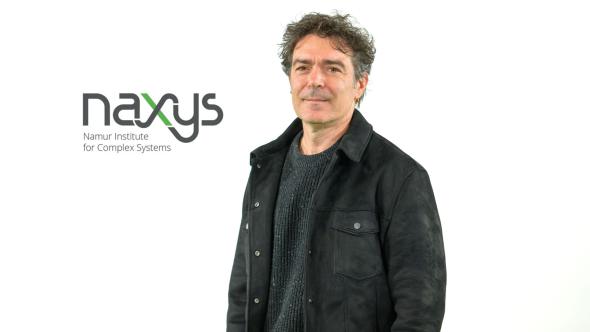
Timoteo Carletti