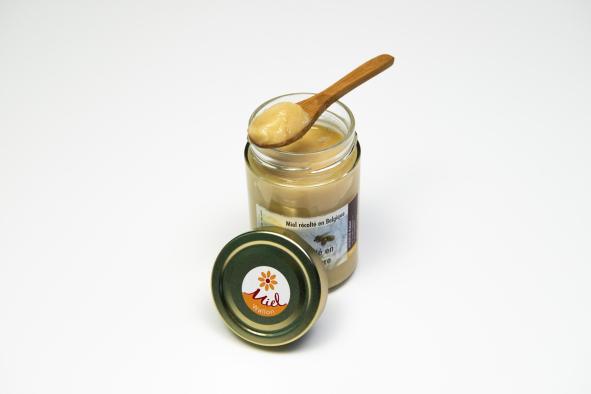
With a beekeeping tradition dating back several centuries, Wallonia boasts a unique network of beekeepers, educational apiaries, and local chapters that preserve a true living heritage. It is largely thanks to this strong connection between the product and its terroir that Walloon honey has joined the prestigious list of Walloon products bearing the PGI (Protected Geographical Indication) label. 

Starting in the early 20th century, the sector became more professional and dynamic, largely thanks to improvements in apiary management and honey quality,” explains Natacha Aucuit, a food history researcher who contributed to this recognition of Walloon honey.

Image
Natacha Aucuit

One of the distinctive features of Walloon honey is its imperceptible to very fine crystallization, with no coarse crystals. This is no accident: Walloon beekeepers have adapted to Wallonia’s great floral diversity by developing a technique for controlled honey crystallization, perfected in the 1980s and 1990s and widely disseminated thanks to CARI ASBL and with the help of PROMIEL ASBL 

Natacha Aucuit Historian

This method, now widely used in Wallonia, produces a spreadable, creamy, uniform honey that retains its natural properties.

Miel wallon

What struck me as I traced the history of this product was its deeply human aspect: knowledge is passed down within beekeeping communities, from master beekeepers to apprentices, embodying the strength of a regional tradition,” notes Natacha Aucuit.

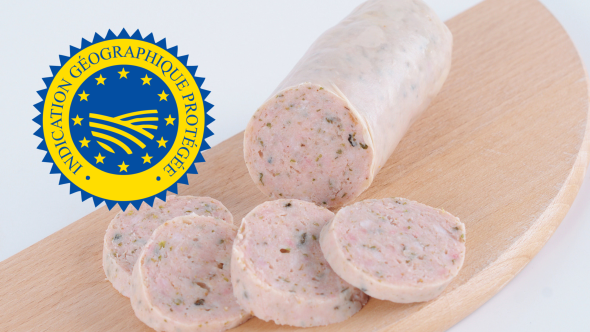
Liège White Sausage: a flavor, an herb, a tradition

In addition to Walloon Honey PGI, Natacha Aucuit also played a role in 2025 in securing PGI status for Liège White Sausage. 

A flagship product of the holiday season in the province, its historical origins are somewhat unclear… but its defining characteristics are very distinct. References to it appear in the press at the end of the 19th century, and by the early 20th century, one characteristic is confirmed: the addition of marjoram. This ingredient became the signature of Liège blood sausage. In the past, butchers and charcutiers grew marjoram themselves or bought it at local markets. Local production has resumed in recent years,” explains Natacha Aucuit.

Boudin de Liège
Liège blood sausage

This white sausage has deep roots in the city of Liège, but it is produced throughout the province. It is at the heart of Liège’s folk traditions: “This product is usually eaten cold, sliced. It is sometimes included in the drèssêye, a typical Liège assortment of cold cuts,” explains Natacha Aucuit. 

Ongoing work on local products

In addition to Walloon Honey PGI and Liège White Sausage PGI, other Walloon products are the focus of the Agrilabel unit, which is responsible for the recognition process. Currently, two applications are in progress: 

  • The revision of the specifications for Ardennes Ham PGI
  • The Wépion Strawberry

Other products certified as PGI since the creation of AgriLabel:

  • Florenville IGP Sausage
  • Ardennes Sausage IGP
  • Ardenne Collier IGP
  • Ardennes Pipe IGP
  • Chimay Escavèche PGI
  • Gaume Sausage PGI

The Agrilabel Project

Founded in 2011 at the initiative of the Wallonia Public Service and supported by the Office of the Walloon Minister of Agriculture, AgriLabel assists producers in obtaining European quality labels (PDO, PGI, and TSG) or regional labels (Label Qualité Plus). This work is based on a partnership between the University of Liège – Gembloux Agro-Bio Tech and UNamur.

In this context, the University of Liège-Gembloux Agro-Bio Tech focuses primarily on product characterization and producers’ expertise, as well as the delineation of the geographical production area. For its part, UNamur is responsible for demonstrating the socio-historical link between the product and its terroir, the designation’s historical recognition, and its reputation—essential elements for the recognition of a designation as a PDO or PGI.

Natacha Aucuit, a researcher specializing in food history at UNamur and a member of ILEE and Transitions, makes a key contribution to the AgriLabel unit under the supervision of Professor Isabelle Parmentier. Since 2013, she has been working on drafting applications for the registration of designations or modifications for products such as the Wépion Strawberry or the Ardennes Ham PGI. Her role consists primarily of establishing a documented historical link between the product and its terroir, based on rigorous research and a scientific approach.