A phenomenon that has received little attention in the scientific literature has caught the attention of Catherine Guirkinger, an economist and professor at Sciences Po’s Faculty of Economics, Management, and Communication (EMCP), and her colleagues, Pablo Alvarez-Aragon, a postdoctoral researcher at the University of Bologna, and Jean-Philippe Platteau, professor emeritus at UNamur: the conversion of African women to “new Christian churches.” This term encompasses new Christian-inspired religious movements such as evangelical or Pentecostal churches, which are growing rapidly on the African continent and in other regions of the world. 

“Statistical analyses show that women are much more likely to be members of these new churches than men. This imbalance is unique to these new churches and is not observed in Catholic churches or other traditional religions, explains Catherine Guirkinger. 

Economic Growth and Religious Conversion

To explain this trend of female conversion, Catherine Guirkinger puts forward a hypothesis centered on the support services offered by these churches, which encourage women in their economic empowerment. “In a previous research study conducted in Benin, we observed that when women gain access to new sources of income, they are more likely to convert, explains Catherine Guirkinger. “When interviewed, they frequently mention these support services, which help them overcome the obstacles they face in accessing new economic opportunities. These services are not solely financial in nature but also include ‘spiritual protection,’ in a context where ‘successful’ women are often accused of or fall victim to witchcraft.” 

Thus, initial analyses suggest that religious conversion is correlated with the economic cycle: it is more frequent when incomes rise. “This is a rather unexpected finding, the researcher notes. “Religious conversion is generally interpreted as a response to difficulties, particularly financial ones. Yet it would seem that economic growth, on the contrary, encourages membership in these new churches.” 

Economic tools for understanding individual behavior

One of the gray areas Catherine Guirkinger hopes to shed light on is identifying the roles these churches play in the empowerment of these women in the face of rather conservative and patriarchal gender norms. To understand this, Catherine Guirkinger will employ a combination of methods: statistical data, qualitative surveys, econometric analyses, as well as “economic games”—role-playing exercises designed to understand individual behaviors through simulated scenarios.  

Image
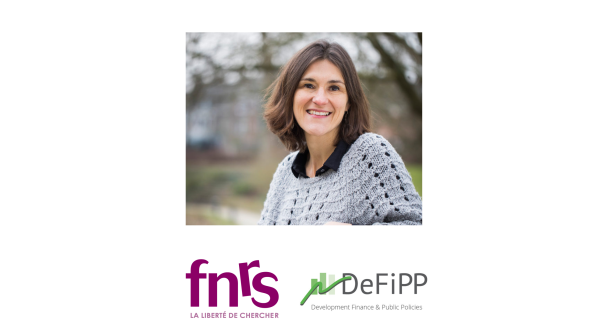
Catherine Guirkinger

The analysis of individual decisions always takes place within an economic conceptual framework, in which individuals make trade-offs based on the constraints they face and the negotiation processes at work. In this project, particular attention is paid to negotiation within the couple, where the husband plays a central role in upholding gender norms. Economic concepts thus shed light on religious decisions by situating them within economic and social dynamics.

Catherine Guirkinger Professor and researcher in development economics

The project will run for four years, from 2026 to 2030. The project team includes a doctoral student (currently being recruited), Jean-Philippe Platteau, professor emeritus at the Defipp Institute, and Pablo Alvarez of the University of Bologna (Italy). 

Quick Bio

Catherine Guirkinger specializes in development economics. At the Center for Economic Development Research (CRED) of the DeFIPP Institute (Development Finance & Public Policies), she conducts research on changes in family structures during development processes. Her work also focuses on the respective roles of women and men in society and on the role of public institutions in the broader sense. Catherine Guirkinger explores these issues particularly in the colonial context, drawing on archival data and historical surveys. In 2017, she received European ERC funding for this research program, and in 2024, she secured funding from the F.R.S-FNRS for a collaborative project with Bruno Schoumaker, professor of demography at UCLouvain, aimed at digitizing census data. As a professor, Catherine Guirkinger teaches courses in microeconomics and development economics. 

Discover the Defipp Institute

DeFIPP brings together the research conducted at the CRED, CEREFIM, and CERPE research centers, which focus on the following major research areas: development economics (CRED), finance and macroeconomics (CEREFIM), and regional economics and economic policy (CERPE). DeFIPP’s primary objective is to promote excellence in economic and financial research with strong international visibility, while applying economic methodology in both theoretical and empirical research.