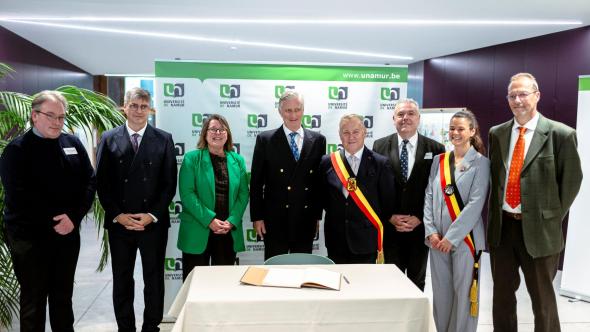
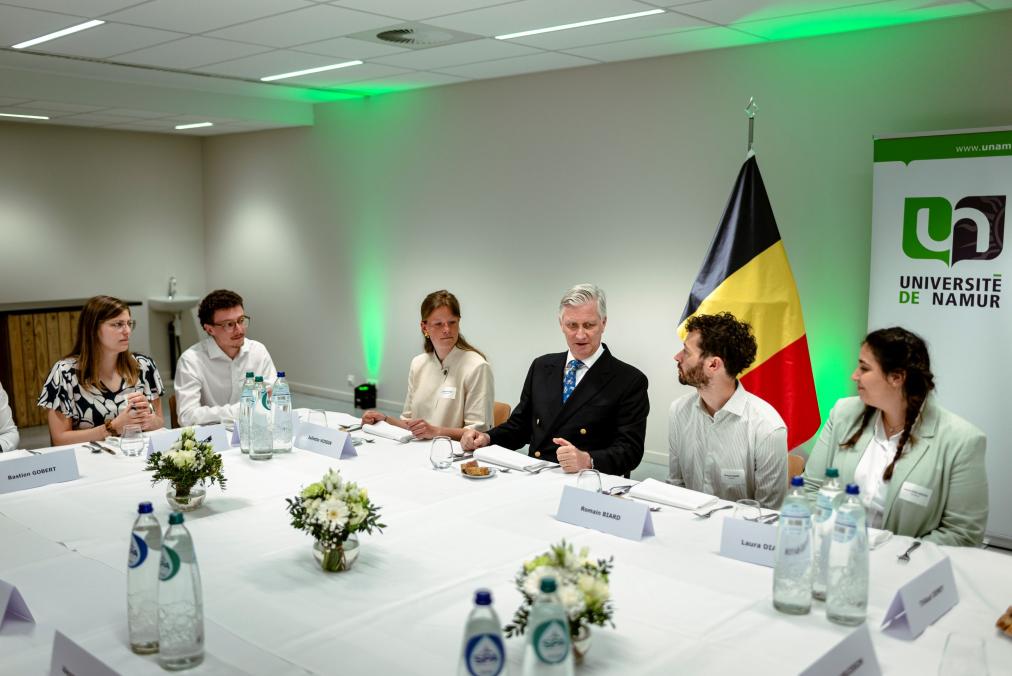
In Namur, the University of Namur is collaborating in this context with Henallux (Haute École Namur Liège Luxembourg) and IMEP (Institut Royal Supérieur de Musique et de Pédagogie). These programs, launched in 2023–2024, have revolutionized the system, now requiring all new teachers to obtain a master’s degree in education. In this context, it was important for UNamur to highlight these students and to underscore the importance of compulsory education and the essential role of teachers in society.
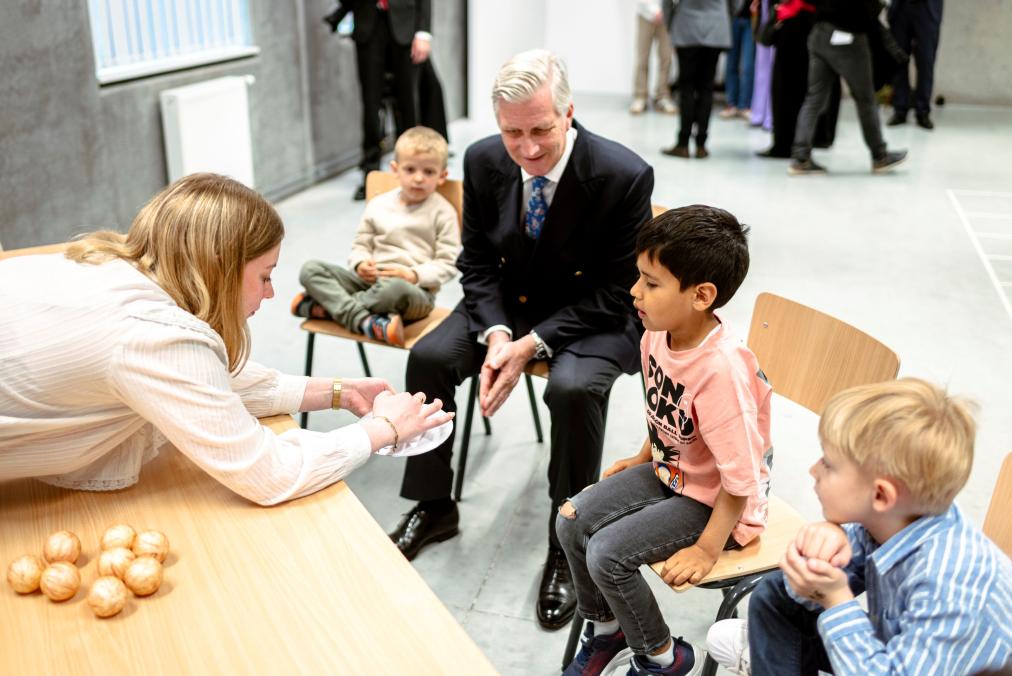
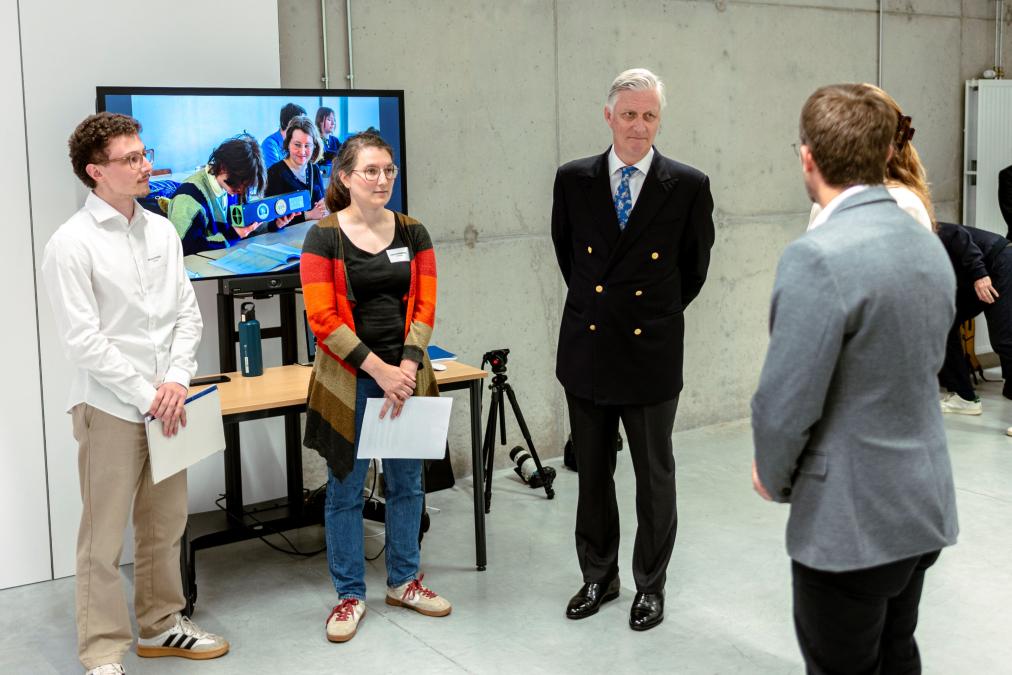
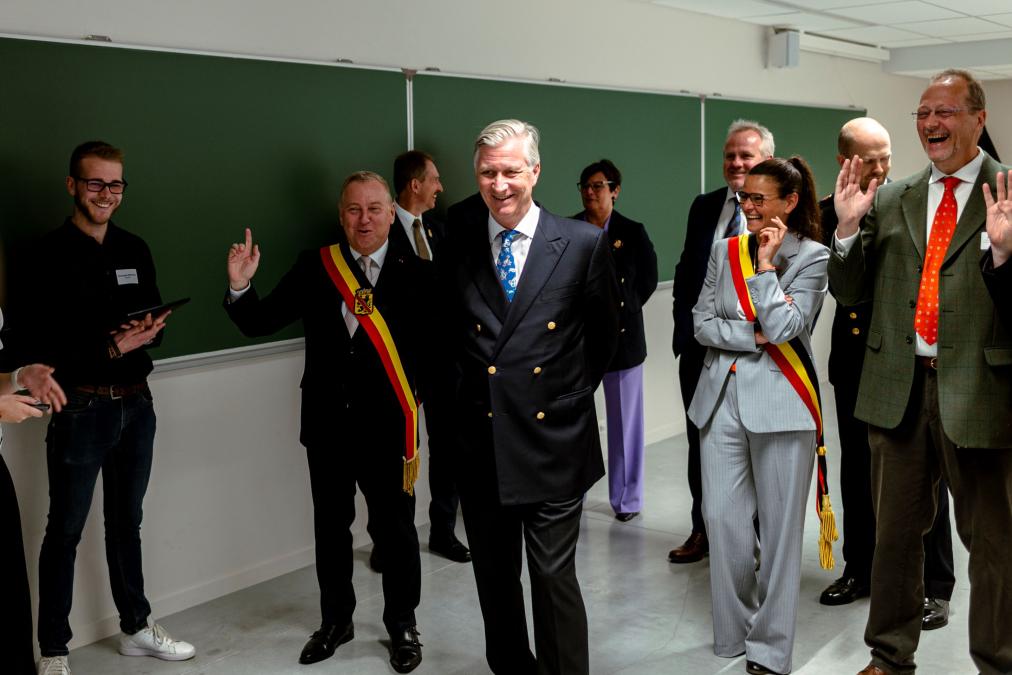
Following the session, His Majesty the King participated in four workshops designed and led by students from UNamur, IMEP, and Henallux, in collaboration with their professors.
- The first workshop focused on the challenges facing the teaching profession and schools: equality, inclusion, the development of critical thinking, and sustainable development.
- The second, titled “Teaching, Inclusion, and Diversification—How to Get the Most Out of Every Student?”, highlighted the adaptation of teaching practices to the diversity of students’ needs. This diversity was presented as a valuable resource in learning. The workshop aimed to illustrate process-oriented work and how to utilize different learning approaches.
- The third workshop, “Teaching from a Sustainable Development Perspective,” invited participants to reflect on how education can foster responsible citizens in the face of environmental challenges.
- The final workshop, “Integrating Critical Thinking Elements into Teaching in the Age of Generative AI,” offered four practical exercises for students to practice their critical thinking skills: distinguishing between real images and AI-generated images, using AI appropriately and critically, raising awareness of deepvoice—a technique that allows for the faithful reproduction of a person’s voice—and the paradigm shift in AI education within the school setting.
To conclude the morning, the students had the honor of sharing a meal with His Majesty the King to continue these moments of exchange.