What makes nickel so essential today?

Nickel is a surprisingly versatile metal, valued for its strength and durability. This explains its presence in many everyday applications. It has been used for over 100 years in the manufacture of stainless steel, which can be found everywhere in our kitchens, particularly in sinks and cutlery. Nickel makes these utensils highly durable and more resistant to corrosion, particularly from household products. It is also found in certain infrastructures. The Atomium, for example, was completely covered with a layer of nickel-containing stainless steel after its original coating had aged. This guarantees several decades of resistance without degradation. Nickel is also essential for electric car batteries because it improves their energy density, as well as for many other renewable energy technologies. Finally, it is one of the most recycled metals and its importance is set to grow with the increasing return of end-of-life batteries.

What is the role of the Nickel Institute?

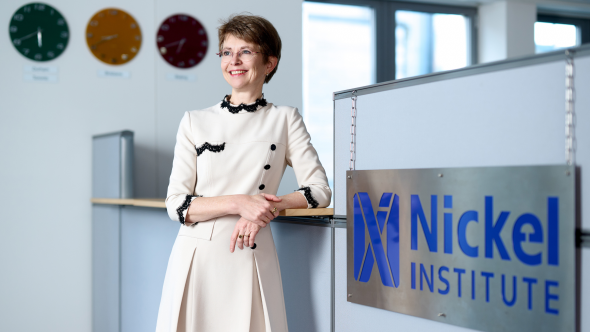
The Nickel Institute is a global organization based in Canada with offices on several continents. Its main mission is to promote responsible nickel sourcing and support the sustainable development of this industry. To this end, we have three complementary departments. The first, scientific, is composed of toxicologists specializing in human and environmental health, as well as a prevention advisor responsible for worker protection. The second focuses on public policy and sustainability by monitoring developments in international regulations. It develops methodologies, particularly for measuring carbon footprints. Finally, the third is dedicated to market development and ensures that the various applications of nickel are better known and that markets remain open globally.

You have just been appointed president of the Nickel Institute. What does this appointment mean for your career as a chemist?

It's a role I really wanted to achieve in my career. After studying at UNamur, spending a year studying industrial chemistry in Leuven, completing a PhD in England and a post-doctorate in the Netherlands, I no longer practiced chemistry in a laboratory, but my training has always accompanied my career. It gave me an analytical and critical mind, an understanding of chemical substances, their properties, and industrial processes. This has enabled me to communicate effectively with authorities and stakeholders throughout my career. I often explain that studying chemistry does not only lead to a career in the laboratory. It opens many doors and gives access to a multitude of career paths.

What environmental and societal challenges await the nickel industry?

The stakes are high, especially because this metal is essential to the energy transition. It is found in many climate-related technologies, such as electric car batteries, hydroelectricity, and wind turbines. But nickel remains a mining product, and its production is mainly located in developing countries where the environment, working conditions, and local communities are not always a priority. That is why the Nickel Institute works closely with authorities, companies, and other stakeholders to improve understanding of nickel and its risks. The goal is to ensure that those who produce or handle this metal are aware of best practices for managing the risks associated with extraction, production, and industrial use. The challenge, therefore, remains to guide the industry toward more responsible and sustainable practices.

What do you remember most about your time at UNamur? 

I loved my years at UNamur. I am Flemish, and many of my friends did not understand why I chose Namur over Leuven, but I have never regretted it. The atmosphere was very friendly, and the professors and teaching assistants were very welcoming. So much so that we are still in touch, forty years after our first year studying chemistry!

Is there a particular memory you would like to share?

One of my fondest memories is the series of concerts we organized at the Arsenal for two years in a row. I played the piano and had the opportunity to perform a piece for four hands with Professor Jean-Marie André, as well as a trio with two other professors. It was something that came very naturally in Namur, thanks to the small size of the university, where everyone knew each other. I'm not sure I would have found that same closeness anywhere else.

What advice would you give to future chemists?

Don't hesitate! Studying chemistry opens many doors. Of course, you need to have a scientific mind, but it's a course of study that allows you to develop skills that are useful in many professions. I would also advise placing real importance on languages. In Belgium, mastering several languages is an essential asset for advancing in industry. I also notice that there are many more opportunities for women in scientific careers than there used to be. At the beginning of my professional life, I was often the only woman in the room, but today teams are much more mixed, even in heavy industries such as metals. The fact that I became the first female president of the Nickel Institute is quite encouraging.

ligne du temps du parcours professionnel de Véronique Steukers

This article is taken from the "Alumni" section of Omalius magazine #39 (December 2025).


Cover Omalius décembre 2025

Did you know?

February 11 is International Day of Women and Girls in Science. To mark the occasion, UNamur is organizing the sixth edition of its Women in Science conference. This annual event aims to promote women's and girls' access to science and technology and their full and equal participation. It highlights the important role of women in the scientific community and is an excellent opportunity to encourage and promote equal opportunities for all genders in science and technology.
