While awaiting the rocket launch scheduled for 2027, researchers at UNamur are already actively preparing for the mission. For several months, they have been conducting a series of tests to ensure the reliability of the experiment: reaction to temperature variations, power failures, transport to the launch site in Florida, assembly of the mini-spacecraft that will house the samples, etc. "Every detail counts: even the choice of bags that protect the samples from light can influence the results," emphasizes Boris Hespeels.
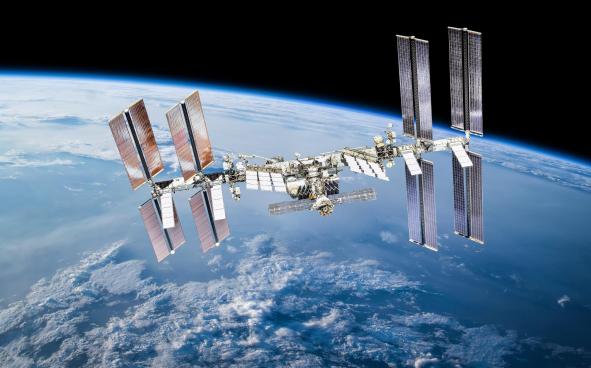
Once on the ISS, Raphaël Liégeois will rehydrate the samples, culture them in a cabin on the station, and finally place them in a freezer at -80°C. "This procedure, which seems simple, becomes complex in zero gravity. We also have to ensure the stability of our samples, regardless of the timing of the experiment," continues Boris Hespeels. Inside the ISS, Raphaël Liégeois will have to carry out various experiments selected by the Belgian Science Policy Office (BELSPO). "And the order in which they will be carried out has not yet been determined," the two Namur-based researchers explain.