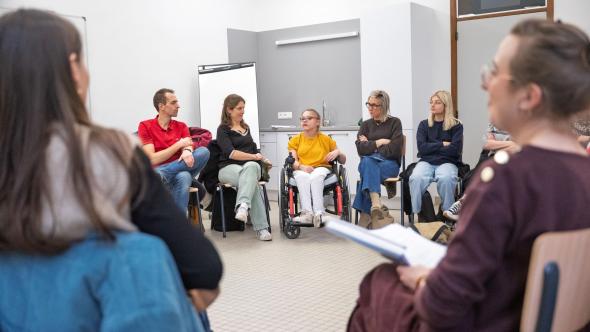
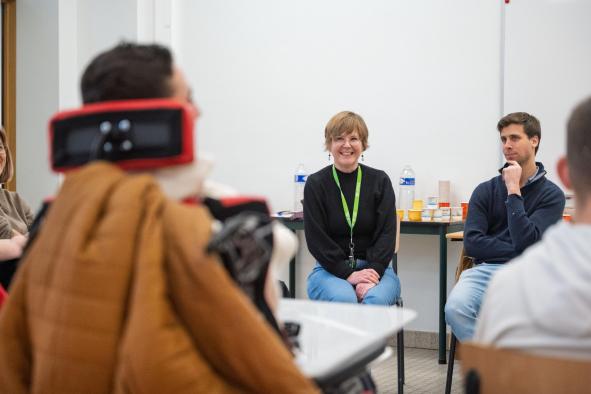
This was a first for UNamur: for the first time, several residents of Château Vert made the trip to the Faculty of Medicine to meet students enrolled in the Master's program specializing in general medicine. The trip required a significant investment of time and energy on the part of the Château Vert teams and residents. "The residents made the effort to come to us. It is a rare gift to be able to talk directly with patients and their caregivers," says Catherine Magnette, general practitioner and organizer of the day. "Who better than the patient themselves, and possibly their close caregiver, can express their expectations of their general practitioner? It is about putting the patient back at the center by giving them a voice," she continues.

Three workshops to better understand and provide better support

The day was structured around three workshops, offered as part of the academic curriculum for the Master's degree specializing in general medicine:

  • "Dys" disorders
    : Understanding learning and communication difficulties and adapting medical practices.
  • The specificities of medical care for people with disabilities
    To better understand patients' vulnerabilities and skills in order to individualize care. Certain pathologies or medical issues are specific to these patients and are rarely addressed in the basic curriculum.
  • Meeting with the residents of Château Vert and their caregivers
    A moment of direct exchange, where students were able to ask questions, listen to life experiences, and hear what patients expect—or fear—in a medical consultation.

Enriching testimonials

"I expect my general practitioner to be kind, but above all to take the time to explain clearly what they are going to do and why they are treating me. I need them to speak slowly because my brain takes longer to understand than other people's. It's very important for me to understand the situation," - Cassie (17), resident at Château Vert. 

Etudiants et résidents du Château Vert

"What I expect from a doctor is that they put themselves in my shoes and understand my pain, even if I can't always express it very precisely." - Christelle, resident at Château Vert. 

"It's really important for doctors to be able to put themselves in their patients' shoes. For example, with my son, explaining the medical tests he's going to have to undergo by miming them beforehand on his cuddly toy is an approach that really works. It reassures him." - Audrey, mother of Arthur (9), resident at Château Vert. 

After hearing these testimonials, the students were able to ask questions and talk with the residents, their caregivers, and the supervisory teams. 

Medical studies pay too little attention to the specificities of caring for people with disabilities. This day provides an opportunity to enrich the training of future doctors in inclusive care.

Catherine Magnette General practitioner
Echanges entre étudiants et résidents du Château Vert

The educational objectives of this day were therefore multiple:

  • Identify the medical, relational, and social specificities related to disability;
  • Use this knowledge to improve patient care;
  • To understand the role of those who support people with specific needs;
  • Develop a patient-centered, respectful, and collaborative care model.

Studies

Discover medical training and the Master's degree in general medicine at UNamur