All of our body's processes rely on cells, whose well-being and proper functioning are essential to our health. A key process in cells is the production of proteins, which enable them to perform the various roles required to maintain the functions of the body and its organs. These functions include converting food into energy, communication between neurons in the brain, and secreting proteins to form the scaffolding that holds our tissues, such as bones and skin, together.

Alison Forrester explains: "Protein production can be compared to a car manufacturing plant, as described in the diagram opposite—click on the image to enlarge it! The basic materials are prepared in the first area of the factory, transported to another area for adjustments, and fully assembled to form the finished car just before leaving the factory. In my recent work, we have discovered a compound that can reduce the efficiency of an early stage in the protein 'production line'. This is the first time we have evidence that it is possible to modify the efficiency of this process. It also provides a tool that my group will use to study the details of how this process works and how it is controlled."

"The process of protein manufacturing and transport is complex and can go wrong, for example in fibrosis," she continues. "In some cases, too much or too little or the wrong proteins are manufactured and secreted by the cell, causing disturbances in the body and potentially leading to the development of disease. My group will study how we can use different compounds to modify the efficiency of the cellular protein trafficking process, and how this will affect the normal balance within the cell. Finally, we aim to test these compounds against different diseases caused by protein trafficking disruption, thereby devising a new therapeutic approach," she concludes.

Express resume

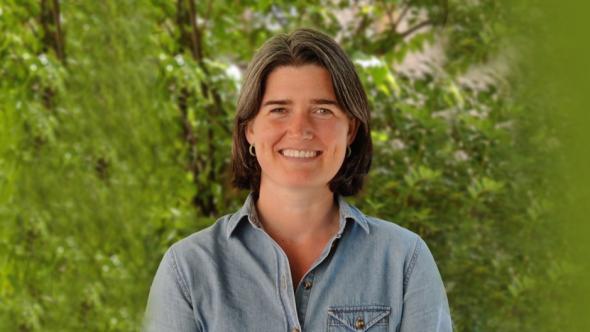
Postdoctoral researcher at the Institut Curie, Paris, France, Alison Forrester has just been awarded an FNRS position as a qualified researcher at UNamur, within the NARILIS Institute. Her expertise includes autophagy in homeostasis and disease, and membrane trafficking. She is particularly interested in the endoplasmic reticulum at its exit sites. Since completing her PhD in 2012, she has developed advanced skills in confocal and advanced imaging techniques, including confocal scanning microscopy, Airyscan, FRAP, live cell imaging, electron microscopy, and correlated light and electron microscopy (CLEM).

She is passionate about creative, cutting-edge research without boundaries, working in multidisciplinary and collaborative environments. She is also passionate about sharing her enthusiasm for research and providing first-hand experiences to people through outreach initiatives, such as school visits, science fairs, lectures, and interviews, as well as traditional seminars and conferences to the scientific community.