

Image

Département de physique
Bienvenue au Département de physique !
Comment produire de l’énergie sans épuiser la planète ? Qu’est-ce que l’exploration de l’espace peut encore nous apprendre ? Comment soigner plus efficacement par protonthérapie ? L’intelligence artificielle, amie ou ennemie ? Et le chat de Schrödinger, finalement, comment va-t-il ?
Vous vous posez ce type de questions et vous aimeriez pouvoir y répondre. Vous aimeriez comprendre, connaître, résoudre, expérimenter, tester, coder, appliquer. Vous aimeriez vous engager pour préserver la planète, pour la santé, pour la société. Vous aimeriez relever le défi de la recherche en entreprise, ou vous préférez mettre vos compétences au service de la connaissance plus fondamentale. En rejoignant le Département de physique de l’Université de Namur, vous serez rassasié et nous vous accueillons avec enthousiasme.
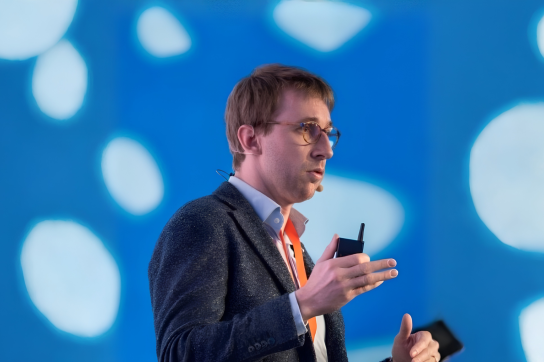
Actuellement responsable du développement commercial pour l’Europe chez AGC Plasma Technology Solutions, Louis Dellieu est un physicien passionné qui met ses compétences scientifiques au service d’AGC Glass Europe depuis près de 10 ans. Des ailes d’insectes aux vitrages spéciaux, voyage dans un univers bio-inspiré.
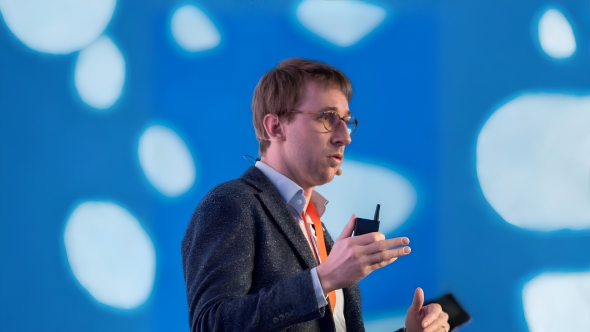
Pendant mes études secondaires, j’ai eu un professeur, Matthieu Dontaine, qui a réussi à me transmettre sa passion pour la physique. Comme j’aimais déjà les mathématiques et que je pouvais suivre ce cursus à Namur, je me suis lancé. Au début, je n’avais pas de sujet de prédilection, mais lorsque j’ai commencé les cours d’optique et de biophotonique avec le professeur Jean-Pol Vigneron, j’ai immédiatement trouvé cela passionnant.
Oui, la bio-inspiration était une thématique très présente durant mes études à l’UNamur. J’ai trouvé formidable de découvrir des propriétés physiques incroyables directement dans la nature. Je me souviens de Socrate, le serpent dans le bureau du Professeur Vigneron. Il nous disait : « J’étudie les peaux de serpent, car elles ont des couleurs iridescentes, mais aussi parce qu’elles possèdent une structure intéressante qui leur permet de se déplacer ».
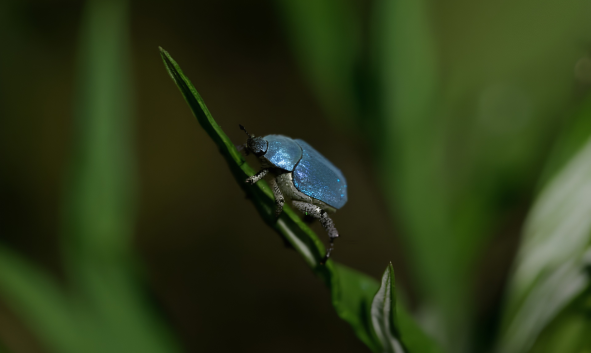
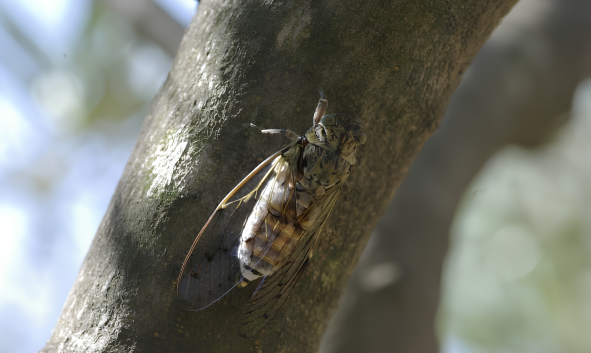
Il nous parlait aussi du Morpho, ce grand papillon aux ailes d’un bleu métallique éclatant. Cette fascination m’a donné envie d’approfondir le sujet. Avec le Professeur Vigneron, nous sommes allés en France, au Panama et même en Bolivie pour « chasser » des cigales et des papillons afin d’étudier leurs ailes. Leur surface est constituée de couches minces successives qui interagissent avec la lumière pour créer des couleurs uniques.
Exactement. J’ai commencé ma thèse en 2013, en étudiant les fonctions de surface des matériaux comme l’antireflet ou l’hydrophobicité. Sous l’excellente supervision du Dr. Michaël Sarrazin et du professeur Olivier Deparis, ma thèse a permis de démontrer, en utilisant l’électrodynamique quantique, qu’en obtenant des propriétés antireflets spécifiques sur certains matériaux, on pouvait indirectement améliorer leurs propriétés de mouillage. C’était une approche assez innovante, et nous avons ensuite travaillé à démontrer ces résultats expérimentalement.

Oui, j’ai eu la chance de finir ma thèse un peu en avance et, un mois à peine après l’avoir soutenue, j’étais engagé chez AGC Glass Europe comme chef de projet. J’ai travaillé sur des sujets passionnants liés aux vitrages spéciaux : anti-balles, anti-explosion, vitrages-écrans, antennes intégrées dans le verre...

Mon désir d’évolution m’a mené, après trois ans, chez Eclat Digital, filiale d’AGC Glass Europe. En tant que business developer pour un logiciel de simulation optique, j’ai renoué avec le sujet de ma thèse au cours d’une période passionnante, riche en voyages et en discussions avec des acteurs industriels de haut niveau.
Mon parcours m’a ensuite ramené au cœur du produit en devenant chef de produit pour FINEO : une nouvelle génération de vitrage isolant. Ce produit innovant allie un design ultra-fin à des performances thermiques et acoustiques exceptionnelles, et est fabriqué selon un procédé révolutionnaire ici, en Wallonie.
Mon cheminement professionnel m’a finalement amené chez AGC Plasma Technology Solutions, où la boucle est bouclée. Nous y fabriquons et commercialisons les machines qui permettent de reproduire industriellement les structures multicouches que j’observais dans la nature. Nous avons par exemple fourni les coaters pour produire les miroirs du plus grand télescope au monde, construit par l’ESO au Chili. C’est, en quelque sorte, un retour aux sources.
Au contraire, c’est là que je m’épanouis pleinement ! J’aime vraiment le fait que ce métier allie une dimension commerciale et de solides connaissances techniques. Je continue à voyager, à rencontrer des personnes et à découvrir des marchés que je ne connais pas. J’apprends continuellement, et cela rend le travail particulièrement stimulant.
En parlant du côté aventure, nous étions partis à la « chasse aux insectes » pendant deux semaines en Bolivie, dans un endroit isolé. Le dernier soir, le gérant du camp nous a dit : « Je suis content, il n’y a pas eu de problèmes, mais cela fait deux ou trois jours qu’un gros félin tourne autour du camp ». Il ne voulait pas nous faire paniquer. Finalement, quelle chance nous avons eue de ne pas nous faire dévorer !
Ce sont des études magnifiques qui permettent de contribuer à la compréhension de l’univers. Sans la physique, nous serions bien démunis pour comprendre le monde qui nous entoure. Si les physiciens n’avaient jamais étudié l’électron, rien du monde électronique moderne n’existerait.
Ce que j’ai aussi particulièrement apprécié, c’est d’avoir pu faire mes études à l’Université de Namur, une université à taille humaine. Les promotions sont petites, ce qui favorise une grande proximité avec les professeurs. On s’y sent soutenu et accompagné. Et puis, on y fait de la super science qui ouvre de nombreuses portes ! Qui ne voudrait pas, par exemple, contribuer à développer des anodes 100 % silicium pour augmenter l’autonomie des batteries ? C’est l’un des défis que nous relevons chez AGC Plasma.
Basé à Louvain-la-Neuve, AGC Glass Europe produit, transforme et commercialise du verre plat à destination des secteurs de la construction (vitrages extérieurs et décoration intérieure), de l’automobile et d’autres secteurs industriels (transport, énergie solaire et high-tech). Il est la branche européenne d’AGC, un leader mondial en verre plat. Employant environ 12 300 personnes, il dispose de plus de 100 sites industriels en Europe.
Pour plus d’informations : www.agc-glass.eu (site corporate), www.agc-yourglass.com (verre pour la construction), www.agc-automotive.com (verre pour l’automobile).
Avec sa division AGC Plasma Technology Solutions, AGC Glass Europe s’est engagé dans champ d’activités proposant ses technologies de dépôt de couches sous vide à un large panel d’industries en dehors du monde verrier. Pour plus d’information sur les équipements et les services offerts par AGC Plasma Technology Solutions.
Cet article est tiré de la rubrique "Alumni" du magazine Omalius #41 (Juin 2026).


Le F.R.S.-FNRS a publié ce 23 juin 2026, la liste des lauréats aux différents mandats doctorants et postdoctorants et projets Télévie (recherche axée sur le cancer). Parmi ceux-ci, de nombreux chercheurs de l'UNamur ont obtenu un financement.

Six chercheurs ont obtenu un mandat d’aspirant permettant de démarrer une thèse de doctorat : Rachel LAURON de la Faculté des Sciences ; Océane WATELET, Vera NOVAK, Camille LAMBIET, Alionka WÉRENNE ainsi que Théodore HARDY (mandat obtenu à l’ULB en cotutelle avec l’UNamur) de la Faculté de Philosophie et Lettres.
Un très beau succès a également été obtenu par les chercheurs namurois au mandat de chargé de recherches. Ils sont sept à recevoir ce financement postdoctoral. Il s'agit d’Eleonor CELORA, Nataliya PUCHENKINA, Jérémy ARTRU et Bernardino PITOCCHELLI de la Faculté de Philosophie et Lettres ; de Romain MERTENS de la Faculté de Droit et de David TALUKDER et François WOITRIN de la Faculté d'Économie Management Communication SciencesPo (EMCP).
Par ailleurs, deux chercheurs permanents du F.R.S.-FNRS au sein de l’UNamur se voient promus Maître de recherche : Francesca CECCHET et Yves CAUDANO tous deux membres du Département de Physique et de l’institut NISM.
L’appel Télévie a également permis à Marc HENNEQUART d’obtenir un financement pour débuter des recherches visant à mettre en évidence les déterminants métaboliques de la réponse à la déprivation en arginine dans les cancers pancréatiques et colorectaux.
Félicitations à eux !

Avec le projet PHOENIX, l’UNamur renoue avec une expertise ancienne : celle des sciences du patrimoine. À l’aide de techniques de pointe et des apports de l’intelligence artificielle, une équipe transdisciplinaire réunissant des experts en histoire, en archéologie et en physique s’est donnée pour mission de renouveler la compréhension d’objets patrimoniaux pour en comprendre les origines, les modes de production et les usages. Sous leur loupe : des pièces de monnaie antiques et des parchemins médiévaux.
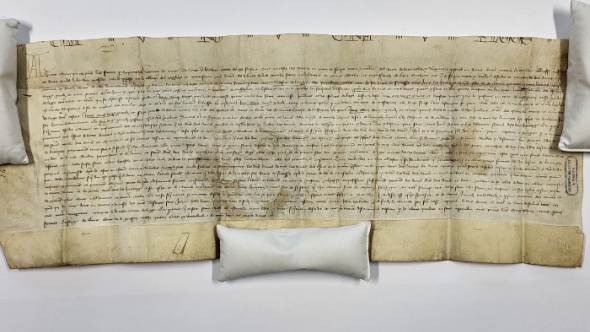
Les sciences du patrimoine sont en train de connaître un nouveau souffle à l’UNamur. Ce domaine de recherche – qui consiste à mobiliser les techniques et expertises issues des sciences exactes (physique, chimie, biologie) pour étudier des objets patrimoniaux anciens – se réinvente grâce au projet PHOENIX, porté par sept chercheurs issus des Facultés des sciences (Département de physique) et de philosophie et lettres (Départements d’histoire et de langues et littératures classiques).
« PHOENIX est né de la rencontre entre plusieurs chercheurs d’horizons différents, mais animés par la même envie d’étudier la matérialité d’objets patrimoniaux. On peut notamment citer Julien Colaux, dont l’un des prédécesseurs avait mené au Laboratoire d'Analyse par Réactions Nucléaires (LARN) de l’UNamur les premiers projets en sciences du patrimoine. C’est une sorte de retour aux sources », se souvient Nicolas Ruffini-Ronzani, chercheur au Département d’histoire, président de l’institut PaTHs et l’un des porteurs du projet.
Avec PHOENIX, les chercheurs souhaitent faire parler deux types d’objets : des pièces de monnaie antiques et des parchemins médiévaux (voir encart). Plus précisément, trois objectifs guident leurs recherches :
C’est dans ce dernier objectif que réside le principal enjeu. « On ne va pas pouvoir dater ces objets à l'année près », avertit Olivier Deparis, professeur au Département de physique et membre de l’institut de recherche NISM. « L’idée est de donner une fourchette temporelle qui soit aussi fine, si pas meilleure, que celle déjà fournie par la paléographie (l’étude des écritures anciennes) ou l’analyse des textes. Si on atteint le quart de siècle, ce sera déjà une belle avancée. »
Pour y parvenir, l’équipe de PHOENIX utilise différentes techniques non-invasives, en particulier les spectroscopies infrarouges et Raman, la spectrométrie de masse d’ions secondaires à temps de vol (ToF-SIMS) et les analyses par faisceau d’ions (IBA). Ces approches – qui mobilisent les outils de pointe de l’UNamur comme l’accélérateur de particules ALTAÏS (voir Omalius #36) – fournissent des renseignements détaillés sur la composition physico-chimique des matériaux, comme l’origine animale et les formulations d’encres pour les parchemins ou le type d’alliage métallique pour les monnaies. « Le recours aux sciences exactes va permettre d’enrichir nos études et donc de mieux comprendre comment étaient produits ces objets par le passé », précise Nicolas Ruffini-Ronzani. « Contrairement à ce que l’on pourrait penser, la collaboration entre sciences humaines et sciences exactes a une longue histoire derrière elle, qui remonte au 19e siècle, voire bien avant pour les monnaies. »
Ces outils vont permettre de scruter les parchemins et les monnaies jusque dans les moindres détails, à l’échelle du pixel. Ces analyses poussées génèrent donc un volume colossal de données brutes à traiter. C’est là que l’intelligence artificielle entre en scène pour accélérer leur traitement et révéler les informations « cachées » dans les données, en dégageant les grandes tendances invisibles à l’œil nu.
Surtout, elle donnera un coup de pouce pour relever le défi de la datation des objets étudiés. Des documents datés, comme des chartes, vont ainsi être utilisés comme références pour tester la robustesse du modèle, en comparant les résultats obtenus aux dates déjà connues. « Si les résultats sont convaincants, la technique pourra être appliquée à des documents non datés », se réjouit Nicolas Ruffini-Ronzani. Il s’agirait là d’une avancée non négligeable dans la recherche historique.
« L’usage des méthodes d’apprentissage automatique n’est pas la panacée », nuance cependant Olivier Deparis. « On a voulu l’exploiter comme une question ouverte, pour évaluer son bénéfice. »
PHOENIX pourrait ainsi incarner une nouvelle ère pour les sciences du patrimoine, où l’intelligence artificielle, à l’image du phénix dont le projet porte le nom, ouvre de nouvelles façons d’analyser et de comprendre les matériaux du passé.
Le corpus de PHOENIX concerne deux types d’objets patrimoniaux :

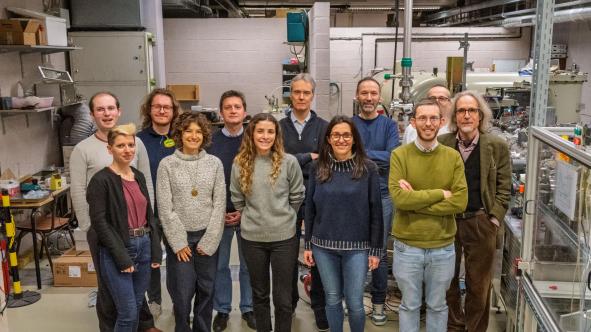
Le projet PHOENIX bénéficie d’un financement du programme d’action de recherche concertée (ARC) de septembre 2024 à août 2029. Il constitue la suite du projet interdisciplinaire Pergamenum21, impulsé en 2014 par la Bibliothèque universitaire Moretus Plantin (BUMP) sous la houlette du professeur Olivier Deparis et consacré à l’étude scientifique du parchemin en vue d’améliorer les pratiques de restauration.
Des jeunes rochefortois ont mis à l’honneur le projet PHOENIX lors du concours international First Lego League, une compétition de robotique ouverte aux jeunes de 10 à 16 ans. Pour coller au thème annuel consacré aux nouvelles technologies dans le domaine de l’archéologie, cette équipe du Centre des Jeunes et de la Culture de Rochefort s’est inspirée de la technique IBA pour élaborer un jeu de recherche permettant d’identifier l’origine de pièces de monnaies de la Grèce Antique modélisées à l’aide d’une imprimante 3D. Leur projet a tapé dans l’œil du jury et leur a permis de se qualifier pour la finale nationale qui a eu lieu en mars dernier. Au-delà du concours, ce jeu original sera présenté lors de la journée des familles de l’Archéoparc de la Malagne (Rochefort).
Cet article est tiré de la rubrique "Eurêka" du magazine Omalius #40 (Avril 2026).

C’est une belle reconnaissance pour la recherche à l’UNamur : trois projets Marie Skłodowska-Curie Doctoral Networks (DN) viennent d’être octroyés, avec une contribution déterminante de chercheurs namurois ! Le premier, en chimie, implique le professeur Stéphane Vincent ; le deuxième, consacré à la résilience des écosystèmes, associe le professeur Frédérik de Laender ; et le troisième, dans le domaine de la photonique, bénéficie de l’expertise du chercheur qualifié F.RS. - FNRS. Michaël Lobet.
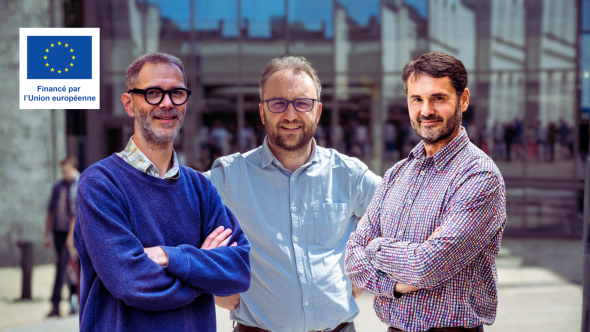
Sur l’appel MSCA Doctoral Networks 2025, 1 616 propositions ont été soumises et 141 ont été retenues, soit un taux de succès de 9,6%. Dans ce contexte très compétitif, la sélection de trois projets impliquant l’UNamur constitue un signal fort : il confirme l’excellence scientifique des équipes namuroises et leur capacité à construire des partenariats internationaux de haut niveau, au service de la formation doctorale et de l’innovation. Ce sont six thèses de doctorat qui pourront être financées.
Grant #101311186 du 01/01/2027 au 31/12/2031 - Projet porté par Stéphane Vincent - UNamur, Namur Research Institute for Life Sciences (NARILIS), en collaboration avec 16 partenaires.
Coordination : Université Federico II (Naples, Italie)

Dans de nombreuses maladies neurologiques, on observe à la fois une inflammation du système nerveux et des déséquilibres du microbiote intestinal. GlycoAxis veut aller au-delà des simples corrélations en identifiant les « messagers » moléculaires qui relient l’intestin, le système immunitaire et le cerveau. Le projet se concentre sur des sucres complexes présents à la surface de certaines bactéries (glycanes), soupçonnés de jouer un rôle clé dans l’activation immunitaire et la neuroinflammation. L’objectif : mieux comprendre ces mécanismes et ouvrir la voie à de nouveaux outils de diagnostic, d’imagerie ou de biomarqueurs pour la santé cérébrale.
Grant # 101312530 du 01/01/2027 au 31/12/2031 - Projet porté par Frédérik de Laender - UNamur, Institute of Life, Earth ant Environment (ILEE) en collaboration avec 20 partenaires.
Coordination : Université de Linköping (Suède).

Face au changement climatique, à la pollution ou à la fragmentation des habitats, certains écosystèmes encaissent les chocs… d’autres basculent. ReDiLeep s’intéresse à un levier central de cette résilience : la diversité des réponses, c’est-à-dire le fait que différentes espèces (ou fonctions) ne réagissent pas toutes de la même manière à une perturbation. Le projet vise à mieux mesurer et modéliser ce mécanisme, afin de relier plus directement la recherche aux besoins de la conservation, de la restauration et des politiques publiques en matière de biodiversité.
Grant # 101310184 du 01/01/2027 au 31/12/2031 - Projet porté par Michaël Lobet - UNamur, Namur Institute Of Structured Matter (NISM), en collaboration avec 7 partenaires.
Coordination : Université technologique d’Eindhoven (Pays-Bas)

Nos communications numériques reposent sur la lumière : fibres optiques, capteurs et circuits photoniques capables de traiter l’information. Mais avec l’explosion des données, de l’IA et l’arrivée de réseaux toujours plus rapides, il devient crucial de contrôler la lumière de façon dynamique, beaucoup plus vite qu’avec les composants actuels, souvent « figés ». SPARK explore une nouvelle piste : associer des métamatériaux spatio-temporels (des structures nanométriques conçues pour façonner la lumière) à une lumière elle-même « structurée » dans l’espace et le temps. À la clé : des technologies photoniques reconfigurables pour le calcul, l’imagerie et les communications ultra-rapides.
En 1996, l’Union européenne créait les MSCA, un ensemble de bourses prestigieuses destinées à financer la recherche.Les Doctoral Networks du programme MSCA financent des réseaux internationaux qui recrutent et forment des doctorantes et doctorants. Leur ambition : combiner recherche de haut niveau et formation structurée, en favorisant la collaboration interdisciplinaire et intersectorielle ainsi que la mobilité en Europe et au-delà.

