As a discipline, history surveys the human past in all its complexity: populations, economies, techniques, politics, religions, arts, ideologies, etc.
At the cost of oral interviews, research in archives or manuscript cabinets, in libraries or museums, on archaeological sites or in certain privileged places where nature has fixed memories of the past, history aims to locate traces left by humans. The aim is to understand the environment in which they lived. It tracks down all possible witnesses.
History borrows questions and methods from the human sciences, making it possible to grasp correlations, detect genesis - in a word, to understand the human adventure.
Two features of history are worth highlighting. Firstly, history is a matter of investigation; indeed, it must begin by discovering the multiform material on which it will work, the "documents" of the past. Secondly, it concerns knowledge of the past over time, sometimes over a very long period, and therefore analyzes births, mutations and evolutions.
A alumni association is present within the department.
Find out more about the History Department
Spotlight
News
Two UNamur Professors Featured During the Japanese Emperor's Visit
During the Japanese Emperorâs state visit to Belgium, two professors from the University of Namur had the opportunity to represent their institution at two highlights of the official program. Isabelle Parmentier and Alexandre Mauroy reflect on an experience they wonât soon forget.
Alexandre Mauroy: âA great opportunity to raise awareness of UNamurâ
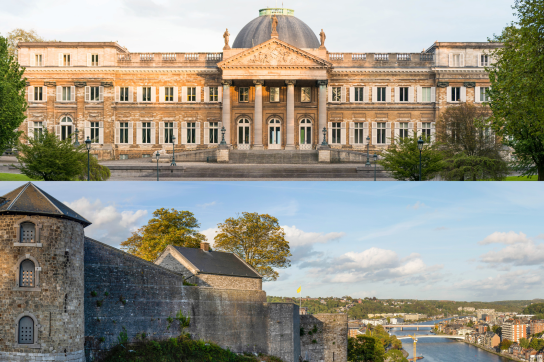
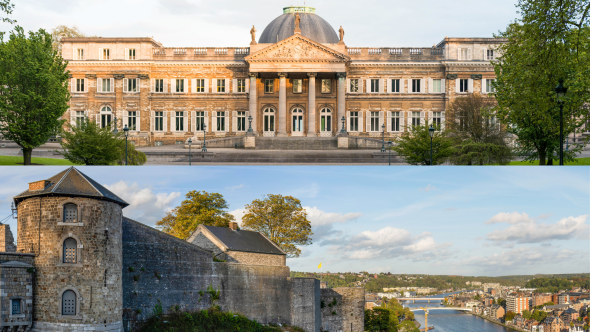
On Tuesday, June 23, the state visit began with an official banquet at the ChĂąteau de Laeken. Among the approximately 150 guests was Alexandre Mauroy, a professor in the Department of Mathematics at the Faculty of Sciences of UNamur. Invited at the request of the Vice-Rector for International Relations and Cooperation, he represented the University of Namur due to his scientific collaborations with Japanese researchers, particularly in connection with a future Erasmus+ project with Kyoto University. âIt was a wonderful opportunity to raise awareness of UNamur,â he explains.
At the Castle of Laeken, Alexandre Mauroy encountered a highly formalized protocol and an evening attended by numerous prominent figures. âAt the cocktail reception, Prime Minister Bart De Wever was right next to me. At the end of the evening, the King was having his coffee just a few meters away. The next morning, I almost felt like Iâd been dreaming.â
Isabelle Parmentier: âI never would have imagined going through this a few years agoâ
The next day, the imperial procession stopped at the Castle of Namur for a visit focused on water management. On this occasion, Isabelle Parmentier, a professor in the Department of History at the Faculty of Philosophy and Letters and a specialist in environmental history, was invited by the Governor of the Province of Namur to present a scholarly lecture on the provinceâs hydrological history. This topic was chosen because of Emperor Naruhitoâs interest in issues related to water and the environment.
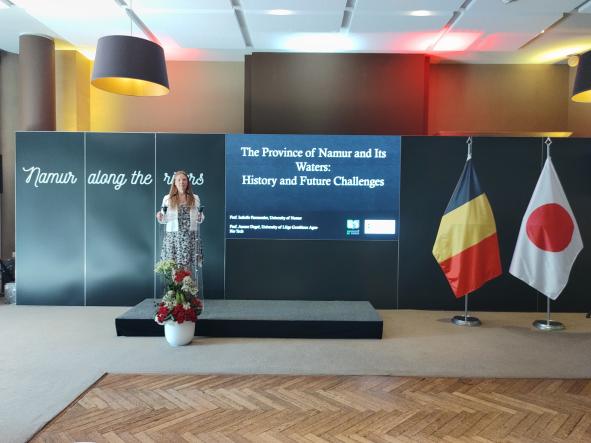
âItâs a truly special experience,â she explains. âI never would have imagined going through this a few years ago. I was very happy to be able to present my area of expertise to the monarchs.â After the presentations, she shared lunch at the table of the Emperor of Japan and King Philippe. âProtocol dictated that we not speak to them spontaneously, but the Emperor showed great interest in my presentation and asked me several questions.â
Although their experiences were very different, Alexandre Mauroy and Isabelle Parmentier both share the same feeling: pride in having represented the University of Namur at an event that highlights the strength of relations between Belgium and Japan, as well as the international reach of the research conducted at UNamur.
A university open to the world
The University of Namur has developed numerous partnerships with universities and research institutions around the world. These collaborations promote academic exchanges, joint research projects and mobility opportunities for students, researchers and staff, while strengthening UNamur's international profile.
PHOENIX: Revitalizing Heritage Sciences at UNamur
With the PHOENIX project, UNamur is revisiting a long-standing area of expertise: heritage sciences. Using cutting-edge techniques and artificial intelligence, a transdisciplinary team of experts in history, archaeology, and physics has set out to renew our understanding of heritage objects in order to uncover their origins, methods of production, and uses. Under their scrutiny: ancient coins and medieval parchments.
Heritage sciences are experiencing a resurgence at UNamur. This field of researchâwhich involves applying techniques and expertise from the exact sciences (physics, chemistry, biology) to study ancient heritage objectsâis reinventing itself thanks to the PHOENIX project, led by seven researchers from the Faculties of Science (Department of Physics) and Philosophy and Letters (Departments of History and Classical Languages and Literatures).
âPHOENIX emerged from the collaboration of several researchers from different backgrounds, yet all driven by the same desire to study the materiality of heritage objects. One notable figure is Julien Colaux, whose predecessor had led the first heritage science projects at UNamurâs Laboratory of Analysis by Nuclear Reactions (LARN). Itâs a sort of return to our roots,â recalls Nicolas Ruffini-Ronzani, a researcher in the Department of History, president of the PaTHs Institute, and one of the projectâs leaders.
A threefold objectiveÂ
With PHOENIX, researchers aim to âmakeâ two types of objects speak: ancient coins and medieval parchments (see box). More specifically, their research is guided by three objectives:
- To understand the composition of the artifacts being studied. For the parchments, to identify the animal species (sheep, goat, or calf); and for the coins, to characterize the metal alloy.
- Gain a better understanding of the production and processing workflow. For example, determine which parts of the animal were used in the production of a parchment.
- To propose the most precise dating possible.
It is in this last objective that the main challenge lies. âWe wonât be able to date these objects to within a year,â warns Olivier Deparis, a professor in the Department of Physics and a member of the NISM research institute. âThe idea is to provide a time frame that is as precise, if not more so, than that already provided by paleography (the study of ancient scripts) or textual analysis. If we can narrow it down to a quarter-century, that will already be a significant step forward.â
Fostering dialogue between the humanities and the natural sciencesÂ
To achieve this, the PHOENIX team uses various non-invasive techniques, in particular infrared and Raman spectroscopy, time-of-flight secondary ion mass spectrometry (ToF-SIMS), and ion beam analysis (IBA). These approachesâwhich utilize UNamurâs state-of-the-art tools such as the ALTAĂS particle accelerator (see Omalius #36)âprovide detailed information on the physicochemical composition of materials, such as the animal origin and ink formulations for parchments or the type of metal alloy for coins. âThe use of the exact sciences will enrich our studies and thus allow us to better understand how these objects were produced in the past,â explains Nicolas Ruffini-Ronzani. âContrary to what one might think, collaboration between the humanities and the exact sciences has a long history, dating back to the 19th century, and even much earlier in the case of coins.â
A breath of fresh air thanks to artificial intelligence
These tools will make it possible to examine parchments and coins down to the finest detail, at the pixel level. These in-depth analyses therefore generate a colossal volume of raw data to process. This is where artificial intelligence comes into play to speed up the processing and reveal the information âhiddenâ in the data, identifying major trends invisible to the naked eye.
Above all, it will provide a boost in meeting the challenge of dating the objects under study. Dated documents, such as charters, will thus be used as references to test the modelâs robustness by comparing the results obtained with already known dates. âIf the results are convincing, the technique could be applied to undated documents,â says Nicolas Ruffini-Ronzani. This would represent a significant breakthrough in historical research.
âThe use of machine learning methods is not a panacea,â Olivier Deparis qualifies, however. âWe wanted to explore it as an open-ended question to assess its benefits.â
PHOENIX could thus herald a new era for heritage sciences, where artificial intelligenceâmuch like the phoenix after which the project is namedâopens up new ways to analyze and understand materials from the past.
Greek coins and banknotes
The PHOENIX corpus covers two types of heritage objects:
- A collection of 168 silver coins associated with the city of Argos (Greece), from the private collection of Tony Hackens (1937â1999), former professor of Archaeology at UCLouvain.
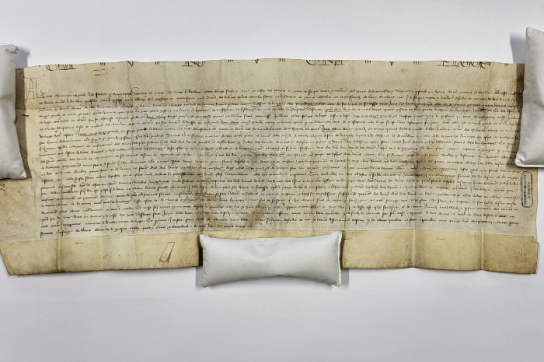
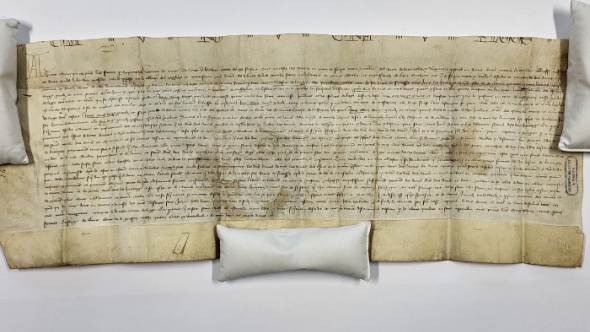
- Several hundred medieval and modern charters from the archives of the Cistercian Abbey of Notre-Dame du Vivier (Marche-les-Dames, Namur), currently held at the State Archives in Namur.
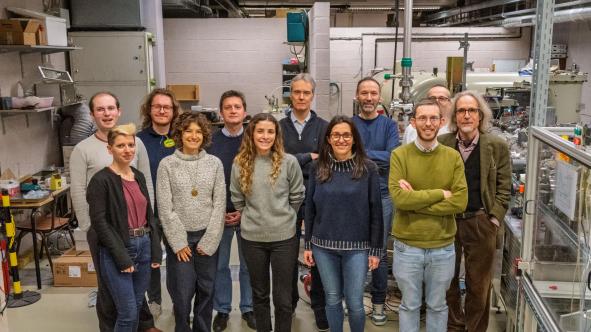
Meet the teamÂ
- Francesca Cecchet (Department of Physics â NISM and NARILIS Institutes)
- Lucas Baseil (Department of Physics â NISM Institute)
- Julien Colaux (Department of Physics â NISM and PaTHs Institutes)
- Olivier Deparis (Department of Physics â NISM, naXys, and PaTHs Institutes)
- Christophe Flament (Department of Classical Languages and Literatures â PaTHs Institute)
- Louise Fauchier (Department of Classical Languages and Literature â PaTHs Institute)
- Laurent Houssiau (Department of Physics â NISM Institute)
- Alexandre Mayer (Department of Physics â NISM and naXys Institutes)
- Giulia Morabito (Department of Physics â NISM and PaTHs Institutes)
- Nicolas Ruffini-Ronzani (Department of History â PaTHs Institute)
- Nicolas Gros (Department of Physics â NISM and PaTHs Institutes)
- Manon Bart (Department of Physics â NISM and naXys Institutes)
The PHOENIX project is funded by the Concerted Research Action (ARC) program from September 2024 to August 2029. It is a continuation of the interdisciplinary Pergamenum21 project, launched in 2014 by the Moretus Plantin University Library (BUMP) under the leadership of Professor Olivier Deparis and dedicated to the scientific study of parchment with a view to improving conservation practices.
The PHOENIX Project at the First Lego League Challenge              Â
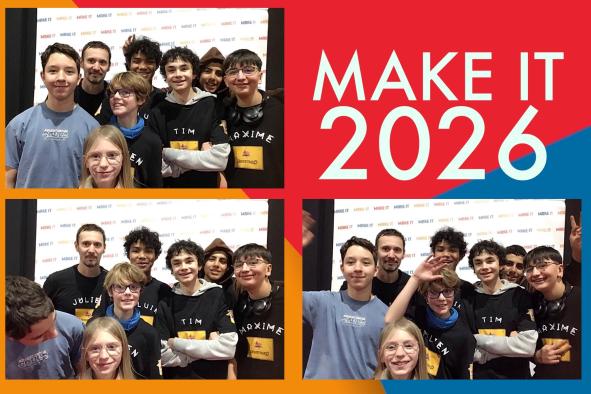
Young people from Rochefort showcased the PHOENIX project at the international First Lego League competition, a robotics contest open to students aged 10 to 16. To align with the annual theme focused on new technologies in the field of archaeology, this team from the Rochefort Youth and Culture Center drew inspiration from IBA technology to develop a research game designed to identify the origin of Ancient Greek coins modeled using a 3D printer. Their project caught the juryâs eye and earned them a spot in the national finals, which took place last March. Beyond the competition, this original game will be presented during Family Day at the Malagne Archaeological Park (Rochefort).
This article is taken from the "Eureka" section of Omalius magazine, Issue #40 (April 2026).
Walloon Honey PGI and LiĂšge White Sausage PGI: When History Adds Flavor to Local Products
In 2025, two iconic Walloon productsâWalloon honey and LiĂšge white blood sausageâwere awarded the prestigious European PGI designation. Behind this success lies the AgriLabel project, to which UNamur has been contributing for over a decade. Working alongside producers, specialists, and public institutions, our Department of History played a decisive role: demonstrating, through historical sources and scientific analysis, the close connection between these products and their local terroir. A project at the heart of economic, identity-related, cultural, and scientific issues.
With a beekeeping tradition dating back several centuries, Wallonia boasts a unique network of beekeepers, educational apiaries, and local chapters that preserve a true living heritage. It is largely thanks to this strong connection between the product and its terroir that Walloon honey has joined the prestigious list of Walloon products bearing the PGI (Protected Geographical Indication) label.
âStarting in the early 20th century, the sector became more professional and dynamic, largely thanks to improvements in apiary management and honey quality,â explains Natacha Aucuit, a food history researcher who contributed to this recognition of Walloon honey.
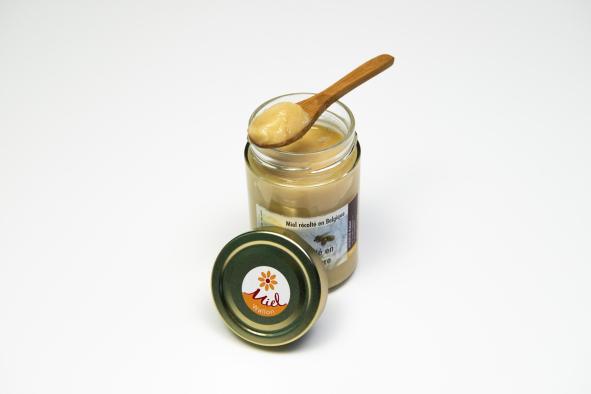
One of the distinctive features of Walloon honey is its imperceptible to very fine crystallization, with no coarse crystals. This is no accident: Walloon beekeepers have adapted to Walloniaâs great floral diversity by developing a technique for controlled honey crystallization, perfected in the 1980s and 1990s and widely disseminated thanks to CARI ASBL and with the help of PROMIEL ASBL
This method, now widely used in Wallonia, produces a spreadable, creamy, uniform honey that retains its natural properties.
âWhat struck me as I traced the history of this product was its deeply human aspect: knowledge is passed down within beekeeping communities, from master beekeepers to apprentices, embodying the strength of a regional tradition,â notes Natacha Aucuit.
LiĂšge White Sausage: a flavor, an herb, a tradition
In addition to Walloon Honey PGI, Natacha Aucuit also played a role in 2025 in securing PGI status for LiĂšge White Sausage.
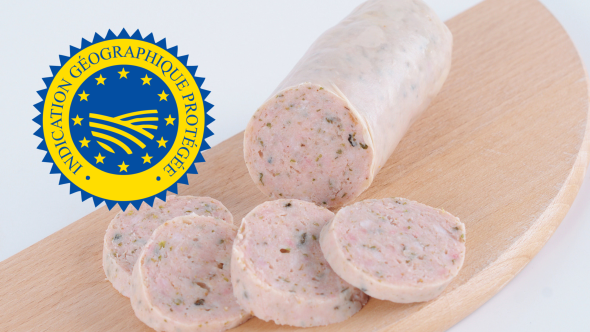
âA flagship product of the holiday season in the province, its historical origins are somewhat unclear⊠but its defining characteristics are very distinct. References to it appear in the press at the end of the 19th century, and by the early 20th century, one characteristic is confirmed: the addition of marjoram. This ingredient became the signature of LiĂšge blood sausage. In the past, butchers and charcutiers grew marjoram themselves or bought it at local markets. Local production has resumed in recent years,â explains Natacha Aucuit.
This white sausage has deep roots in the city of LiĂšge, but it is produced throughout the province. It is at the heart of LiĂšgeâs folk traditions: âThis product is usually eaten cold, sliced. It is sometimes included in the drĂšssĂȘye, a typical LiĂšge assortment of cold cuts,â explains Natacha Aucuit.
Ongoing work on local products
In addition to Walloon Honey PGI and LiĂšge White Sausage PGI, other Walloon products are the focus of the Agrilabel unit, which is responsible for the recognition process. Currently, two applications are in progress:
- The revision of the specifications for Ardennes Ham PGI
- The Wépion Strawberry
Other products certified as PGI since the creation of AgriLabel:
- Florenville IGP Sausage
- Ardennes Sausage IGP
- Ardenne Collier IGP
- Ardennes Pipe IGP
- Chimay EscavĂšche PGI
- Gaume Sausage PGI
The Agrilabel Project
Founded in 2011 at the initiative of the Wallonia Public Service and supported by the Office of the Walloon Minister of Agriculture, AgriLabel assists producers in obtaining European quality labels (PDO, PGI, and TSG) or regional labels (Label QualitĂ© Plus). This work is based on a partnership between the University of LiĂšge â Gembloux Agro-Bio Tech and UNamur.
In this context, the University of LiĂšge-Gembloux Agro-Bio Tech focuses primarily on product characterization and producersâ expertise, as well as the delineation of the geographical production area. For its part, UNamur is responsible for demonstrating the socio-historical link between the product and its terroir, the designationâs historical recognition, and its reputationâessential elements for the recognition of a designation as a PDO or PGI.
Natacha Aucuit, a researcher specializing in food history at UNamur and a member of ILEE and Transitions, makes a key contribution to the AgriLabel unit under the supervision of Professor Isabelle Parmentier. Since 2013, she has been working on drafting applications for the registration of designations or modifications for products such as the Wépion Strawberry or the Ardennes Ham PGI. Her role consists primarily of establishing a documented historical link between the product and its terroir, based on rigorous research and a scientific approach.
At the Heart of Nuclear Power
The discovery of nuclear energy marked a turning point in human history. Today, alongside debates about its role in energy production and its destructive potential, nuclear energy continues to be used in a wide range of fields, such as medical research and cancer therapies. At UNamur, nuclear energy is thus at the heart of the work of biologists, physicists, and art historians.
This article is taken from the "Issues" section of Omalius magazine #40 (March 2026).
âAugust 6, 1945, was Day Zero. The day it was demonstrated that universal history might not continue, that we are in any case capable of severing its threadâthat day ushered in a new age in world history ,â wrote GĂŒnter Anders, considered the first âphilosopher of the bomb,â in âHiroshima Is Everywhereâ (1982).
For many thinkers, the invention of the atomic bomb and its use against Japan by the United States constitute a turning point in the destiny of humanity. The Chernobyl accident in 1986â40 years ago this Aprilâand the Fukushima disaster in 2011, whose 15th anniversary was just marked, are two other landmark events, serving as a reminder of the potential dangers of nuclear energy.
âGĂŒnter Anders also speaks of âglobocide,â that is, the possibility that emerged with nuclear technology to âmake everything disappear,ââ explains Danielle Leenaerts, a researcher in art history at UNamur. âHe also emphasizes the impossibility of separating the risks of military nuclear power from those of civilian nuclear power, since radioactive fallout is a possibility in both areas.â
Hiroshima survivors
Today, however, nuclear energy is ubiquitous in our lives. Every day, for example, many workers are exposed to ionizing radiation. In Belgium, anyone professionally exposed to this radiation must wear a dosimeter at chest level (Article 30.6 of the Royal Decree of July 20, 2001). This data is then centralized, analyzed, and archived monthly by the AFCN (Federal Agency for Nuclear Control). An epidemiologist, researcher at the Faculty of Medicine, and member of the Namur Research Institute for Life Sciences (NARILIS) at UNamur, MĂ©dĂ©a Locquet is also a member of the Belgian delegation to the United Nations Scientific Committee on the Effects of Atomic Radiation (UNSCEAR), whose mission is to assess the levels and effects of exposure to ionizing radiation on human health and the environment. In this context, she studies in particular the effects of occupational exposure (âoccupational studiesâ) âwhether among airline pilots exposed to cosmic rays, uranium mine workers, or healthcare personnelâas well as environmental exposures, particularly the impact of radon,
âa naturally occurring radioactive gas emitted by the soil that can accumulate in buildings, and which is now the second leading cause of lung cancer after tobacco,â she notes.
As part of her collaboration with UNSCEAR, MĂ©dĂ©a Locquet is working with her colleagues in Japan on the âLifespan Study,â which investigates the consequences of the bombings of Hiroshima and Nagasaki on irradiated survivors and their descendants. While the dangers of acute exposure to ionizing radiation (so-called âdeterministicâ effects) are well understood, the effects of low-dose exposure (âstochastic effectsâ) remain more complex to understand and assess.
âGenerally, in medicine, we move from basic research to applied research. Here, itâs the opposite: by observing a military nuclear application, we directly study the effects on human beings to establish radiation protection standards and confirm certain mechanisms of action of the effects of ionizing radiation by returning to experimental research,â explains the researcher.
Nuclear Energy Against Cancer
âCurrently, more than 50% of cancer patients will undergo radiation therapy at least once.â
Carine Michiels, professor of cell biology, member of the NARILIS Research Institute and the Animal Cell Biology Research Unit (URBC).
Bridges between researchers and entrepreneurs
Cancer cells are, in fact, characterized by their ability to proliferate continuously.
âBy using ionizing radiation, radiation therapy is able to strip electrons from the atoms of these cells, which leads to the production of free radicals that damage macromolecules, particularly DNA,â explains Anne-Catherine Heuskin, a biophysicist and researcher in radiobiology. âCancer cells will then have a much harder time replicating, especially if the DNA is severely damaged.â
Opening up Walloon markets to international trade
Radiotherapy traditionally uses an X-ray beam to target the tumor, but today, researchers are increasingly turning their attention to protons.
âUNamur has the only proton irradiator in the Wallonia-Brussels Federation, which allows us to study their advantages over X-rays,â notes Carine Michiels.
Read our previous article on this topic: ALTAĂŻS â Penetrating the depths of matter to address current challenges
âProtons have a ballistic advantage,â explains Anne-Catherine Heuskin. âWhen you target a tumor with X-rays, part of the radiation is absorbed and part passes through to the other side. By irradiating upstream, we therefore also affect downstream tissue. Yet the goal is to spare healthy tissue as much as possible: in breast cancer, for example, we try to avoid irradiating the heart.â
Because they interact differently with matter, protons deposit a small amount of energy continuously as they travel.
âOn the other hand, when they have only a few centimeters or millimeters left to travel, they release all their energy at once,â continues Anne-Catherine Heuskin. âWhatever lies downstream is then spared.â
Proton therapy is particularly promising for treating pediatric cancersâthat is, for patients who have a very long life expectancy and are therefore more likely to experience the long-term effects of radiation on their healthy tissues.
In addition to these external radiation therapy techniques, it is also possible to treat tumors using internal radiation therapy,
âby attaching a radioactive atom to a âcarrier,â such as gold nanoparticles, which will transport this atom to the tumor via the bloodstream,â explains Carine Michiels.
This technique maximizes the effect on cancer cells while sparing normal cells as much as possible.
âOver the past 5 to 10 years, the major breakthrough in cancer treatment has been immunotherapy,â she continues. âBut we still donât understand why some patients respond to it and others donât. One hypothesis is that we need to boost the cancer cells so that they are recognized by the immune system. And this is where radiation therapy has a huge role to play, because by damaging the cancer cells, it helps boost the immune response. The combination of radiation therapy and immunotherapy is therefore set to play a leading role.â
Effects that mimic aging
Today, the scientific community is paying increasing attention to the long-term risks (cancer, leukemia, etc.) associated with medical exposure to radiation.
âSeveral recent studies highlight an increased risk of brain cancers and leukemias in patients who underwent repeated CT scans during childhood,â explains MĂ©dĂ©a Locquet. âDuring childhood, the high rate of cell proliferation and differentiation makes cells more radiosensitive, which increases the risk of late effects, particularly in adulthood.â
Similarly, radiation therapy can increase the risk of certain diseases, even though these risks are now well understood and generally well managed.
âMy research hypothesis,â says MĂ©dĂ©a Locquet, âis that the effects of exposure to ionizing radiation mimic the aging process, since what we will find are mainly complications such as cancer, cardiovascular diseases, but also endocrine or neurodegenerative disordersâthat is, diseases that appear in the general population as people age. Confirming this hypothesis would allow us to optimize doses to prevent this accelerated aging and the onset of treatment-related late effects. We could also try to prevent it by using senomorphs (editorâs note: agents that block the harmful effects of senescent cells), as well as through physical activity and nutrition programs in post-cancer care.â
Three Questions to Help You Understand Nuclear Power
What is nuclear energy?
Nuclear energy is a form of energy released by the nucleus of atoms, which is composed of protons and neutrons. It can be produced by fission (the splitting of an atomic nucleus into several parts) or by the fusion of several nuclei. The nuclear energy used today to generate electricity comes from nuclear fission. Energy production through fusion (as occurs in the cores of the sun and stars) is still in the research and development phase.
How does nuclear fission work?
In nuclear fission, the nucleus of an atom splits into several smaller nuclei, thereby releasing energy through a chain reaction. For example, when the nucleus of a uranium-235 atom is struck by a neutron, it splits into two smaller nuclei and two or three neutrons. These neutrons then strike other uranium-235 atoms, which in turn split, producing more neutrons, with a multiplier effect that releases energy in the form of heat and radiation.
What are the applications of nuclear energy?
Since the discovery of radioactivity, the properties of nuclear energy have been used in numerous applications, notably in nuclear weapons, as well as in military ships and submarines. But nuclear energy also has numerous applications in research, medicine, industry, the food industry (combating insect pests and pathogenic microorganisms), and even archaeology and museology (dating and authenticating certain artifacts).
The Atom Through the Eyes of Artists
âAt the beginning of the 20th century, the first discoveries regarding the structure of the atom quickly captivated artists because they revolutionized our understanding of matter, ânow understood as energy, which allowed for the conception of art liberated from the heaviness and opacity of natureâs appearances,â explained the MusĂ©e dâArt Moderne de Paris, which in 2025 dedicated a major exhibition to this theme (âThe Atomic Age. Artists Put to the Test of Historyâ).
âThroughout the ages, we see a constant dialogue between the arts and the sciences,â Danielle Leenaerts points out in this regard.
Two paths thus emerge: on the one hand, abstraction, as seen in the work of Wassily Kandinsky or Hilma af Klint; on the other, the conceptual art of Marcel Duchamp.
âThe decision to make the atomic bomb a reality subsequently prompted artists to reflect on how to depict the indescribable, particularly in the wake of the bombings of Hiroshima and Nagasaki,â the researcher continues.
Freedom of expression
Today, âin the face of a phenomenal industrial lobby,â visual artists and photographers continue to tackle this theme head-on and, more broadly, the questions related to the Anthropoceneâthat is, this new era in which human activity has become the dominant geological force, surpassing all other natural forces.
âIn a climate where debates are becoming increasingly polarized and it is very difficult to make oneâs voice heard and defend a critical viewpoint without being labeled a conspiracy theorist, there is a real issue at stake regarding freedom of expression when it comes to nuclear power.â
This is particularly evident in the work of Belgian artist CĂ©cile Massart, who explores landfills as sites of memory, and in that of photographer Jacqueline Salmon, who documented the decommissioning of the SuperphĂ©nix nuclear power plant (IsĂšre), âoffering a form of knowledgeâ that is different from and complementary to that of scientists. Both are featured in the exhibition curated by Danielle Leenaerts at the Delta, *(Faire) face au nuclĂ©aire*, and in her eponymous book (published by La Lettre VolĂ©e).
Cet article est tiré de la rubrique "L'expert" du magazine Omalius #40 (Avril 2026).
Two UNamur Professors Featured During the Japanese Emperor's Visit
During the Japanese Emperorâs state visit to Belgium, two professors from the University of Namur had the opportunity to represent their institution at two highlights of the official program. Isabelle Parmentier and Alexandre Mauroy reflect on an experience they wonât soon forget.
Alexandre Mauroy: âA great opportunity to raise awareness of UNamurâ
On Tuesday, June 23, the state visit began with an official banquet at the ChĂąteau de Laeken. Among the approximately 150 guests was Alexandre Mauroy, a professor in the Department of Mathematics at the Faculty of Sciences of UNamur. Invited at the request of the Vice-Rector for International Relations and Cooperation, he represented the University of Namur due to his scientific collaborations with Japanese researchers, particularly in connection with a future Erasmus+ project with Kyoto University. âIt was a wonderful opportunity to raise awareness of UNamur,â he explains.
At the Castle of Laeken, Alexandre Mauroy encountered a highly formalized protocol and an evening attended by numerous prominent figures. âAt the cocktail reception, Prime Minister Bart De Wever was right next to me. At the end of the evening, the King was having his coffee just a few meters away. The next morning, I almost felt like Iâd been dreaming.â
Isabelle Parmentier: âI never would have imagined going through this a few years agoâ
The next day, the imperial procession stopped at the Castle of Namur for a visit focused on water management. On this occasion, Isabelle Parmentier, a professor in the Department of History at the Faculty of Philosophy and Letters and a specialist in environmental history, was invited by the Governor of the Province of Namur to present a scholarly lecture on the provinceâs hydrological history. This topic was chosen because of Emperor Naruhitoâs interest in issues related to water and the environment.
âItâs a truly special experience,â she explains. âI never would have imagined going through this a few years ago. I was very happy to be able to present my area of expertise to the monarchs.â After the presentations, she shared lunch at the table of the Emperor of Japan and King Philippe. âProtocol dictated that we not speak to them spontaneously, but the Emperor showed great interest in my presentation and asked me several questions.â
Although their experiences were very different, Alexandre Mauroy and Isabelle Parmentier both share the same feeling: pride in having represented the University of Namur at an event that highlights the strength of relations between Belgium and Japan, as well as the international reach of the research conducted at UNamur.
A university open to the world
The University of Namur has developed numerous partnerships with universities and research institutions around the world. These collaborations promote academic exchanges, joint research projects and mobility opportunities for students, researchers and staff, while strengthening UNamur's international profile.
PHOENIX: Revitalizing Heritage Sciences at UNamur
With the PHOENIX project, UNamur is revisiting a long-standing area of expertise: heritage sciences. Using cutting-edge techniques and artificial intelligence, a transdisciplinary team of experts in history, archaeology, and physics has set out to renew our understanding of heritage objects in order to uncover their origins, methods of production, and uses. Under their scrutiny: ancient coins and medieval parchments.
Heritage sciences are experiencing a resurgence at UNamur. This field of researchâwhich involves applying techniques and expertise from the exact sciences (physics, chemistry, biology) to study ancient heritage objectsâis reinventing itself thanks to the PHOENIX project, led by seven researchers from the Faculties of Science (Department of Physics) and Philosophy and Letters (Departments of History and Classical Languages and Literatures).
âPHOENIX emerged from the collaboration of several researchers from different backgrounds, yet all driven by the same desire to study the materiality of heritage objects. One notable figure is Julien Colaux, whose predecessor had led the first heritage science projects at UNamurâs Laboratory of Analysis by Nuclear Reactions (LARN). Itâs a sort of return to our roots,â recalls Nicolas Ruffini-Ronzani, a researcher in the Department of History, president of the PaTHs Institute, and one of the projectâs leaders.
A threefold objectiveÂ
With PHOENIX, researchers aim to âmakeâ two types of objects speak: ancient coins and medieval parchments (see box). More specifically, their research is guided by three objectives:
- To understand the composition of the artifacts being studied. For the parchments, to identify the animal species (sheep, goat, or calf); and for the coins, to characterize the metal alloy.
- Gain a better understanding of the production and processing workflow. For example, determine which parts of the animal were used in the production of a parchment.
- To propose the most precise dating possible.
It is in this last objective that the main challenge lies. âWe wonât be able to date these objects to within a year,â warns Olivier Deparis, a professor in the Department of Physics and a member of the NISM research institute. âThe idea is to provide a time frame that is as precise, if not more so, than that already provided by paleography (the study of ancient scripts) or textual analysis. If we can narrow it down to a quarter-century, that will already be a significant step forward.â
Fostering dialogue between the humanities and the natural sciencesÂ
To achieve this, the PHOENIX team uses various non-invasive techniques, in particular infrared and Raman spectroscopy, time-of-flight secondary ion mass spectrometry (ToF-SIMS), and ion beam analysis (IBA). These approachesâwhich utilize UNamurâs state-of-the-art tools such as the ALTAĂS particle accelerator (see Omalius #36)âprovide detailed information on the physicochemical composition of materials, such as the animal origin and ink formulations for parchments or the type of metal alloy for coins. âThe use of the exact sciences will enrich our studies and thus allow us to better understand how these objects were produced in the past,â explains Nicolas Ruffini-Ronzani. âContrary to what one might think, collaboration between the humanities and the exact sciences has a long history, dating back to the 19th century, and even much earlier in the case of coins.â
A breath of fresh air thanks to artificial intelligence
These tools will make it possible to examine parchments and coins down to the finest detail, at the pixel level. These in-depth analyses therefore generate a colossal volume of raw data to process. This is where artificial intelligence comes into play to speed up the processing and reveal the information âhiddenâ in the data, identifying major trends invisible to the naked eye.
Above all, it will provide a boost in meeting the challenge of dating the objects under study. Dated documents, such as charters, will thus be used as references to test the modelâs robustness by comparing the results obtained with already known dates. âIf the results are convincing, the technique could be applied to undated documents,â says Nicolas Ruffini-Ronzani. This would represent a significant breakthrough in historical research.
âThe use of machine learning methods is not a panacea,â Olivier Deparis qualifies, however. âWe wanted to explore it as an open-ended question to assess its benefits.â
PHOENIX could thus herald a new era for heritage sciences, where artificial intelligenceâmuch like the phoenix after which the project is namedâopens up new ways to analyze and understand materials from the past.
Greek coins and banknotes
The PHOENIX corpus covers two types of heritage objects:
- A collection of 168 silver coins associated with the city of Argos (Greece), from the private collection of Tony Hackens (1937â1999), former professor of Archaeology at UCLouvain.
- Several hundred medieval and modern charters from the archives of the Cistercian Abbey of Notre-Dame du Vivier (Marche-les-Dames, Namur), currently held at the State Archives in Namur.
Meet the teamÂ
- Francesca Cecchet (Department of Physics â NISM and NARILIS Institutes)
- Lucas Baseil (Department of Physics â NISM Institute)
- Julien Colaux (Department of Physics â NISM and PaTHs Institutes)
- Olivier Deparis (Department of Physics â NISM, naXys, and PaTHs Institutes)
- Christophe Flament (Department of Classical Languages and Literatures â PaTHs Institute)
- Louise Fauchier (Department of Classical Languages and Literature â PaTHs Institute)
- Laurent Houssiau (Department of Physics â NISM Institute)
- Alexandre Mayer (Department of Physics â NISM and naXys Institutes)
- Giulia Morabito (Department of Physics â NISM and PaTHs Institutes)
- Nicolas Ruffini-Ronzani (Department of History â PaTHs Institute)
- Nicolas Gros (Department of Physics â NISM and PaTHs Institutes)
- Manon Bart (Department of Physics â NISM and naXys Institutes)
The PHOENIX project is funded by the Concerted Research Action (ARC) program from September 2024 to August 2029. It is a continuation of the interdisciplinary Pergamenum21 project, launched in 2014 by the Moretus Plantin University Library (BUMP) under the leadership of Professor Olivier Deparis and dedicated to the scientific study of parchment with a view to improving conservation practices.
The PHOENIX Project at the First Lego League Challenge              Â
Young people from Rochefort showcased the PHOENIX project at the international First Lego League competition, a robotics contest open to students aged 10 to 16. To align with the annual theme focused on new technologies in the field of archaeology, this team from the Rochefort Youth and Culture Center drew inspiration from IBA technology to develop a research game designed to identify the origin of Ancient Greek coins modeled using a 3D printer. Their project caught the juryâs eye and earned them a spot in the national finals, which took place last March. Beyond the competition, this original game will be presented during Family Day at the Malagne Archaeological Park (Rochefort).
This article is taken from the "Eureka" section of Omalius magazine, Issue #40 (April 2026).
Walloon Honey PGI and LiĂšge White Sausage PGI: When History Adds Flavor to Local Products
In 2025, two iconic Walloon productsâWalloon honey and LiĂšge white blood sausageâwere awarded the prestigious European PGI designation. Behind this success lies the AgriLabel project, to which UNamur has been contributing for over a decade. Working alongside producers, specialists, and public institutions, our Department of History played a decisive role: demonstrating, through historical sources and scientific analysis, the close connection between these products and their local terroir. A project at the heart of economic, identity-related, cultural, and scientific issues.
With a beekeeping tradition dating back several centuries, Wallonia boasts a unique network of beekeepers, educational apiaries, and local chapters that preserve a true living heritage. It is largely thanks to this strong connection between the product and its terroir that Walloon honey has joined the prestigious list of Walloon products bearing the PGI (Protected Geographical Indication) label.
âStarting in the early 20th century, the sector became more professional and dynamic, largely thanks to improvements in apiary management and honey quality,â explains Natacha Aucuit, a food history researcher who contributed to this recognition of Walloon honey.
One of the distinctive features of Walloon honey is its imperceptible to very fine crystallization, with no coarse crystals. This is no accident: Walloon beekeepers have adapted to Walloniaâs great floral diversity by developing a technique for controlled honey crystallization, perfected in the 1980s and 1990s and widely disseminated thanks to CARI ASBL and with the help of PROMIEL ASBL
This method, now widely used in Wallonia, produces a spreadable, creamy, uniform honey that retains its natural properties.
âWhat struck me as I traced the history of this product was its deeply human aspect: knowledge is passed down within beekeeping communities, from master beekeepers to apprentices, embodying the strength of a regional tradition,â notes Natacha Aucuit.
LiĂšge White Sausage: a flavor, an herb, a tradition
In addition to Walloon Honey PGI, Natacha Aucuit also played a role in 2025 in securing PGI status for LiĂšge White Sausage.
âA flagship product of the holiday season in the province, its historical origins are somewhat unclear⊠but its defining characteristics are very distinct. References to it appear in the press at the end of the 19th century, and by the early 20th century, one characteristic is confirmed: the addition of marjoram. This ingredient became the signature of LiĂšge blood sausage. In the past, butchers and charcutiers grew marjoram themselves or bought it at local markets. Local production has resumed in recent years,â explains Natacha Aucuit.
This white sausage has deep roots in the city of LiĂšge, but it is produced throughout the province. It is at the heart of LiĂšgeâs folk traditions: âThis product is usually eaten cold, sliced. It is sometimes included in the drĂšssĂȘye, a typical LiĂšge assortment of cold cuts,â explains Natacha Aucuit.
Ongoing work on local products
In addition to Walloon Honey PGI and LiĂšge White Sausage PGI, other Walloon products are the focus of the Agrilabel unit, which is responsible for the recognition process. Currently, two applications are in progress:
- The revision of the specifications for Ardennes Ham PGI
- The Wépion Strawberry
Other products certified as PGI since the creation of AgriLabel:
- Florenville IGP Sausage
- Ardennes Sausage IGP
- Ardenne Collier IGP
- Ardennes Pipe IGP
- Chimay EscavĂšche PGI
- Gaume Sausage PGI
The Agrilabel Project
Founded in 2011 at the initiative of the Wallonia Public Service and supported by the Office of the Walloon Minister of Agriculture, AgriLabel assists producers in obtaining European quality labels (PDO, PGI, and TSG) or regional labels (Label QualitĂ© Plus). This work is based on a partnership between the University of LiĂšge â Gembloux Agro-Bio Tech and UNamur.
In this context, the University of LiĂšge-Gembloux Agro-Bio Tech focuses primarily on product characterization and producersâ expertise, as well as the delineation of the geographical production area. For its part, UNamur is responsible for demonstrating the socio-historical link between the product and its terroir, the designationâs historical recognition, and its reputationâessential elements for the recognition of a designation as a PDO or PGI.
Natacha Aucuit, a researcher specializing in food history at UNamur and a member of ILEE and Transitions, makes a key contribution to the AgriLabel unit under the supervision of Professor Isabelle Parmentier. Since 2013, she has been working on drafting applications for the registration of designations or modifications for products such as the Wépion Strawberry or the Ardennes Ham PGI. Her role consists primarily of establishing a documented historical link between the product and its terroir, based on rigorous research and a scientific approach.
At the Heart of Nuclear Power
The discovery of nuclear energy marked a turning point in human history. Today, alongside debates about its role in energy production and its destructive potential, nuclear energy continues to be used in a wide range of fields, such as medical research and cancer therapies. At UNamur, nuclear energy is thus at the heart of the work of biologists, physicists, and art historians.
This article is taken from the "Issues" section of Omalius magazine #40 (March 2026).
âAugust 6, 1945, was Day Zero. The day it was demonstrated that universal history might not continue, that we are in any case capable of severing its threadâthat day ushered in a new age in world history ,â wrote GĂŒnter Anders, considered the first âphilosopher of the bomb,â in âHiroshima Is Everywhereâ (1982).
For many thinkers, the invention of the atomic bomb and its use against Japan by the United States constitute a turning point in the destiny of humanity. The Chernobyl accident in 1986â40 years ago this Aprilâand the Fukushima disaster in 2011, whose 15th anniversary was just marked, are two other landmark events, serving as a reminder of the potential dangers of nuclear energy.
âGĂŒnter Anders also speaks of âglobocide,â that is, the possibility that emerged with nuclear technology to âmake everything disappear,ââ explains Danielle Leenaerts, a researcher in art history at UNamur. âHe also emphasizes the impossibility of separating the risks of military nuclear power from those of civilian nuclear power, since radioactive fallout is a possibility in both areas.â
Hiroshima survivors
Today, however, nuclear energy is ubiquitous in our lives. Every day, for example, many workers are exposed to ionizing radiation. In Belgium, anyone professionally exposed to this radiation must wear a dosimeter at chest level (Article 30.6 of the Royal Decree of July 20, 2001). This data is then centralized, analyzed, and archived monthly by the AFCN (Federal Agency for Nuclear Control). An epidemiologist, researcher at the Faculty of Medicine, and member of the Namur Research Institute for Life Sciences (NARILIS) at UNamur, MĂ©dĂ©a Locquet is also a member of the Belgian delegation to the United Nations Scientific Committee on the Effects of Atomic Radiation (UNSCEAR), whose mission is to assess the levels and effects of exposure to ionizing radiation on human health and the environment. In this context, she studies in particular the effects of occupational exposure (âoccupational studiesâ) âwhether among airline pilots exposed to cosmic rays, uranium mine workers, or healthcare personnelâas well as environmental exposures, particularly the impact of radon,
âa naturally occurring radioactive gas emitted by the soil that can accumulate in buildings, and which is now the second leading cause of lung cancer after tobacco,â she notes.
As part of her collaboration with UNSCEAR, MĂ©dĂ©a Locquet is working with her colleagues in Japan on the âLifespan Study,â which investigates the consequences of the bombings of Hiroshima and Nagasaki on irradiated survivors and their descendants. While the dangers of acute exposure to ionizing radiation (so-called âdeterministicâ effects) are well understood, the effects of low-dose exposure (âstochastic effectsâ) remain more complex to understand and assess.
âGenerally, in medicine, we move from basic research to applied research. Here, itâs the opposite: by observing a military nuclear application, we directly study the effects on human beings to establish radiation protection standards and confirm certain mechanisms of action of the effects of ionizing radiation by returning to experimental research,â explains the researcher.
Nuclear Energy Against Cancer
âCurrently, more than 50% of cancer patients will undergo radiation therapy at least once.â
Carine Michiels, professor of cell biology, member of the NARILIS Research Institute and the Animal Cell Biology Research Unit (URBC).
Bridges between researchers and entrepreneurs
Cancer cells are, in fact, characterized by their ability to proliferate continuously.
âBy using ionizing radiation, radiation therapy is able to strip electrons from the atoms of these cells, which leads to the production of free radicals that damage macromolecules, particularly DNA,â explains Anne-Catherine Heuskin, a biophysicist and researcher in radiobiology. âCancer cells will then have a much harder time replicating, especially if the DNA is severely damaged.â
Opening up Walloon markets to international trade
Radiotherapy traditionally uses an X-ray beam to target the tumor, but today, researchers are increasingly turning their attention to protons.
âUNamur has the only proton irradiator in the Wallonia-Brussels Federation, which allows us to study their advantages over X-rays,â notes Carine Michiels.
Read our previous article on this topic: ALTAĂŻS â Penetrating the depths of matter to address current challenges
âProtons have a ballistic advantage,â explains Anne-Catherine Heuskin. âWhen you target a tumor with X-rays, part of the radiation is absorbed and part passes through to the other side. By irradiating upstream, we therefore also affect downstream tissue. Yet the goal is to spare healthy tissue as much as possible: in breast cancer, for example, we try to avoid irradiating the heart.â
Because they interact differently with matter, protons deposit a small amount of energy continuously as they travel.
âOn the other hand, when they have only a few centimeters or millimeters left to travel, they release all their energy at once,â continues Anne-Catherine Heuskin. âWhatever lies downstream is then spared.â
Proton therapy is particularly promising for treating pediatric cancersâthat is, for patients who have a very long life expectancy and are therefore more likely to experience the long-term effects of radiation on their healthy tissues.
In addition to these external radiation therapy techniques, it is also possible to treat tumors using internal radiation therapy,
âby attaching a radioactive atom to a âcarrier,â such as gold nanoparticles, which will transport this atom to the tumor via the bloodstream,â explains Carine Michiels.
This technique maximizes the effect on cancer cells while sparing normal cells as much as possible.
âOver the past 5 to 10 years, the major breakthrough in cancer treatment has been immunotherapy,â she continues. âBut we still donât understand why some patients respond to it and others donât. One hypothesis is that we need to boost the cancer cells so that they are recognized by the immune system. And this is where radiation therapy has a huge role to play, because by damaging the cancer cells, it helps boost the immune response. The combination of radiation therapy and immunotherapy is therefore set to play a leading role.â
Effects that mimic aging
Today, the scientific community is paying increasing attention to the long-term risks (cancer, leukemia, etc.) associated with medical exposure to radiation.
âSeveral recent studies highlight an increased risk of brain cancers and leukemias in patients who underwent repeated CT scans during childhood,â explains MĂ©dĂ©a Locquet. âDuring childhood, the high rate of cell proliferation and differentiation makes cells more radiosensitive, which increases the risk of late effects, particularly in adulthood.â
Similarly, radiation therapy can increase the risk of certain diseases, even though these risks are now well understood and generally well managed.
âMy research hypothesis,â says MĂ©dĂ©a Locquet, âis that the effects of exposure to ionizing radiation mimic the aging process, since what we will find are mainly complications such as cancer, cardiovascular diseases, but also endocrine or neurodegenerative disordersâthat is, diseases that appear in the general population as people age. Confirming this hypothesis would allow us to optimize doses to prevent this accelerated aging and the onset of treatment-related late effects. We could also try to prevent it by using senomorphs (editorâs note: agents that block the harmful effects of senescent cells), as well as through physical activity and nutrition programs in post-cancer care.â
Three Questions to Help You Understand Nuclear Power
What is nuclear energy?
Nuclear energy is a form of energy released by the nucleus of atoms, which is composed of protons and neutrons. It can be produced by fission (the splitting of an atomic nucleus into several parts) or by the fusion of several nuclei. The nuclear energy used today to generate electricity comes from nuclear fission. Energy production through fusion (as occurs in the cores of the sun and stars) is still in the research and development phase.
How does nuclear fission work?
In nuclear fission, the nucleus of an atom splits into several smaller nuclei, thereby releasing energy through a chain reaction. For example, when the nucleus of a uranium-235 atom is struck by a neutron, it splits into two smaller nuclei and two or three neutrons. These neutrons then strike other uranium-235 atoms, which in turn split, producing more neutrons, with a multiplier effect that releases energy in the form of heat and radiation.
What are the applications of nuclear energy?
Since the discovery of radioactivity, the properties of nuclear energy have been used in numerous applications, notably in nuclear weapons, as well as in military ships and submarines. But nuclear energy also has numerous applications in research, medicine, industry, the food industry (combating insect pests and pathogenic microorganisms), and even archaeology and museology (dating and authenticating certain artifacts).
The Atom Through the Eyes of Artists
âAt the beginning of the 20th century, the first discoveries regarding the structure of the atom quickly captivated artists because they revolutionized our understanding of matter, ânow understood as energy, which allowed for the conception of art liberated from the heaviness and opacity of natureâs appearances,â explained the MusĂ©e dâArt Moderne de Paris, which in 2025 dedicated a major exhibition to this theme (âThe Atomic Age. Artists Put to the Test of Historyâ).
âThroughout the ages, we see a constant dialogue between the arts and the sciences,â Danielle Leenaerts points out in this regard.
Two paths thus emerge: on the one hand, abstraction, as seen in the work of Wassily Kandinsky or Hilma af Klint; on the other, the conceptual art of Marcel Duchamp.
âThe decision to make the atomic bomb a reality subsequently prompted artists to reflect on how to depict the indescribable, particularly in the wake of the bombings of Hiroshima and Nagasaki,â the researcher continues.
Freedom of expression
Today, âin the face of a phenomenal industrial lobby,â visual artists and photographers continue to tackle this theme head-on and, more broadly, the questions related to the Anthropoceneâthat is, this new era in which human activity has become the dominant geological force, surpassing all other natural forces.
âIn a climate where debates are becoming increasingly polarized and it is very difficult to make oneâs voice heard and defend a critical viewpoint without being labeled a conspiracy theorist, there is a real issue at stake regarding freedom of expression when it comes to nuclear power.â
This is particularly evident in the work of Belgian artist CĂ©cile Massart, who explores landfills as sites of memory, and in that of photographer Jacqueline Salmon, who documented the decommissioning of the SuperphĂ©nix nuclear power plant (IsĂšre), âoffering a form of knowledgeâ that is different from and complementary to that of scientists. Both are featured in the exhibition curated by Danielle Leenaerts at the Delta, *(Faire) face au nuclĂ©aire*, and in her eponymous book (published by La Lettre VolĂ©e).
Cet article est tiré de la rubrique "L'expert" du magazine Omalius #40 (Avril 2026).