

The Faculty of Philosophy and Letters invites you to study the productions of the human mind in search of meaning and values, taking care to restore works, documents and currents of thought in their context and evolution. A vast heritage to discover!
Bienvenue à la Faculté de philosophie et lettres
La Doyenne, Laurence Mettewie, vous souhaite la bienvenue en vidéo !

The studies
Do you have a curiosity for languages and works in their cultural and temporal diversity, as well as an interest in reflection and analysis? If so, the Faculty of Philosophy and Humanities has something for you. Whether you're looking for a bachelor's degree, a specialized master's, a doctorate or continuing education, the Faculty of Philosophy and Letters offers a wide range of courses, whatever your profile!

Research
Research at the Faculty of Philosophy and Letters is highly diversified, and aims to take a fresh look at the cultural productions of yesterday and today. Scientific projects on a national and international scale make it one of the main pillars of the Faculty's influence in Belgium and abroad. With a view to maintaining contact with the teaching provided in the various sections of the faculty, research is developed above all at departmental level.
.
Service to society
Teachers and researchers at the Faculty of Philosophy and Letters contribute to developing the cultural dynamism of the Cité. Through cultural activities, publications and training courses, but also through interventions on request, their work is regularly embedded in the economic and social context of civil society.

Organization
The Faculty of Philosophy and Letters is organized to manage its missions of teaching, research and service to society. It has services common to the entire faculty. It has 6 departments that reflect its diverse range of teaching, with a focus on yesterday, today and tomorrow.
Spotlight
News
Article
-
Faculty of Philosophy and Letters
History Department
A Marie Skłodowska-Curie Fellowship to enable Eleonora Celora to study the role of women in medieval songs
History
A Marie Skłodowska-Curie Fellowship to enable Eleonora Celora to study the role of women in medieval songs
History
Since September, Eleonora Celora has been leading the FUNDATRICES project at the Department of History at UNamur thanks to a Marie Skłodowska-Curie postdoctoral fellowship. Over the next two years, the researcher will study medieval religious songs dedicated to female saints who were abbesses in the former Southern Netherlands, in order to better understand how their memory and image have been passed down through the centuries.
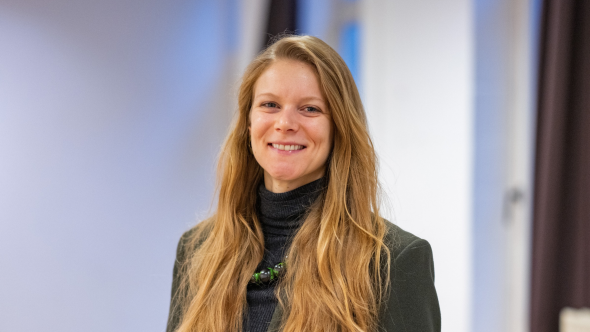
A musicologist and specialist in the Middle Ages, Eleonora Celora has been studying liturgical manuscripts for several years. After conducting research on sources preserved in France, Italy, Belgium, and Germany, she is now focusing specifically on the role of female saints in these documents.
Her FUNDATRICES project is supported by a Marie Skłodowska-Curie postdoctoral fellowship, European funding that will allow her to continue her research for two years at UNamur. “Having the opportunity to spend two years doing research is wonderful. It’s really what you need after a Ph.D.,” she explains.
Songs Dedicated to the Holy Abbesses
At the heart of the project are the “offices in verse”—collections of texts and hymns composed in verse and used during the liturgy. In the Middle Ages, they were often used to commemorate a saint.
Eleonora Celora will focus on the offices dedicated to female abbesses from the former Southern Netherlands. Indeed, several medieval abbeys were founded by women or associated with important female figures. Yet many manuscripts and early printed editions dedicated to them remain understudied, both in terms of text and music.
The goal is to understand how these women were portrayed several centuries after their deaths, which aspects of their lives were highlighted, and what female role models were conveyed through these chants.
Belgium has a particularly rich cultural heritage
The choice of this region is no coincidence. The former Southern Netherlands boast a particularly rich heritage of medieval music and liturgical composition. “When I began compiling a list of verse-based services dedicated to female saints, I found several in this area and realized there was truly something worth studying here,” explains Eleonora Celora.
This proximity to the sources also played a role in her decision to join UNamur. The project is based at the “Medieval Practices of Writing” research center, where she will be able to work in an environment specializing in medieval manuscripts and written culture. “Being able to be here in Belgium, working on Belgian sources and surrounded by researchers who are familiar with this context—it’s ideal,” she emphasizes.
Through FUNDATRICES, Eleonora Celora hopes to contribute to a better understanding of the role and representation of women in medieval societies, while highlighting a heritage that remains largely unknown. The grant also marks an important milestone in her career, one year after completing her Ph.D. “I really didn’t expect to receive this grant because competition among the different projects is very fierce. It was a wonderful surprise,” she says. Congratulations to Eleonora Celora on receiving this grant and on launching this new project at UNamur!
Article
-
Faculty of Philosophy and Letters
Department of Germanic Languages and Literatures
“Mapping Worlds”: A Common Theme to Connect Courses and Activities in Germanic Languages at UNamur
Germanic languages
Students
Classical languages and literature
Literature
Philosophy
“Mapping Worlds”: A Common Theme to Connect Courses and Activities in Germanic Languages at UNamur
Germanic languages
Students
Classical languages and literature
Literature
Philosophy
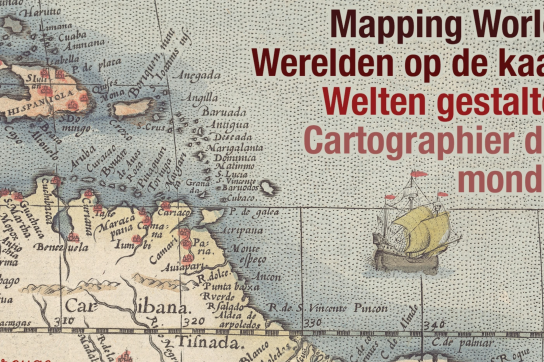
Following a first edition dedicated to “Lifelines,” the Department of Germanic Languages and Literatures at UNamur is continuing its overarching theme for the 2026–2027 academic year. This year, courses, discussions, films, and educational activities will explore a common theme: “Mapping Worlds.” This is a way to foster greater connections between courses and to engage students in their learning in new ways.
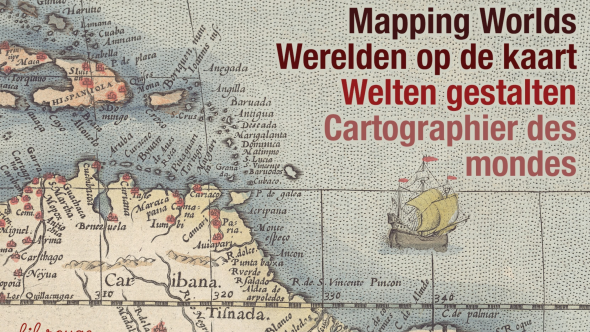
A common theme to tie together classes, readings, films, and discussions: this is the guiding principle adopted last year by the Department of Germanic Languages and Literatures at UNamur. The goal is to create greater coherence among the many activities offered to students.
In 2025–2026, the Department tested this approach with the theme “Lifelines,” which focused on personal journeys, languages, and migration. Building on this initial experience and the very positive feedback from students, the Department is continuing the initiative in 2026–2027 with a new theme: “Mapping Worlds.”
A project monitored throughout the year
Inspired by the 500th anniversary of the birth of the Antwerp cartographer Abraham Ortelius*, this new thematic focus will allow students to explore the worlds we construct, those we inherit, and even those we might like to imagine. Languages, literature, and cultural productions will serve as entry points for examining these different representations. “The idea is to reflect on the worlds that are taking shape and being reshaped, but also on the role that language, literature, and cultural products play in how we represent them,” adds Laurence Mettewie, Dean of the Faculty of Philosophy and Humanities and professor of Dutch linguistics.
This theme will be explored in several courses and activities organized throughout the year. Jeroen Darquennes’ new course, titled “Language and Colonialism,” invites students, in particular, to engage in critical reflection on how European colonial narratives have contributed, over the past centuries, to shaping (mental) maps of the world beyond Europe. In Dutch literature, students will study Raoul de Jong’s novel *Jaguarman* (2020, French translation 2023), which explores the search for his roots between the Netherlands and Suriname, a former Dutch colony. The author will be our guest in Namur during Elisabeth Leijnse’s final class. In the realm of German-language literature, Guillaume Etienne and Valérie Leyh will organize a study day dedicated to accounts of journeys on foot and the way the world is explored through this form of “gentle mobility,” which emphasizes detail and a slow pace. Emma-Louise Silva and Lieven Vandelanotte will combine literary and linguistic analyses of imaginary and artistic cartographies as part of the “Language and Society” course, before introducing students to unique itineraries during the educational trip to London.
Image

“The common thread helps us establish connections between what we’re already doing and new activities that can add value to the theme.”
Connections Among Teachers
Beyond the experience offered to students, this overarching theme has also changed the way the team structures its activities. Rather than each teacher working independently, they collaborate to identify projects, works, or guest speakers that can bring a new dimension to the theme. “This creates a different dynamic,” notes Laurence Mettewie. “We consider how each of us can contribute to the theme based on our areas of expertise and interests.”
The overarching theme is therefore not intended to overhaul the curriculum. Rather, it enriches and enhances the existing offerings. By unifying the activities on offer, it allows us to approach languages and linguistics, literatures, and cultures through a shared lens, thereby opening new windows onto the worlds around us.

Article
-
Faculty of Philosophy and Letters
Department of Classical Languages and Literatures NaLTT Institute
From the 16th century to the present: Two professors from UNamur explore what we can still learn from the books of printer and publisher Christophe Plantin
Classical languages and literature
History
Literature
History
Article
-
Faculty of Philosophy and Letters
Department of Classical Languages and Literatures
Department of Germanic Languages and Literatures
NaLTT Institute
PaTHs Institute
From the 16th century to the present: Two professors from UNamur explore what we can still learn from the books of printer and publisher Christophe Plantin
Classical languages and literature
History
Literature
History
Edited by two professors from UNamur, this anthology brings together the work of 18 researchers focusing on some 50 rare books, selected from among the more than 900 editions by Christophe Plantin held by the University. Supported by the Institut Moretus Plantin Public Benefit Foundation, this project marks the first step leading up to the launch, in September, of a new research initiative on multilingualism and translation practices in the editions of the Antwerp printer.
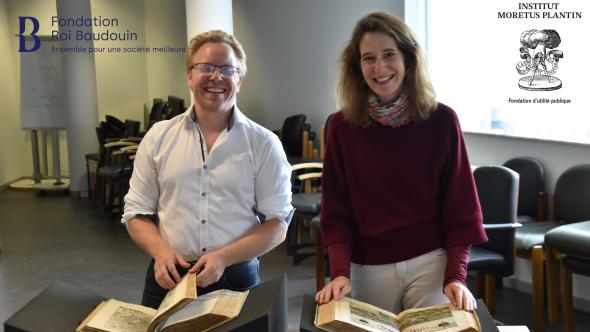
With 905 editions published by Christophe Plantin, the Moretus Plantin University Library (BUMP) at UNamur is now home to one of the largest Plantin collections in Belgium. The largest collection is housed at the Plantin-Moretus Museum in Antwerp, located in the former home and printing house of Christophe Plantin. This rich heritage was significantly expanded in 2020, when the collection assembled by Philippe de Dorlodot, a prominent private collector of Plantin editions, was donated to the King Baudouin Foundation, with the wish that it be preserved at UNamur. This exceptional collection has already been the subject of a catalog and has inspired a collective work dedicated to the legacy of this great Renaissance printer.
“It all began with a phone call from the BUMP Heritage Center, which wanted to organize an exhibition dedicated to Christophe Plantin to mark the 500th anniversary of his birth in 2020,” recalls Pierre Assenmaker, professor of Latin language and literature at UNamur and scientific co-director of the book. Together with Valérie Leyh, a professor of German-language literature who also teaches a course on the history of the book, they began to envision a collaborative project centered on this major figure in European printing. But the initiative quickly took on a new dimension. “When we saw the scope of this collection, we realized we had to go beyond a simple exhibition,” emphasizes Valérie Leyh. “That’s where the idea came from to produce a book that would showcase this exceptional collection held at UNamur.”
The book thus brings together contributions from 18 researchers from UNamur and other institutions in Belgium and the Netherlands. Since the collection had already been the subject of a comprehensive catalog, published with the support of the King Baudouin Foundation, the authors chose a thematic approach: to understand how Christophe Plantin became, in the 16th century, one of the most influential printers in Europe. “We tried to identify the various factors behind this success,” explains Pierre Assenmaker. “Through his network of humanists, as well as his incredible business acumen, Christophe Plantin knew how to adapt his books to different audiences, varying formats, languages, and illustrations. He already possessed the ability to conceive of multiple versions of the same work based on his readers’ expectations.”
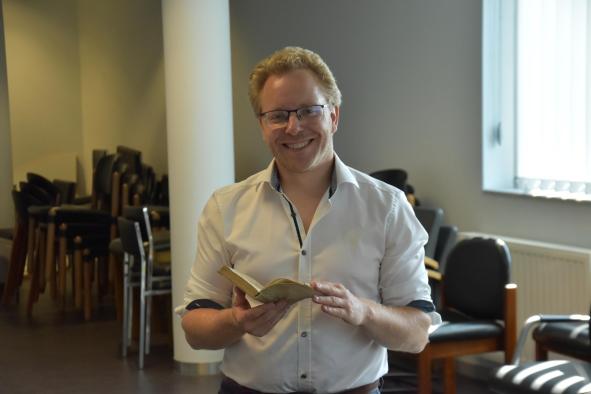
Books: A Record of Several Centuries of History
Studying all 905 works held by the BUMP would have been a Herculean task. The researchers had to make some choices. “We analyzed about fifty works that seemed most revealing to us,” continues Pierre Assenmaker. “Some stand out for their rarity, others for their beauty, or because they particularly well illustrate Plantin’s editorial strategies. Inevitably, any selection involves making sacrifices, and there are still a great many treasures that deserve to be studied.” The researchers were also able to compare several copies of the same edition. “Some books belonged to several collectors. Others have been annotated over the centuries,” adds Valérie Leyh. “These handwritten notes allow us to trace the books’ circulation and understand how they were used or passed down.”
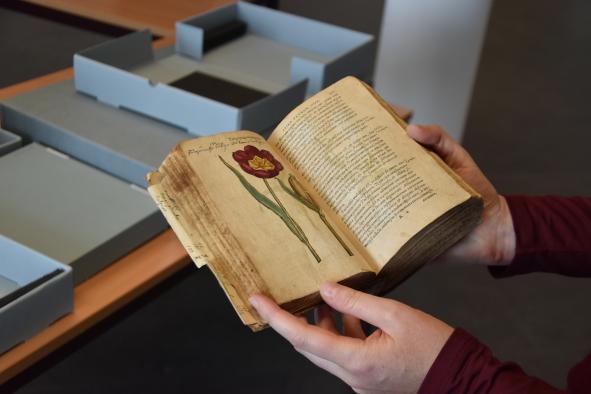
Beyond the texts themselves, researchers have also focused on the book as an object. While today we choose between a large format and a paperback, during the Renaissance, the options were far more numerous. In the 16th century, books were often sold as unbound quires. The buyer then decided on the binding—which could be more or less luxurious—and could even choose to add certain illustrations. Each copy thus became a unique object. Furthermore, as Valérie Leyh points out, a single text could be published in several languages, with or without illustrations, in order to reach different audiences. This was a particularly modern publishing strategy for the time, demonstrating that printers were thoughtful about how to adapt to their readers’ expectations.
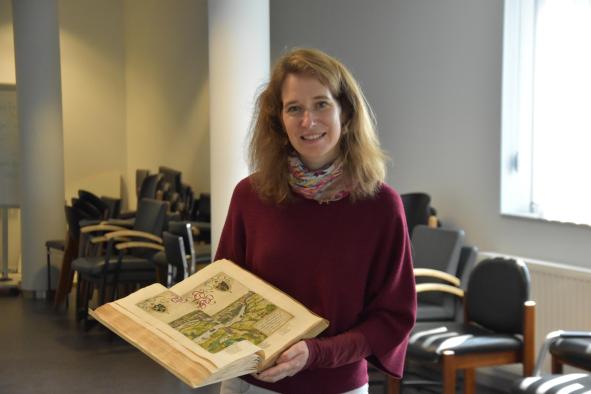
This research also finds a direct extension in the courses offered at UNamur, particularly in the course “The Book and Digital Culture” taught by Valérie Leyh. Students are encouraged to examine a selection of historical books held at the BUMP in order to study their physical characteristics. This is also a way to put these objects into context with current reading practices and digital uses.
A new chapter will begin in September
While this book marks the culmination of several years of work, it also paves the way for new research. In September, Pierre Assenmaker and Valérie Leyh launched, with the support of the Institut Moretus Plantin Public Benefit Foundation, a two-year research project focused on multilingualism and translation in the works of Christophe Plantin. The goal will be to study some 40 to 50 works held at the BUMP in order to better understand how the Antwerp printer made use of the linguistic diversity of his time. “Today, with machine translation tools and artificial intelligence, we sometimes tend to forget the full complexity of translation,” notes Valérie Leyh. “During the Renaissance, translating also meant adapting a work for a new audience. Translators sometimes became co-authors.”
The project, conducted in collaboration with Asseline Sel, a postdoctoral researcher, aims to better understand Plantin’s editorial strategies through the lens of language. Why were certain works translated? Which readers were they intended for? How could the same text be transformed, shortened, expanded, or illustrated differently depending on the target audience? These are the kinds of questions the researchers will seek to answer by analyzing not only the content of the works but also their physical form, their handwritten annotations, and their history over the centuries.
Beyond the history of the book, the two researchers also see this as an invitation to better understand our own era. “The 16th century was a period of profound transformations, marked by political, religious, and economic crises, but also by a remarkable exchange of ideas,” concludes Pierre Assenmaker. “Studying this period reminds us that times of crisis are not incompatible with the development of culture and knowledge. This is undoubtedly one of the most relevant lessons that Christophe Plantin leaves us today.”
Want to learn more?
The book, available from Presses Universitaires de Namur, and the new project will be presented on October 8, 2026, at UNamur (L03 lecture hall, accessible via Rue Grafé). Registration for this event is free and can be done via this link. Everyone is welcome!

News
-
Faculty of Sciences
Department of Mathematics
Two UNamur Professors Featured During the Japanese Emperor's Visit
Institution
News
-
Faculty of Sciences
Faculty of Philosophy and Letters
Department of Mathematics
History Department
Two UNamur Professors Featured During the Japanese Emperor's Visit
Institution
During the Japanese Emperor’s state visit to Belgium, two professors from the University of Namur had the opportunity to represent their institution at two highlights of the official program. Isabelle Parmentier and Alexandre Mauroy reflect on an experience they won’t soon forget.
Alexandre Mauroy: “A great opportunity to raise awareness of UNamur”
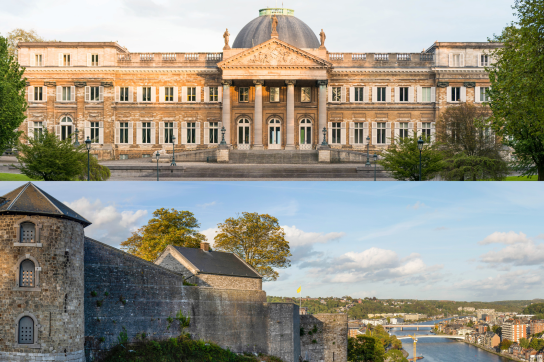
On Tuesday, June 23, the state visit began with an official banquet at the Château de Laeken. Among the approximately 150 guests was Alexandre Mauroy, a professor in the Department of Mathematics at the Faculty of Sciences of UNamur. Invited at the request of the Vice-Rector for International Relations and Cooperation, he represented the University of Namur due to his scientific collaborations with Japanese researchers, particularly in connection with a future Erasmus+ project with Kyoto University. “It was a wonderful opportunity to raise awareness of UNamur,” he explains.
At the Castle of Laeken, Alexandre Mauroy encountered a highly formalized protocol and an evening attended by numerous prominent figures. “At the cocktail reception, Prime Minister Bart De Wever was right next to me. At the end of the evening, the King was having his coffee just a few meters away. The next morning, I almost felt like I’d been dreaming.”
Isabelle Parmentier: “I never would have imagined going through this a few years ago”
The next day, the imperial procession stopped at the Castle of Namur for a visit focused on water management. On this occasion, Isabelle Parmentier, a professor in the Department of History at the Faculty of Philosophy and Letters and a specialist in environmental history, was invited by the Governor of the Province of Namur to present a scholarly lecture on the province’s hydrological history. This topic was chosen because of Emperor Naruhito’s interest in issues related to water and the environment.
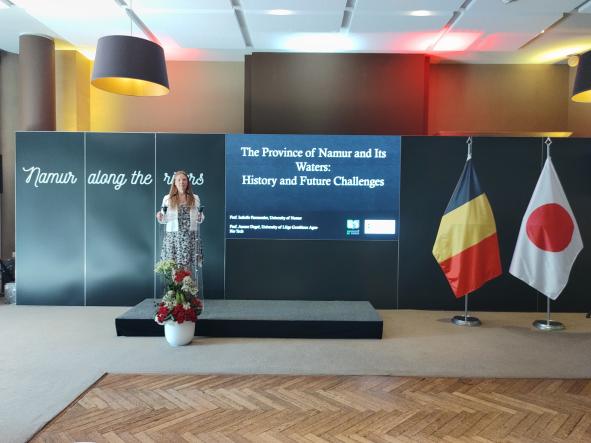
“It’s a truly special experience,” she explains. “I never would have imagined going through this a few years ago. I was very happy to be able to present my area of expertise to the monarchs.” After the presentations, she shared lunch at the table of the Emperor of Japan and King Philippe. “Protocol dictated that we not speak to them spontaneously, but the Emperor showed great interest in my presentation and asked me several questions.”
Although their experiences were very different, Alexandre Mauroy and Isabelle Parmentier both share the same feeling: pride in having represented the University of Namur at an event that highlights the strength of relations between Belgium and Japan, as well as the international reach of the research conducted at UNamur.
A university open to the world
The University of Namur has developed numerous partnerships with universities and research institutions around the world. These collaborations promote academic exchanges, joint research projects and mobility opportunities for students, researchers and staff, while strengthening UNamur's international profile.
Agenda
Congress / Colloquium / Conference
-
Faculty of Philosophy and Letters
Department of Archaeology and Art Sciences
PaTHs Institute
The Iconographic Narrative of Ancient Egypt: Keys to Understanding the Dynamics of the Still
Art history and archaeology
30
2026
09:30
-
31
2026
16:00
UNamur et UCLouvain - Rue de Bruxelle, 61 - 5000 Namur
Contact person
:
Obsomer Claude
Two-dimensional Egyptian depictions—whether carved, drawn, or painted scenes—may appear static at first glance. In reality, it is not uncommon for these depictions—whether singular or multiple—to incorporate a dual dimension—temporal and dynamic—and, as a result, to tell a story. It is this dual dimension—temporal and dynamic—that the various presentations at this conference will seek to highlight, in an effort to bring to life a vibrant Egypt behind an iconography that, at first glance, appears immobile or static.

What's on the agenda
On October 30 at UNamur, the following topics will be discussed: (1) Hatshepsut’s porticoes at Deir el-Bahari; (2) scenes from divine temples; (3) scenes from the tombs in the Valley of the Kings and at Amarna; (4) scenes from the Battle of Kadesh.
At UCLouvain on October 31, the following topics will be covered: (1) the astronomical ceilings of the temples; (2) scenes from private tombs; (3) the temple of Amenhotep III at Kom el-Hettan (behind the Colossi of Memnon).
Current Developments and Contemporary Applications of Hegelian Practical Philosophy
Philosophy
6
2026
14:00
-
16:00
Université de Namur, Faculté de philosophie et lettres, auditoire L56 - rue Grafé, 1 - 5000 Namur
Contact person
:
Tortorella Sabina
Research seminar co-organized by Louis Carré and Sabina Tortorella as part of the activities of the ESPHIN Institute, the Department of Philosophy, and the Arcadie Center, as well as the Marie Skłodowska-Curie SOCIAL project.
This seminar aims to explore contemporary applications of Hegel’s practical philosophy and to examine its relevance and legacy. Central themes in recent philosophical debates—such as globalization, race, feminism, and the Anthropocene—as well as the contemporary challenges facing philosophical reflection—such as social justice and the ecological transition, state sovereignty in the face of international markets and the emergence of supranational entities, or the crisis of democracy in the face of rising populism and the return of war—may call for a reengagement with Hegelian thought. The aim of this seminar is not necessarily to offer a strictly historical-philosophical reading of Hegelian thought, but rather to seek to take Hegel beyond Hegel himself, by engaging in a reflection on issues that find their initial formulation in his work, but which have developed far beyond his conceptual framework, or by examining his concepts from perspectives that do not necessarily claim to be Hegelian. This approach thus aims to foster a dialogue between Hegel’s thought and other philosophical traditions and schools of political philosophy in order to examine its capacity to shed light on certain major issues of our time. By questioning its relevance and limitations, this seminar seeks to examine what Hegelian practical philosophy can still offer us today and how it enables us to examine our own problems from a fresh perspective. While it likely cannot provide ready-made solutions, it may, however, help us ask the right questions and rethink the tensions of our time.
Matthew J. Delhey (KU Leuven) will deliver a lecture titled “Hegel’s Institutional Ontology.”
Free event.
You can attend the seminar online at: https://teams.microsoft.com/meet/3224345405328311?p=FzHFL9Rs8ICFNMzosh
Contact: sabina.tortorella@unamur.be
This project has received funding from the European Union’s Horizon Europe research and innovation program under the Marie Skłodowska-Curie grant agreement No. 101150961.
Deleuze, Cinema, and War
Philosophy
13
2026
14:00
-
17:00
UNamur, Faculté de Philosophie et Lettres, Salle Académique - Rue Grafé 1 - 5000 Namur
Contact person
:
Laoureux Sébastien
Arcadie Center Seminar with Stanislas de Courville
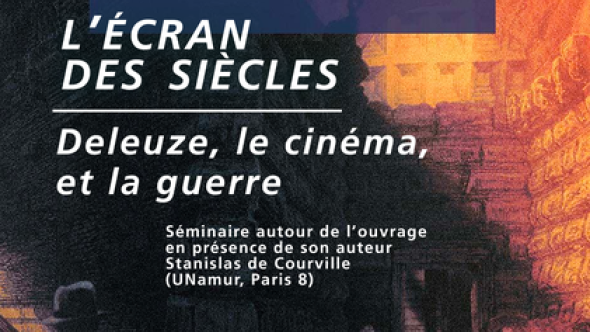
As part of its seminar series, the Arcadie Center at the ESPHIN Institute is hosting a session with Stanislas de Courville focused on his book *L'Écran des siècles: Deleuze, Cinema, and War* (Mimesis, 2025).
Stanislas de Courville is currently a postdoctoral researcher at the Arcadie Center (ESPHIN Institute). He is a lecturer in the film studies departments at Paris 8 and Aix-Marseille Universities. He also teaches in the Film Analysis and Culture department at La Fémis. He is an associate member of the ESTCA (Paris 8) and IRPhiL (Lyon 3) research laboratories. A specialist in film aesthetics, theory, and history, his work focuses in particular on Deleuzian thought on cinema, the relationship between cinema and history, and Soviet and post-Soviet cinema.
Following a presentation of the book, Stanislas de Courville will be interviewed by Déborah V. Brosteaux, Dagmara Osmayeva, Vivien Giet, and Sébastien Laoureux.
Book Presentation
While Gilles Deleuze opens his two-volume work on cinema—comprising *The Movement-Image* and *The Time-Image*—by emphasizing that he is not writing a “history” of the seventh art but rather “a taxonomy, an attempt to classify images and signs,” it has often been pointed out that it is a historical event that appears to serve as the link between the two volumes and their corresponding regimes of images. It is the Second World War, in fact, that seems to mark the transition from the “image-movement” to the “image-time,” despite the philosopher’s stated intentions. The tension that can be discerned between taxonomy and history in the diptych is far from trivial, as it profoundly disrupts its overall structure. Returning to the theoretical and cinematic sources of Deleuze’s thought, this book seeks to examine the claim that a rupture in the “history” of cinema occurred with World War II, and to determine the nature of the history at stake here. At its core lies the idea of the seventh art’s complicity in propaganda, particularly that of the Nazi regime, whose fusion with its own staging—according to Hans-Jürgen Syberberg and Deleuze after him—leaves us grappling with Hitler as a “filmmaker.” A “negative myth” of the dictator, whose shadow would fall over all cinematic images in the postwar period—a shadow that would ultimately prove to be that of so-called “modern” cinema as well.
Free admission. Everyone is welcome!
Meet the Faculty's key players
Image

Image

Image
Image
The departments
Faculty libraries
- Philosophy
- History
- French and Romance languages and literatures
- Germanic languages and literatures: Dutch Unit
- Archaeology and art sciences
See the library portal of the University of Namur, which gives access to all publication directories.
Pedagogical Support Unit
The Faculty of Philosophy and Letters has a Pedagogical Support Unit (Cellule d'appui pédagogique - CAP) whose primary mission is to organize activities to help students (mainly Bac 1 students) succeed. It also manages (in part) the evaluation of teaching by students, and leads pedagogical reflection within the faculty.
.