

naXys
The naXys institute specializes in the analysis of complex systems, whether in astronomy and dynamic cosmology, mathematical biology, optimization in optics, economic complexity or the study of the stability and robustness of these systems.
Quel est le point commun entre le cerveau humain, les réseaux sociaux, les systèmes financiers, l'univers, les systèmes optiques, le métabolisme ou le génome ?
Ce sont des exemples classiques de systèmes complexes, c'est-à-dire des systèmes composés d'un grand nombre d'éléments simples en interaction et présentant des phénomènes émergents. L'objectif principal de l'Institut de recherche naXys est l'étude de ces systèmes complexes, à travers l'analyse de données réelles, leur modélisation par les mathématiques et les simulations numériques, leur contrôle et leur optimisation.
Notre conviction est qu'une bonne compréhension des systèmes nécessite une étape de modélisation, qui permet d'identifier les relations de cause à effet entre les différents paramètres et d'identifier les mécanismes par lesquels ils opèrent. Cette abstraction doit être basée sur une validation empirique, mais l'exploitation des données seules n'est ni suffisante ni satisfaisante. C'est pourquoi une connaissance du domaine spécifique et l'utilisation d'outils adéquats de modélisation, d'analyse et de simulation sont indispensables.
Les axes de recherche
- Astronomie dynamique, cosmologie et astrobiologie (SPACE)
- Biologie mathématique (BIO)
- Ingénierie optique et optique quantique (OPTICS)
- Algorithmes d'optimisation, intelligence artificielle et robotique (AI)
- Complexité socio-économique (ECO)
- Stabilité et robustesse (ROBUST)
Spotlight
News
News
-
Faculty of Sciences
Department of Mathematics naXys Institute
Research conducted in collaboration with UNamur draws inspiration from bees to help swarms of robots make better decisions
Publication
Physics and astronomy
Sustainable
Research conducted in collaboration with UNamur draws inspiration from bees to help swarms of robots make better decisions
Publication
Physics and astronomy
Sustainable
How can a group of robots be enabled to make the right decision, even when some of the information is incorrect? An international team, including Timoteo Carletti, director of the Department of Mathematics at UNamur and a member of the naXys Institute, drew inspiration from bees. Published in *Nature Communications*, their research could help make swarms of robots more reliable and autonomous.
Imagine dozens of robots sent into a disaster zone to search for victims, monitor a fragile ecosystem, or respond to a chemical spill. In these environments that are difficult or dangerous for humans, swarms of robots could one day play a valuable role.
But to operate independently, they must first be able to agree on a course of action. And the task becomes more complicated when the information they exchange isn’t always reliable: a robot might malfunction, a sensor might provide incorrect data, or a message might be tampered with during a cyberattack.
Learning from Bees to Make Better Decisions
Andreagiovanni Reina of the University of Konstanz, Marco Dorigo and Raina Zakir of the Free University of Brussels, and Timoteo Carletti of UNamur sought to understand how robots can reach agreement when they receive conflicting information. To find a solution, the researchers turned to nature and to a champion of collective decision-making: the honeybee.
Indeed, when a colony needs to find a new place to build its nest, bees set out to explore the surroundings and return to advocate for different locations. Those supporting one location can then send a signal to deter the bees advocating for another. Gradually, certain options are abandoned, and the colony eventually agrees on a single destination.
Researchers have replicated this logic in robots. When a robot receives information that contradicts its current choice, it does not immediately change its mind. It first goes through a brief moment of hesitation, during which it no longer supports any option, before being able to make a new choice. This brief hesitation makes all the difference. Even when some information is false or unreliable, robots generally manage to reach agreement more quickly and clearly.
When a Little Chaos Helps with Decision-Making
Even more surprising, researchers discovered that a limited amount of unreliable information could sometimes improve the outcome. These disruptions can prevent the swarm from agreeing too quickly on a poor option and increase its chances of ultimately choosing the best one.
Similar mechanisms exist at various levels in nature, from neural networks to the mechanisms that regulate cells. This research thus bridges the gap between biology and robotics: living organisms inspire the design of more efficient robots, while experiments conducted with these robots provide a better understanding of certain mechanisms found in nature.
Ultimately, this approach could help swarms of robots determine which area to explore first after a disaster or which environmental threat to address first. Congratulations to Timoteo Carletti and the entire team on this publication in *Nature Communications*!
Timoteo Carletti – Short Biography
After earning a master’s degree in physics (University of Florence, June 1995), Timoteo Carletti pursued his doctoral studies in Florence (Italy) and Paris (France) at the IMCCE, and ultimately defended his doctoral dissertation in mathematics in February 2000.
He moved to Belgium in 2005 and was hired by the University of Namur as an adjunct lecturer, then as an assistant professor (2008), and finally as a full professor (2011) in the Department of Mathematics of the Faculty of Sciences. In 2010, he was one of the founders of the Namur Center for Complex Systems (now the Namur Institute for Complex Systems—naXys), which he directed until December 2014.
Learn more about Timoteo Carletti: https://www.unamur.be/fr/profil/tcarlett

News
-
Faculty of Sciences
Department of Mathematics naXys Institute
A new study reveals how “free riders” can ultimately promote cooperation
Publication
Physics and astronomy
Sustainable
A new study reveals how “free riders” can ultimately promote cooperation
Publication
Physics and astronomy
Sustainable
In human societies as well as in ecosystems, opportunistic behaviour does not always prevail. The scientific article, fruit of the collaboration between research teams in India, Slovenia and Belgium, has just been published in the prestigious PNAS journal.
Cooperation lies at the heart of many human societies, ecosystems, and microbial communities. Yet it is constantly threatened by individuals who benefit from collective efforts without contributing themselves. A new study driven by an international collaboration between the teams lead by, Professor Dibakar Ghosh (ISI, Kolkata, India), Professor Matjaž Perc (University of Maribor, Slovenia) and Professor Timoteo Carletti (UNamur, naXys institute, Belgium) shows that the way individuals move within a network can play a decisive role in sustaining cooperation.
For decades, scientists have sought to understand why cooperation persists even though selfish behaviour often appears more advantageous in the short term. Classical theoretical models generally predict that “defectors” — individuals who benefit from a common resource without contributing to it — should eventually dominate.
The unexpected role of movement
Reality, however, tells a different story. In nature as well as in human societies, cooperation remains remarkably widespread. To investigate this apparent paradox, the researchers developed a mathematical model describing populations organized in groups modelled as nodes of a network, where cooperators and defectors can move between groups. Their analysis reveals an unexpected phenomenon: when defectors move faster than cooperators, their advantage can actually diminish. Because cooperators are less mobile, they tend to remain clustered together. These clusters create favourable conditions for mutual support and allow cooperation to persist despite the presence of opportunistic individuals.
The researchers also found that the structure of the network itself plays an important role. Highly connected nodes — comparable to transportation hubs or highly influential individuals in a social network — are particularly effective at sustaining cooperation. By contrast, more peripheral areas remain more vulnerable to defection.
New insights into collective behaviour
These findings highlight a simple yet powerful mechanism: differences in mobility can promote the spontaneous emergence of stable cooperative communities. The results offer new insights into the dynamics of collective behaviour across a wide range of systems, from ecosystems and human societies to microbial populations.
Image

“Our work shows that movement is not merely a secondary feature of a system. It can fundamentally alter the balance between cooperation and selfish behaviour. Cooperation may emerge not despite mobility, but because of it, when different actors move in different ways.”
The journal "Proceedings of the National Academy of Sciences" (PNAS), a peer-reviewed publication of the National Academy of Sciences (NAS), is a leading venue for high-impact original research spanning the biological, physical, and social sciences. The journal has a global reach and welcomes submissions from researchers around the world.
Congratulations to the researchers on this publication!
Timoteo Carletti – Short Biography
After earning a master’s degree in physics from the University of Florence in June 1995, Timoteo Carletti pursued doctoral studies in Florence and Paris, notably at the Institut de mécanique céleste et de calcul des éphémérides. He completed his PhD in Mathematics in February 2000.
In 2005, he moved to Belgium and joined the University of Namur as a Lecturer. He was subsequently appointed Professor in 2008 and Full Professor in 2011 within the Department of Mathematics of the Faculty of Science. In 2010, he was among the founders of the Namur Center for Complex Systems, which later became the Namur Institute for Complex Systems. He served as its Director until December 2014.
About Timoteo Carletti: https://www.unamur.be/en/profil/tcarlett

Article
-
Faculty of Sciences
Physics Department NISM Institute
PHOENIX: Revitalizing Heritage Sciences at UNamur
Heritage, culture and society
Physics and astronomy
History
Article
-
Faculty of Sciences
Faculty of Philosophy and Letters
Physics Department
Department of Classical Languages and Literatures
History Department
NISM Institute
Narilis Institute
PaTHs Institute
naXys Institute
PHOENIX: Revitalizing Heritage Sciences at UNamur
Heritage, culture and society
Physics and astronomy
History
With the PHOENIX project, UNamur is revisiting a long-standing area of expertise: heritage sciences. Using cutting-edge techniques and artificial intelligence, a transdisciplinary team of experts in history, archaeology, and physics has set out to renew our understanding of heritage objects in order to uncover their origins, methods of production, and uses. Under their scrutiny: ancient coins and medieval parchments.

Heritage sciences are experiencing a resurgence at UNamur. This field of research—which involves applying techniques and expertise from the exact sciences (physics, chemistry, biology) to study ancient heritage objects—is reinventing itself thanks to the PHOENIX project, led by seven researchers from the Faculties of Science (Department of Physics) and Philosophy and Letters (Departments of History and Classical Languages and Literatures).
“PHOENIX emerged from the collaboration of several researchers from different backgrounds, yet all driven by the same desire to study the materiality of heritage objects. One notable figure is Julien Colaux, whose predecessor had led the first heritage science projects at UNamur’s Laboratory of Analysis by Nuclear Reactions (LARN). It’s a sort of return to our roots,” recalls Nicolas Ruffini-Ronzani, a researcher in the Department of History, president of the PaTHs Institute, and one of the project’s leaders.
A threefold objective
With PHOENIX, researchers aim to “make” two types of objects speak: ancient coins and medieval parchments (see box). More specifically, their research is guided by three objectives:
- To understand the composition of the artifacts being studied. For the parchments, to identify the animal species (sheep, goat, or calf); and for the coins, to characterize the metal alloy.
- Gain a better understanding of the production and processing workflow. For example, determine which parts of the animal were used in the production of a parchment.
- To propose the most precise dating possible.
It is in this last objective that the main challenge lies. “We won’t be able to date these objects to within a year,” warns Olivier Deparis, a professor in the Department of Physics and a member of the NISM research institute. “The idea is to provide a time frame that is as precise, if not more so, than that already provided by paleography (the study of ancient scripts) or textual analysis. If we can narrow it down to a quarter-century, that will already be a significant step forward.”
Fostering dialogue between the humanities and the natural sciences
To achieve this, the PHOENIX team uses various non-invasive techniques, in particular infrared and Raman spectroscopy, time-of-flight secondary ion mass spectrometry (ToF-SIMS), and ion beam analysis (IBA). These approaches—which utilize UNamur’s state-of-the-art tools such as the ALTAÏS particle accelerator (see Omalius #36)—provide detailed information on the physicochemical composition of materials, such as the animal origin and ink formulations for parchments or the type of metal alloy for coins. “The use of the exact sciences will enrich our studies and thus allow us to better understand how these objects were produced in the past,” explains Nicolas Ruffini-Ronzani. “Contrary to what one might think, collaboration between the humanities and the exact sciences has a long history, dating back to the 19th century, and even much earlier in the case of coins.”
A breath of fresh air thanks to artificial intelligence
These tools will make it possible to examine parchments and coins down to the finest detail, at the pixel level. These in-depth analyses therefore generate a colossal volume of raw data to process. This is where artificial intelligence comes into play to speed up the processing and reveal the information “hidden” in the data, identifying major trends invisible to the naked eye.
Above all, it will provide a boost in meeting the challenge of dating the objects under study. Dated documents, such as charters, will thus be used as references to test the model’s robustness by comparing the results obtained with already known dates. “If the results are convincing, the technique could be applied to undated documents,” says Nicolas Ruffini-Ronzani. This would represent a significant breakthrough in historical research.
“The use of machine learning methods is not a panacea,” Olivier Deparis qualifies, however. “We wanted to explore it as an open-ended question to assess its benefits.”
PHOENIX could thus herald a new era for heritage sciences, where artificial intelligence—much like the phoenix after which the project is named—opens up new ways to analyze and understand materials from the past.
Greek coins and banknotes
The PHOENIX corpus covers two types of heritage objects:
- A collection of 168 silver coins associated with the city of Argos (Greece), from the private collection of Tony Hackens (1937–1999), former professor of Archaeology at UCLouvain.
- Several hundred medieval and modern charters from the archives of the Cistercian Abbey of Notre-Dame du Vivier (Marche-les-Dames, Namur), currently held at the State Archives in Namur.

Meet the team
- Francesca Cecchet (Department of Physics – NISM and NARILIS Institutes)
- Lucas Baseil (Department of Physics – NISM Institute)
- Julien Colaux (Department of Physics – NISM and PaTHs Institutes)
- Olivier Deparis (Department of Physics – NISM, naXys, and PaTHs Institutes)
- Christophe Flament (Department of Classical Languages and Literatures – PaTHs Institute)
- Louise Fauchier (Department of Classical Languages and Literature – PaTHs Institute)
- Laurent Houssiau (Department of Physics – NISM Institute)
- Alexandre Mayer (Department of Physics – NISM and naXys Institutes)
- Giulia Morabito (Department of Physics – NISM and PaTHs Institutes)
- Nicolas Ruffini-Ronzani (Department of History – PaTHs Institute)
- Nicolas Gros (Department of Physics – NISM and PaTHs Institutes)
- Manon Bart (Department of Physics – NISM and naXys Institutes)
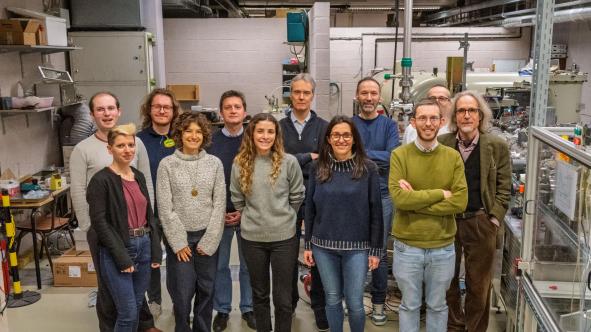
The PHOENIX project is funded by the Concerted Research Action (ARC) program from September 2024 to August 2029. It is a continuation of the interdisciplinary Pergamenum21 project, launched in 2014 by the Moretus Plantin University Library (BUMP) under the leadership of Professor Olivier Deparis and dedicated to the scientific study of parchment with a view to improving conservation practices.
The PHOENIX Project at the First Lego League Challenge
Young people from Rochefort showcased the PHOENIX project at the international First Lego League competition, a robotics contest open to students aged 10 to 16. To align with the annual theme focused on new technologies in the field of archaeology, this team from the Rochefort Youth and Culture Center drew inspiration from IBA technology to develop a research game designed to identify the origin of Ancient Greek coins modeled using a 3D printer. Their project caught the jury’s eye and earned them a spot in the national finals, which took place last March. Beyond the competition, this original game will be presented during Family Day at the Malagne Archaeological Park (Rochefort).

This article is taken from the "Eureka" section of Omalius magazine, Issue #40 (April 2026).

Article
-
Faculty of Computer Science
naXys Institute
Win4Doc | Predicting Failures to Better Protect Space Infrastructure
Space
Win4Doc | Predicting Failures to Better Protect Space Infrastructure
Space
Detecting a failure before it occurs: that is the goal of the research being conducted by Antoine Hubermont, a doctoral student at UNamur. This project, named Monsater, is funded by SPW Research as part of the Win4Doc program in collaboration with the space company Telespazio Belgium. It addresses a key strategic challenge: ensuring the reliability of complex systems, particularly in the space sector.
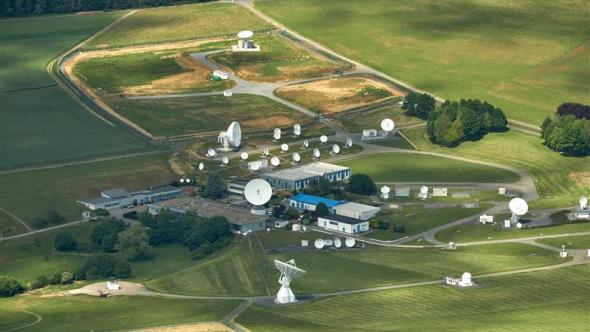
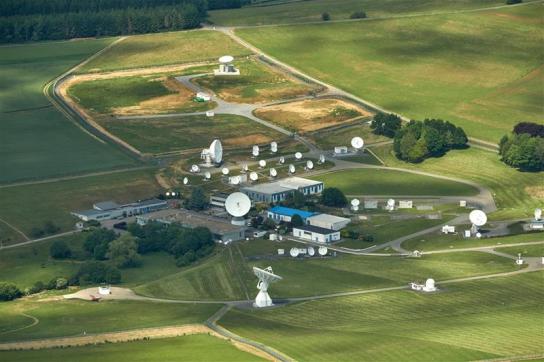
In his research, Antoine Hubermont, a member of naXys (Namur Institute for Complex Systems), focuses specifically on the infrastructure that enables the operation of Galileo, the European satellite navigation system.
“We use it every day, but few people know that we have a European GPS, Galileo, based on a constellation of satellites orbiting more than 23,000 kilometers above Earth,” he explains.
Using artificial intelligence methods, Antoine Hubermont is developing tools capable of predicting the onset of failures.
More specifically, the Monsater project aims to create a platform that allows for visualizing and predicting the status of this equipment, assessing the risk of failure, and identifying anomalies in order to initiate a process to restore their functions. The platform integrates and combines the detection and prediction capabilities of artificial intelligence-based solutions with the technical capabilities of robotic solutions.
In this work, Antoine Hubermont is supervised by Professor Elio Tuci, a member of naXys and professor at the Faculty of Computer Science at UNamur.
Watch the video about the project
Win4doc
Win4Doc is a program established by Wallonia (SPW Research) that enables a Walloon company to hire a researcher to conduct doctoral research in collaboration with a university research unit.

Industrial PhD Programs at UNamur
Ce contenu est en cours de migration. Nous vous invitons à consulter la page externe de l'institut de recherche naXys.
