Understanding Antiquity and illuminating our world through Greek and Latin sources
Greek and Latin literature is one of the foundations of Western thought and culture. Whether we study history, literature, the arts, currents of thought..., references to Greco-Roman antiquity are omnipresent, from the Middle Ages to the present day. The Department of Classical Languages and Literatures is thus atthe intersection of disciplines, at the heart of the Faculty of Philosophy and Letters.
Present since the creation of the University of Namur, courses in Latin and Greek introduce students to the study of ancient authors and the world in which they lived, while encouraging them to reflect on how each era has understood and been inspired by Antiquity. All indispensable keys to a profound understanding of our own world.
The Department of Classical Languages and Literatures brings together teacher-researchers specializing in the study of Greek and Latin languages and literatures, but also in the history of antiquity. This union of philology and history is at the heart of the department's scientific and didactic project. It guarantees a genuine synergy in the teaching of subjects related to Greco-Roman antiquity.
Find out more about the Department of Classical Languages and Literatures
Spotlight
News
From the 16th century to the present: Two professors from UNamur explore what we can still learn from the books of printer and publisher Christophe Plantin
Edited by two professors from UNamur, this anthology brings together the work of 18 researchers focusing on some 50 rare books, selected from among the more than 900 editions by Christophe Plantin held by the University. Supported by the Institut Moretus Plantin Public Benefit Foundation, this project marks the first step leading up to the launch, in September, of a new research initiative on multilingualism and translation practices in the editions of the Antwerp printer.
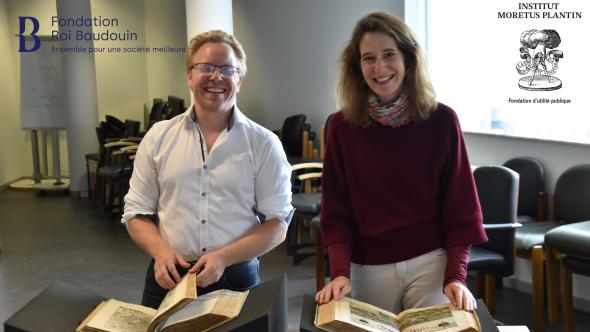
With 905 editions published by Christophe Plantin, the Moretus Plantin University Library (BUMP) at UNamur is now home to one of the largest Plantin collections in Belgium. The largest collection is housed at the Plantin-Moretus Museum in Antwerp, located in the former home and printing house of Christophe Plantin. This rich heritage was significantly expanded in 2020, when the collection assembled by Philippe de Dorlodot, a prominent private collector of Plantin editions, was donated to the King Baudouin Foundation, with the wish that it be preserved at UNamur. This exceptional collection has already been the subject of a catalog and has inspired a collective work dedicated to the legacy of this great Renaissance printer.
“It all began with a phone call from the BUMP Heritage Center, which wanted to organize an exhibition dedicated to Christophe Plantin to mark the 500th anniversary of his birth in 2020,” recalls Pierre Assenmaker, professor of Latin language and literature at UNamur and scientific co-director of the book. Together with Valérie Leyh, a professor of German-language literature who also teaches a course on the history of the book, they began to envision a collaborative project centered on this major figure in European printing. But the initiative quickly took on a new dimension. “When we saw the scope of this collection, we realized we had to go beyond a simple exhibition,” emphasizes Valérie Leyh. “That’s where the idea came from to produce a book that would showcase this exceptional collection held at UNamur.”
The book thus brings together contributions from 18 researchers from UNamur and other institutions in Belgium and the Netherlands. Since the collection had already been the subject of a comprehensive catalog, published with the support of the King Baudouin Foundation, the authors chose a thematic approach: to understand how Christophe Plantin became, in the 16th century, one of the most influential printers in Europe. “We tried to identify the various factors behind this success,” explains Pierre Assenmaker. “Through his network of humanists, as well as his incredible business acumen, Christophe Plantin knew how to adapt his books to different audiences, varying formats, languages, and illustrations. He already possessed the ability to conceive of multiple versions of the same work based on his readers’ expectations.”
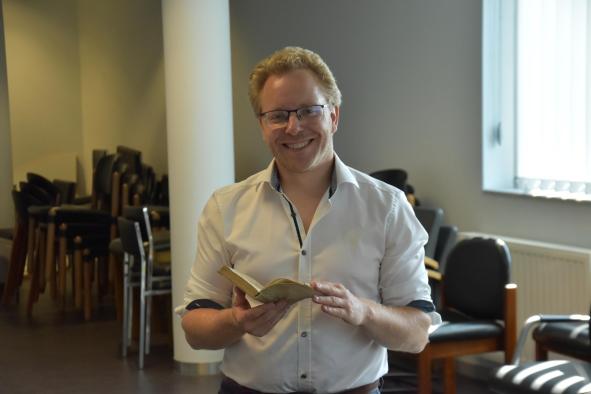
Books: A Record of Several Centuries of History
Studying all 905 works held by the BUMP would have been a Herculean task. The researchers had to make some choices. “We analyzed about fifty works that seemed most revealing to us,” continues Pierre Assenmaker. “Some stand out for their rarity, others for their beauty, or because they particularly well illustrate Plantin’s editorial strategies. Inevitably, any selection involves making sacrifices, and there are still a great many treasures that deserve to be studied.” The researchers were also able to compare several copies of the same edition. “Some books belonged to several collectors. Others have been annotated over the centuries,” adds Valérie Leyh. “These handwritten notes allow us to trace the books’ circulation and understand how they were used or passed down.”
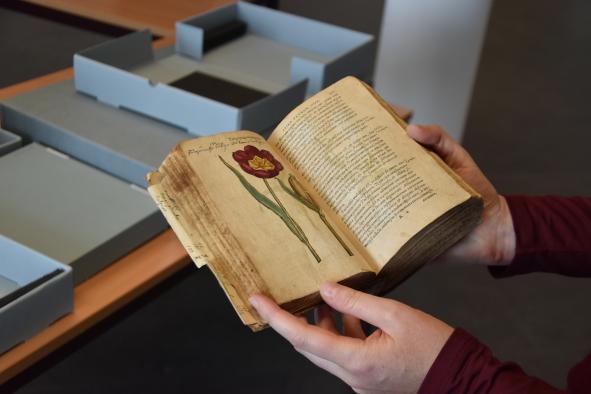
Beyond the texts themselves, researchers have also focused on the book as an object. While today we choose between a large format and a paperback, during the Renaissance, the options were far more numerous. In the 16th century, books were often sold as unbound quires. The buyer then decided on the binding—which could be more or less luxurious—and could even choose to add certain illustrations. Each copy thus became a unique object. Furthermore, as Valérie Leyh points out, a single text could be published in several languages, with or without illustrations, in order to reach different audiences. This was a particularly modern publishing strategy for the time, demonstrating that printers were thoughtful about how to adapt to their readers’ expectations.
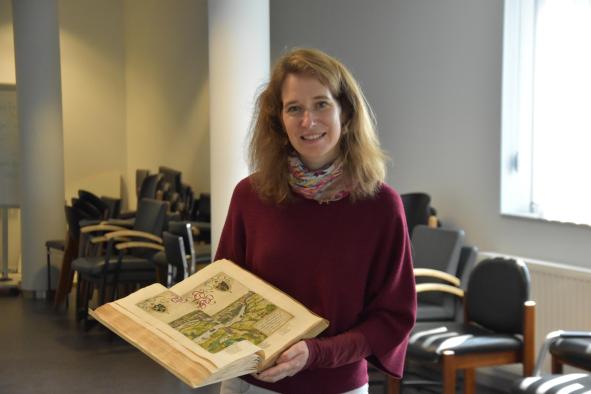
This research also finds a direct extension in the courses offered at UNamur, particularly in the course “The Book and Digital Culture” taught by Valérie Leyh. Students are encouraged to examine a selection of historical books held at the BUMP in order to study their physical characteristics. This is also a way to put these objects into context with current reading practices and digital uses.
A new chapter will begin in September
While this book marks the culmination of several years of work, it also paves the way for new research. In September, Pierre Assenmaker and Valérie Leyh launched, with the support of the Institut Moretus Plantin Public Benefit Foundation, a two-year research project focused on multilingualism and translation in the works of Christophe Plantin. The goal will be to study some 40 to 50 works held at the BUMP in order to better understand how the Antwerp printer made use of the linguistic diversity of his time. “Today, with machine translation tools and artificial intelligence, we sometimes tend to forget the full complexity of translation,” notes Valérie Leyh. “During the Renaissance, translating also meant adapting a work for a new audience. Translators sometimes became co-authors.”
The project, conducted in collaboration with Asseline Sel, a postdoctoral researcher, aims to better understand Plantin’s editorial strategies through the lens of language. Why were certain works translated? Which readers were they intended for? How could the same text be transformed, shortened, expanded, or illustrated differently depending on the target audience? These are the kinds of questions the researchers will seek to answer by analyzing not only the content of the works but also their physical form, their handwritten annotations, and their history over the centuries.
Beyond the history of the book, the two researchers also see this as an invitation to better understand our own era. “The 16th century was a period of profound transformations, marked by political, religious, and economic crises, but also by a remarkable exchange of ideas,” concludes Pierre Assenmaker. “Studying this period reminds us that times of crisis are not incompatible with the development of culture and knowledge. This is undoubtedly one of the most relevant lessons that Christophe Plantin leaves us today.”
Want to learn more?
The book, available from Presses Universitaires de Namur, and the new project will be presented on October 8, 2026, at UNamur (L03 lecture hall, accessible via Rue Grafé). Registration for this event is free and can be done via this link. Everyone is welcome!
PHOENIX: Revitalizing Heritage Sciences at UNamur
With the PHOENIX project, UNamur is revisiting a long-standing area of expertise: heritage sciences. Using cutting-edge techniques and artificial intelligence, a transdisciplinary team of experts in history, archaeology, and physics has set out to renew our understanding of heritage objects in order to uncover their origins, methods of production, and uses. Under their scrutiny: ancient coins and medieval parchments.
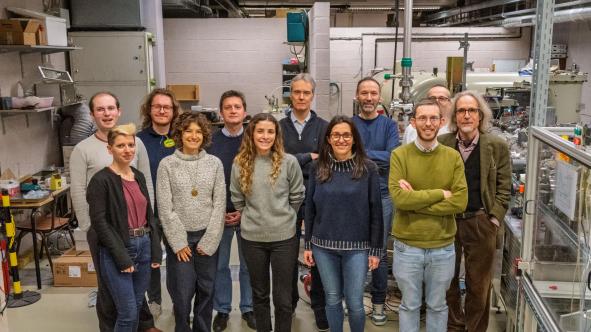
Heritage sciences are experiencing a resurgence at UNamur. This field of research—which involves applying techniques and expertise from the exact sciences (physics, chemistry, biology) to study ancient heritage objects—is reinventing itself thanks to the PHOENIX project, led by seven researchers from the Faculties of Science (Department of Physics) and Philosophy and Letters (Departments of History and Classical Languages and Literatures).
“PHOENIX emerged from the collaboration of several researchers from different backgrounds, yet all driven by the same desire to study the materiality of heritage objects. One notable figure is Julien Colaux, whose predecessor had led the first heritage science projects at UNamur’s Laboratory of Analysis by Nuclear Reactions (LARN). It’s a sort of return to our roots,” recalls Nicolas Ruffini-Ronzani, a researcher in the Department of History, president of the PaTHs Institute, and one of the project’s leaders.
A threefold objective
With PHOENIX, researchers aim to “make” two types of objects speak: ancient coins and medieval parchments (see box). More specifically, their research is guided by three objectives:
- To understand the composition of the artifacts being studied. For the parchments, to identify the animal species (sheep, goat, or calf); and for the coins, to characterize the metal alloy.
- Gain a better understanding of the production and processing workflow. For example, determine which parts of the animal were used in the production of a parchment.
- To propose the most precise dating possible.
It is in this last objective that the main challenge lies. “We won’t be able to date these objects to within a year,” warns Olivier Deparis, a professor in the Department of Physics and a member of the NISM research institute. “The idea is to provide a time frame that is as precise, if not more so, than that already provided by paleography (the study of ancient scripts) or textual analysis. If we can narrow it down to a quarter-century, that will already be a significant step forward.”
Fostering dialogue between the humanities and the natural sciences
To achieve this, the PHOENIX team uses various non-invasive techniques, in particular infrared and Raman spectroscopy, time-of-flight secondary ion mass spectrometry (ToF-SIMS), and ion beam analysis (IBA). These approaches—which utilize UNamur’s state-of-the-art tools such as the ALTAÏS particle accelerator (see Omalius #36)—provide detailed information on the physicochemical composition of materials, such as the animal origin and ink formulations for parchments or the type of metal alloy for coins. “The use of the exact sciences will enrich our studies and thus allow us to better understand how these objects were produced in the past,” explains Nicolas Ruffini-Ronzani. “Contrary to what one might think, collaboration between the humanities and the exact sciences has a long history, dating back to the 19th century, and even much earlier in the case of coins.”
A breath of fresh air thanks to artificial intelligence
These tools will make it possible to examine parchments and coins down to the finest detail, at the pixel level. These in-depth analyses therefore generate a colossal volume of raw data to process. This is where artificial intelligence comes into play to speed up the processing and reveal the information “hidden” in the data, identifying major trends invisible to the naked eye.
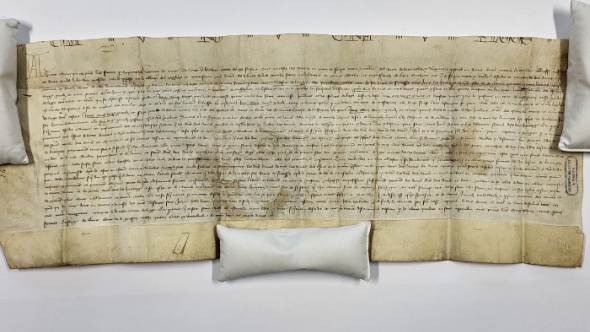
Above all, it will provide a boost in meeting the challenge of dating the objects under study. Dated documents, such as charters, will thus be used as references to test the model’s robustness by comparing the results obtained with already known dates. “If the results are convincing, the technique could be applied to undated documents,” says Nicolas Ruffini-Ronzani. This would represent a significant breakthrough in historical research.
“The use of machine learning methods is not a panacea,” Olivier Deparis qualifies, however. “We wanted to explore it as an open-ended question to assess its benefits.”
PHOENIX could thus herald a new era for heritage sciences, where artificial intelligence—much like the phoenix after which the project is named—opens up new ways to analyze and understand materials from the past.
Greek coins and banknotes
The PHOENIX corpus covers two types of heritage objects:
- A collection of 168 silver coins associated with the city of Argos (Greece), from the private collection of Tony Hackens (1937–1999), former professor of Archaeology at UCLouvain.
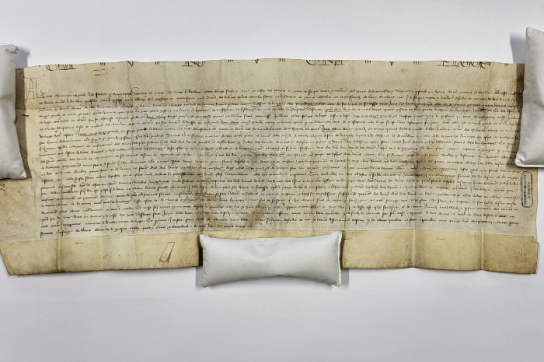
- Several hundred medieval and modern charters from the archives of the Cistercian Abbey of Notre-Dame du Vivier (Marche-les-Dames, Namur), currently held at the State Archives in Namur.
Meet the team
- Francesca Cecchet (Department of Physics – NISM and NARILIS Institutes)
- Lucas Baseil (Department of Physics – NISM Institute)
- Julien Colaux (Department of Physics – NISM and PaTHs Institutes)
- Olivier Deparis (Department of Physics – NISM, naXys, and PaTHs Institutes)
- Christophe Flament (Department of Classical Languages and Literatures – PaTHs Institute)
- Louise Fauchier (Department of Classical Languages and Literature – PaTHs Institute)
- Laurent Houssiau (Department of Physics – NISM Institute)
- Alexandre Mayer (Department of Physics – NISM and naXys Institutes)
- Giulia Morabito (Department of Physics – NISM and PaTHs Institutes)
- Nicolas Ruffini-Ronzani (Department of History – PaTHs Institute)
- Nicolas Gros (Department of Physics – NISM and PaTHs Institutes)
- Manon Bart (Department of Physics – NISM and naXys Institutes)
The PHOENIX project is funded by the Concerted Research Action (ARC) program from September 2024 to August 2029. It is a continuation of the interdisciplinary Pergamenum21 project, launched in 2014 by the Moretus Plantin University Library (BUMP) under the leadership of Professor Olivier Deparis and dedicated to the scientific study of parchment with a view to improving conservation practices.
The PHOENIX Project at the First Lego League Challenge
Young people from Rochefort showcased the PHOENIX project at the international First Lego League competition, a robotics contest open to students aged 10 to 16. To align with the annual theme focused on new technologies in the field of archaeology, this team from the Rochefort Youth and Culture Center drew inspiration from IBA technology to develop a research game designed to identify the origin of Ancient Greek coins modeled using a 3D printer. Their project caught the jury’s eye and earned them a spot in the national finals, which took place last March. Beyond the competition, this original game will be presented during Family Day at the Malagne Archaeological Park (Rochefort).
This article is taken from the "Eureka" section of Omalius magazine, Issue #40 (April 2026).
3 "Latin-French" students create a buzz on Instagram
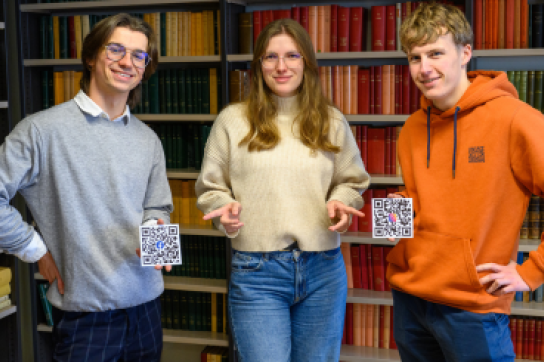
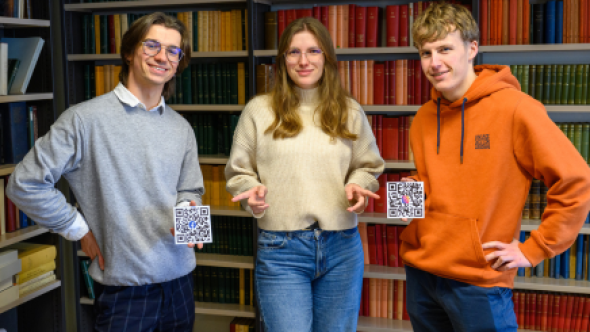
They are 20 years old and are in BAC 3 Latin-French at the University of Namur. Since last November, they've been spreading the word via the Instagram and Facebook accounts they've created. Every week, they popularize Latin and try to raise awareness of this language that is too often described as "dead".
From the 16th century to the present: Two professors from UNamur explore what we can still learn from the books of printer and publisher Christophe Plantin
Edited by two professors from UNamur, this anthology brings together the work of 18 researchers focusing on some 50 rare books, selected from among the more than 900 editions by Christophe Plantin held by the University. Supported by the Institut Moretus Plantin Public Benefit Foundation, this project marks the first step leading up to the launch, in September, of a new research initiative on multilingualism and translation practices in the editions of the Antwerp printer.
With 905 editions published by Christophe Plantin, the Moretus Plantin University Library (BUMP) at UNamur is now home to one of the largest Plantin collections in Belgium. The largest collection is housed at the Plantin-Moretus Museum in Antwerp, located in the former home and printing house of Christophe Plantin. This rich heritage was significantly expanded in 2020, when the collection assembled by Philippe de Dorlodot, a prominent private collector of Plantin editions, was donated to the King Baudouin Foundation, with the wish that it be preserved at UNamur. This exceptional collection has already been the subject of a catalog and has inspired a collective work dedicated to the legacy of this great Renaissance printer.
“It all began with a phone call from the BUMP Heritage Center, which wanted to organize an exhibition dedicated to Christophe Plantin to mark the 500th anniversary of his birth in 2020,” recalls Pierre Assenmaker, professor of Latin language and literature at UNamur and scientific co-director of the book. Together with Valérie Leyh, a professor of German-language literature who also teaches a course on the history of the book, they began to envision a collaborative project centered on this major figure in European printing. But the initiative quickly took on a new dimension. “When we saw the scope of this collection, we realized we had to go beyond a simple exhibition,” emphasizes Valérie Leyh. “That’s where the idea came from to produce a book that would showcase this exceptional collection held at UNamur.”
The book thus brings together contributions from 18 researchers from UNamur and other institutions in Belgium and the Netherlands. Since the collection had already been the subject of a comprehensive catalog, published with the support of the King Baudouin Foundation, the authors chose a thematic approach: to understand how Christophe Plantin became, in the 16th century, one of the most influential printers in Europe. “We tried to identify the various factors behind this success,” explains Pierre Assenmaker. “Through his network of humanists, as well as his incredible business acumen, Christophe Plantin knew how to adapt his books to different audiences, varying formats, languages, and illustrations. He already possessed the ability to conceive of multiple versions of the same work based on his readers’ expectations.”
Books: A Record of Several Centuries of History
Studying all 905 works held by the BUMP would have been a Herculean task. The researchers had to make some choices. “We analyzed about fifty works that seemed most revealing to us,” continues Pierre Assenmaker. “Some stand out for their rarity, others for their beauty, or because they particularly well illustrate Plantin’s editorial strategies. Inevitably, any selection involves making sacrifices, and there are still a great many treasures that deserve to be studied.” The researchers were also able to compare several copies of the same edition. “Some books belonged to several collectors. Others have been annotated over the centuries,” adds Valérie Leyh. “These handwritten notes allow us to trace the books’ circulation and understand how they were used or passed down.”
Beyond the texts themselves, researchers have also focused on the book as an object. While today we choose between a large format and a paperback, during the Renaissance, the options were far more numerous. In the 16th century, books were often sold as unbound quires. The buyer then decided on the binding—which could be more or less luxurious—and could even choose to add certain illustrations. Each copy thus became a unique object. Furthermore, as Valérie Leyh points out, a single text could be published in several languages, with or without illustrations, in order to reach different audiences. This was a particularly modern publishing strategy for the time, demonstrating that printers were thoughtful about how to adapt to their readers’ expectations.
This research also finds a direct extension in the courses offered at UNamur, particularly in the course “The Book and Digital Culture” taught by Valérie Leyh. Students are encouraged to examine a selection of historical books held at the BUMP in order to study their physical characteristics. This is also a way to put these objects into context with current reading practices and digital uses.
A new chapter will begin in September
While this book marks the culmination of several years of work, it also paves the way for new research. In September, Pierre Assenmaker and Valérie Leyh launched, with the support of the Institut Moretus Plantin Public Benefit Foundation, a two-year research project focused on multilingualism and translation in the works of Christophe Plantin. The goal will be to study some 40 to 50 works held at the BUMP in order to better understand how the Antwerp printer made use of the linguistic diversity of his time. “Today, with machine translation tools and artificial intelligence, we sometimes tend to forget the full complexity of translation,” notes Valérie Leyh. “During the Renaissance, translating also meant adapting a work for a new audience. Translators sometimes became co-authors.”
The project, conducted in collaboration with Asseline Sel, a postdoctoral researcher, aims to better understand Plantin’s editorial strategies through the lens of language. Why were certain works translated? Which readers were they intended for? How could the same text be transformed, shortened, expanded, or illustrated differently depending on the target audience? These are the kinds of questions the researchers will seek to answer by analyzing not only the content of the works but also their physical form, their handwritten annotations, and their history over the centuries.
Beyond the history of the book, the two researchers also see this as an invitation to better understand our own era. “The 16th century was a period of profound transformations, marked by political, religious, and economic crises, but also by a remarkable exchange of ideas,” concludes Pierre Assenmaker. “Studying this period reminds us that times of crisis are not incompatible with the development of culture and knowledge. This is undoubtedly one of the most relevant lessons that Christophe Plantin leaves us today.”
Want to learn more?
The book, available from Presses Universitaires de Namur, and the new project will be presented on October 8, 2026, at UNamur (L03 lecture hall, accessible via Rue Grafé). Registration for this event is free and can be done via this link. Everyone is welcome!
PHOENIX: Revitalizing Heritage Sciences at UNamur
With the PHOENIX project, UNamur is revisiting a long-standing area of expertise: heritage sciences. Using cutting-edge techniques and artificial intelligence, a transdisciplinary team of experts in history, archaeology, and physics has set out to renew our understanding of heritage objects in order to uncover their origins, methods of production, and uses. Under their scrutiny: ancient coins and medieval parchments.
Heritage sciences are experiencing a resurgence at UNamur. This field of research—which involves applying techniques and expertise from the exact sciences (physics, chemistry, biology) to study ancient heritage objects—is reinventing itself thanks to the PHOENIX project, led by seven researchers from the Faculties of Science (Department of Physics) and Philosophy and Letters (Departments of History and Classical Languages and Literatures).
“PHOENIX emerged from the collaboration of several researchers from different backgrounds, yet all driven by the same desire to study the materiality of heritage objects. One notable figure is Julien Colaux, whose predecessor had led the first heritage science projects at UNamur’s Laboratory of Analysis by Nuclear Reactions (LARN). It’s a sort of return to our roots,” recalls Nicolas Ruffini-Ronzani, a researcher in the Department of History, president of the PaTHs Institute, and one of the project’s leaders.
A threefold objective
With PHOENIX, researchers aim to “make” two types of objects speak: ancient coins and medieval parchments (see box). More specifically, their research is guided by three objectives:
- To understand the composition of the artifacts being studied. For the parchments, to identify the animal species (sheep, goat, or calf); and for the coins, to characterize the metal alloy.
- Gain a better understanding of the production and processing workflow. For example, determine which parts of the animal were used in the production of a parchment.
- To propose the most precise dating possible.
It is in this last objective that the main challenge lies. “We won’t be able to date these objects to within a year,” warns Olivier Deparis, a professor in the Department of Physics and a member of the NISM research institute. “The idea is to provide a time frame that is as precise, if not more so, than that already provided by paleography (the study of ancient scripts) or textual analysis. If we can narrow it down to a quarter-century, that will already be a significant step forward.”
Fostering dialogue between the humanities and the natural sciences
To achieve this, the PHOENIX team uses various non-invasive techniques, in particular infrared and Raman spectroscopy, time-of-flight secondary ion mass spectrometry (ToF-SIMS), and ion beam analysis (IBA). These approaches—which utilize UNamur’s state-of-the-art tools such as the ALTAÏS particle accelerator (see Omalius #36)—provide detailed information on the physicochemical composition of materials, such as the animal origin and ink formulations for parchments or the type of metal alloy for coins. “The use of the exact sciences will enrich our studies and thus allow us to better understand how these objects were produced in the past,” explains Nicolas Ruffini-Ronzani. “Contrary to what one might think, collaboration between the humanities and the exact sciences has a long history, dating back to the 19th century, and even much earlier in the case of coins.”
A breath of fresh air thanks to artificial intelligence
These tools will make it possible to examine parchments and coins down to the finest detail, at the pixel level. These in-depth analyses therefore generate a colossal volume of raw data to process. This is where artificial intelligence comes into play to speed up the processing and reveal the information “hidden” in the data, identifying major trends invisible to the naked eye.
Above all, it will provide a boost in meeting the challenge of dating the objects under study. Dated documents, such as charters, will thus be used as references to test the model’s robustness by comparing the results obtained with already known dates. “If the results are convincing, the technique could be applied to undated documents,” says Nicolas Ruffini-Ronzani. This would represent a significant breakthrough in historical research.
“The use of machine learning methods is not a panacea,” Olivier Deparis qualifies, however. “We wanted to explore it as an open-ended question to assess its benefits.”
PHOENIX could thus herald a new era for heritage sciences, where artificial intelligence—much like the phoenix after which the project is named—opens up new ways to analyze and understand materials from the past.
Greek coins and banknotes
The PHOENIX corpus covers two types of heritage objects:
- A collection of 168 silver coins associated with the city of Argos (Greece), from the private collection of Tony Hackens (1937–1999), former professor of Archaeology at UCLouvain.
- Several hundred medieval and modern charters from the archives of the Cistercian Abbey of Notre-Dame du Vivier (Marche-les-Dames, Namur), currently held at the State Archives in Namur.
Meet the team
- Francesca Cecchet (Department of Physics – NISM and NARILIS Institutes)
- Lucas Baseil (Department of Physics – NISM Institute)
- Julien Colaux (Department of Physics – NISM and PaTHs Institutes)
- Olivier Deparis (Department of Physics – NISM, naXys, and PaTHs Institutes)
- Christophe Flament (Department of Classical Languages and Literatures – PaTHs Institute)
- Louise Fauchier (Department of Classical Languages and Literature – PaTHs Institute)
- Laurent Houssiau (Department of Physics – NISM Institute)
- Alexandre Mayer (Department of Physics – NISM and naXys Institutes)
- Giulia Morabito (Department of Physics – NISM and PaTHs Institutes)
- Nicolas Ruffini-Ronzani (Department of History – PaTHs Institute)
- Nicolas Gros (Department of Physics – NISM and PaTHs Institutes)
- Manon Bart (Department of Physics – NISM and naXys Institutes)
The PHOENIX project is funded by the Concerted Research Action (ARC) program from September 2024 to August 2029. It is a continuation of the interdisciplinary Pergamenum21 project, launched in 2014 by the Moretus Plantin University Library (BUMP) under the leadership of Professor Olivier Deparis and dedicated to the scientific study of parchment with a view to improving conservation practices.
The PHOENIX Project at the First Lego League Challenge
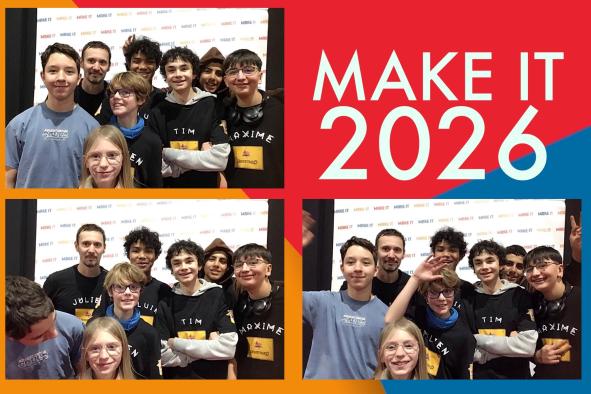
Young people from Rochefort showcased the PHOENIX project at the international First Lego League competition, a robotics contest open to students aged 10 to 16. To align with the annual theme focused on new technologies in the field of archaeology, this team from the Rochefort Youth and Culture Center drew inspiration from IBA technology to develop a research game designed to identify the origin of Ancient Greek coins modeled using a 3D printer. Their project caught the jury’s eye and earned them a spot in the national finals, which took place last March. Beyond the competition, this original game will be presented during Family Day at the Malagne Archaeological Park (Rochefort).
This article is taken from the "Eureka" section of Omalius magazine, Issue #40 (April 2026).
3 "Latin-French" students create a buzz on Instagram
They are 20 years old and are in BAC 3 Latin-French at the University of Namur. Since last November, they've been spreading the word via the Instagram and Facebook accounts they've created. Every week, they popularize Latin and try to raise awareness of this language that is too often described as "dead".