

NISM
The NISM institute brings together the research activities of the chemistry and physics departments at the University of Namur. Research at the NISM institute focuses on various topics in organic chemistry, physical chemistry, (nano)materials chemistry, surface science, optics and photonics, and solid-state physics, from both a theoretical and experimental perspective.
The institute's researchers have recognized expertise in the field of synthesis and functionalization of molecular systems and innovative materials, from 0 to 3 dimensions. They develop analytical and numerical modeling tools for the rational design of molecules and (nano)materials with specific architectures that confer functional end properties.

They draw on a range of advanced experimental techniques to study the chemical and physical properties of these systems at the micro- and nanometric scale. The research conducted at the institute falls within the field of both fundamental research, aimed at understanding and predicting the properties of structured matter, and applied research, aimed at developing functional materials and devices.
NISM's research areas are currently grouped into four clusters, whose boundaries are flexible, reflecting the transdisciplinary nature of the research topics and the collaborative dynamics between clusters.
Each cluster is represented by a permanent scientist and a non-permanent scientist who, together with the institute's president and vice president, form the institute's executive committee.
NISM research poles
Research at NISM is identified by four poles which highlight the main scientific activities carried out within the institute. Each pole is a well-defined structure with members, and is managed by the pole representative. The structuring of the pole does not prevent ongoing cooperation between them. Indeed, there is well-established interaction between the various poles, through joint projects, conferences, seminars, co-supervision of master's and doctoral theses, among others.
Spotlight
News
Article
-
Faculty of Sciences
Chemistry Department NISM Institute
Biennial grants to support early-career researchers
Materials, energy and environment
Article
-
Faculty of Sciences
Chemistry Department
Physics Department
Biology Department
NISM Institute
Biennial grants to support early-career researchers
Materials, energy and environment
The Namur Institute for Structured Matter (NISM) has established a biennial funding program for postdoctoral researchers who are members of the Research Institute on at least a 50% basis. A sort of mini-starting grant, this award helps compensate for the limited number of funding opportunities that postdoctoral researchers can directly apply for. It also allows them to strengthen their professional profile and promote their research with complete freedom.
In Belgium, and more specifically in the Wallonia-Brussels Federation, the main competitive funding sources for postdoctoral researchers rely primarily on FNRS programs, European initiatives—notably the Marie Skłodowska-Curie Actions (MSCA) Postdoctoral Fellowships funded by the European Union—and certain mobility programs such as those offered by Wallonia-Brussels International (WBI). Although thematic or philanthropic funding exists in certain disciplines, it remains fragmented and often highly specialized. Most research resources continue to be allocated to projects led by tenured researchers or established teams, which limits opportunities for postdoctoral researchers on fixed-term contracts to independently develop their own research programs.
This is why the Namur Institute for Structured Matter (NISM) has established a biennial funding program. It takes the form of grants of €2,500. These grants serve, on the one hand, to support early-career researchers and, on the other hand, to allow them to freely use these funds to organize an event, participate in a training program, undertake a research stay, or engage in any other activity, regardless of the topic or discipline, as long as the activity benefits their professional career, whether in academia or elsewhere. The only restriction concerns the research component, which must, of course, align with the research area of the funding agency supporting the candidate’s grant.
The first call for applications was launched in 2023, and four scholarships of €2,500 were awarded. The 2025 call for applications recognized three candidates, who will receive this scholarship in 2026: Baptiste Neil, Joséphine De Meester, and Tárcius Nascimento Ramos.
When asked about this, here are their comments:
Baptiste Neil
“The NISM grant is currently enabling me to spend two months working with Prof. Sebastian Riedel’s team in Berlin. It’s allowing me to learn gas-handling techniques, which I’ll be able to bring back to my lab in Namur upon my return. Beyond the scientific aspects, this experience also allows me to strengthen my record of international mobility, a criterion explicitly identified as an area for improvement during my recent application for the CR CNRS postdoctoral fellowship.”
Joséphine de Meester
“The NISM fellowship enabled me to undertake a four-month research exchange at UCB’s Braine-l’Alleud site, within a laboratory specializing in solid-state research. I had applied for the fellowship to cover my travel expenses.
This exchange gave me my first experience in the world of industrial research. It allowed me to discover a different approach to research projects and to access equipment and expertise that complemented what was available in our lab. It also enabled me to build connections with researchers in the private sector.
I find this type of initiative interesting; in my case, it fostered exchanges between the academic world and the industrial sector.
This visit also helped advance my research project, which focuses on the crystallization of compounds within capsules produced using microfluidics. The work carried out at UCB directly contributes to the continuation of this project, and the results obtained will be put to good use in the future.”
Tárcius Nascimento Ramos.
“The NISM Institute’s initiative to support the career development of its postdoctoral researchers is a particularly valuable form of support. This fellowship offers us an opportunity to delve deeper into specialized fields and strengthen high-level international collaborations. Receiving this vote of confidence from NISM is an honor that validates my research and motivates me for the next stage of my career.
This fellowship will allow me to conduct research stays at the Institut Lumière Matière in Lyon. These stays will be essential for establishing collaborations and advancing my scientific expertise and autonomy. My primary goal is to integrate machine learning techniques to optimize the numerical simulation of the nonlinear optical properties of liquids. This work, which requires expertise spanning both theoretical quantum chemistry and data science, will represent an important step in the development of my career as an independent researcher.”
The selection committee for this fellowship is composed of members of the NISM Institute’s management committee and is chaired by an external member.
Image

I find it very interesting to have an external member on this type of jury because it provides an outside perspective free of conflicts of interest. This year, choosing Murielle Guillaume to chair the jury turned out to be an excellent decision, as it brought a different perspective—one unclouded by academic bias—and, thanks to her expertise in human resources, a “career-oriented” viewpoint as well.
Namur Institute of Structured Matter
The NISM Institute brings together the research activities of the chemistry and physics departments at the University of Namur. Research at the NISM Institute focuses on various topics in organic chemistry, physical chemistry, the chemistry and physics of (nano)materials, surface science, optics and photonics, solid-state physics, and nuclear physics, from both theoretical and experimental perspectives.
Article
-
Faculty of Sciences
Chemistry Department NISM Institute
Roberta Sessoli – The Convergence of the Sciences
Chemistry
Physics and astronomy
Award
Roberta Sessoli – The Convergence of the Sciences
Chemistry
Physics and astronomy
Award
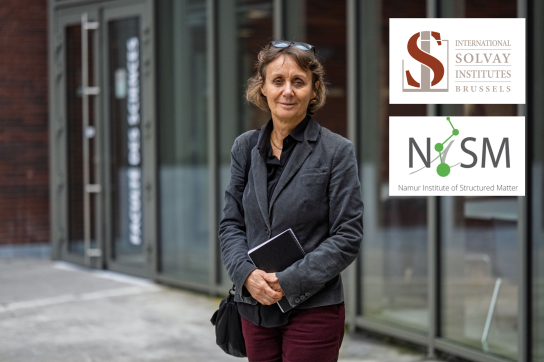
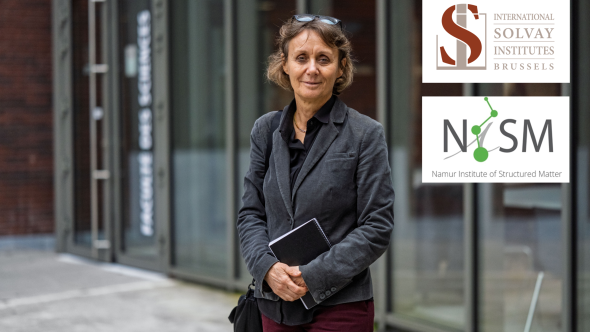
What role can chemistry play in quantum physics? To address this question, the Departments of Physics and Chemistry invited Professor Roberta Sessoli to a seminar organized by the NISM Institute and the Faculty of Science. A leading figure in both Chemistry and Physics thanks to her research on molecular magnetism and the quantum physics of molecular systems, Roberta Sessoli was awarded the prestigious 2026 Solvay International Chair in Chemistry. Today, she talks about her career, her research, and shares some advice for future generations.
You are a renowned chemist. What made you want to pursue this field?
During an open day I attended, I had the opportunity to speak with a professor who convinced me to pursue Chemistry. According to her, it was a discipline in which there were more questions to ask than answers to give. I am naturally curious, and I have always been fascinated by open questions.
Today, when people ask me for advice about choosing what to study, I always answer very simply: “Do you prefer solving problems or discovering problems?” For me, it is rather the second option.
How did you start working on magnetism?
I became interested in it during my second year at university. I had the opportunity to work on paramagnetic systems with my mentor, Dante Gatteschi. These materials have the particular property of developing a small magnetization in the presence of a magnetic field, although this magnetization is not permanent.
At the beginning of my career, I discovered that some molecules could behave like small magnets. This is what is known as a single-molecule magnet (SMM). The interest of these materials lies in the fact that, when a magnetic field is applied to these molecules, they become magnetized and then take a very long time to return to their equilibrium state once the magnetic field is removed. This is referred to as slow relaxation time. This property makes it possible to store magnetic information for long periods of time.
What were the implications of this discovery?
At the time, physicists were investigating these types of effects, but they worked mainly with iron oxides, which had to be ordered—primarily in crystalline structures—in order for these effects to be observed.
The magnetic properties of molecules are essentially defined by their chemical structure, which can be modulated more easily than the structure of inorganic solids. I therefore tried to draw the attention of various professors to this discovery, but it was difficult for me to gain their interest because I was a woman, I was young, and I was a chemist. I eventually had the opportunity to meet Professor Jacques Villain, a very well-known French theoretical physicist. He became fascinated by SMMs, and we began working together. Thanks to his interest in my research, other physicists also began looking into SMMs.
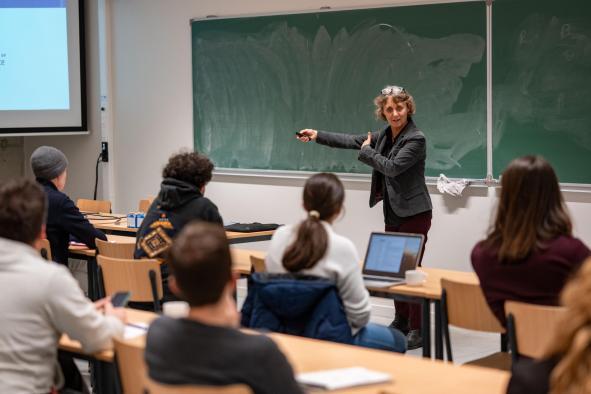
Roberta Sessoli, séminaire de l'Institut NISM et de la Faculté des sciences de l'UNamur.
You are also currently working on chirality. What is this phenomenon, and why is it interesting for your research?
Through a project funded by the European Research Council (ERC), we recently started working on a phenomenon called chirality-induced spin selectivity.
Chirality is a fundamental property of objects that cannot be superimposed on their mirror image. A chiral molecule therefore exists in two forms, called enantiomers, which are mirror images of one another and consequently cannot be superimposed.
Spin, meanwhile, is a quantum property of a particle that gives it an intrinsic magnetic moment and, in simple terms, makes it behave like a small magnet.
When electrons emerge from a chiral medium after passing through it, their spins are predominantly oriented in a particular direction, depending on which enantiomer was used to create the chiral medium.
This is particularly interesting for applications such as oxygen production, artificial photosynthesis, and even the development of electrochemical systems. We use it to transform spin information into an electrical signal (spin-to-charge conversion). This makes it easier to detect the spin state of molecules by monitoring the electrical current. This is one of the main objectives of our ERC project, but it requires a multidisciplinary approach. To achieve this, we are working as a team with four partners, bringing together physicists and chemists in order to combine all the necessary expertise.
Has being a woman influenced your career in research?
At the beginning of my career, I encountered some difficulties in establishing myself in a field that was not originally mine and that was largely dominated by men.
The only thing that can prevent us from building a successful professional career is imposing a mental burden on ourselves. Some women sometimes feel guilty when they are at work because they feel they are not present enough for their children, or conversely, that they are not sufficiently present at work. This is a pressure I refused to submit to by establishing, from the very beginning, a clear boundary between these two parts of my life.
What message would you like to give to young people who are considering a career in science?
First of all, it is important to have confidence in the future rather than trying to control it. Instability is part of life. I am thinking in particular of the day when I had to defend my PhD thesis in Rome with my seven-day-old child. Nevertheless, this did not frighten me because I know that there is a solution to every problem.
Secondly, we should not forget that the most sincere motivation, and therefore the most enduring one, is to follow our own ideas. External recognition does not matter as long as our inner motivation remains strong.
Finally, we must remain open-minded and never be afraid of change. Whether it is the people around us, the tools we use, or our opinions, everything can evolve. The important thing is to remain flexible and curious so that we never close ourselves off from new opportunities.
Interview by Léa Ciparisse, UNamur, February 12, 2026.
The Solvay International Chair in Chemistry
Following the legendary 1911 Solvay Conference on Radiation and the Quanta, chaired by Nobel Prize laureate Hendrik Lorentz, the International Solvay Institute of Physics was founded by Ernest Solvay in 1912. The International Solvay Institute of Chemistry was founded one year later, in 1913. The two institutes merged in 1963 and, in 1970, became the “International Solvay Institutes for Physics and Chemistry.”

Their mission is to support and develop curiosity-driven research in Physics, Chemistry, and related fields, with the aim of “broadening and deepening our understanding of natural phenomena.”
“2025 was the International Year of Quantum Science and Technology. Receiving the Solvay International Chair is a responsibility, especially for me, because it is the Solvay Chair in Chemistry, and I do not really consider myself a ‘true’ chemist, in the sense that I work somewhat at the interface between chemistry and physics. But I am convinced that, even though I do not work on the major research themes that currently dominate the field—catalysis, batteries, or CO₂ capture, which are very much in vogue—there are other areas in which Chemistry can play a role.”
Roberta Sessoli, February 2026.
To be a chemist or to be a physicist—that is the question!
Being half chemist and half physicist is not usual. It is one of the things Professor Yoann Olivier has in common with his guest. A challenge, certainly, but also an opportunity that arose at UNamur when he joined the university in 2019. Yoann Olivier’s research shares common ground with that of Roberta Sessoli, as he studies spin effects in organic π-conjugated materials.

Using numerical simulation methods, his research allows him to investigate these properties at the molecular and even atomic scale.
His research has numerous applications, from a technological perspective (OLED TVs and smartphone displays), to energy (photovoltaic cells and lighting panels), healthcare (monitoring devices and biosensors), and, more recently, quantum information (molecular qubits, quantum computing, and quantum cryptography).
In addition to being a member of the Departments of Chemistry and Physics, he is also a member of the NISM Research Institute, where he has strengthened its multidisciplinary team of researchers working on the synthesis and functionalization of molecular systems and novel materials (from 0D to 3D), the design of solids with specific architectures, their surface properties, and the development of advanced techniques for studying their physicochemical properties.
News
-
Faculty of Sciences
Biology Department NISM Institute
Researchers from Namur Achieve Great Success in the F.R.S.-FNRS’s 2026 “Grants and Research Awards” and “Télévie” Calls
Institution
News
-
Faculty of Sciences
Faculty of Philosophy and Letters
Faculty Economics Management Communication Politics (EMCP)
Biology Department
Physics Department
NISM Institute
Narilis Institute
Researchers from Namur Achieve Great Success in the F.R.S.-FNRS’s 2026 “Grants and Research Awards” and “Télévie” Calls
Institution
On June 23, 2026, the F.R.S.-FNRS published the list of recipients of various doctoral and postdoctoral fellowships and Télévie projects (cancer-focused research). Among them, numerous researchers from UNamur received funding.
Six researchers have been awarded doctoral fellowships to begin their doctoral dissertations: Rachel LAURON from the Faculty of Sciences; Océane WATELET, Vera NOVAK, Camille LAMBIET, Alionka WÉRENNE, and Théodore HARDY (who received his grant from ULB under a joint supervision arrangement with UNamur) from the Faculty of Philosophy and Letters.
Researchers from Namur also achieved great success in securing research fellow grants. Seven of them received this postdoctoral funding. They are Eleonor CELORA, Nataliya PUCHENKINA, Jérémy ARTRU and Bernardino PITOCCHELLI from the Faculty of Philosophy and Letters; Romain MERTENS from the Faculty of Law; and David TALUKDER and François WOITRIN from the Faculty of Economics, Management, and Communication at SciencesPo (EMCP).
In addition, two permanent F.R.S.-FNRS researchers at UNamur have been promoted to Senior Researcher: Francesca CECCHET and Yves CAUDANO, both members of the Department of Physics and the NISM Institute.
The Télévie call for proposals also enabled Marc HENNEQUART to secure funding to begin research aimed at identifying the metabolic determinants of the response to arginine deprivation in pancreatic and colorectal cancers.
Congratulations to them!
Article
-
Faculty of Sciences
Chemistry Department NISM Institute
Global experts in electroluminescence and optoelectronics gather at UNamur
Chemistry
Global experts in electroluminescence and optoelectronics gather at UNamur
Chemistry
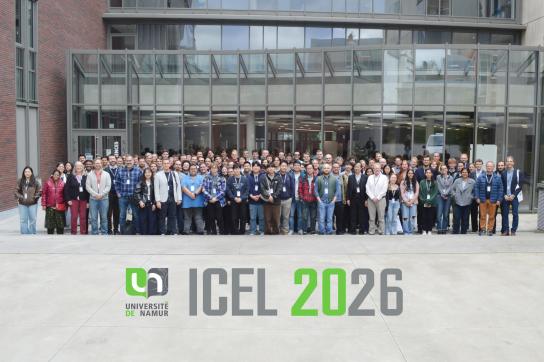
Recognized as a leading research conference in the field of organic electroluminescence and light-emitting devices, the ICEL conferences have generally been held every two years since their inception in Fukuoka, Japan, in 1997, by Professor Tetsuo Tsutsui. A look back at ICEL2026, the 15th conference of its kind, held at UNamur.
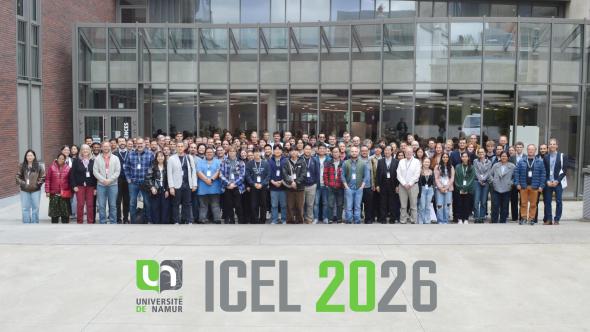
Last May, the International Conference on Electroluminescence and Optoelectronic Devices (ICEL 2026), organized at the University of Namur by Professor Yoann Olivier, with the support of Professor Benoît Champagne, provided an excellent opportunity for intellectual and social exchange among researchers from around the world involved in the research, development, and fabrication of light-emitting materials to discuss their recent advances.
This 15th edition featured plenary lectures for the 125 participants, including both renowned and emerging researchers. The packed five-day program included five presentations by renowned international keynote speakers, 20 presentations by invited speakers, and some thirty oral presentations selected by the organizing committee, as well as two poster sessions featuring more than 50 presentations.
Participants also had the opportunity to mingle and engage in discussions during the various activities of the social program, which highlighted the City of Namur, its iconic sites, and its shops: a tour of the Citadel’s underground passages, a historical and/or culinary stroll through the heart of the pedestrian zone, a tour of the Félicien Rops Museum and the Grafé-Lecocq cellars, a dinner for guest speakers at the restaurant “Le Balthazar,” and a conference dinner at the restaurant “Le Panorama.”
Particular emphasis was placed on the active participation of motivated young researchers. A wide range of topics was explored, offering a comprehensive perspective on contemporary advances in the fields of materials science, fundamental physics, and their applications in cutting-edge devices and technologies.
A success praised by distinguished guests
“A VERY big thank you - this was a really excellent conference - great science and a wonderful sense of being welcome - just how conferences should be!” – Sir Richard Friend, University of Cambridge, UK
“I would like to congratulate you on such an excellent conference. I really liked its scale (not too big), it being single session, affordable, in a nice place, with lots of chance to talk to other participants over coffee/lunch/poster refreshment. The scientific level was excellent (which I fully expected with you as organisers) and there was good variety in the programme. The social activities/invited speaker dinner and spectacular conference dinner all added to a wonderful week. It was an amazing week.” – Prof Ifor Samuel, St Andrews University, UK
“It was a real pleasure to be at the ICEL conference. It really felt like family and the atmosphere was so warm that it completely overcame the cold weather and my flu. Excellent organization and perfect timing!”, Prof. Illia Serdiuk, University of Gdansk, Poland
“Thanks again so much for the organizational effort, the conference went so smoothly!” – Prof Barry Rand, Princeton University, USA
Professor Barry Rand has, in fact, taken over the reins, as he will be organizing the 16th edition of the conference at the prestigious Princeton University in the United States in 2028.
Thank you to our sponsors and partners!
The organizing committee would like to thank its sponsors and partners for their support: Universal Display Corporation, Angstrom Engineering, The Royal Society of Chemistry (RSC), Chemistry Europe, the University of Namur, the Namur Institute of Structured Matter (NISM), the Namur Research College (NARC), the C.G.B. (Comité de Gestion du Bulletin) – C.B.B. (Comité van Beheer van het Bulletin), the Namur City Tourist Office, and the F.R.S.-FNRS thematic doctoral schools CHIM, MAIN, and METAMORPHOSE.
Learn more about ICEL2026
Agenda
10 Years of the NISM Institute
Training
Physics
14
2026
09:00
-
17:00
Université de Namur - La Bourse - Place d'Armes - 5000 Namur
In 2026, NISM will celebrate its 10th anniversary.
For the past decade, the institute has brought together researchers from the chemistry and physics departments at UNamur around a shared goal: to better understand structured matter and develop the materials and technologies of the future.
On this occasion, the NISM Annual Conference will take on a special significance. It will bring together members of the institute, as well as guests from UMons, ULB, UCLouvain, and ULiège for a day of scientific exchange, sharing experiences, and camaraderie.
Join us to celebrate 10 years of research, discoveries, and collective successes!
This event is by invitation only.
Contact: Jeanick Pignolet - executive-assistant.nism@unamur.be
Event
-
Faculty of Sciences
Faculty of Computer Science
Biology Department
Chemistry Department
Department of Mathematics
Physics Department
ILEE Institute
IRDENa Institute
NaDI Institute
Narilis Institute
naXys Institute
NISM Institute
Institute
Women in Science - 7th Edition
Gender and diversity
Science
SDG 5 - Gender equality
11
2027
09:00
-
20:00
Université de Namur, Faculté des sciences, auditoire S01 - rue Grafé, 2 - 5000 Namur
Contact person
:
Comité Women in science
This annual event aims at promoting the access of women and girls to science and technology as well as their full and fair participation. It reminds the important role of women in the scientific community and constitutes a great opportunity to encourage girls and young women to participate in the scientific developments.
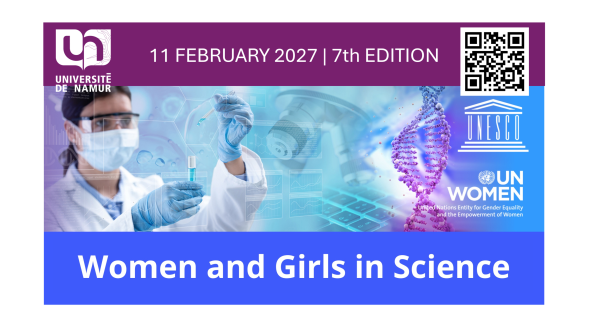
Save the date!
Show your support for equal opportunities for ALL genders in science and technology.
More information to come.