

Faculty Economics Management Communication Politics (EMCP) is a school that listens to people and is open to the world. It offers training in four major disciplines, in day courses or on a staggered timetable, with a strong commitment to student supervision and support. It conducts excellent interdisciplinary scientific research in cutting-edge fields. For tomorrow's experts and decision-makers!
The studies
The Faculty offers high-quality, local training that emphasizes rigor and critical thinking beyond pure knowledge. It strives to make its future experts and decision-makers aware of societal responsibility, interdisciplinarity and the international dimension. The bachelor's, master's and doctoral programs it offers are in four major disciplines:

Pedagogy: a strong commitment!
The Faculty attaches the utmost importance to supervising and supporting students, whether in daytime classes or on a staggered timetable. Learning by doing, service learning, staggered schedule hybridization, ... Come and discover our pedagogical approach as well as our various schemes.


Spotlight
News
News
-
Faculty Economics Management Communication Politics (EMCP)
EGOV 2026: Several Awards for Unamur Researchers
Award
EGOV 2026: Several Awards for Unamur Researchers
Award
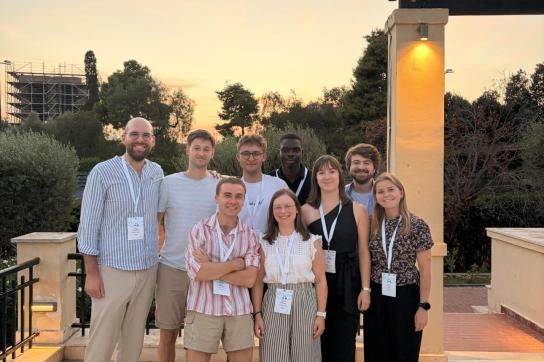
UNamur stood out at the 2026 edition of the IFIP EGOV International Conference, which focused on the digital transformation of government and digital democracy. Researchers from UNamur’s School of Management presented four papers and three posters, earning a Best Paper Award for Simon Dechamps, a Best Poster Award for Lisa Dewulf, and a nomination for Eudes Adiba among the most innovative research contributions.
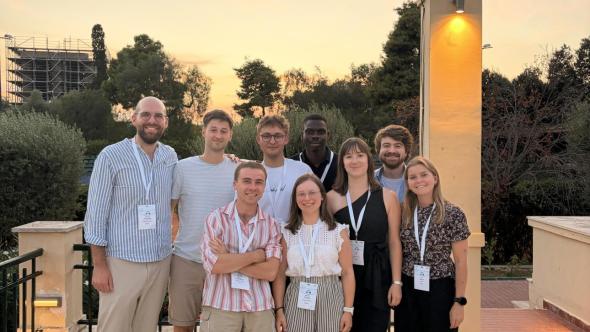
E-government, e-participation, algorithmic governance, and artificial intelligence: the IFIP EGOV International Conference brings together researchers studying digital transformations in the public sector and their implications for citizens and government agencies. UNamur was particularly well represented at the conference this year, with four papers and three posters presented.
A Best Paper Award for Simon Dechamps
Simon Dechamps, a doctoral student in management at UNamur and a member of the MINDIT center, received the 2026 Best Paper Award for his article “From the Modern Citizen to Citizens as Multiplicities: Citizen-Centricity as a Sign of a New Episteme?”His work examines how government agencies seek to better tailor their digital services to citizens’ needs.
Based on fourteen interviews conducted within Belgian public administrations, Simon Dechamps demonstrates that it is difficult to speak of the “citizen” as a single, uniform profile. Needs vary greatly from one person to another, and public services must therefore take this diversity into account. His work thus highlights the need to better equip public officials to tailor services to different user profiles.
Lisa Dewulf Wins the Best Poster Award
Lisa Dewulf, a doctoral student at the UNamur School of Management and a member of the MINDIT center and the NaDI institute, received the Best Poster Award for “Do Fictional Representations of AI in Government Relate to Citizens’ Perceptions?”
Her research focuses on representations of digital technologies in fiction and how these representations can influence our perception of such technologies. Her work is part of the ARC Di-Fic project, which explores, among other things, the use of films, TV series, and video games in digital citizenship education. Her poster presents a typology of representations of artificial intelligence in the government sector based on three dimensions: the level of governance, the type of AI depicted, and its role in the narrative.
The goal is to better understand how fiction helps shape collective imaginaries surrounding artificial intelligence, as it plays an increasingly significant role in government agencies. The jury particularly praised the practical relevance of the work and its contribution to research on AI and digital government.
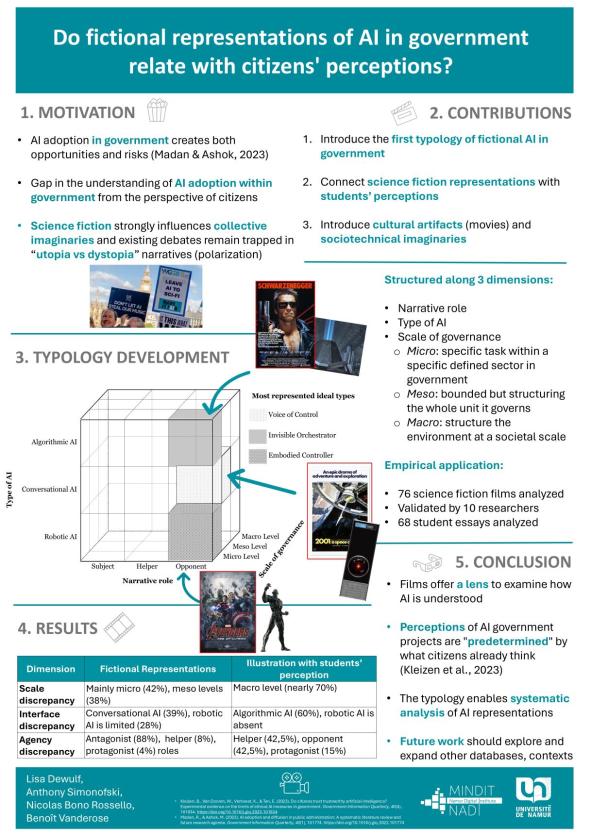
Le poster de Lisa Dewulf, présenté à l'occasion de l'EGOV 2026
Eudes Adiba Among the Most Innovative Contributions
Mahougnon Sedjro Eudes Adiba, a doctoral student at UNamur in the MINDIT–NaDI program, had his article selected as one of the three most innovative research contributions out of nearly 200 submissions. His work focuses on the accessibility of public data and, more specifically, on how citizens search for information on open data portals, such as that of the City of Namur.
His study analyzes how users actually navigate these platforms. By examining their interaction patterns, the research aims to better understand how citizens go about finding public information, with the ultimate goal of designing portals that are simpler, more intuitive, and better suited to their actual needs.
A particularly successful event for UNamur
With seven presentations, two awards, and one nomination, EGOV 2026 highlights the diversity of research conducted at UNamur on digital transformation, public services, and citizenship. This is also a wonderful recognition for the MINDIT center, to which several of these researchers are affiliated. Congratulations to all the researchers who contributed to the work presented at this year’s conference!
Article
-
Faculty Economics Management Communication Politics (EMCP)
DeFIPP Institute
Inheriting, Choosing, Passing On: How Are Identities Formed?
Outreach
Inheriting, Choosing, Passing On: How Are Identities Formed?
Outreach
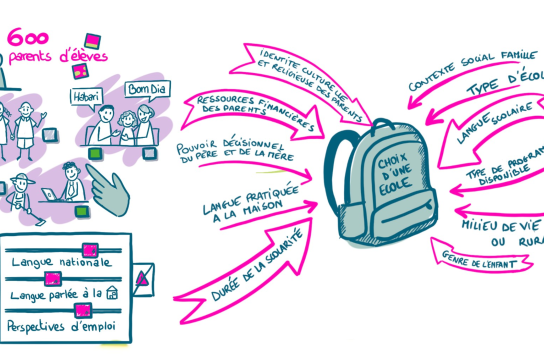
How are our social identities formed? Are they simply inherited, like a last name or a family history passed down at birth? Or are they built gradually, at the intersection of family legacies, educational choices, and the social contexts in which children grow up? These questions lie at the heart of the work of Juliette Crespin-Boucaud, a postdoctoral researcher and Marie Skłodowska-Curie fellow at the Center for Research in Development Economics (CRED) at the University of Namur. To mark European Researchers’ Night, UNamur is highlighting several research projects conducted under the Marie Skłodowska-Curie Actions (MSCA).
Portrait
Juliette Crespin-Boucaud, a microeconomist, works at the intersection of development economics, household economics, and economic history. In 2021, she earned her Ph.D. from the Paris School of Economics. She then pursued several multidisciplinary research projects, first at the London School of Economics and later at the Barcelona Institute of International Studies. This background has shaped her current approach, which emphasizes dialogue with other social sciences, particularly political science, sociology, and demography.
The TransmId Project: Intergenerational Transmission of Identity in Sub-Saharan Africa
In TranmId, Juliette seeks to understand how social identities (ethnic, national, religious, or linguistic) are formed, acquired, and passed down from one generation to the next. In other words: How do parents’ choices shape their children’s social identities?
The project focuses primarily on marriages, since the choice of a partner influences the possible identities of the children born of that union. Parents’ affiliations, languages, or religions can open up different paths of transmission: a single heritage, multiple combined heritages, or identities that are reshaped over generations.
But transmission does not stop at birth. It continues through very concrete decisions: Which language to speak at home? Which school should you enroll your children in? What priority should be given to a national language, a mother tongue or a language spoken within the family circle, religion, or educational opportunities? Development economics helps connect these individual decisions to broader contexts: available resources, public policies, history, social norms, and family aspirations.
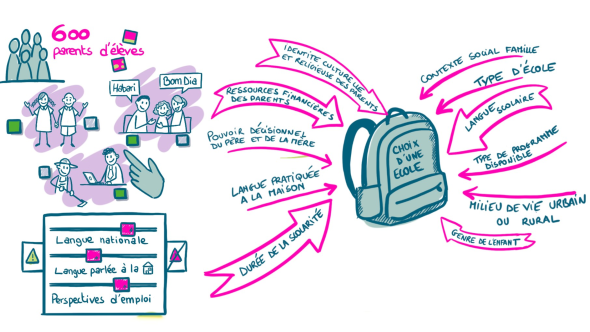
One component of the project, funded by the International Growth Centre, focuses specifically on Mozambique, where parents’ language and educational choices provide a concrete example of this transmission. Indeed, in this country marked by significant linguistic diversity, the choice of an educational program, a language of instruction, or the language spoken at home contributes to the formation of children’s sense of identity. These decisions depend on practical constraints such as available financial resources, the languages known or spoken by parents, and accessible schools, but they are also directly linked to the aspirations parents have for their children: giving them the best opportunities for the future, preserving a family language, or maintaining a cultural identity.
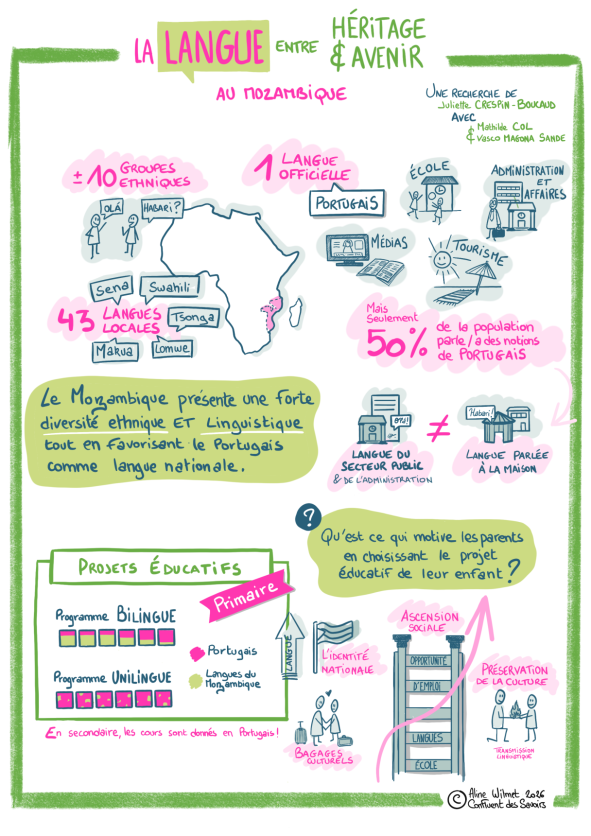
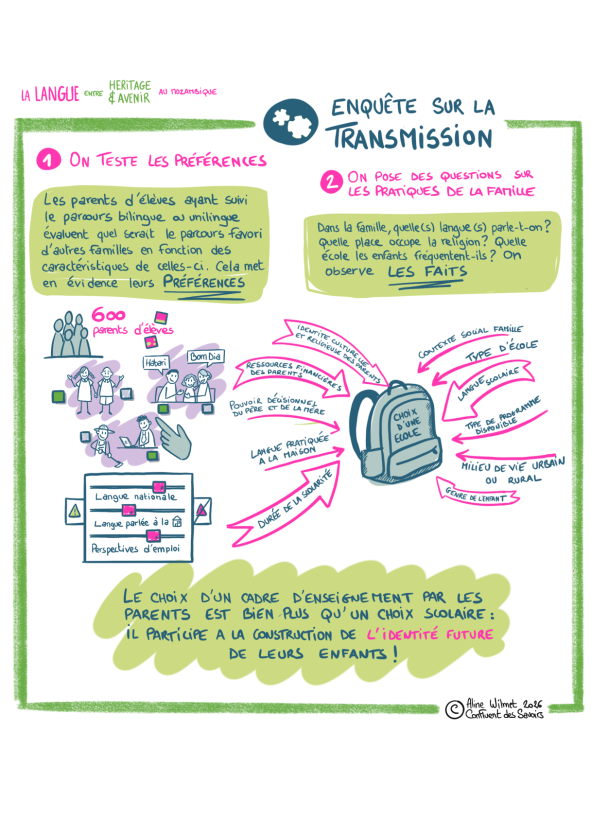
To understand these choices, Juliette observes families’ behaviors as clues. What language do they speak at home? What program (bilingual or not) do they prefer for their children?
To study how parents shape their children’s “identity background,” the survey focuses on both parents’ practices and their expectations and preferences. To measure the latter, the survey asks parents
to estimate the benefits of both types of programs. For example: Out of 10 children in the bilingual/unilingual program, how many will speak Portuguese by the end of elementary school?
— to consider hypothetical scenarios in which the language spoken at home, the parents’ occupation, and the child’s gender vary. For example: Which program will parents who are farmers and do not speak Portuguese at home prefer for their daughter?
This information is then compared with families’ actual practices: languages spoken at home, programs attended, etc.
Moving Beyond a Rigid View of Identities
Ethnic, national, or linguistic identities are not merely categories inherited once and for all. They are also shaped by everyday choices: getting married, speaking a language at home, enrolling a child in school, or choosing one form of learning over another.
Through this research, Juliette Crespin-Boucaud shows that education is not merely a place for acquiring knowledge. It is also a space for transmission, negotiation, and planning for the future. Amid family heritage, national identity, and social opportunities, language thus becomes a common thread for understanding how families shape the identities of future generations.
The Marie Skłodowska-Curie Fellowship (MSCA-PF)
The Marie Skłodowska-Curie Fellowship (MSCA-PF) is a selective European grant that enables a postdoctoral researcher to carry out an ambitious project at a new institution, often abroad. It supports the excellence of the project, the researcher’s mobility, and the development of their scientific career.
This project has received funding from the European Union under the Marie Skłodowska-Curie Actions (MSCA) Postdoctoral Fellowships program, grant agreement No. 101151041

Outreach and Accessibility: Aline Wilmet - Confluent des Savoirs
European Researchers' Night
To mark European Researchers’ Night, UNamur is highlighting several research projects conducted as part of the Marie Skłodowska-Curie Actions (MSCA). To make this research and its implications accessible to as many people as possible, Confluent des Savoirs, UNamur’s research outreach and dissemination service, has created a visual summary of each project. These visualizations aim to organize scientific information into an illustrated, accessible summary that combines keywords, diagrams, and graphics to help readers quickly grasp the mechanisms being studied and the key research questions.

Article
-
Faculty Economics Management Communication Politics (EMCP)
DeFIPP Institute
“Economics Starts with People” — A Nobel Laureate at the ERINN 2026 Conference
Economy
“Economics Starts with People” — A Nobel Laureate at the ERINN 2026 Conference
Economy
The ERINN 2026 annual conference, organized by the CRED Research Center at the DeFiPP Institute, took place on June 15 and 16, 2026, at the EMCP Faculty. Funded by the Wallonia-Brussels Federation’s ARC IDnomics project, the conference explored the interaction between rapidly evolving social identities and public policy, as well as the impact of these factors on societal behaviors and economic choices.
It also welcomed a distinguished guest: Professor George Arthur Akerlof, a 2001 recipient of the Alfred Nobel Prize in Economic Science. In the interview Professor Akerlof granted us, he reflects on the origins of his career but does not discuss equations or economic models. He talks about people.

George Akerlof was educated at Yale and the Massachusetts Institute of Technology, where he received his PhD in 1966, the same year he became an assistant professor at Berkeley. He became a full professor in 1978. Professor Akerlof is a 2001 recipient of the Alfred E. Nobel Prize in Economic Science; he was honoured for his theory of asymmetric information and its effect on economic behaviour. He is also the 2006 President of the American Economic Association. He served earlier as vice president and member of the executive committee. He is also on the North American Council of the Econometric Association.
A young boy encounters unemployment
"When I was 11 years old, my father lost his job. My 11-year-old boy reasoning was that if my father spent less, somebody else would get less income, and then they would spend less, and the consequences would spread throughout society."
George Akerlof

He also remembers growing up in a country marked by racial discrimination and deep inequalities. These early experiences shaped a question that would remain at the centre of his work for decades: why do economies generate persistent unemployment and exclusion when the standard economic theory predicts that markets should clear?
Learning How to Think
George Akerlof grew up in an unusually academic family and frequently felt that he was not the most naturally gifted person in the room. That belief forced him to work harder. It also encouraged a kind of intellectual humility that still remains. Before arriving at MIT, Akerlof spent an entire summer teaching himself advanced topology. And the professor who taught the course would leave a lasting impression. Before solving a puzzle, identify the larger question that makes the puzzle important. This became a lifelong research philosophy.
"You have to look at the big picture: first understand the structure of the problem, then work on the details."
George Akerlof
Justice, Inequality, and Moral Purpose
"I was concerned about unemployment, but I was also concerned about segregation. Those problems seemed very important to me. I thought economics was one way of understanding them.”
George Akerlof
This concern for real-world problems rather than purely theoretical puzzles resonates strongly with the mission of the Center for Research in Development Economics (CRED), one of the three research centers that make up the Institute for Development Finance & Public Policies (DeFiPP) at the University of Namur.

DeFiPP brings together expertise in development economics, finance, and public policy, while encouraging dialogue across disciplines and methodological approaches. Within this framework, CRED has established itself as one of Europe's leading centres in development economics. Founded by scholars including Jean-Marie Baland and Jean-Philippe Platteau and now directed by Catherine Guirkinger, CRED has built an international reputation through research that combines theoretical rigor with extensive fieldwork. Its researchers study how institutions, social norms, collective action, market development, and political processes shape economic outcomes in developing countries. Much of the work relies on original data collected directly in Africa, Asia, and Latin America, allowing researchers to confront economic theory with realities observed on the ground.
These questions are at the heart of CRED’s research program. The centre’s researchers study the role of institutions and social norms in shaping development trajectories, analysing how informal rules, collective beliefs, and governance structures influence economic opportunities and well-being. Their work contributes to international research networks such as “Economic Development and Institutions” (EDI), a major initiative dedicated to understanding the links between the quality of institutions and economic development.


India Changes Everything
This approach echoes one of George Akerlof's central convictions: economics cannot be understood solely through mathematical models. During his studies and later through a formative year in India where he too observed realities on the ground, he became increasingly convinced that economics is not just about facts and figures.
"I learned that understanding an economy means understanding the people who live in it. You have to understand institutions, customs, and beliefs."
George Akerlof
Development, he argues, cannot be explained by markets alone. To understand why some societies prosper while others remain trapped in poverty, we must understand how people behave within specific social and institutional environments.
The market for Lemons
George Akerlof's work on information asymmetries provides another point of connection. His landmark article The Market for Lemons demonstrated that markets can fail when buyers and sellers possess different information.
"People make decisions without knowing what other people know."
George Akerlof
The insight transformed economics by showing that imperfect information is not an exception but a fundamental feature of many markets.
At CRED, researchers similarly examine the frictions that prevent markets from functioning efficiently. Their work explores access to credit, agricultural productivity, market integration, taxation, and development finance, seeking to understand why some individuals and communities remain excluded from economic opportunities. Recent projects have investigated issues ranging from tax compliance in Sub-Saharan Africa to the long-term effects of colonial institutions and the digital transformation of agricultural value chains in West Africa.
Multiple Equilibria
Another important theme linking George Akerlof's work and CRED's research concerns the role of social norms and multiple equilibria.
He challenged the idea that economies naturally converge toward a single optimal outcome. Drawing partly on observations made in India, he argued that societies can become trapped in persistent patterns of behaviour sustained by shared beliefs and institutions. Poverty, discrimination, or unemployment may therefore persist not because individuals make irrational choices, but because entire systems of expectations reinforce existing outcomes.
"One of the things I got from India was that one should take into account what people were thinking when thinking about equilibrium. There may be more than one equilibrium."
George Akerlof
This perspective has become increasingly influential in development economics. Researchers at CRED investigate how social norms affect household decisions, gender relations, collective action, and access to economic resources. Particular attention has been devoted to understanding discrimination, bargaining power within households, and the economic constraints faced by women. Research led by Catherine Guirkinger, for example, examines the mechanisms behind gender inequalities in Sub-Saharan Africa and the factors that limit women's economic opportunities.
Beyond its research output, CRED also serves as a vibrant international hub for scholarly exchange. The centre regularly hosts conferences, workshops, doctoral training activities, and collaborations with researchers from around the world. Through these initiatives, it contributes to the development of new generations of economists committed to addressing some of the most pressing challenges facing developing societies.
The Identity and the Future of Economics
The collaboration with Rachel Kranton represented, in many ways, the culmination of George Akerlof’s intellectual trajectory. Identity economics brought together themes that had been present for decades. Social expectations. Collective beliefs. Norms. Institutions. The boundaries between economics, sociology, psychology, and political science are often less rigid than academic institutions suggest. Human behaviour does not respect disciplinary boundaries.
"What people think they should do affects what they actually do."
George Akerlof
What ultimately emerges from George Akerlof's reflections is a simple but powerful idea: economics is a science of people before it is a science of markets. Markets matter, institutions matter, and policies matter—but understanding human behaviour remains essential.
This principle lies at the core of CRED's identity. Whether studying poverty, gender inequality, market development, public institutions, or collective action, the centre seeks to understand how economic outcomes are shaped by the interactions between individuals, communities, and institutions. In doing so, it continues a tradition of research that combines analytical rigor with a deep concern for real-world problems.
For George Akerlof, the purpose of economics has always been to better understand society and improve human well-being. For CRED, that ambition remains as relevant today as ever.
Useful References
- George Akerlof
- DeFiPP Institute, Center for Research in Development Economics (CRED), University of Namur
- University of Namur Research Portal (CRED)
The ARC IDnomics Project
The IDnomics project (Identities, Norms, and Narratives) is an inter-university Concerted Research Action (ARC) funded by the Wallonia-Brussels Federation (FWB). It explores the interaction between rapidly evolving social identities and public policies, and how these factors impact societal behaviours and economic choices.
The research is a collaborative effort between the Université de Namur (UNamur) and UCLouvain. Key features and goals of the initiative include:
- An Interdisciplinary Approach: The project bridges economics, political science, and data science to understand how changing societal demographics and group identities influence public policy adoption.
- Academic research: It serves as a fundamental research hub, aiming to develop centres of excellence in economic and social sciences.
- Research Conferences: The project frequently sponsors academic gatherings, such as the ERINN (Economic Research on Identity, Norms, and Narratives) conference series hosted in Namur.
Article
-
Faculty Economics Management Communication Politics (EMCP)
NaDI Institute
Center for Research in Marketing and Service Management (CeRCLe)
Wafa Hammedi: Impact as a Compass
Marketing
Wellness
Article
-
Faculty Economics Management Communication Politics (EMCP)
NaDI Institute
Center for Research in Marketing and Service Management (CeRCLe)
Wafa Hammedi: Impact as a Compass
Marketing
Wellness
Through research, teaching, and knowledge sharing, Wafa Hammedi, a professor at Sciences Po’s Faculty of Economics, Management, and Communication (EMCP), has charted a path guided by her convictions. Far from the performance-driven clichés typically associated with marketing, she advocates for socially engaged research that serves society, equity, and inclusion.
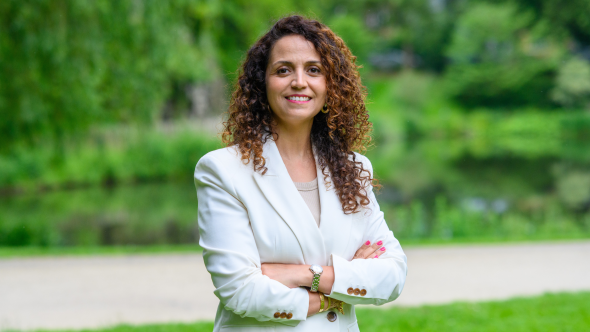
You specialize in services and innovation marketing. What led you to focus on this area of research?
Service marketing appealed to me because it directly touches people’s real lives: seeking medical care, learning, getting around, accessing public services, interacting with technology, or receiving support in times of vulnerability. Unlike product marketing, which focuses more on tangible goods, service marketing is concerned with experiences that are often intangible, subjective, and deeply human.
This field allows us to analyze what defines the quality of an experience: human or digital interactions, trust, emotions, the co-creation of value, as well as issues of social justice, ethics, inclusion, and dignity. The same experience can be perceived differently depending on the individual, their resources, their situation, and the context of their interaction. This is precisely what makes this field of research complex, fascinating, and essential.
What motivates me today is understanding how organizations and institutions can design services that are not only effective or innovative, but also fairer, more humane, and more responsible. For me, service marketing is a tool for transforming people’s experiences and contributing, in very concrete ways, to people’s well-being and to a more inclusive society.
Speaking of which, how do these issues of inclusion, equity, and vulnerability play out in your research?
These questions are at the heart of my work. From this perspective, services are not reduced to a simple transaction but are situated within an ecosystem involving multiple stakeholders. For me, inclusion and equity are not abstract concepts: they prompt us to ask who is left out of certain services, who faces greater difficulties in being heard, understood, or served with dignity, and how to design interactions that strengthen autonomy rather than creating new forms of exclusion. My goal as a researcher is to address these issues and propose concrete recommendations in close collaboration with all stakeholders. In my view, academic research has a responsibility to engage with important societal issues and to help make the service system more inclusive and respectful of people’s dignity.
Image

These questions are at the heart of my work. They are not abstract concepts: they prompt us to ask who is being left behind and how we can design interactions that foster autonomy rather than creating new forms of exclusion.
I also advocate for management research that is more open, more inclusive, and truly connected to the realities of the world. All too often, our field remains dominated by a Europe–United States lens, which leaves other contexts, other voices, and other experiences in the shadows. However, to remain relevant, management science must better integrate the diversity of human, social, cultural, and geographic realities. This commitment is not merely an intellectual conviction; it translates into concrete actions. For example, through the NEXSER program—an ambitious initiative supported by the European Union via Erasmus+—we have built a network of excellence with partners from the Global South. These collaborations—fueled by research stays, scholarly exchanges, and joint research projects—enable us to broaden our perspectives, challenge our established frameworks, and produce research that is more grounded, more accurate, and more useful. Whether through my institutional responsibilities, my international collaborations, or my engagement within my scientific community, I strive to contribute to academic ecosystems where scientific excellence, societal impact, and personal fulfillment advance hand in hand. For me, research without borders is also research that opens doors.
You have just received the Jay Kandampully Journal of Service Management (JOSM) Mentorship Award, which recognizes support for and commitment to the career development of early-career researchers. What does this award mean to you?
It is a true honor, and this recognition touches me deeply. This appointment serves as a reminder that academic impact is not measured solely by publications, but also by the ability to teach, support, and help others grow. It recognizes a central aspect of my academic identity: mentoring.
I am convinced that supporting the next generation of researchers means shaping the future of research and society. It is essential, demanding work—yet often unseen. Helping young researchers find their voice in a highly competitive and demanding academic world, gain confidence, feel validated, and develop high-quality, meaningful research is, for me, just as important as conducting research myself. In a way, it means guiding them as they learn a demanding profession. This commitment is reflected in my participation in committees, thesis defense panels, and large-scale mentoring programs at the national and international levels. When supervising my own doctoral students, I try to encourage them to nurture their passion for scientific research, to develop an academic mindset, to believe in their contributions, and to conduct research that transcends their individual trajectories to be of real benefit to society. For me, mentoring is not limited to the acquisition of scientific or methodological skills. It also involves passing on values that are fundamental to the academic world: integrity, rigor, responsibility, intellectual openness, respect for others… as well as a commitment to producing research that is useful, robust, and capable of meeting the highest scientific standards.
This nomination also holds special significance for me, as it comes from people I deeply respect, both in Belgium and elsewhere. The fact that senior colleagues and young researchers took the initiative to submit this nomination without my knowledge makes this recognition even more valuable and deeply personal. I sincerely enjoy interacting with young researchers. These interactions give great meaning to my academic mission. I enjoy taking the time to mentor them—whether they’re my Ph.D. students or not—with a level of expectation that I hope is always supportive. As I often tell them: “Small details make a big difference.” I am therefore deeply moved to see this long-term effort recognized by my peers.
You are participating in the social innovation lab, which raises students’ awareness of the Sustainable Development Goals through hands-on projects. How does this approach change the way they learn?
My approach as a teacher aligns with the one I advocate as a researcher: helping students push themselves while bringing theoretical concepts to life. This approach shifts them from a mindset of simply absorbing content to one of active engagement. In this social innovation lab led by a highly dynamic team of instructors, students step into the role of “change makers” to develop solutions to pressing societal issues related to the Sustainable Development Goals, such as poverty, disability, and so on. We strive to bring them as close as possible to the issue at hand so they can shift their perspectives and better understand the realities experienced by others. In this way, they learn to connect concepts to human realities, collaborate, experiment, take responsibility for their choices, and reflect on the consequences of their actions. We use innovative and immersive teaching methods. For example, we recently developed virtual reality scenarios that allow students to experience the daily life of a visually impaired person. In addition to stimulating their capacity for innovation, this course fosters their empathy—an essential quality for future leaders. I strongly believe in an educational approach that produces not only good students, but also citizens and future professionals capable of considering the impact of their actions. I am convinced that better training for our managers today contributes to building a better, fairer society that is more attentive to everyone.
Quick Resume
Wafa Hammedi has been a professor and researcher in services marketing and innovation at the University of Namur since 2010. Her award-winning work explores how services can serve as drivers of inclusion, equity, and societal transformation. She holds editorial positions at leading academic journals and mentors doctoral students who have received research awards.
The Center for Research in Marketing and Service Management (CeRCLe)
Wafa Hammedi heads NaDI-CeRCLe, the UNamur Research Center for Marketing and Service Management. Established in 2005 within the Faculty of Economics, Management, and Communication Sciences (EMCP), it brings together a dynamic team of faculty members, researchers, doctoral students, and practitioners in the fields of marketing and service management. The center places impact at the heart of its work, particularly in the areas of consumption, responsible and ethical management, new models of sustainable marketing, and inclusion and vulnerability. NaDI-CerCLe is internationally recognized as a leading research center by the American Marketing Association (SERVSIG) and the French Marketing Association (AFM).
This article is taken from the "Expert" section of Omalius magazine, Issue #41 (June 2026).

Insight Out: The Series That Makes Research Accessible
With INSIGHT OUT, Confluent des Savoirs has launched a popular science web series based on an idea by Wafa Hammedi. The first three episodes focus on research in the EMCP that is little known to the general public and showcase the full diversity of a field often wrongly reduced to a few clichés. The project is intended to eventually highlight research from all of our university’s schools.
Agenda
Congress / Colloquium / Conference
-
Faculty of Law
Faculty Economics Management Communication Politics (EMCP)
Europe: The World of Yesterday or Tomorrow
General public
Law
Political Science
22
2026
19:30
-
20:30
Unviersité de Namur - rue de Bruxelles, 61 (auditoire à confirmer) - 5000 Namur
Contact person
:
De Streel Alexandre
Panel discussion with Deputy Prime Minister and Minister of Foreign Affairs Maxime Prévot on the current and future challenges facing the European Union.
Free event—More information coming soon.
Thesis defense
-
Faculty Economics Management Communication Politics (EMCP)
UNamur School of Management
Public Defense of a Doctoral Dissertation in Economics and Management - Florence Nizette
Economy
Management
Artificial intelligence (AI)
30
2026
17:00
-
20:00
Université de Namur, Faculté EMCP, local E13 - Rempart de la Vierge, 8 - 5000 Namur
Designing Trustworthy AI-Based Services: A Human-Centered and Ethical Perspective on Explainable AI
Chair of the Jury
Professor Sophie Béreau, University of Namur
Advisors
- Professor Allard Van Riel, University of Hasselt
- Professor Wafa Hammedi, University of Namur
- Professor Nadia Steils, University of Liège
Other Members of the Committee
- Professor Cécile Delcourt, University of Liège
- Professor Carlos Flavián, University of Zaragoza
- Professor Benoît Frénay, University of Namur
- Professor Simon Hazée, Catholic University of Louvain
- Professor Sara Leroi-Werelds, University of Hasselt
Research
The Faculty's many research teams aim to produce research of excellence where quality takes precedence over quantity. By concentrating their research efforts in cutting-edge fields, they produce scientific research, open to interdisciplinary rapprochements, with a societal impact, on a national and international scale. The research carried out in the Faculty feeds its teaching and its capacity to innovate.
International
In addition to the internationalization of faculty life (courses and other activities, students, teachers), the Faculty offers Bachelor's and Master's level mobility opportunities in the form of "course" exchange programs (Erasmus Belgica, Erasmus + and non-European stays) as well as internships in companies and other organizations abroad!

A word from the Dean
Students are at the heart of our profession, they are our joy, our pride. By working together, openly, creatively and constructively, we'll make sure they shine, both at UNamur and beyond its walls.
Read the article
Image

The Faculty in figures
1800
Students
15
Percentage of international students
4
Departments
250
Staff members

