Exploring the Earth and its past to prepare for a sustainable future.
Geologists interrogate rocks and landscapes to reveal the dynamic processes that shape our natural environment. Why is the Earth unique in our solar system? How did life develop here? How diverse are the rocks and minerals that make it up? Where can we find the metals we need for technological and sustainable development? How can we manage, protect and clean up our soil and groundwater? From the field to the laboratory, geology provides answers to these varied questions through an interdisciplinary approach combining exact and natural sciences.
Find out more about the Geology Department
Nowadays, the geologist plays an essential role in the energy transition. They identify and enable the extraction of metals and other resources crucial to the establishment of sustainable energies. Thanks to their understanding of the interactions between the subsoil and the environment, they contribute to land-use planning and the siting of new infrastructures and buildings.
In the age of space exploration, geologists also compare the Earth with the other planets in our solar system to better understand the specific features of our "living" planet. These current themes are at the heart of our research activities and continue to diversify the opportunities for our graduates.
The spectacular rocks sculpted by the Meuse and its tributaries in the Namur region have captivated European geologists for over two centuries. They illustrate major geological processes and trace the evolution of our region over hundreds of millions of years. They are also home to numerous quarries that continue to fuel our local industry and economy.
Spotlight
News
From Namur to Leuven: A Successful Transition for Geology Students
Geology students at UNamur are encouraged to continue their studies at another university after completing their bachelor’s degree. This transition has been successful, as recently confirmed by two professors from KULeuven who visited the students.
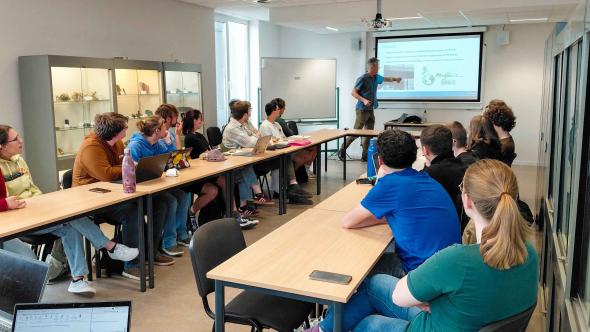
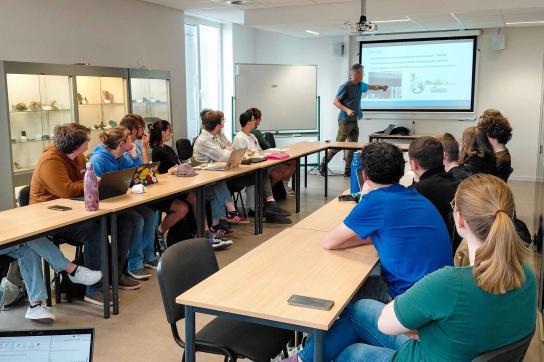
In early May, three former geology students from UNamur returned to the Faculty of Sciences to share their experiences of the master’s program at KULeuven with second- and third-year undergraduate students. Joining them were two professors from the Flemish university who had traveled to present their program.
Positive feedback from these alumni: “The bachelor’s program at UNamur provides very comprehensive preparation for further studies. During our first two semesters at KU Leuven, we didn’t feel any need to catch up,” explain Arthur and Guilhem, two Master’s students at KU Leuven. “Beyond the linguistic differences, which are real opportunities, we found a close relationship with the faculty, a flexible curriculum, and direct access to research. “The KU Leuven program perfectly complements our studies at UNamur by opening doors to the Flemish region and offering expanded professional opportunities, particularly through internships and a global reputation in research,” the two students continue.
“We are very pleased to see that our former students are doing well at other universities, including in environments where English is not their first language,” says Johan Yans, professor and chair of the Department of Geology.
Skills recognized beyond UNamur
At KU Leuven, the situation is similar. Faculty members praise the quality of students trained at UNamur and their ability to adapt quickly: “Our program shares many similarities with the one in Namur. This is also reflected in the skills acquired by UNamur graduates, such as optical microscopy. Since the master’s program is taught in English, there is no language barrier either. UNamur graduates have no trouble integrating with KU Leuven graduates,” confirm Robert Speijer and Manuel Sintubin, professors of geology at KU Leuven.
Third-year undergraduate students at UNamur and KU Leuven can already broaden their horizons through the Erasmus Belgica program.
Bonds that go beyond training
This meeting also highlights broader collaborations between the two universities. Joint research projects have already been launched, particularly on the evolution of fossil faunas, and could continue in the future with the recent appointment of Professor Max Collinet, who specializes in planetary science. He is also involved in evaluating and supervising theses for this same Master’s program.
Don't say "Geology" anymore—say "Geosciences"!
Starting in the 2028–2029 academic year, the Bachelor’s degree in Geological Sciences will be renamed the “Bachelor’s degree in Geosciences” at universities in the Wallonia-Brussels Federation.
Colourful speleothems: treasures hidden deep within the earth
Well hidden from passersby, caves nevertheless conceal particularly aesthetic secrets. For the past four years, Martin Vlieghe has been pursuing a PhD in geology at UNamur. He is exploring the origin of the surprisingly varied colours of certain concretions nestled in the heart of Belgian and French caves. Together with Prof. Johan Yans and Gaëtan Rochez, he samples, observes, and analyses these magnificent objects with the aim of uncovering the mysteries they conceal.
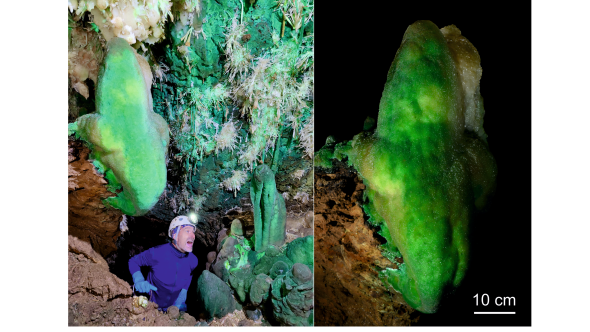
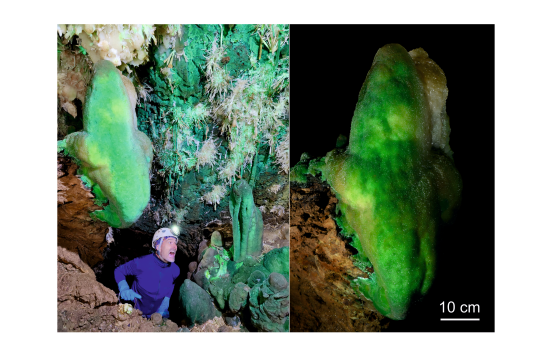
Photo: Green speleothems in the Aven du Mont Marcou (Hérault, France) © Stéphane Pire, Gaëtan Rochez (UNamur)
Speleothems, for instance stalactites and stalagmites, are commonly composed of calcite or aragonite (CaCO3). This mineral compound comes directly from the rock in which the cave was formed and naturally has a white to brownish colour. However, speleothems can sometimes exhibit unique and unusual colours. From yellow to black, blue, red, green, and even purple, there is something for everyone!
Such a diversity of colours reflects the many possible causes: mineralogical, chemical, biological, or even physical. A speleothem, like any natural formation, is never perfectly pure. Their deposition process, through the precipitation of calcium carbonate dissolved in water, is necessarily accompanied by the deposition of numerous impurities carried along with the water circulating underground. Even if these impurities are sometimes too low in concentration or simply uncoloured, they can still have a visible impact on the colour.
OK, but what is the point?
The formation of speleothems is very often linked to impurities dissolved in groundwater. Therefore, studying coloured speleothems provides valuable information about potential contamination of surface water with heavy metals or other harmful organic compounds, which in some cases may be consumed by residents. It is therefore a simple and direct way to identify areas with potentially contaminated water and to determine whether this contamination poses an environmental or health risk.
This is the objective of Martin Vlieghe's thesis: to apply a range of cutting-edge analytical techniques to samples of these speleothems to determine these causes and propose an explanation for the origin of the colouring elements.
Here are a few examples.
Green from the Aven du Marcou: the influence of nickel
An initial project explored the green speleothems of the Aven du Marcou (see photo above). Located in the Hérault department of France, this chasm is well known in the area for its series of impressive shafts, the largest of which is over 100 meters deep. It also has a tiny chamber hidden at the top of a steep wall, which houses an impressive concentration of deep green speleothems. After all the effort of descending and climbing ropes to progress through this very vertical cave, what a wonderful reward to discover this true underground gem! Once the initial wonder has passed, it's time to get to work! We observe, describe, interpret, and collect a few green fragments from the ground, while respecting the integrity of the site as much as possible. Back in Belgium, it's time to move on to the analyses.
Careful observation of the recovered fragments quickly reveals the presence of green minerals in the outer part of the speleothems, which are easily associated with the green colour observed. These minerals, which are deposited in platelets parallel to the white aragonite (CaCO₃), turn out to be nepouite crystals, a nickel phyllosilicate ((Ni,Mg)₃Si₂O₅(OH)₄) usually found in marine volcanic rocks.
The discovery is all the more surprising given that there are no nickel deposits in the vicinity of the cave! Further study of the composition of the nepouite reveals that they contain a high concentration of zinc, which is also very unusual and suggests that they are in fact quite different from those commonly mined in volcanic deposits. Finally, this mystery was solved by a thorough examination of the rock outcrops in the immediate vicinity of the cave. Just above the cave are siliceous deposits particularly rich in pyrite, an iron sulphide commonly found in this type of settingst. Analysis of these sulphides reveals high concentrations of nickel, which is also found in the natural water source closest to the cave.
The result of this "investigation" and final explanation: nepouite was able to settle underground through the dissolution of various chemical elements contained in the pyrite of the overlying rocks, which were transported into the cave by surface water and were able to crystallize on site.
Malaval blues: when metals interact
The Malaval cave is very different from the Aven du Marcou. Located in Lozère (France), it extends largely along a high underground river that winds beneath the Cévennes massif. At the bend of a meander, one can find magnificent blue speleothems.
As in the Aven du Marcou, the coloured speleothems are found only in two specific locations in the cave and nowhere else, suggesting that the origin of the chromophore elements is probably very localized.
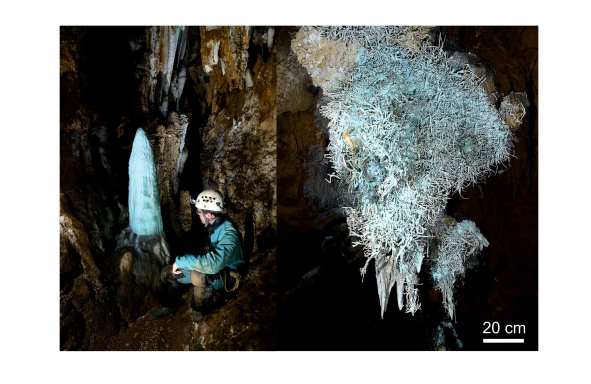
Photos - Left: Blue stalagmite in Malaval Cave. Right: Cluster of blue aragonites in Malaval Cave © Gaëtan Rochez (UNamur)
Once again, a few fragments were collected, including a large bluish stalactite found broken on the cave floor. A series of microscopic observations and mineralogical and geochemical analyses were carried out. The first striking finding was that several blue fragments contained no minerals other than aragonite, suggesting that, unlike the green ones from Marcou, it was the aragonite itself that was coloured by the presence of metallic elements. After examining the analyses, three of these elements stood out: copper, commonly cited as the cause of blue colouring in aragonite, as well as zinc and lead.
While copper appears to be the main cause of the blue colouration, zinc and lead also play a role here.
Zinc is largely present in the form of deep blue amorphous phases, which are only found in some of the blue fragments studied. The presence of these phases, linked to the oxidation of nearby zinc-rich deposits, generates variations in the blue colour at the microscopic level, as revealed by optical microspectrophotometry.
Lead also has a marked colouring power, producing green to blue hues, but statistical analysis of coloured and uncoloured areas shows that these colours only appear in the absence of zinc, which seems to inhibit lead-induced colouring. This study clearly demonstrates that, even if a problem seems easy to explain at first glance, it can sometimes hide unexpected subtleties that need to be explored in greater depth in order to uncover all its secrets.
Gypsum from the Cigalère: the underground rainbow
The Cigalère Cave is one of a kind. Not only does it contain impressive quantities of gypsum, a calcium sulphate found in certain caves, but this gypsum also displays a wide variety of colours rarely seen in nature. Because of this rarity, the cave is particularly well protected, to the point that we were not allowed to collect any fragments from inside it.
This study was therefore the ideal opportunity to test the Geology Department's new acquisition: a portable X-ray fluorescence spectrometer (pXRF), which allows rapid, in situ, and above all completely non-destructive analysis of coloured speleothems.
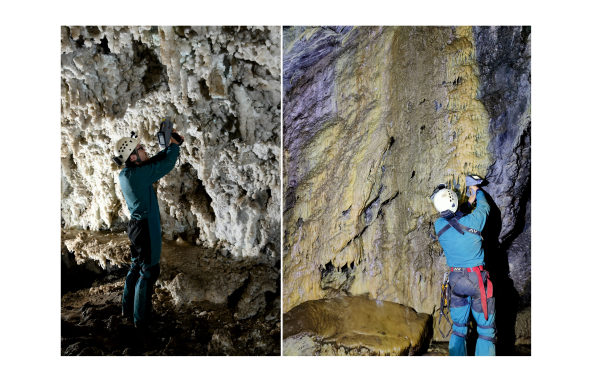
Photos - pXRF analysis of a blue stalactite core (left) and a yellow flowstone (right) in the Cigalère Cave © Stéphane Pire (UNamur)
A total of five sites of interest were selected in the Cigalère for the diversity of colours found there. The pXRF revealed the presence of several metals.
At Cascade Noire, for example, a high concentration of iron in the form of oxides and sulphates was detected, which are responsible for the black and orange colouring of the gypsum, respectively.
Black is also found in the Chapelle de Donnea, but contrary to what one might think, no iron has been detected. Here, it is manganese in the form of oxides that is responsible for the colouration. This observation is interesting because it clearly demonstrates that black colouration in gypsum, two phenomena that appear similar at first glance, can have very different causes, hence the importance of being able to carry out analyses directly in the field.
A little further downstream, blue dominates along the main gallery, and analyses have shown strong similarities with the blue speleothems of Malaval, with a marked influence of copper and potentially zinc.
All this highlights that, despite certain limitations of the device, this type of non-destructive analysis method is a very valuable tool for studying rare, fragile, precious, or protected objects, of which the Cigalère cave is an excellent example!
The research team
Martin Vlieghe's doctoral thesis on "The origin(s) of colored speleothems in caves," supervised by Professor Johan Yans and in collaboration with Gaëtan Rochez, began in February 2022. All three researchers are members of the Faculty of Sciences, Department of Geology at UNamur and the ILEE Research Institute.
ILEE (Institute of Life, Earth and Environment) is directly involved in issues related to the study and preservation of the environment, to which this subject is directly linked.
The various analyses were carried out with the support of UNamur's technological platforms:
- Physicochemical characterization (PC²)
- Lasers, optics, and spectroscopy (LOS)
- Electron microscopy
- Synthesis, Irradiation and Analysis of Materials (SIAM)
Some analyses were carried out in partnership with KUL, MRScNB and UMontpellier, and access to the caves was provided by the Association Mont Marcou, the Malaval Association and the Association de Recherche souterraine du Haut Lez.
This thesis was originally funded by the ILEE institute and institutional funds from UNamur, and by an Aspirant F.R.S. - FNRS grant (FC 50205) since October 2023.
It is also closely linked to the new research partnership supported by the RELIEF network (Réseau d’Échanges et de Liaisons entre Institutions d’Enseignement supérieur Francophones), the ILEE research institute at UNamur, and EDYTEM (Environnements, Dynamiques et Territoires de Montagne, Université Savoie Mont Blanc). Mobility programs between these entities will strengthen a common research area: the study of the critical zone, the most superficial zone of the Earth, where rocks, water, air, and living organisms interact. The perspective is to develop other transdisciplinary research areas and potential teaching projects in the field of environmental sciences and sustainable development.
Being curious about the Earth and the natural world: a key to meeting tomorrow's challenges!
Studying geology means developing a solid foundation in physics, chemistry, and biology in order to understand the Earth, from its internal dynamics to surface processes and their interactions with our environment and human activities.
Thanks to their interdisciplinary training, geologists are ideally positioned to perform a variety of roles that require a rigorous scientific approach to solving complex problems (research and development, project management, consulting, and education).
What are the advantages of studying at UNamur?
- Practical training and numerous field activities
- Strong scientific foundations
- Immersion in geology from block 1
- The possibility of ERASMUS from block 3 onwards
- Close contact with teachers
The advantages of studying in Namur
- A practical training and lots of field activities
- Strong scientific foundations
- Immersion in geology from the 1st year
- ERASMUS possible from the 3rd year onwards
- Close contact with teachers
Climate disruption: fossils tell us about the past to better understand the future
Today, our planet is undergoing major climatic changes. Particularly in the face of rising temperatures, it is not easy to predict how flora and fauna will react and adapt in disturbed ecosystems. International research, in which Professor Johan Yans' team (Department of Geology and ILEE Institute) is taking part, has found some answers in fossils, which have been the memory of Darwinian evolution for millions of years. Explanations.
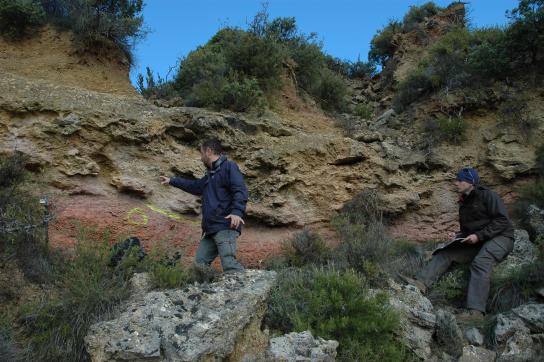
Photo: Excavation site at Albas, Massif des Corbières (France) © Gaëtan Rochez (UNamur)
Current predictions for biodiversity evolution in the face of climate change are based on models and scenarios derived from multidisciplinary studies. An article has just been published in the prestigious journal PNAS (Proceedings of the National Academy of Sciences), feeding into these scenarios. The researchers' original idea? To envisage an analogy between the biodiversity of the past and that of the future.
To understand, we need to go back 56 million years, to the transition between the Paleocene and the Eocene, a period characterized by intense global warming (named Paleocene-Eocene Thermal Maximum - or PETM). Paleoclimatologists consider this period to be a geological analogue of today's warming in terms of its amplitude (an increase of 5 to 8°C) and cause (a massive release of CO₂ into the atmosphere, similar to what we experience today).
At this time, global warming generated major disturbances on fauna. This change in climate, although 10 to 100 times slower than the one we experience today, coincided with the appearance of "modern" placental mammals (of which humans are a part), but also artiodactyls (ruminants, goats...), perissodactyls (horses, rhinoceroses...), bats, rodents and so on. Intense and rapid climatic disturbances generate major stresses on ecosystems: organisms try to adapt, some disappearing because they are unable to cope with these intense environmental changes, while others develop or evolve. This scenario was already well known...
But a few thousand years before PETM, another warming episode, named Pre-Onset Event (or POE), is recorded. It is less intense (+2°C) than the PETM, and more similar to current climate disturbances, leading researchers to investigate its impacts on faunas.
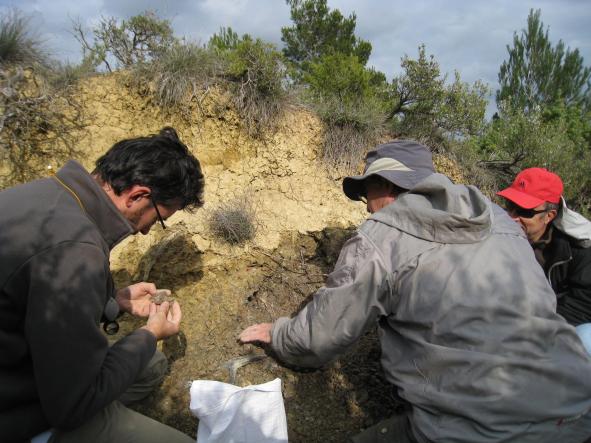
Photo: In search of fossils by fellow paleontologists from the University of Montpellier © ISEM
Fossils speak
Field research has been carried out in the Massif des Corbières, southern France: the geological layers representative of this period are numerous and thick. Thanks to carbon isotope geochemistry, Namur researchers have been able to date these layers with great precision, making it possible to detail the evolution of fossils over time.
The fossils thus discovered have delivered their memory. And this calls into question previously established scenarios on two key aspects:
- Species evolved rapidly as early as the EOP, a climatic event similar to today's disturbances.
- While researchers thought that European faunas were composed of species endemic to Europe, they discovered that these archaic animals also rubbed shoulders with more modern species, such as marsupials or rodents, having probably migrated from North America during the EOP.
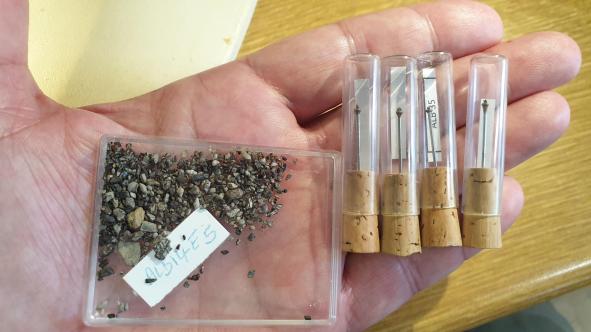
Photo: Mammal fossils discovered at Albas preserved in small glass tubes. These are the tiny teeth of a small "archaic" mammal called Paschatherium. Rodolphe Tabuce
So, during the EOP, species migrated from one continent to another... But how is this possible? It was thought that, at the time, the European continent was relatively isolated from the others by shallow seas. In reality, as a result of global warming, vast expanses of forest covered the high latitudes (present-day northern Greenland, Scandinavia and the Bering Strait in Siberia), serving as "natural land bridges" for forest fauna! Climatic disturbances therefore modified the flora, which in turn served as a passage between continents for "modern" faunas, also in the midst of upheaval.
The climatic disturbances of the POE, similar to those recorded today, therefore drastically influenced the faunas, notably by facilitating intercontinental migrations.
The impact of these decisive events during the EOP offers new avenues for reflection and study on the future of biodiversity in the context of current and future global warming.
The project team
"EDENs: Life during past super-warm climate events: Evolutionary Dynamics of Early EoceNe mammals from Southwestern France" is a multidisciplinary and international project in which Johan Yans, Jean-Yves Storme and Gaëtan Rochez (Department of Geology and ILEE Institute at UNamur) have been involved for the past 3 years. This research brings together the expertise of various partners:
- L'Institut des Sciences de l'Evolution de Montpellier (ISEM), Rodolphe Tabuce and Fabrice Lihoreau,
- Géosciences Montpellier, Flavia Girard and Gregory Ballas.
It is funded by the Agence Nationale de la Recherche (ANR-France). Its mission is to support and promote the development of fundamental and finalized research in all disciplines, and to strengthen the dialogue between science and society.
Media coverage
Sustainable development at UNamur
The university, in its missions, must be exemplary in terms of Sustainable Development in line with the United Nations Sustainable Development Goals (SDGs).
In terms of training, in addition to courses incorporating the SDOs, the University of Namur offers the University Certificate of Further Training in Sustainable Development. Aimed at members of organizations, administrations, companies, schools, etc. concerned or simply interested in the implications and challenges of sustainable development, it aims to offer information that is as thoughtful and diversified as possible, in order to help each participant better position, in his or her professional context, the issues linked to sustainable development that concern him or her more directly.
In terms of research, researchers work through 11 interdisciplinary research institutes. Johan Yans' team is active within the Institute ILEE - Institute of Life, Earth and Environment - and this research is a focus of activities devoted to Sustainable Development at UNamur.
A furnace to reproduce magmatic processes in Mars rocks
Max Collinet, professor of geology at the Faculty of Science and researcher at the Institute of Life, Earth and Environment (ILEE), has just been awarded equipment funding (EQP) from the F.R.S - FNRS following calls whose results were published in December 2024.
The rocks that make up a planet's crust have a wide variety of chemical and mineralogical compositions. For the most part, these rocks originate from the slow cooling of magmas produced by the melting of other rocks located deeper down (the so-called mantle).
Between their source and the surface, magmas undergo continuous transformations, as crystals form and separate, progressively modifying their composition. It is theoretically possible to use surface rocks to infer the composition of planetary interiors. However, this requires a detailed understanding of magmatic processes, which can be partially reproduced in the laboratory.
The funding obtained will be used to acquire a furnace capable of reaching temperatures of up to 1600°C, in order to study the chemical equilibria between magmas and the various crystals that form in them.
Two objectives
The first objective is to constrain the magmatic processes behind rocks over 3.5 billion years old, analyzed by the Perseverance rover on Mars. This should make it possible to identify the nature of the mantle rocks at depth, but also to better understand how the Martian crust, as a whole, was formed.
The second objective is to study even older magmatic processes, active over 4.5 billion years ago, at a time when planets were still forming and had not yet reached their final size. At that time, the solar system was populated by miniature planets known as planetesimals, the vast majority of which were incorporated into the growing planets. Some fragments of these planetesimals survived to form what are known today as asteroids.
We can also study the meteorites from these planetesimals and reproduce the magmatic processes that gave rise to them, in order to understand why the planets of the solar system are covered with rocks of such varied compositions.
Max Collinet - Mini CV
Max Collinet joined the University of Namur in September 2023. He brings unique expertise in magmatic petrology and planetary geology. Having explored Martian rocks through the study of meteorites, he also examined asteroid meteorites at MIT Boston. At UNamur, his ambition is to develop an experimental petrology laboratory and collaborate with physicists.
Committed to the UNIVERSEH program, Max Collinet has positioned himself as a key figure in the geological and space fields.
To find out more, read our previous article: Understanding Mars rocks that have fallen to Earth: portrait of a geologist with his head in the stars
ILEE - Institute of Life, Earth and Environment
The Institut de la Vie, de la Terre et de l'Environnement at the University of Namur brings together a team of experts from diverse backgrounds and disciplines to work collaboratively using innovative technologies and rigorous scientific methods to make significant contributions to the field of environmental sciences. Researchers collaborate in interdisciplinary research around 5 research areas.
FNRS, the freedom to search
Every year, the F.R.S.-FNRS launches calls for proposals to fund fundamental research. It has set up a range of tools enabling it to offer scientific and technical staff, equipment and operating resources to researchers, who are the bearers of a project of excellence.
From Namur to Leuven: A Successful Transition for Geology Students
Geology students at UNamur are encouraged to continue their studies at another university after completing their bachelor’s degree. This transition has been successful, as recently confirmed by two professors from KULeuven who visited the students.
In early May, three former geology students from UNamur returned to the Faculty of Sciences to share their experiences of the master’s program at KULeuven with second- and third-year undergraduate students. Joining them were two professors from the Flemish university who had traveled to present their program.
Positive feedback from these alumni: “The bachelor’s program at UNamur provides very comprehensive preparation for further studies. During our first two semesters at KU Leuven, we didn’t feel any need to catch up,” explain Arthur and Guilhem, two Master’s students at KU Leuven. “Beyond the linguistic differences, which are real opportunities, we found a close relationship with the faculty, a flexible curriculum, and direct access to research. “The KU Leuven program perfectly complements our studies at UNamur by opening doors to the Flemish region and offering expanded professional opportunities, particularly through internships and a global reputation in research,” the two students continue.
“We are very pleased to see that our former students are doing well at other universities, including in environments where English is not their first language,” says Johan Yans, professor and chair of the Department of Geology.
Skills recognized beyond UNamur
At KU Leuven, the situation is similar. Faculty members praise the quality of students trained at UNamur and their ability to adapt quickly: “Our program shares many similarities with the one in Namur. This is also reflected in the skills acquired by UNamur graduates, such as optical microscopy. Since the master’s program is taught in English, there is no language barrier either. UNamur graduates have no trouble integrating with KU Leuven graduates,” confirm Robert Speijer and Manuel Sintubin, professors of geology at KU Leuven.
Third-year undergraduate students at UNamur and KU Leuven can already broaden their horizons through the Erasmus Belgica program.
Bonds that go beyond training
This meeting also highlights broader collaborations between the two universities. Joint research projects have already been launched, particularly on the evolution of fossil faunas, and could continue in the future with the recent appointment of Professor Max Collinet, who specializes in planetary science. He is also involved in evaluating and supervising theses for this same Master’s program.
Don't say "Geology" anymore—say "Geosciences"!
Starting in the 2028–2029 academic year, the Bachelor’s degree in Geological Sciences will be renamed the “Bachelor’s degree in Geosciences” at universities in the Wallonia-Brussels Federation.
Colourful speleothems: treasures hidden deep within the earth
Well hidden from passersby, caves nevertheless conceal particularly aesthetic secrets. For the past four years, Martin Vlieghe has been pursuing a PhD in geology at UNamur. He is exploring the origin of the surprisingly varied colours of certain concretions nestled in the heart of Belgian and French caves. Together with Prof. Johan Yans and Gaëtan Rochez, he samples, observes, and analyses these magnificent objects with the aim of uncovering the mysteries they conceal.
Photo: Green speleothems in the Aven du Mont Marcou (Hérault, France) © Stéphane Pire, Gaëtan Rochez (UNamur)
Speleothems, for instance stalactites and stalagmites, are commonly composed of calcite or aragonite (CaCO3). This mineral compound comes directly from the rock in which the cave was formed and naturally has a white to brownish colour. However, speleothems can sometimes exhibit unique and unusual colours. From yellow to black, blue, red, green, and even purple, there is something for everyone!
Such a diversity of colours reflects the many possible causes: mineralogical, chemical, biological, or even physical. A speleothem, like any natural formation, is never perfectly pure. Their deposition process, through the precipitation of calcium carbonate dissolved in water, is necessarily accompanied by the deposition of numerous impurities carried along with the water circulating underground. Even if these impurities are sometimes too low in concentration or simply uncoloured, they can still have a visible impact on the colour.
OK, but what is the point?
The formation of speleothems is very often linked to impurities dissolved in groundwater. Therefore, studying coloured speleothems provides valuable information about potential contamination of surface water with heavy metals or other harmful organic compounds, which in some cases may be consumed by residents. It is therefore a simple and direct way to identify areas with potentially contaminated water and to determine whether this contamination poses an environmental or health risk.
This is the objective of Martin Vlieghe's thesis: to apply a range of cutting-edge analytical techniques to samples of these speleothems to determine these causes and propose an explanation for the origin of the colouring elements.
Here are a few examples.
Green from the Aven du Marcou: the influence of nickel
An initial project explored the green speleothems of the Aven du Marcou (see photo above). Located in the Hérault department of France, this chasm is well known in the area for its series of impressive shafts, the largest of which is over 100 meters deep. It also has a tiny chamber hidden at the top of a steep wall, which houses an impressive concentration of deep green speleothems. After all the effort of descending and climbing ropes to progress through this very vertical cave, what a wonderful reward to discover this true underground gem! Once the initial wonder has passed, it's time to get to work! We observe, describe, interpret, and collect a few green fragments from the ground, while respecting the integrity of the site as much as possible. Back in Belgium, it's time to move on to the analyses.
Careful observation of the recovered fragments quickly reveals the presence of green minerals in the outer part of the speleothems, which are easily associated with the green colour observed. These minerals, which are deposited in platelets parallel to the white aragonite (CaCO₃), turn out to be nepouite crystals, a nickel phyllosilicate ((Ni,Mg)₃Si₂O₅(OH)₄) usually found in marine volcanic rocks.
The discovery is all the more surprising given that there are no nickel deposits in the vicinity of the cave! Further study of the composition of the nepouite reveals that they contain a high concentration of zinc, which is also very unusual and suggests that they are in fact quite different from those commonly mined in volcanic deposits. Finally, this mystery was solved by a thorough examination of the rock outcrops in the immediate vicinity of the cave. Just above the cave are siliceous deposits particularly rich in pyrite, an iron sulphide commonly found in this type of settingst. Analysis of these sulphides reveals high concentrations of nickel, which is also found in the natural water source closest to the cave.
The result of this "investigation" and final explanation: nepouite was able to settle underground through the dissolution of various chemical elements contained in the pyrite of the overlying rocks, which were transported into the cave by surface water and were able to crystallize on site.
Malaval blues: when metals interact
The Malaval cave is very different from the Aven du Marcou. Located in Lozère (France), it extends largely along a high underground river that winds beneath the Cévennes massif. At the bend of a meander, one can find magnificent blue speleothems.
As in the Aven du Marcou, the coloured speleothems are found only in two specific locations in the cave and nowhere else, suggesting that the origin of the chromophore elements is probably very localized.
Photos - Left: Blue stalagmite in Malaval Cave. Right: Cluster of blue aragonites in Malaval Cave © Gaëtan Rochez (UNamur)
Once again, a few fragments were collected, including a large bluish stalactite found broken on the cave floor. A series of microscopic observations and mineralogical and geochemical analyses were carried out. The first striking finding was that several blue fragments contained no minerals other than aragonite, suggesting that, unlike the green ones from Marcou, it was the aragonite itself that was coloured by the presence of metallic elements. After examining the analyses, three of these elements stood out: copper, commonly cited as the cause of blue colouring in aragonite, as well as zinc and lead.
While copper appears to be the main cause of the blue colouration, zinc and lead also play a role here.
Zinc is largely present in the form of deep blue amorphous phases, which are only found in some of the blue fragments studied. The presence of these phases, linked to the oxidation of nearby zinc-rich deposits, generates variations in the blue colour at the microscopic level, as revealed by optical microspectrophotometry.
Lead also has a marked colouring power, producing green to blue hues, but statistical analysis of coloured and uncoloured areas shows that these colours only appear in the absence of zinc, which seems to inhibit lead-induced colouring. This study clearly demonstrates that, even if a problem seems easy to explain at first glance, it can sometimes hide unexpected subtleties that need to be explored in greater depth in order to uncover all its secrets.
Gypsum from the Cigalère: the underground rainbow
The Cigalère Cave is one of a kind. Not only does it contain impressive quantities of gypsum, a calcium sulphate found in certain caves, but this gypsum also displays a wide variety of colours rarely seen in nature. Because of this rarity, the cave is particularly well protected, to the point that we were not allowed to collect any fragments from inside it.
This study was therefore the ideal opportunity to test the Geology Department's new acquisition: a portable X-ray fluorescence spectrometer (pXRF), which allows rapid, in situ, and above all completely non-destructive analysis of coloured speleothems.
Photos - pXRF analysis of a blue stalactite core (left) and a yellow flowstone (right) in the Cigalère Cave © Stéphane Pire (UNamur)
A total of five sites of interest were selected in the Cigalère for the diversity of colours found there. The pXRF revealed the presence of several metals.
At Cascade Noire, for example, a high concentration of iron in the form of oxides and sulphates was detected, which are responsible for the black and orange colouring of the gypsum, respectively.
Black is also found in the Chapelle de Donnea, but contrary to what one might think, no iron has been detected. Here, it is manganese in the form of oxides that is responsible for the colouration. This observation is interesting because it clearly demonstrates that black colouration in gypsum, two phenomena that appear similar at first glance, can have very different causes, hence the importance of being able to carry out analyses directly in the field.
A little further downstream, blue dominates along the main gallery, and analyses have shown strong similarities with the blue speleothems of Malaval, with a marked influence of copper and potentially zinc.
All this highlights that, despite certain limitations of the device, this type of non-destructive analysis method is a very valuable tool for studying rare, fragile, precious, or protected objects, of which the Cigalère cave is an excellent example!
The research team
Martin Vlieghe's doctoral thesis on "The origin(s) of colored speleothems in caves," supervised by Professor Johan Yans and in collaboration with Gaëtan Rochez, began in February 2022. All three researchers are members of the Faculty of Sciences, Department of Geology at UNamur and the ILEE Research Institute.
ILEE (Institute of Life, Earth and Environment) is directly involved in issues related to the study and preservation of the environment, to which this subject is directly linked.
The various analyses were carried out with the support of UNamur's technological platforms:
- Physicochemical characterization (PC²)
- Lasers, optics, and spectroscopy (LOS)
- Electron microscopy
- Synthesis, Irradiation and Analysis of Materials (SIAM)
Some analyses were carried out in partnership with KUL, MRScNB and UMontpellier, and access to the caves was provided by the Association Mont Marcou, the Malaval Association and the Association de Recherche souterraine du Haut Lez.
This thesis was originally funded by the ILEE institute and institutional funds from UNamur, and by an Aspirant F.R.S. - FNRS grant (FC 50205) since October 2023.
It is also closely linked to the new research partnership supported by the RELIEF network (Réseau d’Échanges et de Liaisons entre Institutions d’Enseignement supérieur Francophones), the ILEE research institute at UNamur, and EDYTEM (Environnements, Dynamiques et Territoires de Montagne, Université Savoie Mont Blanc). Mobility programs between these entities will strengthen a common research area: the study of the critical zone, the most superficial zone of the Earth, where rocks, water, air, and living organisms interact. The perspective is to develop other transdisciplinary research areas and potential teaching projects in the field of environmental sciences and sustainable development.
Being curious about the Earth and the natural world: a key to meeting tomorrow's challenges!
Studying geology means developing a solid foundation in physics, chemistry, and biology in order to understand the Earth, from its internal dynamics to surface processes and their interactions with our environment and human activities.
Thanks to their interdisciplinary training, geologists are ideally positioned to perform a variety of roles that require a rigorous scientific approach to solving complex problems (research and development, project management, consulting, and education).
What are the advantages of studying at UNamur?
- Practical training and numerous field activities
- Strong scientific foundations
- Immersion in geology from block 1
- The possibility of ERASMUS from block 3 onwards
- Close contact with teachers
The advantages of studying in Namur
- A practical training and lots of field activities
- Strong scientific foundations
- Immersion in geology from the 1st year
- ERASMUS possible from the 3rd year onwards
- Close contact with teachers
Climate disruption: fossils tell us about the past to better understand the future
Today, our planet is undergoing major climatic changes. Particularly in the face of rising temperatures, it is not easy to predict how flora and fauna will react and adapt in disturbed ecosystems. International research, in which Professor Johan Yans' team (Department of Geology and ILEE Institute) is taking part, has found some answers in fossils, which have been the memory of Darwinian evolution for millions of years. Explanations.
Photo: Excavation site at Albas, Massif des Corbières (France) © Gaëtan Rochez (UNamur)
Current predictions for biodiversity evolution in the face of climate change are based on models and scenarios derived from multidisciplinary studies. An article has just been published in the prestigious journal PNAS (Proceedings of the National Academy of Sciences), feeding into these scenarios. The researchers' original idea? To envisage an analogy between the biodiversity of the past and that of the future.
To understand, we need to go back 56 million years, to the transition between the Paleocene and the Eocene, a period characterized by intense global warming (named Paleocene-Eocene Thermal Maximum - or PETM). Paleoclimatologists consider this period to be a geological analogue of today's warming in terms of its amplitude (an increase of 5 to 8°C) and cause (a massive release of CO₂ into the atmosphere, similar to what we experience today).
At this time, global warming generated major disturbances on fauna. This change in climate, although 10 to 100 times slower than the one we experience today, coincided with the appearance of "modern" placental mammals (of which humans are a part), but also artiodactyls (ruminants, goats...), perissodactyls (horses, rhinoceroses...), bats, rodents and so on. Intense and rapid climatic disturbances generate major stresses on ecosystems: organisms try to adapt, some disappearing because they are unable to cope with these intense environmental changes, while others develop or evolve. This scenario was already well known...
But a few thousand years before PETM, another warming episode, named Pre-Onset Event (or POE), is recorded. It is less intense (+2°C) than the PETM, and more similar to current climate disturbances, leading researchers to investigate its impacts on faunas.
Photo: In search of fossils by fellow paleontologists from the University of Montpellier © ISEM
Fossils speak
Field research has been carried out in the Massif des Corbières, southern France: the geological layers representative of this period are numerous and thick. Thanks to carbon isotope geochemistry, Namur researchers have been able to date these layers with great precision, making it possible to detail the evolution of fossils over time.
The fossils thus discovered have delivered their memory. And this calls into question previously established scenarios on two key aspects:
- Species evolved rapidly as early as the EOP, a climatic event similar to today's disturbances.
- While researchers thought that European faunas were composed of species endemic to Europe, they discovered that these archaic animals also rubbed shoulders with more modern species, such as marsupials or rodents, having probably migrated from North America during the EOP.
Photo: Mammal fossils discovered at Albas preserved in small glass tubes. These are the tiny teeth of a small "archaic" mammal called Paschatherium. Rodolphe Tabuce
So, during the EOP, species migrated from one continent to another... But how is this possible? It was thought that, at the time, the European continent was relatively isolated from the others by shallow seas. In reality, as a result of global warming, vast expanses of forest covered the high latitudes (present-day northern Greenland, Scandinavia and the Bering Strait in Siberia), serving as "natural land bridges" for forest fauna! Climatic disturbances therefore modified the flora, which in turn served as a passage between continents for "modern" faunas, also in the midst of upheaval.
The climatic disturbances of the POE, similar to those recorded today, therefore drastically influenced the faunas, notably by facilitating intercontinental migrations.
The impact of these decisive events during the EOP offers new avenues for reflection and study on the future of biodiversity in the context of current and future global warming.
The project team
"EDENs: Life during past super-warm climate events: Evolutionary Dynamics of Early EoceNe mammals from Southwestern France" is a multidisciplinary and international project in which Johan Yans, Jean-Yves Storme and Gaëtan Rochez (Department of Geology and ILEE Institute at UNamur) have been involved for the past 3 years. This research brings together the expertise of various partners:
- L'Institut des Sciences de l'Evolution de Montpellier (ISEM), Rodolphe Tabuce and Fabrice Lihoreau,
- Géosciences Montpellier, Flavia Girard and Gregory Ballas.
It is funded by the Agence Nationale de la Recherche (ANR-France). Its mission is to support and promote the development of fundamental and finalized research in all disciplines, and to strengthen the dialogue between science and society.
Media coverage
Sustainable development at UNamur
The university, in its missions, must be exemplary in terms of Sustainable Development in line with the United Nations Sustainable Development Goals (SDGs).
In terms of training, in addition to courses incorporating the SDOs, the University of Namur offers the University Certificate of Further Training in Sustainable Development. Aimed at members of organizations, administrations, companies, schools, etc. concerned or simply interested in the implications and challenges of sustainable development, it aims to offer information that is as thoughtful and diversified as possible, in order to help each participant better position, in his or her professional context, the issues linked to sustainable development that concern him or her more directly.
In terms of research, researchers work through 11 interdisciplinary research institutes. Johan Yans' team is active within the Institute ILEE - Institute of Life, Earth and Environment - and this research is a focus of activities devoted to Sustainable Development at UNamur.
A furnace to reproduce magmatic processes in Mars rocks
Max Collinet, professor of geology at the Faculty of Science and researcher at the Institute of Life, Earth and Environment (ILEE), has just been awarded equipment funding (EQP) from the F.R.S - FNRS following calls whose results were published in December 2024.
The rocks that make up a planet's crust have a wide variety of chemical and mineralogical compositions. For the most part, these rocks originate from the slow cooling of magmas produced by the melting of other rocks located deeper down (the so-called mantle).
Between their source and the surface, magmas undergo continuous transformations, as crystals form and separate, progressively modifying their composition. It is theoretically possible to use surface rocks to infer the composition of planetary interiors. However, this requires a detailed understanding of magmatic processes, which can be partially reproduced in the laboratory.
The funding obtained will be used to acquire a furnace capable of reaching temperatures of up to 1600°C, in order to study the chemical equilibria between magmas and the various crystals that form in them.
Two objectives
The first objective is to constrain the magmatic processes behind rocks over 3.5 billion years old, analyzed by the Perseverance rover on Mars. This should make it possible to identify the nature of the mantle rocks at depth, but also to better understand how the Martian crust, as a whole, was formed.
The second objective is to study even older magmatic processes, active over 4.5 billion years ago, at a time when planets were still forming and had not yet reached their final size. At that time, the solar system was populated by miniature planets known as planetesimals, the vast majority of which were incorporated into the growing planets. Some fragments of these planetesimals survived to form what are known today as asteroids.
We can also study the meteorites from these planetesimals and reproduce the magmatic processes that gave rise to them, in order to understand why the planets of the solar system are covered with rocks of such varied compositions.
Max Collinet - Mini CV
Max Collinet joined the University of Namur in September 2023. He brings unique expertise in magmatic petrology and planetary geology. Having explored Martian rocks through the study of meteorites, he also examined asteroid meteorites at MIT Boston. At UNamur, his ambition is to develop an experimental petrology laboratory and collaborate with physicists.
Committed to the UNIVERSEH program, Max Collinet has positioned himself as a key figure in the geological and space fields.
To find out more, read our previous article: Understanding Mars rocks that have fallen to Earth: portrait of a geologist with his head in the stars
ILEE - Institute of Life, Earth and Environment
The Institut de la Vie, de la Terre et de l'Environnement at the University of Namur brings together a team of experts from diverse backgrounds and disciplines to work collaboratively using innovative technologies and rigorous scientific methods to make significant contributions to the field of environmental sciences. Researchers collaborate in interdisciplinary research around 5 research areas.
FNRS, the freedom to search
Every year, the F.R.S.-FNRS launches calls for proposals to fund fundamental research. It has set up a range of tools enabling it to offer scientific and technical staff, equipment and operating resources to researchers, who are the bearers of a project of excellence.