

Image

Physics Department
Welcome to the Department of Physics!
How can we produce energy without exhausting the planet? What else can space exploration teach us? How can we treat patients more effectively with proton therapy? Artificial intelligence, friend or foe? And how is Schrödinger's cat doing?
You're asking yourself these kinds of questions, and you'd like to be able to answer them. You'd like to understand, know, solve, experiment, test, code, apply. You'd like to make a commitment to preserving the planet, to health, to society. You'd like to take up the challenge of corporate research, or you'd prefer to put your skills at the service of more fundamental knowledge. By joining the Department of Physics at the University of Namur, you will be satiated and we welcome you with enthusiasm.
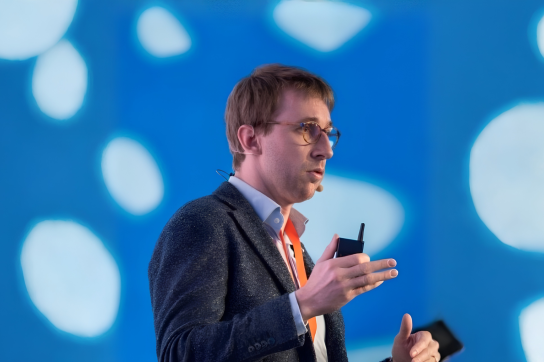
Currently the head of business development for Europe at AGC Plasma Technology Solutions, Louis Dellieu is a passionate physicist who has been putting his scientific expertise to work for AGC Glass Europe for nearly 10 years. From insect wings to specialty glass, join us on a journey through a bio-inspired world.
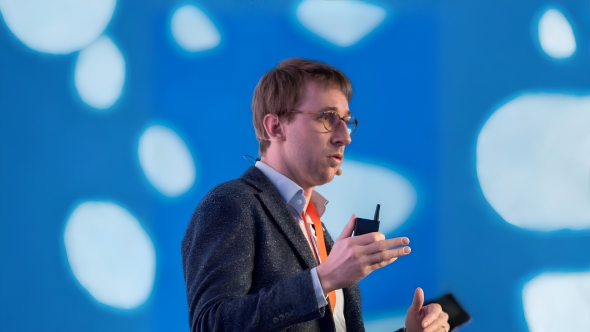
During high school, I had a teacher, Matthieu Dontaine, who managed to inspire me with his passion for physics. Since I already loved math and could pursue this program in Namur, I decided to go for it. At first, I didn’t have a favorite subject, but when I started taking courses in optics and biophotonics with Professor Jean-Pol Vigneron, I immediately found them fascinating.
Yes, bio-inspiration was a major theme during my studies at UNamur. I thought it was amazing to discover incredible physical properties right in nature. I remember Socrates, the snake in Professor Vigneron’s office. He used to tell us, “I study snake skins because they have iridescent colors, but also because they have an interesting structure that allows them to move.”
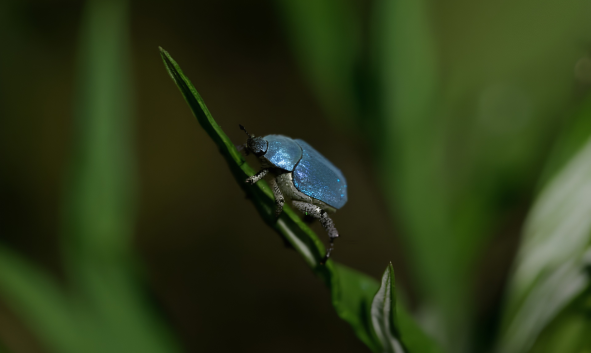
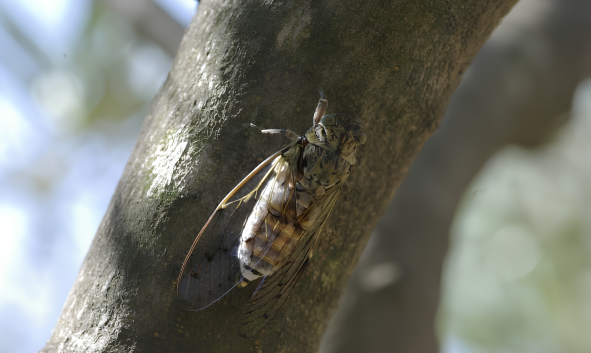
He also told us about the Morpho, that large butterfly with dazzling metallic blue wings. This fascination made me want to explore the subject further. Together with Professor Vigneron, we traveled to France, Panama, and even Bolivia to “hunt” for cicadas and butterflies in order to study their wings. Their surfaces are made up of successive thin layers that interact with light to create unique colors.
Exactly. I began my dissertation in 2013, studying the surface properties of materials such as anti-reflection and hydrophobicity. Under the excellent supervision of Dr. Michaël Sarrazin and Professor Olivier Deparis, my dissertation used quantum electrodynamics to demonstrate that by achieving specific anti-reflective properties on certain materials, we could indirectly improve their wetting properties. This was a fairly innovative approach, and we subsequently worked to verify these results experimentally.

Yes, I was lucky enough to finish my dissertation a little ahead of schedule, and barely a month after defending it, I was hired by AGC Glass Europe as a project manager. I worked on exciting projects related to specialty glass: bulletproof, blast-resistant, screen-integrated glass, antennas embedded in glass, and more...

My desire to grow led me, after three years, to Eclat Digital, a subsidiary of AGC Glass Europe. As a business developer for optical simulation software, I reconnected with the topic of my thesis during an exciting period filled with travel and discussions with high-level industry leaders.
My career path then brought me back to the heart of the product when I became product manager for FINEO: a new generation of insulating glass. This innovative product combines an ultra-thin design with exceptional thermal and acoustic performance, and is manufactured using a revolutionary process right here in Wallonia.
My professional journey ultimately led me to AGC Plasma Technology Solutions, where I’ve come full circle. Here, we manufacture and market the machines that enable the industrial-scale reproduction of the multilayer structures I once observed in nature. For example, we supplied the coaters used to produce the mirrors for the world’s largest telescope, built by the ESO in Chile. In a way, it’s a return to my roots.
On the contrary, that’s where I truly thrive! I really love the fact that this job combines a business aspect with solid technical knowledge. I get to keep traveling, meeting people, and discovering markets I’m not familiar with. I’m constantly learning, and that makes the work particularly stimulating.
Speaking of adventure, we had gone on a two-week “insect hunt” in Bolivia, in a remote area. On our last night, the camp manager told us: “I’m glad there weren’t any problems, but a big cat has been prowling around the camp for the past two or three days.” He didn’t want to freak us out. All in all, we were really lucky not to have been devoured!
These are magnificent fields of study that help us understand the universe. Without physics, we would be at a loss to understand the world around us. If physicists had never studied the electron, none of the modern electronic world would exist.
What I also particularly appreciated was being able to study at the University of Namur, a university on a human scale. The classes are small, which fosters a close relationship with the professors. You feel supported and guided there. Plus, they do cutting-edge science there that opens up so many doors! Who wouldn’t want, for example, to help develop 100% silicon anodes to increase battery life? That’s one of the challenges we’re tackling at AGC Plasma.
Based in Louvain-la-Neuve, AGC Glass Europe manufactures, processes, and markets flat glass for the construction sector (exterior glazing and interior design), the automotive industry, and other industrial sectors (transportation, solar energy, and high-tech). It is the European division of AGC, a global leader in flat glass. With approximately 12,300 employees, it operates more than 100 industrial sites across Europe.
For more information: www.agc-glass.eu (corporate website), www.agc-yourglass.com (glass for construction), www.agc-automotive.com (glass for the automotive industry).
Through its AGC Plasma Technology Solutions division, AGC Glass Europe is active in a business segment that offers its vacuum coating technologies to a wide range of industries outside the glass industry. For more information on the equipment and services offered by AGC Plasma Technology Solutions.
This article is taken from the "Alumni" section of Omalius magazine, Issue #41 (June 2026).

On June 23, 2026, the F.R.S.-FNRS published the list of recipients of various doctoral and postdoctoral fellowships and Télévie projects (cancer-focused research). Among them, numerous researchers from UNamur received funding.
Six researchers have been awarded doctoral fellowships to begin their doctoral dissertations: Rachel LAURON from the Faculty of Sciences; Océane WATELET, Vera NOVAK, Camille LAMBIET, Alionka WÉRENNE, and Théodore HARDY (who received his grant from ULB under a joint supervision arrangement with UNamur) from the Faculty of Philosophy and Letters.
Researchers from Namur also achieved great success in securing research fellow grants. Seven of them received this postdoctoral funding. They are Eleonor CELORA, Nataliya PUCHENKINA, Jérémy ARTRU and Bernardino PITOCCHELLI from the Faculty of Philosophy and Letters; Romain MERTENS from the Faculty of Law; and David TALUKDER and François WOITRIN from the Faculty of Economics, Management, and Communication at SciencesPo (EMCP).
In addition, two permanent F.R.S.-FNRS researchers at UNamur have been promoted to Senior Researcher: Francesca CECCHET and Yves CAUDANO, both members of the Department of Physics and the NISM Institute.
The Télévie call for proposals also enabled Marc HENNEQUART to secure funding to begin research aimed at identifying the metabolic determinants of the response to arginine deprivation in pancreatic and colorectal cancers.
Congratulations to them!
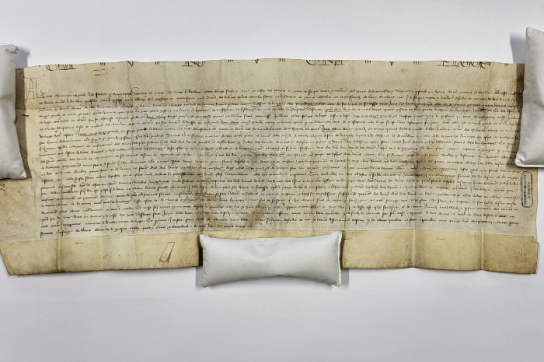
With the PHOENIX project, UNamur is revisiting a long-standing area of expertise: heritage sciences. Using cutting-edge techniques and artificial intelligence, a transdisciplinary team of experts in history, archaeology, and physics has set out to renew our understanding of heritage objects in order to uncover their origins, methods of production, and uses. Under their scrutiny: ancient coins and medieval parchments.
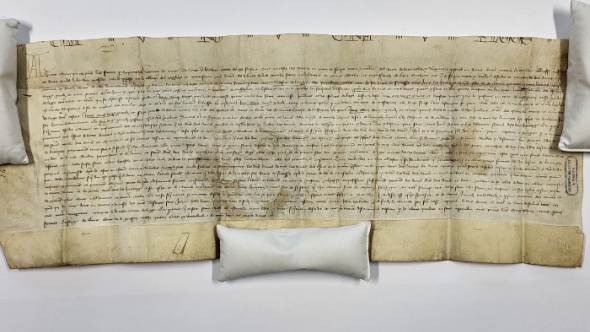
Heritage sciences are experiencing a resurgence at UNamur. This field of research—which involves applying techniques and expertise from the exact sciences (physics, chemistry, biology) to study ancient heritage objects—is reinventing itself thanks to the PHOENIX project, led by seven researchers from the Faculties of Science (Department of Physics) and Philosophy and Letters (Departments of History and Classical Languages and Literatures).
“PHOENIX emerged from the collaboration of several researchers from different backgrounds, yet all driven by the same desire to study the materiality of heritage objects. One notable figure is Julien Colaux, whose predecessor had led the first heritage science projects at UNamur’s Laboratory of Analysis by Nuclear Reactions (LARN). It’s a sort of return to our roots,” recalls Nicolas Ruffini-Ronzani, a researcher in the Department of History, president of the PaTHs Institute, and one of the project’s leaders.
With PHOENIX, researchers aim to “make” two types of objects speak: ancient coins and medieval parchments (see box). More specifically, their research is guided by three objectives:
It is in this last objective that the main challenge lies. “We won’t be able to date these objects to within a year,” warns Olivier Deparis, a professor in the Department of Physics and a member of the NISM research institute. “The idea is to provide a time frame that is as precise, if not more so, than that already provided by paleography (the study of ancient scripts) or textual analysis. If we can narrow it down to a quarter-century, that will already be a significant step forward.”
To achieve this, the PHOENIX team uses various non-invasive techniques, in particular infrared and Raman spectroscopy, time-of-flight secondary ion mass spectrometry (ToF-SIMS), and ion beam analysis (IBA). These approaches—which utilize UNamur’s state-of-the-art tools such as the ALTAÏS particle accelerator (see Omalius #36)—provide detailed information on the physicochemical composition of materials, such as the animal origin and ink formulations for parchments or the type of metal alloy for coins. “The use of the exact sciences will enrich our studies and thus allow us to better understand how these objects were produced in the past,” explains Nicolas Ruffini-Ronzani. “Contrary to what one might think, collaboration between the humanities and the exact sciences has a long history, dating back to the 19th century, and even much earlier in the case of coins.”
These tools will make it possible to examine parchments and coins down to the finest detail, at the pixel level. These in-depth analyses therefore generate a colossal volume of raw data to process. This is where artificial intelligence comes into play to speed up the processing and reveal the information “hidden” in the data, identifying major trends invisible to the naked eye.
Above all, it will provide a boost in meeting the challenge of dating the objects under study. Dated documents, such as charters, will thus be used as references to test the model’s robustness by comparing the results obtained with already known dates. “If the results are convincing, the technique could be applied to undated documents,” says Nicolas Ruffini-Ronzani. This would represent a significant breakthrough in historical research.
“The use of machine learning methods is not a panacea,” Olivier Deparis qualifies, however. “We wanted to explore it as an open-ended question to assess its benefits.”
PHOENIX could thus herald a new era for heritage sciences, where artificial intelligence—much like the phoenix after which the project is named—opens up new ways to analyze and understand materials from the past.
The PHOENIX corpus covers two types of heritage objects:

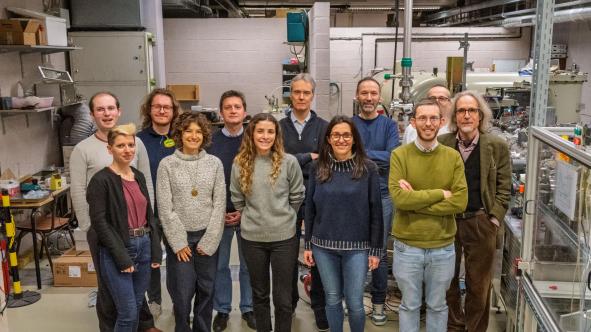
The PHOENIX project is funded by the Concerted Research Action (ARC) program from September 2024 to August 2029. It is a continuation of the interdisciplinary Pergamenum21 project, launched in 2014 by the Moretus Plantin University Library (BUMP) under the leadership of Professor Olivier Deparis and dedicated to the scientific study of parchment with a view to improving conservation practices.
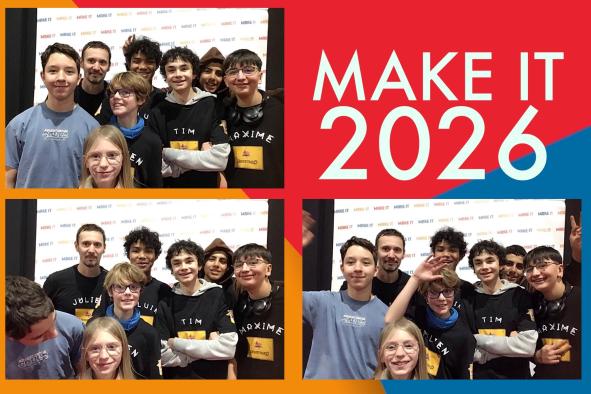
Young people from Rochefort showcased the PHOENIX project at the international First Lego League competition, a robotics contest open to students aged 10 to 16. To align with the annual theme focused on new technologies in the field of archaeology, this team from the Rochefort Youth and Culture Center drew inspiration from IBA technology to develop a research game designed to identify the origin of Ancient Greek coins modeled using a 3D printer. Their project caught the jury’s eye and earned them a spot in the national finals, which took place last March. Beyond the competition, this original game will be presented during Family Day at the Malagne Archaeological Park (Rochefort).
This article is taken from the "Eureka" section of Omalius magazine, Issue #40 (April 2026).

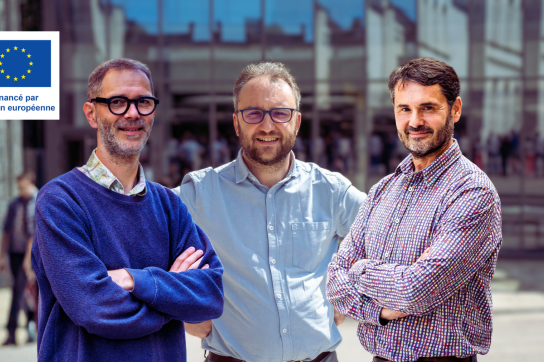
This is a great recognition of research at UNamur: three Marie Skłodowska-Curie Doctoral Networks (DN) projects have just been awarded, with a key contribution from researchers in Namur! The first, in chemistry, involves Professor Stéphane Vincent; the second, focused on ecosystem resilience, involves Professor Frédérik de Laender; and the third, in the field of photonics, benefits from the expertise of FNRS-qualified researcher Michaël Lobet.
For the MSCA Doctoral Networks 2025 call, 1,616 proposals were submitted and 141 were selected, representing a success rate of 9.6%. In this highly competitive environment, the selection of three projects involving UNamur sends a strong signal: it confirms the scientific excellence of Namur’s teams and their ability to build high-level international partnerships in support of doctoral training and innovation. Six doctoral dissertations will be eligible for funding.
Grant #101311186 from January 1, 2027, to December 31, 2031 – Project led by Stéphane Vincent – UNamur, Namur Research Institute for Life Sciences (NARILIS), in collaboration with 16 partners.
Coordination: Federico II University (Naples, Italy)

In many neurological diseases, both inflammation of the nervous system and imbalances in the gut microbiota are observed. GlycoAxis aims to go beyond simple correlations by identifying the molecular “messengers” that link the gut, the immune system, and the brain. The project focuses on complex sugars found on the surface of certain bacteria (glycans), which are suspected of playing a key role in immune activation and neuroinflammation. The goal: to better understand these mechanisms and pave the way for new diagnostic tools, imaging techniques, or biomarkers for brain health.
Grant # 101312530 from January 1, 2027, to December 31, 2031 – Project led by Frédérik de Laender – UNamur, Institute of Life, Earth and Environment (ILEE), in collaboration with 20 partners.
Coordination: Linköping University (Sweden).

In the face of climate change, pollution, and habitat fragmentation, some ecosystems weather the shocks… while others collapse. ReDiLeep focuses on a key driver of this resilience: response diversity—that is, the fact that different species (or ecological functions) do not all react in the same way to a disturbance. The project aims to better measure and model this mechanism in order to link research more directly to the needs of conservation, restoration, and public policy regarding biodiversity.
Grant # 101310184 from January 1, 2027, to December 31, 2031 – Project led by Michaël Lobet – UNamur, Namur Institute of Structured Matter (NISM), in collaboration with 7 partners.
Coordination: Eindhoven University of Technology (Netherlands)

Our digital communications rely on light: optical fibers, sensors, and photonic circuits capable of processing information. But with the explosion of data, the rise of AI, and the advent of ever-faster networks, it is becoming crucial to control light dynamically—much faster than is possible with current components, which are often “static.” SPARK is exploring a new approach: combining spatiotemporal metamaterials (nanoscale structures designed to shape light) with light that is itself “structured” in space and time. The result: reconfigurable photonic technologies for computing, imaging, and ultra-fast communications.
In 1996, the European Union established the MSCA, a set of prestigious grants designed to fund research. The MSCA Doctoral Networks fund international networks that recruit and train doctoral students. Their goal is to combine high-level research with structured training, while promoting interdisciplinary and cross-sectoral collaboration as well as mobility within Europe and beyond.

Raman Optical Activity Signatures of Flexible Systems – Focus on Cryptophane Derivatives.
In this work, I aimed to accurately simulate the Raman optical activity (ROA) signatures of flexible solute molecules in their environment. Indeed, these systems are quite challenging due to the potentially huge number of conformers—that is, local minima on the potential energy surface (PES). Furthermore, the environment can drastically alter the PES, as evidenced by experimental ROA spectra that vary significantly depending on the molecule’s conformation and its surroundings. To address this issue, we have developed a hierarchy of methodologies designated M1, M2, and M3. In M1 and M2, the so-called static approach is used: one or more conformers are identified, their geometries are reoptimized at the Density Functional Theory (DFT) level, and their vibrational signatures are simulated, typically using the harmonic approximation. The initial list of conformers was obtained using the CREST algorithm. In M1, the solvent is treated implicitly, whereas in M2, explicit solvent molecules are added around the solute molecule. In M3, we perform ab initio molecular dynamics simulations of the solute molecule surrounded by explicit solvent molecules. The spectrum is obtained by evaluating time-correlation functions along the trajectory. Our first systems of interest were cryptophane derivatives. These are flexible cage-like systems consisting of two hemispheres connected by three -O-(CH₂)n-O- (denoted Cr–nnn) linkers that exhibit chiroptical properties. For Cr–111, the smallest possible cryptophane, the M1 methodology showed good agreement with experimental data, especially in the fingerprint region. However, we demonstrated that the relative ratio between the different conformers was strongly influenced by the choice of the exchange-correlation (XC) functional in our DFT calculations, highlighting the sensitivity of the potential energy surface (PES) description. Cr–222 molecules have been shown to be more flexible, as evidenced by a greater number of significant conformers. The overall agreement with experimental data was also satisfactory. Finally, to test our different approaches (M1–M3), I performed new ROA measurements of amino acids in water at the University of Bordeaux in Dr. Daugey’s laboratory. When compared to our simulations, we clearly observed an improvement in the ROA signatures when explicit water molecules were added to our simulations (M2 vs. M1). Unfortunately, the M3 method did not perform as expected, and further investigation is needed. Overall, I have shown that the PES, as described by our various methodologies, is highly sensitive to various simulation parameters—such as the XC functional, the number and position of explicit solvent molecules, and so on—and that all of these factors strongly influence the simulated ROA signatures.
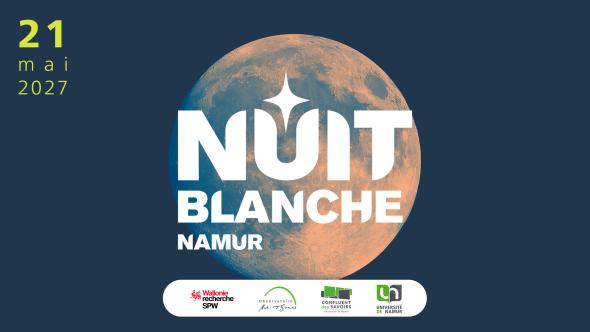
On May 22, 2026, for the third consecutive year, Namur’s cultural institutions and the University of Namur will open their doors to the public for a truly extraordinary evening event.
💶 Admission: Free
🧑 Target audience: All ages
📅 Date: Friday, May 22
🕙 Hours: 6:00 PM to 12:00 AM (continuous) (Except for Observatory tours by reservation)
📍 Location: Cour de médecine - 3 Rue Joseph Grafé, Namur
Le Confluent des Savoirs, UNamur’s research outreach and public engagement service, invites you to experience an exceptional evening at the heart of the university. Step inside spaces usually off-limits to the public and be amazed by the wealth of activities on offer.
Explore the zoology collections and discover the animal world through fascinating specimens and observations.
Then take to the skies with tours of the Antoine Thomas Astronomical Observatory—available by reservation only—for a deep dive into the mysteries of the heavens.
At the Moretus Plantin University Library (BUMP), let yourself be swept up in a captivating scavenger hunt, following in the footsteps of two iconic figures from Namur folklore: a fun adventure blending puzzles and exploration.
Also travel back in time by meeting researchers who reveal the secrets of medieval parchments. Between history and the exact sciences, discover how scientific analysis today makes it possible to identify the animal origin of these precious writing materials.
Finally, delve into the heart of today’s environmental challenges with the exhibition “Sentinels in Troubled Waters.” This cross-border research project (ORION) highlights the study and modeling of water quality in the Meuse River basin in the face of human pressures and the challenges of climate change.
A unique evening to explore, understand, and marvel… to the rhythm of science.
Whether you’re curious, passionate, or simply looking for a unique experience, the Nuit Blanche at UNamur promises a journey rich in discoveries, accessible to all.
