

NaDI
At NaDI, researchers provide innovative solutions to the new societal challenges posed by the digital revolution (eGov, eHealth, eServices, Big data, etc.). Coming from a variety of disciplines, researchers combine their expertise in IT, technology, ethics, law, management or sociology. Grouping six research centers from various disciplines, the Namur Digital Institute offers a unique multidisciplinary expertise to all areas of informatics, its applications and its social impact.
Among its main competencies are formal methods, man-machine interface, requirement engineering, modeling techniques to reason and design complex software systems, testing, quality insurance, software product lines, data bases, big data, machine learning and more generally artificial intelligence, security, privacy, ethics by design, technology assessment and legal reasoning.

Read more
This content is currently being migrated. We invite you to visit the external page of the research institute.
Spotlight
News

Article
-
Faculty of Computer Science
NaDI Institute
Research from UNamur Makes Artificial Intelligence Tools More Reliable
Artificial Intelligences (AI)
Computer science (IT)
Digital transition
Research from UNamur Makes Artificial Intelligence Tools More Reliable
Artificial Intelligences (AI)
Computer science (IT)
Digital transition
Researchers at UNamur have developed a new method that has uncovered 32 previously undetected bugs in some of the most widely used software libraries for training artificial intelligence models. Originating from a master’s thesis, this research has already led to fixes in several software programs used by millions of developers around the world.

Before artificial intelligence can recognize an image, understand a text, or answer a question, it must first be trained. To do this, developers and data scientists use specialized software libraries—true “toolboxes” that enable the construction of these AI models.
A research team comprising the University of Namur, the University of Passau (Germany), and TU Delft (Netherlands) has been studying this software. Their goal: to detect bugs that are particularly difficult to spot and that could cause a program to crash suddenly.
A New Method for Detecting Hidden Bugs
To verify that these libraries are functioning properly, researchers use software capable of automatically generating thousands of tests. The purpose of these tests is to push the programs to their limits in order to identify any potential errors.
Until now, however, these tools had a major limitation: whenever a test caused a software library to malfunction, the software responsible for running the tests would also stop working. This made it impossible to pinpoint the exact source of the problem or report it to the developers.
Researchers at UNamur have therefore devised a new method. Now, each test is run separately. If one of them causes a crash, it is isolated: the testing software continues to run, logs the error, and carries on with its analysis. This makes it possible to automatically detect bugs that previously went unnoticed.
32 bugs discovered and already fixed
Using this new method, researchers analyzed 1,648 modules from the leading machine learning libraries and uncovered 32 previously unknown bugs. Several of these affected software that has become indispensable for training artificial intelligence models.
These issues were reported to the development teams. Several have already been acknowledged and fixed. “When a bug is fixed at this level, potentially thousands, or even millions, of users benefit,” notes Xavier Devroey, a professor in the Faculty of Computer Science at UNamur and a member of the PReCISE research center at the Namur Digital Institute (NaDI). Beyond these fixes, this research helps make the software on which so many artificial intelligence applications rely today more reliable.
Research that grew out of a thesis
This breakthrough originated from Lucas Berg’s master’s thesis, completed at UNamur under the supervision of Professor Xavier Devroey. As part of his research internship, Lucas Berg then joined Professor Annibale Panichella’s team at TU Delft to work on Pynguin, the open-source automated test generation tool developed at the University of Passau by Professor Gordon Fraser’s team, mentioned earlier.
Initially, his goal was to improve this tool. By preventing crashes while discovering bugs, this first contribution subsequently caught the attention of researchers at the University of Passau, who were facing the same problem, leading to an international collaboration that would result in a joint scientific publication.
Lucas Berg is currently pursuing a Ph.D. at the Faculty of Computer Science at UNamur under the supervision of Professors Wim Vanhoof and Xavier Devroey. The results of this research were presented at the IEEE International Conference on Software Testing, Verification, and Validation (ICST 2026), one of the most prestigious international conferences in the field of software testing.
This research also received support from the Wallonia Public Service (SPW Research) and Wallonia-Brussels International. This recognition underscores the quality of this work and its significance to the international scientific community.
The Namur Digital Institute (NaDI)
At NaDI, researchers develop innovative solutions to the new societal challenges posed by the digital revolution (eGov, eHealth, eServices, big data, etc.). Drawing from a variety of disciplines, the researchers combine their expertise in computer science, technology, ethics, law, management, and sociology. Comprising six research centers, the Namur Digital Institute offers unique multidisciplinary expertise in all areas of computer science, its applications, and its social impact.

News
-
Faculty of Law
NaDI Institute
NaDI doctoral students are launching “What If AI…,” a lecture series aimed at “demystifying artificial intelligence”
Artificial Intelligences (AI)
NaDI doctoral students are launching “What If AI…,” a lecture series aimed at “demystifying artificial intelligence”
Artificial Intelligences (AI)
Through five interdisciplinary lecture-workshops, doctoral students from UNamur NaDI invite the general public to develop a critical perspective on artificial intelligence, which is already transforming our daily lives.

Artificial intelligence is now accessible to everyone. Yet, while many people use it every day, few truly understand how it works, its limitations, or the issues surrounding it. To address this need, the Namur Digital Institute (NaDI) is launching “What If AI…,” a series of lecture-workshops open to the general public, coordinated by doctoral students Elisa De Coster (PReCISE) and Aline Nardi (CRIDS).
“The idea behind the project is to demystify artificial intelligence,” begins Elisa De Coster. “As researchers, we’re fortunate to be aware of the issues raised by AI. We wanted curious members of the public to have access to these keys to understanding as well.”
“Before 2022 and the rise of ChatGPT, these tools were limited to a niche audience,” continues Aline Nardi. “Since then, the use of AI has become widespread at record speed, but reflection on the societal implications of these uses has not kept pace. This series of lectures is an invitation to take a step back and understand what’s happening behind the scenes.”
Different Perspectives for a Better Understanding of AI
Each session, lasting about two hours, will bring together the perspectives of several specialists. A doctoral student in computer science will explain the technical workings of AI, while his counterpart in law will address the legal, ethical, and societal implications.
Speakers from the professional world will share their real-world experience, and an interactive activity will allow the audience to put these concepts into practice. Interactivity, interdisciplinarity, and accessibility to the general public are the three pillars of the project.
Five lectures exploring the challenges of AI
Each event will address a different social issue:
- October 1, 2026 – La Nef
What if AI were your confidant?
Can you confide in a chatbot? What are the risks? - October 22, 2026 – PA02
What if AI were wrong?
How can we recognize errors in artificial intelligence and maintain our critical thinking? - November 19, 2026 – Caméo
What if AI were subjective? Is artificial intelligence
truly neutral, or does it perpetuate certain biases? - February 25, 2027 – Quai 22
What if AI stole your creations?
What challenges does generative AI pose in terms of copyright and intellectual property? - March 18, 2027 – TRAKK
What if AI knew you too well?
What happens to our personal data, and to what extent can AI learn to know us?
While Elisa De Coster and Aline Nardi coordinate the project, they emphasize that it is, above all, a collaborative effort. The lecture series is led by ten doctoral students from the PReCISE and CRIDS research centers: Elisa De Coster, Adélaïde Couplet, Jules Dejaeghere, Pierre Luycx, Pierre Poitier, Aline Nardi, Alix Gobert, Florian Jacques, Martin Rappe, Lionel Goffaux, and Olga Thiry. Together, they aim to help the general public better understand artificial intelligence, without demonizing it or presenting it as a miracle solution.
Research at NaDI-CeRCLe
Article
-
Faculty Economics Management Communication Politics (EMCP)
NaDI Institute
Center for Research in Marketing and Service Management (CeRCLe)
Wafa Hammedi: Impact as a Compass
Marketing
Wellness
Article
-
Faculty Economics Management Communication Politics (EMCP)
NaDI Institute
Center for Research in Marketing and Service Management (CeRCLe)
Wafa Hammedi: Impact as a Compass
Marketing
Wellness
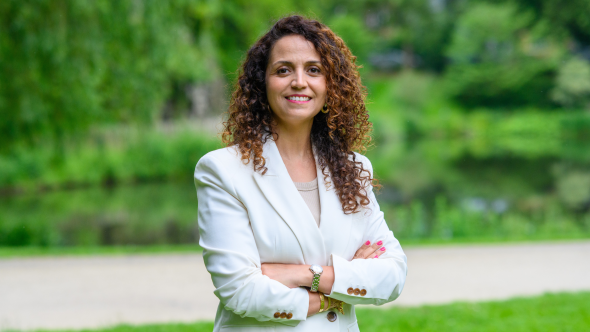
Through research, teaching, and knowledge sharing, Wafa Hammedi, a professor at Sciences Po’s Faculty of Economics, Management, and Communication (EMCP), has charted a path guided by her convictions. Far from the performance-driven clichés typically associated with marketing, she advocates for socially engaged research that serves society, equity, and inclusion.
You specialize in services and innovation marketing. What led you to focus on this area of research?
Service marketing appealed to me because it directly touches people’s real lives: seeking medical care, learning, getting around, accessing public services, interacting with technology, or receiving support in times of vulnerability. Unlike product marketing, which focuses more on tangible goods, service marketing is concerned with experiences that are often intangible, subjective, and deeply human.
This field allows us to analyze what defines the quality of an experience: human or digital interactions, trust, emotions, the co-creation of value, as well as issues of social justice, ethics, inclusion, and dignity. The same experience can be perceived differently depending on the individual, their resources, their situation, and the context of their interaction. This is precisely what makes this field of research complex, fascinating, and essential.
What motivates me today is understanding how organizations and institutions can design services that are not only effective or innovative, but also fairer, more humane, and more responsible. For me, service marketing is a tool for transforming people’s experiences and contributing, in very concrete ways, to people’s well-being and to a more inclusive society.
Speaking of which, how do these issues of inclusion, equity, and vulnerability play out in your research?
These questions are at the heart of my work. From this perspective, services are not reduced to a simple transaction but are situated within an ecosystem involving multiple stakeholders. For me, inclusion and equity are not abstract concepts: they prompt us to ask who is left out of certain services, who faces greater difficulties in being heard, understood, or served with dignity, and how to design interactions that strengthen autonomy rather than creating new forms of exclusion. My goal as a researcher is to address these issues and propose concrete recommendations in close collaboration with all stakeholders. In my view, academic research has a responsibility to engage with important societal issues and to help make the service system more inclusive and respectful of people’s dignity.
Image

These questions are at the heart of my work. They are not abstract concepts: they prompt us to ask who is being left behind and how we can design interactions that foster autonomy rather than creating new forms of exclusion.
I also advocate for management research that is more open, more inclusive, and truly connected to the realities of the world. All too often, our field remains dominated by a Europe–United States lens, which leaves other contexts, other voices, and other experiences in the shadows. However, to remain relevant, management science must better integrate the diversity of human, social, cultural, and geographic realities. This commitment is not merely an intellectual conviction; it translates into concrete actions. For example, through the NEXSER program—an ambitious initiative supported by the European Union via Erasmus+—we have built a network of excellence with partners from the Global South. These collaborations—fueled by research stays, scholarly exchanges, and joint research projects—enable us to broaden our perspectives, challenge our established frameworks, and produce research that is more grounded, more accurate, and more useful. Whether through my institutional responsibilities, my international collaborations, or my engagement within my scientific community, I strive to contribute to academic ecosystems where scientific excellence, societal impact, and personal fulfillment advance hand in hand. For me, research without borders is also research that opens doors.
You have just received the Jay Kandampully Journal of Service Management (JOSM) Mentorship Award, which recognizes support for and commitment to the career development of early-career researchers. What does this award mean to you?
It is a true honor, and this recognition touches me deeply. This appointment serves as a reminder that academic impact is not measured solely by publications, but also by the ability to teach, support, and help others grow. It recognizes a central aspect of my academic identity: mentoring.
I am convinced that supporting the next generation of researchers means shaping the future of research and society. It is essential, demanding work—yet often unseen. Helping young researchers find their voice in a highly competitive and demanding academic world, gain confidence, feel validated, and develop high-quality, meaningful research is, for me, just as important as conducting research myself. In a way, it means guiding them as they learn a demanding profession. This commitment is reflected in my participation in committees, thesis defense panels, and large-scale mentoring programs at the national and international levels. When supervising my own doctoral students, I try to encourage them to nurture their passion for scientific research, to develop an academic mindset, to believe in their contributions, and to conduct research that transcends their individual trajectories to be of real benefit to society. For me, mentoring is not limited to the acquisition of scientific or methodological skills. It also involves passing on values that are fundamental to the academic world: integrity, rigor, responsibility, intellectual openness, respect for others… as well as a commitment to producing research that is useful, robust, and capable of meeting the highest scientific standards.
This nomination also holds special significance for me, as it comes from people I deeply respect, both in Belgium and elsewhere. The fact that senior colleagues and young researchers took the initiative to submit this nomination without my knowledge makes this recognition even more valuable and deeply personal. I sincerely enjoy interacting with young researchers. These interactions give great meaning to my academic mission. I enjoy taking the time to mentor them—whether they’re my Ph.D. students or not—with a level of expectation that I hope is always supportive. As I often tell them: “Small details make a big difference.” I am therefore deeply moved to see this long-term effort recognized by my peers.
You are participating in the social innovation lab, which raises students’ awareness of the Sustainable Development Goals through hands-on projects. How does this approach change the way they learn?
My approach as a teacher aligns with the one I advocate as a researcher: helping students push themselves while bringing theoretical concepts to life. This approach shifts them from a mindset of simply absorbing content to one of active engagement. In this social innovation lab led by a highly dynamic team of instructors, students step into the role of “change makers” to develop solutions to pressing societal issues related to the Sustainable Development Goals, such as poverty, disability, and so on. We strive to bring them as close as possible to the issue at hand so they can shift their perspectives and better understand the realities experienced by others. In this way, they learn to connect concepts to human realities, collaborate, experiment, take responsibility for their choices, and reflect on the consequences of their actions. We use innovative and immersive teaching methods. For example, we recently developed virtual reality scenarios that allow students to experience the daily life of a visually impaired person. In addition to stimulating their capacity for innovation, this course fosters their empathy—an essential quality for future leaders. I strongly believe in an educational approach that produces not only good students, but also citizens and future professionals capable of considering the impact of their actions. I am convinced that better training for our managers today contributes to building a better, fairer society that is more attentive to everyone.
Quick Resume
Wafa Hammedi has been a professor and researcher in services marketing and innovation at the University of Namur since 2010. Her award-winning work explores how services can serve as drivers of inclusion, equity, and societal transformation. She holds editorial positions at leading academic journals and mentors doctoral students who have received research awards.
The Center for Research in Marketing and Service Management (CeRCLe)
Wafa Hammedi heads NaDI-CeRCLe, the UNamur Research Center for Marketing and Service Management. Established in 2005 within the Faculty of Economics, Management, and Communication Sciences (EMCP), it brings together a dynamic team of faculty members, researchers, doctoral students, and practitioners in the fields of marketing and service management. The center places impact at the heart of its work, particularly in the areas of consumption, responsible and ethical management, new models of sustainable marketing, and inclusion and vulnerability. NaDI-CerCLe is internationally recognized as a leading research center by the American Marketing Association (SERVSIG) and the French Marketing Association (AFM).
This article is taken from the "Expert" section of Omalius magazine, Issue #41 (June 2026).

Insight Out: The Series That Makes Research Accessible
With INSIGHT OUT, Confluent des Savoirs has launched a popular science web series based on an idea by Wafa Hammedi. The first three episodes focus on research in the EMCP that is little known to the general public and showcase the full diversity of a field often wrongly reduced to a few clichés. The project is intended to eventually highlight research from all of our university’s schools.

Article
-
Faculty of Law
NaDI Institute
Continuing Education: An Opportunity for Universities
Pedagogy
Article
-
Faculty of Law
Faculty Economics Management Communication Politics (EMCP)
Faculty of Education and Training Sciences
NaDI Institute
Institute
IRDENa Institute
Continuing Education: An Opportunity for Universities
Pedagogy
The days when people chose a career once and for all and when experience alone was enough to climb the career ladder seem to be over. Nowadays, lifelong learning has almost become the norm. “There is clearly a trend in this direction, particularly in the context of automation and artificial intelligence, which makes acquiring new skills all the more important,” says Michel Ajzen, a professor in the Management Department at the Faculty of Economics, Management, and Communication at SciencePo, UNamur, and a member of the Namur Digital Institute. “And it’s not a generational issue: whether you’re 30, 40, or 50, this need exists.”

While many companies offer training programs for their employees, it also appears that the “responsibility for employability” has gradually shifted to the workers themselves, who are now expected to take greater control of their careers. “In the past, the boss was seen as responsible for the employee’s development—and even their personal fulfillment—sometimes even beyond the workplace,” notes Michel Ajzen. “But over time, this responsibility for employability has been diluted. ” This trend has been reinforced by new “career scripts,” which are heavily based on mobility. “When I ask students how many employers they think they’ll have in their lifetime, the average answer is six,” the professor continues. “This means that even before entering the workforce, they already have the idea that they’ll move from one employer to another, which can lead them to feel ‘responsible’ for their own careers and thus potentially to pursue training on their own initiative.”
Career Strategies
Getting an education, sure, but in what? And how? As Michel Ajzen explains, this choice depends largely on the “career tactics” adopted by workers. “Depending on their stage of life, they may adopt tactics that are more employment-oriented, with the goal of quickly securing a job to make ends meet,” he explains.
“At other times, they’ll adopt a strategy more focused on employability, with the goal of gradually acquiring the knowledge that will allow them to advance—whether through vertical mobility—within the same company—or horizontal mobility—to another company or a different position. Finally, there’s the ‘meaning’ approach: pursuing training that will lead them to a job that makes them even more eager to get out of bed in the morning…”

Michel Ajzen
Furthermore, training periods are often seen by workers as a breather: an opportunity to step back and “lift their heads up from the handlebars” in what is often a high-pressure workday. This “break” is now governed by various policies. For example, the law of October 3, 2022, guarantees private-sector employees an individual right to training equivalent to 5 days per year for full-time workers. This training may be organized by the employer or left to the employees’ discretion (subject to the employer’s oversight). “However, some companies are not required to guarantee this right to their employees. This is particularly the case for companies with fewer than ten employees,” explains Charlotte Lambert, an associate professor and specialist in labor law. “In labor law, there are also collective bargaining agreements that supplement the law on a sector-by-sector basis and may provide for additional days of training.”
CEP and Time Credit
When an employee wishes to pursue more extensive training—for example, a university certificate program that typically lasts more than five days per year—they can also take advantage of other programs that allow them to maintain all or part of their pay. “Paid educational leave, or CEP—which falls under regional jurisdiction—allows employees to take a recognized training course of at least 32 hours, including initial training,” explains Charlotte Lambert. “The employee retains their pay, while the employer is compensated by the ONEM.”
The other option is “training-related” time credit: this regional program, which exists only in the private sector, allows employees to temporarily reduce or suspend their working hours without affecting the validity of their contract. In this case, the employee receives compensation directly from the ONEM, subject to certain age and seniority requirements. Time credit is also limited to a period of 36 months. “These various programs are not necessarily well known to the public,” comments Charlotte Lambert, “which also explains why many people are discouraged from pursuing training, particularly out of fear of losing their job or having to reduce their working hours and, consequently, their pay.” Furthermore, they are only available to workers with relatively stable employment status (permanent contracts, long-term fixed-term contracts, etc.). “Specific but similar mechanisms exist in the public sector. For the self-employed, however, taking paid leave or using time credits is not an option. They must therefore bear the indirect cost of their training themselves,” the labor law specialist adds.
The Superheroes of the Off-Peak Schedule
Given the need for worker training, universities naturally have a role to play. The “Paysage” decree of November 7, 2013, stipulates that they are authorized to organize continuing education programs accredited by ARES (Academy of Research and Higher Education). “Under the terms of the decree, continuing education does not refer to bachelor’s or master’s degrees, but rather to certificates,” explains Charlotte Lambert. Thus, to avoid any misunderstanding, students should be aware that earning a university certificate is not the same as earning an academic degree and therefore does not confer the same advantages in the job market.
On the other hand, there is indeed the possibility for working professionals to earn a bachelor’s or master’s degree through part-time study, as is the case at the UNamur School of Law. “The unique feature of a bachelor’s degree—and ideally a master’s degree—is that it represents a true fresh start,” emphasizes Mathieu Rolain, academic coordinator of this program and researcher at the Vulnerabilities & Societies (V&S) Center at the Transitions Institute. “Often, it’s a complete career change and sometimes even the fulfillment of a dream: some are 50 years old and are about to begin their bar exam preparation…”. In Block 1 of the Faculty of Law’s part-time program, there are about 50 to 60 enrolled students each year: 10 to 15 of them will graduate in Block 3. “These students are extremely supportive of one another; they share their notes and help each other out when one of them is struggling,” observes the coordinator.
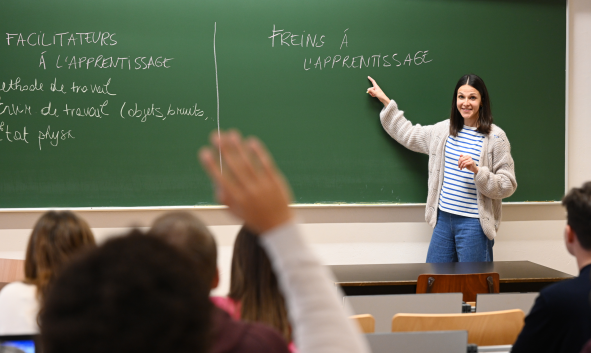
In the same vein, UNamur is committed to tailoring its programs as best as possible to this group. “Many have family responsibilities and sometimes live far from Namur,” continues Mathieu Rolain. “All of our classes are therefore recorded and posted online. We also give them access to staff parking lots and notify them of exam dates well in advance… We try to show them that we support them and understand them. ” Because for these adults with busy professional and personal lives, (re)starting university studies “in evening classes” requires extraordinary discipline and determination, as well as the unconditional support of those around them. “I really admire them a lot,” enthuses Mathieu Rolain. “To me, they’re superheroes. We’ve had medical specialists who came in after their workday, single parents… They’re very unconventional individuals with brilliant backgrounds. They’re also a very demanding group who are always watching your every move—which, for us teachers, is incredibly stimulating.” Because by opening its doors to an experienced audience, the academic world, too, continues to learn.
UNamur, a pioneer in continuing education for teachers
Since the 1980s, the University of Namur has distinguished itself through its expertise in continuing education for teachers, covering both didactic and psychopedagogical aspects.
“It was the Faculty of Philosophy and Letters that initially launched this initiative to offer what were then called ‘refresher courses’ to French teachers,” says Sandrine Biémar, coordinator of the Center for Continuing Education for Teachers at the Faculty of Education and Training Sciences (FaSEF), a professor, and a member of the Institute for Research in Didactics and Education (IRDENa). “ Subsequently, more general training courses on psychopedagogical aspects followed: these were initially organized by the Department of Education and Technology, which has since become FaSEF. Similarly, in the 1990s, the Faculty of Sciences and the Faculty of Economics developed their own centers for continuing teacher education.” These four centers for continuing teacher education are now united under the “Salle des Pros.”
While the decree of June 17, 2021 (Book 6 of the Education Code) formalizes the rights and duties of teaching staff regarding continuing education, this is by no means a new concept for the profession.
“The profession is so complex and subject to so many changes—particularly in curricula and teaching methods—that it is important for teachers to view their career as a continuous process,” insists Sandrine Biémar. “That is why, starting with initial training, we inform students about these opportunities for continuing education.”
The goal is to train “reflective practitioners” capable of questioning their own practices in order to refine and adapt them over time.
“We try to bridge the gap between the world of research and the world of practice: so that we can inform teachers about new studies, but they can also inform us about what’s happening in the field,” the coordinator continues. “The Salle des Pros serves as this space that opens us up to the world.”
The Pros' Room
The Dynamics of Continuing Education for Teachers at the University of Namur: A Crossroads Between Research and Practice!
The Salle des Pros is, above all, a space dedicated to addressing the questions teachers have about their practice. At the intersection of practice and research, it tackles issues that arise in the field through reflection, discussion, and collaborative problem-solving.

Differentiation and Language of Instruction
In addition to the mandatory and free training courses it offers as a “training provider” for teachers, UNamur also offers several certificate programs focused on specific topics. “Teachers voluntarily enroll in these certificate programs, in addition to their mandatory training and outside of their teaching hours, and cover the costs themselves,” explains Sandrine Biémar. Among the topics generating growing interest in the teaching community are differentiated instruction practices. “On a daily basis, teachers are faced with groups of students where each has different needs and learns at different paces,” explains the coordinator. “ Yet there is a whole range of methodologies that allow for these differences to be taken into account, which is a very important issue today, especially with the implementation of the common core curriculum.” Training programs focused on the language of instruction—which are central to combating inequalities—have also expanded significantly. “We make teachers aware that they use language specific to the school setting—‘sit down,’ ‘take out your notebook,’ ‘analyze,’ ‘color in’—and that this language must be made explicit. We need to tell students why we’re having them do this or that.” Finally, AI is, unsurprisingly, one of the new topics in continuing education for teachers, as well as for other audiences (managers, decision-makers, etc.). A new university micro-course on artificial intelligence has been offered since early 2026.
The Benefits of a Flexible/Adapted Schedule
- Identical Degree: The degree awarded is the same as that for the daytime program.
- Recognition of prior learning: Prior learning is recognized and credited.
- Schedule: A calendar and class times tailored to adult learners.
- Access: A campus that’s easily accessible by both train and car.
- Structure: About ten hours of classes per week.
Our staggered/adapted schedules
High School Graduates
- Law
- Economics and Business Administration
- Computer Science
Master's
- Economics and Management
- Education (Sections 4 and 5)
- Computer Science
Specialized Master’s Programs
This article is from the "Issues" section of Omalius magazine, Issue #41 (June 2026).
Agenda
What if AI made mistakes? (ESIA#2)
Artificial intelligence (AI)
22
2026
18:30
-
20:30
Université de Namur - rue de Bruxelles, 61 - 5000 Namur
What if an AI responded to you with confidence… while being completely wrong? During this second session of the “What If AI?” series, test your ability to spot its mistakes and discover why even advanced tools can produce false results.
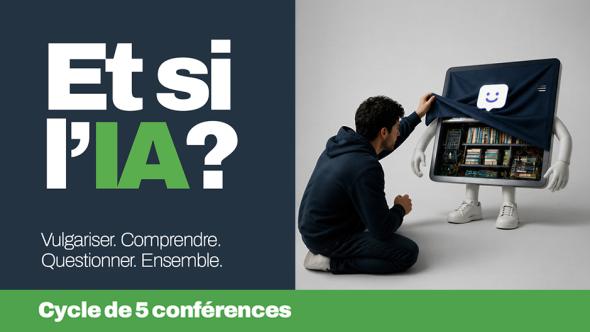
Is artificial intelligence reliable? Can it make up information without us realizing it? This second session in the “What If AI?” series sheds light on the phenomenon of AI “hallucinations”—errors that can sometimes seem credible and may have significant consequences, particularly in professional settings.
Drawing on real-world examples, such as reports containing false references, the speakers will explain why these errors occur, what their technical causes are, and how to detect them. An interactive activity will invite the audience to distinguish between true and false information in AI-generated responses, while exploring the limitations of solutions such as prompt engineering.
The goal: to develop a critical perspective on AI responses and gain a better understanding of its limitations.
What if AI were as subjective as you are? (ESIA#3)
Artificial intelligence (AI)
19
2026
18:30
-
20:30
Université de Namur - rue de Bruxelles, 61 - 5000 Namur
What if AI inherited our biases and blind spots? During this third session of the “What If AI?” series, compare, question, and experiment to uncover the subjectivity hidden behind seemingly neutral answers.
AI is often perceived as neutral and objective. But is that really the case? This third session of the “What If AI?” series examines the biases and discrimination that can be embedded in artificial intelligence systems, drawing on striking examples such as biased recruitment and judicial algorithms.
Through demonstrations and interactive experiments, the session aims to debunk the myth of technological neutrality and explore ways to design more equitable and inclusive systems.
What if AI stole your creations? (ESIA#4)
Artificial intelligence (AI)
25
2027
18:30
-
20:30
Université de Namur - rue de Bruxelles, 61 - 5000 Namur
Creating with AI—but at what cost to authors and artists? During this fourth session of the “What If AI?” series, explore the blurred lines between inspiration, reproduction, and appropriation.
Artificial intelligence creates, imitates, and transforms content on a large scale. But who owns these creations? And what happens to the works used to train these models? This fourth session of the “What If AI?” series addresses the intellectual property issues related to generative AI.
Drawing on recent cases involving the use of copyrighted works to train models, the speakers will explain the tensions between technological innovation and respect for copyright.
This session will provide insights into the current challenges facing intellectual property law in the face of these technologies and the implications for creators.