« Au cœur des mécanismes de réponse et de régulation cellulaires »
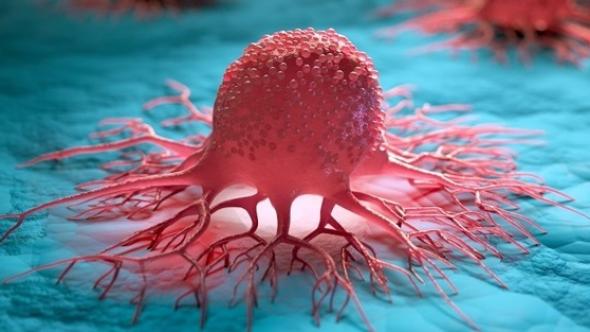
L’Unité de Recherche en Biologie Cellulaire (URBC) comprend une quarantaine de chercheurs et techniciens qui étudient dans le domaine de la biologie cellulaire et moléculaire.
Les recherches sont consacrées à la compréhension des mécanismes de réponse cellulaire dans les situations normales et pathologiques.
Spotlight
News
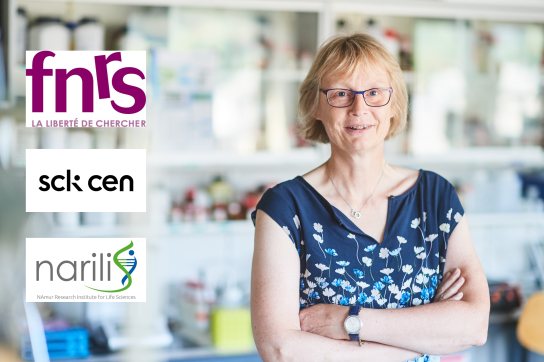
Carine Michiels awarded the SCK CEN "Roger Van Geen" Chair 2025
Created on the initiative of the Belgian Nuclear Research Center SCK CEN, this Chair is awarded every two years by the F.R.S.-FNRS and the FWO to recognize a leading researcher in the field of nuclear sciences and their applications. In 2025, the Chair will pay tribute to Carine Michiels' brilliant career and her outstanding contributions to radiobiology and cancer research.
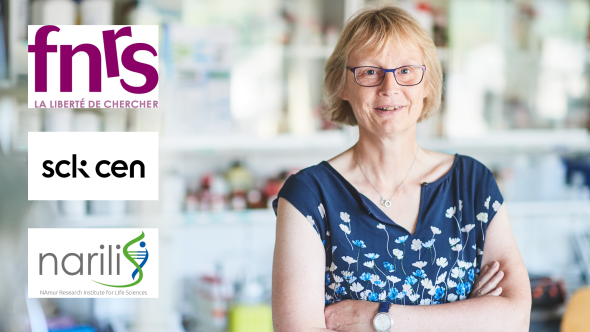
Over the past two decades, Carine Michiels, professor of cell biology at UNamur and member of the radiobiology group at UNamur's life sciences research institute (NARILIS), has significantly advanced our understanding of the molecular mechanisms underlying the interaction between radiation and cancer cells. Within the Institute's cancer center, her research is based on a strong integration of cell biology and radiation physics, supported by a long-standing collaboration with the Institute's physicists, Professor Stéphane Lucas and Professor Anne-Catherine Heuskin. By bridging the gap between biology and physics, his team has conducted cutting-edge interdisciplinary research with the aim of improving the effectiveness of radiation therapy for cancer.
Preserving healthy cells
One of their main achievements is the development of innovative therapeutic approaches that combine advanced irradiation techniques, such as proton therapy, with unique nanohybrid compounds. These compounds, consisting of gold nanoparticles coupled with targeted antibodies, act as radiosensitizers, increasing the sensitivity of cancer cells to radiation while limiting damage to surrounding healthy tissue.
By paving the way for more precise and personalized cancer treatments, Carine Michiels' research is fully in line with the objectives of the SCK CEN Chair. Her achievements illustrate how fundamental research in radiation sciences can translate into significant advances in medicine and public health.
Long-standing collaborations
The University of Namur and SCK CEN have been collaborating for many years, notably through joint research projects and co-supervision of theses, including most recently that of Naomi Daems, for which Carine Michiels and Stéphane Lucas were co-supervisors alongside Professor Sarah Baatout (SCK CEN). Thanks to the latter, Carine Michiels joined the group of experts of the Belgian delegation to UNSCEAR (United Nations Scientific Committee on the Effects of Atomic Radiation), an international UN committee set up to assess the effects of ionizing radiation on human health and the environment.
I would particularly like to thank my colleagues Sarah Baatout from SCK CEN, Stéphane Lucas and Anne-Catherine Heuskin from UNamur for their research collaboration. I would also like to thank Télévie from F.R.S.-FNRS and the strategic research project Proton Therapy Research in Wallonia (PROTHER-WAL) from SPW Recherche for their support!
A series of conferences in Mol
In addition to receiving a personal award, the SCK CEN Chair holder will give an inaugural lecture and a series of lectures for students, SCK CEN researchers, and the Belgian nuclear community in general during a scientific visit to the Research Center in Mol, Belgium. The series of lectures will be organized in collaboration with the SCK CEN Academy.
Namur Research Institute for Life Sciences (NARILIS)
NARILIS seeks to stimulate two-way interactions between basic researchers and clinicians, and to build bridges between the laboratory and the patient's bedside. NARILIS therefore aims to facilitate the translation of basic research findings into clinical applications. Its mission is to promote multidisciplinary research in order to improve human and animal health and quality of life.
Plants against steatotic liver disease, a HEPATANT project!
At UNamur, research is not confined to laboratories. From physics to political science, robotics, biodiversity, law, AI, and health, researchers collaborate daily with numerous stakeholders in society. The goal? To transform ideas into concrete solutions to address current challenges.
Focus #1 | The HEPATANT project
HEPATANT is a project run by the Wagralim Competitiveness Cluster and coordinated by ORTIS Laboratories, a company that has been a pioneer in the field of phytosanitary products (plant-based dietary supplements) for 60 years. It aims to find a natural treatment for fatty liver disease. Several partners are involved in the project, including Professor Thierry Arnould (UNamur, URBC-Narilis).
Our metabolism naturally leads to the accumulation or synthesis of fat. Certain cells are designed for this purpose: these are called adipocytes. The main goal is to be able to mobilize fat and release fatty acids "when needed." The problem is that if there is an excess of nutrients, certain cells in the body, which are not designed to do so, can also accumulate fat in tissues such as the liver, heart, or muscles, which can cause health problems. This is known as "lipotoxicity."
Metabolic dysfunction-associated steatotic liver disease (MASLD) is an accumulation of fat in the liver linked to metabolic disorders associated with metabolic syndrome, obesity, diabetes, or excessive alcohol consumption. Initially, it is often asymptomatic but can progress to inflammation, fibrosis, cirrhosis, or even liver cancer. However, it is reversible in its early stages (steatosis). Treatment is based on weight loss, a healthy diet (reduced sugar/fat intake), and physical exercise, as few specific drugs have been approved by the FDA (Food and Drug Administration) at this time. Dietary supplements—based on plants known to be beneficial—are often used to treat this type of condition, but there is little or no scientific and mechanistic evidence on the actual effects of these products.
If the effectiveness of a dietary supplement or combination of supplements could be demonstrated, it would be possible to intervene at the primary stage of the condition and undoubtedly prevent this liver disorder, thereby halting or at least slowing its progression to advanced or even irreversible stages. This is the aim of this project, in which Professor Thierry Arnould was chosen for his expertise in lipid metabolism. Professor Arnould and postdoctoral researcher Célia Thomas are testing plant extracts (including hops) in vitro on fat-laden cells to investigate the effects that increase or decrease lipid accumulation.
The originality and feasibility of the project lie in the alliance of scientific experts internationally recognized for their expertise in biomedical and pharmaceutical sciences, and in technological and agronomic sciences, with renowned industrialists in their field of expertise related to the project's needs.
In addition to its main objective of creating an effective formulation against hepatic steatosis by combining the best plants or plant substances, this project also aims to generate economic growth, create and sustain jobs in Wallonia, and contribute to the international reputation of the Walloon partner universities: UCLouvain and UNamur.
The partners of the HEPATANT project
- Prof. Thierry Arnould – UNamur, URBC, Narilis | Expertise: The URBC-NARILIS laboratory has extensive expertise and experience in cell differentiation, metabolism, and lipid metabolism in obesity and adipose cells. It also has excellent expertise in the field of hepatocytes and hepatogenic differentiation from precursors and stem cells (collaboration with Professor P. Renard, UNamur, URBC-NARILIS).
- Prof. Isabelle Leclercq - UCLouvain (IREC/GAEN) | Expertise: Pathogenesis of liver diseases in in vivo models.
- Remi Desmet – UCLouvain (Louvain University Farms - FERM) | Expertise: Agronomic research - As a UCLouvain technology platform, FERM works with farmers and partners to support the transition to more sustainable agricultural models.
- Alexandre Dumont de Chassart - Yakima Chief Hops | Expertise: Production of hops and hop-derived products.
- Caroline Devillers – Bel go Bio | Expertise: Agricultural cooperative
Competitiveness Clusters in the Walloon Region
Since their creation in 2006, competitiveness clusters have brought together companies, accredited research centers, and universities around ambitious collaborative projects. Supported and funded by the Walloon Region to stimulate innovation and economic growth, competitiveness cluster projects are organized around six strategic sectors: biotechnology (BioWin), aerospace (SkyWin Wallonia), logistics (Logistics in Wallonia), green chemistry (GreenWin), mechanical engineering (Mecatech), and food system transition (Wagralim). aerospace (SkyWin Wallonia), logistics (Logistics in Wallonia), green chemistry (GreenWin), mechanical engineering (Mecatech), and food system transition (Wagralim).
The projects aim to develop innovative products, services, or processes, creating jobs and strengthening international competitiveness. UNamur is heavily involved in these projects.
Wagralim, the Walloon agri-food cluster, has more than 300 members working to stimulate innovation and collaboration within the food ecosystem and support stakeholders in their responsible development and sustainable transition.
From fundamental to applied research, UNamur demonstrates every day that research is a driver of transformation. Thanks to the commitment of its researchers, the support of its partners from all walks of life, funders, industrial partners, and a solid ecosystem of valorization, UNamur actively participates in shaping a society that is open to the world, more innovative, more responsible, and more sustainable.
To go further
This article complements our publication "Research and innovation: major assets for the industrial sector" taken from the Issues section of Omalius magazine #39 (December 2025).
21 new F.R.S.-FNRS grants for research at UNamur
The F.R.S.-FNRS has just published the results of its various 2024 calls. Equipment calls, research credits and projects, FRIA doctoral grants and Mandant d'Impulsion Scientifique (MIS), there are many instruments to support fundamental research. Find out more about UNamur's results.
The "research credits and projects" call resulted in 14 grants for ambitious new projects. These include two "equipment" grants, five "research credits (CDR)" grants and seven "research projects (PDR)" grants, including one in collaboration with the University of Applied Sciences and Arts of Western Switzerland. The FRIA doctoral research support call will fund 6 doctoral fellowships.
A prestigious Mandat d'Impulsion Scientifique (MIS) has also been obtained. This 3-year funding supports young permanent researchers wishing to develop an original and innovative research program while acquiring scientific autonomy within their department.
Results in detail
Call for Equipment
- Max Collinet, Institut ILEE
- Catherine Michaux, with Stéphane Vincent and Guillaume Berionni, co-sponsors, Institut NISM
Call for Research Credits (CDR)
- Thierry Arnould, Institut NARILIS
- Thomas Balligand, Department of Medicine
- Danielle Leenaerts, Institut PaTHs
- Denis Saint-Amand, Institut NaLTT
- Elio Tuci, Institut NADI
Appel Projets de Recherche (PDR)
- Nathalie Burnay, in collaboration with "the University of Applied Sciences and Arts of Western Switzerland", Institut Transitions (Subject to acceptance by SNSF Switzerland)
- Catherine Guirkinger, Institut DEFIPP, co-promoter in collaboration with UCLouvain
- Luca Fusaro, Institut NISM
- Laurence Meurant, Institut NaLTT
- René Preys, Institut PaTHs
- Stéphane Vincent, Institut NISM, co-promoter in collaboration with UCLouvain
- Johan Wouters, Institut NISM, co-promoter in collaboration with UCLouvain
Fonds pour la formation à la Recherche dans l'Industrie et dans l'Agriculture (FRIA)
- Alix Buridant - Promoter: Henri-François Renard, Institut NARILIS ; Co-sponsor: Medical University of Innsbruck, Innsbruck - Austria -
- Constance De Maere d'Aertrycke - Promoter Nicolas Gillet, Institut NARILIS
- Noah Deveaux - Promoter: Benoît Champagne, Institut NISM
- Nicolas Dricot - Promoter: Muriel Lepère, Institut NISM; Co-promoter: Bastien Vispoel, Institut NISM and Université Grenoble Alpes
- Laurie Marchal - Promoter Thierry Arnould. Co-promoter: Patricia Renard. Institut NARILIS
- Léa Poskin - Promoter: Catherine Michaux, Institut NISM; Co-promoter: Jean-Pierre Gillet, Institut NARILIS
Mandat d'Impulsion Scientifique (MIS)
- Arthur Borriello, Institut Transitions
Congratulations to all and sundry
!F.R.S.-FNRS missions
The mission of the Fonds de la Recherche Scientifique - FNRS is to develop basic scientific research through initiatives presented by researchers. It promotes the production and development of knowledge by supporting individual researchers on the one hand, and by financing research programs carried out in laboratories and departments located mainly in the universities of the Wallonia-Brussels Federation on the other.
Based on the sole criterion of scientific excellence, financial support from the F.R.S.-FNRS is provided in several ways. Numerous calls for funding are launched each year to support fundamental research at all levels of researchers' careers.
Carine Michiels receives the ERRS Bacq and Alexander Award
Since 1996, the European Radiation Research Society (ERRS) has awarded the Bacq and Alexander Prize each year to an outstanding European researcher in recognition of the recipient's achievements in the field of radiation research. This year, the award was presented to Professor Carine Michiels, from the University of Namur.
Carine Michiels est professeure ordinaire au Département de biologie de l’UNamur et directrice de recherche FNRS honoraire. Auteure de plus de 180 articles parus dans des revues internationales, elle dirige une équipe de chercheurs au sein de l’Unité de recherche en biologie cellulaire (URBC).
Des particules pour combattre le cancer
Les travaux de recherche de la chercheuse, en collaboration avec le Professeur Stéphane Lucas et la Professeur Anne-Catherine Heuskin au sein de l’Institut NARILIS, visent à améliorer les thérapies anti-cancéreuses dont la radiothérapie et plus spécifiquement la protonthérapie. La radiothérapie classique utilise des photons (des particules de lumière) tandis que la protonthérapie utilise des protons (des particules de matière). Ces particules sont plus lourdes et possèdent plus d’énergie, ce qui permet de mieux cibler la tumeur et ainsi, de moins endommager les tissus environnants.
Le prix Bacq et Alexander est remis lors de l'assemblée annuelle de la Société. Cette année, la réunion annuelle avait lieu à Catane, en Sicile, du 21 au 24 septembre. La Professeur Carine Michiels a donné une conférence inspirante intitulée "How cell biology and radiation physics met to boost radiotherapy" qui montre à quel point une recherche interdisciplinaire peut être fructueuse.
Carine Michiels awarded the SCK CEN "Roger Van Geen" Chair 2025
Created on the initiative of the Belgian Nuclear Research Center SCK CEN, this Chair is awarded every two years by the F.R.S.-FNRS and the FWO to recognize a leading researcher in the field of nuclear sciences and their applications. In 2025, the Chair will pay tribute to Carine Michiels' brilliant career and her outstanding contributions to radiobiology and cancer research.
Over the past two decades, Carine Michiels, professor of cell biology at UNamur and member of the radiobiology group at UNamur's life sciences research institute (NARILIS), has significantly advanced our understanding of the molecular mechanisms underlying the interaction between radiation and cancer cells. Within the Institute's cancer center, her research is based on a strong integration of cell biology and radiation physics, supported by a long-standing collaboration with the Institute's physicists, Professor Stéphane Lucas and Professor Anne-Catherine Heuskin. By bridging the gap between biology and physics, his team has conducted cutting-edge interdisciplinary research with the aim of improving the effectiveness of radiation therapy for cancer.
Preserving healthy cells
One of their main achievements is the development of innovative therapeutic approaches that combine advanced irradiation techniques, such as proton therapy, with unique nanohybrid compounds. These compounds, consisting of gold nanoparticles coupled with targeted antibodies, act as radiosensitizers, increasing the sensitivity of cancer cells to radiation while limiting damage to surrounding healthy tissue.
By paving the way for more precise and personalized cancer treatments, Carine Michiels' research is fully in line with the objectives of the SCK CEN Chair. Her achievements illustrate how fundamental research in radiation sciences can translate into significant advances in medicine and public health.
Long-standing collaborations
The University of Namur and SCK CEN have been collaborating for many years, notably through joint research projects and co-supervision of theses, including most recently that of Naomi Daems, for which Carine Michiels and Stéphane Lucas were co-supervisors alongside Professor Sarah Baatout (SCK CEN). Thanks to the latter, Carine Michiels joined the group of experts of the Belgian delegation to UNSCEAR (United Nations Scientific Committee on the Effects of Atomic Radiation), an international UN committee set up to assess the effects of ionizing radiation on human health and the environment.
I would particularly like to thank my colleagues Sarah Baatout from SCK CEN, Stéphane Lucas and Anne-Catherine Heuskin from UNamur for their research collaboration. I would also like to thank Télévie from F.R.S.-FNRS and the strategic research project Proton Therapy Research in Wallonia (PROTHER-WAL) from SPW Recherche for their support!
A series of conferences in Mol
In addition to receiving a personal award, the SCK CEN Chair holder will give an inaugural lecture and a series of lectures for students, SCK CEN researchers, and the Belgian nuclear community in general during a scientific visit to the Research Center in Mol, Belgium. The series of lectures will be organized in collaboration with the SCK CEN Academy.
Namur Research Institute for Life Sciences (NARILIS)
NARILIS seeks to stimulate two-way interactions between basic researchers and clinicians, and to build bridges between the laboratory and the patient's bedside. NARILIS therefore aims to facilitate the translation of basic research findings into clinical applications. Its mission is to promote multidisciplinary research in order to improve human and animal health and quality of life.
Plants against steatotic liver disease, a HEPATANT project!
At UNamur, research is not confined to laboratories. From physics to political science, robotics, biodiversity, law, AI, and health, researchers collaborate daily with numerous stakeholders in society. The goal? To transform ideas into concrete solutions to address current challenges.
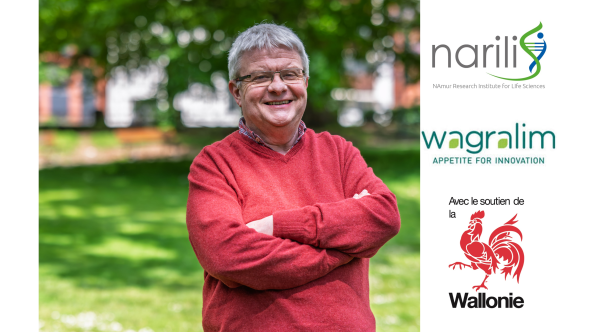
Focus #1 | The HEPATANT project
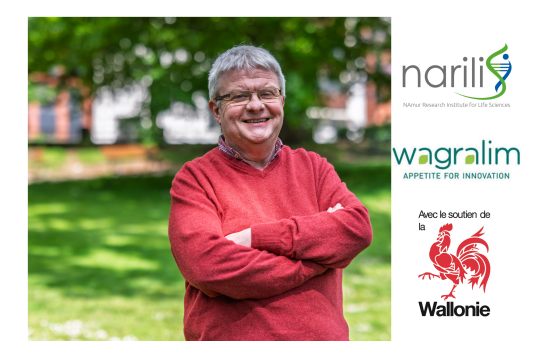
HEPATANT is a project run by the Wagralim Competitiveness Cluster and coordinated by ORTIS Laboratories, a company that has been a pioneer in the field of phytosanitary products (plant-based dietary supplements) for 60 years. It aims to find a natural treatment for fatty liver disease. Several partners are involved in the project, including Professor Thierry Arnould (UNamur, URBC-Narilis).
Our metabolism naturally leads to the accumulation or synthesis of fat. Certain cells are designed for this purpose: these are called adipocytes. The main goal is to be able to mobilize fat and release fatty acids "when needed." The problem is that if there is an excess of nutrients, certain cells in the body, which are not designed to do so, can also accumulate fat in tissues such as the liver, heart, or muscles, which can cause health problems. This is known as "lipotoxicity."
Metabolic dysfunction-associated steatotic liver disease (MASLD) is an accumulation of fat in the liver linked to metabolic disorders associated with metabolic syndrome, obesity, diabetes, or excessive alcohol consumption. Initially, it is often asymptomatic but can progress to inflammation, fibrosis, cirrhosis, or even liver cancer. However, it is reversible in its early stages (steatosis). Treatment is based on weight loss, a healthy diet (reduced sugar/fat intake), and physical exercise, as few specific drugs have been approved by the FDA (Food and Drug Administration) at this time. Dietary supplements—based on plants known to be beneficial—are often used to treat this type of condition, but there is little or no scientific and mechanistic evidence on the actual effects of these products.
If the effectiveness of a dietary supplement or combination of supplements could be demonstrated, it would be possible to intervene at the primary stage of the condition and undoubtedly prevent this liver disorder, thereby halting or at least slowing its progression to advanced or even irreversible stages. This is the aim of this project, in which Professor Thierry Arnould was chosen for his expertise in lipid metabolism. Professor Arnould and postdoctoral researcher Célia Thomas are testing plant extracts (including hops) in vitro on fat-laden cells to investigate the effects that increase or decrease lipid accumulation.
The originality and feasibility of the project lie in the alliance of scientific experts internationally recognized for their expertise in biomedical and pharmaceutical sciences, and in technological and agronomic sciences, with renowned industrialists in their field of expertise related to the project's needs.
In addition to its main objective of creating an effective formulation against hepatic steatosis by combining the best plants or plant substances, this project also aims to generate economic growth, create and sustain jobs in Wallonia, and contribute to the international reputation of the Walloon partner universities: UCLouvain and UNamur.
The partners of the HEPATANT project
- Prof. Thierry Arnould – UNamur, URBC, Narilis | Expertise: The URBC-NARILIS laboratory has extensive expertise and experience in cell differentiation, metabolism, and lipid metabolism in obesity and adipose cells. It also has excellent expertise in the field of hepatocytes and hepatogenic differentiation from precursors and stem cells (collaboration with Professor P. Renard, UNamur, URBC-NARILIS).
- Prof. Isabelle Leclercq - UCLouvain (IREC/GAEN) | Expertise: Pathogenesis of liver diseases in in vivo models.
- Remi Desmet – UCLouvain (Louvain University Farms - FERM) | Expertise: Agronomic research - As a UCLouvain technology platform, FERM works with farmers and partners to support the transition to more sustainable agricultural models.
- Alexandre Dumont de Chassart - Yakima Chief Hops | Expertise: Production of hops and hop-derived products.
- Caroline Devillers – Bel go Bio | Expertise: Agricultural cooperative
Competitiveness Clusters in the Walloon Region
Since their creation in 2006, competitiveness clusters have brought together companies, accredited research centers, and universities around ambitious collaborative projects. Supported and funded by the Walloon Region to stimulate innovation and economic growth, competitiveness cluster projects are organized around six strategic sectors: biotechnology (BioWin), aerospace (SkyWin Wallonia), logistics (Logistics in Wallonia), green chemistry (GreenWin), mechanical engineering (Mecatech), and food system transition (Wagralim). aerospace (SkyWin Wallonia), logistics (Logistics in Wallonia), green chemistry (GreenWin), mechanical engineering (Mecatech), and food system transition (Wagralim).
The projects aim to develop innovative products, services, or processes, creating jobs and strengthening international competitiveness. UNamur is heavily involved in these projects.
Wagralim, the Walloon agri-food cluster, has more than 300 members working to stimulate innovation and collaboration within the food ecosystem and support stakeholders in their responsible development and sustainable transition.
From fundamental to applied research, UNamur demonstrates every day that research is a driver of transformation. Thanks to the commitment of its researchers, the support of its partners from all walks of life, funders, industrial partners, and a solid ecosystem of valorization, UNamur actively participates in shaping a society that is open to the world, more innovative, more responsible, and more sustainable.
To go further
This article complements our publication "Research and innovation: major assets for the industrial sector" taken from the Issues section of Omalius magazine #39 (December 2025).
21 new F.R.S.-FNRS grants for research at UNamur
The F.R.S.-FNRS has just published the results of its various 2024 calls. Equipment calls, research credits and projects, FRIA doctoral grants and Mandant d'Impulsion Scientifique (MIS), there are many instruments to support fundamental research. Find out more about UNamur's results.
The "research credits and projects" call resulted in 14 grants for ambitious new projects. These include two "equipment" grants, five "research credits (CDR)" grants and seven "research projects (PDR)" grants, including one in collaboration with the University of Applied Sciences and Arts of Western Switzerland. The FRIA doctoral research support call will fund 6 doctoral fellowships.
A prestigious Mandat d'Impulsion Scientifique (MIS) has also been obtained. This 3-year funding supports young permanent researchers wishing to develop an original and innovative research program while acquiring scientific autonomy within their department.
Results in detail
Call for Equipment
- Max Collinet, Institut ILEE
- Catherine Michaux, with Stéphane Vincent and Guillaume Berionni, co-sponsors, Institut NISM
Call for Research Credits (CDR)
- Thierry Arnould, Institut NARILIS
- Thomas Balligand, Department of Medicine
- Danielle Leenaerts, Institut PaTHs
- Denis Saint-Amand, Institut NaLTT
- Elio Tuci, Institut NADI
Appel Projets de Recherche (PDR)
- Nathalie Burnay, in collaboration with "the University of Applied Sciences and Arts of Western Switzerland", Institut Transitions (Subject to acceptance by SNSF Switzerland)
- Catherine Guirkinger, Institut DEFIPP, co-promoter in collaboration with UCLouvain
- Luca Fusaro, Institut NISM
- Laurence Meurant, Institut NaLTT
- René Preys, Institut PaTHs
- Stéphane Vincent, Institut NISM, co-promoter in collaboration with UCLouvain
- Johan Wouters, Institut NISM, co-promoter in collaboration with UCLouvain
Fonds pour la formation à la Recherche dans l'Industrie et dans l'Agriculture (FRIA)
- Alix Buridant - Promoter: Henri-François Renard, Institut NARILIS ; Co-sponsor: Medical University of Innsbruck, Innsbruck - Austria -
- Constance De Maere d'Aertrycke - Promoter Nicolas Gillet, Institut NARILIS
- Noah Deveaux - Promoter: Benoît Champagne, Institut NISM
- Nicolas Dricot - Promoter: Muriel Lepère, Institut NISM; Co-promoter: Bastien Vispoel, Institut NISM and Université Grenoble Alpes
- Laurie Marchal - Promoter Thierry Arnould. Co-promoter: Patricia Renard. Institut NARILIS
- Léa Poskin - Promoter: Catherine Michaux, Institut NISM; Co-promoter: Jean-Pierre Gillet, Institut NARILIS
Mandat d'Impulsion Scientifique (MIS)
- Arthur Borriello, Institut Transitions
Congratulations to all and sundry
!F.R.S.-FNRS missions
The mission of the Fonds de la Recherche Scientifique - FNRS is to develop basic scientific research through initiatives presented by researchers. It promotes the production and development of knowledge by supporting individual researchers on the one hand, and by financing research programs carried out in laboratories and departments located mainly in the universities of the Wallonia-Brussels Federation on the other.
Based on the sole criterion of scientific excellence, financial support from the F.R.S.-FNRS is provided in several ways. Numerous calls for funding are launched each year to support fundamental research at all levels of researchers' careers.
Carine Michiels receives the ERRS Bacq and Alexander Award
Since 1996, the European Radiation Research Society (ERRS) has awarded the Bacq and Alexander Prize each year to an outstanding European researcher in recognition of the recipient's achievements in the field of radiation research. This year, the award was presented to Professor Carine Michiels, from the University of Namur.
Carine Michiels est professeure ordinaire au Département de biologie de l’UNamur et directrice de recherche FNRS honoraire. Auteure de plus de 180 articles parus dans des revues internationales, elle dirige une équipe de chercheurs au sein de l’Unité de recherche en biologie cellulaire (URBC).
Des particules pour combattre le cancer
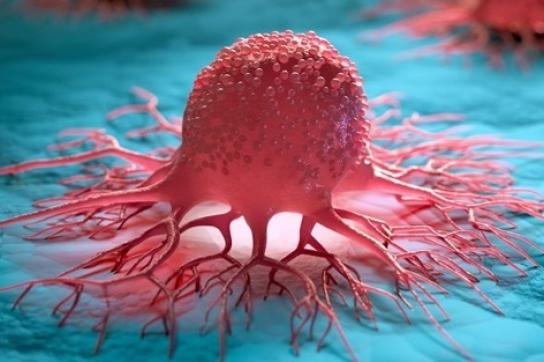
Les travaux de recherche de la chercheuse, en collaboration avec le Professeur Stéphane Lucas et la Professeur Anne-Catherine Heuskin au sein de l’Institut NARILIS, visent à améliorer les thérapies anti-cancéreuses dont la radiothérapie et plus spécifiquement la protonthérapie. La radiothérapie classique utilise des photons (des particules de lumière) tandis que la protonthérapie utilise des protons (des particules de matière). Ces particules sont plus lourdes et possèdent plus d’énergie, ce qui permet de mieux cibler la tumeur et ainsi, de moins endommager les tissus environnants.
Le prix Bacq et Alexander est remis lors de l'assemblée annuelle de la Société. Cette année, la réunion annuelle avait lieu à Catane, en Sicile, du 21 au 24 septembre. La Professeur Carine Michiels a donné une conférence inspirante intitulée "How cell biology and radiation physics met to boost radiotherapy" qui montre à quel point une recherche interdisciplinaire peut être fructueuse.
Equipement et laboratoires
Outre l'équipement propre à l'unité, nous avons la chance de travailler avec 2 plateformes scientifiques qui nous aident dans nos analyses.
En savoir plus sur l'URBC
Nos bailleurs de fonds