

Informatics at the service of collective well-being and personal development.
The Faculty of Informatics has a vision of a world in which the intensive and growing use of informatics is oriented towards collective well-being and personal development. Its mission is to contribute to this orientation through education, scientific research and service to society.
The studies
When you choose to study computer science, you're guaranteed immediate access to an exciting, multi-faceted career. Through a comprehensive range of courses - bachelor's, master's, specialization master's and doctorate - the Faculty of Computer Science offers you quality training based on scientific rigor and critical thinking, while emphasizing interdisciplinarity and societal responsibility.

Research
The mission of the Faculty of Computer Science is to ensure cutting-edge scientific research, open to the creation and integration of knowledge that feeds teaching, technological innovation and societal debate.

Service to society
The Faculty of Computer Science contributes to the development of our social, economic, technological and political environment by disseminating knowledge and providing advice at regional, national and international levels. Through the synergy between researchers and industry, and by making knowledge and know-how available, it participates in numerous missions of service to society.

International
The Faculty of Computer Science's international outlook is fundamental to the development of its teaching and research activities.

Organization
The Faculty of Computer Science has organized itself to manage its missions in the best possible way. It has around a hundred members at the service of teaching, research and service to society.
A word from the Dean
IT is a key to understanding, progress and responsibility in the face of the challenges and issues facing our society.
Read the article
Image

Animation
A series of events and players revolve around the Faculty of Computer Science.

Spotlight
News
Article
-
Faculty of Computer Science
A poster session to explore AI across all disciplines
Students
Artificial Intelligences (AI)
A poster session to explore AI across all disciplines
Students
Artificial Intelligences (AI)
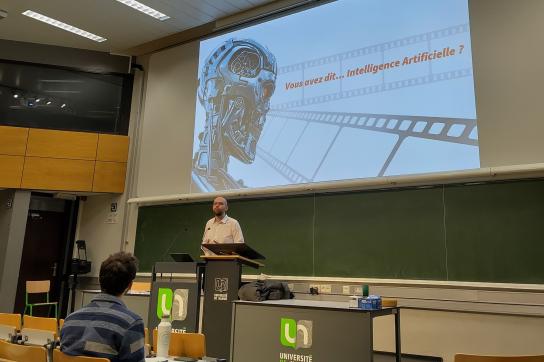
As part of the interdisciplinary course “AI: Challenges and Opportunities,” students at UNamur presented a series of posters focusing on the uses of artificial intelligence in their fields of study. This highlight showcased the diversity of AI applications, as well as the University of Namur’s commitment to training students to use it critically, fairly, and thoughtfully.
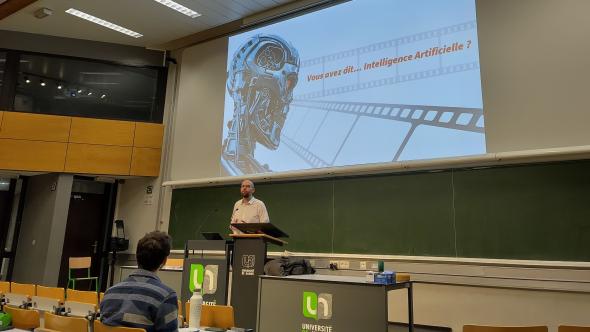
Organized as part of the evaluation of the course “AI: Challenges and Opportunities,” the poster session invited students, working in pairs, to explore a concrete example of AI application within their academic discipline. Objectives? To assess the relevance, limitations, risks, quality of the results produced, and implications for professional, academic, or societal practices.
“The posters presented this year demonstrated the wealth of diverse perspectives on artificial intelligence,” notes Benoît Frenay, a professor in the School of Computer Science, AI project lead, and chair of the UNamur AI Council. “The topics covered ranged, for example, from physics applied to artificial neurons to recommendation systems on YouTube, from AI in education to its use in public administration, as well as soccer, higher education, cancer detection using medical images, and intellectual property issues in the music industry.”

A course to help you understand AI beyond common misconceptions
Open to senior undergraduate students from various faculties, the course “AI: Challenges and Opportunities” has been offered at UNamur for two years and is attracting growing interest. After a first edition that attracted around fifty registrants, the number of students doubled in the second year. “This growth confirms the need for interdisciplinary training on a subject that now cuts across all sectors of society,” notes Benoît Frenay.
The course’s goal is clear: to provide students with a solid foundation for understanding artificial intelligence in both its technical and human dimensions. It encourages them to develop a scientific and nuanced perspective on AI, to understand both its benefits and risks, and to adopt a reflective and responsible approach.
A practical, critical, and interdisciplinary approach
The course structure combines theoretical reflection with practical application. The poster session is fully in line with this approach: it allows students to present their analyses, compare their perspectives, and demonstrate how AI can be examined from a variety of different disciplines. This assessment focuses on a case study from the student’s field of study, through a critical analysis of a practical case based on the concepts covered in the course.
UNamur, a leading player in responsible AI
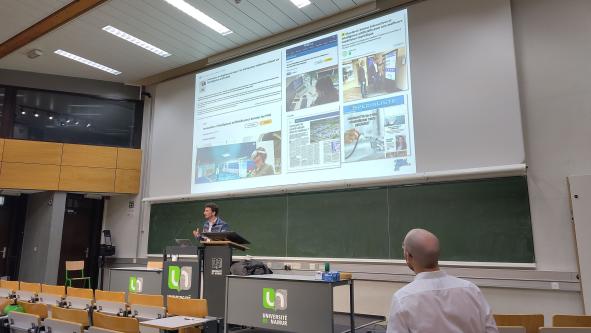
UNamur has established itself as a key player in the field of artificial intelligence by integrating this topic into its teaching, research, and community service missions. Its institutional approach to AI is based on a comprehensive strategy: fostering critical, responsible, and ethical use of these technologies, driving innovation through interdisciplinary research projects, and supporting society’s stakeholders as they navigate the transformations these technologies bring.
This ambition is reflected in several concrete initiatives. In addition to the course “AI: Challenges and Opportunities,” the University offers specialized programs in data science, resources to demystify generative AI for educators, and a short university course on artificial intelligence designed for non-specialists, including professionals. UNamur has also established an AI Council and guidelines to support members of its community in the thoughtful use of these tools. Numerous research projects are also dedicated to AI and contribute to UNamur’s unique transdisciplinary expertise in digital technology.

Article
-
Faculty of Computer Science
NaDI Institute
An innovative educational approach to ensuring software quality
Computer science (IT)
Students
Future students
An innovative educational approach to ensuring software quality
Computer science (IT)
Students
Future students
An innovative educational initiative was carried out at the University of Namur during the 2024–2025 academic year as part of the “Software Testing and Quality” course in the Master’s program in Computer Science, with a focus on software engineering. This initiative led to the publication of the SNAIL Report 2025, a comprehensive barometer of software development practices in the Wallonia-Brussels Federation.

Image

A little over a year ago, on a Monday morning like any other, Prof. Benoît Vanderose walked into my office with a cup of coffee and a statement that would kick off an extraordinary adventure: “I have a great idea for our Testing and Quality course!”
This idea, born over a cup of coffee, evolved over the weeks into an ambitious educational project: to work with students in the Master’s program in Software Engineering to conduct a comprehensive assessment of software testing and quality practices in the Wallonia-Brussels Federation. Today, this initiative culminates in the publication of the SNAIL Report 2025.
What is SNAIL?
The "SNAIL - Software Normalization Assessment and Improvement Lab" is a team of researchers from the Faculty of Computer Science and the Namur Digital Institute (NaDI) at the University of Namur. The team aims to advance the state of the art and practices in software engineering to improve software reliability by addressing quality assessment and testing in both human and technical contexts. Their research expertise is combined with ongoing collaboration with industry to identify real-world needs and provide concrete solutions to concrete problems.

An educational approach grounded in professional realities
The teaching team’s project had two objectives: to give students hands-on experience with current issues in software quality and to produce an overview that would be useful to academics and professionals in the field. Rather than limiting themselves to analyzing existing practices, the students were fully involved in an applied research project, ranging from the design of a measurement tool to the analysis and dissemination of results. This approach fostered active learning, centered on collaboration, critical thinking, and an understanding of real-world practices in the field.
A collaborative and methodical process
The project began with an in-depth analysis of the scientific literature and leading international reports on software development. This phase helped identify the key themes to be investigated: team organization, methodologies, testing practices, automation, documentation, artificial intelligence, security, technologies, and developer experience.
Based on this, a 78-question survey was collaboratively developed through an iterative process during joint sessions involving students and faculty. Particular attention was paid to the clarity of the questions, their relevance, and their alignment with the practices observed within various organizations that presented their approaches as part of the course.
A survey of software development professionals
The survey was distributed between April and July 2025 to software development professionals in the Wallonia-Brussels Federation through academic and industry networks. A total of 52 respondents from organizations of various sizes and sectors (SMEs, mid-sized companies, large corporations, and the public sector) participated in the study. Once the survey was completed, the collected data underwent rigorous analysis by researchers at the SNAIL laboratory, combining quantitative and qualitative methods, before being synthesized and contextualized in the final report.
The SNAIL Report 2025: Key Findings
The SNAIL Report 2025 provides a structured overview of software development practices in the Wallonia-Brussels Federation. Among the trends highlighted are:
- widespread adoption of Agile approaches;
- a central role for collaborative tools and code reviews;
- widespread use of testing practices and automation via CI/CD pipelines;
- the growing integration of artificial intelligence into development activities;
- as well as persistent challenges regarding the formalization of practices, documentation, security, and training.
The report also highlights the importance of human and organizational factors in software quality, particularly collaboration, accountability, and team autonomy.
Added value for education and research
Beyond the results presented, this initiative illustrates the value of an educational approach based on the co-construction of knowledge, the close link between teaching and research, and openness to the professional world.
For the students, the project was a formative experience, allowing them to develop technical, methodological, and analytical skills while gaining an understanding of current challenges in software development. For the University of Namur, it is a concrete example of how pedagogical innovations can be leveraged to support teaching and research missions.
Article
-
Faculty of Computer Science
Florentin Rochet - IT Security: Reading Between the Lines of Code
Computer science (IT)
Florentin Rochet - IT Security: Reading Between the Lines of Code
Computer science (IT)
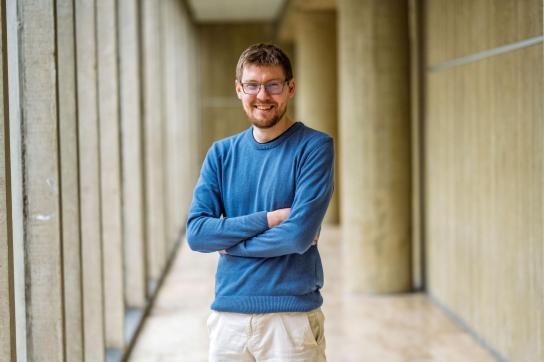
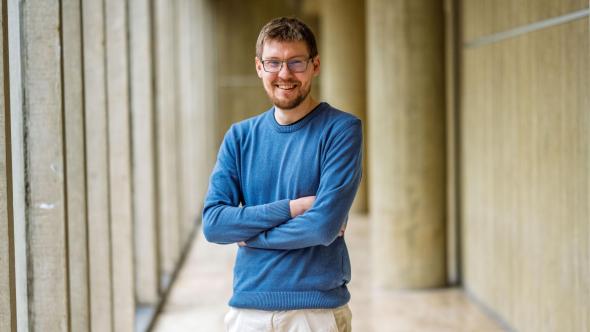
Florentin Rochet, a professor of computer security at the University of Namur, specializes in applied cryptography and secure communications. Against the backdrop of rapid advances in artificial intelligence and open-source solutions, he shares his analysis of the current situation and offers his outlook for the future.
How might we define cybersecurity?
Cybersecurity, or IT security, seeks to explore the limits of information technology. In practical terms, when we create computer systems or software, we realize during use that they have certain limitations that can be exploited. We therefore seek to understand the root causes in order to make future generations of systems more robust and secure. The highly competitive nature of today’s market conflicts with this approach, as large companies want to develop their software as quickly as possible and stand out from their competitors, often at the expense of security.
In your opinion, what is the main threat to IT security today?
The major risk is the growing use of artificial intelligence (AI) by developers to generate code. This AI-generated code may seem well-crafted at first glance, but that is not the case at all. There are a huge number of vulnerabilities in this type of code, which falls far short of the standard an experienced programmer can achieve. By way of comparison, the subprime crisis that hit the United States in 2007–2008 was based on the massive sale of subprime mortgages and their transformation into complex financial products. This mechanism led to widespread mistrust of the banking system, ultimately triggering the global financial crisis we experienced. It’s somewhat the same principle at play with AI: the abundance of AI-generated code could flood the software created by companies, with the risk of growing uncertainty regarding its reliability. The consequences of this situation are difficult to predict, but there will certainly be a significant need for experts in the future to audit software. However, such individuals are rather scarce. Young computer scientists, understandably, are immersed in AI themselves. Unfortunately, recently published research suggests a negative impact on learning. We can hypothesize that it will also affect future generations of experts by reducing their numbers. The academic world and education therefore have a major role to play in rising to the challenge of the situation ahead.
What other risks do you identify?
The emergence of a hackneyed narrative surrounding the term “cybersecurity” can also prove dangerous. Under the guise of improving public safety, current political movements—particularly in the United States, but also in Europe—are using cybersecurity as a banner to, in fact, carry out mass surveillance of citizens. This is part of a broader trend of the erosion of democracy and fundamental freedoms. True cybersecurity is that which protects all members of society without discrimination: the state, the police, journalists, businesses, citizens, the defense sector, and so on.
Our heavy reliance on foreign IT solutions should also be a cause for concern. Our society is primarily based on a service economy, which itself depends on foreign IT solutions. What happens, then, if we lose control of these tools?
Various attacks against Walloon and Belgian public institutions, such as the Wallonia Public Service (SPW), have made headlines in recent months. How do you explain this?
What is curious about the SPW attack is the entry point the attackers used. It is generally known that cybercriminals exploit known vulnerabilities to gain access to computer systems. However, the vulnerabilities used by the cybercriminals in this attack are covered in basic computer security courses at the university level. This case may highlight the difficulty of updating software systems within an institution and maintaining internal expertise. Indeed, the reliance on external consulting is becoming increasingly systematic, which could be counterproductive to the very development of this internal expertise if knowledge transfer does not occur. Obviously, this is a complex reality in financial and human terms for institutions, one that must not be denied.
In this context, what roles can research and training play?
Research can help provide additional options and more secure alternatives. For example, open-source software, which offers greater robustness but requires a certain level of expertise in return. Unfortunately, these tools carry less weight compared to more commercial solutions. On the training side, the challenge lies in educating future IT professionals about these issues so they can manage and maintain open-source software. With the automation of IT—and this is understandable—we’re seeing less interest in these more “do-it-yourself” solutions.
What is your current research focused on?
With my research group, the Privacy and Security Lab, we are working on anonymous communications and secure communications in general, with expertise in privacy protection technologies. In particular, we are studying communication technologies that allow for the anonymization of internet communications. These tools, which we believe are more transparent—such as Tor, for example—are, however, less efficient and slower, which hinders their adoption by the general public. Our goal is to make these technologies accessible to the entire population by improving their efficiency. For this type of research and the development of new prototypes, we aim to collaborate with the Faculty of Law to leverage their expertise in privacy protection. We are also working to improve the integration and efficiency of encrypted transport protocols within network transport libraries, which leads to tangible results such as more efficient VPNs.
Quick Resume
Florentin Rochet is a computer engineer, holds a Ph.D. in applied cryptography (UCLouvain), and has been an assistant professor at the University of Namur in computer security, cryptography, and privacy since 2022. Since joining UNamur, he has been developing the Privacy and Security Lab (PS Lab) research group, whose goal is to conduct research in the field of privacy protection technologies and secure communications.
Cet article est tiré de la rubrique "L'expert" du magazine Omalius #40 (Avril 2026).

Article
-
Faculty of Computer Science
24-Hour Student Drive for Télévie
Students
Computer science (IT)
24-Hour Student Drive for Télévie
Students
Computer science (IT)
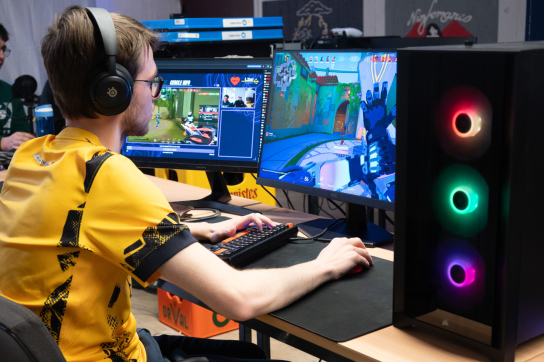
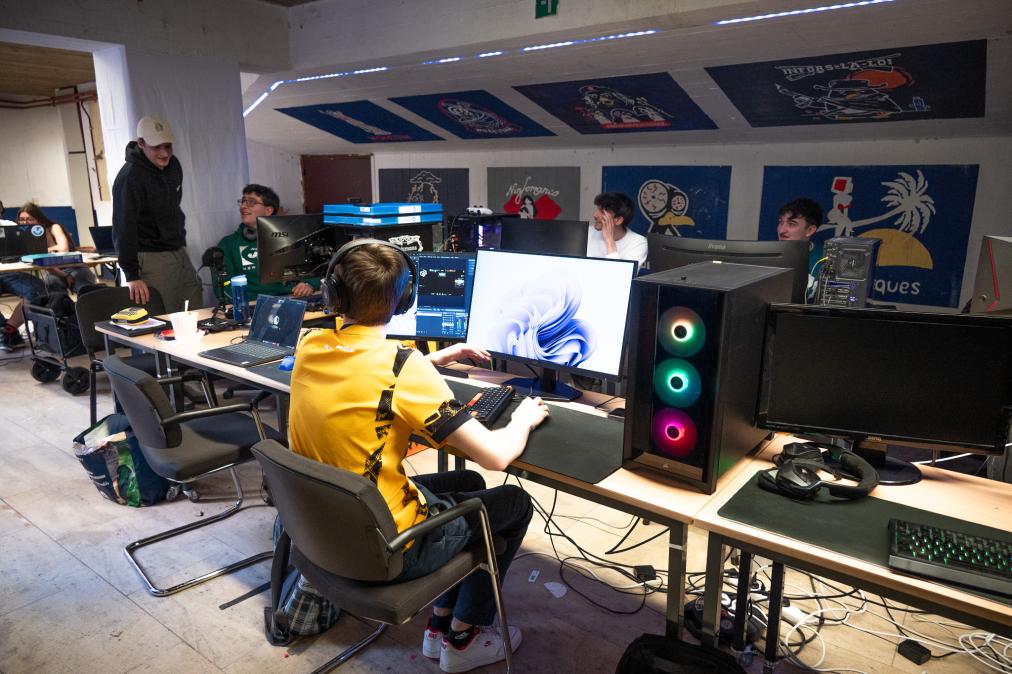
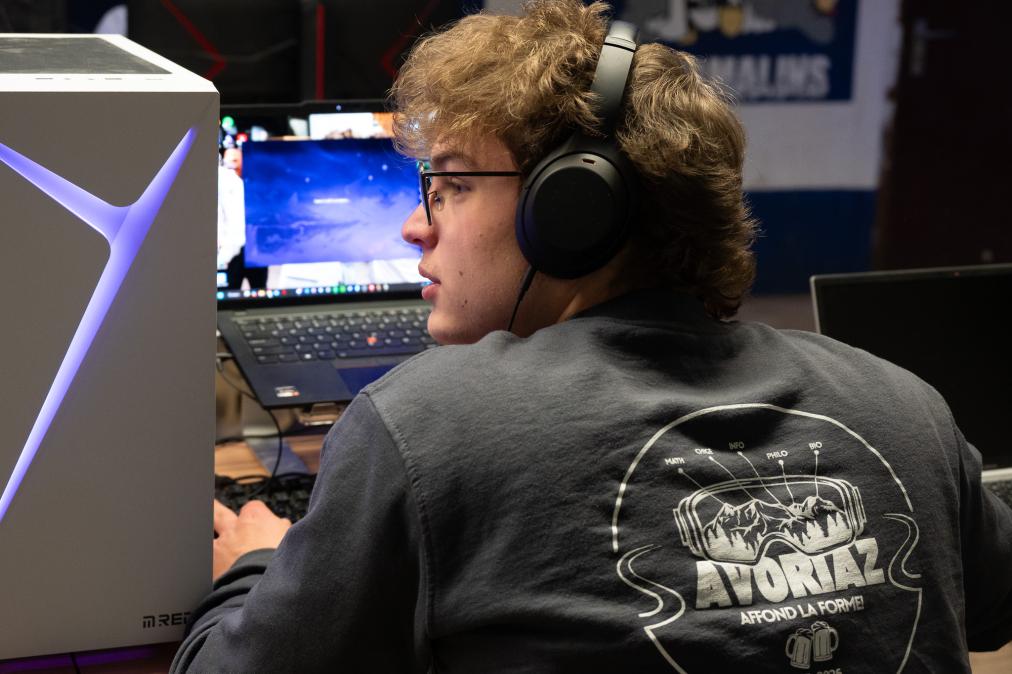
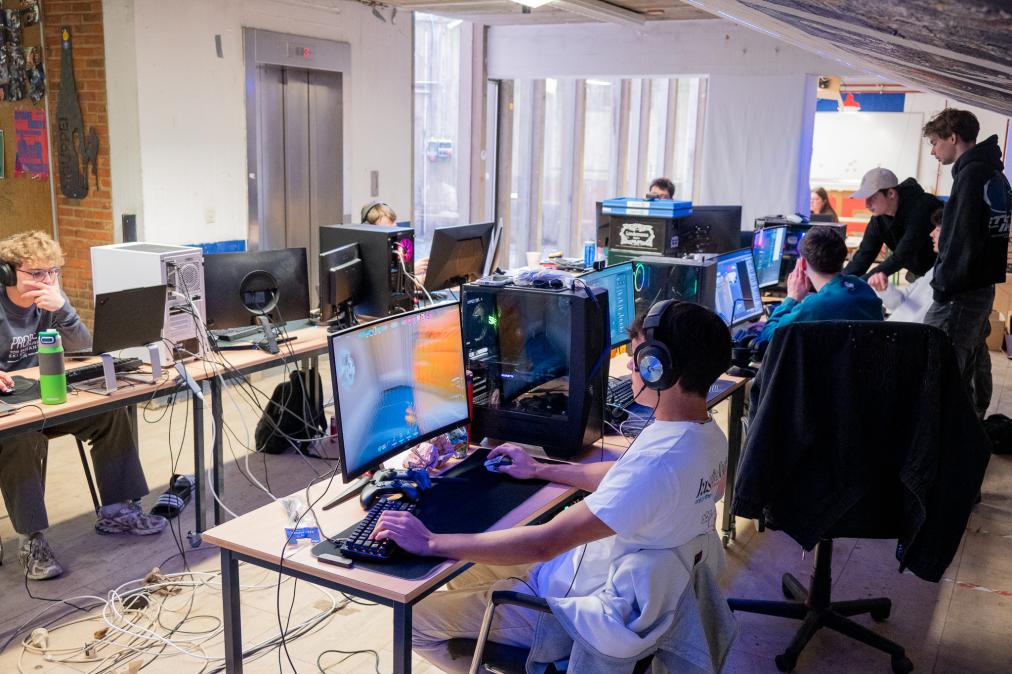
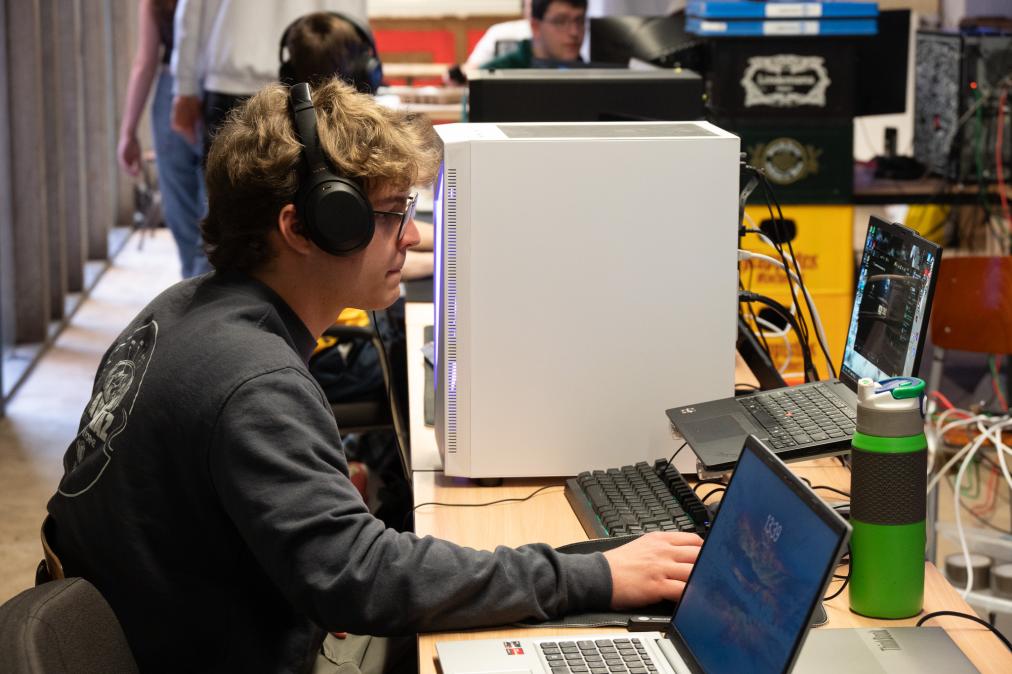
A 24-hour live stream, about ten computers and video game consoles, around fifteen participants… and one goal: to raise as much money as possible for Télévie. Building on the success of its first event, the UNamur Computer Club embarked on the adventure once again with a new charity marathon, which took place from April 7 to 8. In total, the event raised €1,831.91 for Télévie.
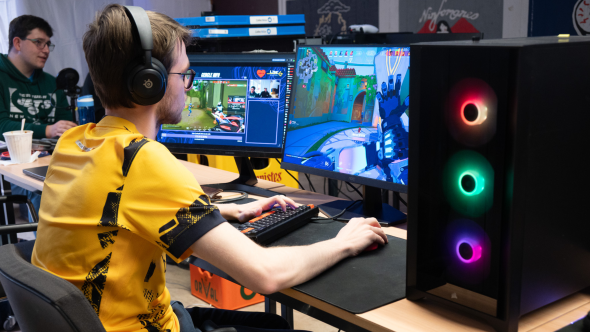
Inspired by ZEvent, a charity event that brings together top streamers over several days to raise funds for a nonprofit organization, the Computer Club wanted to adapt the concept to its own scale. “ZEvent really inspired us, and we thought: why not us? We have a lot of knowledge, we’re good with tech, we have contacts with the university’s IT department… So we wanted to create our own event,” explain Fabio, the 2025–2026 president of the IT Club, and Corentin, his predecessor.
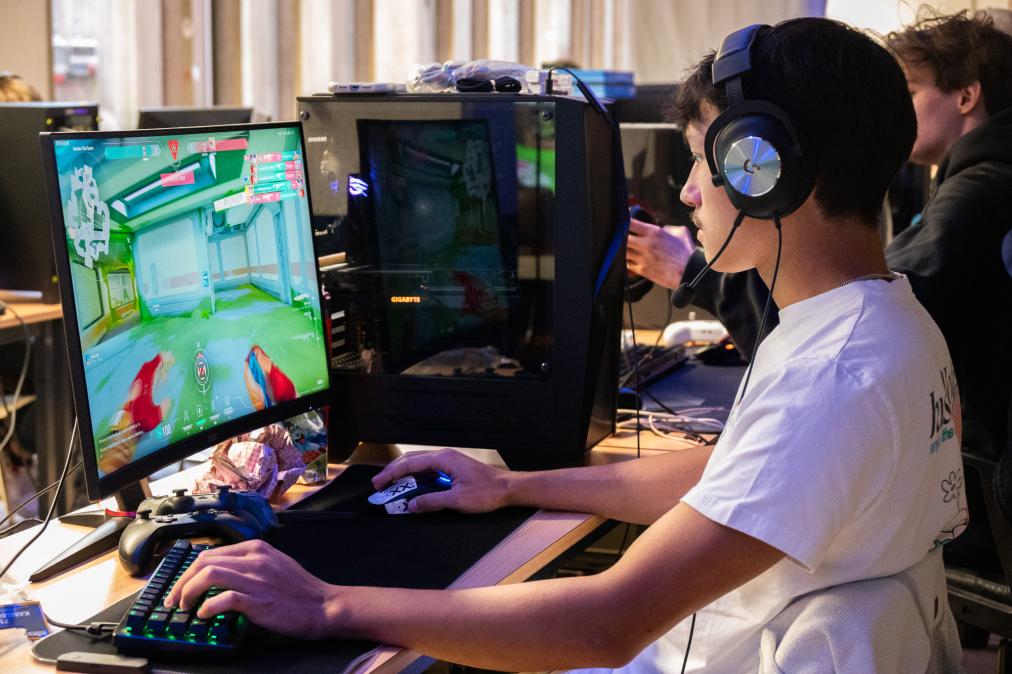
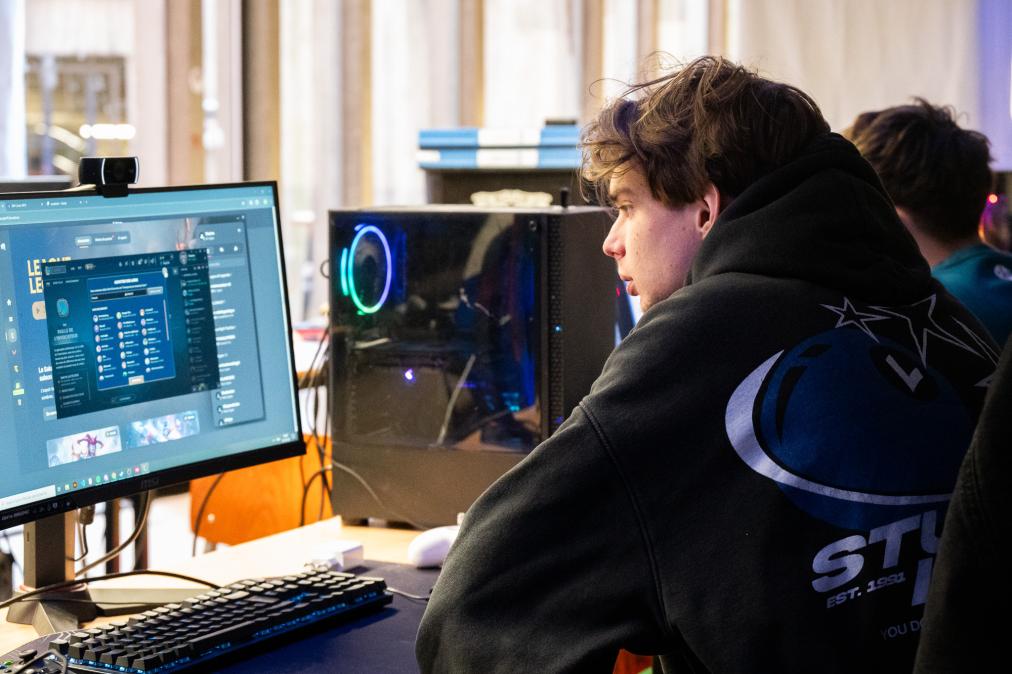
The concept is simple: for 24 hours, students go live on the Twitch streaming platform to raise as many donations as possible for Télévie. “Every time we hit a milestone, we complete challenges. And throughout the live stream, we take turns, play video games, and chat.” While only one screen is broadcast live, about ten other computers are made available to students for playing games simultaneously, along with a space equipped with a Nintendo Switch and a PlayStation 3.
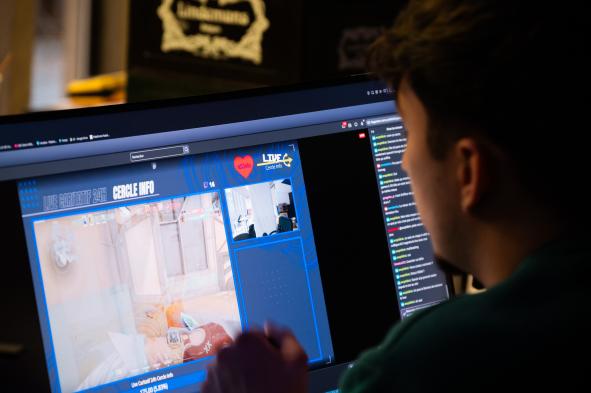
“It took us over four hours to turn the Cercle Info space into a streaming room,” the students explain. “We had to set up the computers and consoles, run the cables, configure the network, and make sure everything was working before going live…”
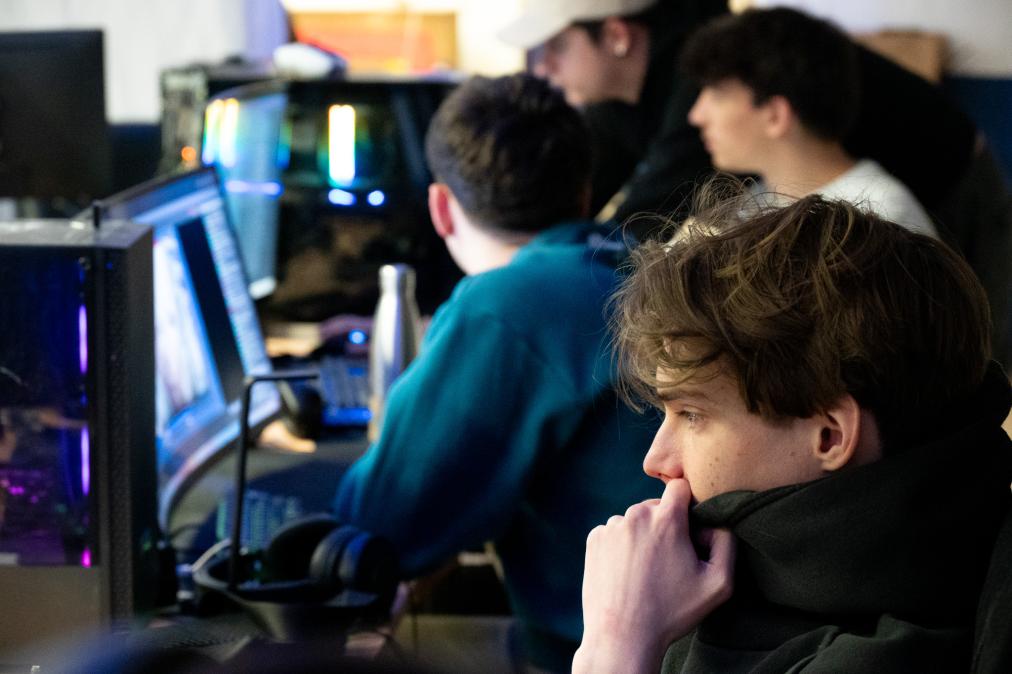
Beyond the charitable goal, this experience also left a lasting impression on the students on a personal level. “It’s a little stressful, but mostly it’s full of good memories,” they confide. “During the night, we’re all tired and the slightest thing sets us off laughing. And it brings us closer together—we rarely get the chance to spend 24 hours together.” ”
Organizing this event also helps bridge the gap between classroom theory and practical application. “Everything related to networking, for example, we learn about in class, but here we understand exactly how it works in practice.” A unique experience that the students hope to continue within the Faculty.

A collaboration with UNamur departments
The event also received support from several university departments. In particular, the School of Computer Science lent equipment such as tables, chairs, and cables. The IT Department provided technical assistance by adapting the university’s network. Finally, the Fundraising Office also supported the initiative, enabling this student project to be incorporated into UNamur’s broader campaign in support of Télévie.
More information on the fight against cancer and Télévie
Interested in learning more about our IT training programs?
The School of Computer Science envisions a world in which the intensive and growing use of information technology is directed toward the common good and personal development. Its mission is to contribute to this goal through education, scientific research, and service to society.

