

The Transitions Research Institute brings together researchers in the humanities and social sciences to study the major changes affecting our contemporary societies. Faced with multiple environmental, democratic, economic, health, and social tensions, our development models, institutions, and ways of living together are being called into question.
The Institute's research focuses on areas of critical importance such as the environment, politics, law, justice, social cohesion, the food system, development, education, vulnerabilities, etc. Drawing on critical approaches and mobilizing disciplinary, interdisciplinary, and transdisciplinary perspectives, the Transitions Institute aims to improve understanding of contemporary issues while actively participating in certain dynamics of change in the field.
Thanks to their nationally and internationally recognized expertise (F.R.S.-FNRS, European Union, Federal Government, Walloon Region, etc.), the members of the Transitions Institute develop fundamental research projects as well as action research projects that serve society.

The institute is currently organized around four main entities:
- The Democratic Transformations division focuses on developments in political systems, electoral representation, modes of citizen participation, and democratic legitimacy (Permanent members: Arthur Borriello, Jérémy Dodeigne, and Vincent Jacquet).
- The Territorial and Environmental Transformations division offers a systemic interpretation of the links between humans and nature, promoting participatory and locally-based approaches to support socio-ecological transformations at the territorial level (Permanent members: Nicolas Dendoncker and Johan Yans).
- The Transitions and Life Stages cluster focuses on the restructuring of life trajectories, highlighting the effects of public policies on individual and collective vulnerabilities (Permanent member: Nathalie Burnay).
- The Vulnerabilities and Societies Center uses an interdisciplinary approach to examine contemporary forms of vulnerability within businesses, the state, and families, as well as the legal transformations brought about by these shifts (Permanent members: Géraldine Mathieu, Stéphanie Wattier, Marc Nihoul, Nathalie Basecqz, and Pauline Colson).


Spotlight
News
Article
-
Faculty of Medicine
Department of Psychology Institute
Educational Games: The Faculty of Medicine's Innovative Approach
Pedagogy
Psychology
Medicine
Educational Games: The Faculty of Medicine's Innovative Approach
Pedagogy
Psychology
Medicine
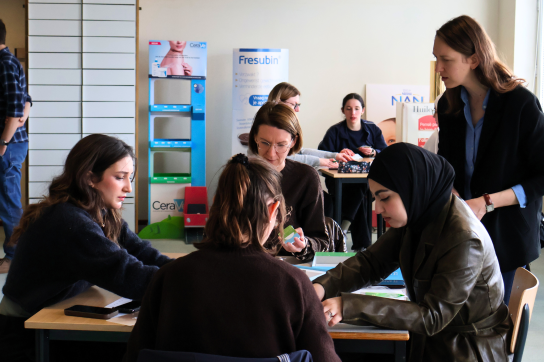
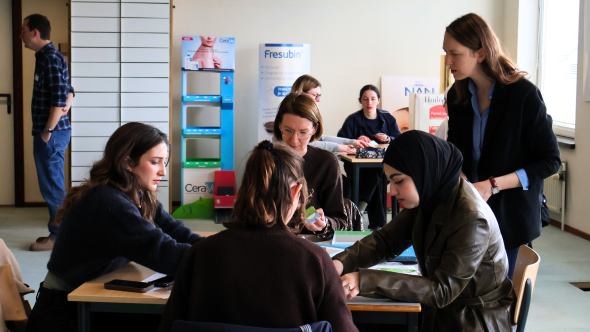
By offering several modules to students in healthcare training programs that focus on learning through play, the University of Namur’s Faculty of Medicine is setting itself apart in the Wallonia-Brussels Federation. These methods, which educational coordinator Hélène Givron explored in her dissertation, place communication at the heart of the learning process.
There are some things you can’t learn from books. Universities know this well—they always set aside part of the curriculum for hands-on work. But beyond knowledge and know-how, there’s a third dimension that’s rarely taught in a practical way: interpersonal skills. Yet listening to others and being able to convey a message are skills that can be learned! And play can be a powerful tool for transmitting this knowledge.
Hired in 2016 by UNamur to complete her dissertation after studying clinical psychology, Hélène Givron, a member of the TRANSITIONS Research Institute, was tasked with teaching third-year medical students about the doctor-patient relationship as part of Professor Martin Desseilles’ medical psychology course. “After reading extensively on the existing literature about caregiver-patient communication, I realized that simply teaching them the theory wasn’t going to make them better communicators,” she explains. “We needed to use experiential learning, particularly through simulation. That’s how I became interested in more active teaching methods.”

The ideal approach would have involved having students interact with actor-patients, so they could get as close as possible to their future reality, but class sizes make such a system impossible. “So I decided to use role-playing exercises, in which students took turns playing the roles of both doctor and patient,” explains Hélène Givron. “The exercise was very well received by the students, who were essentially taking on the role of a doctor for the first time! And the literature showed that putting themselves in a patient’s shoes also helps develop their empathy.”
Each simulation is filmed, allowing students to review their performance and reflect on what they did and how to improve their communication. “This is a very important moment, which can have detrimental consequences for students if it isn’t led by properly trained individuals,” warns the psychologist. “Even though it’s just a simulation, it deeply immerses students in what will be their future profession. We mustn’t let any of them, faced with a poorly supervised debriefing, conclude that they’ll be a bad doctor.”
To avoid this situation, Hélène Givron helped develop an interuniversity training program specifically designed for simulation instructors: “The role model’s attitude is, in my view, very important, because students learn a great deal by imitation. It would therefore be somewhat absurd to teach them to be good listeners while we ourselves are being judgmental during a debriefing. We must embody what we teach.”
Due to its positive evaluation, this communication workshop is now mandatory for all third-year medical students. Using a simulated clinic designed to closely mirror reality, students first practice welcoming a new patient before tackling more complex situations. “We put them in very specific situations, such as managing a patient under intense stress or delivering bad news,” explains Hélène Givron. “The whole point is to teach them to hone their listening skills and learn to read what patients aren’t saying by observing their nonverbal behavior.”
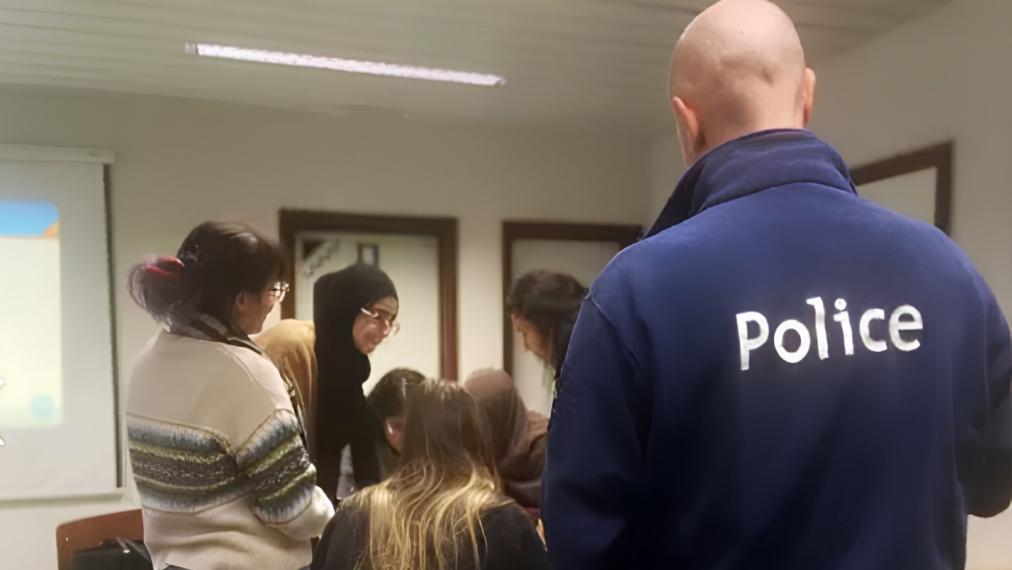
“This program has since been enhanced with an escape game, created by Milena Jarosik and Sophie Evrard from Hénallux University with the goal of raising students’ awareness about addressing domestic and spousal violence,” the psychologist continues. “The debriefing is led by practitioners in the field who can share their real-life experiences on this topic.”
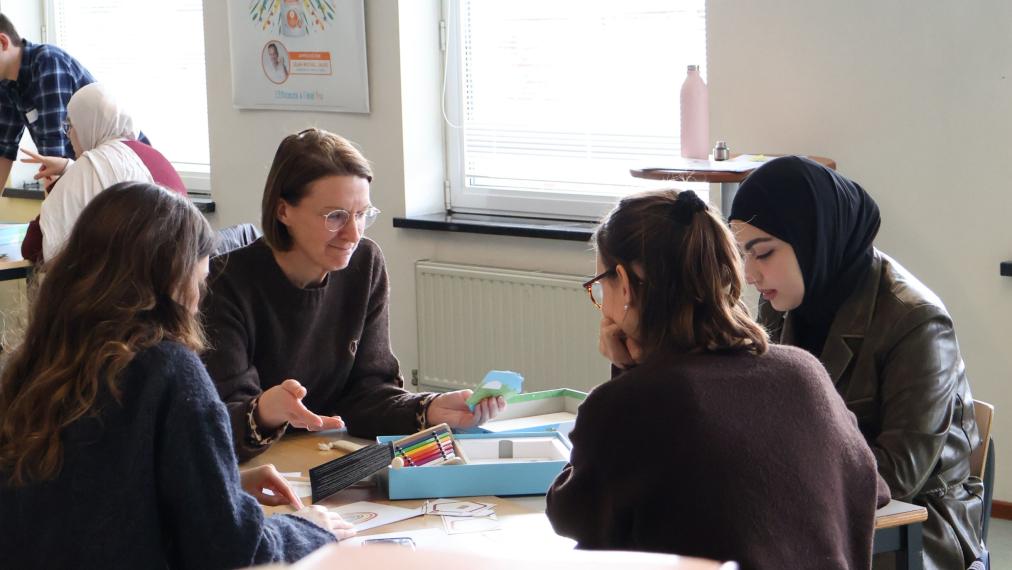
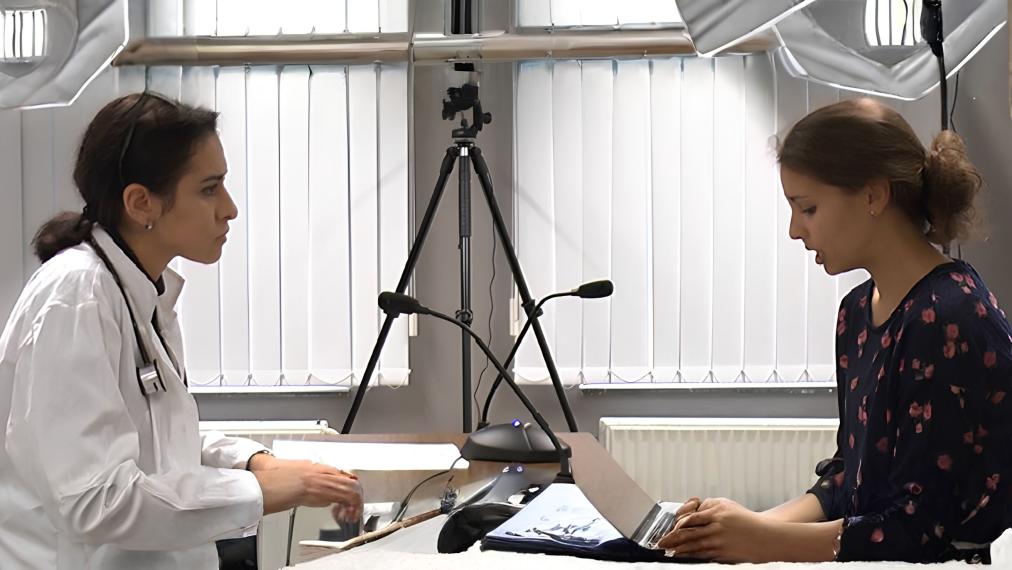
Playing the Role of a Lifetime
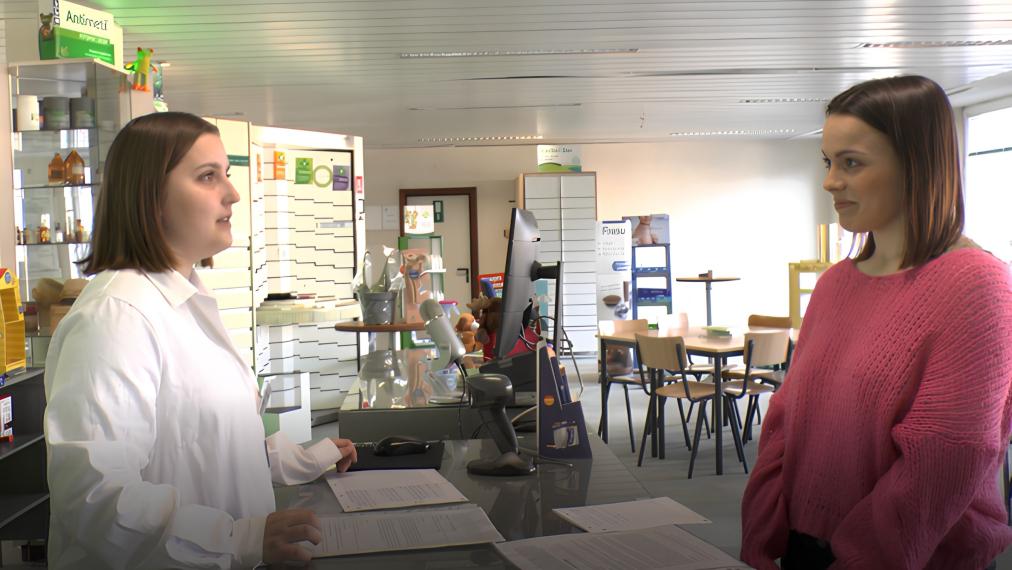
Medical students aren’t the only ones to benefit from this type of teaching, by the way: “Pharmacy students have access to a teaching pharmacy, which allows them to gain hands-on experience interacting with patients,” explains Hélène Givron. “All role-playing exercises are also filmed, because we learn a lot by watching ourselves.”
And recently, thanks to a Punch project (Namur University Pedagogy in Transition) from the Faculty of Education and Training, and with the help of Christine Laurent, a public health physician and educational games specialist, the psychologist has also been able to set up a play-based learning workshop focused on interprofessional communication. “In recent years, my courses have expanded to include other professions, such as nursing students and midwives,” she explains. “But I remained frustrated by working in silos, even though the literature shows that 70% of medical incidents occur due to communication issues.”
The psychologist therefore decided to create a game in which communication between different professions is the only way to progress. “In the game, students face a situation involving a patient who is absent but needs to receive care,” she explains. “We cover all the skills associated with teamwork and leadership.”
That said, while all these workshops take the form of games, they are nonetheless rigorously supervised. “We’ve adopted a very scientific approach to this learning,” argues Hélène Givron. “After implementing them, we studied their effects and the students’ attitudes to ensure they didn’t have any negative consequences. All of this was reported during faculty meetings where our actions were discussed. Finally, we have all been trained in this approach, which makes it all the more robust.”
In this way, we bring to life the statement by psychologist and child development specialist Francesco Tonucci: “All of life’s important learning takes place through play.”
Image

We have taken a very scientific approach to these learning methods. We have studied their effects and the students’ attitudes to ensure they do not have any negative consequences. We have all been trained in this approach, which makes it all the more robust.
Well-being at the Heart of Public Transportation
In addition to game-based learning, Hélène Givron’s dissertation had some more unexpected implications: “We found that when students were anxious or experiencing burnout, they were much less interested in communication. After all, how can you muster the energy to listen to someone else when you’re at the end of your rope yourself?” This led the researcher to develop practical exercises focused on student well-being. “We provide them with strategies for regulating their emotions that they can use for themselves, but also to recognize when their patient isn’t doing well. It’s all intrinsically linked.”
Also check out:
This article is from the "Tomorrow Learn" section of Omalius magazine, Issue #41 (June 2026).


Article
-
Faculty of Law
NaDI Institute
Continuing Education: An Opportunity for Universities
Pedagogy
Article
-
Faculty of Law
Faculty Economics Management Communication Politics (EMCP)
Faculty of Education and Training Sciences
NaDI Institute
Institute
IRDENa Institute
Continuing Education: An Opportunity for Universities
Pedagogy
The days when people chose a career once and for all and when experience alone was enough to climb the career ladder seem to be over. Nowadays, lifelong learning has almost become the norm. “There is clearly a trend in this direction, particularly in the context of automation and artificial intelligence, which makes acquiring new skills all the more important,” says Michel Ajzen, a professor in the Management Department at the Faculty of Economics, Management, and Communication at SciencePo, UNamur, and a member of the Namur Digital Institute. “And it’s not a generational issue: whether you’re 30, 40, or 50, this need exists.”

While many companies offer training programs for their employees, it also appears that the “responsibility for employability” has gradually shifted to the workers themselves, who are now expected to take greater control of their careers. “In the past, the boss was seen as responsible for the employee’s development—and even their personal fulfillment—sometimes even beyond the workplace,” notes Michel Ajzen. “But over time, this responsibility for employability has been diluted. ” This trend has been reinforced by new “career scripts,” which are heavily based on mobility. “When I ask students how many employers they think they’ll have in their lifetime, the average answer is six,” the professor continues. “This means that even before entering the workforce, they already have the idea that they’ll move from one employer to another, which can lead them to feel ‘responsible’ for their own careers and thus potentially to pursue training on their own initiative.”
Career Strategies
Getting an education, sure, but in what? And how? As Michel Ajzen explains, this choice depends largely on the “career tactics” adopted by workers. “Depending on their stage of life, they may adopt tactics that are more employment-oriented, with the goal of quickly securing a job to make ends meet,” he explains.
“At other times, they’ll adopt a strategy more focused on employability, with the goal of gradually acquiring the knowledge that will allow them to advance—whether through vertical mobility—within the same company—or horizontal mobility—to another company or a different position. Finally, there’s the ‘meaning’ approach: pursuing training that will lead them to a job that makes them even more eager to get out of bed in the morning…”

Michel Ajzen
Furthermore, training periods are often seen by workers as a breather: an opportunity to step back and “lift their heads up from the handlebars” in what is often a high-pressure workday. This “break” is now governed by various policies. For example, the law of October 3, 2022, guarantees private-sector employees an individual right to training equivalent to 5 days per year for full-time workers. This training may be organized by the employer or left to the employees’ discretion (subject to the employer’s oversight). “However, some companies are not required to guarantee this right to their employees. This is particularly the case for companies with fewer than ten employees,” explains Charlotte Lambert, an associate professor and specialist in labor law. “In labor law, there are also collective bargaining agreements that supplement the law on a sector-by-sector basis and may provide for additional days of training.”
CEP and Time Credit
When an employee wishes to pursue more extensive training—for example, a university certificate program that typically lasts more than five days per year—they can also take advantage of other programs that allow them to maintain all or part of their pay. “Paid educational leave, or CEP—which falls under regional jurisdiction—allows employees to take a recognized training course of at least 32 hours, including initial training,” explains Charlotte Lambert. “The employee retains their pay, while the employer is compensated by the ONEM.”
The other option is “training-related” time credit: this regional program, which exists only in the private sector, allows employees to temporarily reduce or suspend their working hours without affecting the validity of their contract. In this case, the employee receives compensation directly from the ONEM, subject to certain age and seniority requirements. Time credit is also limited to a period of 36 months. “These various programs are not necessarily well known to the public,” comments Charlotte Lambert, “which also explains why many people are discouraged from pursuing training, particularly out of fear of losing their job or having to reduce their working hours and, consequently, their pay.” Furthermore, they are only available to workers with relatively stable employment status (permanent contracts, long-term fixed-term contracts, etc.). “Specific but similar mechanisms exist in the public sector. For the self-employed, however, taking paid leave or using time credits is not an option. They must therefore bear the indirect cost of their training themselves,” the labor law specialist adds.
The Superheroes of the Off-Peak Schedule
Given the need for worker training, universities naturally have a role to play. The “Paysage” decree of November 7, 2013, stipulates that they are authorized to organize continuing education programs accredited by ARES (Academy of Research and Higher Education). “Under the terms of the decree, continuing education does not refer to bachelor’s or master’s degrees, but rather to certificates,” explains Charlotte Lambert. Thus, to avoid any misunderstanding, students should be aware that earning a university certificate is not the same as earning an academic degree and therefore does not confer the same advantages in the job market.
On the other hand, there is indeed the possibility for working professionals to earn a bachelor’s or master’s degree through part-time study, as is the case at the UNamur School of Law. “The unique feature of a bachelor’s degree—and ideally a master’s degree—is that it represents a true fresh start,” emphasizes Mathieu Rolain, academic coordinator of this program and researcher at the Vulnerabilities & Societies (V&S) Center at the Transitions Institute. “Often, it’s a complete career change and sometimes even the fulfillment of a dream: some are 50 years old and are about to begin their bar exam preparation…”. In Block 1 of the Faculty of Law’s part-time program, there are about 50 to 60 enrolled students each year: 10 to 15 of them will graduate in Block 3. “These students are extremely supportive of one another; they share their notes and help each other out when one of them is struggling,” observes the coordinator.
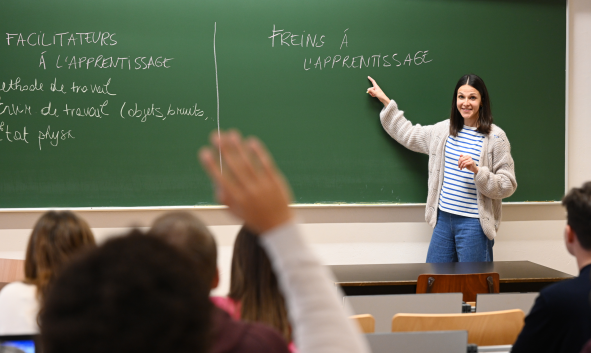
In the same vein, UNamur is committed to tailoring its programs as best as possible to this group. “Many have family responsibilities and sometimes live far from Namur,” continues Mathieu Rolain. “All of our classes are therefore recorded and posted online. We also give them access to staff parking lots and notify them of exam dates well in advance… We try to show them that we support them and understand them. ” Because for these adults with busy professional and personal lives, (re)starting university studies “in evening classes” requires extraordinary discipline and determination, as well as the unconditional support of those around them. “I really admire them a lot,” enthuses Mathieu Rolain. “To me, they’re superheroes. We’ve had medical specialists who came in after their workday, single parents… They’re very unconventional individuals with brilliant backgrounds. They’re also a very demanding group who are always watching your every move—which, for us teachers, is incredibly stimulating.” Because by opening its doors to an experienced audience, the academic world, too, continues to learn.
UNamur, a pioneer in continuing education for teachers
Since the 1980s, the University of Namur has distinguished itself through its expertise in continuing education for teachers, covering both didactic and psychopedagogical aspects.
“It was the Faculty of Philosophy and Letters that initially launched this initiative to offer what were then called ‘refresher courses’ to French teachers,” says Sandrine Biémar, coordinator of the Center for Continuing Education for Teachers at the Faculty of Education and Training Sciences (FaSEF), a professor, and a member of the Institute for Research in Didactics and Education (IRDENa). “ Subsequently, more general training courses on psychopedagogical aspects followed: these were initially organized by the Department of Education and Technology, which has since become FaSEF. Similarly, in the 1990s, the Faculty of Sciences and the Faculty of Economics developed their own centers for continuing teacher education.” These four centers for continuing teacher education are now united under the “Salle des Pros.”
While the decree of June 17, 2021 (Book 6 of the Education Code) formalizes the rights and duties of teaching staff regarding continuing education, this is by no means a new concept for the profession.
“The profession is so complex and subject to so many changes—particularly in curricula and teaching methods—that it is important for teachers to view their career as a continuous process,” insists Sandrine Biémar. “That is why, starting with initial training, we inform students about these opportunities for continuing education.”
The goal is to train “reflective practitioners” capable of questioning their own practices in order to refine and adapt them over time.
“We try to bridge the gap between the world of research and the world of practice: so that we can inform teachers about new studies, but they can also inform us about what’s happening in the field,” the coordinator continues. “The Salle des Pros serves as this space that opens us up to the world.”
The Pros' Room
The Dynamics of Continuing Education for Teachers at the University of Namur: A Crossroads Between Research and Practice!
The Salle des Pros is, above all, a space dedicated to addressing the questions teachers have about their practice. At the intersection of practice and research, it tackles issues that arise in the field through reflection, discussion, and collaborative problem-solving.

Differentiation and Language of Instruction
In addition to the mandatory and free training courses it offers as a “training provider” for teachers, UNamur also offers several certificate programs focused on specific topics. “Teachers voluntarily enroll in these certificate programs, in addition to their mandatory training and outside of their teaching hours, and cover the costs themselves,” explains Sandrine Biémar. Among the topics generating growing interest in the teaching community are differentiated instruction practices. “On a daily basis, teachers are faced with groups of students where each has different needs and learns at different paces,” explains the coordinator. “ Yet there is a whole range of methodologies that allow for these differences to be taken into account, which is a very important issue today, especially with the implementation of the common core curriculum.” Training programs focused on the language of instruction—which are central to combating inequalities—have also expanded significantly. “We make teachers aware that they use language specific to the school setting—‘sit down,’ ‘take out your notebook,’ ‘analyze,’ ‘color in’—and that this language must be made explicit. We need to tell students why we’re having them do this or that.” Finally, AI is, unsurprisingly, one of the new topics in continuing education for teachers, as well as for other audiences (managers, decision-makers, etc.). A new university micro-course on artificial intelligence has been offered since early 2026.
The Benefits of a Flexible/Adapted Schedule
- Identical Degree: The degree awarded is the same as that for the daytime program.
- Recognition of prior learning: Prior learning is recognized and credited.
- Schedule: A calendar and class times tailored to adult learners.
- Access: A campus that’s easily accessible by both train and car.
- Structure: About ten hours of classes per week.
Our staggered/adapted schedules
High School Graduates
- Law
- Economics and Business Administration
- Computer Science
Master's
- Economics and Management
- Education (Sections 4 and 5)
- Computer Science
Specialized Master’s Programs
This article is from the "Issues" section of Omalius magazine, Issue #41 (June 2026).
Article
-
Faculty of Law
Institute
CAPACITI: Protecting Children or Involving Them—Do We Really Have to Choose?
Law
CAPACITI: Protecting Children or Involving Them—Do We Really Have to Choose?
Law
They are rarely asked for their opinion. Yet the law is clear: every child must be able to express their views on decisions that affect them. A gap persists between this principle and reality. This is what the CAPACITI project seeks to bridge by bringing together partners from the Greater Region around a shared goal: making children’s rights a concrete reality. At UNamur, a team of legal experts has examined an issue as common as it is sensitive—parental separations—to better understand it… and to bring about changes in practice.
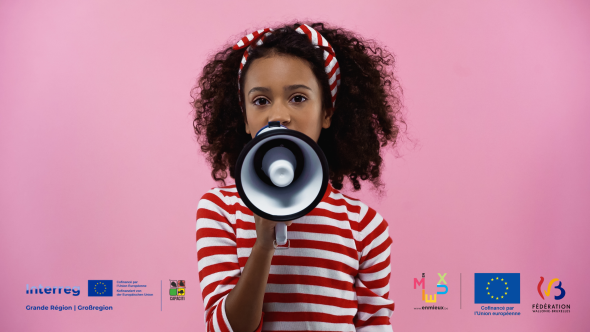
Supervised by Professor Géraldine Mathieu, a specialist in juvenile and family law and co-director of the Vulnerabilities & Societies Center, the UNamur research team involved in the CAPACITI project consists of Manon Brulard, a researcher in the Faculty of Law, and two student researchers, Lisa Salmon and Donaciene Quoirin. Together, they are exploring a specific question: How can a child truly participate in decisions that affect them when their family is breaking apart? “The effects of parental separations on children are still insufficiently documented from the perspective of their rights,” explains Manon Brulard.
Listen to children… really
To gather the children’s perspectives, the team first attempted individual and group interviews. They ran into a telling obstacle: parental consent. Without parental consent, they had no access to the children, even when the children themselves were eager to participate. “This really raised questions, because we’re conducting research on children’s participation and yet we find ourselves blocked by the goodwill of adults,” summarizes Manon Brulard. “This obstacle illustrates a major dilemma: how can we ensure that children’s rights are effectively upheld in a context where their lack of legal capacity prevents them from exercising those rights independently?” adds Géraldine Mathieu.
The team was nevertheless able to meet with about twenty children through interviews. They then rethought their approach and developed educational activities conducted directly in classrooms with children aged 8 to 12, with a twofold goal: to inform them about their rights and to provide them with a space to express themselves. At the same time, Manon Brulard met with child welfare professionals (judges, psychologists, mediators, and lawyers) to examine their practices and identify their needs.

Unrecognized rights, a silenced voice
One of the most striking findings is also one of the simplest: children’s rights are not widely known. “How can a child exercise and defend rights they don’t even know exist?” asks Manon Brulard. A survey of nearly 800 students preparing for careers in child-related fields confirms this in a troubling way: 40% of them had never heard of the United Nations Convention on the Rights of the Child, and rated their knowledge of these rights at 4 out of 10—the same score they gave to the importance placed on these rights in their training. “These students are the professionals of tomorrow. If they themselves aren’t properly trained, how can we guarantee children’s rights in the field?” the researcher asks.
But lack of knowledge is not the only obstacle. Fieldwork reveals deeper tensions. The first is almost paradoxical: the desire to protect a child can end up silencing them. “We want to shield them from parental conflict. But in reality, they’re already at the heart of that conflict at home,” observes Manon Brulard. Protecting them isn’t enough; we must also listen to them. Added to this is a power dynamic between adults and children that remains very pronounced. “There’s a very hierarchical relationship in which the child must comply with decisions without being consulted beforehand,” notes the researcher.
Professionals, for their part, often feel that they are listening, but children do not experience it that way. They generally receive no feedback on what they express and do not even know if their words are actually being taken into account.
Finally, children themselves censor what they say out of fear of hurting their parents. “They start thinking about the consequences of their words at a very early age. They don’t want to cause harm, so they stay silent. We’ve observed this fear in every classroom,” insists Manon Brulard.
Tools for Changing Practices
These findings inform the design of practical tools. At UNamur, within the TRANSITIONS Institute, the research team is, for example, developing a board game inspired by Monopoly and Trivial Pursuit, “where the goal isn’t to win, but to speak out about one’s rights,” explains Lisa Salmon, who played a major role in its design. The research team is also creating an interactive workbook that combines games, word searches, and practical resources to help children continue reflecting on the topics covered in the workshops at home.
Each project partner is currently developing its own research tools, with the goal of eventually co-creating an artistic work, a board game, a serious game, and interactive stories. Legal fact sheets, primarily intended for children, will also be posted online. Training sessions, e-learning modules for childcare professionals, and a white paper with recommendations will round out this collection. The white paper will also be aimed at children and policymakers, with the goal of transforming the research findings into concrete changes. All of these resources will be brought together within a cross-border center of expertise, the specific form of which has yet to be defined.
Being a Student-Researcher: An Experience Off the Beaten Path
A research student since 2024, Donaciene Quoirin joined the CAPACITI project after helping to write a scientific article based on children’s testimonies, alongside Géraldine Mathieu and Bee Marique (educational collaborator). She is joined this year by another student: Lisa Salmon.
Both have facilitated classroom sessions, designed educational tools, and conducted research on procedures for hearing children’s testimony under Belgian law.
What strikes Donaciene and Lisa is not only the intellectual richness of the project, but the human reality it reveals. During the sessions in schools, the children open up with disconcerting ease. “In just two hours, they tackle very sensitive topics,” says Donaciene. Lisa, for her part, highlights the group dynamics: “Sometimes, some of the children would judge those who dared to speak up.”
This immersion in research is something they find very enriching and hope to continue next year—and even after they graduate.
Learn more: When Students Become Researchers: Lisa and Donaciene’s Experience at the School of Law
The CAPACITI research project (Children’s Participation, Space, and Power to Act in Promoting Their Rights) brings together 8 funding partners and 19 methodological partners active in Belgium, France, Germany, and Luxembourg. It is funded under the Interreg Greater Region program. Its final results and the tools developed will be released starting in February 2028.
This article is taken from the "Eureka" section of Omalius magazine, Issue #41 (June 2026).
News
-
Faculty of Law
Institute
Domestic Violence: Understanding, Identifying, and Taking Action
Law
Domestic Violence: Understanding, Identifying, and Taking Action
Law
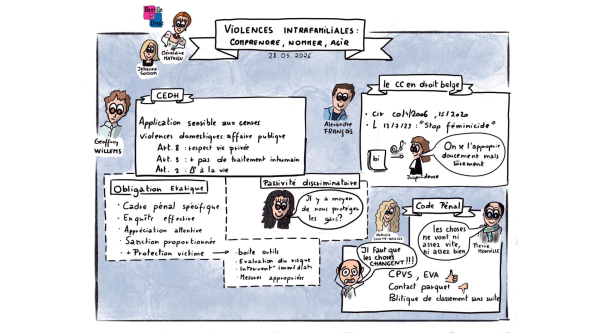
230 participants, 25 papers, a shared conviction: domestic violence must be studied in a different way. Neither marginal nor accidental, it constitutes a major, deeply rooted social phenomenon whose manifestations extend far beyond its most visible forms. A conference held at UNamur and a collective volume are fundamentally reshaping our understanding of the phenomenon.
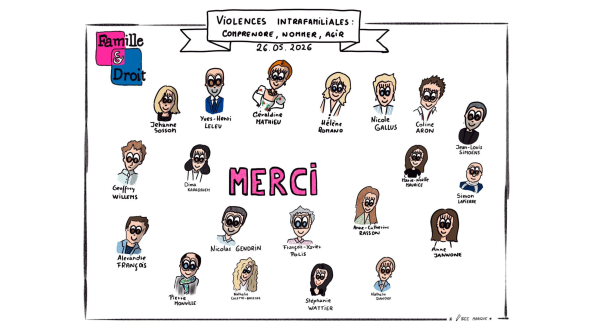
While domestic violence is becoming an increasingly prominent topic in public discourse, this does not mean that it is fully understood. On the contrary. It was this observation that led to the creation of the biennial conference of the Association Famille & Droit, co-chaired by Professor Géraldine Mathieu and Professor Yves-Henri Leleu, which brings together family law professors from French-speaking universities in Belgium. Organized with the support of the “Children’s Rights” Unit at the Vulnerabilities & Societies (V&S) Center at UNamur and the SMAJ (Marche Service for Assistance to Litigants), it brought together 230 researchers, judges, lawyers, psychologists, and practitioners united by a shared conviction: to better understand a complex phenomenon in order to respond to it more effectively. This collective reflection led to the publication of the anthology *Intrafamilial Violence: Understanding, Identifying, and Taking Action: An Interdisciplinary and Systemic Approach*, published by Larcier-Intersentia and edited by Professor Géraldine Mathieu.
Image

“Having the courage to see the nuances—not to downplay acts of violence, but to better understand situations and develop more appropriate responses.”
Going Beyond the Obvious
“There are topics that a society can never discuss too much, as long as it continues to learn and question itself,” says Géraldine Mathieu. One of the central themes of the conference and the book is precisely the call to “have the courage to be nuanced—not to downplay violence, but to better understand situations and develop more appropriate responses.”
Understand, name, act: these three verbs structure the book just as they structured the conference. Three verbs that, according to the professor, “emerged naturally,” as they reflect both an ethical and an intellectual imperative in the face of realities that “defy simplistic explanations.”
Coercive Control: Shifting Our Perspective to Understand
One of the book’s major contributions is that it places the concept of coercive control at the heart of its analysis. “It invites us to shift our perspective,” explains Géraldine Mathieu. “It reminds us that domestic violence is not limited to a few visible incidents, but can be part of a gradual dynamic of control and domination.”
This concept helps us grasp a reality that has long been underestimated: a person can gradually lose their freedom, self-confidence, or autonomy without there necessarily being any physical violence. Isolation, surveillance, control over finances or movements, systematic belittling… these are all mechanisms that build lasting control, the consequences of which can be just as devastating as physical violence. The book explores how this concept, now recognized within the Belgian legal system, compels the law to listen more closely to victims and to “take seriously realities that sometimes fell outside our usual categories,” explains Géraldine Mathieu.
Invisible Violence: Naming It to Acknowledge It
The book also devotes significant attention to invisible forms of violence (psychological, economic, administrative, or digital), including those that continue after separation and those that affect children. “To name it is already to acknowledge it. And to acknowledge it is to enable better protection,” emphasizes Géraldine Mathieu.
These forms of violence pose a major challenge: they defy existing legal categories, often evade reporting mechanisms, and remain underdocumented. The book’s contributions aim to bring these forms of violence to light through statistical, sociological, and clinical approaches, while also examining the blind spots in public policy. As Géraldine Mathieu puts it: “Words are not just for describing the world. Identifying a form of violence means acknowledging what victims are going through and better understanding the mechanisms at work.”
The law is essential, but it cannot act alone
In the face of this complexity, compartmentalized approaches reveal their limitations. The book brings together 25 contributions from academics, judges, lawyers, clinicians, and practitioners in the field, all sharing a common conviction: “The most relevant solutions emerge when everyone contributes their experience and is willing to learn from others.”
The law (criminal, family, property, and juvenile) is analyzed in depth at the Belgian, European, and international levels, but is constantly placed in dialogue with psychology, sociology, and practices in the field.
The conference embodied this same approach. By bringing together in one room professionals who do not always cross paths, it allowed new perspectives to emerge. “When professionals who don’t always follow the same practices take the time to listen to one another, new ideas emerge and everyone leaves a little changed,” observes Géraldine Mathieu. The outcome exceeded her expectations: for Marie-Amélie Delvaux, an attorney and lecturer at the Faculty of Law, the day was “eye-opening”: “We’re leaving with concrete tools; the speakers drew us into their cause.”
The book builds on this momentum by presenting innovative approaches and inspiring practices to improve the identification, prevention, and support of victims.
The Vulnerabilities & Societies Center (V&S;)
The Vulnerabilities & Societies Research Center at UNamur takes a resolutely interdisciplinary approach to situations of human vulnerability, at the intersection of law, psychology, and the social sciences. It pays particular attention to vulnerable populations and fundamental rights.
Its unique character is based on a twofold goal: to produce rigorous knowledge and to foster dialogue between academic scholarship and practical fieldwork.
“Addressing serious issues with rigor, but also with enough openness to learn from others,” summarizes Géraldine Mathieu, co-director of the center.
Beyond research and teaching, V&S; sees itself as a meeting place between the academic world and the field, convinced that knowledge realizes its full value when it is shared and discussed. This mission is fully illustrated by this conference and the accompanying book.