

Faculté de droit
The "Vulnerabilities and Societies" ("V&S") research center takes an interdisciplinary approach to the relationship between vulnerability(ies) and society(ies). It is the result of the merger of the Droits fondamentaux & Lien social center (formerly Droit et sécurité d'existence) and the Projucit center (Protection juridique des citoyens), which decided to join forces to reflect on the fragilities observed in our societies.
V&S | A research center of the Institut Transitions
The V&S Center brings together members from different Faculties to ensure the interdisciplinary approach essential to its field of expertise. It is composed of 4 units:

Teaching
The V&S Center's research also feeds into numerous teaching courses - including in the field of continuing education - including:
- the inter-university certificate in urban security policy management, in collaboration with UCL and ULg, unique in the French Community;
- the inter-university certificate in forensics, in collaboration with UCL and USL-B;
- the inter Hautes-Ecoles et Universités certificate in support for the highly precarious in collaboration with HENALLUX;
- the certificate in children's rights co-organized by UNamur, UCL and USL-B;
- the master of specialization in human rights co-organized by UNamur, UCL and USL-B;
- some elective courses taught at the Faculty of Law (law, gender and society, special welfare issues at work, antidiscriminatierecht, special public law issues, etc.).
- the master of specialization in an interdisciplinary approach to children's rights, co-organized by UNamur, UCLouvain, ULB, ULiège and USL-B ;
- the certificate in a multidisciplinary approach to child and youth abuse, co-organized by UNamur, UCLouvain, ULB, ULiège and UMons;
- the certificate in school and social attachment support, in collaboration with ITN.
- The "Vulnerabilities and Societies" option can also be chosen as part of the Bachelor of Law curriculum
Spotlight
News
Article
-
Faculty of Law
Institute
CAPACITI: Protecting Children or Involving Them—Do We Really Have to Choose?
Law
CAPACITI: Protecting Children or Involving Them—Do We Really Have to Choose?
Law
They are rarely asked for their opinion. Yet the law is clear: every child must be able to express their views on decisions that affect them. A gap persists between this principle and reality. This is what the CAPACITI project seeks to bridge by bringing together partners from the Greater Region around a shared goal: making children’s rights a concrete reality. At UNamur, a team of legal experts has examined an issue as common as it is sensitive—parental separations—to better understand it… and to bring about changes in practice.
Supervised by Professor Géraldine Mathieu, a specialist in juvenile and family law and co-director of the Vulnerabilities & Societies Center, the UNamur research team involved in the CAPACITI project consists of Manon Brulard, a researcher in the Faculty of Law, and two student researchers, Lisa Salmon and Donaciene Quoirin. Together, they are exploring a specific question: How can a child truly participate in decisions that affect them when their family is breaking apart? “The effects of parental separations on children are still insufficiently documented from the perspective of their rights,” explains Manon Brulard.
Listen to children… really
To gather the children’s perspectives, the team first attempted individual and group interviews. They ran into a telling obstacle: parental consent. Without parental consent, they had no access to the children, even when the children themselves were eager to participate. “This really raised questions, because we’re conducting research on children’s participation and yet we find ourselves blocked by the goodwill of adults,” summarizes Manon Brulard. “This obstacle illustrates a major dilemma: how can we ensure that children’s rights are effectively upheld in a context where their lack of legal capacity prevents them from exercising those rights independently?” adds Géraldine Mathieu.
The team was nevertheless able to meet with about twenty children through interviews. They then rethought their approach and developed educational activities conducted directly in classrooms with children aged 8 to 12, with a twofold goal: to inform them about their rights and to provide them with a space to express themselves. At the same time, Manon Brulard met with child welfare professionals (judges, psychologists, mediators, and lawyers) to examine their practices and identify their needs.

Unrecognized rights, a silenced voice
One of the most striking findings is also one of the simplest: children’s rights are not widely known. “How can a child exercise and defend rights they don’t even know exist?” asks Manon Brulard. A survey of nearly 800 students preparing for careers in child-related fields confirms this in a troubling way: 40% of them had never heard of the United Nations Convention on the Rights of the Child, and rated their knowledge of these rights at 4 out of 10—the same score they gave to the importance placed on these rights in their training. “These students are the professionals of tomorrow. If they themselves aren’t properly trained, how can we guarantee children’s rights in the field?” the researcher asks.
But lack of knowledge is not the only obstacle. Fieldwork reveals deeper tensions. The first is almost paradoxical: the desire to protect a child can end up silencing them. “We want to shield them from parental conflict. But in reality, they’re already at the heart of that conflict at home,” observes Manon Brulard. Protecting them isn’t enough; we must also listen to them. Added to this is a power dynamic between adults and children that remains very pronounced. “There’s a very hierarchical relationship in which the child must comply with decisions without being consulted beforehand,” notes the researcher.
Professionals, for their part, often feel that they are listening, but children do not experience it that way. They generally receive no feedback on what they express and do not even know if their words are actually being taken into account.
Finally, children themselves censor what they say out of fear of hurting their parents. “They start thinking about the consequences of their words at a very early age. They don’t want to cause harm, so they stay silent. We’ve observed this fear in every classroom,” insists Manon Brulard.
Tools for Changing Practices
These findings inform the design of practical tools. At UNamur, within the TRANSITIONS Institute, the research team is, for example, developing a board game inspired by Monopoly and Trivial Pursuit, “where the goal isn’t to win, but to speak out about one’s rights,” explains Lisa Salmon, who played a major role in its design. The research team is also creating an interactive workbook that combines games, word searches, and practical resources to help children continue reflecting on the topics covered in the workshops at home.
Each project partner is currently developing its own research tools, with the goal of eventually co-creating an artistic work, a board game, a serious game, and interactive stories. Legal fact sheets, primarily intended for children, will also be posted online. Training sessions, e-learning modules for childcare professionals, and a white paper with recommendations will round out this collection. The white paper will also be aimed at children and policymakers, with the goal of transforming the research findings into concrete changes. All of these resources will be brought together within a cross-border center of expertise, the specific form of which has yet to be defined.
Being a Student-Researcher: An Experience Off the Beaten Path
A research student since 2024, Donaciene Quoirin joined the CAPACITI project after helping to write a scientific article based on children’s testimonies, alongside Géraldine Mathieu and Bee Marique (educational collaborator). She is joined this year by another student: Lisa Salmon.
Both have facilitated classroom sessions, designed educational tools, and conducted research on procedures for hearing children’s testimony under Belgian law.
What strikes Donaciene and Lisa is not only the intellectual richness of the project, but the human reality it reveals. During the sessions in schools, the children open up with disconcerting ease. “In just two hours, they tackle very sensitive topics,” says Donaciene. Lisa, for her part, highlights the group dynamics: “Sometimes, some of the children would judge those who dared to speak up.”
This immersion in research is something they find very enriching and hope to continue next year—and even after they graduate.
Learn more: When Students Become Researchers: Lisa and Donaciene’s Experience at the School of Law
The CAPACITI research project (Children’s Participation, Space, and Power to Act in Promoting Their Rights) brings together 8 funding partners and 19 methodological partners active in Belgium, France, Germany, and Luxembourg. It is funded under the Interreg Greater Region program. Its final results and the tools developed will be released starting in February 2028.
This article is taken from the "Eureka" section of Omalius magazine, Issue #41 (June 2026).

News
-
Faculty of Law
Institute
Domestic Violence: Understanding, Identifying, and Taking Action
Law
Domestic Violence: Understanding, Identifying, and Taking Action
Law
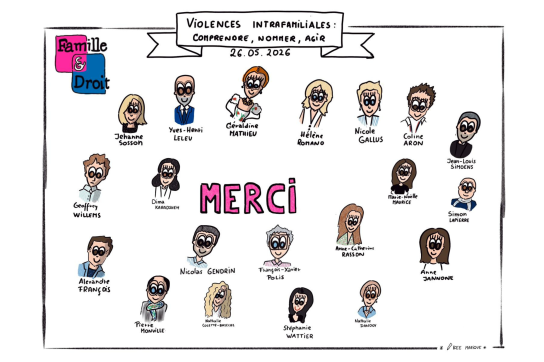
230 participants, 25 papers, a shared conviction: domestic violence must be studied in a different way. Neither marginal nor accidental, it constitutes a major, deeply rooted social phenomenon whose manifestations extend far beyond its most visible forms. A conference held at UNamur and a collective volume are fundamentally reshaping our understanding of the phenomenon.
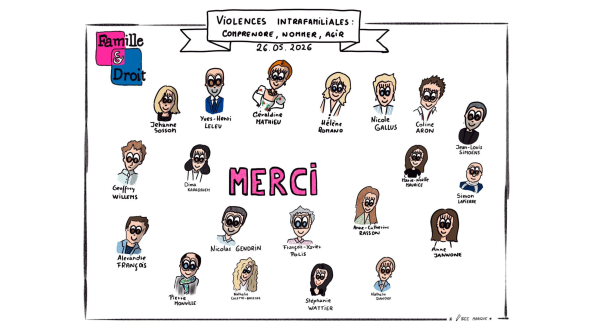
While domestic violence is becoming an increasingly prominent topic in public discourse, this does not mean that it is fully understood. On the contrary. It was this observation that led to the creation of the biennial conference of the Association Famille & Droit, co-chaired by Professor Géraldine Mathieu and Professor Yves-Henri Leleu, which brings together family law professors from French-speaking universities in Belgium. Organized with the support of the “Children’s Rights” Unit at the Vulnerabilities & Societies (V&S) Center at UNamur and the SMAJ (Marche Service for Assistance to Litigants), it brought together 230 researchers, judges, lawyers, psychologists, and practitioners united by a shared conviction: to better understand a complex phenomenon in order to respond to it more effectively. This collective reflection led to the publication of the anthology *Intrafamilial Violence: Understanding, Identifying, and Taking Action: An Interdisciplinary and Systemic Approach*, published by Larcier-Intersentia and edited by Professor Géraldine Mathieu.
Image

“Having the courage to see the nuances—not to downplay acts of violence, but to better understand situations and develop more appropriate responses.”
Going Beyond the Obvious
“There are topics that a society can never discuss too much, as long as it continues to learn and question itself,” says Géraldine Mathieu. One of the central themes of the conference and the book is precisely the call to “have the courage to be nuanced—not to downplay violence, but to better understand situations and develop more appropriate responses.”
Understand, name, act: these three verbs structure the book just as they structured the conference. Three verbs that, according to the professor, “emerged naturally,” as they reflect both an ethical and an intellectual imperative in the face of realities that “defy simplistic explanations.”
Coercive Control: Shifting Our Perspective to Understand
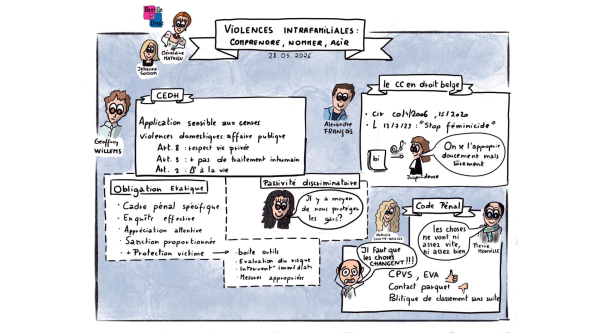
One of the book’s major contributions is that it places the concept of coercive control at the heart of its analysis. “It invites us to shift our perspective,” explains Géraldine Mathieu. “It reminds us that domestic violence is not limited to a few visible incidents, but can be part of a gradual dynamic of control and domination.”
This concept helps us grasp a reality that has long been underestimated: a person can gradually lose their freedom, self-confidence, or autonomy without there necessarily being any physical violence. Isolation, surveillance, control over finances or movements, systematic belittling… these are all mechanisms that build lasting control, the consequences of which can be just as devastating as physical violence. The book explores how this concept, now recognized within the Belgian legal system, compels the law to listen more closely to victims and to “take seriously realities that sometimes fell outside our usual categories,” explains Géraldine Mathieu.
Invisible Violence: Naming It to Acknowledge It
The book also devotes significant attention to invisible forms of violence (psychological, economic, administrative, or digital), including those that continue after separation and those that affect children. “To name it is already to acknowledge it. And to acknowledge it is to enable better protection,” emphasizes Géraldine Mathieu.
These forms of violence pose a major challenge: they defy existing legal categories, often evade reporting mechanisms, and remain underdocumented. The book’s contributions aim to bring these forms of violence to light through statistical, sociological, and clinical approaches, while also examining the blind spots in public policy. As Géraldine Mathieu puts it: “Words are not just for describing the world. Identifying a form of violence means acknowledging what victims are going through and better understanding the mechanisms at work.”
The law is essential, but it cannot act alone
In the face of this complexity, compartmentalized approaches reveal their limitations. The book brings together 25 contributions from academics, judges, lawyers, clinicians, and practitioners in the field, all sharing a common conviction: “The most relevant solutions emerge when everyone contributes their experience and is willing to learn from others.”
The law (criminal, family, property, and juvenile) is analyzed in depth at the Belgian, European, and international levels, but is constantly placed in dialogue with psychology, sociology, and practices in the field.
The conference embodied this same approach. By bringing together in one room professionals who do not always cross paths, it allowed new perspectives to emerge. “When professionals who don’t always follow the same practices take the time to listen to one another, new ideas emerge and everyone leaves a little changed,” observes Géraldine Mathieu. The outcome exceeded her expectations: for Marie-Amélie Delvaux, an attorney and lecturer at the Faculty of Law, the day was “eye-opening”: “We’re leaving with concrete tools; the speakers drew us into their cause.”
The book builds on this momentum by presenting innovative approaches and inspiring practices to improve the identification, prevention, and support of victims.
The Vulnerabilities & Societies Center (V&S;)
The Vulnerabilities & Societies Research Center at UNamur takes a resolutely interdisciplinary approach to situations of human vulnerability, at the intersection of law, psychology, and the social sciences. It pays particular attention to vulnerable populations and fundamental rights.
Its unique character is based on a twofold goal: to produce rigorous knowledge and to foster dialogue between academic scholarship and practical fieldwork.
“Addressing serious issues with rigor, but also with enough openness to learn from others,” summarizes Géraldine Mathieu, co-director of the center.
Beyond research and teaching, V&S; sees itself as a meeting place between the academic world and the field, convinced that knowledge realizes its full value when it is shared and discussed. This mission is fully illustrated by this conference and the accompanying book.
Article
-
Faculty of Law
Gender Through the Lens of Human Rights: Stéphanie Wattier Publishes a seminal work
Law
Gender and diversity
SDG#5 - Gender equality
Gender Through the Lens of Human Rights: Stéphanie Wattier Publishes a seminal work
Law
Gender and diversity
SDG#5 - Gender equality
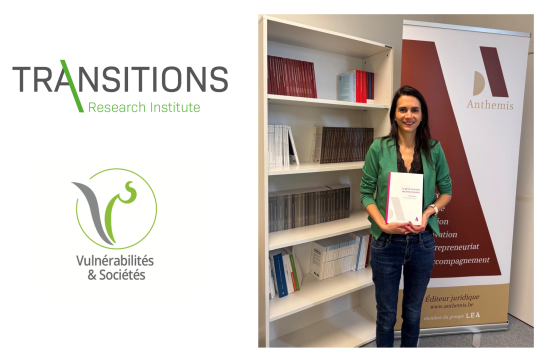
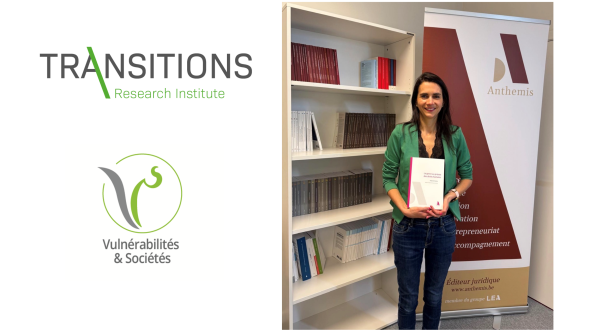
At a time when issues of gender equality, LGBTQIA+ rights, and the fight against violence against women are at the forefront of public debate, Stéphanie Wattier, a professor at the Faculty of Law at the University of Namur, has published a reference work titled *Gender Through the Lens of Human Rights*, published by Anthemis.
A rigorous analysis grounded in current legal developments
A specialist in constitutional law and fundamental rights, Stéphanie Wattier has established herself as one of Belgium’s leading academic voices on the intersection of gender and human rights. With some 100 publications to her credit, this book is the result of years of research and teaching, particularly through her course “Law, Gender, and Society” taught in the Faculty of Law and in the inter-university master’s program specializing in gender studies.
Primarily grounded in Belgian law, the book incorporates numerous developments in European law, including the case law of the European Court of Human Rights, as well as elements of comparative law.
The book opens with an analysis of the emergence of the concept of “gender” and its reception in law, before addressing topics such as gender identity, the physical and psychological integrity of intersex people, sexual orientation, gender-based violence, reproductive health, and gender equality.
The foreword is written by Stéphanie Hennette Vauchez, professor of public law at the University of Paris Nanterre and a leading expert on gender issues, a scholarly endorsement that underscores the significance of this work beyond national borders.
A book for everyone
While not intended as a popular science guide, Gender Through the Lens of Human Rights was written to be accessible to a wide audience: lawyers, law students, activists, social workers, policymakers, and curious citizens will all find food for thought within its pages. This accessibility reflects Stéphanie Wattier’s conviction that legal research must be grounded in real-world practice and accessible to society as a whole.
Co-director of the Center for Vulnerabilities and Societies (V&S) and Vice President of the Transitions Institute at UNamur, as well as a member of the University’s Gender Committee, Stéphanie Wattier embodies this ambition for research that is both rigorous and grounded in the real world, addressing the challenges of our time. Her expertise is regularly sought after at national and international conferences, by the media, by members of civil society, and by the various Belgian parliaments.
UNamur, a university committed to gender equality and diversity
The University of Namur is strongly committed to gender equality, diversity, and inclusion. Since the creation of a gender group in 2011, followed by a dedicated Vice-Rectorate in 2013, UNamur has implemented a proactive policy centered on four pillars: human dignity, gender equality, inclusion, and the fight against harassment. On campus, the PHARE (Protection HARcèlement Étudiant) initiative, launched in 2021, allows any student who is a victim or witness to report an uncomfortable situation and receive anonymous and confidential support. Gender equality is also one of the Sustainable Development Goals (SDGs) to which UNamur has fully committed.
News
-
Faculty of Medicine
Narilis Institute
Our researchers in the World's Top 2% Scientists list
Ranking
Institution
ODD#9 - Industry, innovation and infrastructure
News
-
Faculty of Medicine
Faculty Economics Management Communication Politics (EMCP)
Faculty of Sciences
Faculty of Law
Narilis Institute
NISM Institute
NaDI Institute
PaTHs Institute
ILEE Institute
naXys Institute
Our researchers in the World's Top 2% Scientists list
Ranking
Institution
ODD#9 - Industry, innovation and infrastructure
Stanford University has published a prestigious ranking that highlights the most influential researchers in a wide range of scientific fields. The list, based on bibliographic criteria, aims to provide a standardized means of identifying the world's scientific leaders. It is one criterion among others for assessing the quality of scientific research. Twelve researchers from the University of Namur are among them!

This list, created by Stanford University and published in August 2024 is compiled in collaboration with Elsevier's ICST lab from Scopus data, aims to provide a standardized means of identifying the world's best scientists and recognizing those scientists who have had a significant impact on their respective fields.
While this list has been adopted by many institutions as a reliable measure of research impact, it is not the only way to evaluate research. Based strictly on bibliometric data, it is also subject to criticism.
Since September 2023, the University of Namur has been strengthening its commitment to the implementation of research assessment reform with the signing of the "Coalition for Advancing Research Assessment (CoARA) "agreement.
This agreement commits the institution to a series of principles, including taking into account career diversity and emphasizing qualitative research criteria rather than relying solely on bibliometric (and therefore quantitative) data.
Namur University researchers honored
- Charlotte Beaudart - Faculty of Medicine, Narilis Institute
- Benoît Champagne - Faculty of Science, NISM Institute
- Alain Decrop - EMCP Faculty, NaDi-CRIDS Institute
- Olivier Deparis - Science Faculty, NISM Institute and PaTHs Institute
- Jonathan Douxfils - Faculty of Medicine, Narilis Institute
- Patrick Kestemont - Faculty of Science, ILEE Institute
- Alexandre Mayer - Faculty of Science, NISM Institute and Institut naXys
- Carine Michiels - Faculty of Science, Institut Narilis
- Antoinette Rouvroy - Faculty of Law, ESPHIN Institutes and NaDi-CRIDS Institute
- Frédéric Silvestre - Faculty of Science, ILEE Institute
- Bao-Lian Su - Faculty of Science, NISM Institute
- Johan Wouters - Faculty of Science, NISM Institute
The list is updated every year, with data on the whole career and impacts on a single year, for the sake of transparency and relevance.
The measurement criteria used
A variety of bibliometric measures are taken into account to ensure a fair and balanced representation of researchers' work.
- The C-score: this composite score is based on various bibliometric factors, including the total number of citations.
- The h-index: this impact indicator takes into account the number of a researcher's publications as well as the number of their citations.
- The percentiles of fields and subfields : scientists are classified into 22 major fields and 176 subfields. Only those who rank in the top 2% of their subfield are taken into account.
- Career-wide or single-year impact: rankings are available for both career-wide impact and single-year performance, providing a better understanding of long-term contribution and recent achievements.
Research excellence
Figuring among this top 2% of scientists is therefore a prestigious recognition of an individual's contribution to science and demonstrates the excellence of their research, enhancing their reputation in academia and industry.
The ranking offers visibility across all disciplines, drawing attention to work that might otherwise remain in a niche or be under-appreciated. It also serves as a benchmark for institutions and governments to assess the influence of their research programs.
Many institutions use the ranking to measure the success of their faculty, or other entity, which can also enhance credibility within the academic community.
This list encourages scientists to focus on producing high-quality, impactful research rather than chasing quantity.
By compiling data from all scientific fields and offering a fair, metrics-based approach, this ranking not only celebrates individual achievements, but also highlights the importance of impactful research in advancing knowledge. However, it must be qualified, as it only takes into account quantitative data, which are not necessarily representative of the full diversity of research.
According to another database, that of UNESCO, the number of researchers in the world is increasing by 300,000 per year, reaching 9 million today. The Top 2% comprises 200,000 names, including twelve researchers from the University of Namur.
Congratulations to them for their excellent research and for this prestigious worldwide recognition!