

Image

Faculté de droit
The Faculty of Law at the University of Namur (UNamur) has long been committed to the pursuit of academic excellence and inter-university cooperation promoted by the Francqui Foundation.
By hosting Belgian and international professors and inviting its own faculty members to other universities, the Faculty of Law actively contributes to the influence of the Francqui Chairs, which serve as true vehicles for scientific exchange, intellectual debate, and the promotion of high-level research.
This page presents the general framework of the Francqui Chairs, as well as the history of visiting professors at the UNamur Faculty of Law and UNamur professors invited to other academic institutions.
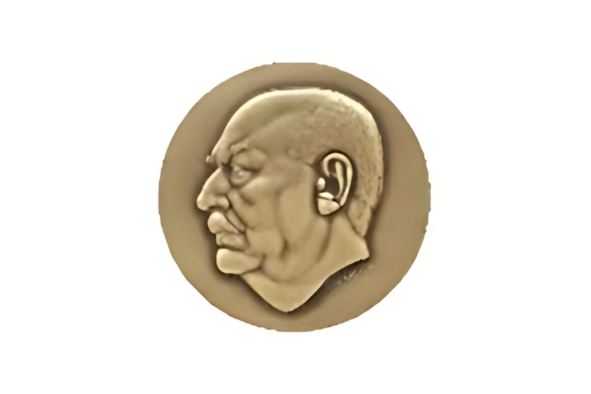
The Francqui Foundation funds academic chairs with the aim of promoting cooperation and exchanges between universities—primarily in Belgium—and highlighting academic excellence.
The Belgian Francqui Chairs aim to facilitate the organization of approximately ten hours of lectures, preceded by an inaugural lecture. The purpose
of this lecture is to highlight the chairholder’s research field and to emphasize its scientific and societal relevance. It also serves as a unique opportunity for researchers active in the relevant field to meet and engage in discussion.
International Francqui Chairs
The Francqui Foundation also funds International Francqui Chairs. These enable a foreign professor to stay in Belgium for an uninterrupted period of three to six months. These chairs are intended for world-renowned researchers of the highest caliber who remain highly active in their professional careers.
It is within this dual framework—national and international—that the UNamur Faculty of Law hosts visiting professors and that members of the Faculty are invited to teach at other universities.
Delphine Misonne, Professor at UCLouvain.
Theme: “Need for the environment, need for law?”
Inaugural Lecture: Protecting the Environment Beyond Politics
Lucie Cluzel-Métayer – Professor at the University of Paris Nanterre (France)
Field: E-Government
Inaugural Lecture: “What Challenges for Human Rights in the Age of Digital Governance?”
Serge Gutwirth – Vrije Universiteit Brussel (VUB)
Field: Law, Science, Technology, and Society
Inaugural Lecture: “Back to Law”
Diane Roman – François-Rabelais University (France)
Fields: Labor law, health law
Inaugural lecture: “Vulnerability and Law. What Kind of Law in a Vulnerable World?”
Julien Stuyck – Katholieke Universiteit Leuven (KUL)
Areas of expertise: European law, consumer law
Inaugural lecture: “Business Practices and Competition: Toward a New Balance?”
Dan Kaminski – Catholic University of Louvain (UCL)
Areas: Law, Criminology
Inaugural lecture: “Penalty, management, innovation”
Paul Martens – University of Liège (ULg) and Free University of Brussels (ULB)
Inaugural lecture: “Can Law Do Without God?”
Éric David – Free University of Brussels (ULB)
Areas of expertise: Public international law, international criminal law
Inaugural lecture: “International criminal law yesterday and today: from the suppression of piracy to the September 11 attacks”
Jean-Luc Brackelaire
Collen-Francqui Chair at the Université libre de Bruxelles (ULB)
Inaugural Lecture: “Making History Together.” How Can We Rebuild Sociality After Its Destruction?
Antoinette Rouvroy
Francqui Chair at the University of Liège
Inaugural lecture: “Algorithmic Governmentality: An Analysis of Power in the Age of Big Data”
Xavier Thunis
Francqui Chair at UCLouvain Saint-Louis Brussels
Inaugural lecture: “How Do Lawyers Keep Their Word? An Essay on the Relationship Between Law and Language. A Legal Version of the World”
Yves Poullet
Francqui Chair at the Catholic University of Louvain in Hainaut (UCL-Mons)
Inaugural lecture: “E-law—a revolution in progress. Internet regulation: a revolutionary undertaking”