

Image

Faculté de droit
It’s impossible to forget the Faculty of Law once you’ve studied there! The bonds formed between students, professors, and researchers extend far beyond the classroom. This spirit of solidarity and openness is at the heart of the Namur Law School Alumni Association (ADANam), which offers graduates a special space to stay in touch and share their professional journeys.
The Faculty of Law Alumni Association has several objectives set forth in its bylaws:
To achieve these goals, ADANam organizes various activities and training sessions:
Most ADANam members are now legal professionals: lawyers, magistrates, in-house counsel, judges, bailiffs, notaries, diplomats, researchers, or educators…
Many of them continue their education at UNamur through specialized master’s programs, doctoral studies, or continuing education courses offered by the Faculty.
The Association also collaborates with the Faculty’s research centers and the Association of Namur Lawyers (AJN) to offer continuing education activities.
Membership applications may be submitted by mail or email to the ADANam Board of Directors via its President (amelie.lachapelle@unamur.be)
President of ADANam
Members of the ADANam Committee
Honorary Member of ADANam
Anniversary Gala on September 22, 2023, in collaboration with the Law Society and the Law Review
A memorable evening celebrating the 50th anniversary of the alumni association and the 55th anniversary of the law school!

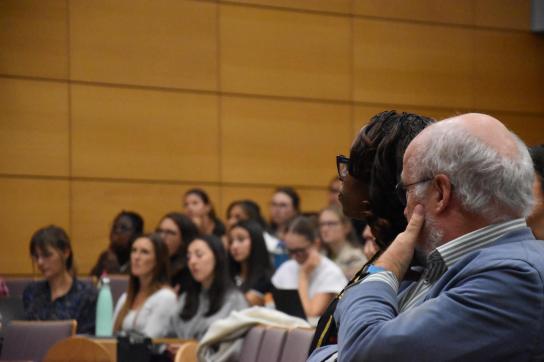
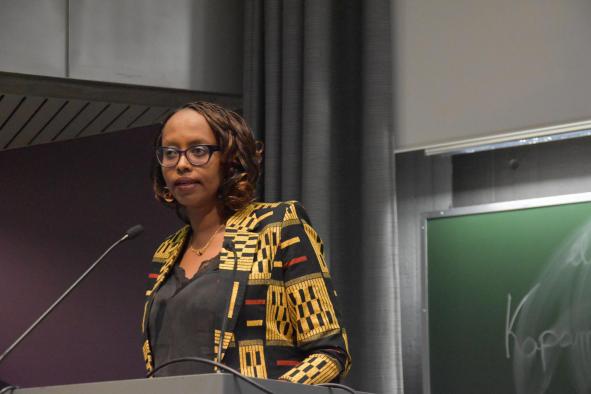
For the 2026–2027 academic year, the UNamur School of Law has chosen peace as its central theme, under the slogan “Peace & Law.” Launched on September 22, this fifth edition will invite students and faculty to explore, throughout the year, the role that law can play in building or restoring peace. To kick off this new chapter, the Faculty featured Jacques Fierens and Annick Umutoni, both of whom have close ties to Rwanda.
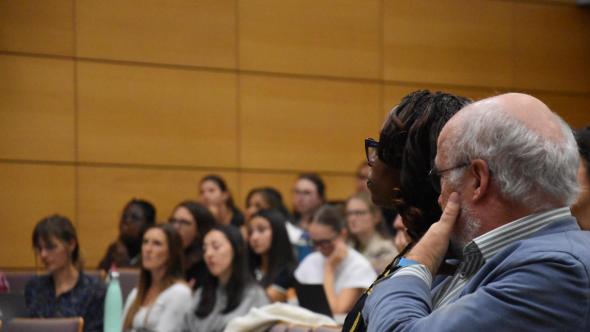
Since 2022, the School of Law has chosen a theme each year designed to bring its entire community together. Following themes such as childhood and migration, the fight against harassment, the promotion of inclusion, and then environmentalism with “Let’s Re-enchant the Earth!”, peace will be the theme for this new academic year.
With “Peace & Law,” the School aims in particular to explore how the law can contribute to peace, as well as the limits of this tool and the situations in which it can, on the contrary, become an instrument of domination or a source of conflict. The “Fil Rouge” initiative brings students and faculty together around a common theme, while forging connections between different courses.
To launch this new series, the Faculty has chosen to bring together two staunch defenders of human rights—both deeply aware of war and its consequences, but above all active contributors to a peaceful society: Annick Umutoni, a psychologist of Rwandan origin, and Jacques Fierens, a lawyer and professor emeritus at this Faculty.
For Jacques Fierens, the theme “Peace & Law” immediately brought to mind an experience he had thirty years earlier. In 1996, the Law School received a fax from the new Rector of the National University of Rwanda, himself a former doctoral student at the University of Namur. The university, which had just resumed operations following the genocide against the Tutsis, was seeking a professor to teach the philosophy of law, and Jacques Fierens quickly volunteered.
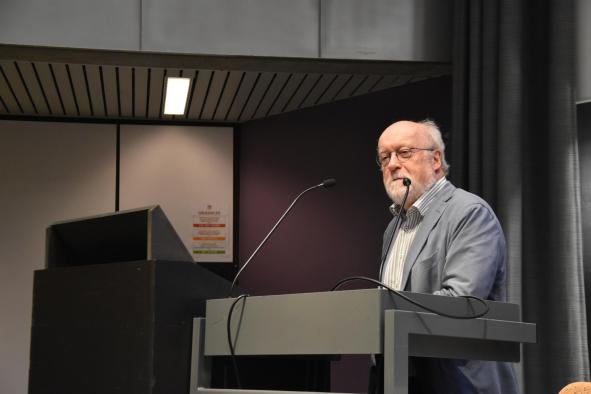
Speaking to a group of about fifty students, he discussed the thinkers who have reflected on the relationship between law and peace, from Grotius to Hannah Arendt, including Kant. But the exercise quickly brought him face to face with the limits of his own teaching: how could he discuss law, justice, or peace with students who had themselves experienced the consequences of genocide?

“Peace is infinitely more than just the end of a fight or a war”
For him, this experience has above all reinforced his conviction about the role of the law in peacebuilding: while it cannot solve everything, it can and must lay certain foundations. “The law cannot bring about peace,” he emphasizes. “However, it serves as a threshold, an indispensable step toward peace.”
Annick Umutoni’s life story offers a different perspective on this issue. A teenager at the time of the 1994 genocide against the Tutsis, she left Rwanda with the last of the UN peacekeepers and went on to build a life in Belgium. Now a psychologist, she works with people dealing with the consequences of conflict and the trauma that can be passed down from one generation to the next.
Her work, however, is not limited to Rwanda. She also works with people who have experienced post-conflict situations in the Congo or Burundi, as well as domestic violence, forced marriages, or other forms of violence. “When we talk about peace, we’re also talking about memory—what we pass on or what we don’t—and about resilience,” she explains. During her presentation, Annick Umutoni demonstrated that reflecting on peace also involves discussing trauma and what is built in the aftermath of conflict.
For Jacques Fierens, returning to UNamur to speak to the students also held special significance. A former professor at the Faculty, he says he is “more convinced than ever that the world will be saved by young people and by the education they receive.” For Annick Umutoni, the value of Le Fil Rouge also lies in bringing together multiple disciplines and perspectives to address an issue as broad as peace.

“This blending of all these disciplines is important. It’s not just about law, it’s not just about philosophy: we need to bring different perspectives together to build something more peaceful.”
The launch on September 22 is just the first step. Several events are already scheduled. On October 12, diplomat Antoine Misonne will speak on the topic “Does public international law still exist?” On October 22, Luuk Van Middelaar and Maxime Prévot will participate in a discussion focused on the European Union as an instrument of peace and the protection of democracy. A discussion on the Israeli-Palestinian conflict, featuring Simone Susskind and Bichara Khader, is scheduled for November 4, while a mock international negotiation on the crisis in Iran will be organized with Professor Elena Aoun. Other activities will be added to the program over the coming months, including a mock trial on the theme “Namur at War.”

Through five interdisciplinary lecture-workshops, doctoral students from UNamur NaDI invite the general public to develop a critical perspective on artificial intelligence, which is already transforming our daily lives.

Artificial intelligence is now accessible to everyone. Yet, while many people use it every day, few truly understand how it works, its limitations, or the issues surrounding it. To address this need, the Namur Digital Institute (NaDI) is launching “What If AI…,” a series of lecture-workshops open to the general public, coordinated by doctoral students Elisa De Coster (PReCISE) and Aline Nardi (CRIDS).
“The idea behind the project is to demystify artificial intelligence,” begins Elisa De Coster. “As researchers, we’re fortunate to be aware of the issues raised by AI. We wanted curious members of the public to have access to these keys to understanding as well.”
“Before 2022 and the rise of ChatGPT, these tools were limited to a niche audience,” continues Aline Nardi. “Since then, the use of AI has become widespread at record speed, but reflection on the societal implications of these uses has not kept pace. This series of lectures is an invitation to take a step back and understand what’s happening behind the scenes.”
Each session, lasting about two hours, will bring together the perspectives of several specialists. A doctoral student in computer science will explain the technical workings of AI, while his counterpart in law will address the legal, ethical, and societal implications.
Speakers from the professional world will share their real-world experience, and an interactive activity will allow the audience to put these concepts into practice. Interactivity, interdisciplinarity, and accessibility to the general public are the three pillars of the project.
Each event will address a different social issue:
While Elisa De Coster and Aline Nardi coordinate the project, they emphasize that it is, above all, a collaborative effort. The lecture series is led by ten doctoral students from the PReCISE and CRIDS research centers: Elisa De Coster, Adélaïde Couplet, Jules Dejaeghere, Pierre Luycx, Pierre Poitier, Aline Nardi, Alix Gobert, Florian Jacques, Martin Rappe, Lionel Goffaux, and Olga Thiry. Together, they aim to help the general public better understand artificial intelligence, without demonizing it or presenting it as a miracle solution.

The days when people chose a career once and for all and when experience alone was enough to climb the career ladder seem to be over. Nowadays, lifelong learning has almost become the norm. “There is clearly a trend in this direction, particularly in the context of automation and artificial intelligence, which makes acquiring new skills all the more important,” says Michel Ajzen, a professor in the Management Department at the Faculty of Economics, Management, and Communication at SciencePo, UNamur, and a member of the Namur Digital Institute. “And it’s not a generational issue: whether you’re 30, 40, or 50, this need exists.”

While many companies offer training programs for their employees, it also appears that the “responsibility for employability” has gradually shifted to the workers themselves, who are now expected to take greater control of their careers. “In the past, the boss was seen as responsible for the employee’s development—and even their personal fulfillment—sometimes even beyond the workplace,” notes Michel Ajzen. “But over time, this responsibility for employability has been diluted. ” This trend has been reinforced by new “career scripts,” which are heavily based on mobility. “When I ask students how many employers they think they’ll have in their lifetime, the average answer is six,” the professor continues. “This means that even before entering the workforce, they already have the idea that they’ll move from one employer to another, which can lead them to feel ‘responsible’ for their own careers and thus potentially to pursue training on their own initiative.”
Getting an education, sure, but in what? And how? As Michel Ajzen explains, this choice depends largely on the “career tactics” adopted by workers. “Depending on their stage of life, they may adopt tactics that are more employment-oriented, with the goal of quickly securing a job to make ends meet,” he explains.
“At other times, they’ll adopt a strategy more focused on employability, with the goal of gradually acquiring the knowledge that will allow them to advance—whether through vertical mobility—within the same company—or horizontal mobility—to another company or a different position. Finally, there’s the ‘meaning’ approach: pursuing training that will lead them to a job that makes them even more eager to get out of bed in the morning…”

Furthermore, training periods are often seen by workers as a breather: an opportunity to step back and “lift their heads up from the handlebars” in what is often a high-pressure workday. This “break” is now governed by various policies. For example, the law of October 3, 2022, guarantees private-sector employees an individual right to training equivalent to 5 days per year for full-time workers. This training may be organized by the employer or left to the employees’ discretion (subject to the employer’s oversight). “However, some companies are not required to guarantee this right to their employees. This is particularly the case for companies with fewer than ten employees,” explains Charlotte Lambert, an associate professor and specialist in labor law. “In labor law, there are also collective bargaining agreements that supplement the law on a sector-by-sector basis and may provide for additional days of training.”
When an employee wishes to pursue more extensive training—for example, a university certificate program that typically lasts more than five days per year—they can also take advantage of other programs that allow them to maintain all or part of their pay. “Paid educational leave, or CEP—which falls under regional jurisdiction—allows employees to take a recognized training course of at least 32 hours, including initial training,” explains Charlotte Lambert. “The employee retains their pay, while the employer is compensated by the ONEM.”
The other option is “training-related” time credit: this regional program, which exists only in the private sector, allows employees to temporarily reduce or suspend their working hours without affecting the validity of their contract. In this case, the employee receives compensation directly from the ONEM, subject to certain age and seniority requirements. Time credit is also limited to a period of 36 months. “These various programs are not necessarily well known to the public,” comments Charlotte Lambert, “which also explains why many people are discouraged from pursuing training, particularly out of fear of losing their job or having to reduce their working hours and, consequently, their pay.” Furthermore, they are only available to workers with relatively stable employment status (permanent contracts, long-term fixed-term contracts, etc.). “Specific but similar mechanisms exist in the public sector. For the self-employed, however, taking paid leave or using time credits is not an option. They must therefore bear the indirect cost of their training themselves,” the labor law specialist adds.
Given the need for worker training, universities naturally have a role to play. The “Paysage” decree of November 7, 2013, stipulates that they are authorized to organize continuing education programs accredited by ARES (Academy of Research and Higher Education). “Under the terms of the decree, continuing education does not refer to bachelor’s or master’s degrees, but rather to certificates,” explains Charlotte Lambert. Thus, to avoid any misunderstanding, students should be aware that earning a university certificate is not the same as earning an academic degree and therefore does not confer the same advantages in the job market.
On the other hand, there is indeed the possibility for working professionals to earn a bachelor’s or master’s degree through part-time study, as is the case at the UNamur School of Law. “The unique feature of a bachelor’s degree—and ideally a master’s degree—is that it represents a true fresh start,” emphasizes Mathieu Rolain, academic coordinator of this program and researcher at the Vulnerabilities & Societies (V&S) Center at the Transitions Institute. “Often, it’s a complete career change and sometimes even the fulfillment of a dream: some are 50 years old and are about to begin their bar exam preparation…”. In Block 1 of the Faculty of Law’s part-time program, there are about 50 to 60 enrolled students each year: 10 to 15 of them will graduate in Block 3. “These students are extremely supportive of one another; they share their notes and help each other out when one of them is struggling,” observes the coordinator.
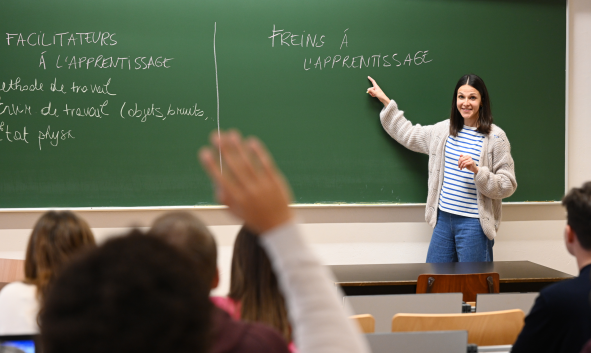
In the same vein, UNamur is committed to tailoring its programs as best as possible to this group. “Many have family responsibilities and sometimes live far from Namur,” continues Mathieu Rolain. “All of our classes are therefore recorded and posted online. We also give them access to staff parking lots and notify them of exam dates well in advance… We try to show them that we support them and understand them. ” Because for these adults with busy professional and personal lives, (re)starting university studies “in evening classes” requires extraordinary discipline and determination, as well as the unconditional support of those around them. “I really admire them a lot,” enthuses Mathieu Rolain. “To me, they’re superheroes. We’ve had medical specialists who came in after their workday, single parents… They’re very unconventional individuals with brilliant backgrounds. They’re also a very demanding group who are always watching your every move—which, for us teachers, is incredibly stimulating.” Because by opening its doors to an experienced audience, the academic world, too, continues to learn.
Since the 1980s, the University of Namur has distinguished itself through its expertise in continuing education for teachers, covering both didactic and psychopedagogical aspects.
“It was the Faculty of Philosophy and Letters that initially launched this initiative to offer what were then called ‘refresher courses’ to French teachers,” says Sandrine Biémar, coordinator of the Center for Continuing Education for Teachers at the Faculty of Education and Training Sciences (FaSEF), a professor, and a member of the Institute for Research in Didactics and Education (IRDENa). “ Subsequently, more general training courses on psychopedagogical aspects followed: these were initially organized by the Department of Education and Technology, which has since become FaSEF. Similarly, in the 1990s, the Faculty of Sciences and the Faculty of Economics developed their own centers for continuing teacher education.” These four centers for continuing teacher education are now united under the “Salle des Pros.”
While the decree of June 17, 2021 (Book 6 of the Education Code) formalizes the rights and duties of teaching staff regarding continuing education, this is by no means a new concept for the profession.
“The profession is so complex and subject to so many changes—particularly in curricula and teaching methods—that it is important for teachers to view their career as a continuous process,” insists Sandrine Biémar. “That is why, starting with initial training, we inform students about these opportunities for continuing education.”
The goal is to train “reflective practitioners” capable of questioning their own practices in order to refine and adapt them over time.
“We try to bridge the gap between the world of research and the world of practice: so that we can inform teachers about new studies, but they can also inform us about what’s happening in the field,” the coordinator continues. “The Salle des Pros serves as this space that opens us up to the world.”
The Dynamics of Continuing Education for Teachers at the University of Namur: A Crossroads Between Research and Practice!
The Salle des Pros is, above all, a space dedicated to addressing the questions teachers have about their practice. At the intersection of practice and research, it tackles issues that arise in the field through reflection, discussion, and collaborative problem-solving.

In addition to the mandatory and free training courses it offers as a “training provider” for teachers, UNamur also offers several certificate programs focused on specific topics. “Teachers voluntarily enroll in these certificate programs, in addition to their mandatory training and outside of their teaching hours, and cover the costs themselves,” explains Sandrine Biémar. Among the topics generating growing interest in the teaching community are differentiated instruction practices. “On a daily basis, teachers are faced with groups of students where each has different needs and learns at different paces,” explains the coordinator. “ Yet there is a whole range of methodologies that allow for these differences to be taken into account, which is a very important issue today, especially with the implementation of the common core curriculum.” Training programs focused on the language of instruction—which are central to combating inequalities—have also expanded significantly. “We make teachers aware that they use language specific to the school setting—‘sit down,’ ‘take out your notebook,’ ‘analyze,’ ‘color in’—and that this language must be made explicit. We need to tell students why we’re having them do this or that.” Finally, AI is, unsurprisingly, one of the new topics in continuing education for teachers, as well as for other audiences (managers, decision-makers, etc.). A new university micro-course on artificial intelligence has been offered since early 2026.
High School Graduates
Master's
Specialized Master’s Programs
This article is from the "Issues" section of Omalius magazine, Issue #41 (June 2026).

They are rarely asked for their opinion. Yet the law is clear: every child must be able to express their views on decisions that affect them. A gap persists between this principle and reality. This is what the CAPACITI project seeks to bridge by bringing together partners from the Greater Region around a shared goal: making children’s rights a concrete reality. At UNamur, a team of legal experts has examined an issue as common as it is sensitive—parental separations—to better understand it… and to bring about changes in practice.
Supervised by Professor Géraldine Mathieu, a specialist in juvenile and family law and co-director of the Vulnerabilities & Societies Center, the UNamur research team involved in the CAPACITI project consists of Manon Brulard, a researcher in the Faculty of Law, and two student researchers, Lisa Salmon and Donaciene Quoirin. Together, they are exploring a specific question: How can a child truly participate in decisions that affect them when their family is breaking apart? “The effects of parental separations on children are still insufficiently documented from the perspective of their rights,” explains Manon Brulard.
To gather the children’s perspectives, the team first attempted individual and group interviews. They ran into a telling obstacle: parental consent. Without parental consent, they had no access to the children, even when the children themselves were eager to participate. “This really raised questions, because we’re conducting research on children’s participation and yet we find ourselves blocked by the goodwill of adults,” summarizes Manon Brulard. “This obstacle illustrates a major dilemma: how can we ensure that children’s rights are effectively upheld in a context where their lack of legal capacity prevents them from exercising those rights independently?” adds Géraldine Mathieu.
The team was nevertheless able to meet with about twenty children through interviews. They then rethought their approach and developed educational activities conducted directly in classrooms with children aged 8 to 12, with a twofold goal: to inform them about their rights and to provide them with a space to express themselves. At the same time, Manon Brulard met with child welfare professionals (judges, psychologists, mediators, and lawyers) to examine their practices and identify their needs.

One of the most striking findings is also one of the simplest: children’s rights are not widely known. “How can a child exercise and defend rights they don’t even know exist?” asks Manon Brulard. A survey of nearly 800 students preparing for careers in child-related fields confirms this in a troubling way: 40% of them had never heard of the United Nations Convention on the Rights of the Child, and rated their knowledge of these rights at 4 out of 10—the same score they gave to the importance placed on these rights in their training. “These students are the professionals of tomorrow. If they themselves aren’t properly trained, how can we guarantee children’s rights in the field?” the researcher asks.
But lack of knowledge is not the only obstacle. Fieldwork reveals deeper tensions. The first is almost paradoxical: the desire to protect a child can end up silencing them. “We want to shield them from parental conflict. But in reality, they’re already at the heart of that conflict at home,” observes Manon Brulard. Protecting them isn’t enough; we must also listen to them. Added to this is a power dynamic between adults and children that remains very pronounced. “There’s a very hierarchical relationship in which the child must comply with decisions without being consulted beforehand,” notes the researcher.
Professionals, for their part, often feel that they are listening, but children do not experience it that way. They generally receive no feedback on what they express and do not even know if their words are actually being taken into account.
Finally, children themselves censor what they say out of fear of hurting their parents. “They start thinking about the consequences of their words at a very early age. They don’t want to cause harm, so they stay silent. We’ve observed this fear in every classroom,” insists Manon Brulard.
These findings inform the design of practical tools. At UNamur, within the TRANSITIONS Institute, the research team is, for example, developing a board game inspired by Monopoly and Trivial Pursuit, “where the goal isn’t to win, but to speak out about one’s rights,” explains Lisa Salmon, who played a major role in its design. The research team is also creating an interactive workbook that combines games, word searches, and practical resources to help children continue reflecting on the topics covered in the workshops at home.
Each project partner is currently developing its own research tools, with the goal of eventually co-creating an artistic work, a board game, a serious game, and interactive stories. Legal fact sheets, primarily intended for children, will also be posted online. Training sessions, e-learning modules for childcare professionals, and a white paper with recommendations will round out this collection. The white paper will also be aimed at children and policymakers, with the goal of transforming the research findings into concrete changes. All of these resources will be brought together within a cross-border center of expertise, the specific form of which has yet to be defined.
A research student since 2024, Donaciene Quoirin joined the CAPACITI project after helping to write a scientific article based on children’s testimonies, alongside Géraldine Mathieu and Bee Marique (educational collaborator). She is joined this year by another student: Lisa Salmon.
Both have facilitated classroom sessions, designed educational tools, and conducted research on procedures for hearing children’s testimony under Belgian law.
What strikes Donaciene and Lisa is not only the intellectual richness of the project, but the human reality it reveals. During the sessions in schools, the children open up with disconcerting ease. “In just two hours, they tackle very sensitive topics,” says Donaciene. Lisa, for her part, highlights the group dynamics: “Sometimes, some of the children would judge those who dared to speak up.”
This immersion in research is something they find very enriching and hope to continue next year—and even after they graduate.
Learn more: When Students Become Researchers: Lisa and Donaciene’s Experience at the School of Law
The CAPACITI research project (Children’s Participation, Space, and Power to Act in Promoting Their Rights) brings together 8 funding partners and 19 methodological partners active in Belgium, France, Germany, and Luxembourg. It is funded under the Interreg Greater Region program. Its final results and the tools developed will be released starting in February 2028.
This article is taken from the "Eureka" section of Omalius magazine, Issue #41 (June 2026).
A conference organized as part of the Faculty of Law's annual theme, which this year is "Peace & Law."

Featuring presentations by Simone SUSSKIND (former Brussels regional representative and federal senator, founder of Actions in the Mediterranean) and Bichara KHADER (professor emeritus at UCLouvain and specialist in the Arab world and Euro-Mediterranean relations).
Free event.


University of Namur,
Faculty of Law
Rempart de la Vierge 5,
5000 Namur
081/72 47 67
adanam@unamur.be