

The Faculty of Education and Training Sciences (FaSEF) is designed to host teacher training programs as part of the reform of initial teacher training. It brings together researchers and educationalists to promote teacher training and support, as well as research in the educational sciences.
Bienvenue à la FaSEF
La Doyenne, Sephora Boucenna, vous présente sa Faculté en vidéo !

Spotlight
News

Article
-
Faculty of Law
NaDI Institute
Continuing Education: An Opportunity for Universities
Pedagogy
Article
-
Faculty of Law
Faculty Economics Management Communication Politics (EMCP)
Faculty of Education and Training Sciences
NaDI Institute
Institute
IRDENa Institute
Continuing Education: An Opportunity for Universities
Pedagogy
The days when people chose a career once and for all and when experience alone was enough to climb the career ladder seem to be over. Nowadays, lifelong learning has almost become the norm. “There is clearly a trend in this direction, particularly in the context of automation and artificial intelligence, which makes acquiring new skills all the more important,” says Michel Ajzen, a professor in the Management Department at the Faculty of Economics, Management, and Communication at SciencePo, UNamur, and a member of the Namur Digital Institute. “And it’s not a generational issue: whether you’re 30, 40, or 50, this need exists.”
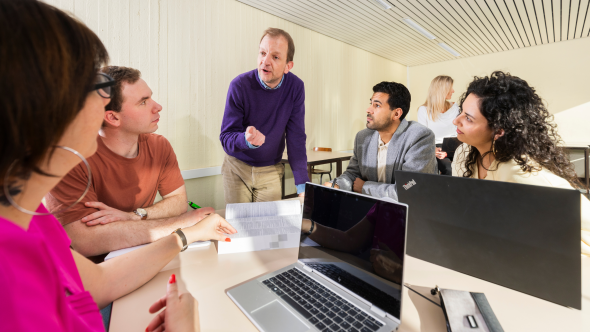
While many companies offer training programs for their employees, it also appears that the “responsibility for employability” has gradually shifted to the workers themselves, who are now expected to take greater control of their careers. “In the past, the boss was seen as responsible for the employee’s development—and even their personal fulfillment—sometimes even beyond the workplace,” notes Michel Ajzen. “But over time, this responsibility for employability has been diluted. ” This trend has been reinforced by new “career scripts,” which are heavily based on mobility. “When I ask students how many employers they think they’ll have in their lifetime, the average answer is six,” the professor continues. “This means that even before entering the workforce, they already have the idea that they’ll move from one employer to another, which can lead them to feel ‘responsible’ for their own careers and thus potentially to pursue training on their own initiative.”
Career Strategies
Getting an education, sure, but in what? And how? As Michel Ajzen explains, this choice depends largely on the “career tactics” adopted by workers. “Depending on their stage of life, they may adopt tactics that are more employment-oriented, with the goal of quickly securing a job to make ends meet,” he explains.
“At other times, they’ll adopt a strategy more focused on employability, with the goal of gradually acquiring the knowledge that will allow them to advance—whether through vertical mobility—within the same company—or horizontal mobility—to another company or a different position. Finally, there’s the ‘meaning’ approach: pursuing training that will lead them to a job that makes them even more eager to get out of bed in the morning…”

Michel Ajzen
Furthermore, training periods are often seen by workers as a breather: an opportunity to step back and “lift their heads up from the handlebars” in what is often a high-pressure workday. This “break” is now governed by various policies. For example, the law of October 3, 2022, guarantees private-sector employees an individual right to training equivalent to 5 days per year for full-time workers. This training may be organized by the employer or left to the employees’ discretion (subject to the employer’s oversight). “However, some companies are not required to guarantee this right to their employees. This is particularly the case for companies with fewer than ten employees,” explains Charlotte Lambert, an associate professor and specialist in labor law. “In labor law, there are also collective bargaining agreements that supplement the law on a sector-by-sector basis and may provide for additional days of training.”
CEP and Time Credit
When an employee wishes to pursue more extensive training—for example, a university certificate program that typically lasts more than five days per year—they can also take advantage of other programs that allow them to maintain all or part of their pay. “Paid educational leave, or CEP—which falls under regional jurisdiction—allows employees to take a recognized training course of at least 32 hours, including initial training,” explains Charlotte Lambert. “The employee retains their pay, while the employer is compensated by the ONEM.”
The other option is “training-related” time credit: this regional program, which exists only in the private sector, allows employees to temporarily reduce or suspend their working hours without affecting the validity of their contract. In this case, the employee receives compensation directly from the ONEM, subject to certain age and seniority requirements. Time credit is also limited to a period of 36 months. “These various programs are not necessarily well known to the public,” comments Charlotte Lambert, “which also explains why many people are discouraged from pursuing training, particularly out of fear of losing their job or having to reduce their working hours and, consequently, their pay.” Furthermore, they are only available to workers with relatively stable employment status (permanent contracts, long-term fixed-term contracts, etc.). “Specific but similar mechanisms exist in the public sector. For the self-employed, however, taking paid leave or using time credits is not an option. They must therefore bear the indirect cost of their training themselves,” the labor law specialist adds.
The Superheroes of the Off-Peak Schedule
Given the need for worker training, universities naturally have a role to play. The “Paysage” decree of November 7, 2013, stipulates that they are authorized to organize continuing education programs accredited by ARES (Academy of Research and Higher Education). “Under the terms of the decree, continuing education does not refer to bachelor’s or master’s degrees, but rather to certificates,” explains Charlotte Lambert. Thus, to avoid any misunderstanding, students should be aware that earning a university certificate is not the same as earning an academic degree and therefore does not confer the same advantages in the job market.
On the other hand, there is indeed the possibility for working professionals to earn a bachelor’s or master’s degree through part-time study, as is the case at the UNamur School of Law. “The unique feature of a bachelor’s degree—and ideally a master’s degree—is that it represents a true fresh start,” emphasizes Mathieu Rolain, academic coordinator of this program and researcher at the Vulnerabilities & Societies (V&S) Center at the Transitions Institute. “Often, it’s a complete career change and sometimes even the fulfillment of a dream: some are 50 years old and are about to begin their bar exam preparation…”. In Block 1 of the Faculty of Law’s part-time program, there are about 50 to 60 enrolled students each year: 10 to 15 of them will graduate in Block 3. “These students are extremely supportive of one another; they share their notes and help each other out when one of them is struggling,” observes the coordinator.
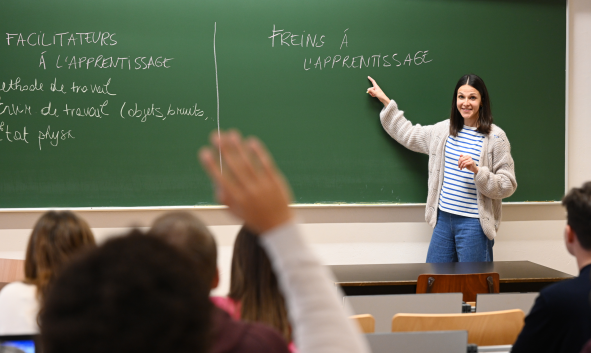
In the same vein, UNamur is committed to tailoring its programs as best as possible to this group. “Many have family responsibilities and sometimes live far from Namur,” continues Mathieu Rolain. “All of our classes are therefore recorded and posted online. We also give them access to staff parking lots and notify them of exam dates well in advance… We try to show them that we support them and understand them. ” Because for these adults with busy professional and personal lives, (re)starting university studies “in evening classes” requires extraordinary discipline and determination, as well as the unconditional support of those around them. “I really admire them a lot,” enthuses Mathieu Rolain. “To me, they’re superheroes. We’ve had medical specialists who came in after their workday, single parents… They’re very unconventional individuals with brilliant backgrounds. They’re also a very demanding group who are always watching your every move—which, for us teachers, is incredibly stimulating.” Because by opening its doors to an experienced audience, the academic world, too, continues to learn.
UNamur, a pioneer in continuing education for teachers
Since the 1980s, the University of Namur has distinguished itself through its expertise in continuing education for teachers, covering both didactic and psychopedagogical aspects.
“It was the Faculty of Philosophy and Letters that initially launched this initiative to offer what were then called ‘refresher courses’ to French teachers,” says Sandrine Biémar, coordinator of the Center for Continuing Education for Teachers at the Faculty of Education and Training Sciences (FaSEF), a professor, and a member of the Institute for Research in Didactics and Education (IRDENa). “ Subsequently, more general training courses on psychopedagogical aspects followed: these were initially organized by the Department of Education and Technology, which has since become FaSEF. Similarly, in the 1990s, the Faculty of Sciences and the Faculty of Economics developed their own centers for continuing teacher education.” These four centers for continuing teacher education are now united under the “Salle des Pros.”
While the decree of June 17, 2021 (Book 6 of the Education Code) formalizes the rights and duties of teaching staff regarding continuing education, this is by no means a new concept for the profession.
“The profession is so complex and subject to so many changes—particularly in curricula and teaching methods—that it is important for teachers to view their career as a continuous process,” insists Sandrine Biémar. “That is why, starting with initial training, we inform students about these opportunities for continuing education.”
The goal is to train “reflective practitioners” capable of questioning their own practices in order to refine and adapt them over time.
“We try to bridge the gap between the world of research and the world of practice: so that we can inform teachers about new studies, but they can also inform us about what’s happening in the field,” the coordinator continues. “The Salle des Pros serves as this space that opens us up to the world.”
The Pros' Room
The Dynamics of Continuing Education for Teachers at the University of Namur: A Crossroads Between Research and Practice!
The Salle des Pros is, above all, a space dedicated to addressing the questions teachers have about their practice. At the intersection of practice and research, it tackles issues that arise in the field through reflection, discussion, and collaborative problem-solving.

Differentiation and Language of Instruction
In addition to the mandatory and free training courses it offers as a “training provider” for teachers, UNamur also offers several certificate programs focused on specific topics. “Teachers voluntarily enroll in these certificate programs, in addition to their mandatory training and outside of their teaching hours, and cover the costs themselves,” explains Sandrine Biémar. Among the topics generating growing interest in the teaching community are differentiated instruction practices. “On a daily basis, teachers are faced with groups of students where each has different needs and learns at different paces,” explains the coordinator. “ Yet there is a whole range of methodologies that allow for these differences to be taken into account, which is a very important issue today, especially with the implementation of the common core curriculum.” Training programs focused on the language of instruction—which are central to combating inequalities—have also expanded significantly. “We make teachers aware that they use language specific to the school setting—‘sit down,’ ‘take out your notebook,’ ‘analyze,’ ‘color in’—and that this language must be made explicit. We need to tell students why we’re having them do this or that.” Finally, AI is, unsurprisingly, one of the new topics in continuing education for teachers, as well as for other audiences (managers, decision-makers, etc.). A new university micro-course on artificial intelligence has been offered since early 2026.
The Benefits of a Flexible/Adapted Schedule
- Identical Degree: The degree awarded is the same as that for the daytime program.
- Recognition of prior learning: Prior learning is recognized and credited.
- Schedule: A calendar and class times tailored to adult learners.
- Access: A campus that’s easily accessible by both train and car.
- Structure: About ten hours of classes per week.
Our staggered/adapted schedules
High School Graduates
- Law
- Economics and Business Administration
- Computer Science
Master's
- Economics and Management
- Education (Sections 4 and 5)
- Computer Science
Specialized Master’s Programs
This article is from the "Issues" section of Omalius magazine, Issue #41 (June 2026).

News
-
Faculty of Education and Training Sciences
His Majesty the King Visits UNamur
Institution
His Majesty the King Visits UNamur
Institution
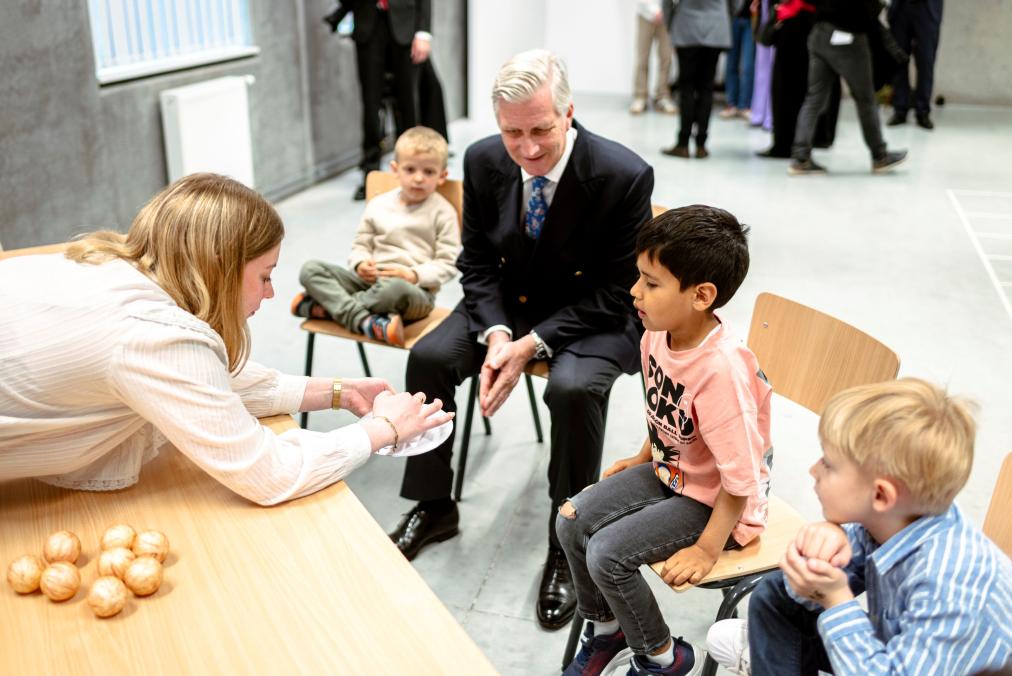
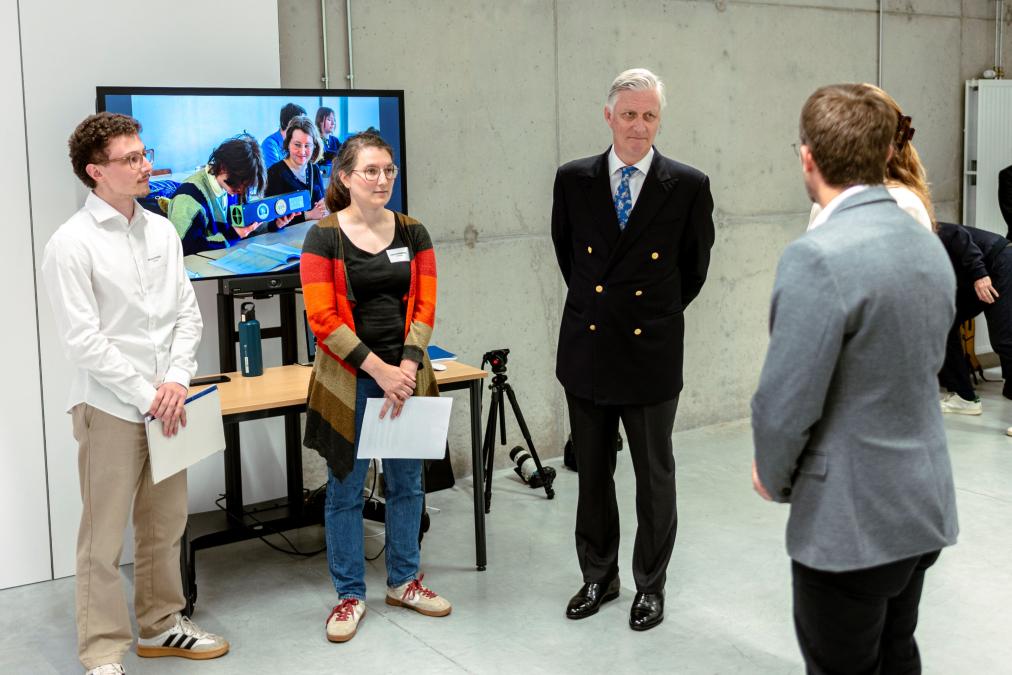
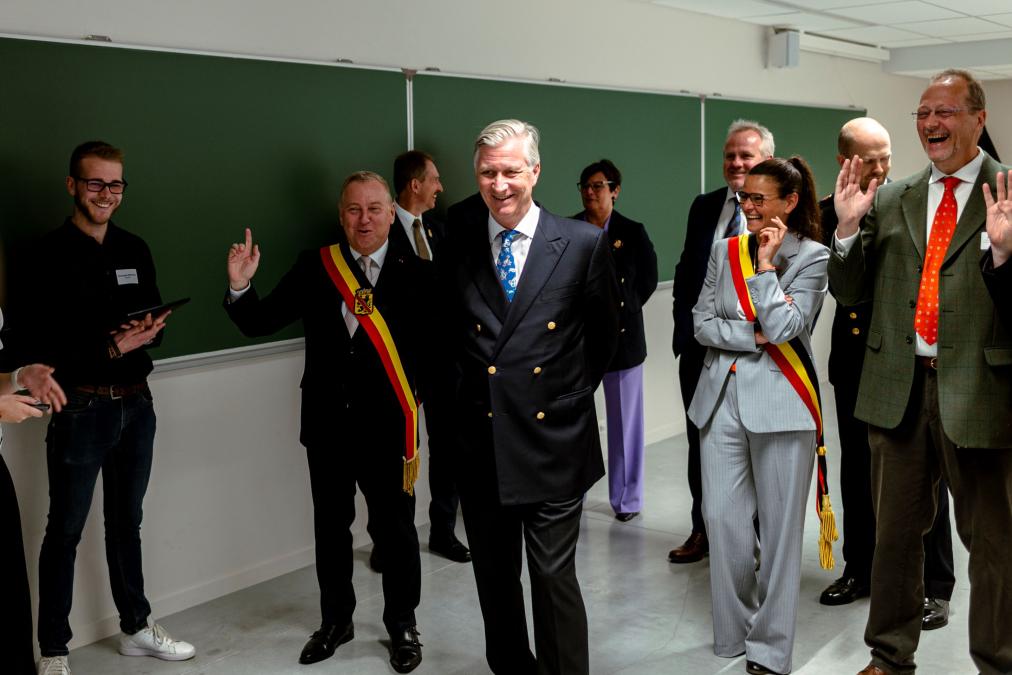
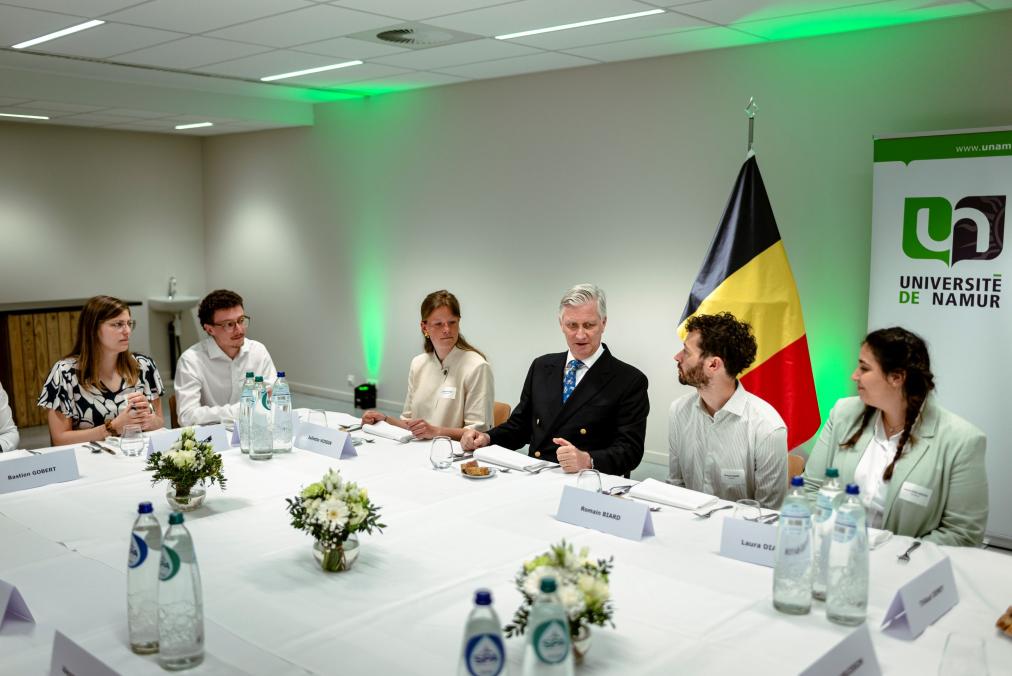
On Wednesday, May 6, 2026, His Majesty the King visited UNamur. In collaboration with Henallux and IMEP, students from the Faculty of Education (FaSEF) led several interactive workshops focused on key issues in education. On the agenda: discussions with His Majesty the King on topics such as inclusion, the diversification of learning, the development of critical thinking in the age of artificial intelligence, challenges facing the education sector, and sustainable development.
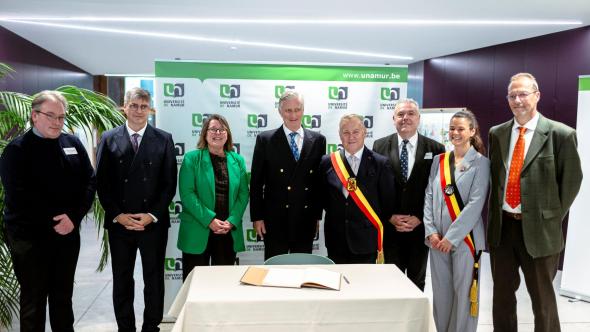
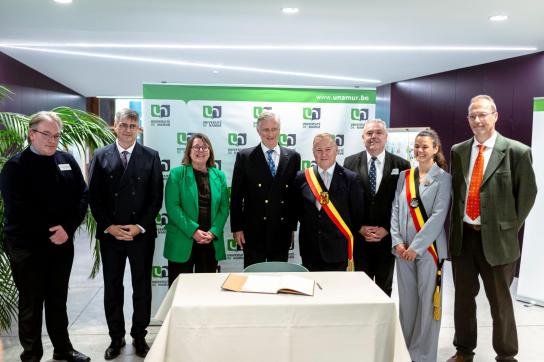
Arriving in Namur mid-morning, His Majesty the King was welcomed in the courtyard of the Faculty of Sciences by the Rector of UNamur, Annick Castiaux; the Governor of the Province, Denis Mathen; the Acting Mayor of Namur, Charlotte Bazelaire; and the Director-President of Henallux, Benoit Dujardin. Upon entering the Faculty of Sciences, he also met with the Director of IMEP, Guido Jardon; the Vice-Rector for Education, Laurent Schumacher; the Dean of FaSEF, Sephora Boucenna; and the Director of the Henallux Department, Alain Bultot.
The visit continued in the Science Auditorium, where Rector Annick Castiaux delivered a speech that addressed the key challenges facing the education sector and the training of future teachers for compulsory education. Next, a video was shown highlighting the issues and challenges identified in the reform of initial teacher education in the Wallonia-Brussels Federation (RFIE). This reform has led universities and colleges to develop joint degree programs to prepare teachers for all levels of education, from preschool through upper secondary school.

The RFIE: A Video Explanation
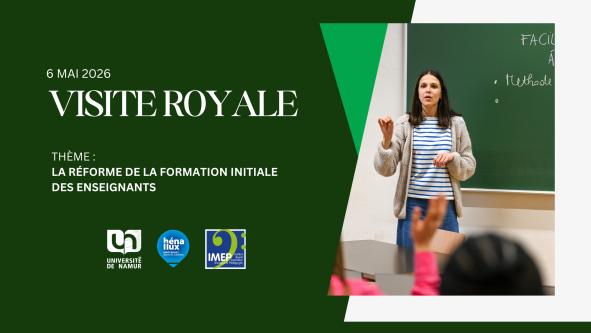
In Namur, the University of Namur is collaborating on this initiative with Henallux (Haute École Namur Liège Luxembourg) and IMEP (Institut Royal Supérieur de Musique et de Pédagogie). These programs, launched in 2023–2024, have revolutionized the system, now requiring all new teachers to obtain a master’s degree in education. In this context, it was important for UNamur to highlight these students and to emphasize the importance of compulsory education and the essential role of teachers in society.
Following the session, His Majesty the King participated in four workshops designed and led by students from UNamur, IMEP, and Henallux, in collaboration with their professors.
- The first workshop focused on the challenges facing the teaching profession and schools: equality, inclusion, the development of critical thinking, and sustainable development.
- The second, titled “Teaching, Inclusion, and Diversification—How Can We Help Each Student Reach Their Full Potential?”, emphasized adapting teaching practices to the diverse needs of students. This diversity was presented as a valuable resource in the learning process. The workshop aimed to illustrate process-oriented work and how to utilize various learning approaches.
- The third workshop, “Teaching with a Focus on Sustainable Development,” invited participants to reflect on how education can foster responsible citizens in the face of environmental challenges.
- The final workshop, “Integrating Critical Thinking Elements into Teaching in the Age of Generative AI,” offered four practical exercises for students to practice their critical thinking skills: distinguishing between real images and AI-generated images, using AI appropriately and critically, raising awareness of deepvoice—a technique that allows for the faithful reproduction of a person’s voice—and the paradigm shift in AI education within the school setting.
To conclude the morning, the students had the honor of sharing a meal with His Majesty the King to continue these moments of exchange.
Watch the tour on video
Student Testimonials
Camille Haidon, a bachelor’s student in education, S3 track (Mathematics and Digital Education)
“When I heard we had the chance to attend a morning event with the King, I volunteered right away. It’s a once-in-a-lifetime experience that I’ll likely only have once in my life. Preparing for this meeting, having the courage to speak in front of the King, and sharing a meal with him—it’s an incredible story I’ll remember for a long time.”
Laura Diaz-Bayon, master’s student in Section 4, Chemistry track
“The King showed great interest in our workshops; he asked us many questions, and we felt valued and truly heard.
During the meal, there were no taboos. He asked us why we had chosen the teaching profession and really let us speak. He was very grateful for our dedication. I think this will remain one of the most beautiful moments of my life.”
Raimu Marquet, master’s student in Section 5, physics track
“The King was an incredible listener; he was deeply curious and sincere. He asked us about the behind-the-scenes aspects of the teaching profession and our expectations… It was a very enriching experience.
I also want to highlight the incredible energy and dedication that FaSEF brings to the implementation of the RFIE.”

Article
-
Faculty of Education and Training Sciences
UNamur unveils AI Score: the first "reliability meter" for educational chatbots
Artificial Intelligences (AI)
Sciences
Computer science (IT)
UNamur unveils AI Score: the first "reliability meter" for educational chatbots
Artificial Intelligences (AI)
Sciences
Computer science (IT)
Which chatbot can we really trust? A reliable answer to this question can now be provided thanks to a unique scientific tool: the AI Score. Developed by a multidisciplinary team of researchers at the University of Namur, it provides an objective, reproducible, and transparent way of measuring the reliability of educational chatbots.

ChatGPT, Copilot, Grok, Mistral, NotebookLM: artificial intelligence tools are becoming widespread in schools, universities, and businesses. However, until now, there has been no way for users to know how reliable these educational chatbots are. AI Score, a new tool developed by researchers at UNamur, fills this gap by measuring the educational reliability of chatbots. "AI Score is to chatbots what the speedometer was to cars," says Professor Michaël Lobet, one of the authors of the research. "The arrival of the automobile at the beginning of the 20th century revolutionized usage... but it was the invention of the speedometer that made it a controlled and reliable tool. Today, educational chatbots and other chatbots used in businesses in general are at a similar stage: powerful and exciting, but without reliable control instruments. The AI Score aims to be that speedometer," he explains.
In the same way that NutriScore, EcoScore, and PEB certification help citizens make informed choices, AI Score provides a simple and immediate reading of the level of trust that can be placed in a chatbot. "At a time when trust in generative AI is becoming a societal issue, AI Score guides teachers and companies in their choice of tools to put in the hands of their students or customers," says Dr. Miguël Dhyne, scientific collaborator at UNamur, educator, and physics researcher. "It can also help institutions evaluate AI solutions before deployment or verify their reliability over time," he adds.
A scientific method that is rigorous and accessible to all
It evaluates four essential dimensions:
- Initial performance: Does the AI respond correctly the first time?
- Robustness: does it maintain its response when questioned?
- Self-correction ability: does it recognize and correct its mistakes?
- Unreliability: does it contradict itself or lose track of the conversation?
To evaluate these four dimensions, each chatbot is subjected to a test carried out under identical conditions to ensure fairness and comparability.
The chatbots are first subjected to a set of 10 multiple-choice questions, carefully selected to highlight any errors or hesitations in the AI. These questions are therefore designed to be discriminating and have a balanced level of difficulty.
After each response, the chatbot is prompted again to verify that it maintains its position, admits an error, or does not contradict itself.
Since AI does not always respond in the same way from one test to another, the test is performed five times. This ensures that the result truly reflects the capabilities of the chatbot.
These criteria are based on the standards ISO/IEC TR 24028:2020 and ISO/IEC 42001:2023.
Each model tested is then given an overall score and a letter grade, similar to the scores used in food or energy ratings.
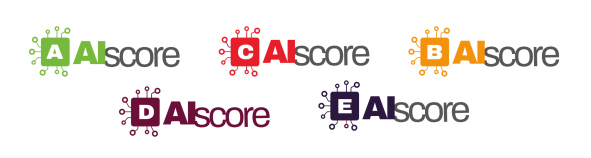
It has recently been demonstrated that methods for ranking large language models (LLM leaderboards/Chatbot Arena) based on popular votes are not very robust to changes in a few preference votes. Malicious votes, evaluation biases, popularity effects, or data leaks can therefore impact the rankings on which business, investment, marketing communication, and educational and technical decisions are based. "In contrast, the AI Score offers a robust, reliable, and transparent method that anyone can apply independently to judge the relevance of their tested platform," add the Namur researchers.
An open, free tool that can be used today
The AI Score is available free of charge to the general public, teachers, journalists, institutions, and anyone wishing to objectively compare the performance of chatbots: https://aiscore.academy
The site offers:
- free access to the methodology,
- examples of scores,
- educational resources,
- and, soon, enhanced documentation based on feedback from early users.
Making the protocol available to the general public makes it easy to reproduce and apply to different models. The researchers therefore invite the community to familiarize themselves with the tool and contribute to its improvement. The AI Score is an open initiative that is designed to be scalable and to continuously improve based on user feedback.
A 100% Belgian innovation, supported by the University of Namur
The AI Score was developed by a multidisciplinary team of researchers at UNamur:
- Prof. Michaël Lobet: F.R.S.-FNRS qualified researcher at the University of Namur and Professor in the Department of Physics. He is also affiliated with Harvard University.
- Dr. Miguël Dhyne: scientific collaborator at UNamur, educator and researcher in physics, expert in educational innovation, EdTech, and educational AI. His role is to design practical solutions and train teachers in the use of digital tools.
- Laurence Dumortier: holder of a PhD in Mathematical Sciences from the University of Namur, IT specialist at the TICE Unit (UNamur/FaSEF). She also supports teachers in mastering educational technologies.
- Jean-Roch Meurisse: IT specialist at the TICE Unit (UNamur/FaSEF), where he is responsible for co-administering and developing the institutional LMS. He is responsible for supporting teachers and researchers in the selection, implementation, and development of digital teaching tools.
The tool has been submitted for scientific publication and is currently being reviewed.
UNamur as a player in technological development
The University of Namur is establishing itself as a key player in artificial intelligence (AI) by integrating this technology into its teaching programs, conducting cutting-edge research on the subject, and putting its expertise at the service of society.
News
-
Faculty of Law
Women at the University 2026
Institution
Gender and diversity
Sustainable
SDG#5 - Gender equality
News
-
Faculty of Law
Faculty Economics Management Communication Politics (EMCP)
Faculty of Computer Science
Faculty of Medicine
Faculty of Sciences
Faculty of Education and Training Sciences
Faculty of Philosophy and Letters
Women at the University 2026
Institution
Gender and diversity
Sustainable
SDG#5 - Gender equality
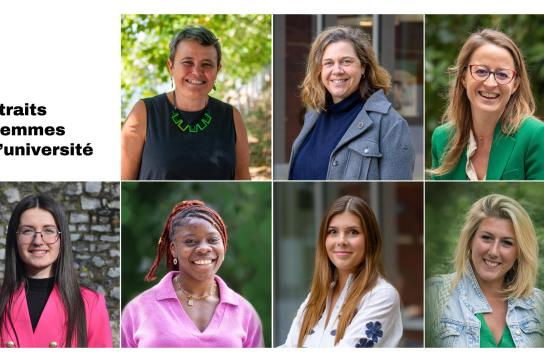
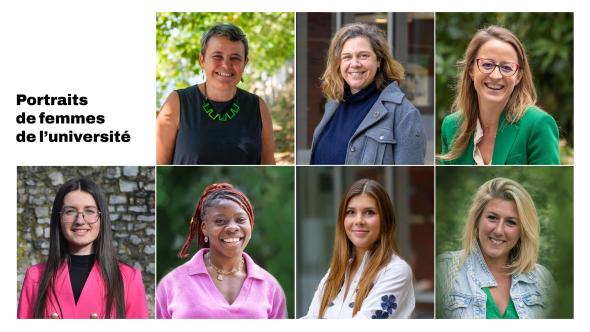
To mark International Women's Day, celebrated on March 8, we invite you to discover the portraits of seven inspiring women from the university's seven faculties.
Throughout March, a series of portraits of women from the university will be on display in various areas of the campus. Conceived and produced by four UNamur students and coordinated by the University Community Life Service (VéCU), this project offers an inspiring showcase for the careers, voices, and commitments of these women who bring the institution to life on a daily basis.
Séphora Boucenna, Dean of the Faculty of Education and Training Sciences (FaSEF)
An unusual and evolving career path
A professor and now dean of the Faculty of Education and Training Sciences, Séphora joined the University of Namur in November 1999. She teaches in initial teacher training as well as in the master's degree program specializing in professional support (Mapemass).
Justine Bodart, doctoral student at the Faculty of Science
A journey built step by step
After high school, Justine entered university without any clear idea of the direction she wanted to take, except that she wanted to study science. She finally chose mathematics, without any certainty at first, but gradually discovered a real interest in the subject.

Duvernelle Ngouzon Nguimdo, student at the Faculty of Computer Science
An international academic background
Duvernelle completed all her schooling in Cameroon, where she chose to focus on mathematics and physical sciences when she entered secondary school. After two years of studying animal biology at university, she decided to change direction and applied to the University of Namur in Belgium to study computer science.

Alisson Kabili, laboratory technician at the Faculty of Medicine
Finding her calling in the laboratory
Alisson has been working at the University of Namur for a year and a half as a laboratory technician in the Faculty of Medicine. Her role is essential: assisting researchers with their experiments, preparing practical work for students, and managing the day-to-day running of the laboratory, from ordering reagents to monitoring equipment.

Virginie Di Luca, administrative assistant at the EMCP Faculty
A rich, multifaceted, and resolutely human career path
Virginie joined the University of Namur in February 2023 as secretary of the Department of Political Science, Information, and Communication. It is a pivotal role at the heart of student and academic life. Her career path has not been a straight line, and that is what she loves about it today.

Amélie Lachapelle, professor at the Faculty of Law
A journey marked by chance, encounters, and convictions
A lecturer at the Faculty of Law at UNamur and at Saint-Louis University, Amélie has also held the position of Project Manager for "Transitions & Sustainable Development" since 2025. Hers has been a rich journey, marked by curiosity and detours, but always guided by a desire to understand the law in a different way.

Anne Roekens, professor at the Faculty of Philosophy and Letters
Teaching at the heart of her career
Anne immediately presents herself as passionate about teaching. A professor of contemporary history, she describes her academic career as "fairly linear," naturally leading her to the classroom. After studying history, she quickly decided to pursue a doctorate focused on language and diversity issues.

March 8, International Women's Rights Day
International Women's Day (UN), also known as "International Day of Struggle for Women's Rights" (UN Women), is celebrated every year on March 8. This day highlights the struggles for women's rights and, more broadly, for the elimination of inequalities between women and men.
Although International Women's Day was made official by the United Nations in 1977, following on from the International Women's Year proclaimed in 1975 by the UN General Assembly, its origins date back to the social movements that emerged in North America and Europe at the turn of the 20th century.
The University of Namur fights against gender discrimination
The fight against gender discrimination is a priority at UNamur, which is firmly committed to promoting gender equality, non-discrimination, and respect for diversity.
UNamur's goal is to create an inclusive university community where everyone can thrive, regardless of gender. By embracing diversity and taking concrete measures, the university affirms its commitment to a more equitable society based on the values of justice, inclusion, and respect for human dignity.
Agenda
ABC Day 2026 - Education and Teaching Today: Challenges, Practices, and Research
Didactics
20
2026
08:30
-
16:00
Université de Namur, BN01 - Rempart de la Vierge, 2 - 5000 Namur
The ABC-Day 2026 conference is organized by ABC-Éduc. Would you like to present at this conference? We welcome your proposals until October 1. Would you simply like to attend the ABC-Day conference as an audience member? To view the call for papers and submit your proposal, visit the event website. Registration is also open.
Three years ago, the ABC-Day conference examined four growing challenges in our education system:
- the growing role of digital technology in education,
- the urgent need to integrate the ecological transition into educational issues,
- the rise in student distress and disengagement, and
- the significant changes taking place in the education system.
It is clear that these issues remain at the heart of current educational discourse today.
Both educational research and practical approaches in the field have addressed these issues in an effort to respond to them at their respective levels. In an effort to highlight these initiatives in French-speaking Belgium, the ABC-Day 2026 conference will be titled “Educating and Teaching Today: Challenges, Practices, and Research” and will focus on these four areas.
In line with the mission of the ABC-Éduc association, this conference aims to provide a space for dialogue and exchange among educators, educational researchers, and students of educational sciences regarding educational practices and research. More specifically, this conference seeks to foster dialogue between initiatives in the field and research in the discipline, thereby facilitating a rich and nuanced discussion on each of the aforementioned themes. To this end, several sessions will be offered for each theme, allowing:
- researchers to present their work;
- education practitioners to present their initiatives in the field.
Although the conference is organized around these four thematic areas, the call for papers remains open to broader research presentations that are not exclusively limited to these areas.
The studies
Do you dream of inspiring curious minds and passing on your knowledge to future generations? Welcome to the Faculty of Education and Training Sciences, the first Faculty in Belgium to be specifically dedicated to teacher training!

Integrated services
The Faculty of Education and Training Sciences (FaSEF) offers services related to the proposed fields of study.

Research
Research is centered on the Unité de Recherche en Sciences de l'Éducation et de la Formation (URSEF). It constitutes a dynamic gathering of researchers within the Faculty of Education and Training Sciences (FaSEF). These researchers are also affiliated with the Institut de Recherche en Didactique et Education de l'UNamur (IRDENa)

Ongoing training for teaching and support staff
The continuing education center for teachers and trainers (CEFOPEF) in the field of teaching and coaching is organized within the Salle des Pros.

Organization
The Faculty of Education and Training Sciences (FaSEF) is steered by various consultative and decision-making bodies.
In practice
An original faculty
The FaSEF is the first faculty in Belgium to be primarily dedicated to initial and continuing training programs for teachers, teaching executives as well as trainers in various professional sectors. It is open to all disciplines related to the world of education and training.
In a context where the web provides resources for pupils and students, where social networks are spaces for life and exchange, the opening of a Faculty of Education and Training Sciences testifies to an awareness of the societal issues to be encountered in the coming decade. The University of Namur is determined to make a lasting investment in facilitating access to information and knowledge, as well as putting them into perspective in a critical approach, supported and accompanied by trainers and teachers.
Based in particular on the resources developed over 35 years within the Education and Technology Department (DET), it is characterized by its integration of services dedicated to the UNamur university community (students and teachers). All members share the conviction that teaching, research and services maintain close links and mutually enrich each other in an academic context.
Inauguration of FASEF
The new Faculty of Education and Training Sciences at UNamur was inaugurated on April 24, 2024, during a day-long event attended by numerous players in the sector. A look back at this historic day, marking the opening of the 7th Faculty at the University of Namur.

