Welcome to NaDI-CeRCLe, UNamur's Marketing and Service Management research center. Created in 2005 within the Faculté Economie Management Communication sciencesPo (EMCP), NaDI-CeRCLe brings together a dynamic team of teachers, researchers, PhD students and practitioners. Since 2018, NaDI-CeRCLe is proud to be a founding partner of the Namur Digital Institute (NaDI), advancing cutting-edge research and collaboration in the digital age.

Internationally recognized as a leading research center by the American Marketing Association (SERVSIG) and Association Française de Marketing (AFM).

Logos de Servsig et AFM

The main aim of the Center is to actively promote theoretical and empirical research, both fundamental and applied, in the field of marketing and services, and more specifically in the areas of consumption and leisure.

The three main areas of research are consumer and managerial decision-making, consumer practices and phenomena, and marketing actions and consumer response. The main field of application concerns the service industry, and more specifically tourism, culture and leisure, on the one hand, and retail and commercial activities on the other.
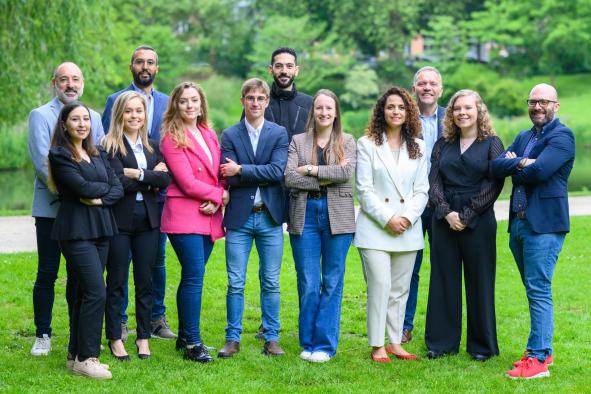
Les membres du centre de recherche NaDI-Cercle

Mission

Develop, conduct and disseminate theoretical/empirical, fundamental/applied research in the field of service marketing and management. Research revolves around the following activities: scientific research, participation/organization of conferences, international-level publications, training and supervision of doctoral students, hosting visiting researchers and professors, involvement in research networks.

Mission et vision du cercle

Vision

Our research center envisions a future where people are at the heart of the project. United by a strong team spirit, shared values and a supportive environment, we aim for research excellence. Our commitment extends to promoting global leadership through collaborations and networks, ensuring that our work not only advances knowledge, but also creates tangible impact for stakeholders, society and the world at large.

The members of NaDi-CeRCLe share three pillars: Excellencein research, Collaborationsand networksand Impact. In this way, CeRCLe's research focuses on important, timely and useful research topics with a high degree of theoretical, managerial and societal relevance.
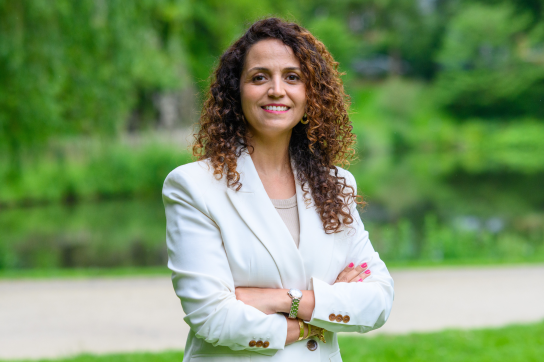
Spotlight

News

Wafa Hammedi: Impact as a Compass

Marketing
Wellness

Through research, teaching, and knowledge sharing, Wafa Hammedi, a professor at Sciences Po’s Faculty of Economics, Management, and Communication (EMCP), has charted a path guided by her convictions. Far from the performance-driven clichés typically associated with marketing, she advocates for socially engaged research that serves society, equity, and inclusion.
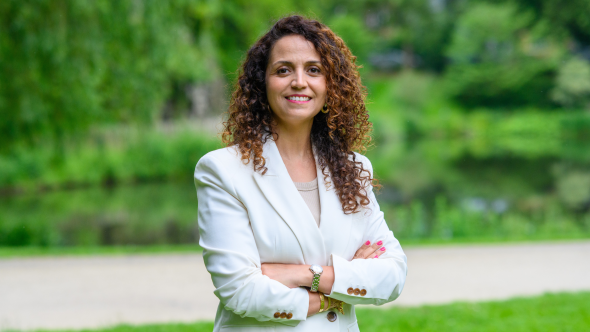
Wafa Hammedi

You specialize in services and innovation marketing. What led you to focus on this area of research?

Service marketing appealed to me because it directly touches people’s real lives: seeking medical care, learning, getting around, accessing public services, interacting with technology, or receiving support in times of vulnerability. Unlike product marketing, which focuses more on tangible goods, service marketing is concerned with experiences that are often intangible, subjective, and deeply human.

This field allows us to analyze what defines the quality of an experience: human or digital interactions, trust, emotions, the co-creation of value, as well as issues of social justice, ethics, inclusion, and dignity. The same experience can be perceived differently depending on the individual, their resources, their situation, and the context of their interaction. This is precisely what makes this field of research complex, fascinating, and essential. 

What motivates me today is understanding how organizations and institutions can design services that are not only effective or innovative, but also fairer, more humane, and more responsible. For me, service marketing is a tool for transforming people’s experiences and contributing, in very concrete ways, to people’s well-being and to a more inclusive society.

Speaking of which, how do these issues of inclusion, equity, and vulnerability play out in your research?

These questions are at the heart of my work. From this perspective, services are not reduced to a simple transaction but are situated within an ecosystem involving multiple stakeholders. For me, inclusion and equity are not abstract concepts: they prompt us to ask who is left out of certain services, who faces greater difficulties in being heard, understood, or served with dignity, and how to design interactions that strengthen autonomy rather than creating new forms of exclusion. My goal as a researcher is to address these issues and propose concrete recommendations in close collaboration with all stakeholders. In my view, academic research has a responsibility to engage with important societal issues and to help make the service system more inclusive and respectful of people’s dignity.

Image
Wafa Hammedi

These questions are at the heart of my work. They are not abstract concepts: they prompt us to ask who is being left behind and how we can design interactions that foster autonomy rather than creating new forms of exclusion.

Wafa Hammedi Professor and researcher in services and innovation marketing at UNamur

I also advocate for management research that is more open, more inclusive, and truly connected to the realities of the world. All too often, our field remains dominated by a Europe–United States lens, which leaves other contexts, other voices, and other experiences in the shadows. However, to remain relevant, management science must better integrate the diversity of human, social, cultural, and geographic realities. This commitment is not merely an intellectual conviction; it translates into concrete actions. For example, through the NEXSER program—an ambitious initiative supported by the European Union via Erasmus+—we have built a network of excellence with partners from the Global South. These collaborations—fueled by research stays, scholarly exchanges, and joint research projects—enable us to broaden our perspectives, challenge our established frameworks, and produce research that is more grounded, more accurate, and more useful. Whether through my institutional responsibilities, my international collaborations, or my engagement within my scientific community, I strive to contribute to academic ecosystems where scientific excellence, societal impact, and personal fulfillment advance hand in hand. For me, research without borders is also research that opens doors.

You have just received the Jay Kandampully Journal of Service Management (JOSM) Mentorship Award, which recognizes support for and commitment to the career development of early-career researchers. What does this award mean to you?

It is a true honor, and this recognition touches me deeply. This appointment serves as a reminder that academic impact is not measured solely by publications, but also by the ability to teach, support, and help others grow. It recognizes a central aspect of my academic identity: mentoring. 

I am convinced that supporting the next generation of researchers means shaping the future of research and society. It is essential, demanding work—yet often unseen. Helping young researchers find their voice in a highly competitive and demanding academic world, gain confidence, feel validated, and develop high-quality, meaningful research is, for me, just as important as conducting research myself. In a way, it means guiding them as they learn a demanding profession. This commitment is reflected in my participation in committees, thesis defense panels, and large-scale mentoring programs at the national and international levels.  When supervising my own doctoral students, I try to encourage them to nurture their passion for scientific research, to develop an academic mindset, to believe in their contributions, and to conduct research that transcends their individual trajectories to be of real benefit to society. For me, mentoring is not limited to the acquisition of scientific or methodological skills. It also involves passing on values that are fundamental to the academic world: integrity, rigor, responsibility, intellectual openness, respect for others… as well as a commitment to producing research that is useful, robust, and capable of meeting the highest scientific standards.

This nomination also holds special significance for me, as it comes from people I deeply respect, both in Belgium and elsewhere. The fact that senior colleagues and young researchers took the initiative to submit this nomination without my knowledge makes this recognition even more valuable and deeply personal. I sincerely enjoy interacting with young researchers. These interactions give great meaning to my academic mission. I enjoy taking the time to mentor them—whether they’re my Ph.D. students or not—with a level of expectation that I hope is always supportive. As I often tell them: “Small details make a big difference.” I am therefore deeply moved to see this long-term effort recognized by my peers.

You are participating in the social innovation lab, which raises students’ awareness of the Sustainable Development Goals through hands-on projects. How does this approach change the way they learn?

My approach as a teacher aligns with the one I advocate as a researcher: helping students push themselves while bringing theoretical concepts to life. This approach shifts them from a mindset of simply absorbing content to one of active engagement. In this social innovation lab led by a highly dynamic team of instructors, students step into the role of “change makers” to develop solutions to pressing societal issues related to the Sustainable Development Goals, such as poverty, disability, and so on. We strive to bring them as close as possible to the issue at hand so they can shift their perspectives and better understand the realities experienced by others.  In this way, they learn to connect concepts to human realities, collaborate, experiment, take responsibility for their choices, and reflect on the consequences of their actions. We use innovative and immersive teaching methods. For example, we recently developed virtual reality scenarios that allow students to experience the daily life of a visually impaired person. In addition to stimulating their capacity for innovation, this course fosters their empathy—an essential quality for future leaders. I strongly believe in an educational approach that produces not only good students, but also citizens and future professionals capable of considering the impact of their actions. I am convinced that better training for our managers today contributes to building a better, fairer society that is more attentive to everyone.

Quick Resume

Wafa Hammedi has been a professor and researcher in services marketing and innovation at the University of Namur since 2010. Her award-winning work explores how services can serve as drivers of inclusion, equity, and societal transformation. She holds editorial positions at leading academic journals and mentors doctoral students who have received research awards.

The Center for Research in Marketing and Service Management (CeRCLe)

Wafa Hammedi heads NaDI-CeRCLe, the UNamur Research Center for Marketing and Service Management. Established in 2005 within the Faculty of Economics, Management, and Communication Sciences (EMCP), it brings together a dynamic team of faculty members, researchers, doctoral students, and practitioners in the fields of marketing and service management. The center places impact at the heart of its work, particularly in the areas of consumption, responsible and ethical management, new models of sustainable marketing, and inclusion and vulnerability. NaDI-CerCLe is internationally recognized as a leading research center by the American Marketing Association (SERVSIG) and the French Marketing Association (AFM). 

This article is taken from the "Expert" section of Omalius magazine, Issue #41 (June 2026).

Omalius 41

Insight Out: The Series That Makes Research Accessible

With INSIGHT OUT, Confluent des Savoirs has launched a popular science web series based on an idea by Wafa Hammedi. The first three episodes focus on research in the EMCP that is little known to the general public and showcase the full diversity of a field often wrongly reduced to a few clichés. The project is intended to eventually highlight research from all of our university’s schools.

Why Hiking in the Mountains Recharges Our Batteries: Research Conducted by UNamur and the University of Burgundy Provides Answers

Marketing

The result of a collaboration with Isabelle Frochot of the University of Burgundy Europe, a study in which Alain Decrop, a marketing professor at the EMCP Faculty, participated, shows that the mountains foster a genuine reconnection with oneself, with others, and with one’s environment. The results of this research were published in the prestigious journal *Recherche et Applications en Marketing* (RAM).

Chalets "isolés" au bord du lac de Roselend dans les Alpes en Savoie.

But what drives so many people to spend several days in the mountains? That’s the question researchers set out to answer. “The popularity of multi-day hiking in the mountains continues to grow, and it’s certainly intriguing, begins Alain Decrop. “Today, some destinations are even facing overtourism. We thought it would be interesting to understand what people are really looking for in this type of experience.” The researchers conducted a field study at a dozen mountain huts in the French Alps. This choice was no accident: mountain huts are an ideal place to meet hikers and gather their accounts after several hours of walking. For nearly a year, the team conducted in-depth interviews and ethnographic observations to understand what really happens during these trips. 

Although Alain Decrop did not participate in the field data collection, his role was crucial in analyzing the results. “The data was collected by our colleagues in Savoie, who were closest to the field. My role was to provide an outside perspective to analyze and interpret this data, linking it to theoretical concepts, he explains. “When you’re less involved in the data collection, you can sometimes spot things that people immersed in the field no longer see as easily.” This complementary approach among researchers has led to a better understanding of what happens during a stay at a mountain hut. 

Disconnect to Reconnect Better

The study shows that backpacking in the mountains creates conditions conducive to letting go. Walking, the natural environment, and the simplicity of life in a mountain hut foster what researchers call “resonant availability”—a state that allows people to break away from the demands of daily life. 

This renewed openness allows people to take a step back from their lives, live more fully in the present moment, and view their surroundings with fresh eyes. “This disconnection then allows them to reconnect with themselves, with others, and with their environment, summarizes Alain Decrop. “They regain a mental openness that offers them genuine space for reflection and peace of mind.” 

This research, conducted over nearly a year, led to a publication in *Recherche et Applications en Marketing* (RAM), one of the most prestigious scientific journals in the field. “The review process is particularly selective: only one in five or six articles is accepted, notes Alain Decrop. “It’s a highly ranked journal, which attests to the scientific quality of our work.” Congratulations to Alain Decrop and all of his colleagues on this outstanding scientific recognition. 

About Alain Decrop

Alain Decrop is a full professor of marketing at the University of Namur in Belgium. A founding member and former director of NADI-CeRCLe (Namur Digital Institute - Center for Research on Consumption and Leisure) and the CCMS (Center for Research on Consumers and Marketing Strategy), he also served as president of the French Marketing Association (AFM). He holds a master’s degree in modern history and economics, and a Ph.D. in business administration. 

Alain Decrop has taught a number of courses related to marketing management, consumer behavior, digital marketing communications, research methods, service management, and collaborative business models.

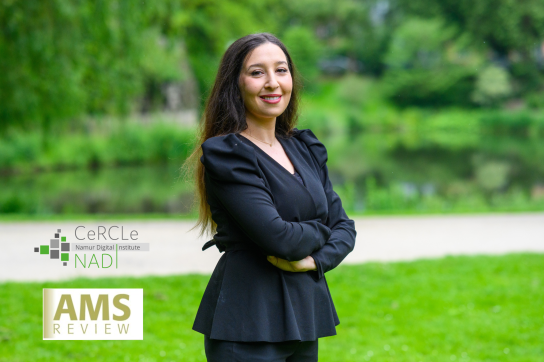
Alain Decrop

Sara Belghiti Honored by the AMS Review – The Sheth Foundation DoCCa 2026, an international recognition of excellence in doctoral research!

Award
Management

Sara Belghiti, a doctoral student at the University of Namur (NaDI-CeRCLe Institute) and a teaching and research assistant at the IÉSEG School of Management (France), has just been recognized by the AMS Review – Sheth Foundation Doctoral Competition for Conceptual Articles (DoCCA) 2026, one of the world’s most prestigious doctoral competitions in theoretical and conceptual marketing and management. 
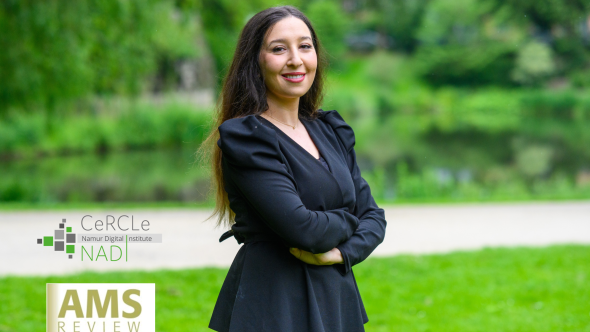
Cette distinction récompense l’excellence scientifique et l’originalité conceptuelle de travaux de recherche

Her research project, titled “Care or Control? Conceptualizing Smart Service System Paternalism Beyond the Technological Prism, was selected as one of the best international doctoral proposals in marketing and management following a prestigious, large-scale competition. 

This distinction recognizes the scientific excellence and conceptual originality of the research conducted under the supervision of Professor Wafa Hammedi (University of Namur) and Professor Thomas Leclercq (IÉSEG School of Management). 

Research at the forefront of technological and societal challenges

Specializing in services marketing, Sara Belghiti focuses on smart service systems, smart technologies, and the transformations they bring about in the relationships between individuals, organizations, and institutions. 

Her work explores, in particular, the relational, ethical, and societal dimensions of smart technologies. Her article on “smart service relationships” was recently published in the Journal of Service Management, a leading international academic journal in the field. 

A graduate of ESCP Business School, Sara Belghiti has also presented her research at major international academic conferences such as the American Marketing Association (AMA), SERVSIG, QUIS, and Frontiers. 

The DoCCA Doctoral Competition: A Springboard to Scientific Excellence

Organized jointly by the AMS Review and the Sheth Foundation, the DoCCA competition aims to identify the most promising conceptual work by doctoral students in marketing and management from around the world. 

Beyond academic recognition, the competition offers a prize funded by the Sheth Foundation and invites the winners to present their work at the annual conference of the Academy of Marketing Science (AMS), thereby providing exceptional international visibility within the global academic community. 

The top candidates receive personalized support from leading experts in the field, as well as mentors from the AMS Review, to facilitate the publication of their work. 

Through this distinction, Sara Belghiti contributes to the University of Namur’s international reputation in the fields of marketing and management research. 
Research at NaDI-CeRCLe

Flamure Ibrahimi has been awarded the 2026 ServCollab Scholarship, an international recognition of excellence in doctoral research!

Award

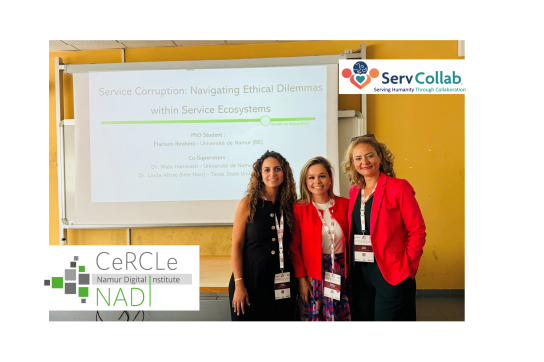
Flamure Ibrahimi is a Ph.D. student in service and marketing management at the NaDI-CeRCLe Research Center at the University of Namur (Belgium) within the EMCP Faculty, under the supervision of Prof. Dr. Wafa Hammedi (University of Namur) and Prof. Dr. Linda Alkire (Texas State University). She has just been awarded the prestigious ServCollab Scholarship 2026, an international distinction that recognizes and supports doctoral students whose work falls within the field of Transformative Service Research (TSR)—doctoral projects with high impact on society and humanity.
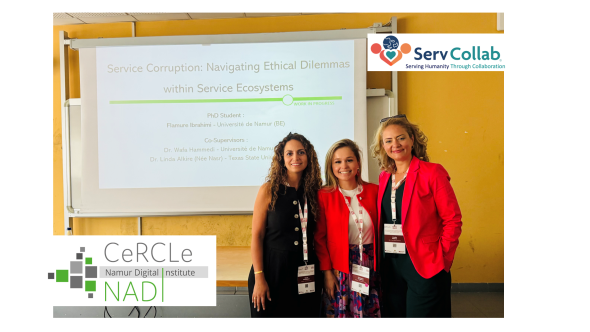
Photo : W. Hammedi, F. Ibrahimi, Linda Alkire (ServCollab Scholarship 026)

Transformative Service Research: Research That Serves People

Transformative Service Research (TSR) examines the transformative power of services in the lives of individuals, communities, and society. It focuses on how service systems—whether public, health, educational, digital, or technological—can serve as drivers of well-being, inclusion, and social justice. Moving beyond a vision focused solely on organizational performance, TSR places fundamental issues such as equity, access, dignity, the reduction of vulnerabilities, and the creation of positive societal impact at the heart of its analysis. It thus invites us to rethink services not only as spaces for exchange, but as instruments of transformation for a more just, inclusive, and humane society.

Research on corruption in public services, and a career marked by a commitment to social causes

Flamure Ibrahimi’s research is rooted in this transformative perspective and focuses on corruption in service interactions involving frontline employees or service providers, particularly its implications for vulnerable and underserved populations. Shaped by her personal journey as the daughter of refugees who did everything they could to rebuild their lives in a new country with limited resources, Flamure became aware at a very early age of the essential role that service systems play in access to rights, recognition, dignity, and well-being. This experience inspired her interest in the ethical and societal dimensions of service systems.

Her doctoral thesis examines corruption beyond its legal, structural, or normative aspects, focusing instead on the phenomenon from a more interactional, process-oriented, ethical, and behavioral perspective.  Her current research, in collaboration with Prof. Dr. Wafa Hammedi (University of Namur), Prof. Dr. Linda Alkire (Texas State University), and Prof. Dr. Gazi Islam (Grenoble Ecole de Management), further explores this perspective.  In the context of frontline service interactions, corruption can impair access to essential resources and undermine mechanisms of equity and trust. While these effects affect all users, they are particularly pronounced for people in vulnerable situations or from underserved populations, for whom access to services is often a decisive factor in their life trajectories.

Image
Flamure Ibrahimi

“Receiving this grant means much more than academic recognition. It is a profound encouragement to continue research aimed at understanding and improving concrete realities—realities that are sometimes invisible but essential to people’s lives. As a young mother, this endeavor takes on even greater significance: it strengthens my commitment to contributing, in my own way, to service systems that are more equitable, more humane, and more just—not only for current generations, but also for those to come.”

Flamure Ibrahimi Ph.D. student at NaDI-CeRCLe, UNamur

ServCollab: An international initiative to serve humanity

ServCollab is an international nonprofit organization at the forefront of global research in Service Research. Founded under the leadership of Prof. Dr. Raymond P. Fisk, a leading pioneer in the field, the organization draws on a network of top academic experts to translate scientific theory into drivers of societal impact. Transformative Service Research (TSR) is based on the idea that individuals operate within service systems that shape their access to resources and their well-being. When these systems malfunction, they can lead to inequality and suffering. The ServCollab Scholarship is awarded following a selection process by a jury composed of eminent researchers in this field, and supports doctoral students whose research aligns with this perspective and contributes to the betterment of humanity. 

Wafa Hammedi: Impact as a Compass

Marketing
Wellness

Through research, teaching, and knowledge sharing, Wafa Hammedi, a professor at Sciences Po’s Faculty of Economics, Management, and Communication (EMCP), has charted a path guided by her convictions. Far from the performance-driven clichés typically associated with marketing, she advocates for socially engaged research that serves society, equity, and inclusion.

Wafa Hammedi

You specialize in services and innovation marketing. What led you to focus on this area of research?

Service marketing appealed to me because it directly touches people’s real lives: seeking medical care, learning, getting around, accessing public services, interacting with technology, or receiving support in times of vulnerability. Unlike product marketing, which focuses more on tangible goods, service marketing is concerned with experiences that are often intangible, subjective, and deeply human.

This field allows us to analyze what defines the quality of an experience: human or digital interactions, trust, emotions, the co-creation of value, as well as issues of social justice, ethics, inclusion, and dignity. The same experience can be perceived differently depending on the individual, their resources, their situation, and the context of their interaction. This is precisely what makes this field of research complex, fascinating, and essential. 

What motivates me today is understanding how organizations and institutions can design services that are not only effective or innovative, but also fairer, more humane, and more responsible. For me, service marketing is a tool for transforming people’s experiences and contributing, in very concrete ways, to people’s well-being and to a more inclusive society.

Speaking of which, how do these issues of inclusion, equity, and vulnerability play out in your research?

These questions are at the heart of my work. From this perspective, services are not reduced to a simple transaction but are situated within an ecosystem involving multiple stakeholders. For me, inclusion and equity are not abstract concepts: they prompt us to ask who is left out of certain services, who faces greater difficulties in being heard, understood, or served with dignity, and how to design interactions that strengthen autonomy rather than creating new forms of exclusion. My goal as a researcher is to address these issues and propose concrete recommendations in close collaboration with all stakeholders. In my view, academic research has a responsibility to engage with important societal issues and to help make the service system more inclusive and respectful of people’s dignity.

Image
Wafa Hammedi

These questions are at the heart of my work. They are not abstract concepts: they prompt us to ask who is being left behind and how we can design interactions that foster autonomy rather than creating new forms of exclusion.

Wafa Hammedi Professor and researcher in services and innovation marketing at UNamur

I also advocate for management research that is more open, more inclusive, and truly connected to the realities of the world. All too often, our field remains dominated by a Europe–United States lens, which leaves other contexts, other voices, and other experiences in the shadows. However, to remain relevant, management science must better integrate the diversity of human, social, cultural, and geographic realities. This commitment is not merely an intellectual conviction; it translates into concrete actions. For example, through the NEXSER program—an ambitious initiative supported by the European Union via Erasmus+—we have built a network of excellence with partners from the Global South. These collaborations—fueled by research stays, scholarly exchanges, and joint research projects—enable us to broaden our perspectives, challenge our established frameworks, and produce research that is more grounded, more accurate, and more useful. Whether through my institutional responsibilities, my international collaborations, or my engagement within my scientific community, I strive to contribute to academic ecosystems where scientific excellence, societal impact, and personal fulfillment advance hand in hand. For me, research without borders is also research that opens doors.

You have just received the Jay Kandampully Journal of Service Management (JOSM) Mentorship Award, which recognizes support for and commitment to the career development of early-career researchers. What does this award mean to you?

It is a true honor, and this recognition touches me deeply. This appointment serves as a reminder that academic impact is not measured solely by publications, but also by the ability to teach, support, and help others grow. It recognizes a central aspect of my academic identity: mentoring. 

I am convinced that supporting the next generation of researchers means shaping the future of research and society. It is essential, demanding work—yet often unseen. Helping young researchers find their voice in a highly competitive and demanding academic world, gain confidence, feel validated, and develop high-quality, meaningful research is, for me, just as important as conducting research myself. In a way, it means guiding them as they learn a demanding profession. This commitment is reflected in my participation in committees, thesis defense panels, and large-scale mentoring programs at the national and international levels.  When supervising my own doctoral students, I try to encourage them to nurture their passion for scientific research, to develop an academic mindset, to believe in their contributions, and to conduct research that transcends their individual trajectories to be of real benefit to society. For me, mentoring is not limited to the acquisition of scientific or methodological skills. It also involves passing on values that are fundamental to the academic world: integrity, rigor, responsibility, intellectual openness, respect for others… as well as a commitment to producing research that is useful, robust, and capable of meeting the highest scientific standards.

This nomination also holds special significance for me, as it comes from people I deeply respect, both in Belgium and elsewhere. The fact that senior colleagues and young researchers took the initiative to submit this nomination without my knowledge makes this recognition even more valuable and deeply personal. I sincerely enjoy interacting with young researchers. These interactions give great meaning to my academic mission. I enjoy taking the time to mentor them—whether they’re my Ph.D. students or not—with a level of expectation that I hope is always supportive. As I often tell them: “Small details make a big difference.” I am therefore deeply moved to see this long-term effort recognized by my peers.

You are participating in the social innovation lab, which raises students’ awareness of the Sustainable Development Goals through hands-on projects. How does this approach change the way they learn?

My approach as a teacher aligns with the one I advocate as a researcher: helping students push themselves while bringing theoretical concepts to life. This approach shifts them from a mindset of simply absorbing content to one of active engagement. In this social innovation lab led by a highly dynamic team of instructors, students step into the role of “change makers” to develop solutions to pressing societal issues related to the Sustainable Development Goals, such as poverty, disability, and so on. We strive to bring them as close as possible to the issue at hand so they can shift their perspectives and better understand the realities experienced by others.  In this way, they learn to connect concepts to human realities, collaborate, experiment, take responsibility for their choices, and reflect on the consequences of their actions. We use innovative and immersive teaching methods. For example, we recently developed virtual reality scenarios that allow students to experience the daily life of a visually impaired person. In addition to stimulating their capacity for innovation, this course fosters their empathy—an essential quality for future leaders. I strongly believe in an educational approach that produces not only good students, but also citizens and future professionals capable of considering the impact of their actions. I am convinced that better training for our managers today contributes to building a better, fairer society that is more attentive to everyone.

Quick Resume

Wafa Hammedi has been a professor and researcher in services marketing and innovation at the University of Namur since 2010. Her award-winning work explores how services can serve as drivers of inclusion, equity, and societal transformation. She holds editorial positions at leading academic journals and mentors doctoral students who have received research awards.

The Center for Research in Marketing and Service Management (CeRCLe)

Wafa Hammedi heads NaDI-CeRCLe, the UNamur Research Center for Marketing and Service Management. Established in 2005 within the Faculty of Economics, Management, and Communication Sciences (EMCP), it brings together a dynamic team of faculty members, researchers, doctoral students, and practitioners in the fields of marketing and service management. The center places impact at the heart of its work, particularly in the areas of consumption, responsible and ethical management, new models of sustainable marketing, and inclusion and vulnerability. NaDI-CerCLe is internationally recognized as a leading research center by the American Marketing Association (SERVSIG) and the French Marketing Association (AFM). 

This article is taken from the "Expert" section of Omalius magazine, Issue #41 (June 2026).

Omalius 41

Insight Out: The Series That Makes Research Accessible

With INSIGHT OUT, Confluent des Savoirs has launched a popular science web series based on an idea by Wafa Hammedi. The first three episodes focus on research in the EMCP that is little known to the general public and showcase the full diversity of a field often wrongly reduced to a few clichés. The project is intended to eventually highlight research from all of our university’s schools.

Why Hiking in the Mountains Recharges Our Batteries: Research Conducted by UNamur and the University of Burgundy Provides Answers

Marketing

The result of a collaboration with Isabelle Frochot of the University of Burgundy Europe, a study in which Alain Decrop, a marketing professor at the EMCP Faculty, participated, shows that the mountains foster a genuine reconnection with oneself, with others, and with one’s environment. The results of this research were published in the prestigious journal *Recherche et Applications en Marketing* (RAM).

Chalets "isolés" au bord du lac de Roselend dans les Alpes en Savoie.

But what drives so many people to spend several days in the mountains? That’s the question researchers set out to answer. “The popularity of multi-day hiking in the mountains continues to grow, and it’s certainly intriguing, begins Alain Decrop. “Today, some destinations are even facing overtourism. We thought it would be interesting to understand what people are really looking for in this type of experience.” The researchers conducted a field study at a dozen mountain huts in the French Alps. This choice was no accident: mountain huts are an ideal place to meet hikers and gather their accounts after several hours of walking. For nearly a year, the team conducted in-depth interviews and ethnographic observations to understand what really happens during these trips. 

Although Alain Decrop did not participate in the field data collection, his role was crucial in analyzing the results. “The data was collected by our colleagues in Savoie, who were closest to the field. My role was to provide an outside perspective to analyze and interpret this data, linking it to theoretical concepts, he explains. “When you’re less involved in the data collection, you can sometimes spot things that people immersed in the field no longer see as easily.” This complementary approach among researchers has led to a better understanding of what happens during a stay at a mountain hut. 

Disconnect to Reconnect Better

The study shows that backpacking in the mountains creates conditions conducive to letting go. Walking, the natural environment, and the simplicity of life in a mountain hut foster what researchers call “resonant availability”—a state that allows people to break away from the demands of daily life. 

This renewed openness allows people to take a step back from their lives, live more fully in the present moment, and view their surroundings with fresh eyes. “This disconnection then allows them to reconnect with themselves, with others, and with their environment, summarizes Alain Decrop. “They regain a mental openness that offers them genuine space for reflection and peace of mind.” 

This research, conducted over nearly a year, led to a publication in *Recherche et Applications en Marketing* (RAM), one of the most prestigious scientific journals in the field. “The review process is particularly selective: only one in five or six articles is accepted, notes Alain Decrop. “It’s a highly ranked journal, which attests to the scientific quality of our work.” Congratulations to Alain Decrop and all of his colleagues on this outstanding scientific recognition. 

About Alain Decrop

Alain Decrop is a full professor of marketing at the University of Namur in Belgium. A founding member and former director of NADI-CeRCLe (Namur Digital Institute - Center for Research on Consumption and Leisure) and the CCMS (Center for Research on Consumers and Marketing Strategy), he also served as president of the French Marketing Association (AFM). He holds a master’s degree in modern history and economics, and a Ph.D. in business administration. 

Alain Decrop has taught a number of courses related to marketing management, consumer behavior, digital marketing communications, research methods, service management, and collaborative business models.

Alain Decrop

Sara Belghiti Honored by the AMS Review – The Sheth Foundation DoCCa 2026, an international recognition of excellence in doctoral research!

Award
Management

Sara Belghiti, a doctoral student at the University of Namur (NaDI-CeRCLe Institute) and a teaching and research assistant at the IÉSEG School of Management (France), has just been recognized by the AMS Review – Sheth Foundation Doctoral Competition for Conceptual Articles (DoCCA) 2026, one of the world’s most prestigious doctoral competitions in theoretical and conceptual marketing and management. 

Cette distinction récompense l’excellence scientifique et l’originalité conceptuelle de travaux de recherche

Her research project, titled “Care or Control? Conceptualizing Smart Service System Paternalism Beyond the Technological Prism, was selected as one of the best international doctoral proposals in marketing and management following a prestigious, large-scale competition. 

This distinction recognizes the scientific excellence and conceptual originality of the research conducted under the supervision of Professor Wafa Hammedi (University of Namur) and Professor Thomas Leclercq (IÉSEG School of Management). 

Research at the forefront of technological and societal challenges

Specializing in services marketing, Sara Belghiti focuses on smart service systems, smart technologies, and the transformations they bring about in the relationships between individuals, organizations, and institutions. 

Her work explores, in particular, the relational, ethical, and societal dimensions of smart technologies. Her article on “smart service relationships” was recently published in the Journal of Service Management, a leading international academic journal in the field. 

A graduate of ESCP Business School, Sara Belghiti has also presented her research at major international academic conferences such as the American Marketing Association (AMA), SERVSIG, QUIS, and Frontiers. 

The DoCCA Doctoral Competition: A Springboard to Scientific Excellence

Organized jointly by the AMS Review and the Sheth Foundation, the DoCCA competition aims to identify the most promising conceptual work by doctoral students in marketing and management from around the world. 

Beyond academic recognition, the competition offers a prize funded by the Sheth Foundation and invites the winners to present their work at the annual conference of the Academy of Marketing Science (AMS), thereby providing exceptional international visibility within the global academic community. 

The top candidates receive personalized support from leading experts in the field, as well as mentors from the AMS Review, to facilitate the publication of their work. 

Through this distinction, Sara Belghiti contributes to the University of Namur’s international reputation in the fields of marketing and management research. 

Research at NaDI-CeRCLe

Flamure Ibrahimi has been awarded the 2026 ServCollab Scholarship, an international recognition of excellence in doctoral research!

Award

Flamure Ibrahimi is a Ph.D. student in service and marketing management at the NaDI-CeRCLe Research Center at the University of Namur (Belgium) within the EMCP Faculty, under the supervision of Prof. Dr. Wafa Hammedi (University of Namur) and Prof. Dr. Linda Alkire (Texas State University). She has just been awarded the prestigious ServCollab Scholarship 2026, an international distinction that recognizes and supports doctoral students whose work falls within the field of Transformative Service Research (TSR)—doctoral projects with high impact on society and humanity.

Photo : W. Hammedi, F. Ibrahimi, Linda Alkire (ServCollab Scholarship 026)

Transformative Service Research: Research That Serves People

Transformative Service Research (TSR) examines the transformative power of services in the lives of individuals, communities, and society. It focuses on how service systems—whether public, health, educational, digital, or technological—can serve as drivers of well-being, inclusion, and social justice. Moving beyond a vision focused solely on organizational performance, TSR places fundamental issues such as equity, access, dignity, the reduction of vulnerabilities, and the creation of positive societal impact at the heart of its analysis. It thus invites us to rethink services not only as spaces for exchange, but as instruments of transformation for a more just, inclusive, and humane society.

Research on corruption in public services, and a career marked by a commitment to social causes

Flamure Ibrahimi’s research is rooted in this transformative perspective and focuses on corruption in service interactions involving frontline employees or service providers, particularly its implications for vulnerable and underserved populations. Shaped by her personal journey as the daughter of refugees who did everything they could to rebuild their lives in a new country with limited resources, Flamure became aware at a very early age of the essential role that service systems play in access to rights, recognition, dignity, and well-being. This experience inspired her interest in the ethical and societal dimensions of service systems.

Her doctoral thesis examines corruption beyond its legal, structural, or normative aspects, focusing instead on the phenomenon from a more interactional, process-oriented, ethical, and behavioral perspective.  Her current research, in collaboration with Prof. Dr. Wafa Hammedi (University of Namur), Prof. Dr. Linda Alkire (Texas State University), and Prof. Dr. Gazi Islam (Grenoble Ecole de Management), further explores this perspective.  In the context of frontline service interactions, corruption can impair access to essential resources and undermine mechanisms of equity and trust. While these effects affect all users, they are particularly pronounced for people in vulnerable situations or from underserved populations, for whom access to services is often a decisive factor in their life trajectories.

Image
Flamure Ibrahimi

“Receiving this grant means much more than academic recognition. It is a profound encouragement to continue research aimed at understanding and improving concrete realities—realities that are sometimes invisible but essential to people’s lives. As a young mother, this endeavor takes on even greater significance: it strengthens my commitment to contributing, in my own way, to service systems that are more equitable, more humane, and more just—not only for current generations, but also for those to come.”

Flamure Ibrahimi Ph.D. student at NaDI-CeRCLe, UNamur

ServCollab: An international initiative to serve humanity

ServCollab is an international nonprofit organization at the forefront of global research in Service Research. Founded under the leadership of Prof. Dr. Raymond P. Fisk, a leading pioneer in the field, the organization draws on a network of top academic experts to translate scientific theory into drivers of societal impact. Transformative Service Research (TSR) is based on the idea that individuals operate within service systems that shape their access to resources and their well-being. When these systems malfunction, they can lead to inequality and suffering. The ServCollab Scholarship is awarded following a selection process by a jury composed of eminent researchers in this field, and supports doctoral students whose research aligns with this perspective and contributes to the betterment of humanity. 

All news

Agenda

All events

Contact

Prof. Wafa Hammedi

Director

NaDI-CeRCLe

Secretariat