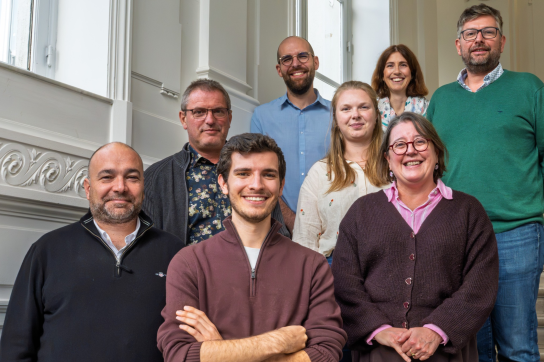
The Faculty Economics Management Communication Politics (EMCP) has hosted many events over the course of its history. Here's a look back at some of our Faculty's most memorable moments.
60 years of the Faculty
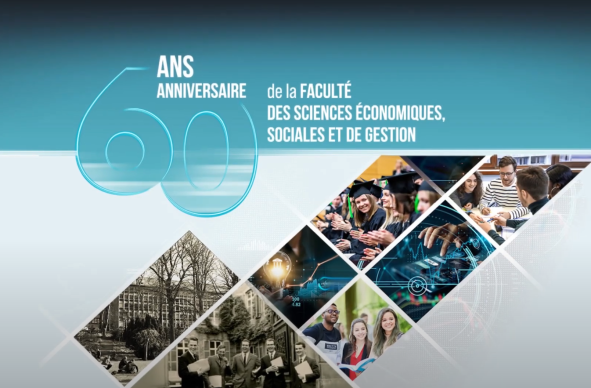
In October 2022, the Faculty celebrated its 60th anniversary. To mark this anniversary, the Faculty organized two major events that gave everyone the opportunity to get together and share backgrounds, experiences, talents and memories!
On October 13, a conference-debate around the theme "New school rhythms: At university too?" in the presence of the Minister of Higher Education and party representatives. The debate was moderated by Béatrice Delvaux (Chief Editorialist, Le Soir). The full conference-debate is available on Youtube.
On October 15, an anniversary evening around the theme "La Faculté a des talents". Alumni, professors, researchers and students pitted their talents against the challenges of today and tomorrow: entrepreneurship, sustainable development, digital transition and innovative pedagogies were on the menu of a colorful academic session. The academic session was followed by a festive and convivial evening featuring cocktails, a meal and an after-dinner. All photos of the event are available on the phototheque.
Discover the souvenir video of the event here :
Baccalaureate graduation ceremony
On February 16, 2024, the graduation ceremony for the Bachelor of Information and Communication, Management Engineering, Economics and Management and Political Science programs took place. The ceremony was followed by a "verre de l'amitié", served by the Cercle des étudiants, bringing together graduates, their families and members of the Faculty's staff. The ceremony marked the crowning of several years of effort and sharing, both for students and their loved ones and for staff members.
Reforming Belgium" symposium
On October 10, 2023, a colloquium around the theme "Faut-il réformer la Belgique" was held at the Faculty of Economics, Social Sciences and Management. This featured various panels and also a political debate between representatives of the six parties of the Fédération Wallonie Bruxelles and moderated by Arnaud Ruyssen (RTBF).
Spotlight
News
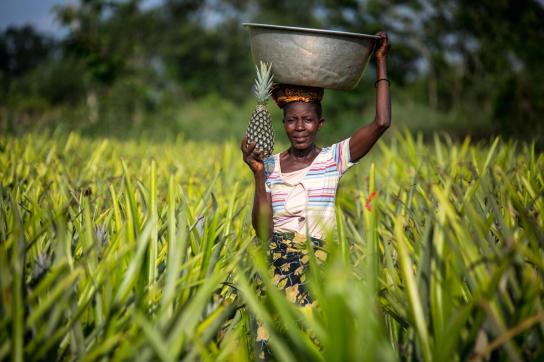
Empowering Women, from Agriculture to Science: Enabel and UNamur, a Growing Partnership
For several years now, Enabel and the University of Namur have been working together based on a shared conviction: development can only be sustainable if it fully benefits women. From Benin to Senegal, Tanzania, Mozambique, Jordan, and Ukraine, here’s a look back at a partnership that is being built step by step.
A More Equitable Pineapple Supply Chain
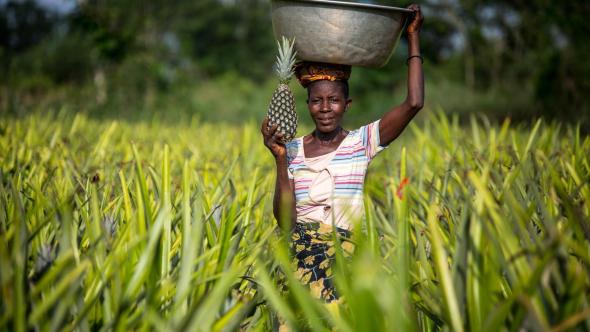
In Benin, women play a major role in pineapple processing and marketing: they account for 55% of processors and 78% of traders. However, in 2019, they made up only 15% of producers. This is due to social norms that limit their access to land, and consequently to credit, training, and support networks.
To address this issue, the Entrepreneurship Development in the Pineapple Sector (DEFIA) program, running from 2019 to 2023, was launched. Enabel, in collaboration with local authorities, brought several partners on board, including the University of Namur. Together, they employed a combination of strategies: advocacy efforts to facilitate women’s access to land, a nine-month training and coaching program, assistance with stump removal, plowing, planting, and the installation of protective plastic sheeting, and support in obtaining identity cards—which are essential for accessing credit and land.
For Catherine Guirkinger, a professor of economics at UNamur who coordinated the research component, this work has shed light on an often-overlooked aspect of programs supporting women:
Supporting women in agricultural work means intervening not just with an individual, but with an entire household. Family labor, production decisions, and trade-offs between spouses are being reorganized, and these adjustments can either strengthen or hinder women’s autonomy. This is where research is valuable: it allows for a detailed analysis of these dynamics before helping to better design programs.
UNamur identified the obstacles and the activities that were working through action research: observe, test, measure, then adjust. Among DEFIA’s main results:
- More than 670 women—77% of the country’s female pineapple producers—have strengthened their entrepreneurial, financial, and technical skills.
- Women’s participation in pineapple production rose from 15% in 2019 to 30% in 2023. Through the program, the women targeted doubled the area of land they use for pineapple production.
- Nearly 40% of the women surveyed gained greater autonomy in making decisions about their personal lives and households.
- Nearly 65% of them report that the project has enabled them to access credit and microfinance, thereby strengthening their ability to invest and their economic independence.
A New Milestone for Women in Science and Technology
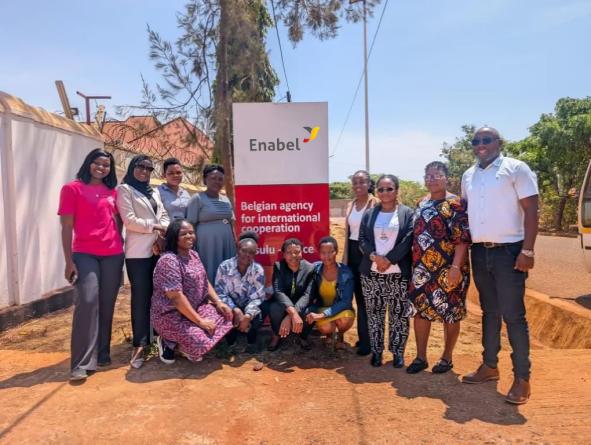
Building on this experience, Enabel and UNamur have taken another step forward. The signing of a framework cooperation agreement facilitates the mobilization of academic expertise for future projects. The first project to benefit from this is the Women Leadership in Information and Communication Technology (WLICT) project.
It aims to promote access for girls and women to education and careers in STEM fields: science, technology, engineering, and mathematics. These fields remain underrepresented by women, even though they are at the heart of the digital transformation. WLICT is a European project being implemented in Senegal, Tanzania, Mozambique, Jordan, and Ukraine.
This research is coordinated at UNamur by Julie Henry. Within the project, Enabel coordinates the component dedicated to engaging girls and women in STEM. It combines STEM awareness-raising, career guidance, participation in STEM clubs, computer training, and the building of sustainable networks among participants.
For its part, UNamur, through its Institute for Research in Didactics and Education (IRDENa), contributes its scientific expertise to better understand the barriers and success factors related to girls’ and women’s participation in STEM. It is working with partners to build a community of practice that brings together researchers, educators, and STEM professionals to share best practices and develop mentoring programs for young women.
A Partnership That Goes Above and Beyond
From DEFIA to WLICT, the collaboration between Enabel and UNamur illustrates a simple idea: academic research benefits from engaging with real-world realities, and international cooperation benefits from being grounded in scientific rigor. Together, the two institutions seek to advance women’s economic autonomy, both in rural areas and in the digital sectors of the future.
This partnership is an opportunity for mutual learning: UNamur contributes its expertise and networks, while Enabel and its partners in the five countries bring practical experience gained from their daily work with schools, public institutions, and young women. Together, we aim to identify and promote solutions that enable more girls and women to access STEM fields, succeed in them, and exercise leadership within them.
Today, this partnership serves as a resource for the women, institutions, and communities that collaborate with us. It demonstrates that targeted investment in equality yields results that extend beyond the scope of a single project, while strengthening ties among academic and public sector stakeholders, civil society, and the private sector.
Enabel
Enabel is Belgium’s international cooperation agency. It collaborates with various partners, including universities and research centers, to increase the impact of Belgian international cooperation and contribute to the achievement of the Sustainable Development Goals. The partnership established between UNamur and Enabel enables the implementation of specific cooperation agreements (SCAs), the first of which was signed to support the WLICT project—Women Leadership in Information and Communication Technology.
30 Years of Part-Time Education: When Adults Become Students, Too
For more than 30 years, UNamur has offered flexible-schedule programs, allowing people already in the workforce to enroll in bachelor’s, master’s, and specialized master’s degree programs. These programs are based on a tailored teaching approach centered on the students’ experiences and real-world situations.
For as long as he can remember, Théophile Renier, 31, has always wanted to be a lawyer. It’s a calling that this freelance music industry professional—who is also a marine technician—set aside for a time... before returning to it a few years ago by enrolling in the School of Law. Since 2016, UNamur has indeed offered a bachelor’s and master’s program in law with a flexible schedule. “What I find exceptional about this program is that the professors actively support students in their success,” says Théophile. “Everything is set up so that people who can’t be there in person can still access the courses remotely. ” All classes in the flexible-schedule law program are recorded and posted online to facilitate remote learning. Students are also notified of assignment and exam deadlines well in advance, to accommodate their professional and family commitments.
As Mathieu Rolain, the program’s academic coordinator, points out, students in the flexible-schedule law program stand out for their exceptional determination and discipline: “superheroes,” he says. So, despite working three days a week at the Port of Zeebrugge and running his own music business—“I work about 50 hours a week”—Théophile manages to juggle it all. “For me, it’s actually very complementary,” says this passionate student. “People often wonder if it’s harder to study when you already have professional experience, but for me, studying is a pleasure! Nowadays, I focus more on what’s essential.” After completing his first two years of his bachelor’s degree, the student is now starting his third year; he then plans to pursue a master’s degree before joining the bar. “For me, it’s a childhood dream coming true,” he says. The future lawyer has just one piece of advice for those who are still hesitating:
Many people wonder if it’s possible, or if they’re too old: in my opinion, you should put your reservations aside! This program is truly designed for people who are currently working: it has everything you need to succeed.
Soft Skills and Skills Assessment
For the past 30 years, the EMCP Faculty (Economics, Management, Communication, Sciences Po) has also offered flexible-schedule programs. It was in this context that the FSE+ track “Assessment, Strengthening, and Enhancement of Skills,” led by Jean-Yves Gnabo, was developed. Thanks to external support from the European Social Fund Plus, this educational program now provides better support for adults returning to school, not only at EMCP but also, eventually, in other faculties at UNamur. The project’s uniqueness lies in its integration of two complementary dimensions. On the one hand, an academic framework centered on an innovative thesis format, designed to prevent students from dropping out near the end of the program due to “writer’s block.” On the other hand, there is support for transferable skills: communication, organization, leadership, teamwork, time management, stress management, and more.
“Historically, we’ve focused on subject-specific skills, while soft skills were assumed to be acquired,” explains Jean-Yves Gnabo. “But succeeding in a part-time program also depends on ‘soft’ skills.” Furthermore, there was another blind spot in our approach: the fact that students were not always aware of their own skills. ” The FSE+ program therefore allows students, with the help of a coach, to conduct a skills assessment upon entry and upon completion, thereby measuring their progress. “This is not only essential for self-confidence but also for learning how to leverage newly acquired skills in the professional world,” explains the economics professor. For the past two years, the EMCP Faculty has also offered a specialized master’s program with a flexible schedule focused on management and sustainable economics. Thirty-five students were already enrolled in the first year. “Once the master’s program is established, the idea is to draw on a board of external stakeholders facing transition challenges, as well as to build a community among students, alumni, and faculty,” concludes Jean-Yves Gnabo.
IT Work Shifts: Training That's More Necessary Than Ever
For the past 25 years, it has also been possible to earn a master’s degree in computer science at UNamur through a part-time program. While the sector faces many questions related to the widespread adoption of AI, Vincent Englebert, a professor of computer science, has no doubt that this program will continue to attract many working professionals. “We’re obviously going through a turbulent phase, but one thing is certain: while AI boosts the number of lines of code we can write per day, it also introduces a fair amount of errors into those lines, which creates serious maintenance issues... Companies are therefore beginning to realize the ‘technical debt’ generated by AI: if we ignore an engine problem just because a car is still running, we run the risk of the vehicle exploding one day on the highway... ” For Vincent Englebert, training new professionals in the challenges of generative AI is therefore a necessity. “I’d even say that AI is a great opportunity to pursue a degree in computer science today! Thirty years ago, computer scientists were asked to develop very basic programs. Today, they’re asked to develop much more complex systems, and AI—when used properly—frees them from highly technical tasks in this context. This allows them to focus on what really matters: what humans want to achieve with AI to make it more ethical, fairer, more useful, and safer.”
A teaching approach tailored to students' needs
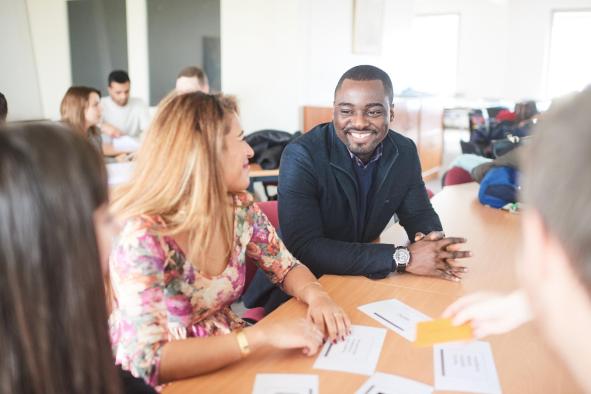
At UNamur, adult education plays a key role. Some of these working adults return to university to advance their careers, while others do so because they are in the process of changing careers. They all arrive with their own experiences, expectations, and dreams, but also with family and professional responsibilities, time constraints, and doubts… That is why, through its various flexible-schedule programs (evening and Saturday classes), UNamur has developed a specific pedagogical approach to best support these adults in their new academic and professional ambitions: realistic time management, an emphasis on collaborative work, close interaction with faculty, and a co-constructive approach to learning...
This article is taken from the "Guest" section of Omalius magazine, Issue #42 (September 2026).
UNamur and Clinique Saint-Luc Bouge are joining forces to accelerate the “Twin Transformation” of healthcare
How can we use digital technology to build a more sustainable, efficient, and resilient healthcare system? A new research chair led by the University of Namur, in partnership with the Clinique Saint-Luc Bouge, will tackle this challenge.
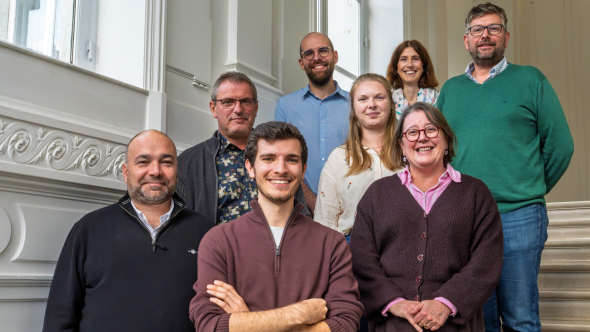
From left to right and from bottom to top: Adrien Dufour (CEO of Clinique Saint-Luc Bouge), Arthur Meuleman (Ph.D. candidate and researcher at UNamur), Annick Castiaux (Rector of UNamur), Christophe Plompteux (Director of Purchasing and Coordinator of Quality and Sustainable Development), Anna Renneson (CSL Bouge CSR Project Manager), Anthony Simonofski (Professor at UNamur and academic advisor for the project), Morgane Belin (Head of Corporate Sponsorship at UNamur), and Fabian Dehanne (Staff Member in the Executive Management Office at Clinique Saint-Luc Bouge).
Through its MINDIT (Management of Information and Digital Transformation) center, which is part of the Namur Digital Institute, UNamur will lead a program dedicated to “Twin Transformation,” which combines digital transformation and sustainable transition in healthcare. Supported by the Clinique Saint-Luc Bouge, this research aims to develop innovative solutions that benefit patients and staff in the hospital sector. This is an issue that affects the entire healthcare system both in our country and internationally.
A Major Challenge for Health Care Systems
Globally, as well as in Belgium, the healthcare sector accounts for about 5% of greenhouse gas emissions. If it were a country, it would be the fifth-largest emitter of CO₂ in the world. Without structural changes, its carbon footprint in Belgium could grow by more than 60% by 2050, with hospitals accounting for more than half of these emissions.
At the same time, healthcare facilities are accelerating their digital transformation: digitized patient journeys, electronic health records, artificial intelligence, automation, and decision-support tools. The Twin Transformation aims to bring these developments together so that digital technology can fully contribute to the environmental goals of healthcare organizations.
In practical terms, the Twin Transformation combines digital transformation and sustainable transition so that they reinforce one another. In healthcare, it involves making digital technology more resource-efficient and using it to reduce environmental impact, while improving the quality of care.
Research Conducted by UNamur to Benefit Real-World Applications
The project centers on a doctoral dissertation on the governance and implementation of Twin Transformation in hospital information systems. Conducted at MINDIT under the supervision of Professor Anthony Simonofski, the research will involve close collaboration between a doctoral researcher and the teams at Clinique Saint-Luc Bouge.
The research will identify the organizational, managerial, and technological levers that enable the integration of environmental considerations into digital projects. In particular, it will address governance, digital frugality, the impact of information systems, the involvement of frontline staff, and decision support.
Hospitals are investing heavily in digital technology, but environmental considerations are too often addressed separately. Our goal is to offer governance models and tools that enable users to link these two issues, resulting in high-performing, responsible, and sustainable information systems.
Ultimately, the project will produce tools, methods, and recommendations that can be applied to the Belgian hospital network and beyond: all hospitals face the same challenges worldwide.
This research offers a unique opportunity to examine how healthcare institutions can incorporate sustainability into their digital decision-making and develop solutions that can be implemented in the field and subsequently transferred to other organizations in the sector.
A partnership based on a shared vision, dedicated to healthcare in Wallonia
This project will be integrated into UNamur as part of a new Chair dedicated to the topic of Twin Transformation. This Chair will help foster a research momentum on the Green Health System and the dual digital and sustainable transformation as major societal challenges. It will serve as an interface between academic experts and practitioners in the field to collaboratively address these challenges. In particular, the Chair will facilitate the development of scientific activities related to Twin Transformation, such as study days, conferences, and scientific symposia during the 2026–2030 period.
At the Clinique Saint-Luc in Bouge, issues related to Corporate Social Responsibility have been a focus for several years. Various initiatives have been implemented, such as the installation of solar panels, active mobility policies, the expansion of vegetarian meal options, and various discussions regarding healthcare practices. Supporting this academic research project is part of Clinique Saint-Luc Bouge’s commitment to advancing discussions on the sustainable transformation of the healthcare system.
At the Saint-Luc Bouge Clinic, we are convinced that digital and environmental transformations must now be considered together. Our commitment to this chair reflects our desire to support research grounded in the realities of the hospital setting—research capable of yielding concrete, responsible, and sustainable solutions. By combining UNamur’s scientific expertise with the experience of our teams, we aim to actively contribute to the evolution of practices in the healthcare sector.
For UNamur, this partnership reaffirms its role in conducting research to address major societal challenges.
This collaboration demonstrates UNamur’s commitment to partnerships that support the transformation of our society. We are proud that our researchers’ expertise enables us to help address this major challenge in healthcare alongside a partner committed to environmental and digital transitions.
George Akerlof: The Economist Who Put People Back at the Heart of Economics
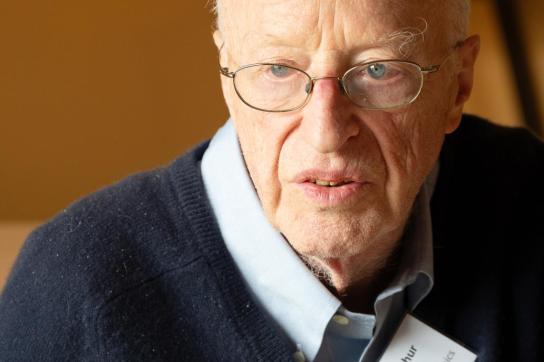
It all began when an eleven-year-old boy witnessed his father losing his job. That experience led George Akerlof to question unemployment, the functioning of markets, social norms, and ultimately identity itself. Awarded the Nobel Prize in Economics in 2001, he has spent his career defending a simple but powerful idea: to understand economics, we must first understand the people who make economies work.
A conversation reconstructed from a long-form biographical interview.
What first inspired you to become an economist?
The decisive event was probably my father's loss of employment when I was eleven years old. I began thinking about the consequences of unemployment: when a family loses income, it spends less, which in turn affects other families and businesses. Very early on, I found myself asking why unemployment exists when economic models seem to predict that markets should naturally move toward equilibrium.
Was economics primarily an intellectual discipline for you?
Not really. My interest came first and foremost from human problems. I was concerned about unemployment, but also about social and racial inequality. I wanted to understand these issues and, in my own way, contribute to addressing them. For me, economics was never simply about numbers or equations; it was a way of understanding the challenges people face in their everyday lives.
Did mathematics influence the way you approached research?
Very much so. During my studies, I took a topology course that left a lasting impression on me. The professor emphasized a simple idea: before focusing on details, you must understand the overall structure of a problem. That lesson stayed with me throughout my career. I always tried to begin with the big questions and only then look for the tools needed to answer them.
You have often argued that economics should engage with the other social sciences. Why?
Because economic behaviour is shaped by beliefs, institutions, social norms, and the way people see themselves. Economic models are useful, but they do not explain everything. To understand how people make decisions, we often need insights from psychology, sociology, history, and other disciplines.
Did your time in India play an important role in that realization?
Absolutely. My year in India was probably the most important intellectual experience of my life. It taught me that economic development cannot be reduced to capital and labor alone. Beliefs, institutions, traditions, and social interactions matter enormously. I came away convinced that an economy cannot be understood without understanding the people who live within it.
Your paper The Market for Lemons changed the way economists think about markets. What was the central idea?
The core insight was that information is not distributed equally among market participants. Sellers often know more than buyers. This asymmetry of information can create significant distortions and prevent markets from functioning as classical economic models predict.
I never expected the idea to have such a broad impact. Yet it turned out to apply to countless areas, from finance and insurance to credit markets and labour economics.
You later became interested in social norms and multiple equilibria. What led you in that direction?
Some situations persist simply because everyone expects them to persist. Collective beliefs influence behaviour, and behaviour reinforces those beliefs. As a result, societies can remain trapped in inefficient outcomes.
My experience in India, particularly my observations of the caste system, led me to think that there is often more than one possible equilibrium. Expectations and social norms can lock societies into patterns that endure for generations.
Your collaboration with Rachel Kranton led to the development of Identity Economics. What does this approach add?
It reminds us that people are motivated by more than money and material incentives. They also act according to their identity, their sense of belonging, and the social roles with which they identify.
Together, Rachel Kranton and I sought to show that economic behaviour is influenced by how individuals see themselves and by what they believe they ought to be. This perspective helps explain phenomena ranging from workplace motivation and educational achievement to discrimination and collective behaviour.
After a lifetime of research, what is the most important lesson you have learned?
That economics is fundamentally about people. Markets matter, but they cannot be understood without considering the human beings who make them work.
In the end, all my research—on unemployment, information, social norms, and identity—grew out of the same conviction: to understand economics, we must understand what people think, believe, and experience.
7 Key Quotes by George Akerlof
"When I was eleven, my father lost his job."
"First understand the structure of the problem. Then work on the details."
"India changed the way I thought about economics."
"One of the things I got from India was that one should take into account what people were thinking when thinking about equilibrium."
"The seller knows something the buyer does not know."
"Identity affects behaviour."
"Economics begins with people."
George Akerlof's career can be seen as a continuous effort to bring economics closer to reality. From the unemployment that marked his childhood to the development of identity economics later in life, he consistently challenged economists to look beyond abstract models and pay closer attention to human behaviour. By reintroducing beliefs, social norms, and identity into economic analysis, he helped transform the discipline—and reminded us that economics are ultimately created by people, not by equations.
George Akerlof was interviewed during his participation in the ERINN 2026 conference, organized by Professors Guilhem Cassan and Catherine Guirkinger of the DeFiPP Research Institute and the CRED Research Center as part of the IDnomics project, an interuniversity Concerted Research Initiative (ARC) funded by the Wallonia-Brussels Federation (FWB).
This article is taken from the "Guest" section of Omalius magazine, Issue #42 (September 2026).
Empowering Women, from Agriculture to Science: Enabel and UNamur, a Growing Partnership
For several years now, Enabel and the University of Namur have been working together based on a shared conviction: development can only be sustainable if it fully benefits women. From Benin to Senegal, Tanzania, Mozambique, Jordan, and Ukraine, here’s a look back at a partnership that is being built step by step.
A More Equitable Pineapple Supply Chain
In Benin, women play a major role in pineapple processing and marketing: they account for 55% of processors and 78% of traders. However, in 2019, they made up only 15% of producers. This is due to social norms that limit their access to land, and consequently to credit, training, and support networks.
To address this issue, the Entrepreneurship Development in the Pineapple Sector (DEFIA) program, running from 2019 to 2023, was launched. Enabel, in collaboration with local authorities, brought several partners on board, including the University of Namur. Together, they employed a combination of strategies: advocacy efforts to facilitate women’s access to land, a nine-month training and coaching program, assistance with stump removal, plowing, planting, and the installation of protective plastic sheeting, and support in obtaining identity cards—which are essential for accessing credit and land.
For Catherine Guirkinger, a professor of economics at UNamur who coordinated the research component, this work has shed light on an often-overlooked aspect of programs supporting women:
Supporting women in agricultural work means intervening not just with an individual, but with an entire household. Family labor, production decisions, and trade-offs between spouses are being reorganized, and these adjustments can either strengthen or hinder women’s autonomy. This is where research is valuable: it allows for a detailed analysis of these dynamics before helping to better design programs.
UNamur identified the obstacles and the activities that were working through action research: observe, test, measure, then adjust. Among DEFIA’s main results:
- More than 670 women—77% of the country’s female pineapple producers—have strengthened their entrepreneurial, financial, and technical skills.
- Women’s participation in pineapple production rose from 15% in 2019 to 30% in 2023. Through the program, the women targeted doubled the area of land they use for pineapple production.
- Nearly 40% of the women surveyed gained greater autonomy in making decisions about their personal lives and households.
- Nearly 65% of them report that the project has enabled them to access credit and microfinance, thereby strengthening their ability to invest and their economic independence.
A New Milestone for Women in Science and Technology
Building on this experience, Enabel and UNamur have taken another step forward. The signing of a framework cooperation agreement facilitates the mobilization of academic expertise for future projects. The first project to benefit from this is the Women Leadership in Information and Communication Technology (WLICT) project.
It aims to promote access for girls and women to education and careers in STEM fields: science, technology, engineering, and mathematics. These fields remain underrepresented by women, even though they are at the heart of the digital transformation. WLICT is a European project being implemented in Senegal, Tanzania, Mozambique, Jordan, and Ukraine.
This research is coordinated at UNamur by Julie Henry. Within the project, Enabel coordinates the component dedicated to engaging girls and women in STEM. It combines STEM awareness-raising, career guidance, participation in STEM clubs, computer training, and the building of sustainable networks among participants.
For its part, UNamur, through its Institute for Research in Didactics and Education (IRDENa), contributes its scientific expertise to better understand the barriers and success factors related to girls’ and women’s participation in STEM. It is working with partners to build a community of practice that brings together researchers, educators, and STEM professionals to share best practices and develop mentoring programs for young women.
A Partnership That Goes Above and Beyond
From DEFIA to WLICT, the collaboration between Enabel and UNamur illustrates a simple idea: academic research benefits from engaging with real-world realities, and international cooperation benefits from being grounded in scientific rigor. Together, the two institutions seek to advance women’s economic autonomy, both in rural areas and in the digital sectors of the future.
This partnership is an opportunity for mutual learning: UNamur contributes its expertise and networks, while Enabel and its partners in the five countries bring practical experience gained from their daily work with schools, public institutions, and young women. Together, we aim to identify and promote solutions that enable more girls and women to access STEM fields, succeed in them, and exercise leadership within them.
Today, this partnership serves as a resource for the women, institutions, and communities that collaborate with us. It demonstrates that targeted investment in equality yields results that extend beyond the scope of a single project, while strengthening ties among academic and public sector stakeholders, civil society, and the private sector.
Enabel
Enabel is Belgium’s international cooperation agency. It collaborates with various partners, including universities and research centers, to increase the impact of Belgian international cooperation and contribute to the achievement of the Sustainable Development Goals. The partnership established between UNamur and Enabel enables the implementation of specific cooperation agreements (SCAs), the first of which was signed to support the WLICT project—Women Leadership in Information and Communication Technology.

30 Years of Part-Time Education: When Adults Become Students, Too
For more than 30 years, UNamur has offered flexible-schedule programs, allowing people already in the workforce to enroll in bachelor’s, master’s, and specialized master’s degree programs. These programs are based on a tailored teaching approach centered on the students’ experiences and real-world situations.

For as long as he can remember, Théophile Renier, 31, has always wanted to be a lawyer. It’s a calling that this freelance music industry professional—who is also a marine technician—set aside for a time... before returning to it a few years ago by enrolling in the School of Law. Since 2016, UNamur has indeed offered a bachelor’s and master’s program in law with a flexible schedule. “What I find exceptional about this program is that the professors actively support students in their success,” says Théophile. “Everything is set up so that people who can’t be there in person can still access the courses remotely. ” All classes in the flexible-schedule law program are recorded and posted online to facilitate remote learning. Students are also notified of assignment and exam deadlines well in advance, to accommodate their professional and family commitments.
As Mathieu Rolain, the program’s academic coordinator, points out, students in the flexible-schedule law program stand out for their exceptional determination and discipline: “superheroes,” he says. So, despite working three days a week at the Port of Zeebrugge and running his own music business—“I work about 50 hours a week”—Théophile manages to juggle it all. “For me, it’s actually very complementary,” says this passionate student. “People often wonder if it’s harder to study when you already have professional experience, but for me, studying is a pleasure! Nowadays, I focus more on what’s essential.” After completing his first two years of his bachelor’s degree, the student is now starting his third year; he then plans to pursue a master’s degree before joining the bar. “For me, it’s a childhood dream coming true,” he says. The future lawyer has just one piece of advice for those who are still hesitating:
Many people wonder if it’s possible, or if they’re too old: in my opinion, you should put your reservations aside! This program is truly designed for people who are currently working: it has everything you need to succeed.
Soft Skills and Skills Assessment
For the past 30 years, the EMCP Faculty (Economics, Management, Communication, Sciences Po) has also offered flexible-schedule programs. It was in this context that the FSE+ track “Assessment, Strengthening, and Enhancement of Skills,” led by Jean-Yves Gnabo, was developed. Thanks to external support from the European Social Fund Plus, this educational program now provides better support for adults returning to school, not only at EMCP but also, eventually, in other faculties at UNamur. The project’s uniqueness lies in its integration of two complementary dimensions. On the one hand, an academic framework centered on an innovative thesis format, designed to prevent students from dropping out near the end of the program due to “writer’s block.” On the other hand, there is support for transferable skills: communication, organization, leadership, teamwork, time management, stress management, and more.
“Historically, we’ve focused on subject-specific skills, while soft skills were assumed to be acquired,” explains Jean-Yves Gnabo. “But succeeding in a part-time program also depends on ‘soft’ skills.” Furthermore, there was another blind spot in our approach: the fact that students were not always aware of their own skills. ” The FSE+ program therefore allows students, with the help of a coach, to conduct a skills assessment upon entry and upon completion, thereby measuring their progress. “This is not only essential for self-confidence but also for learning how to leverage newly acquired skills in the professional world,” explains the economics professor. For the past two years, the EMCP Faculty has also offered a specialized master’s program with a flexible schedule focused on management and sustainable economics. Thirty-five students were already enrolled in the first year. “Once the master’s program is established, the idea is to draw on a board of external stakeholders facing transition challenges, as well as to build a community among students, alumni, and faculty,” concludes Jean-Yves Gnabo.
IT Work Shifts: Training That's More Necessary Than Ever
For the past 25 years, it has also been possible to earn a master’s degree in computer science at UNamur through a part-time program. While the sector faces many questions related to the widespread adoption of AI, Vincent Englebert, a professor of computer science, has no doubt that this program will continue to attract many working professionals. “We’re obviously going through a turbulent phase, but one thing is certain: while AI boosts the number of lines of code we can write per day, it also introduces a fair amount of errors into those lines, which creates serious maintenance issues... Companies are therefore beginning to realize the ‘technical debt’ generated by AI: if we ignore an engine problem just because a car is still running, we run the risk of the vehicle exploding one day on the highway... ” For Vincent Englebert, training new professionals in the challenges of generative AI is therefore a necessity. “I’d even say that AI is a great opportunity to pursue a degree in computer science today! Thirty years ago, computer scientists were asked to develop very basic programs. Today, they’re asked to develop much more complex systems, and AI—when used properly—frees them from highly technical tasks in this context. This allows them to focus on what really matters: what humans want to achieve with AI to make it more ethical, fairer, more useful, and safer.”
A teaching approach tailored to students' needs
At UNamur, adult education plays a key role. Some of these working adults return to university to advance their careers, while others do so because they are in the process of changing careers. They all arrive with their own experiences, expectations, and dreams, but also with family and professional responsibilities, time constraints, and doubts… That is why, through its various flexible-schedule programs (evening and Saturday classes), UNamur has developed a specific pedagogical approach to best support these adults in their new academic and professional ambitions: realistic time management, an emphasis on collaborative work, close interaction with faculty, and a co-constructive approach to learning...
This article is taken from the "Guest" section of Omalius magazine, Issue #42 (September 2026).
UNamur and Clinique Saint-Luc Bouge are joining forces to accelerate the “Twin Transformation” of healthcare
How can we use digital technology to build a more sustainable, efficient, and resilient healthcare system? A new research chair led by the University of Namur, in partnership with the Clinique Saint-Luc Bouge, will tackle this challenge.
From left to right and from bottom to top: Adrien Dufour (CEO of Clinique Saint-Luc Bouge), Arthur Meuleman (Ph.D. candidate and researcher at UNamur), Annick Castiaux (Rector of UNamur), Christophe Plompteux (Director of Purchasing and Coordinator of Quality and Sustainable Development), Anna Renneson (CSL Bouge CSR Project Manager), Anthony Simonofski (Professor at UNamur and academic advisor for the project), Morgane Belin (Head of Corporate Sponsorship at UNamur), and Fabian Dehanne (Staff Member in the Executive Management Office at Clinique Saint-Luc Bouge).
Through its MINDIT (Management of Information and Digital Transformation) center, which is part of the Namur Digital Institute, UNamur will lead a program dedicated to “Twin Transformation,” which combines digital transformation and sustainable transition in healthcare. Supported by the Clinique Saint-Luc Bouge, this research aims to develop innovative solutions that benefit patients and staff in the hospital sector. This is an issue that affects the entire healthcare system both in our country and internationally.
A Major Challenge for Health Care Systems
Globally, as well as in Belgium, the healthcare sector accounts for about 5% of greenhouse gas emissions. If it were a country, it would be the fifth-largest emitter of CO₂ in the world. Without structural changes, its carbon footprint in Belgium could grow by more than 60% by 2050, with hospitals accounting for more than half of these emissions.
At the same time, healthcare facilities are accelerating their digital transformation: digitized patient journeys, electronic health records, artificial intelligence, automation, and decision-support tools. The Twin Transformation aims to bring these developments together so that digital technology can fully contribute to the environmental goals of healthcare organizations.
In practical terms, the Twin Transformation combines digital transformation and sustainable transition so that they reinforce one another. In healthcare, it involves making digital technology more resource-efficient and using it to reduce environmental impact, while improving the quality of care.
Research Conducted by UNamur to Benefit Real-World Applications
The project centers on a doctoral dissertation on the governance and implementation of Twin Transformation in hospital information systems. Conducted at MINDIT under the supervision of Professor Anthony Simonofski, the research will involve close collaboration between a doctoral researcher and the teams at Clinique Saint-Luc Bouge.
The research will identify the organizational, managerial, and technological levers that enable the integration of environmental considerations into digital projects. In particular, it will address governance, digital frugality, the impact of information systems, the involvement of frontline staff, and decision support.
Hospitals are investing heavily in digital technology, but environmental considerations are too often addressed separately. Our goal is to offer governance models and tools that enable users to link these two issues, resulting in high-performing, responsible, and sustainable information systems.
Ultimately, the project will produce tools, methods, and recommendations that can be applied to the Belgian hospital network and beyond: all hospitals face the same challenges worldwide.
This research offers a unique opportunity to examine how healthcare institutions can incorporate sustainability into their digital decision-making and develop solutions that can be implemented in the field and subsequently transferred to other organizations in the sector.
A partnership based on a shared vision, dedicated to healthcare in Wallonia
This project will be integrated into UNamur as part of a new Chair dedicated to the topic of Twin Transformation. This Chair will help foster a research momentum on the Green Health System and the dual digital and sustainable transformation as major societal challenges. It will serve as an interface between academic experts and practitioners in the field to collaboratively address these challenges. In particular, the Chair will facilitate the development of scientific activities related to Twin Transformation, such as study days, conferences, and scientific symposia during the 2026–2030 period.
At the Clinique Saint-Luc in Bouge, issues related to Corporate Social Responsibility have been a focus for several years. Various initiatives have been implemented, such as the installation of solar panels, active mobility policies, the expansion of vegetarian meal options, and various discussions regarding healthcare practices. Supporting this academic research project is part of Clinique Saint-Luc Bouge’s commitment to advancing discussions on the sustainable transformation of the healthcare system.
At the Saint-Luc Bouge Clinic, we are convinced that digital and environmental transformations must now be considered together. Our commitment to this chair reflects our desire to support research grounded in the realities of the hospital setting—research capable of yielding concrete, responsible, and sustainable solutions. By combining UNamur’s scientific expertise with the experience of our teams, we aim to actively contribute to the evolution of practices in the healthcare sector.
For UNamur, this partnership reaffirms its role in conducting research to address major societal challenges.
This collaboration demonstrates UNamur’s commitment to partnerships that support the transformation of our society. We are proud that our researchers’ expertise enables us to help address this major challenge in healthcare alongside a partner committed to environmental and digital transitions.
George Akerlof: The Economist Who Put People Back at the Heart of Economics
It all began when an eleven-year-old boy witnessed his father losing his job. That experience led George Akerlof to question unemployment, the functioning of markets, social norms, and ultimately identity itself. Awarded the Nobel Prize in Economics in 2001, he has spent his career defending a simple but powerful idea: to understand economics, we must first understand the people who make economies work.
A conversation reconstructed from a long-form biographical interview.

What first inspired you to become an economist?
The decisive event was probably my father's loss of employment when I was eleven years old. I began thinking about the consequences of unemployment: when a family loses income, it spends less, which in turn affects other families and businesses. Very early on, I found myself asking why unemployment exists when economic models seem to predict that markets should naturally move toward equilibrium.
Was economics primarily an intellectual discipline for you?
Not really. My interest came first and foremost from human problems. I was concerned about unemployment, but also about social and racial inequality. I wanted to understand these issues and, in my own way, contribute to addressing them. For me, economics was never simply about numbers or equations; it was a way of understanding the challenges people face in their everyday lives.
Did mathematics influence the way you approached research?
Very much so. During my studies, I took a topology course that left a lasting impression on me. The professor emphasized a simple idea: before focusing on details, you must understand the overall structure of a problem. That lesson stayed with me throughout my career. I always tried to begin with the big questions and only then look for the tools needed to answer them.
You have often argued that economics should engage with the other social sciences. Why?
Because economic behaviour is shaped by beliefs, institutions, social norms, and the way people see themselves. Economic models are useful, but they do not explain everything. To understand how people make decisions, we often need insights from psychology, sociology, history, and other disciplines.
Did your time in India play an important role in that realization?
Absolutely. My year in India was probably the most important intellectual experience of my life. It taught me that economic development cannot be reduced to capital and labor alone. Beliefs, institutions, traditions, and social interactions matter enormously. I came away convinced that an economy cannot be understood without understanding the people who live within it.
Your paper The Market for Lemons changed the way economists think about markets. What was the central idea?
The core insight was that information is not distributed equally among market participants. Sellers often know more than buyers. This asymmetry of information can create significant distortions and prevent markets from functioning as classical economic models predict.
I never expected the idea to have such a broad impact. Yet it turned out to apply to countless areas, from finance and insurance to credit markets and labour economics.
You later became interested in social norms and multiple equilibria. What led you in that direction?
Some situations persist simply because everyone expects them to persist. Collective beliefs influence behaviour, and behaviour reinforces those beliefs. As a result, societies can remain trapped in inefficient outcomes.
My experience in India, particularly my observations of the caste system, led me to think that there is often more than one possible equilibrium. Expectations and social norms can lock societies into patterns that endure for generations.
Your collaboration with Rachel Kranton led to the development of Identity Economics. What does this approach add?
It reminds us that people are motivated by more than money and material incentives. They also act according to their identity, their sense of belonging, and the social roles with which they identify.
Together, Rachel Kranton and I sought to show that economic behaviour is influenced by how individuals see themselves and by what they believe they ought to be. This perspective helps explain phenomena ranging from workplace motivation and educational achievement to discrimination and collective behaviour.
After a lifetime of research, what is the most important lesson you have learned?
That economics is fundamentally about people. Markets matter, but they cannot be understood without considering the human beings who make them work.
In the end, all my research—on unemployment, information, social norms, and identity—grew out of the same conviction: to understand economics, we must understand what people think, believe, and experience.
7 Key Quotes by George Akerlof
"When I was eleven, my father lost his job."
"First understand the structure of the problem. Then work on the details."
"India changed the way I thought about economics."
"One of the things I got from India was that one should take into account what people were thinking when thinking about equilibrium."
"The seller knows something the buyer does not know."
"Identity affects behaviour."
"Economics begins with people."
George Akerlof's career can be seen as a continuous effort to bring economics closer to reality. From the unemployment that marked his childhood to the development of identity economics later in life, he consistently challenged economists to look beyond abstract models and pay closer attention to human behaviour. By reintroducing beliefs, social norms, and identity into economic analysis, he helped transform the discipline—and reminded us that economics are ultimately created by people, not by equations.
George Akerlof was interviewed during his participation in the ERINN 2026 conference, organized by Professors Guilhem Cassan and Catherine Guirkinger of the DeFiPP Research Institute and the CRED Research Center as part of the IDnomics project, an interuniversity Concerted Research Initiative (ARC) funded by the Wallonia-Brussels Federation (FWB).
This article is taken from the "Guest" section of Omalius magazine, Issue #42 (September 2026).