
Bachelor in Modern Languages and Literatures: German, Dutch and English
-
Schedule
regular course
- ECTS Credits 180

At the start, you choose two languages from Dutch, English and German. For each of these, you take courses in linguistics, language proficiency (reading, listening, writing, speaking), the history of literatures and civilizations, and the analysis of literary texts.
In linguistics, you question the evolution, diversity and complexity of the human phenomenon that is language. In literature, you discover how language enables cultures to define themselves and function through literature. These courses aim to develop a critical mind capable of structuring and interpreting textual, historical and cultural information from a coherent perspective.
All these courses are taught in the languages you are studying.
The program develops your cross-disciplinary skills of analysis, synthesis and communication.
You've chosen courses in German and only have a very basic knowledge of the language?
A leveling program is specially designed for you, enabling you to quickly and significantly improve your command of German. In concrete terms, it consists of intensive exercises covering basic grammar.
A third Germanic... or even Romance foreign language
You have the option of studying a third Germanic or Romance foreign language from among Dutch, English, German, Spanish and Italian.
Great flexibility in your program: complementary training
You can also, if you wish, enrich your program with complementary training in a wide variety of disciplines: psychology, law, IT, sociology, communication, languages and many other electives.
You're off to a good start
- you enjoy reading as well as V.O. films;
- you have a flair for communication;
- you have basic knowledge and sufficient command of listening and reading comprehension in the two languages you choose to study (Dutch, English or German ).
Teaching methods

Courses, exercises, stays and visits abroad... everything is done to ensure that you master the languages studied, their history and culture.
To enhance your learning, theoretical language and linguistics lessons are complemented by cultural activities, student presentations and/or interactive projects. They are, moreover, accompanied by practical sessions in small groups.
Literature and civilization lessons are illustrated through novels, plays, short stories and films in V.O. about which you discuss either in group conversations or individual analyses.
Small-group work allows you to take stock of your knowledge, gauge teachers' requirements, assess your working method and get further explanations of parts of subjects not fully understood.
An end-of-cycle assignment brings your bachelor's degree to a close. It enables you to develop a personal approach and project. You can then approach the Master's program independently and creatively. Several end-of-cycle works by Namur Germanists have led to scientific publication!
Quelques activités incontournables
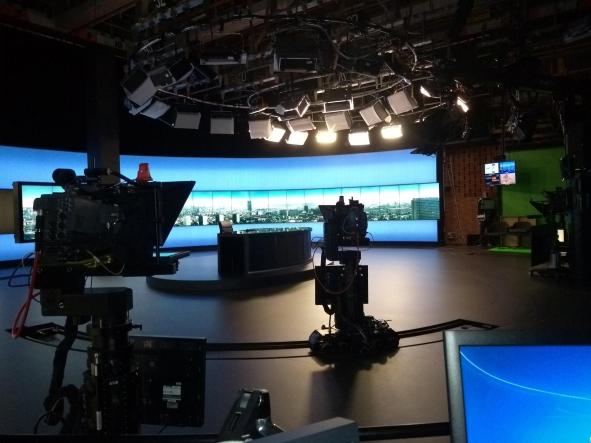
En néerlandais |
Projets pédagogiques d’immersion
Voyages didactiques
Activités scientifiques
|
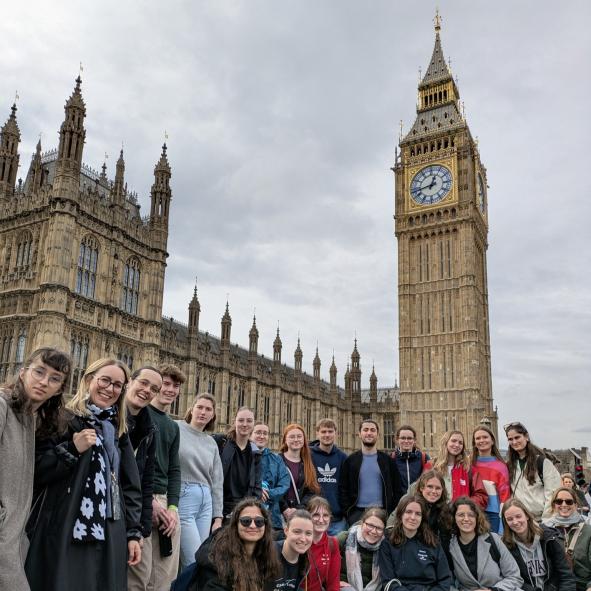
En anglais |
Activités de recherche scientifique
|
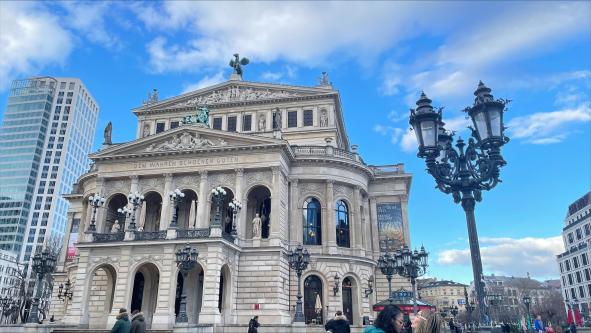
En allemand |
Activités de recherche scientifique
|
Success aids
Succeeding in a year of study at university involves many challenges.
To help you meet them, UNamur supports you in developing your disciplinary, methodological and human skills... with the support of numerous professionals.
Preparatory courses, individualized help... Find out about the schemes set up for your training.
Vous souhaitez choisir l’allemand, or vous n’avez qu’une connaissance très basique de la langue ?
Un dispositif de mise à niveau est spécialement conçu pour vous permettre de développer rapidement et sensiblement votre maitrise de l’allemand. Concrètement, il s’agit de cours ainsi que d’exercices intensifs reprenant la grammaire de base.
After the baccalauréat: the master's degree
The bachelor's degree in Germanic languages and literature gives automatic access, in the Wallonia-Brussels Federation, to the master's degree in Germanic languages and literature. The harmonization of programs gives you complete freedom of choice in the various Belgian universities, including Flanders.
Many Namur graduates go on - successfully - to pursue their master's studies in Flanders (Antwerp, Ghent, Leuven) or abroad (Cologne, Innsbruck, Utrecht)!
The two-year Master's program includes the study of specialty subjects, elective subjects and the submission of a dissertation.
The master's degree in teaching prepares you specifically for teaching in upper secondary schools.
-
Language
-
English
-
Linguistic approaches
Code Name Staff Th.+Ex. Credits/Block 1 2 3 LANGB101 English from sounds to sentences Vandelanotte Lieven 45h th. + 30h ex. 5 5 LANGB102_Bloc 1 English proficiency Vandelanotte Lieven 30h th. + 75h ex. 9 LANGB207 General linguistics : usage-based approaches to language study Vandelanotte Lieven 30h th. 5 LANGB2033 English language and linguistics I : selected topics Vandelanotte Lieven 45h th. + 90h ex. 5 LANGB301 English language and linguistics II : viewpoint and multimodality Vandelanotte Lieven 30h th. + 30h ex. 6 LANGB200 English language and linguistics 15h th. + 75h ex. 5 -
Literary approaches
Code Name Staff Th.+Ex. Credits/Block 1 2 3 LANGB104 Narratology Lab Silva Emma-Louise 30h th. + 15h ex. 7 7 LANGB004 English literary history II (1660-present) Silva Emma-Louise 45h th. + 15h ex. 5 LANGB005 Literary theory Silva Emma-Louise 45h th. 5 LANGB307 Literary text analysis: literary multilingualism and translation Silva Emma-Louise 30h th. + 30h ex. 7 LANGB205 Culture Club 15h th. 2
-
-
Dutch
-
Linguistic approaches
Code Name Staff Th.+Ex. Credits/Block 1 2 3 LNRLB102_Bloc 1 Dutch Linguistics Mettewie Laurence 37.5h th. + 30h ex. 5 Sustainable developmentImage
LNRLB103_bloc 1 Taalbeheersing Nederlands (Language Proficiency in Dutch) Mettewie Laurence 30h th. + 60h ex. 9 English Friendly CoursesImage
LNRLB208 Algemene taalkunde : 12 eeuwen geschiedenis en variatie van het Nederlands Mettewie Laurence 30h th. 5 LNRLB201 Nederlandse taal en taalkunde I : taal en media Mettewie Laurence 45h th. + 90h ex. 5 LNRLB301 Nederlandse taal en taalkunde II: taalverwerving van het Nederlands als vreemde taal Mettewie Laurence 30h th. + 30h ex. 6 LNRLB209 Taalonderzoek: methodes en praktijk 15h th. + 45h ex. 5 -
Literary approaches
Code Name Staff Th.+Ex. Credits/Block 1 2 3 LNRLB105 Nederlandse tekstanalyse I Leijnse Elisabeth 30h th. 7 7 Sustainable developmentImage
LNRLB206 Nederlands tekstanalyse II Leijnse Elisabeth 45h th. + 15h ex. 5 LNRLB002 Geschiedenis van de Nederlandstalige literatuur II (1650-nu) Leijnse Elisabeth 45h th. + 15h ex. 5 LNRLB303 Algemene literatuur Leijnse Elisabeth 30h th. + 15h ex. 7 LNRLB210 Cultuurcafé 15h th. 2
-
-
German
-
Linguistic approaches
Code Name Staff Th.+Ex. Credits/Block 1 2 3 LALLB101 German linguistics Darquennes Jeroen 30h th. + 75h ex. 9 9 LALLB105_Bloc 1 Introduction to German Darquennes Jeroen 30h th. + 75h ex. 5 LALLB206 General linguistics Darquennes Jeroen 30h th. 5 LALLB201 German language and linguistics I : capita selecta Darquennes Jeroen 45h th. + 90h ex. 5 LALLB301 Deutsche Sprache und Sprachwissenschaft II : Deutsch als plurizentrische Sprache Darquennes Jeroen 30h th. + 30h ex. 6 LALLB309 Sprache und Gesellschaft II : Sprache, Literatur und Macht 30h th. + 30h ex. 5 5 LALLB207 Sprache und Gesellschaft I : Sprache und Medien 30h th. + 30h ex. 5 5 -
Literary approaches
Code Name Staff Th.+Ex. Credits/Block 1 2 3 LALLB104 Literarische Textanalyse I: Prosa und Lyrik Leyh Valérie 30h th. + 30h ex. 7 7 Soft skillsImage
LALLB205 Literarische Textanalyse II: Drama und Prosa Leyh Valérie 45h th. + 15h ex. 5 LALLB204 Geschichte der deutschen Literatur Leyh Valérie 45h th. + 15h ex. 5 Soft skillsImage
LALLB303 Literaturen der Welt Leyh Valérie 30h th. + 15h ex. 7 LALLB208 Kulturfabrik 15h th. + 15h ex. 2
-
-
-
Introduction to human sciences
Code Name Staff Th.+Ex. Credits/Block 1 2 3 LPHIB105 General introduction to philosophy De Meyer Thibault 45h th. 5 LHISB101 Religious Studies 30h th. 3 UNAM0048 Artificial intelligence: challenges and opportunities 24h th. 3 LHISB005 Historical introduction to the main non-European civilisations ("Arab-Muslim world - Sub-Saharan Africa" module) Renard Etienne 45h th. 3 LGERB204 <unknown> 22.5h th. 4 -
History and Art History
Code Name Staff Th.+Ex. Credits/Block 1 2 3 LALLB103 Geschichte der deutschen Literatur I (800-1700) Leyh Valérie 15h th. + 30h ex. 5 LANGB003_Bloc 1 Cultural History of Literature in English: 600-1660 Silva Emma-Louise 30h th. 5 LNRLB001_Bloc 1 Geschiedenis van de Nederlandstalige literatuur I (1100-1650) Leijnse Elisabeth 30h th. 5 Soft skillsImage
LHISB320 Critique of film sources Roekens Anne 15h th. 2 LARTB028 Archaeology and Art History. Contemporary period Leenaerts Danielle 30h th. 3 LARTB012 Archaeology and Art History. Modern times Lefftz Michel 30h th. 3 LARTB011 Archaeology and art history. Middle Ages Piavaux Mathieu 30h th. 3 -
Written work
Code Name Staff Th.+Ex. Credits/Block 1 2 3 LALLB305 Bachelorarbeit deutsche Sprachwissenschaft Darquennes Jeroen 15h ex. 7 LALLB306 Bachelorarbeit deutsche Literaturwissenschaft Leyh Valérie 15h ex. 7 LANGB305 Bachelor paper in English linguistics Vandelanotte Lieven 15h ex. 7 LNRLB306 Bachelorpaper Nederlandse literatuur Leijnse Elisabeth 15h ex. 7 LNRLB305 BA paper in Dutch Linguistics (Bachelorpaper Nederlandse taalkunde) Mettewie Laurence 15h ex. 7 LANGB306 Bachelor paper in English literature Silva Emma-Louise 15h ex. 7 -
Complementary training
-
Introduction to human sciences
Code Name Staff Th.+Ex. Credits/Block 1 2 3 Soft skillsImage
LLETB001 Books and digital culture Leyh Valérie 30h th. 3 LLETB002 History of ancient literature and its legacies Minet Mathieu 30h th. 3 -
Philology
Code Name Staff Th.+Ex. Credits/Block 1 2 3 LANGB304 Language and society Silva Emma-Louise Vandelanotte Lieven 15h th. + 30h ex. 5 LNRLB304 Language and Society (Taal en maatschappij) Mettewie Laurence Leijnse Elisabeth 15h th. + 30h ex. 5 LALLB309 Sprache und Gesellschaft II : Sprache, Literatur und Macht 30h th. + 30h ex. 5 5 LALLB207 Sprache und Gesellschaft I : Sprache und Medien 30h th. + 30h ex. 5 5 -
Third modern foreign language
-
General training
-
-
Language
-
English
-
Linguistic approaches
Code Name Staff Credits Hours/Quarter 1 2 LANGB101 English from sounds to sentences Vandelanotte Lieven 5 45h th. + 30h ex. LANGB102_Bloc 1 English proficiency Vandelanotte Lieven 9 30h th. + 30h ex. 45h ex. -
Literary approaches
Code Name Staff Credits Hours/Quarter 1 2 LANGB104 Narratology Lab Silva Emma-Louise 7 30h th. + 15h ex.
-
-
Dutch
-
Linguistic approaches
Code Name Staff Credits Hours/Quarter 1 2 LNRLB102_Bloc 1 Dutch Linguistics Mettewie Laurence 5 22.5h th. + 15h ex. 15h th. + 15h ex. Sustainable developmentImage
LNRLB103_bloc 1 Taalbeheersing Nederlands (Language Proficiency in Dutch) Mettewie Laurence 9 30h th. + 30h ex. 30h ex. -
Literary approaches
Code Name Staff Credits Hours/Quarter 1 2 LNRLB105 Nederlandse tekstanalyse I Leijnse Elisabeth 7 30h th.
-
-
German
-
Linguistic approaches
Code Name Staff Credits Hours/Quarter 1 2 LALLB101 German linguistics Darquennes Jeroen 9 30h th. + 75h ex. LALLB105_Bloc 1 Introduction to German Darquennes Jeroen 5 30h th. + 75h ex. -
Literary approaches
Code Name Staff Credits Hours/Quarter 1 2 LALLB104 Literarische Textanalyse I: Prosa und Lyrik Leyh Valérie 7 30h th. + 30h ex.
-
-
-
Introduction to human sciences
Code Name Staff Credits Hours/Quarter 1 2 LPHIB105 General introduction to philosophy De Meyer Thibault 5 22.5h th. 22.5h th. LHISB101 Religious Studies 3 30h th. -
History and Art History
Code Name Staff Credits Hours/Quarter 1 2 LALLB103 Geschichte der deutschen Literatur I (800-1700) Leyh Valérie 5 15h th. + 30h ex. LANGB003_Bloc 1 Cultural History of Literature in English: 600-1660 Silva Emma-Louise 5 30h th. LNRLB001_Bloc 1 Geschiedenis van de Nederlandstalige literatuur I (1100-1650) Leijnse Elisabeth 5 30h th.
-
Language
-
English
-
Linguistic approaches
Code Name Staff Credits Hours/Quarter 1 2 LANGB207 General linguistics : usage-based approaches to language study Vandelanotte Lieven 5 30h th. LANGB2033 English language and linguistics I : selected topics Vandelanotte Lieven 5 45h th. + 45h ex. 45h ex. LANGB200 English language and linguistics 5 15h th. + 52.5h ex. 22.5h ex. -
Literary approaches
Code Name Staff Credits Hours/Quarter 1 2 LANGB004 English literary history II (1660-present) Silva Emma-Louise 5 45h th. + 15h ex. LANGB005 Literary theory Silva Emma-Louise 5 45h th. LANGB205 Culture Club 2 15h th.
-
-
Dutch
-
Linguistic approaches
Code Name Staff Credits Hours/Quarter 1 2 English Friendly CoursesImage
LNRLB208 Algemene taalkunde : 12 eeuwen geschiedenis en variatie van het Nederlands Mettewie Laurence 5 30h th. LNRLB201 Nederlandse taal en taalkunde I : taal en media Mettewie Laurence 5 45h th. + 45h ex. 45h ex. LNRLB209 Taalonderzoek: methodes en praktijk 5 15h th. + 22.5h ex. 22.5h ex. -
Literary approaches
Code Name Staff Credits Hours/Quarter 1 2 Sustainable developmentImage
LNRLB206 Nederlands tekstanalyse II Leijnse Elisabeth 5 45h th. + 15h ex. LNRLB002 Geschiedenis van de Nederlandstalige literatuur II (1650-nu) Leijnse Elisabeth 5 45h th. + 15h ex. LNRLB210 Cultuurcafé 2 15h th.
-
-
German
-
Linguistic approaches
Code Name Staff Credits Hours/Quarter 1 2 LALLB206 General linguistics Darquennes Jeroen 5 30h th. LALLB201 German language and linguistics I : capita selecta Darquennes Jeroen 5 15h th. + 45h ex. 30h th. + 45h ex. LALLB309 Sprache und Gesellschaft II : Sprache, Literatur und Macht 5 30h th. + 30h ex. LALLB207 Sprache und Gesellschaft I : Sprache und Medien 5 30h th. + 30h ex. -
Literary approaches
Code Name Staff Credits Hours/Quarter 1 2 Soft skillsImage
LALLB205 Literarische Textanalyse II: Drama und Prosa Leyh Valérie 5 45h th. + 15h ex. LALLB204 Geschichte der deutschen Literatur Leyh Valérie 5 45h th. + 15h ex. LALLB208 Kulturfabrik 2 15h th. + 15h ex.
-
-
-
Introduction to human sciences
Code Name Staff Credits Hours/Quarter 1 2 LGERB204 <unknown> 4 22.5h th. -
History and Art History
Code Name Staff Credits Hours/Quarter 1 2 Soft skillsImage
LHISB320 Critique of film sources Roekens Anne 2 15h th.
-
Language
-
English
-
Linguistic approaches
Code Name Staff Credits Hours/Quarter 1 2 LANGB301 English language and linguistics II : viewpoint and multimodality Vandelanotte Lieven 6 30h th. + 30h ex. -
Literary approaches
Code Name Staff Credits Hours/Quarter 1 2 LANGB307 Literary text analysis: literary multilingualism and translation Silva Emma-Louise 7 30h th. + 30h ex.
-
-
Dutch
-
Linguistic approaches
Code Name Staff Credits Hours/Quarter 1 2 LNRLB301 Nederlandse taal en taalkunde II: taalverwerving van het Nederlands als vreemde taal Mettewie Laurence 6 30h th. + 30h ex. -
Literary approaches
Code Name Staff Credits Hours/Quarter 1 2 LNRLB303 Algemene literatuur Leijnse Elisabeth 7 30h th. + 15h ex.
-
-
German
-
Linguistic approaches
Code Name Staff Credits Hours/Quarter 1 2 LALLB301 Deutsche Sprache und Sprachwissenschaft II : Deutsch als plurizentrische Sprache Darquennes Jeroen 6 30h th. + 30h ex. -
Literary approaches
Code Name Staff Credits Hours/Quarter 1 2 Soft skillsImage
LALLB303 Literaturen der Welt Leyh Valérie 7 30h th. + 15h ex.
-
-
-
Introduction to human sciences
Code Name Staff Credits Hours/Quarter 1 2 UNAM0048 Artificial intelligence: challenges and opportunities 3 24h th. LHISB005 Historical introduction to the main non-European civilisations ("Arab-Muslim world - Sub-Saharan Africa" module) Renard Etienne 3 22.5h th. 22.5h th. -
History and Art History
Code Name Staff Credits Hours/Quarter 1 2 LARTB028 Archaeology and Art History. Contemporary period 3 30h th. LARTB012 Archaeology and Art History. Modern times 3 30h th. LARTB011 Archaeology and art history. Middle Ages 3 30h th. -
Written work
Code Name Staff Credits Hours/Quarter 1 2 LALLB305 Bachelorarbeit deutsche Sprachwissenschaft Darquennes Jeroen 7 7.5h ex. 7.5h ex. LALLB306 Bachelorarbeit deutsche Literaturwissenschaft Leyh Valérie 7 7.5h ex. 7.5h ex. LANGB305 Bachelor paper in English linguistics Vandelanotte Lieven 7 7.5h ex. 7.5h ex. LNRLB306 Bachelorpaper Nederlandse literatuur Leijnse Elisabeth 7 7.5h ex. 7.5h ex. LNRLB305 BA paper in Dutch Linguistics (Bachelorpaper Nederlandse taalkunde) Mettewie Laurence 7 7.5h ex. 7.5h ex. LANGB306 Bachelor paper in English literature Silva Emma-Louise 7 7.5h ex. 7.5h ex. -
Complementary training
-
Introduction to human sciences
Code Name Staff Credits Hours/Quarter 1 2 Soft skillsImage
LLETB001 Books and digital culture Leyh Valérie 3 30h th. LLETB002 History of ancient literature and its legacies Minet Mathieu 3 30h th. -
Philology
Code Name Staff Credits Hours/Quarter 1 2 LANGB304 Language and society Silva Emma-Louise Vandelanotte Lieven 5 15h th. + 30h ex. LNRLB304 Language and Society (Taal en maatschappij) Mettewie Laurence Leijnse Elisabeth 5 15h th. + 30h ex. LALLB309 Sprache und Gesellschaft II : Sprache, Literatur und Macht 5 30h th. + 30h ex. LALLB207 Sprache und Gesellschaft I : Sprache und Medien 5 30h th. + 30h ex. -
Third modern foreign language
-
General training
-
Description
From the very start, students choose two languages from English, Dutch and German.
Through immersive and varied courses, they develop their skills in literary and linguistic analysis, the history of languages, literatures and civilisations, as well as culture and media, in their two target languages — in which they build mastery across listening, reading, writing and speaking.
The Bachelor’s degree develops students’ abilities in analysis, synthesis, critical thinking and communication, while broadening their understanding of the world.
At the heart of language and cultures
In linguistics, students explore the mysteries of language — its evolution, diversity, complexity, and its role in human interaction and on the web. In literature, they analyse how works reflect and shape cultural identities, discovering the deep connections between individuals, lived experiences and society through texts, but also through films, music and other media.
An enlightened perspective on contemporary challenges
The languages studied become both tools and horizons. The Bachelor’s degree in Germanic Languages and Literatures prepares students to become informed and engaged actors, able to navigate a multilingual, interconnected world.
Each course draws on the socio-cultural, historical and political contexts of Dutch-, German- and English-speaking regions. These references are then put into perspective to contextualise today’s major challenges: linguistic and cultural diversity, multilingualism, migration, the digital age, inclusion, intergenerational relations, links with pop culture, media language, ecological transition, and resilience. Writing tasks aim to develop students’ writing skills and mastery of current digital tools.
(Inter)national mobility and a third foreign language
In the third year, students can explore new linguistic horizons by learning a third foreign language. Through Erasmus or additional training, they gain access to a wide range of languages, such as German, English, Dutch, Spanish, Italian, as well as Japanese, Russian or Gaelic.
International mobility and openness
An invaluable asset for enriching students’ academic journey and broadening their horizons, Erasmus and other (inter)national mobility opportunities are available as early as the Bachelor’s programme.
In the third year, students may benefit from a study placement of 3 to 5 months at one of our partner universities in Germany, Austria, the United States, Flanders, Ireland, Japan, Luxembourg or the Netherlands.
This experience enables them to further develop their language skills while discovering university life, culture, environment and everyday life within these linguistic communities.
The mobility programmes, designed by the students in consultation with the International Mobility Coordinator, must be approved by the admissions board, in line with several criteria: the mobility programme must comprise at least 21 credits as a replacement for the complementary modules, including at least one literature-focused module and one linguistics-focused module, through which students deepen their knowledge and skills in the language of the host university. It must also include at least one module offered in the student’s second core language of study, where this is available at the partner institution, or alternatively in a third language. Finally, the programme must not include modules that have already been credited during the Bachelor’s in Germanic Languages and Literatures.
For students whose plans do not involve Erasmus, there is the option of a tailored complementary programme. Remaining at UNamur, they can broaden their skills by selecting courses in fields such as communication, sociology, political science, history, art history, communication and media, or sign language, including The Book and Digital Culture. They also choose two courses from the specific Germanic Languages and Literatures offering: Language and Society, Sprache und Gesellschaft or Taal en maatschappij, depending on their target languages.
Help to succeed
- Passport to the Bachelor’s degree
At the beginning of the first year (Block 1), students are invited to complete a questionnaire known as the Passport to the Bachelor’s degree. This questionnaire allows them to position themselves in relation to the expectations of their lecturers and of their fellow students, particularly with regard to their reading skills when dealing with advanced-level texts. Based on the results, students may benefit from correction sessions and support aimed at strengthening the required prerequisites.
These “passports” are based on research originally conducted at the University of Namur, designed to identify the prerequisites necessary for entry into university — in other words, the skills developed during secondary education that first-year (Block 1) course units draw upon, but which are not explicitly taught as part of the curriculum.
- Study skills and methodology
From the very start of Block 1, students must familiarise themselves with new learning techniques: taking notes from dense lectures, managing their study time by setting their own interim deadlines, assimilating larger volumes of material than at secondary school, and developing appropriate study tools. They must ensure a solid understanding of the content related to each subject and adapt to a mode of communication specific to the university context. Having effective strategies in these areas is a major asset for success in the first year.
The Faculty’s Pedagogical Support Unit (CAP) offers students weekly sessions dedicated to these various aspects, organises individual review interviews after the November tests and examination sessions, and remains available to provide more personalised follow-up when needed.
The University of Namur’s Interfaculty Pedagogical Support Unit (CIAP) responds to any request for methodological support and can offer individual guidance throughout the academic year. At various points, it also contributes directly to the support sessions organised by the CAP, particularly in relation to study integration techniques and time and stress management.
Finally, on the eve of the first exam revision period (blocus), students may take part in a discussion and advice session with second- or third-year students, under the supervision of the Pedagogical Support Unit and the department.
- Coaching with lecturers
Where necessary, the teaching team supports students in strengthening their language skills and mastering specific elements (grammar, writing, etc.). This support may take place either in person or remotely (for example, for Erasmus students).
Teaching methods
Lectures, practical exercises, coaching, study trips and visits abroad… everything is designed to ensure that students gain mastery not only of literature and linguistics in their two chosen languages, but also of the culture, history — and above all the contemporary realities — of the regions concerned.
Immersive and intensive
To support students’ learning and strengthen their skills, language and linguistics modules are enriched with cultural activities, student presentations, interactive projects and an introduction to scientific research, alongside grammar exercises and conversation sessions.
Literature and civilisation courses come alive through novels, short stories, plays and films in the original language. Students deepen their cultural understanding by engaging in group discussions or individual analyses (Culture Club, Cultuurcafé, Kulturfabrik), and by experiencing these works directly through theatre or cinema outings, as well as meetings with authors, directors or literary translators.
Practical work enables students to learn how to work independently and as part of a team, to assess their knowledge, to understand their teachers' expectations and to improve their working methods. They also benefit from additional explanations on the parts of the subject matter that they find more difficult to understand.
Some courses are taught using the flipped classroom approach, which, after self-study of key elements, maximises engagement and interaction with teachers and fellow students during class.
Providing genuine hands-on learning experiences in linguistics and literature, study trips also offer opportunities to conduct interviews, collect data for research projects and immerse oneself in the culture of the region or country being visited.
The Bachelor’s degree culminates in a final dissertation, allowing students to develop their personal project through a scientific and analytical approach. This experience, grounded in real-world contexts, prepares students to embark on their Master’s studies with greater independence. Several of our students’ final dissertations have even led to scientific publications!
Aims and objectives
The programme will enable students to:
- gain knowledge of, and promote, two Germanic cultures — their language, literature and history, as well as their role in today’s world: German, and/or English, and/or Dutch;
- become specialists in multilingual and multicultural communication.
The specialised training is complemented by an introduction to the humanities, such as philosophy and art history.
Assessment
In the first year (Block 1), indicative written tests with follow-up are organised during the semester in certain subjects, including general courses such as Philosophy. These tests allow students to take stock of their knowledge, understand the expectations of their future examiners, and assess the effectiveness of their study methods.
In January, first-year students sit examinations on the material taught during the first semester. In the event of failure, the result is not taken into account, and students may resit the examination in June and, if necessary, in August–September. They therefore have three opportunities to succeed. Beyond the first year, any examination not passed in the January or June session is automatically deferred to the August session.
Examinations may take the form of written or oral assessments. Students are informed by each lecturer of the requirements and format of the examination. Several lecturers also provide sample questions, either orally or via the intranet.
Lecturers generally favour open-ended questions and, wherever possible, combine written and oral assessment methods in order to evaluate a range of competences, including language skills. Many lecturers use approaches designed to encourage the creative or critical application of knowledge to examples not covered in class. For many course units, a significant proportion of the final grade is determined by individual or group projects, presented in various written or oral formats.
Language skills developed through exercises may be assessed on a continuous basis (through active participation) or through individual or group assignments.
Students complete their programme by demonstrating, through their final dissertation, that they have acquired the ability to conduct research and to engage in personal and critical reflection, in accordance with the standards of the chosen discipline (literature / linguistics).
Les métiers des germanistes
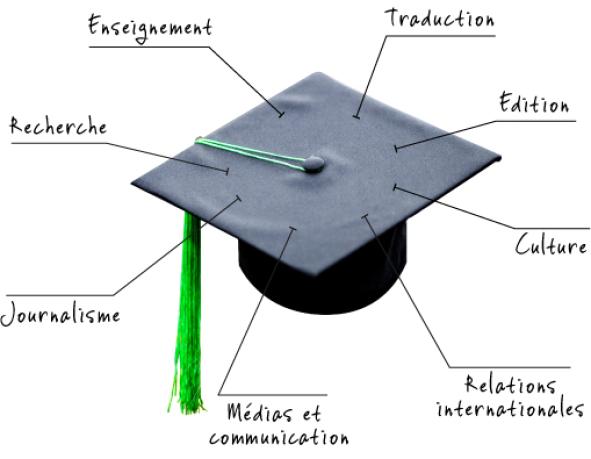
Jobs for Germanists
Germanists offer a sought-after profile for positions of responsibility: in-depth knowledge of several foreign languages (those that matter most in the Belgian context: the national languages and English, the international language par excellence), but also flexibility, adaptability, methodological knowledge, critical thinking.
A highly sought-after profile
In the internationalized society of the 21st century, mastery of various languages and knowledge of cultures other than one's own offer more power than ever over oneself and one's environment, particularly at work.
The oral and written mastery of several foreign languages (in addition to French) opens up numerous career opportunities for Germanists. But multilingualism is not their only sesame; other assets are added to their palette. Studies in languages and literature develop the ability to analyze discourse, synthesize ideas and think on their feet; they teach students to seek meaning and organize information; and they train them to report and argue in several languages, both orally and in writing. All these skills, coupled with a solid general culture, enable Germanists to learn quickly and develop professionally in sectors as diverse as teaching, international organizations, business, the media and more.
Finally, a not inconsiderable advantage, Germanists can directly offer their skills in the country's three language communities, and internationally.
Some Germanists continue their studies with further training (communication, IT, management, etc.), which can facilitate their professional integration in more specialized fields.
Teaching and training
Many Germanists share their expertise and passion for German, English or Dutch with secondary school students. Germanists also intervene in other training contexts in front of audiences of all ages. There is a great need for competent language teachers in colleges, universities, private language centers, continuing education organizations and even within some large national and international companies.
To teach Germanic languages in secondary education, the diploma of agrégé de l'enseignement secondaire supérieur is required. It can be obtained during a second cycle (master's degree with a didactic focus) or through further training.
Language services
In Belgium, federal and international administrations as well as multinational companies generate many jobs related to foreign language skills: translation, multilingual documentation and information management. Some Germanists offer these services on a freelance basis.
In addition, new professions linked to computerized language processing are emerging: development of automatic translation or voice recognition software, courseware design... In this type of innovative project, the expertise of linguists is invaluable support for information technology specialists.
Corporate world
More and more Germanists are working in companies that are open to international business: exporting SMEs, banks, insurance companies, IT services, transport and logistics... They occupy positions in direct contact with foreign customers, assist international executives or progress to management positions.
Research
Some Germanists pursue a research activity after graduation, often supplemented by teaching duties, in Belgium and sometimes abroad. Universities and public funds (e.g. FNRS) can finance the completion of a doctorate. Among other things, PhDs in philosophy and humanities have the opportunity to teach at universities and colleges at national and international level.
For the department's research themes, feel free to visit the department.
Media and communication
Provided they are open to the socio-economic world or have specialized in a particular cultural field, Germanists can join the world of the media (television, print media, specialized press, corporate press...).
Many of our graduates are now journalists. Others hold communications-related positions (external relations, marketing), for example in cultural institutions.
A social life to develop
When it comes to landing a first job, a candidate's personality is often as important as his or her university degree, hence the importance of keeping curiosity alive throughout studies and building a rich social life. Even if they're highly sought-after on the job market, future Germanists will give themselves every chance of landing a fulfilling first job in line with their wishes by multiplying intercultural experiences during their studies, for example by spending time abroad or getting involved in the associative world.