The Department of Veterinary Medicine trains today's doctors into a scientist who can exercise his or her talent in varied and strategic fields such as companion animal health, collective and individual livestock medicine, public health, scientific research, teaching, humanitarian aid, the pharmaceutical and agrifood industries,...
It is to these many facets of the profession that the Department of Veterinary Medicine prepares its undergraduates, anxious to develop in them the resources essential to the acquisition of professional skills that will enable them to manage the complex situations with which they will be confronted.
Find out more about the Department of Veterinary Medicine
Spotlight
News
The importance of languages in university studies
Why take English classes when you want to become a veterinarian? How can you teach Spanish to future management engineers? Far from vocabulary lists or lab classes with headphones, these languages are taught as genuine cross-disciplinary skills that are essential for the jobs of tomorrow.
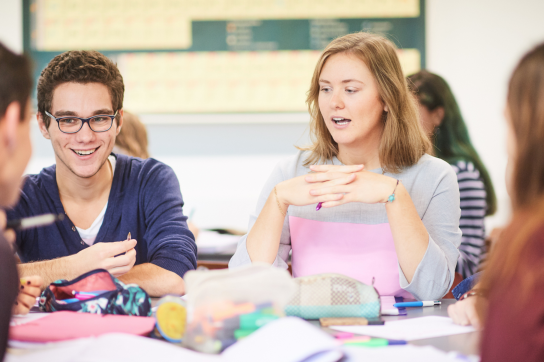
In recent years, language teaching has continued to evolve, adapting to new societal challenges. Students no longer work solely on grammar or vocabulary, but carry out practical tasks directly related to their discipline. "The professional world is changing rapidly, and we must prepare them for that," emphasizes Natassia Schutz, director of the UNamur Language Center. "International mobility and the internationalization of careers also require adaptation to multilingual and multicultural environments." Cultural diversity and inclusion are further requirements. "Ludwig Wittgenstein said, 'The limits of one's language are the limits of one's world.' Knowing several languages allows you to see your environment differently," she points out. Finally, the digital transition is profoundly transforming teaching practices, with the integration of technological tools that multiply the possibilities for training and interaction.
An interdisciplinary approach
To respond to these changes, the Language Center places students at the heart of its approach. "We start with their needs, their context, and their goals. Everything must be meaningful and authentic," explains Natassia Schutz. In concrete terms, this translates into courses tailored to the academic and professional realities of each discipline. In the Faculty of Science, students are introduced to reading articles, writing and scientific presentation in English from their first year. In the Faculty of Economics, Management and Communication Sciences (EMCP), they learn how to write a CV in Dutch and practice in mock job interviews. "We go far beyond vocabulary lists and grammar and use the foreign language as a tool to achieve a specific goal."
"We often describe ourselves as Swiss Army knives: depending on the context, the course, or the students, we pull out the right tool," explains the director. The team collectively reflects on its strategic priorities, but above all, it works closely with professors in each field. This co-construction allows language courses to be anchored in concrete and relevant situations. "Interdisciplinary collaboration is essential. To design our courses, we are in regular contact with faculty professors, which allows us to provide tailor-made learning that combines language learning with direct application in the field being studied," adds Natassia Schutz.
A specialized course in English
In the Department of Veterinary Medicine, English is no longer taught as a separate subject, but is directly integrated into a specialized course through the CLIL (Content and Language Integrated Learning) program. The principle is simple: "We use English to teach a subject, combining learning the subject matter with developing language skills in a concrete and motivating context for the learner," explains Hélène Bouchat, a language teacher. "This program is based on three principles: motivating students by giving meaning to language learning, promoting intensive exposure to English, and bringing together a subject specialist and a language specialist to integrate content and language in a balanced way," she adds.
As a result, the animal ethnography course has been merged with the English course to form a single course. In practical terms, Benoît Muylkens and Marlies Dauwen, professors of animal ethnography, teach the subject, while Hélène Bouchat regularly intervenes to draw attention to specific linguistic points, such as technical vocabulary, false friends, and useful grammatical structures. "I want to make sure that students understand, because their success in the course also depends on their mastery of English." For those who encounter more difficulties, remedial sessions are organized.
"The results are very positive. Students are more motivated and better understand the usefulness of English in their future careers, which gives meaning to their learning," says Hélène Bouchat. "We also know that veterinarians will need to read scientific literature in English. It is therefore essential to prepare them from the very beginning."
Learning languages through projects
At the EMCP Faculty, languages are also integrated into interdisciplinary projects called "integrated teaching units." "These projects allow us to link several courses around a concrete achievement. In the entrepreneurship project, for example, students design a business plan and we help them write their executive summary in English, which is intended to convince a potential investor," explains Jérémie Dupal, who is in charge of the English part of the project.
This approach requires good coordination between teachers. "We need to know what our colleagues have already covered with the students, because the executive summary can only be written once the financial, marketing, and other aspects are in place. This multidisciplinary approach also shows students that the disciplines are complementary, as they are in professional life. These projects make learning more concrete and develop cross-disciplinary skills such as creativity, collaboration, and the ability to make connections between their different courses. Even students who sometimes see languages as a constraint understand, in this context, how essential they are in their future profession," concludes Jérémie Dupal.
A new name for the Language Center
The UNamur School of Modern Languages is becoming the Language Center. Created in the 1970s, the School has evolved over time: from an audio-oral approach, it has moved to an action-oriented and communicative approach, in line with the academic and professional needs of learners. "The term 'school' and the distinction between modern and dead languages no longer corresponded to our reality," explains Natassia Schutz. "With this new name, we are affirming our identity as a university entity and strengthening the sense of belonging within the institution."
This article is taken from the "Tomorrow Learn" section of Omalius magazine #38 (September 2025).
Veterinary students plunge into the world of lambing
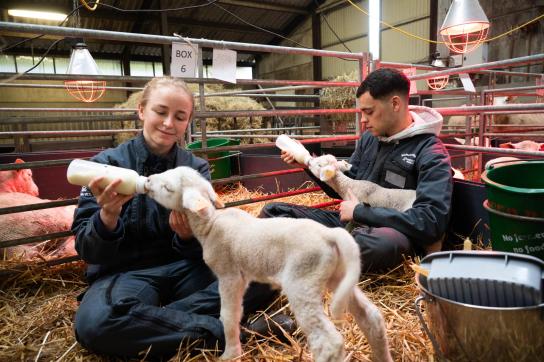
Rubber boots, overalls, the bleating of ewes, the smell of straw... The scene is set. On the farm of the Centre de Recherche Ovine, located in the Namur countryside, veterinary students live, for the space of a few days, to the rhythm of lamb births. An intense, formative experience, filled with technical gestures and emotions, supervised by veterinarians from the University of Namur.
In spring, the sheepfold at the Centre de Recherche Ovine (CRO) in Faulx-les-Tombes enters a period of excitement, that of lambing. Over a three-week period, some 70 ewes of the Île-de-France breed give birth. To mark the occasion, two types of internship are offered to students: a three-day lambing internship for baccalaureate veterinary students, and a more in-depth internship for final-year students. Two complementary formats that pursue the same objective: to train students as closely as possible to the reality in the field.
"To be a good veterinarian, you first need to know how a farm works and understand the breeder's job," explains Astrid Petit, veterinarian and CRO member. "That's why we ask students to take part in all farm tasks: daily care, feeding, mulching, monitoring ewes ready to lamb, assisting with parturition, resuscitating lambs, checking colostrum intake, neonatal care, etc."
The internship: a means of transmission between students
As a first-year veterinary student, Valentine has been living to the rhythm of the births for the past two days: "Our days depend on the births. It's up to us to be attentive, to detect the first signs and make sure everything goes well. But alongside the births, there are a huge number of other things to do: feed the young that the mother hasn't recognized, check that they're taking the colostrum, mulch, fill the troughs...". A job that requires constant presence, day and night. That's why the students stay on site, enabling them to intervene at any hour and monitor the ewes continuously. "These are three intense days when we don't sleep much at night, but our fatigue is more than compensated for by the "cuteness rate" of the lambs," she smiles.
Available from the first year of veterinary medicine, the lambing internship is based on active teaching and transmission between students. Every day, students progress in their role on the farm. They start the internship as "beginners", then evolve on day two as "confirmed trainees", before finishing as "experienced trainees" on the final day. "It's the students themselves who ensure the transmission of knowledge, enabling them to evolve rapidly and with total autonomy," Astrid Petit points out. "Having three different levels, learning thanks to the other students and then passing on our knowledge to the next ones, it's really very rewarding and empowering," adds Valentine.
Beyond clinical skills, this internship also develops human qualities that are essential for future veterinarians: stress management, teamwork, observation skills, a sense of priorities...
Boarding school: extended immersion
Alongside the three-day internships, CRO also offers another, more advanced formula: lambing internships. This eight- to nine-day program allows students to live at the rhythm of the farm, coordinating trainees and supervising care outside staff hours. "This immersion offers students a unique opportunity to acquire in-depth knowledge and operational skills essential to the management of parturitions and the early stages of newborn life (neonatology)," explains Astrid Petit.
Before starting, interns receive theoretical training and clinical coaching. They learn how to spot certain pathologies (metritis, retentions, mastitis...), intervene in obstetrical complications, perform certain authorized medical procedures under supervision (taking blood, injections, placing a probe, neonatal resuscitation...) and ensure careful monitoring of ewes and lambs.
"What we miss during our studies is contact with animals, especially live animals. Being able to be out there and apply theoretical information we've received in class is really an incredible opportunity," testifies third-year student Chloé. "Here, we're also supervised by professionals from the University and by veterinarians. They are there to help us and give us additional information, while leaving us a great deal of autonomy. The fact that interns and trainees get together creates a real learning dynamic, with very rich exchanges," she concludes.
Discover the lambing boarding school on video
Lambing in figures
- 70 ewes of the Île-de-France breed
- About 100 births
- Between 5 and 10 farrowings per day
- A score of student trainees
- Three to five interns mobilized over the period
Ovine Research Center (CRO)
Located in an exceptional natural setting in Faulx-les-Tombes, the CRO is part of the Integrated Veterinary Research Unit of the Department of Veterinary Medicine. The Center combines three main missions:
- Research : the center studies sheep as a model for locomotor diseases, neonatal pathologies and sustainability issues in animal husbandry. It hosts university researchers and industrialists.
- Teaching: it serves as an educational farm for veterinary students (since the 1st year), enabling them to put theory into practice (clinical examinations, animal handling, lambing, perinatal care...).
- Breeding: as a sheep breeding site, the center produces lamb meat and breeding stock. The CRO also offers various services to breeders: analyses, advice, supply of seeds, health support, etc.
The Center has the ambition to become a place of convergence where researchers, students and breeders share and develop knowledge in a collaborative way.
This article is taken from the "Tomorrow Learn" column in Omalius magazine #37 (July 2025).
An exploratory mission to forge ties with Senegal
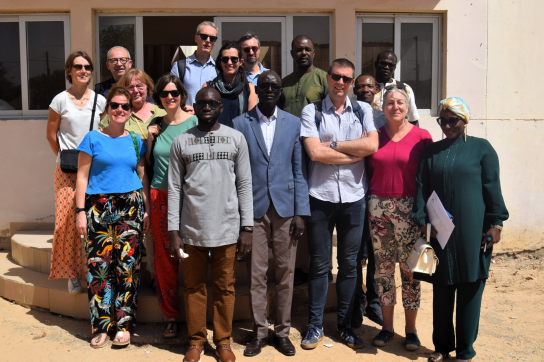
A delegation from the Université de Namur took part in an exploratory mission to the Université Cheikh Anta Diop (UCAD) in Dakar, Senegal. The aim: to discover the research carried out in the field, meet UCAD researchers and initiate future collaborations between the two institutions.
Ten members of UNamur's academic and scientific staff, accompanied by the International Relations Department and the NGO FUCID, the University Forum for International Development Cooperation, took part in an exploratory mission co-organized with UCAD. The mission was part of the university's drive to strengthen partnerships with the South, by promoting exchanges, raising researchers' awareness of the issues facing the global South, and helping new projects to emerge.
For a week, several activities were organized to enable members of the delegation to discover the Senegalese university: a visit to UCAD and discovery of its issues, exchanges around the concept of "One Health", meetings between researchers, a field visit and a closing moment in the presence of institutional partners.
Catherine Linard, professor at the Faculty of Sciences, was part of the Namur delegation "Going on site and exchanging with our Senegalese colleagues is very important. It allows us to discover the wealth of their research, in fields often directly connected to realities on the ground," she explains.
Since 2015, Catherine Linard has been collaborating with UCAD, notably as part of a research and development project supported by ARES. "From this initial collaboration a number of dynamics were born. Several Senegalese PhD students have come to Belgium to pursue their research. And conversely, one of my Belgian PhD students, Camille Morlighem, who is working on the creation of malaria risk maps in Senegal, has been able to benefit from mobility grants for research stays at UCAD. We've also established teaching exchanges: I went to Dakar to give a week's training to PhD students in geography, and a fellow health geographer, Aminata Niang Diène, comes to Belgium every year to speak in one of my master's courses," continues the professor.
The participants
The delegation brought together profiles from several UNamur faculties and departments:
- Francesca Cecchet, Faculty of Science, President of the NISM (Namur Institute of Structured Matter) Research Institute and member of the (NaRILIS Namur Research Institute for Life Sciences)
- Laurent Houssiau, Faculty of Science and member of the NISM (Namur Institute of Structured Matter) Research Institute
- Charles Nicaise, Faculty of Medicine and President of the NaRILIS Research Institute (Namur Research Institute for Life Sciences)
- Denis Saint-Amand, Faculty of Philosophy and Letters and member of the NaLTT Research Institute (Namur Institute of Language, Text and Transmediality)
- Laurent Ravez, Faculties of Medicine and Science and member of the NaRILiS (Namur Research Institute for Life Sciences) and EsPhiN (Espace Philosophique de Namur)
- Anne Vermeyen, member of the Cellule bien-être animal
- Flora Musuamba, Faculty of Medicine and member of the NaRILIS Research Institute (Namur Research Institute for Life Sciences)
- Florence Georges, Faculty of Law and member of the NaDI (Namur Digital Institute)
- Nathanaël Laurent, Faculty of Science and member of the EsPhiN (Espace Philosophique de Namur)
- Catherine Linard, Faculty of Science and member of the NaRILIS (Namur Research Institute for Life Sciences) and ILEE (Institute of Life-Earth-Environment)
- Rita Rixen, Director of FUCID, the University Forum for International Development Cooperation
- Amélie Schnock, member of the International Relations Department
The University of Namur on the international stage
Committed to international cooperation and development, the University of Namur maintains numerous collaborations with several institutions around the world. These collaborations take the form of research projects, teaching or training assignments, or student training as part of UNamur's teaching offer or as part of short-term internships, particularly research internships.
The University of Namur is committed to international cooperation and development.
A new mural for the Faculty of Science
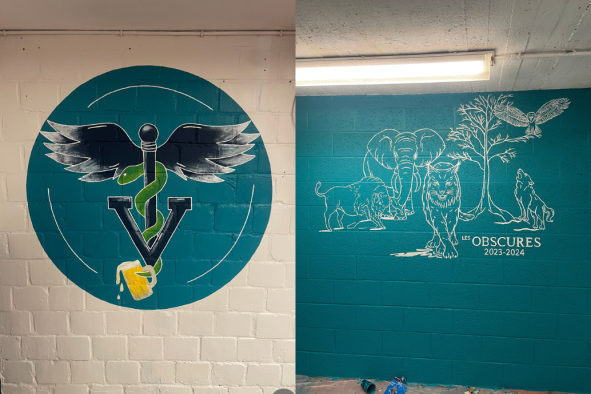
A 3rd-year veterinary medicine student with a passion for drawing, Élise Hottois has transformed one of the walls of the Faculty of Science into a veritable work of art.
It was during a call for projects to embellish the premises of the Faculty of Science that Élise was chosen from among other candidates. The aim: to highlight its eight departments: biology, chemistry, geography, geology, mathematics, veterinary medicine, physics and philosophical sciences. After a pre-selection process, Elise submitted a sketch that quickly won over the jury. "I wanted to illustrate each discipline in a soft, happy aesthetic, mixing antique objects with some more artistic elements," she explains. These include an armillary sphere, a skeleton and a representation of the solar system.
Family support
"Since I was a little girl, I've loved drawing, it's a passion I inherited from my mum," confides Élise. "As soon as I started the sketches for the fresco, I asked her for ideas and advice. She's very creative and helped me a lot," she recounts. Together, they sought inspiration and refined their sketches, before embarking on painting the entire fresco.
The project required several weeks of upstream preparation and almost two weeks of intensive work to complete the 15-meter-long work.
The fresco can be seen in the passage between the Science Building and the Pedro Arrupe Auditorium, accessible from the Science Building, by descending to -1.
Other achievements
For Élise, it wasn't the first time she'd tried her hand at this kind of exercise. "Last year, I had created two frescoes in collaboration with the committee in the Veterinary Circle. I also make tablars for students, which is what got me into painting. I'd love to continue developing this artistic side alongside my studies", concludes the student.
The importance of languages in university studies
Why take English classes when you want to become a veterinarian? How can you teach Spanish to future management engineers? Far from vocabulary lists or lab classes with headphones, these languages are taught as genuine cross-disciplinary skills that are essential for the jobs of tomorrow.
In recent years, language teaching has continued to evolve, adapting to new societal challenges. Students no longer work solely on grammar or vocabulary, but carry out practical tasks directly related to their discipline. "The professional world is changing rapidly, and we must prepare them for that," emphasizes Natassia Schutz, director of the UNamur Language Center. "International mobility and the internationalization of careers also require adaptation to multilingual and multicultural environments." Cultural diversity and inclusion are further requirements. "Ludwig Wittgenstein said, 'The limits of one's language are the limits of one's world.' Knowing several languages allows you to see your environment differently," she points out. Finally, the digital transition is profoundly transforming teaching practices, with the integration of technological tools that multiply the possibilities for training and interaction.
An interdisciplinary approach
To respond to these changes, the Language Center places students at the heart of its approach. "We start with their needs, their context, and their goals. Everything must be meaningful and authentic," explains Natassia Schutz. In concrete terms, this translates into courses tailored to the academic and professional realities of each discipline. In the Faculty of Science, students are introduced to reading articles, writing and scientific presentation in English from their first year. In the Faculty of Economics, Management and Communication Sciences (EMCP), they learn how to write a CV in Dutch and practice in mock job interviews. "We go far beyond vocabulary lists and grammar and use the foreign language as a tool to achieve a specific goal."
"We often describe ourselves as Swiss Army knives: depending on the context, the course, or the students, we pull out the right tool," explains the director. The team collectively reflects on its strategic priorities, but above all, it works closely with professors in each field. This co-construction allows language courses to be anchored in concrete and relevant situations. "Interdisciplinary collaboration is essential. To design our courses, we are in regular contact with faculty professors, which allows us to provide tailor-made learning that combines language learning with direct application in the field being studied," adds Natassia Schutz.
A specialized course in English
In the Department of Veterinary Medicine, English is no longer taught as a separate subject, but is directly integrated into a specialized course through the CLIL (Content and Language Integrated Learning) program. The principle is simple: "We use English to teach a subject, combining learning the subject matter with developing language skills in a concrete and motivating context for the learner," explains Hélène Bouchat, a language teacher. "This program is based on three principles: motivating students by giving meaning to language learning, promoting intensive exposure to English, and bringing together a subject specialist and a language specialist to integrate content and language in a balanced way," she adds.
As a result, the animal ethnography course has been merged with the English course to form a single course. In practical terms, Benoît Muylkens and Marlies Dauwen, professors of animal ethnography, teach the subject, while Hélène Bouchat regularly intervenes to draw attention to specific linguistic points, such as technical vocabulary, false friends, and useful grammatical structures. "I want to make sure that students understand, because their success in the course also depends on their mastery of English." For those who encounter more difficulties, remedial sessions are organized.
"The results are very positive. Students are more motivated and better understand the usefulness of English in their future careers, which gives meaning to their learning," says Hélène Bouchat. "We also know that veterinarians will need to read scientific literature in English. It is therefore essential to prepare them from the very beginning."
Learning languages through projects
At the EMCP Faculty, languages are also integrated into interdisciplinary projects called "integrated teaching units." "These projects allow us to link several courses around a concrete achievement. In the entrepreneurship project, for example, students design a business plan and we help them write their executive summary in English, which is intended to convince a potential investor," explains Jérémie Dupal, who is in charge of the English part of the project.
This approach requires good coordination between teachers. "We need to know what our colleagues have already covered with the students, because the executive summary can only be written once the financial, marketing, and other aspects are in place. This multidisciplinary approach also shows students that the disciplines are complementary, as they are in professional life. These projects make learning more concrete and develop cross-disciplinary skills such as creativity, collaboration, and the ability to make connections between their different courses. Even students who sometimes see languages as a constraint understand, in this context, how essential they are in their future profession," concludes Jérémie Dupal.
A new name for the Language Center
The UNamur School of Modern Languages is becoming the Language Center. Created in the 1970s, the School has evolved over time: from an audio-oral approach, it has moved to an action-oriented and communicative approach, in line with the academic and professional needs of learners. "The term 'school' and the distinction between modern and dead languages no longer corresponded to our reality," explains Natassia Schutz. "With this new name, we are affirming our identity as a university entity and strengthening the sense of belonging within the institution."
This article is taken from the "Tomorrow Learn" section of Omalius magazine #38 (September 2025).
Veterinary students plunge into the world of lambing
Rubber boots, overalls, the bleating of ewes, the smell of straw... The scene is set. On the farm of the Centre de Recherche Ovine, located in the Namur countryside, veterinary students live, for the space of a few days, to the rhythm of lamb births. An intense, formative experience, filled with technical gestures and emotions, supervised by veterinarians from the University of Namur.
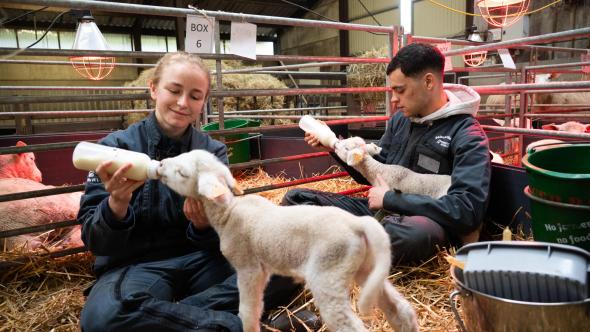
In spring, the sheepfold at the Centre de Recherche Ovine (CRO) in Faulx-les-Tombes enters a period of excitement, that of lambing. Over a three-week period, some 70 ewes of the Île-de-France breed give birth. To mark the occasion, two types of internship are offered to students: a three-day lambing internship for baccalaureate veterinary students, and a more in-depth internship for final-year students. Two complementary formats that pursue the same objective: to train students as closely as possible to the reality in the field.
"To be a good veterinarian, you first need to know how a farm works and understand the breeder's job," explains Astrid Petit, veterinarian and CRO member. "That's why we ask students to take part in all farm tasks: daily care, feeding, mulching, monitoring ewes ready to lamb, assisting with parturition, resuscitating lambs, checking colostrum intake, neonatal care, etc."
The internship: a means of transmission between students
As a first-year veterinary student, Valentine has been living to the rhythm of the births for the past two days: "Our days depend on the births. It's up to us to be attentive, to detect the first signs and make sure everything goes well. But alongside the births, there are a huge number of other things to do: feed the young that the mother hasn't recognized, check that they're taking the colostrum, mulch, fill the troughs...". A job that requires constant presence, day and night. That's why the students stay on site, enabling them to intervene at any hour and monitor the ewes continuously. "These are three intense days when we don't sleep much at night, but our fatigue is more than compensated for by the "cuteness rate" of the lambs," she smiles.
Available from the first year of veterinary medicine, the lambing internship is based on active teaching and transmission between students. Every day, students progress in their role on the farm. They start the internship as "beginners", then evolve on day two as "confirmed trainees", before finishing as "experienced trainees" on the final day. "It's the students themselves who ensure the transmission of knowledge, enabling them to evolve rapidly and with total autonomy," Astrid Petit points out. "Having three different levels, learning thanks to the other students and then passing on our knowledge to the next ones, it's really very rewarding and empowering," adds Valentine.
Beyond clinical skills, this internship also develops human qualities that are essential for future veterinarians: stress management, teamwork, observation skills, a sense of priorities...
Boarding school: extended immersion
Alongside the three-day internships, CRO also offers another, more advanced formula: lambing internships. This eight- to nine-day program allows students to live at the rhythm of the farm, coordinating trainees and supervising care outside staff hours. "This immersion offers students a unique opportunity to acquire in-depth knowledge and operational skills essential to the management of parturitions and the early stages of newborn life (neonatology)," explains Astrid Petit.
Before starting, interns receive theoretical training and clinical coaching. They learn how to spot certain pathologies (metritis, retentions, mastitis...), intervene in obstetrical complications, perform certain authorized medical procedures under supervision (taking blood, injections, placing a probe, neonatal resuscitation...) and ensure careful monitoring of ewes and lambs.
"What we miss during our studies is contact with animals, especially live animals. Being able to be out there and apply theoretical information we've received in class is really an incredible opportunity," testifies third-year student Chloé. "Here, we're also supervised by professionals from the University and by veterinarians. They are there to help us and give us additional information, while leaving us a great deal of autonomy. The fact that interns and trainees get together creates a real learning dynamic, with very rich exchanges," she concludes.
Discover the lambing boarding school on video
Lambing in figures
- 70 ewes of the Île-de-France breed
- About 100 births
- Between 5 and 10 farrowings per day
- A score of student trainees
- Three to five interns mobilized over the period
Ovine Research Center (CRO)
Located in an exceptional natural setting in Faulx-les-Tombes, the CRO is part of the Integrated Veterinary Research Unit of the Department of Veterinary Medicine. The Center combines three main missions:
- Research : the center studies sheep as a model for locomotor diseases, neonatal pathologies and sustainability issues in animal husbandry. It hosts university researchers and industrialists.
- Teaching: it serves as an educational farm for veterinary students (since the 1st year), enabling them to put theory into practice (clinical examinations, animal handling, lambing, perinatal care...).
- Breeding: as a sheep breeding site, the center produces lamb meat and breeding stock. The CRO also offers various services to breeders: analyses, advice, supply of seeds, health support, etc.
The Center has the ambition to become a place of convergence where researchers, students and breeders share and develop knowledge in a collaborative way.
This article is taken from the "Tomorrow Learn" column in Omalius magazine #37 (July 2025).
An exploratory mission to forge ties with Senegal
A delegation from the Université de Namur took part in an exploratory mission to the Université Cheikh Anta Diop (UCAD) in Dakar, Senegal. The aim: to discover the research carried out in the field, meet UCAD researchers and initiate future collaborations between the two institutions.
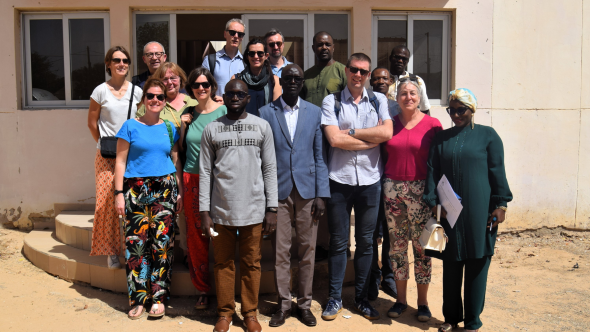
Ten members of UNamur's academic and scientific staff, accompanied by the International Relations Department and the NGO FUCID, the University Forum for International Development Cooperation, took part in an exploratory mission co-organized with UCAD. The mission was part of the university's drive to strengthen partnerships with the South, by promoting exchanges, raising researchers' awareness of the issues facing the global South, and helping new projects to emerge.
For a week, several activities were organized to enable members of the delegation to discover the Senegalese university: a visit to UCAD and discovery of its issues, exchanges around the concept of "One Health", meetings between researchers, a field visit and a closing moment in the presence of institutional partners.
Catherine Linard, professor at the Faculty of Sciences, was part of the Namur delegation "Going on site and exchanging with our Senegalese colleagues is very important. It allows us to discover the wealth of their research, in fields often directly connected to realities on the ground," she explains.
Since 2015, Catherine Linard has been collaborating with UCAD, notably as part of a research and development project supported by ARES. "From this initial collaboration a number of dynamics were born. Several Senegalese PhD students have come to Belgium to pursue their research. And conversely, one of my Belgian PhD students, Camille Morlighem, who is working on the creation of malaria risk maps in Senegal, has been able to benefit from mobility grants for research stays at UCAD. We've also established teaching exchanges: I went to Dakar to give a week's training to PhD students in geography, and a fellow health geographer, Aminata Niang Diène, comes to Belgium every year to speak in one of my master's courses," continues the professor.
The participants
The delegation brought together profiles from several UNamur faculties and departments:
- Francesca Cecchet, Faculty of Science, President of the NISM (Namur Institute of Structured Matter) Research Institute and member of the (NaRILIS Namur Research Institute for Life Sciences)
- Laurent Houssiau, Faculty of Science and member of the NISM (Namur Institute of Structured Matter) Research Institute
- Charles Nicaise, Faculty of Medicine and President of the NaRILIS Research Institute (Namur Research Institute for Life Sciences)
- Denis Saint-Amand, Faculty of Philosophy and Letters and member of the NaLTT Research Institute (Namur Institute of Language, Text and Transmediality)
- Laurent Ravez, Faculties of Medicine and Science and member of the NaRILiS (Namur Research Institute for Life Sciences) and EsPhiN (Espace Philosophique de Namur)
- Anne Vermeyen, member of the Cellule bien-être animal
- Flora Musuamba, Faculty of Medicine and member of the NaRILIS Research Institute (Namur Research Institute for Life Sciences)
- Florence Georges, Faculty of Law and member of the NaDI (Namur Digital Institute)
- Nathanaël Laurent, Faculty of Science and member of the EsPhiN (Espace Philosophique de Namur)
- Catherine Linard, Faculty of Science and member of the NaRILIS (Namur Research Institute for Life Sciences) and ILEE (Institute of Life-Earth-Environment)
- Rita Rixen, Director of FUCID, the University Forum for International Development Cooperation
- Amélie Schnock, member of the International Relations Department
The University of Namur on the international stage
Committed to international cooperation and development, the University of Namur maintains numerous collaborations with several institutions around the world. These collaborations take the form of research projects, teaching or training assignments, or student training as part of UNamur's teaching offer or as part of short-term internships, particularly research internships.
The University of Namur is committed to international cooperation and development.
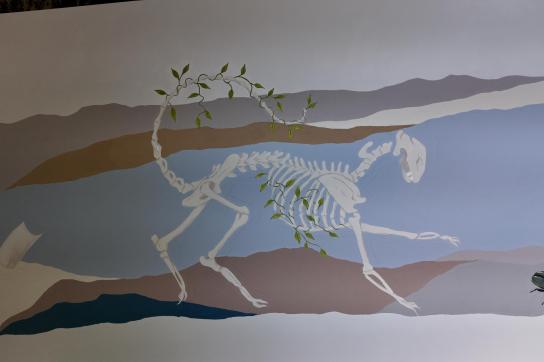
A new mural for the Faculty of Science
A 3rd-year veterinary medicine student with a passion for drawing, Élise Hottois has transformed one of the walls of the Faculty of Science into a veritable work of art.
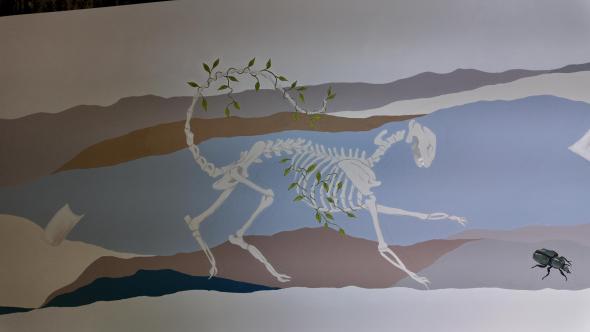
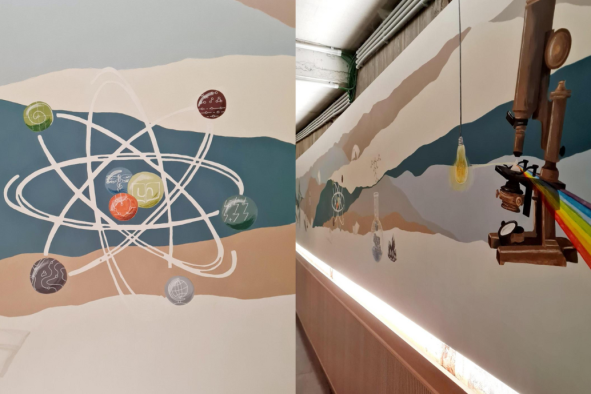
It was during a call for projects to embellish the premises of the Faculty of Science that Élise was chosen from among other candidates. The aim: to highlight its eight departments: biology, chemistry, geography, geology, mathematics, veterinary medicine, physics and philosophical sciences. After a pre-selection process, Elise submitted a sketch that quickly won over the jury. "I wanted to illustrate each discipline in a soft, happy aesthetic, mixing antique objects with some more artistic elements," she explains. These include an armillary sphere, a skeleton and a representation of the solar system.
Family support
"Since I was a little girl, I've loved drawing, it's a passion I inherited from my mum," confides Élise. "As soon as I started the sketches for the fresco, I asked her for ideas and advice. She's very creative and helped me a lot," she recounts. Together, they sought inspiration and refined their sketches, before embarking on painting the entire fresco.
The project required several weeks of upstream preparation and almost two weeks of intensive work to complete the 15-meter-long work.
The fresco can be seen in the passage between the Science Building and the Pedro Arrupe Auditorium, accessible from the Science Building, by descending to -1.
Other achievements
For Élise, it wasn't the first time she'd tried her hand at this kind of exercise. "Last year, I had created two frescoes in collaboration with the committee in the Veterinary Circle. I also make tablars for students, which is what got me into painting. I'd love to continue developing this artistic side alongside my studies", concludes the student.
Agenda
MDAH 2026 conference
15th International Symposium on Marek's Disease and Avian Herpesviruses.
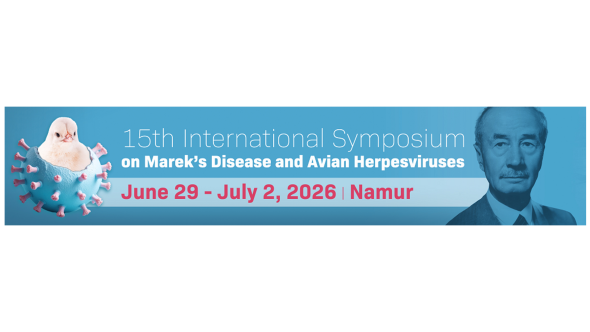
Every two years, the International Symposium on Marek's Disease and Avian Herpesviruses (MDAH) brings together researchers from around the world to exchange the latest insights on poultry viral diseases - covering their biology, evolution, control strategies, and epidemiology. Attendees include PhD students, postdocs and researchers representing academia, government, and commercial organizations from North and South America, Europe, Asia, the Middle East, Australia, and Africa.